BANGKOK (AP) — Behind the hoopla over the promise of artificial intelligence lay difficult realities, including how such technology might affect people already disadvantaged in a data-driven world.
A new report by the United Nations Development Program notes most of the gains from AI are likely to be reaped by wealthy nations unless steps are taken to use its power to help close gaps in access to basic needs, as well as such advanced know-how.
Click to Gallery
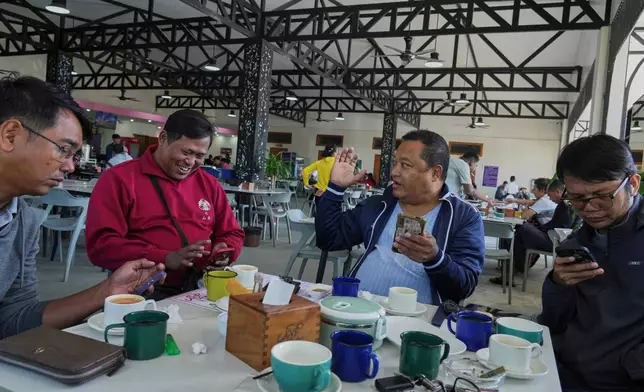
People use their mobile phones at a tea shop in Naypyitaw, Myanmar, Monday, Dec. 1, 2025. (AP Photo/Aung Shine Oo)
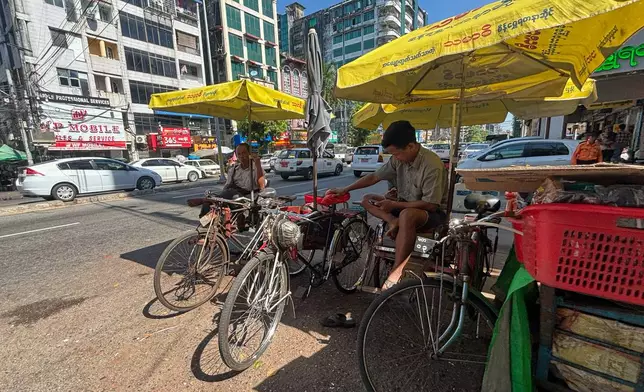
A man uses a mobile phone as he waits for passengers on his trishaw in Yangon, Myanmar Monday, Dec. 1, 2025. (AP Photo/Thein Zaw)
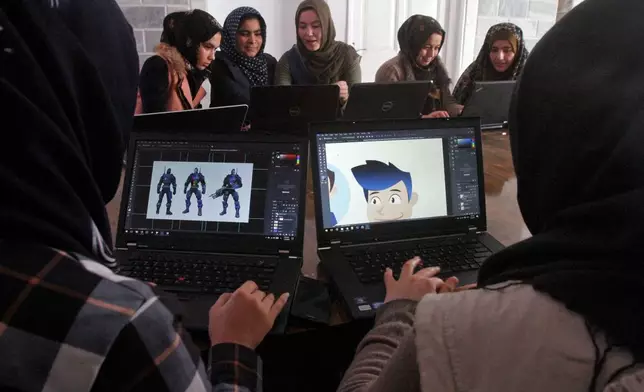
FILE - Afghan coders practice at the Code to Inspire computer training center in Herat province, western Afghanistan, Jan. 22, 2018. (AP Photo/Ahmad Seir, File)
FILE - Chat GPT app icon is seen on a smartphone screen, Aug. 4, 2025, in Chicago. (AP Photo/Kiichiro Sato, File)
FILE - An usher directs an attendee to a seat for a seminar at a convention titled AI Expo in Tokyo, on Aug. 27, 2025. (AP Photo/Hiro Komae, File)
The report released Tuesday likens the situation to the “Great Divergence” of the industrial revolution, when many Western countries saw rapid modernization while others fell behind.
Questions over how companies and other institutions will use AI are a near universal concern given its potential to change or replace some jobs done by people with computers and robots.
But while much of the attention devoted to AI focuses on productivity, competitiveness and growth, the more important question is what it will mean for human lives, the authors note.
“We tend to overemphasize the role of technology,” said Michael Muthukrishna of the London School of Economics, the report's main author, told reporters. “We need to ensure it’s not technology first, but it’s people first,” he said, speaking by video at the report’s launch in Bangkok.
The risk of exclusion is an issue for communities where most people are still struggling to access skills, electric power and internet connectivity, for older people, for people displaced by war, civil conflict and climate disasters. At the same time, such people may be “invisible” in data that will not take them into account, the report said.
“As a general-purpose technology, AI can lift productivity, spark new industries, and help latecomers catch up,” the report says.
Better advice on farming, analysis of X-rays within seconds and faster medical diagnoses, more effective weather forecasts and damage assessments hold promise for rural communities and areas prone to natural disasters.
“AI systems that analyze poverty, health, and disaster risks enable faster, fairer, and more transparent decisions, turning data into continuous learning and public value,” it says.
Still, even in wealthy nations like the United States, the potential for data centers to devour too large a share of electricity and water has raised concerns. Ramping up power generation to meet higher demand may hinder progress in limiting the emissions of carbon from burning fossil fuels that contribute to global warming, while also causing health hazards.
The technology raises ethical, privacy and cybersecurity concerns: researchers have found hackers using AI to automate portions of cyberattacks. There also is the problem of deepfakes that can misinform or facilitate criminal activity.
Asian nations including China, Japan, South Korea and Singapore are well placed to take advantage of AI tools, the report notes, while places like Afghanistan, the Maldives and Myanmar lack skills, reliable power and other resources needed to tap into the computing potential of AI. Inequalities between regions within countries mean some places even in advanced economies are prone to be left behind.
About a quarter of the Asia-Pacific region lacks online access, the report says.
If such gaps are not closed, many millions may be excluded from the kinds of devices, digital payment systems, digital IDs and education and skills that are required to participate fully in the global economy, falling further behind, said Philip Schellekens, the UNDP's chief economist for the Asia Pacific.
Other risks include misinformation and disinformation, surveillance that violates rights to privacy and systems that can act as “black boxes,” reinforcing biases against minorities or other groups. So transparency and effective regulations are crucial guardrails for ensuring AI is used in fair and accountable ways, he said.
“We believe we need more balance, less hysteria and hype,” Schellekens said.
AI is becoming essential for modern life, like electricity, roads, and now the internet, so governments need to invest more in digital infrastructure, education and training, fair competition and social protections, the report says.
“The goal," it says, "is to democratize access to AI so that every country and community can benefit while protecting those most at risk from disruption.”
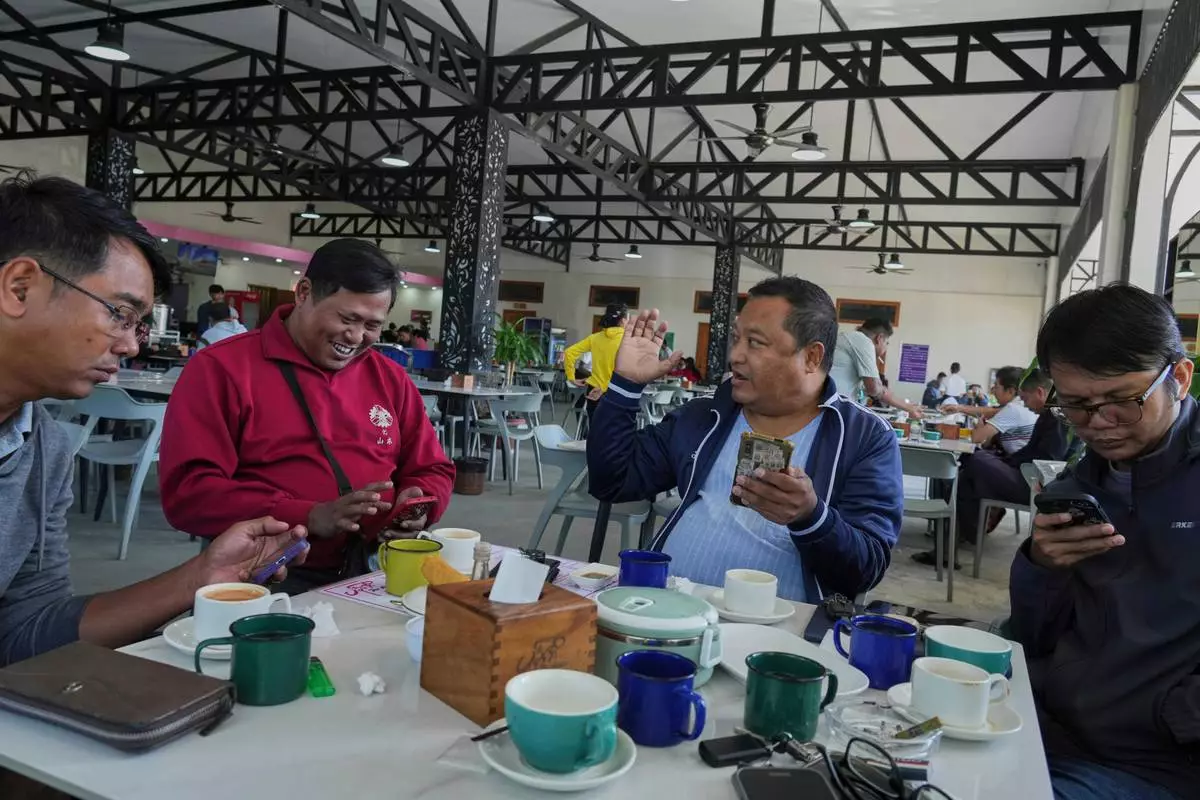
People use their mobile phones at a tea shop in Naypyitaw, Myanmar, Monday, Dec. 1, 2025. (AP Photo/Aung Shine Oo)
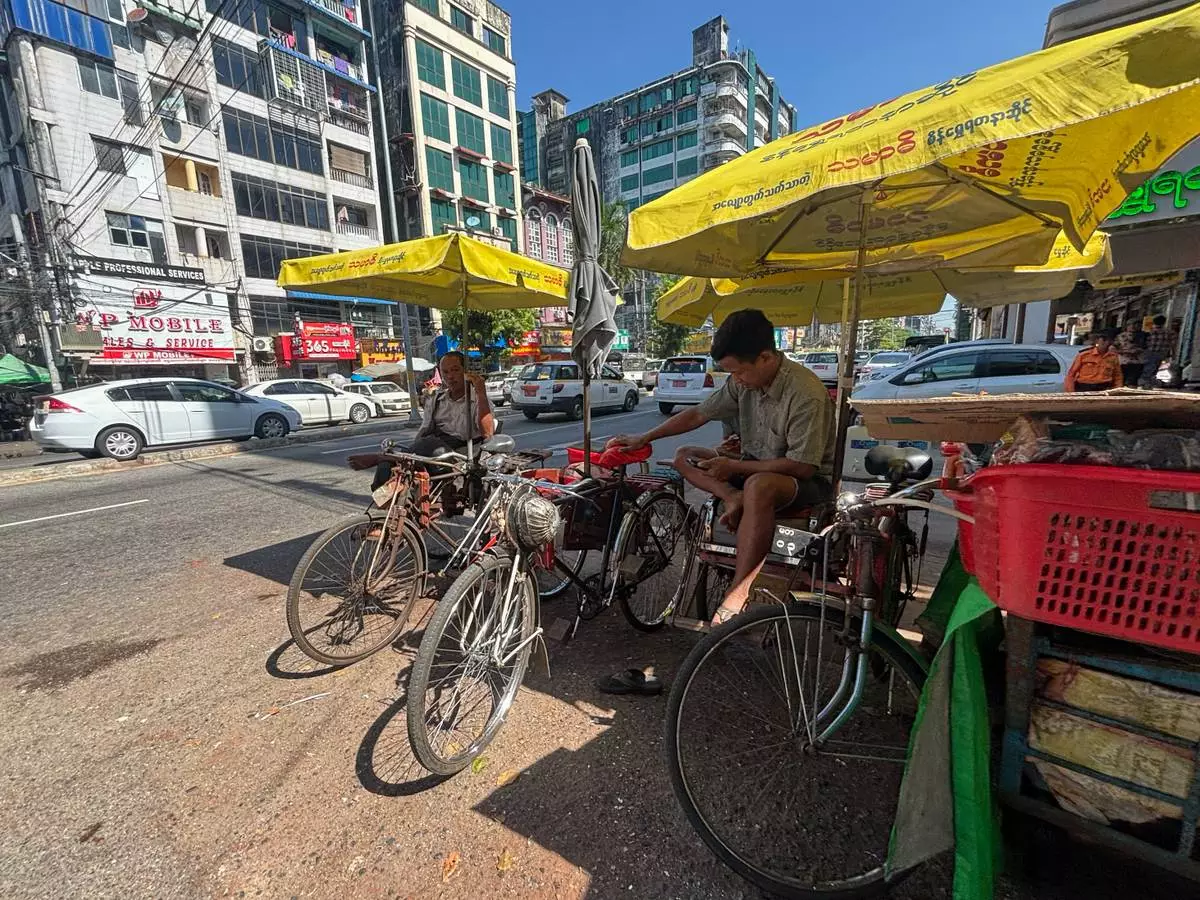
A man uses a mobile phone as he waits for passengers on his trishaw in Yangon, Myanmar Monday, Dec. 1, 2025. (AP Photo/Thein Zaw)
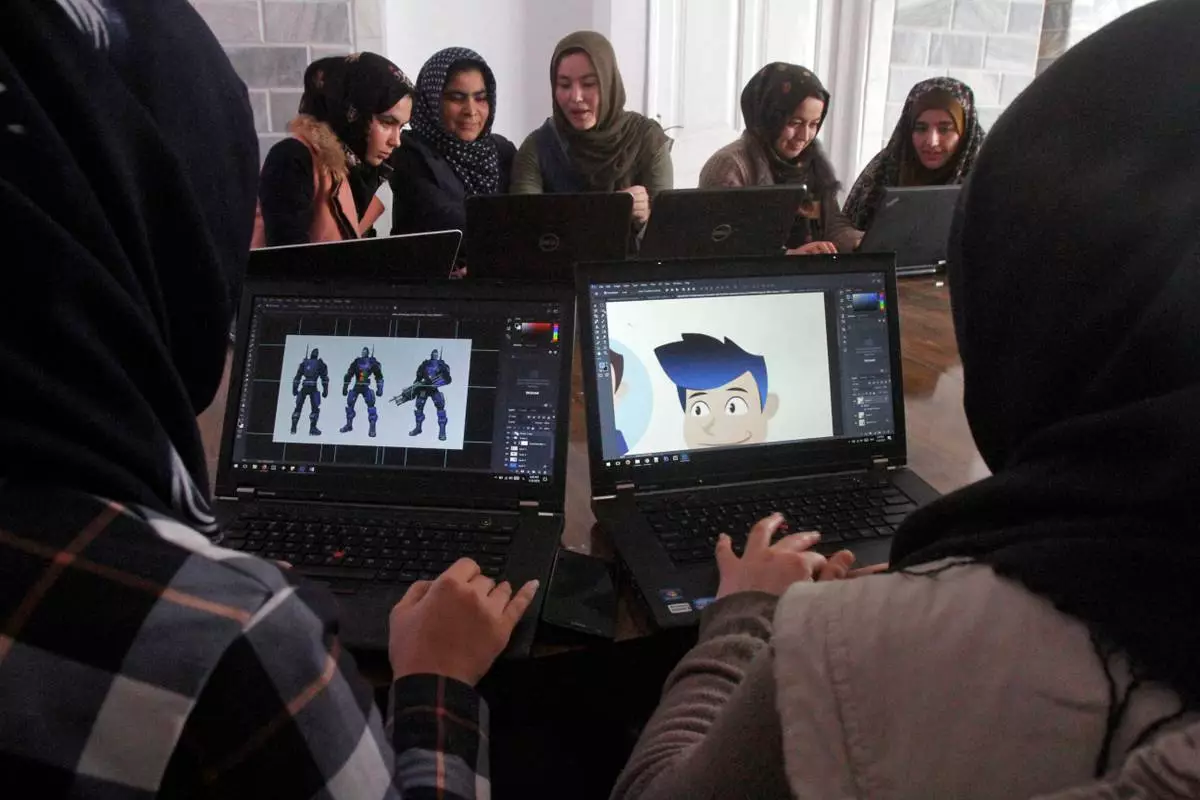
FILE - Afghan coders practice at the Code to Inspire computer training center in Herat province, western Afghanistan, Jan. 22, 2018. (AP Photo/Ahmad Seir, File)

FILE - Chat GPT app icon is seen on a smartphone screen, Aug. 4, 2025, in Chicago. (AP Photo/Kiichiro Sato, File)

FILE - An usher directs an attendee to a seat for a seminar at a convention titled AI Expo in Tokyo, on Aug. 27, 2025. (AP Photo/Hiro Komae, File)
DUBAI, United Arab Emirates (AP) — Iran fired more missiles at Israel and Gulf Arab states Thursday, demonstrating Tehran’s continued ability to strike its neighbors even as U.S. President Donald Trump claimed the threat from the country was nearly eliminated.
Iran’s attacks on Gulf states along with its chokehold on the Strait of Hormuz have disrupted the world’s energy supplies with effects far beyond the Middle East. That has proved to be Iran’s greatest strategic advantage in the war. Britain planned to hold a call with nearly three dozen countries about how to reopen the strait once the fighting is over.
Trump has insisted the strait can be taken by force — but said it is not up to the U.S. to do that. In an address to the American people Wednesday night, he encouraged countries that depend on oil from Hormuz to “build some delayed courage” and go “take it.”
Before the U.S. and Israel started the war on Feb. 28 with strikes on Iran, the waterway was open to traffic and 20% of all traded oil used passed through it.
Iran responded defiantly to Trump’s speech, in which the American president claimed U.S. military action had been so decisive that “one of the most powerful countries” is “really no longer a threat.”
A spokesman for Iran’s military, Lt. Col. Ebrahim Zolfaghari, insisted Thursday that Tehran maintains hidden stockpiles of arms, munitions and production facilities. He said facilities targeted so far by U.S. strikes are “insignificant.”
Just before Trump began his address — in which he said U.S. “core strategic objectives are nearing completion” — explosions were heard in Dubai as air defenses worked to intercept an Iranian missile barrage.
Less than a half-hour after the president was done, Israel said its military was also working to intercept incoming missiles. Sirens sounded in Bahrain, home to the U.S. Navy’s 5th Fleet, immediately after the speech.
Attacks continued across Iran on Thursday, with strikes reported in multiple cities.
In Lebanon — home to Iran-backed Hezbollah militants who are fighting Israel, which has launched a ground invasion — an Israeli strike killed four people in the south, the Health Ministry said.
More than 1,900 people have been killed in Iran during the war, while 19 have been reported dead in Israel. More than two dozen people have died in Gulf states and the occupied West Bank, while 13 U.S. service members have been killed.
More than 1,200 people have been killed and more than 1 million displaced in Lebanon. Ten Israeli soldiers have also died there.
Iranian attacks on about two dozen commercial ships, and the threat of more, have halted nearly all traffic in the waterway that connects the Persian Gulf to the open ocean.
Since March 1, traffic through the strait has dropped 94% over the same period last year, according to the Lloyds List Intelligence shipping data firm. Two ships are confirmed to have paid a fee, the firm said, while others were allowed through based on agreements with their home governments.
In order to bypass Hormuz, Saudi Arabia has been piping more oil to a Red Sea port, and Iraq said Thursday that it had started to truck oil across Syria to the Mediterranean.
The 35 countries speaking Thursday, including all G7 industrialized democracies except the U.S., as well as the United Arab Emirates and Bahrain, signed a declaration last month demanding Iran stop blocking the strait.
Thursday’s talks were focused on political and diplomatic measures, but British Foreign Secretary Yvette Cooper said military planners from an unspecified number of countries will also plot ways to ensure security once fighting ends, including potential mine-clearing work and “reassurance” for commercial shipping.
No country appears willing to try to open the strait by force while the war is raging. French President Emmanuel Macron, while on a visit to South Korea, called a military operation to secure the waterway “unrealistic.”
But there is a concern that Iran might limit traffic through the waterway even after U.S. and Israeli attacks on it cease.
The idea of an international effort has echoes of the “coalition of the willing,” led by the U.K. and France, that was assembled to underpin Ukraine’s security in the event of a ceasefire in that war. The coalition is, in part, an attempt to demonstrate to Washington that Europe is doing more for its own security in the face of frequent criticism from Trump.
The conflict is driving up prices for oil and natural gas, roiling stock markets, pushing up the cost of gasoline and threatening to make a range of goods, including food, more expensive.
On Thursday, Brent crude, the international standard, rose again and was at $108 in spot trading, up about 50% from Feb. 28 when Israel and the U.S. started the war.
Though the oil and gas that typically transits the strait is primarily sold to Asian nations, Japan and South Korea were the only two countries from the region joining Thursday's call about the strait. The supply of jet fuel has also been interrupted by the conflict, with consequences for travel worldwide.
Weissert reported from Washington and Rising from Bangkok. Associated Press writer David McHugh in Frankfurt, Germany, contributed to this story.
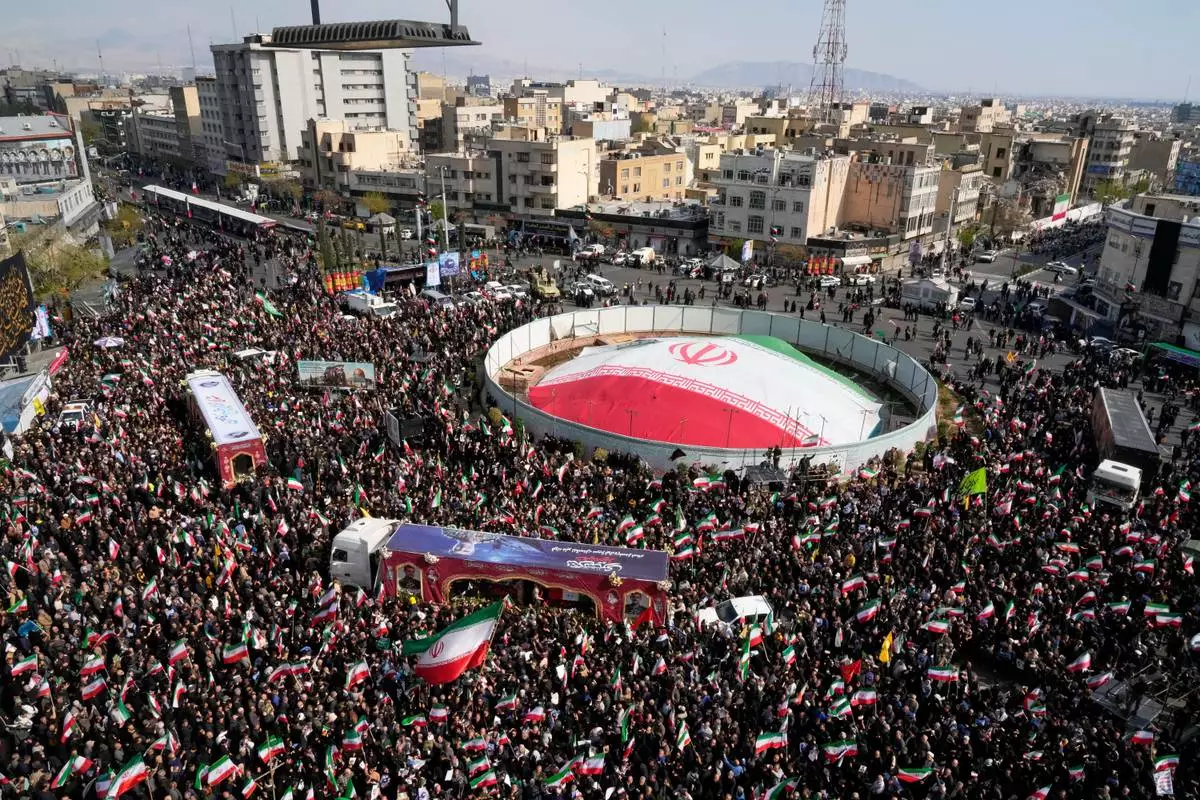
Mourners gather during a funeral procession for Alireza Tangsiri, head of Iran's Islamic Revolutionary Guard Corps Navy, and others killed in Israeli strikes in late March, in Tehran, Iran, Wednesday, April 1, 2026. (AP Photo/Vahid Salemi)
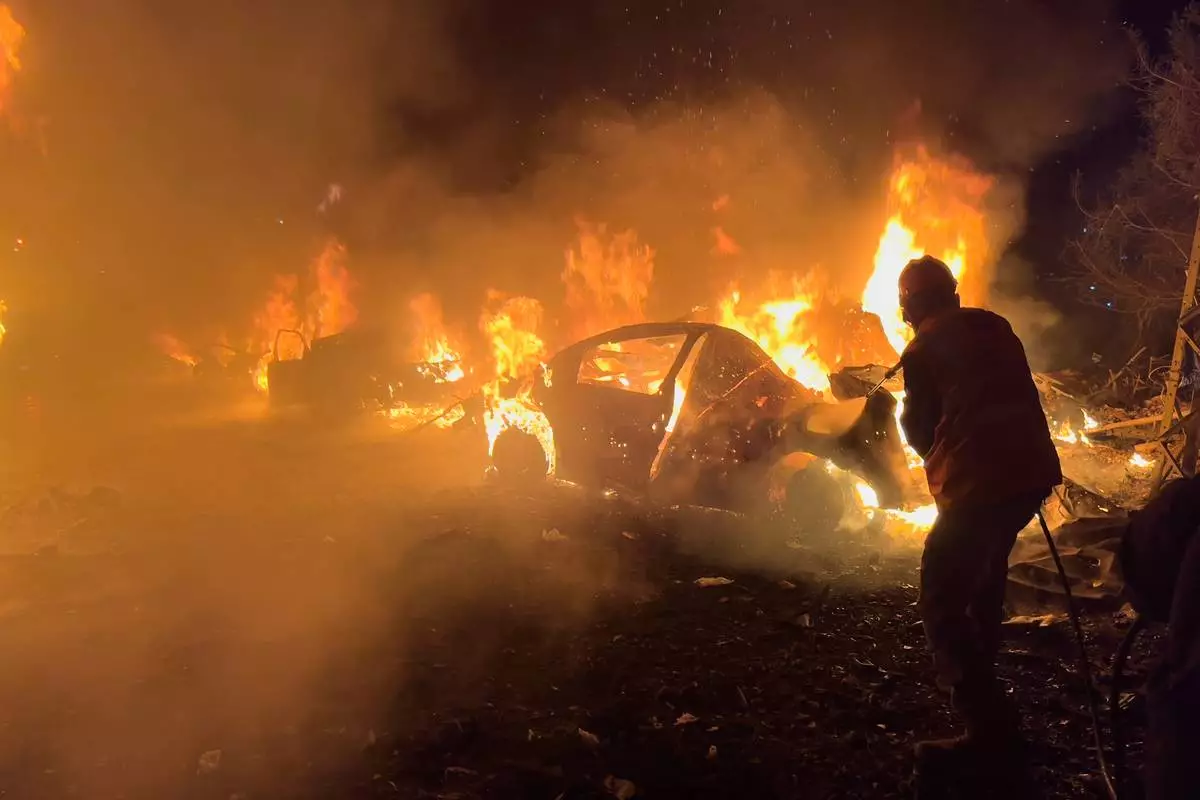
A firefighter extinguishes a car at the site of Israeli airstrikes, in Beirut, Lebanon, Wednesday, April 1, 2026. (AP Photo/Hussein Malla)
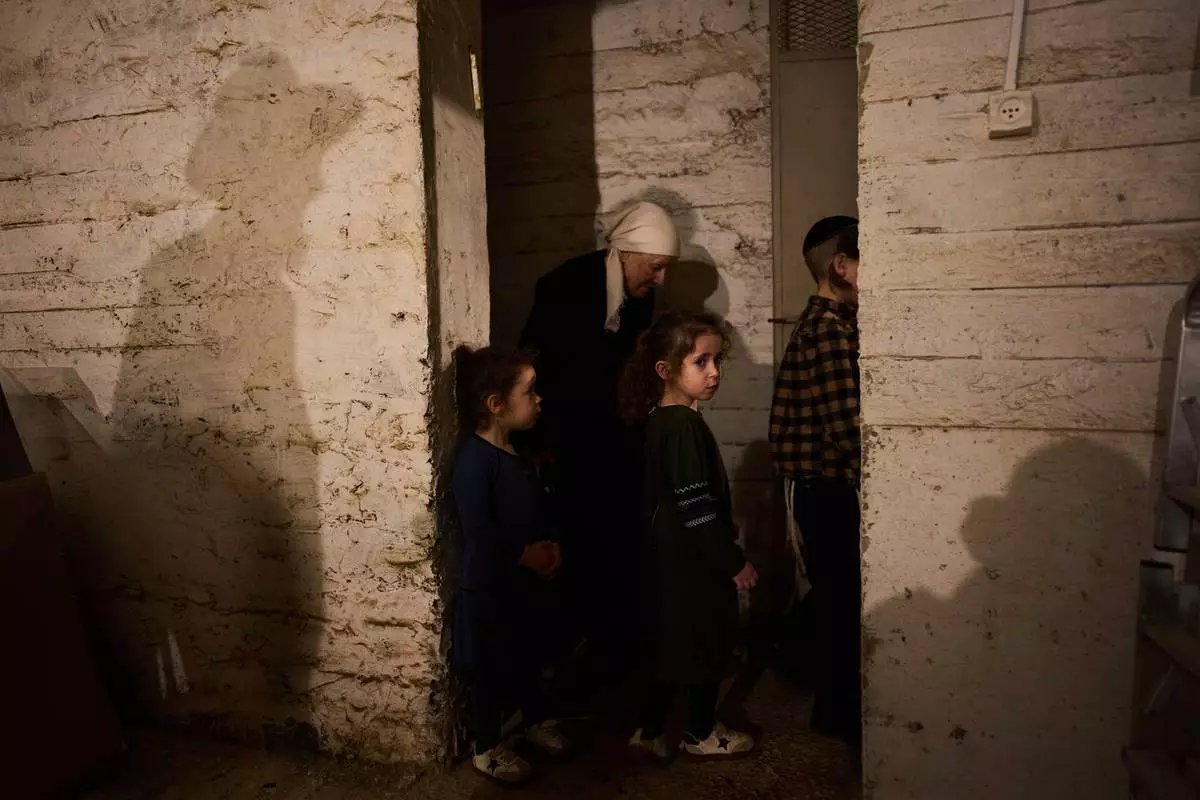
People take cover in a bomb shelter as air raid sirens warn of incoming Iranian missile strikes in Bnei Brak, Israel, Wednesday, April 1, 2026. (AP Photo/Oded Balilty)
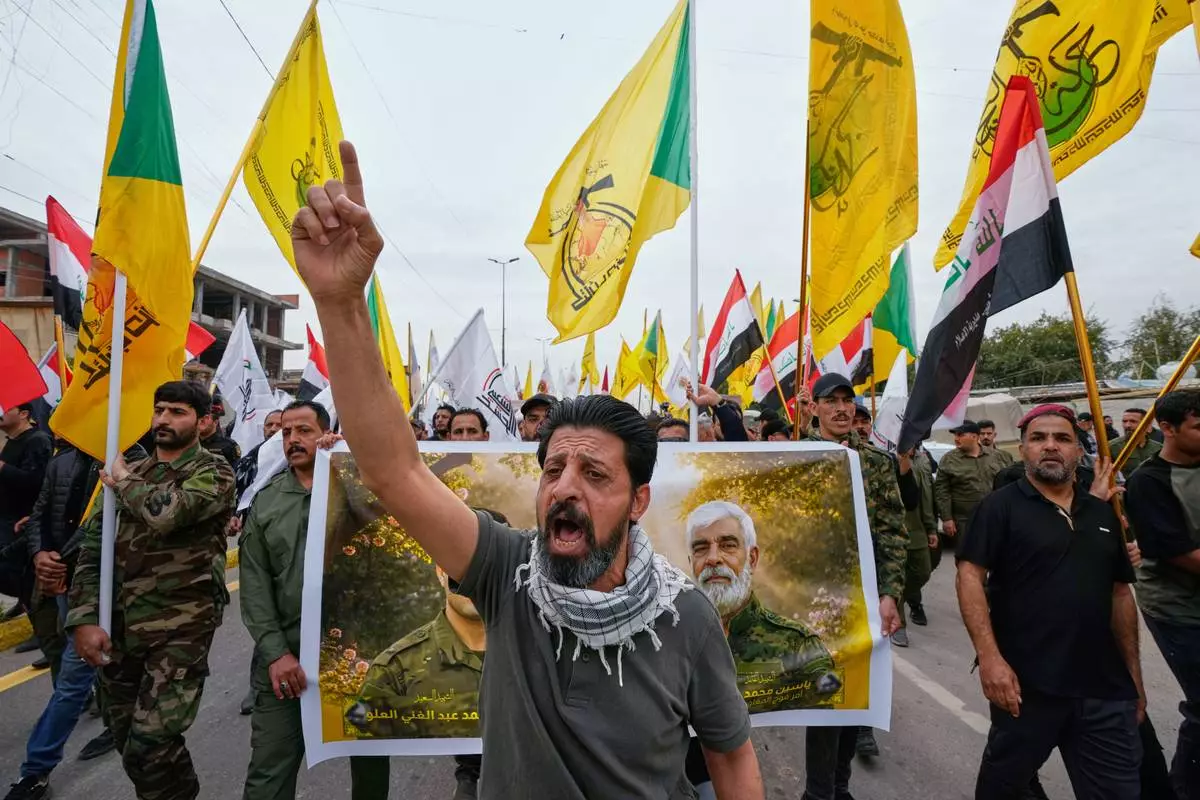
Members from the Popular Mobilization Forces attend a funeral of fighters who were killed in a U.S. airstrike, in Tal Afar, Nineveh province, north of Baghdad, Iraq, Thursday, April 2, 2026. (AP Photo/Hadi Mizban)
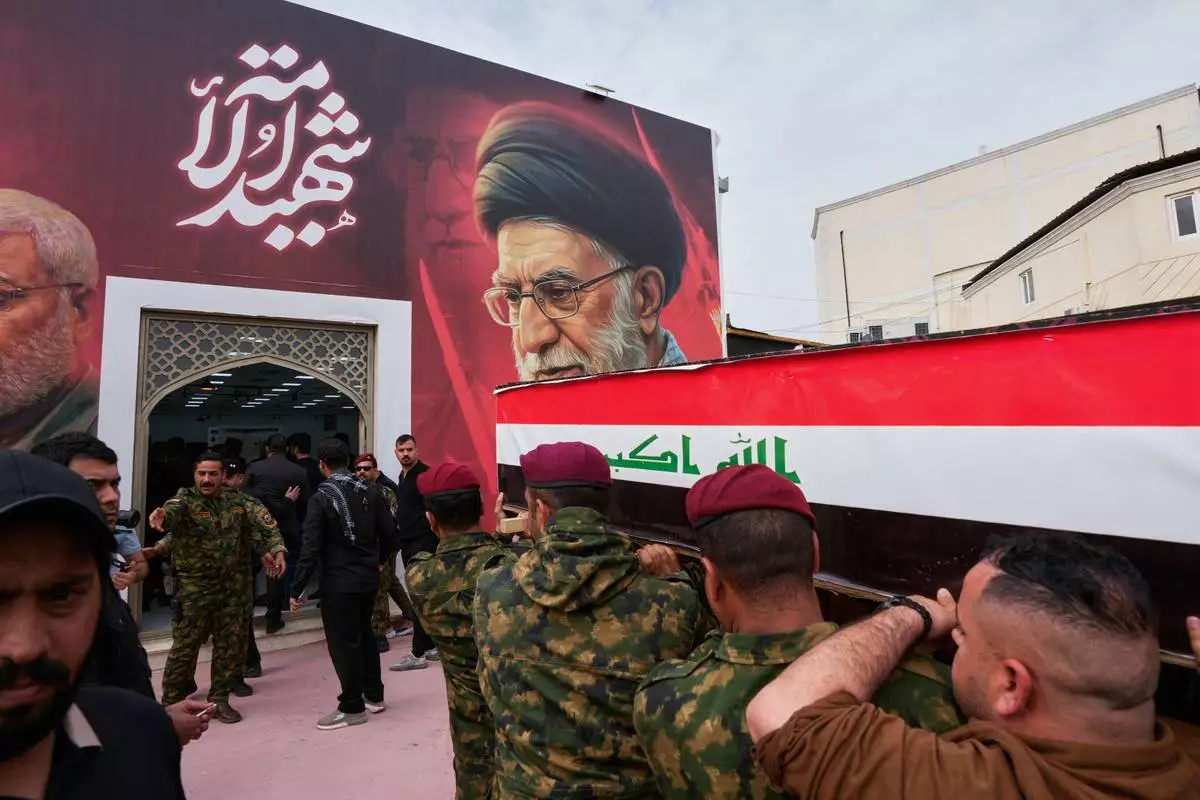
Members from the Popular Mobilization Forces attend a funeral of fighters who were killed in a U.S. airstrike, in Tal Afar, Nineveh province, north of Baghdad, Iraq, Thursday, April 2, 2026. (AP Photo/Hadi Mizban)
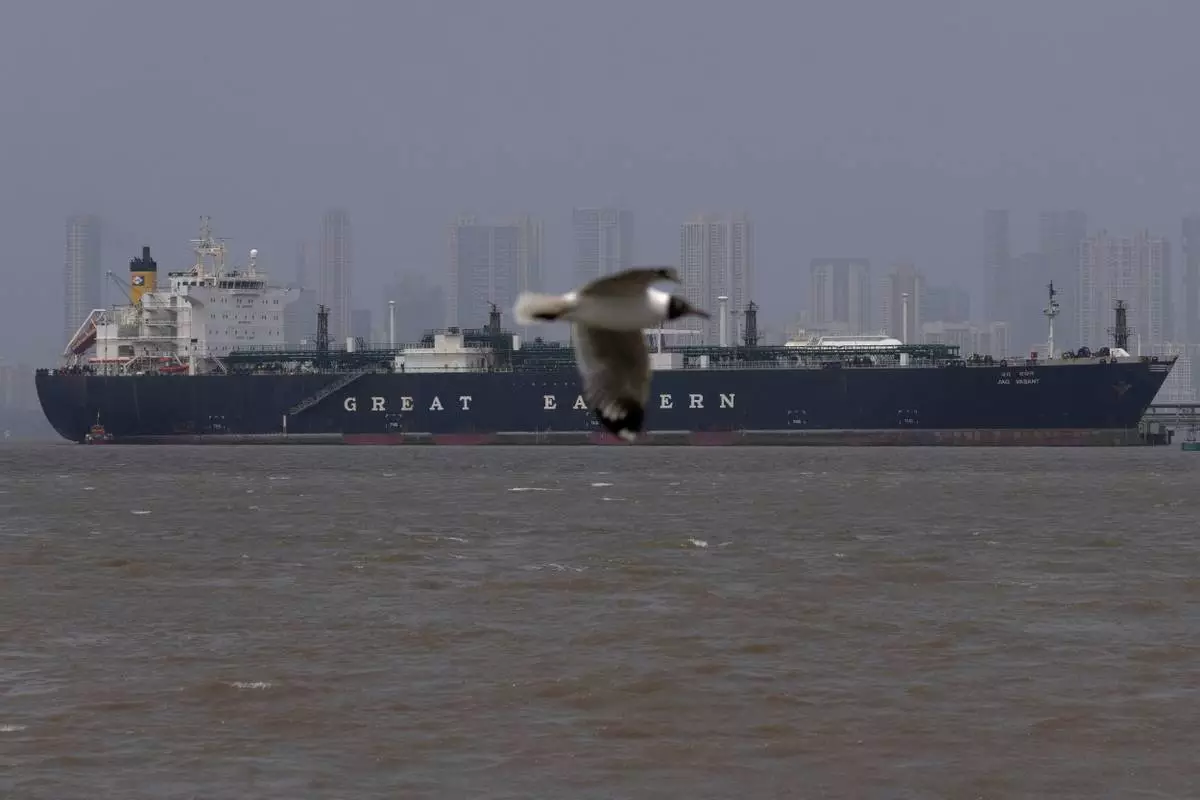
The Indian flagged LPG carrier Jag Vasant transporting liquefied petroleum gas, is seen at the Mumbai Port in Mumbai, India, after it arrived clearing the Strait of Hormuz, Wednesday, April 1, 2026. (AP Photo/Rafiq Maqbool)
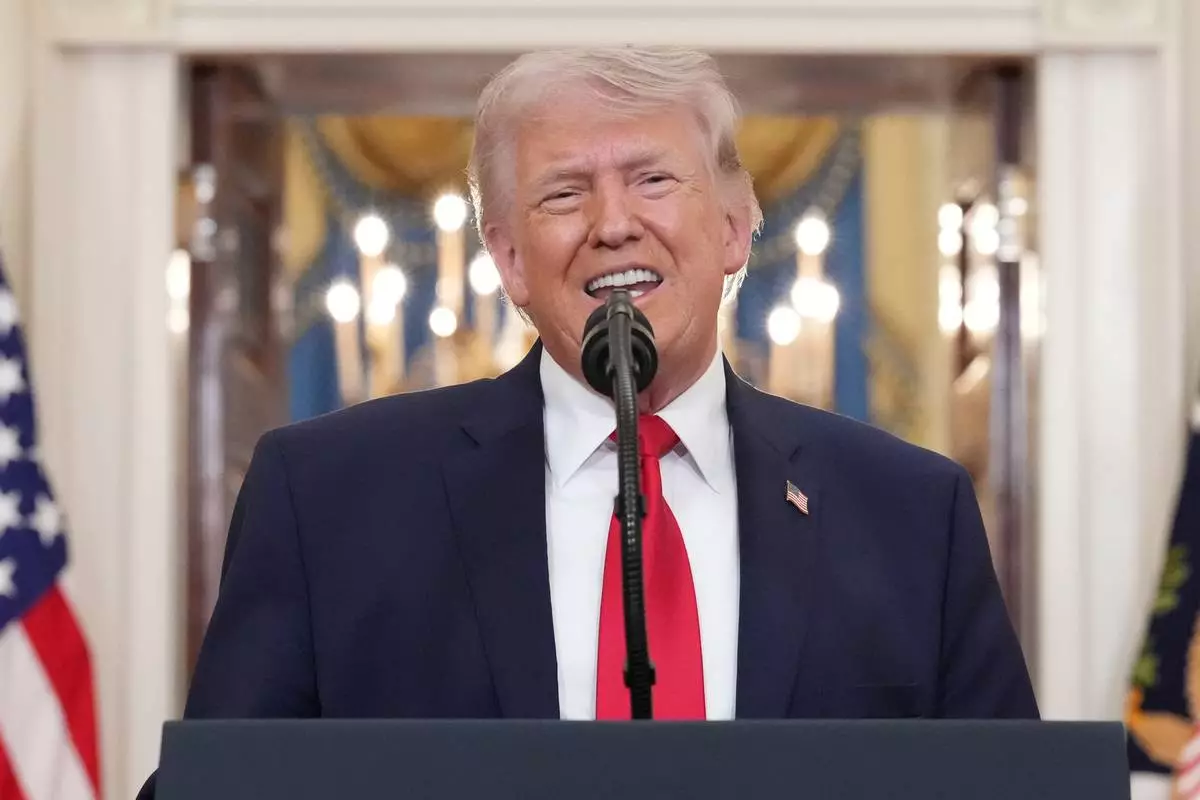
President Donald Trump speaks about the Iran war from the Cross Hall of the White House on Wednesday, April 1, 2026, in Washington. (AP Photo/Alex Brandon, Pool)
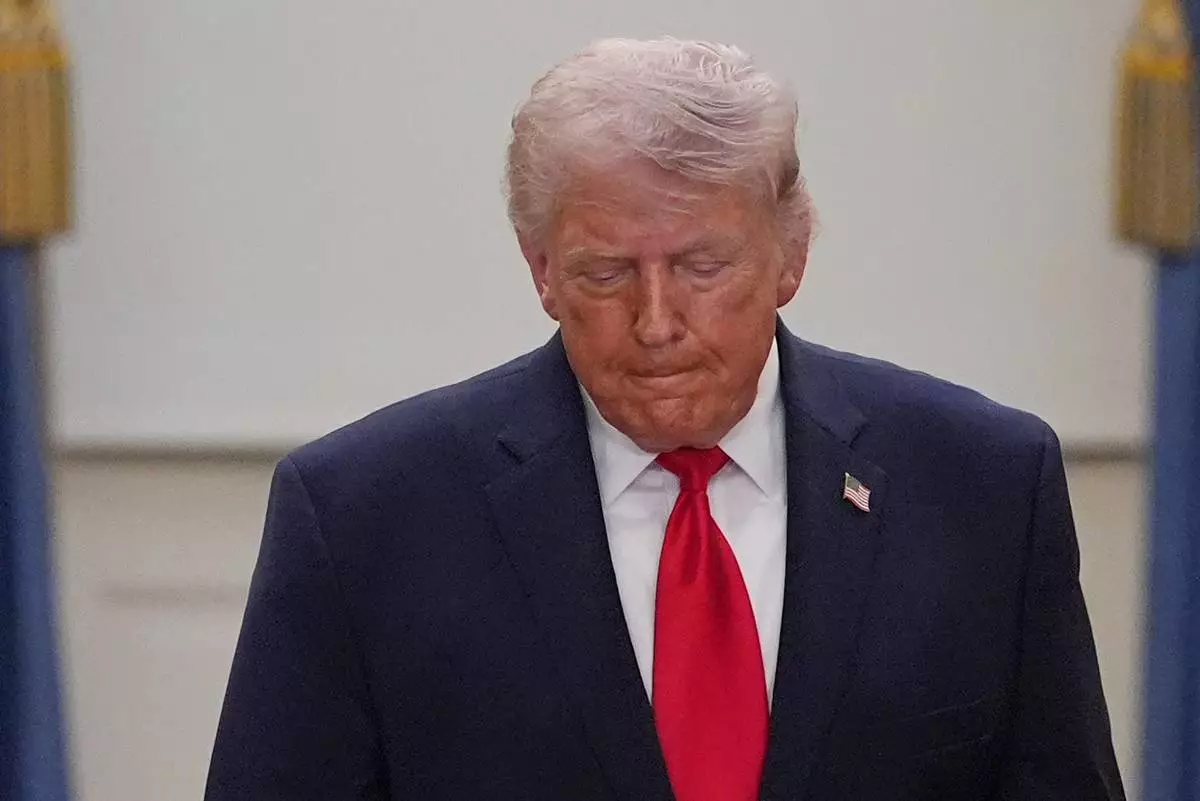
President Donald Trump walks from the Blue Room to speak about the Iran war from the Cross Hall of the White House on Wednesday, April 1, 2026, in Washington. (AP Photo/Alex Brandon, Pool)
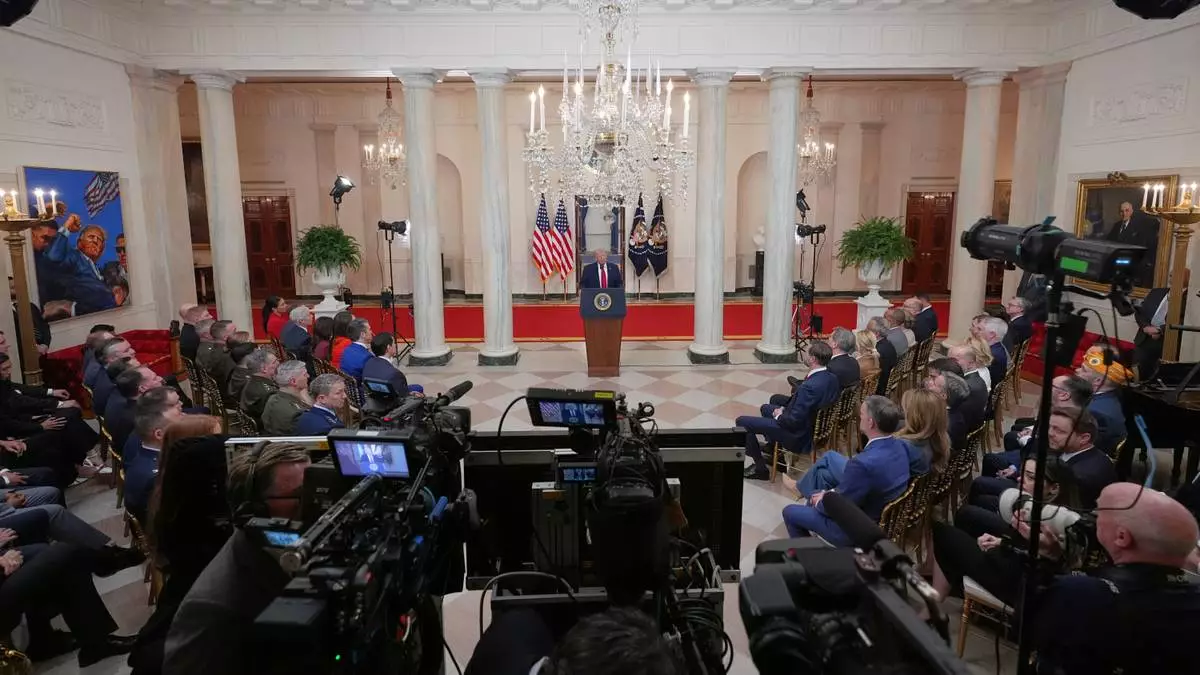
President Donald Trump speaks about the Iran war from the Cross Hall of the White House on Wednesday, April 1, 2026, in Washington. (AP Photo/Alex Brandon, Pool)
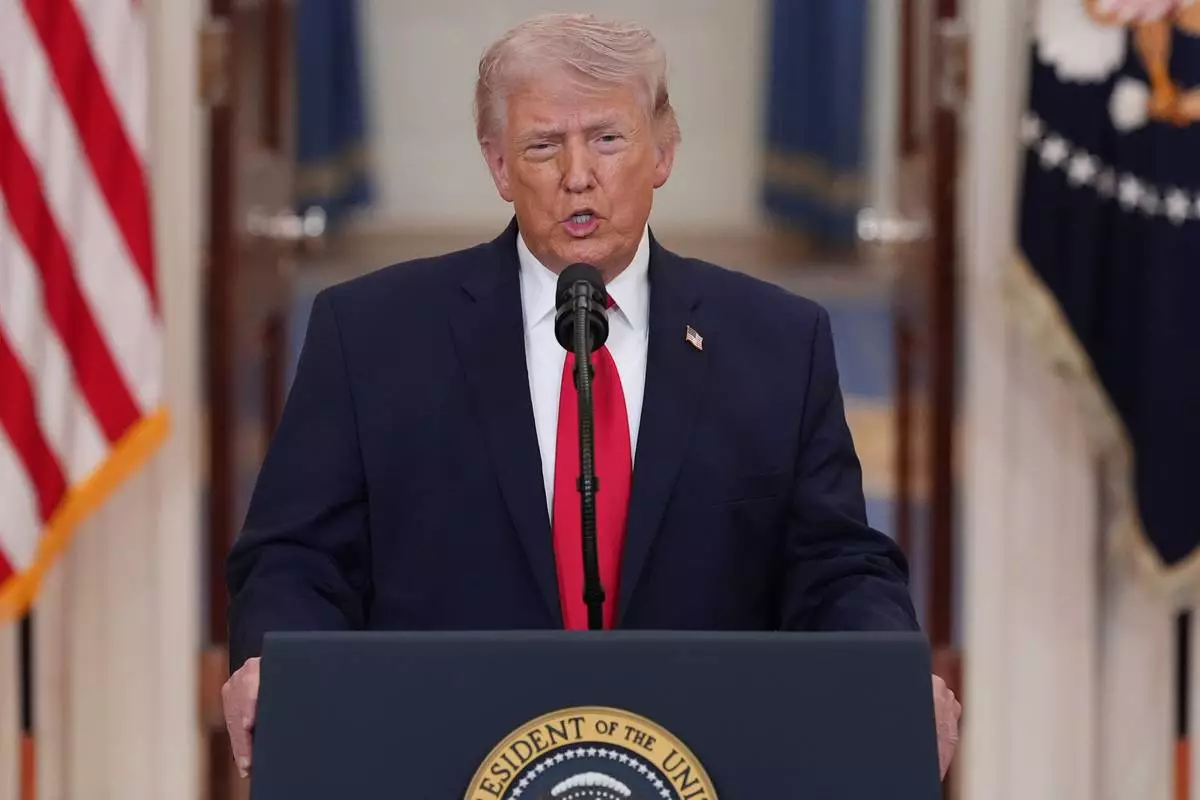
President Donald Trump speaks about the Iran war from the Cross Hall of the White House on Wednesday, April 1, 2026, in Washington. (AP Photo/Alex Brandon, Pool)