TUEBINGEN, Germany--(BUSINESS WIRE)--Dec 2, 2025--
Just a few months after the world’s first Gastric Mucosal Ablation (GMA) case using MOVIVA ® at the Policlinico Universitario Agostino Gemelli in Rome, clinical experience is rapidly expanding across Europe. With around 80 procedures performed within a short timeframe in eight countries, MOVIVA ® is helping to establish a new era of endoscopic bariatric treatment – offering a less invasive option as obesity rates continue to rise worldwide.
This press release features multimedia. View the full release here: https://www.businesswire.com/news/home/20251202355726/en/
A promising alternative for bariatric patients: GMA with MOVIVA ®
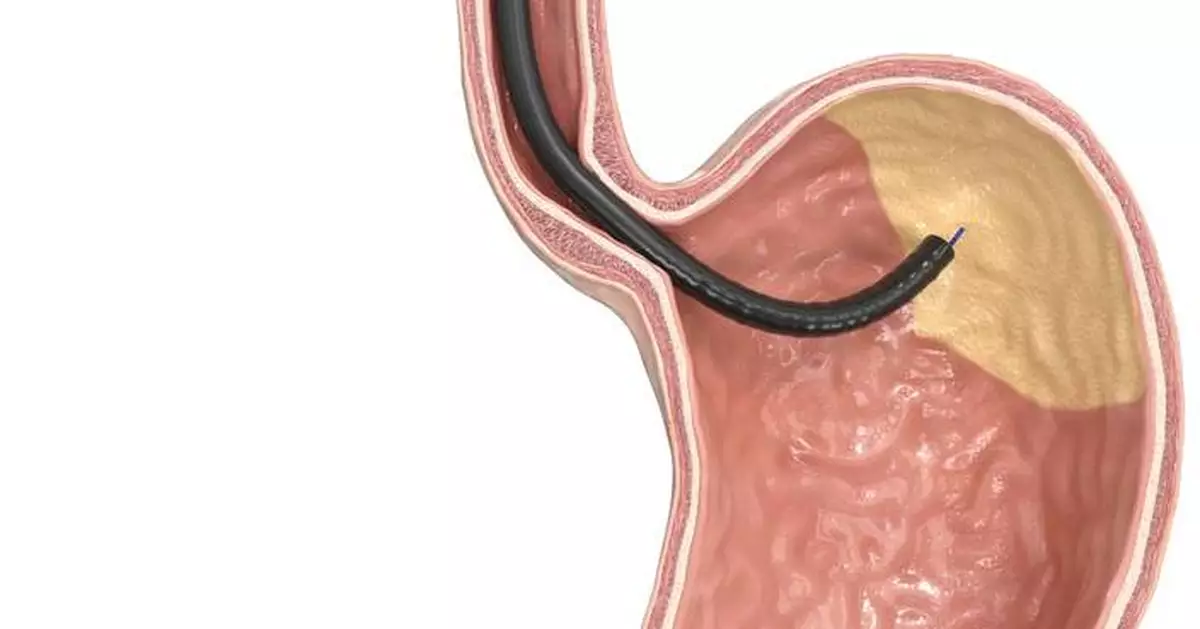
GMA is an incisionless, minimally invasive endoscopic procedure. It targets the gastric fundus, the main site of ghrelin production – the so-called hunger hormone. By reducing ghrelin levels, patients experience less hunger. At the same time, the ablated tissue shrinks the fundus, which reduces stomach capacity. Together, these effects can support controlled weight reduction.
MOVIVA ® is a dedicated hybrid probe developed specifically for GMA. It combines high-pressure, needle-free injection to create a protective submucosal fluid cushion with superficial thermal ablation via argon plasma coagulation (APC). MOVIVA ® ’s dedicated moveAPD mode ensures broad and consistent argon plasma coagulation. Another strength of MOVIVA ® lies in its enhanced injection capabilities, particularly in tangential positions, which are often challenging in endoscopic settings.
According to Prof. Ivo Boskoski, who led the first case in Rome: “Minimally invasive endoscopic techniques that target appetite regulation through precise ablation of the gastric fundus offer patients an effective pathway to weight loss without the risks associated with surgery. MOVIVA ® ’s innovative injection and ablation capabilities simplify the GMA procedure and could set a new standard in endoscopic bariatric care."
GMA can be performed as a stand-alone treatment or in combination with Endoscopic Sleeve Gastroplasty (ESG). In combination with ESG, the approach achieves weight loss outcomes comparable to vertical sleeve gastrectomy, while being less invasive.
“MOVIVA ® sets new standards by addressing ghrelin, the hunger hormone, and has been shown to effectively manage hunger and cravings, supporting weight loss in people living with obesity.We are really looking forward to the commercial launch of MOVIVA ® in 2026,” says Marcus Felstead, Chief Commercial Officer at Erbe Elektromedizin.
MOVIVA ® is currently available in CE and CE-related markets.
Register for the free webinar "Advancing bariatric endoscopy"
Join Prof. Ivo Boskoski, MD, Christopher McGowan, MD and Abdullah AlMousa, MD on 11 December for a live online session on the latest developments in bariatric endoscopy and GMA with MOVIVA ®: Webinar Registration - Zoom [ https://erbe-med.zoom.us/webinar/register/WN_10nhAgt8TlOR4eu5qf51ZQ#/registration ].
About Erbe Elektromedizin
Erbe Elektromedizin develops, manufactures, and distributes surgical instruments and devices worldwide, while providing services for professional use of these products in a diverse range of medical disciplines. Surgeons, OR teams and patients around the world rely on Erbe medical technology. The surgical instruments and devices find use in almost all specialist areas. They are based on electrosurgery combined with other Erbe technologies. Hybrid solutions enable us to provide new, innovative applications in medicine.
Fields of activity
An international network
The Erbe workforce

MOVIVA®: Hybrid technology for Endoscopic Gastric Mucosal Ablation
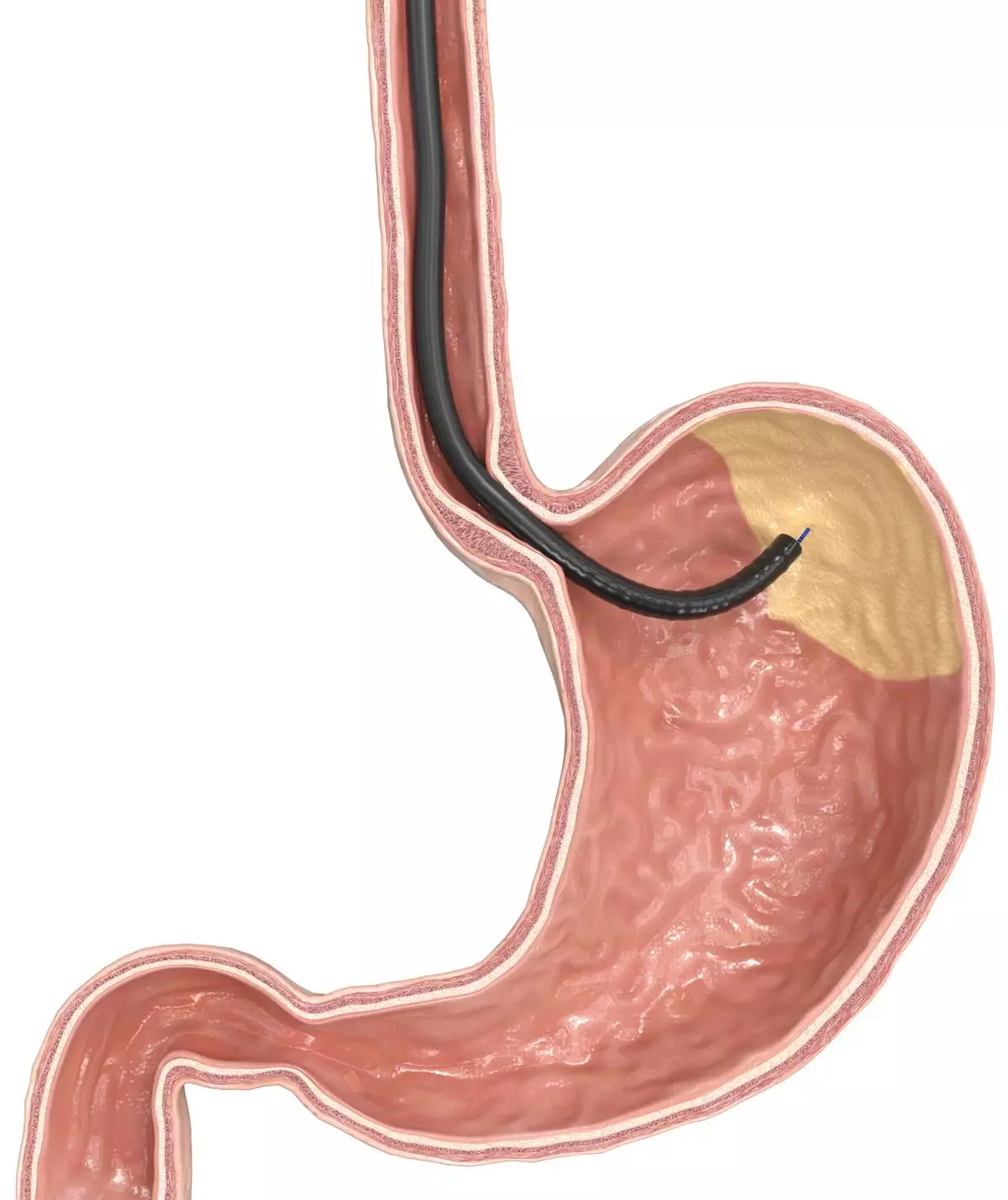
GMA with MOVIVA®
JDEIDEH, Lebanon (AP) — It was not how the Rev. Maroun Ghafari had envisioned this Holy Week — for years, he had held Easter sermons in his predominantly Christian village of Alma al-Shaab in southern Lebanon, near the border with Israel.
This year, he is preaching from a Beirut suburb, beside a cardboard cutout depicting his church in Alma al-Shaab, now caught in the crossfire between Israeli forces and Hezbollah fighters.
Since hostilities erupted last month between Israel and Lebanon's Iran-backed Hezbollah militant group — in the shadow of the wider, U.S.-Israeli war on Iran — over 1,400 people have been killed in Lebanon, and more than 1 million have been forced to flee their homes.
Among those displaced from the war-torn south are thousands of Christians. They now find themselves far from their ancestral churches in Lebanon, where Christians have maintained a strong presence through centuries of Byzantine, Arab and Ottoman conquest and plenty of modern-day crises.
Christians are estimated to make up around a third of Lebanon's population of roughly 5.5 million people. With 12 Christian sects, the country is home to the largest proportion of Christians of any nation in the Arab world.
Christian villagers who stayed behind in southern Lebanon, ignoring Israel’s blanket evacuation warnings for the area, have increasingly hardened into enclaves surrounded by fierce clashes.
And though villagers in Alma al-Shaab had been uprooted before, in the 2024 Israel-Hezbollah war, this time around, they were adamant they wouldn't leave, even as airstrikes came closer and closer.
The villagers huddled in their church for protection as Israeli warplanes pounded large swaths of southern and eastern Lebanon while Israeli troops stepped up a ground invasion and Hezbollah kept firing rockets at Israel.
In his annual Easter homily, Patriarch Beshara al-Rai of Lebanon’s Maronite Church blamed both Hezbollah and Israel for the suffering wrought by the war.
“The country is going through a critical situation due to Iranian interference through Hezbollah and Israeli aggression,” he said. “Our hearts bleed for the victims of the conflict imposed on Lebanon.”
Ghafari’s brother, 70-year-old Sami Ghafari, was among the villagers who sought refuge at the church in Alma al-Shaab.
But he dashed out briefly on March 8 to tend to his garden, and was killed by an Israeli drone strike. His killing prompted the remaining villagers — including his brother — to pack up their belongings.
The U.N. peacekeepers in the area — a force known as UNIFIL that has monitored the region for nearly five decades — evacuated them to the northern suburbs of Beirut.
“We wanted to stay, but it was always possible that one of us could be targeted or killed at any moment,” the Rev. Maroun Ghafari told The Associated Press from St. Anthony Church in the northern Beirut suburb of Jdeideh, where the displaced from Alma al-Shaab came to worship on Saturday.
“Everyone is tired, and we see that war brings nothing but destruction, death and displacement.”
For many Lebanese Christians, it's a tradition on Holy Saturday — the day between Good Friday, which commemorates the crucifixion and death of Jesus, and Easter Sunday, which marks his resurrection according to the Gospels — to visit the graves of their loved ones.
This year, displaced Christians could only reflect from afar.
Nabila Farah, dressed in black for the Saturday service at St. Anthony Church, was among the last to leave Alma al-Shaab. She still feels heartbroken, a month later.
“You miss the smell of home, the lovely traditions and customs, the sounds of the bells of three churches ringing,” she said, reminiscing about her village. “As much as we experience the Easter atmosphere here, it will never be as it is over there.”
Those who remain face other challenges.
Marius Khairallah, a priest in the southern Lebanese city of Tyre, where much of the Christian community has hunkered down, says that he and his congregants are staying put "not out of stubbornness, but out of a sense of mission, to remain alongside their fellow faithful, as witnesses.”
“A significant number of parishioners have been displaced or are absent,” he said. "Yet churches still open their doors. Prayers are still raised — even with fewer voices."
Worries are mounting among Christians in the area as the Lebanese army — which seeks to stay neutral in the Israel-Hezbollah war — pulls out from parts of southern Lebanon, leaving them exposed to Israeli forces pushing deeper into the territory.
St. Antony's main priest, the Rev. Dori Fayyad, used his Good Friday sermon to take solemn note of the war’s widening toll on the southern Lebanese Christians, as the faithful recited prayers in Arabic and Syriac, a dialect of the Aramaic language spoken by Jesus.
“Today, you understand what the cross means, not as an idea, not as a concept, but because you are going through it,” he told the fully packed pews, the crowd so thick that dozens had to stand or crouch on the back stairs.
Some wiped away tears as Fayyad named one by one the southern churches, illustrated in the cardboard cutouts next to the pulpit.
“These churches in these villages are not only places of worship,” he said. “They are silent witnesses to suffering and to faith.”
Associated Press video journalist Ali Sharafeddine in Jdeideh, Lebanon, contributed to this report.
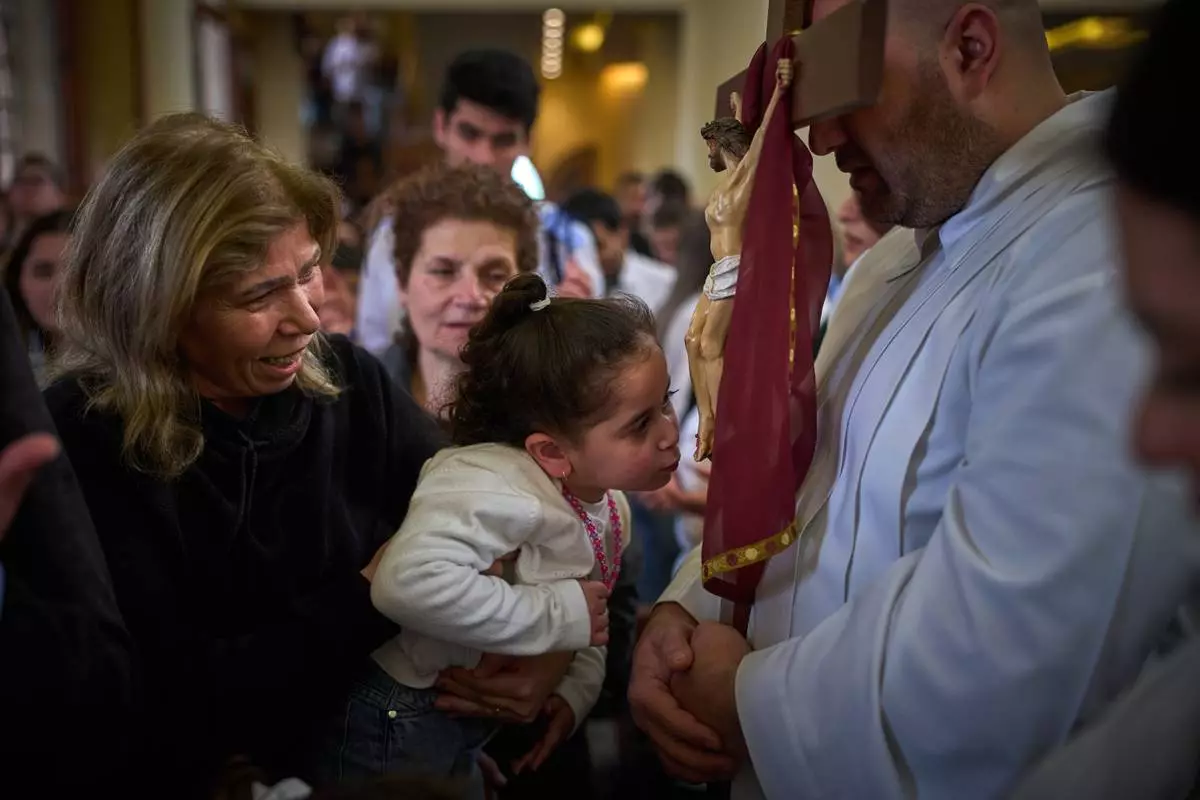
A girl kisses a cross held by a priest during Good Friday Mass at St. Anthony Church, which was devoted to expressing solidarity with Christian villagers in southern Lebanon displaced by the war in Jdeideh, a suburb of Beirut, Lebanon, Friday, April 3, 2026. (AP Photo/Emilio Morenatti)
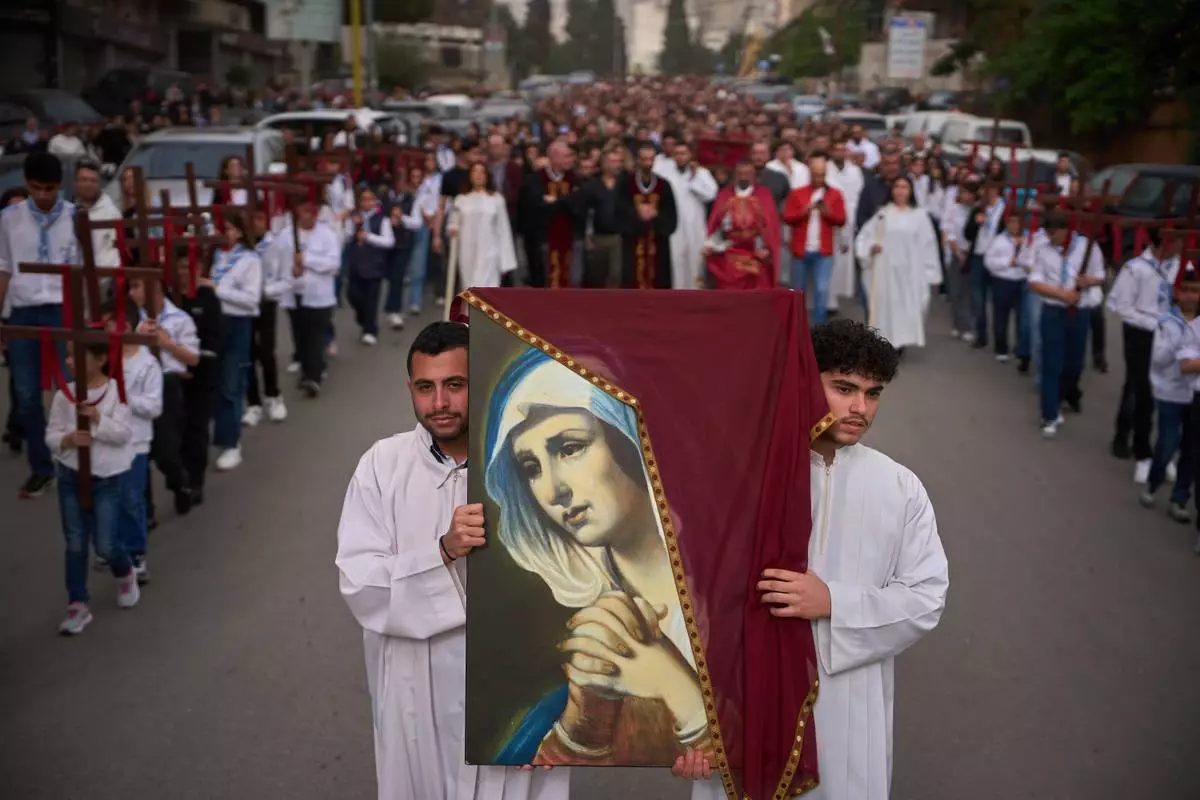
Parishioners walk in a procession after a Good Friday Mass at St. Anthony Church, which was devoted to expressing solidarity with Christian villagers in southern Lebanon displaced by the war in Jdeideh, a suburb of Beirut, Lebanon, Friday, April 3, 2026. (AP Photo/Emilio Morenatti)
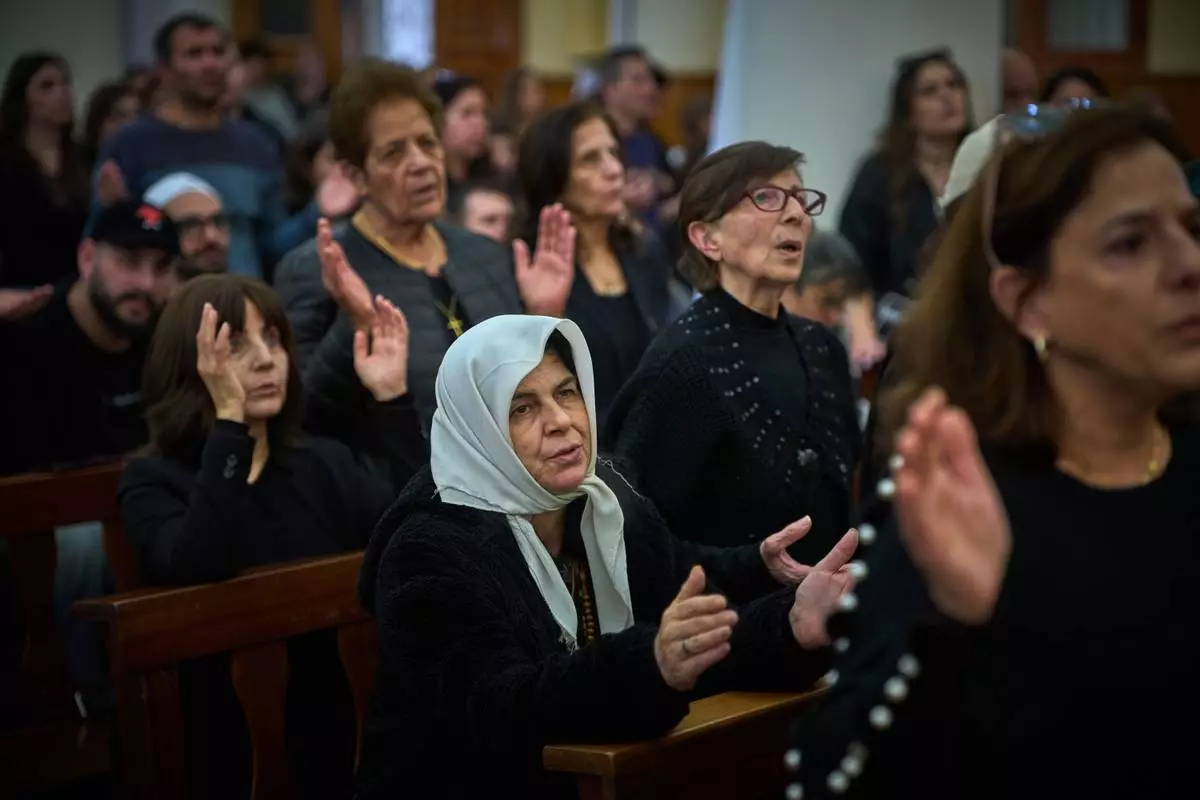
Worshipers pray during Good Friday Mass at St. Anthony Church, which was devoted to expressing solidarity with Christian villagers in southern Lebanon displaced by the war in Jdeideh, a suburb of Beirut, Lebanon, Friday, April 3, 2026. (AP Photo/Emilio Morenatti)
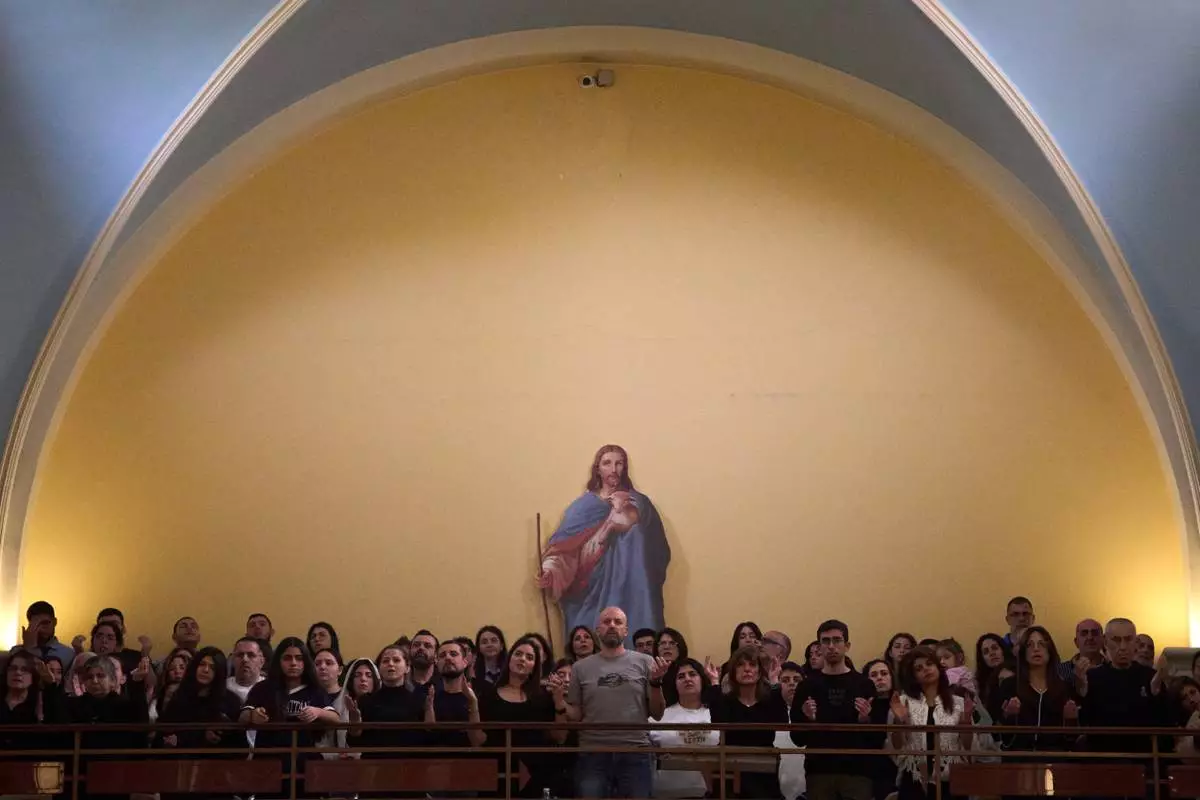
Worshipers pray during Good Friday Mass at St. Anthony Church, which was devoted to expressing solidarity with Christian villagers in southern Lebanon displaced by the war in Jdeideh, a suburb of Beirut, Lebanon, Friday, April 3, 2026. (AP Photo/Emilio Morenatti)
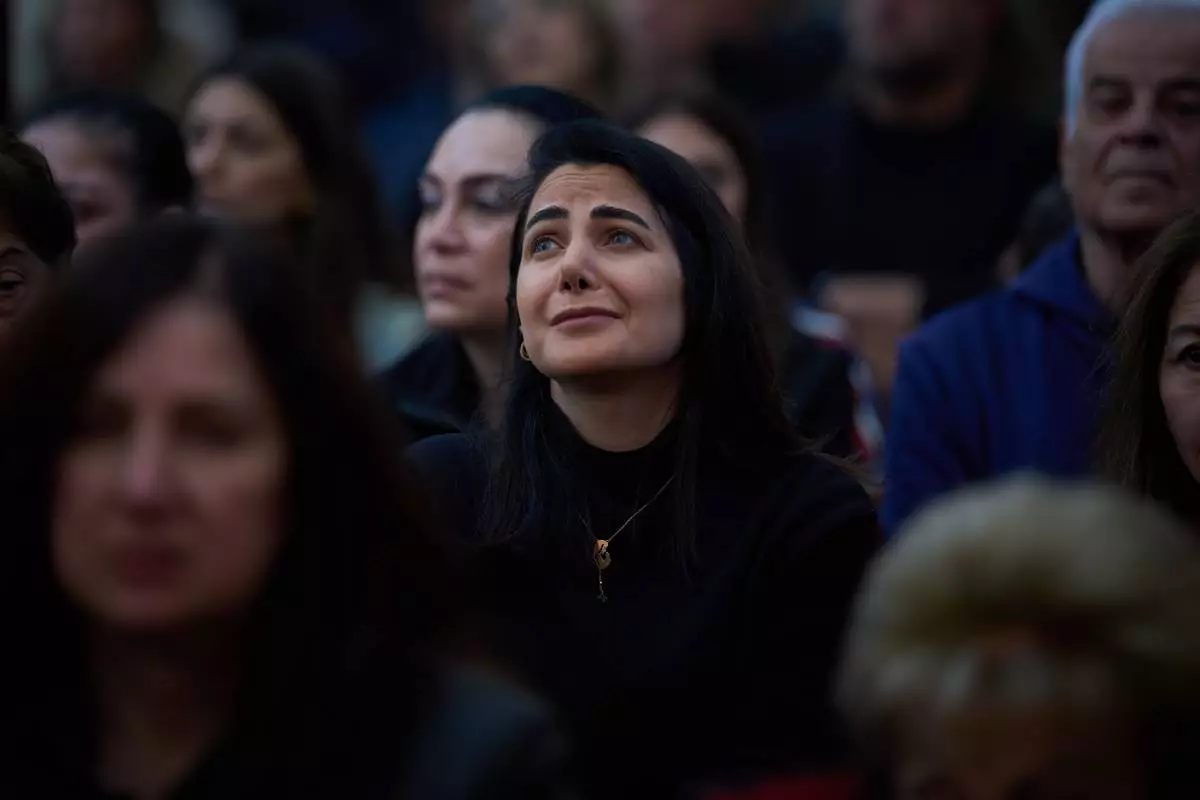
Worshipers pray during Good Friday Mass at St. Anthony Church, which was devoted to expressing solidarity with Christian villagers in southern Lebanon displaced by the war in Jdeideh, a suburb of Beirut, Lebanon, Friday, April 3, 2026. (AP Photo/Emilio Morenatti)