LONDON--(BUSINESS WIRE)--Dec 2, 2025--
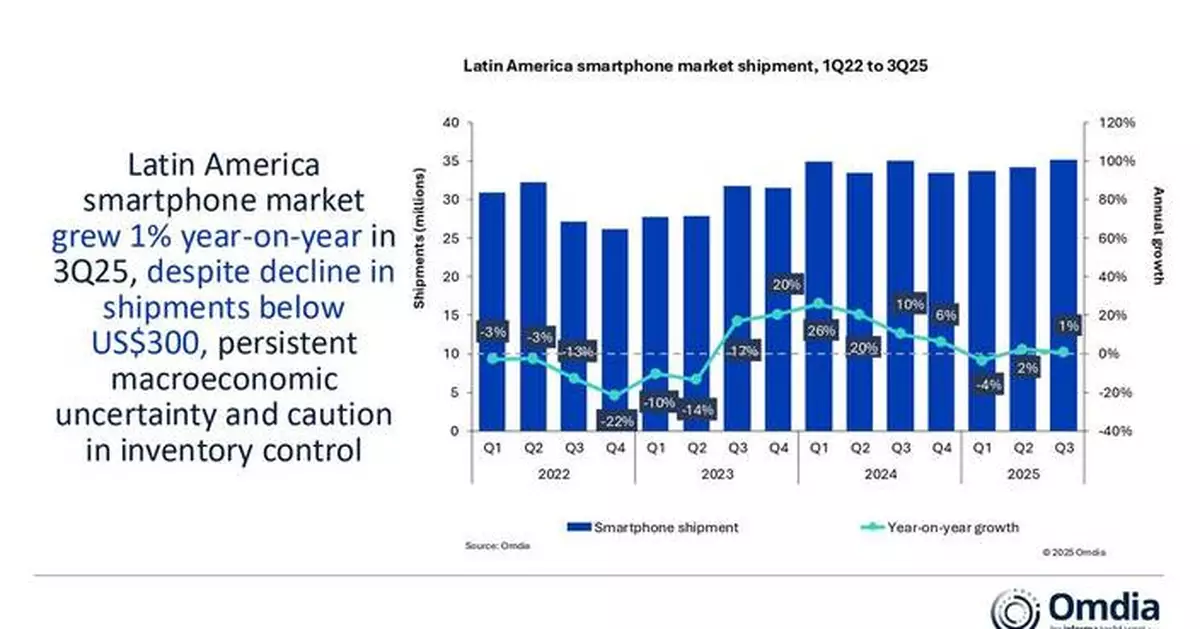
Omdia’s latest report reveals that Latin America’s smartphone market grew 1% year-over-year (YoY) in 3Q25, with shipments reaching 35.2 million units, the highest quarterly level since 4Q15. The region’s resilience amid economic uncertainty, cautious inventory management, and moderate consumption was reflected in shipments across top vendors. Samsung led with 11.6 million units and a 33% share, driven by its low-end A-series models, which accounted for 68% of its shipments. Xiaomi followed with 6.3 million units (18% share), while Motorola ranked third, marking its sixth consecutive quarter of decline with an 11% drop. HONOR, in fourth place, reached a record shipments for the third consecutive quarter with 2.9 million units, driven by growth in the Caribbean, Colombia, and Ecuador, which now represent over 40% of its shipments. TRANSSION rounded out the top five despite a 19% YoY decline.
This press release features multimedia. View the full release here: https://www.businesswire.com/news/home/20251202425561/en/
The region’s recovery was supported by growth in key markets such as Brazil and Central America, alongside rebounds in Chile, Colombia and Ecuador. Brazil, the largest market with a 29% share and 10.3 million units (up 5% YoY), saw new entrants like realme, OPPO, HONOR, and Jovi (vivo) strengthen their positions through local manufacturing and partnerships with operators and retailers. In contrast, Mexico, the second-largest market with 7.4 million units (21% share), declined by 11%, marking its fourth consecutive quarter of contraction due to reduced shipments of devices under $300, reflecting cautious inventory strategies.
Outside Brazil, other notable markets like Central America and Ecuador continued their growth trend, fueled by strong demand for low-end devices, while Colombia and Chile showed signs of recovery, supported by improved economic conditions such as inflation control, increased investment, and higher consumer spending.
Despite overall market growth, the sub-$300 segment, which accounts for 71% of total shipments, has experienced a 2% decline year-to-date through 3Q25. This drop is primarily due to ongoing inventory pressures and stalled consumer demand, coupled with vendors adjusting strategies to prioritize higher average selling prices (ASP) in pursuit of greater financial sustainability.
However, this decline has been offset by a notable 20% year-to-date increase) in shipments of high-end and premium devices priced above $500. This shift has contributed to an 8% rise in ASP in 3Q25, further intensifying competition in the high-value segment, traditionally dominated by Apple and Samsung. In response, brands such as OPPO, Xiaomi, HONOR, vivo, realme, and Google (in Mexico) are ramping up investments to strengthen their positions in this lucrative segment.
“The rise in higher-value device shipments reflects manufacturers’ efforts to maintain market share and enhance brand positioning amidst saturation in the low-end segment,” said Miguel Ángel Pérez, Senior Analyst for Latin America at Omdia. “For manufacturers with long-term ambitions, it is crucial to invest in increasing ASPs, enhancing ecosystem profitability, and fostering customer loyalty to ensure sustained financial sustainability. Stocking high-end devices in 3Q ahead of the 4Q peak sales season is a key strategy to boost sales, value, and profitability, shaping business planning for the next year.
“Despite challenging conditions, Omdia expects the Latin American smartphone market to remain flat by the end of 2025 compared to 2024, with 137.0 million units shipped. However, challenges loom for 2026. Rising memory and storage costs may increase device prices, particularly in entry-level segments, potentially hindering market growth. Manufacturers and retailers will need to adopt strategies such as subsidies, margin management, bundling, and flexible financing plans to mitigate the impact on consumers.”
ABOUT OMDIA
Omdia, part of Informa TechTarget, Inc. (Nasdaq: TTGT), is a technology research and advisory group. Our deep knowledge of tech markets grounded in real conversations with industry leaders and hundreds of thousands of data points, make our market intelligence our clients’ strategic advantage. From R&D to ROI, we identify the greatest opportunities and move the industry forward.
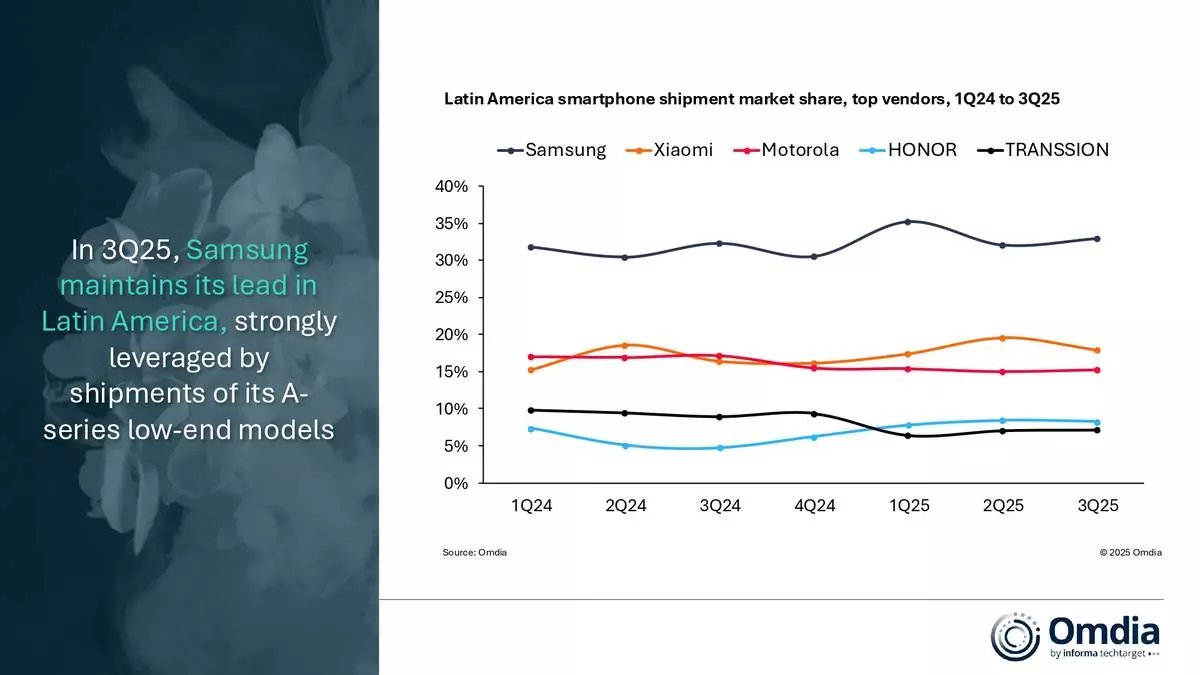
Latin America smartphone shipment market share, top vendors, 1Q24 to 3Q25

Latin America smartphone shipment market share 3Q 2025
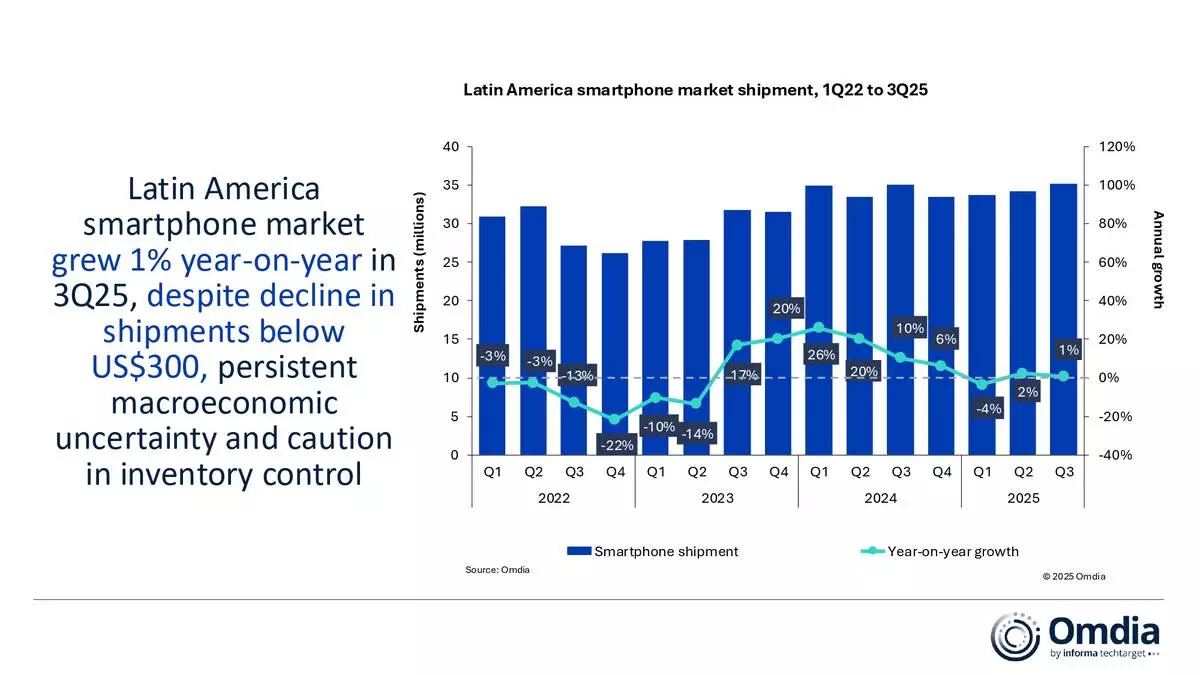
Latin America smartphone market shipment, 1Q22 to 3Q25