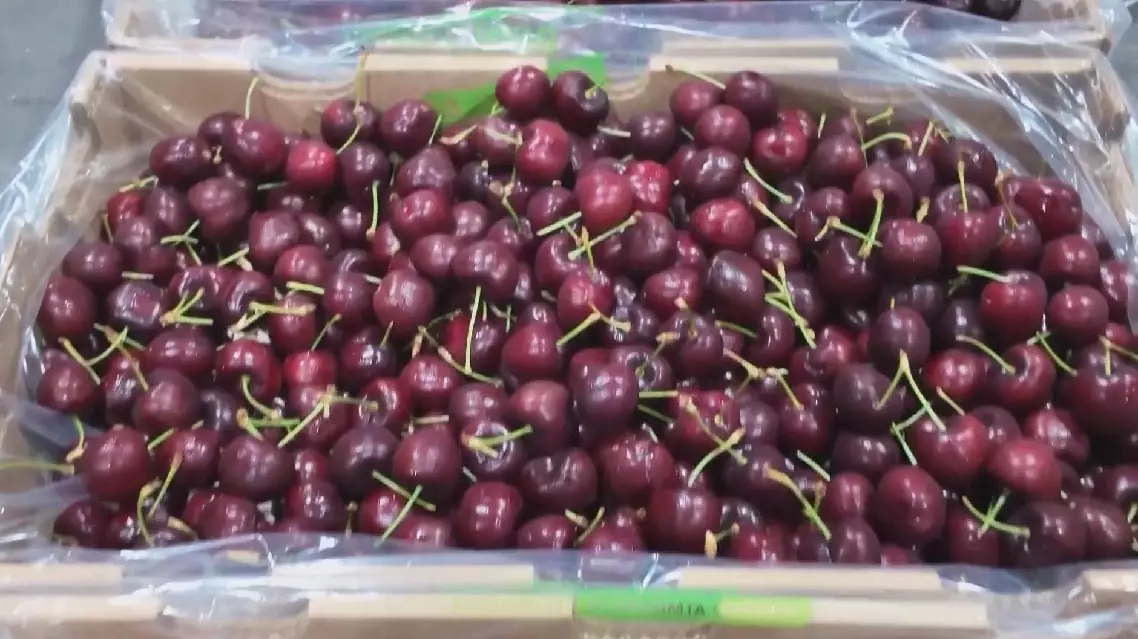
A container vessel loaded with about 1,100 tons of Chilean cherries arrived in south China's Shenzhen City in the early hours of Tuesday, marking the arrival of the first sea shipment of Chilean cherries in China for the 2025-2026 production season.
The cherries first reached Hong Kong through maritime transportation and was then delivered to Shenzhen by cross-border trucks.
After customs clearance, the cherries will be distributed to major supermarkets and fruit and vegetable wholesale markets across south China. The whole process will only take less than four hours from the vessel's arrival.
"From unloading in Hong Kong to customs clearance at the Shenzhen Bay Port, the entire process was efficient and smooth, effectively preserving the freshness and quality of the cherries," said Liu Juan, customs affairs manager of a local foreign trade company.
Following this shipment, at least one "cherry freighter' is expected to dock in the Guangdong-Hong Kong-Macao Greater Bay Area. During the last peak import season, from Nov 2024 to March 2025, Shenzhen ports handled a total of 202,000 tons of cherry imports, accounting for nearly 40 percent of the country's imported cherries, according to the Shenzhen Customs.
"We carefully calculate the variables and instantaneous peak values in cherry clearance to arrange for inspection manpower in advance. By utilizing advanced technologies such as intelligent label recognition, we have significantly shortened inspection time combining manpower and technologies, achieving fast inspection and clearance for cherries," said Wu Weiguang, a customs officer at the Shenzhen Bay Customs.
According to the Chilean Cherry Committee, the country anticipates cherry exports to reach 131 million boxes, totaling 655,000 tons in the latest season.
Of those ruby-colored fruits, 93 percent are destined for the Chinese market, with 90 percent of fresh cherries transported by sea, and direct routes to China only take 23 days, according to the Chilean Agriculture Minister.
This year, Chile has further strengthened its cherry express operations, planning 32 direct voyages, double the number from last year.
First sea shipment of Chilean cherries for 2025-2026 season arrives in China
A new China Global Television Network (CGTN) documentary explores how the historic Long March spirit is driving modern innovation, as young Chinese researchers and engineers are channeling this relentless drive to overcome critical bottlenecks in the EV and AI industries.
Titled "The Source of AI: Not a Single Rock Goes to Waste", the documentary highlights the pioneering journeys of Zhong Yu and He Pengyu.
Two years ago, Zhong made a pivotal career shift, leaving a long-established automaker to return to China and join Farasis Energy, a homegrown battery manufacturer based in Ganzhou City of east China's Jiangxi Province.
Working around the clock, Zhong and his team are developing solid-state batteries. This next-generation technology promises higher energy density and enhanced safety, having the potential to completely disrupt the current automotive landscape.
Through his research, Zhong is determined to establish China as a global leader in the battery sector.
While Zhong focuses on the power sources of the future, He Pengyu is tackling the foundational raw materials required for the EV and AI boom.
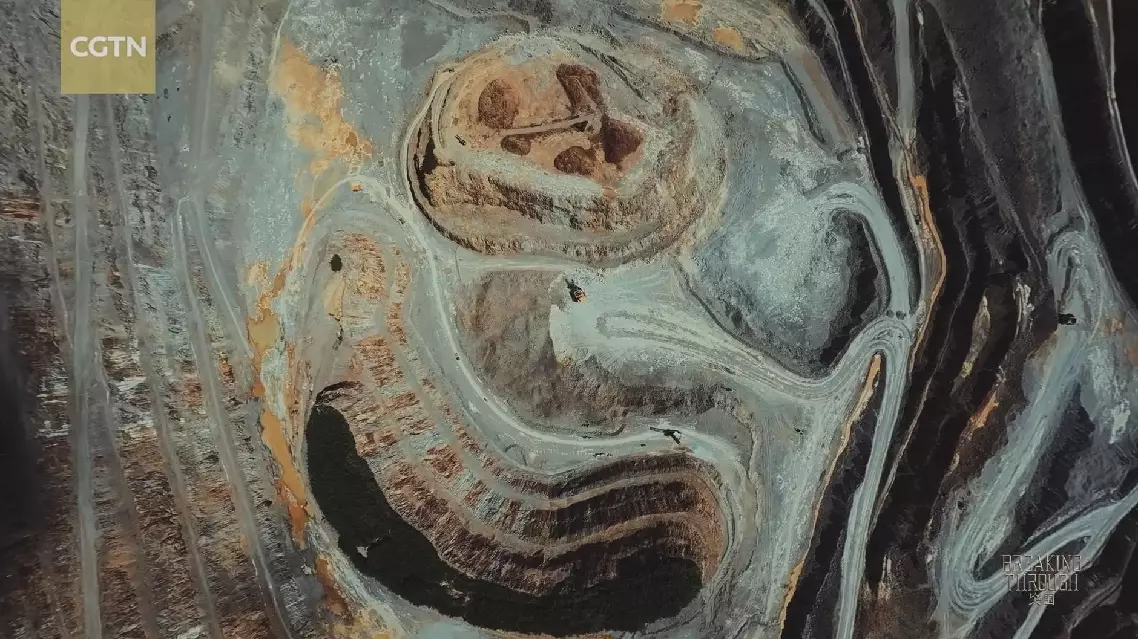
The rapid expansion of these sectors has triggered a massive surge in demand for copper and rare earth elements. However, extracting and separating these valuable minerals from raw ore has long been a formidable technical hurdle.
Without advanced equipment, China's mining industry once relied on grueling, inefficient manual sorting.
Determined to change this paradigm after returning from his studies in France, He founded HPY Sorting. The company has developed a revolutionary AI-driven optical ore sorting system capable of automatically separating waste rock from valuable ore.
Processing up to 300 tons of ore per hour, this intelligent sorting technology is now deployed in mines across the world, replacing tasks that once relied on human experience with precision-driven algorithms and automated machinery.
He Pengyu hopes that through his innovation, not a single rock goes to waste.
The documentary is part of CGTN's "Breaking Through" series, which traces China's journey from the historic Long March undertaken by the Red Army nine decades ago to its modern-day achievements, highlighting the resilience, ingenuity, and determination of its people.
Long March spirit drives critical breakthroughs in China's EV, AI industries: documentary