WASHINGTON (AP) — With Tuesday's White House Cabinet meeting chugging past the two-hour mark, President Donald Trump 's eyes fluttered and closed. His budget director busied himself doodling a fluffy cloud. Defense Secretary Pete Hegseth was lucky enough to speak early, but the title on his nameplate was misspelled.
The sleepy, and occasionally slipshod, gathering nonetheless ended with a flurry of news. Trump declared that he didn't want Somalis in the U.S. and Hegseth cited the “ fog of war ” in defending a follow-up strike on an alleged drug-carrying boat in the Caribbean Sea in September.
Click to Gallery
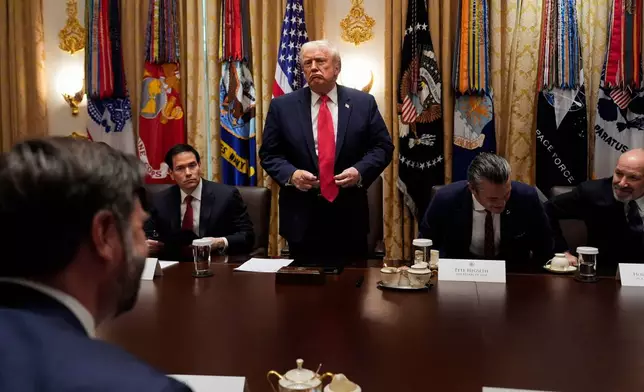
President Donald Trump stands up to depart following a Cabinet meeting at the White House, Tuesday, Dec. 2, 2025, in Washington. (AP Photo/Julia Demaree Nikhinson)
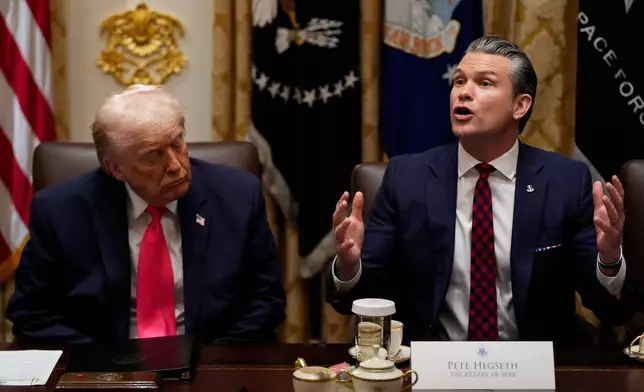
President Donald Trump closes his eyes as Defense Secretary Pete Hegseth speaks during a Cabinet meeting at the White House, Tuesday, Dec. 2, 2025, in Washington. (AP Photo/Julia Demaree Nikhinson)
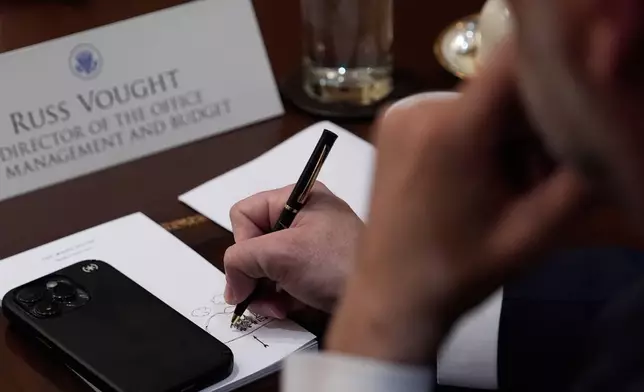
Russ Vought, Director of the Office of Management and Budget, attends the Cabinet meeting at the White House, Tuesday, Dec. 2, 2025, in Washington. (AP Photo/Julia Demaree Nikhinson)
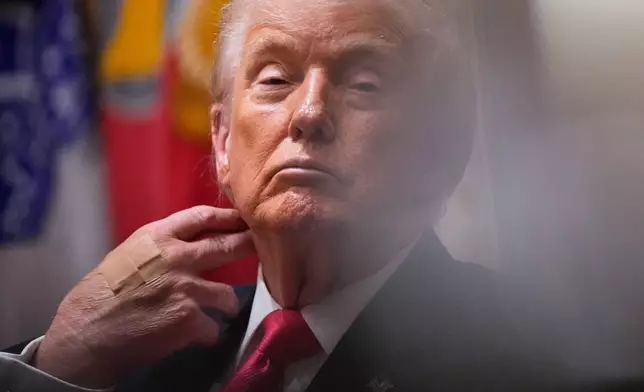
President Donald Trump listens during a Cabinet meeting at the White House, Tuesday, Dec. 2, 2025, in Washington. (AP Photo/Julia Demaree Nikhinson)
The president started things off by noting that it was the last time his Cabinet would gather until 2026. And, though marathon sessions with his top advisers lavishing praise have become a Trump trademark since he returned to the White House, this latest installment felt at times like a holiday break was needed.
Trump offered lengthy opening comments largely rehashing his key previous policy announcements from recent months. He also repeated old grievances, going back to his falsehoods about having won the 2020 election.
The president then gave each Cabinet member a chance to speak, declaring, “We're gonna go quickly.” That did little to stop most Cabinet members from offering long presentations.
Hegseth went first and praised the Trump administration's move to rename his agency the Department of War — something that can't be officially done without an act of Congress. But the nameplate in front of Hegseth labeled him the “ssecretary of war,” including a mistaken double “S” that quickly became the source of searing online ridicule.
After that, as each official took turns speaking, a TV camera trained on Trump showed him struggling to stay alert. The president sat back in his chair with his eyes occasionally drooping and sometimes shutting completely.
Trump's apparent sleepiness followed his criticism of a recent New York Times story examining his schedule and stamina at age 79. Trump again slammed the Times story early in Tuesday's meeting and even slipped into the third person to assure all involved that “Trump is sharp.”
Another indication that things were dragging came from budget director Russell Vought, who was spotted sketching a bucolic scene on White House letterhead.
Vought drew mountains framed by pine trees topped by the kind of friendly-seeming clouds that public television legend Bob Ross preferred to crowd his serene landscape paintings with. The budget chief also sketched an arrow underneath his mountain. Where it was supposed to be pointing was not clear.
Just as Trump's admonishments to keep things tight were flouted, some of the Cabinet members also defied the president in their presentations when it came to the issue of affordability.
Trump made a point in his opening remarks to call concerns that Democrats have raised about rising costs a “con job." That didn't stop many of his administration's top voices from earnestly detailing how they were indeed seeking to reduce prices nationwide.
Agriculture Secretary Brooke Rollins talked about economic pressures on farmers, Treasury Secretary Scott Bessent called affordability a “crisis," and Housing and Urban Development Secretary Scott Turner said that hundreds of thousands of Americans becoming first-time homebuyers was an example of how the administration was making strides to achieve greater affordability.
The final speaker was Secretary of State Marco Rubio, who spoke for several minutes and acknowledged: “I know I’m last, so I wanted to be fast. But there’s a lot to cover."
All told, Tuesday's gathering lasted more than two hours. That fell short of Trump's Cabinet meeting record: an August marathon that stretched to a whopping three hours and 17 minutes.
Still, even the president acknowledged that the latest meeting was going long. “We're spending a lot of time in here," he said.
Trump wrapped things by taking questions from reporters, but only after jokingly asking, “After that, do you WANT to ask any questions?” He also pointed at a journalist holding a boom mic to capture sound from the Cabinet meeting and playfully offered, “How strong are you?”
“You've been holding that for two hours,” the president continued, drawing laughs from Cabinet members. “There are very few people who could do that. I'm very proud of you.”
Reporters' questions shook off the doldrums.
Hegseth said he did not see that there were survivors in the water when the second strike on the boat off Venezuela was ordered and launched in early September. He said “the thing was on fire” and cited the “fog of war” in defending what occurred. He also said he “didn’t stick around” for the remainder of the Sept. 2 mission following the initial strike.
In response to a later question, Trump declared he didn't want Somali immigrants in the U.S., adding that residents of the war-ravaged eastern African country should stay there and try to fix their homeland. He also accused Somalis of being too reliant on U.S. aid programs while offering little to the nation in return.
That drew applause from his Cabinet, though the questions ended abruptly with journalists soon hustled out of the room. Trump punctuated the conclusion by slapping his hand twice on the table, pushing his chair back, standing up and thumping Hegseth on the shoulder.
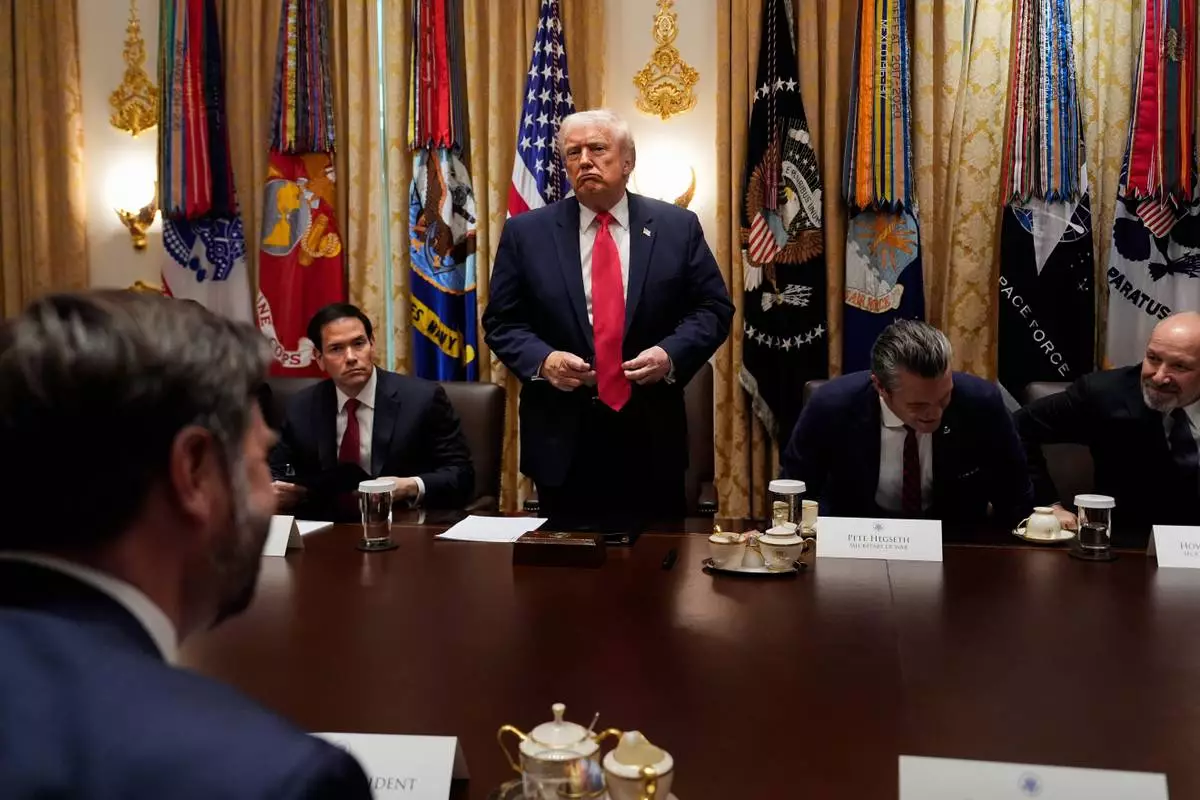
President Donald Trump stands up to depart following a Cabinet meeting at the White House, Tuesday, Dec. 2, 2025, in Washington. (AP Photo/Julia Demaree Nikhinson)
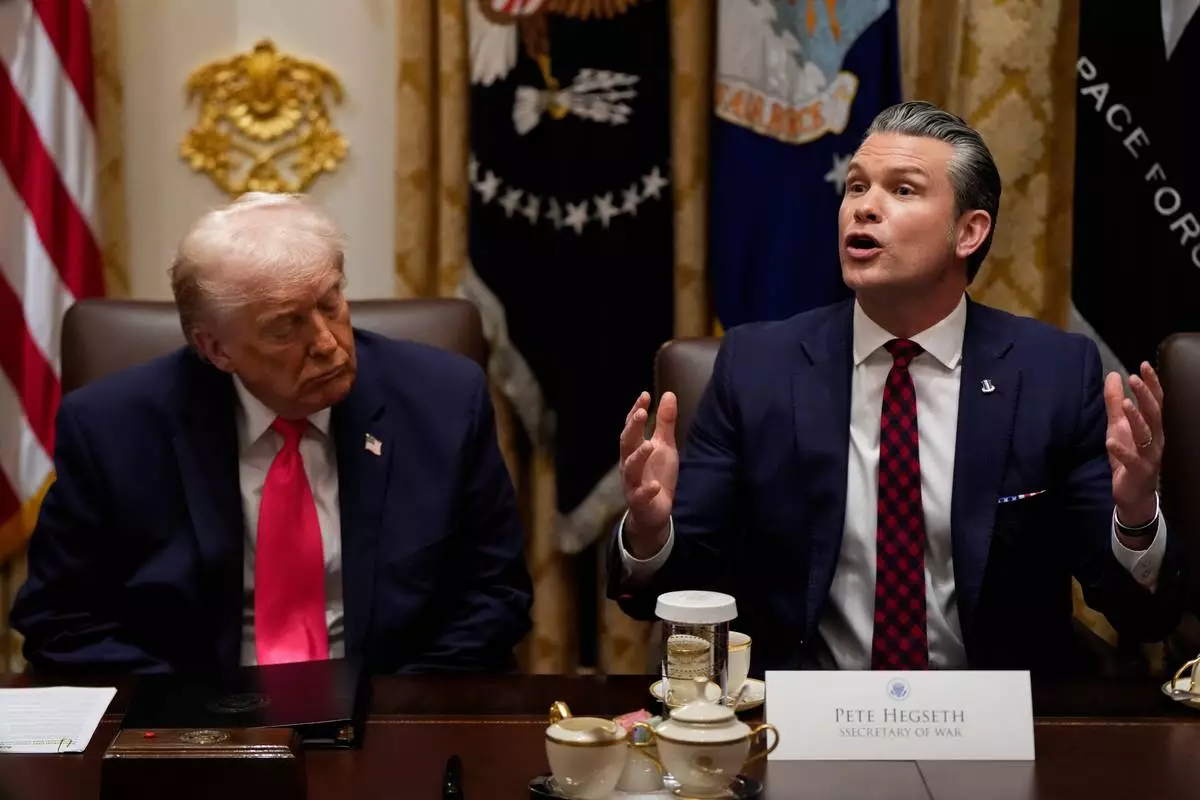
President Donald Trump closes his eyes as Defense Secretary Pete Hegseth speaks during a Cabinet meeting at the White House, Tuesday, Dec. 2, 2025, in Washington. (AP Photo/Julia Demaree Nikhinson)
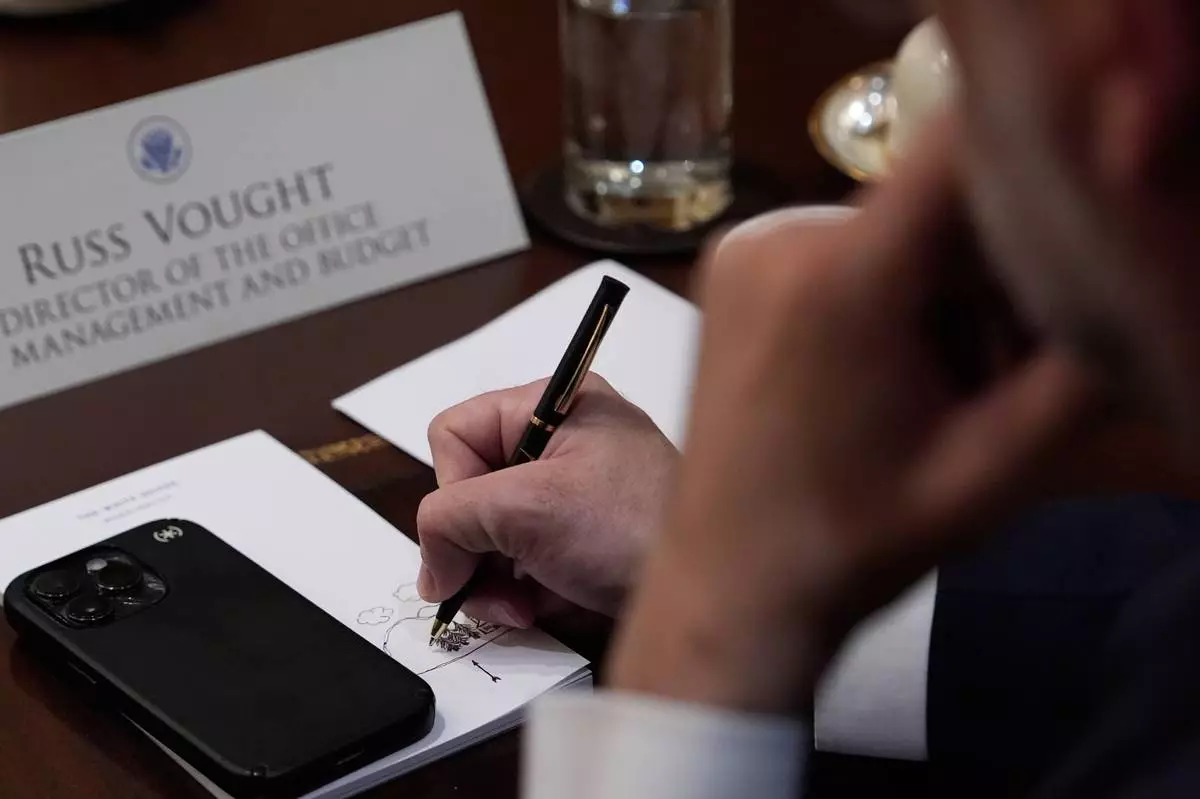
Russ Vought, Director of the Office of Management and Budget, attends the Cabinet meeting at the White House, Tuesday, Dec. 2, 2025, in Washington. (AP Photo/Julia Demaree Nikhinson)
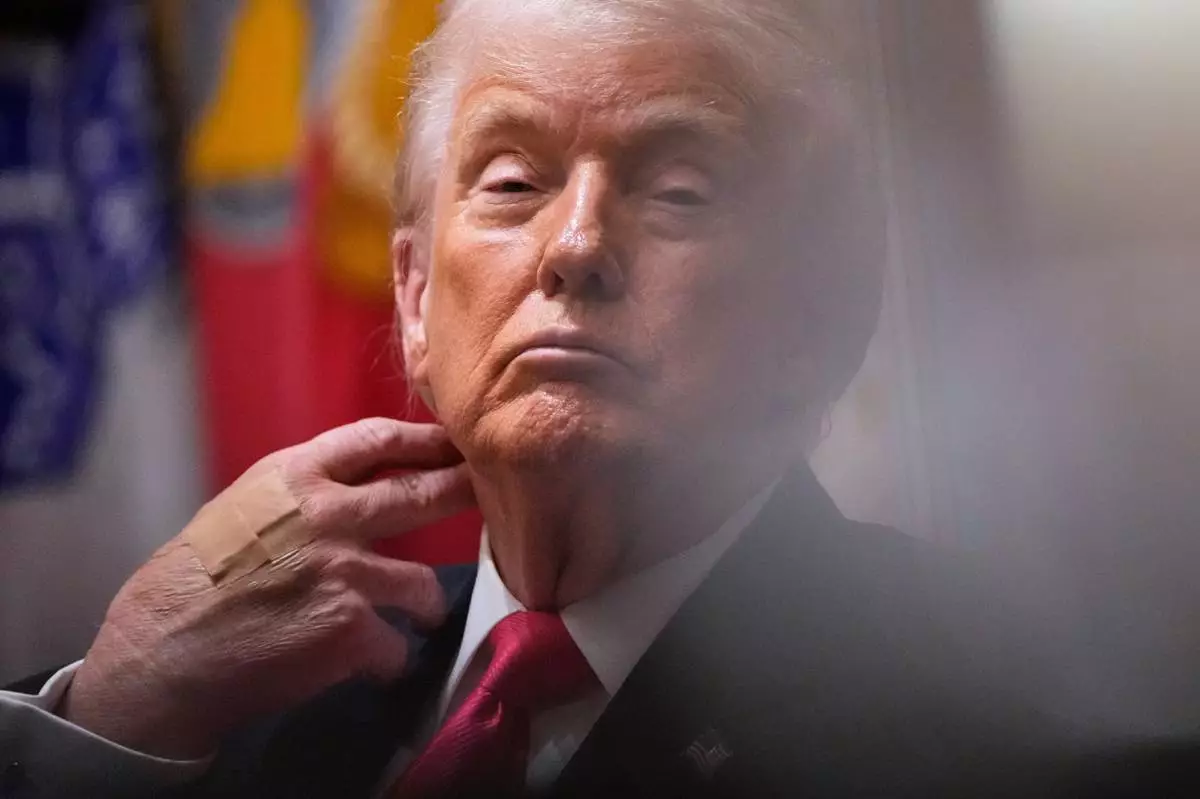
President Donald Trump listens during a Cabinet meeting at the White House, Tuesday, Dec. 2, 2025, in Washington. (AP Photo/Julia Demaree Nikhinson)
The Virginia Supreme Court on Friday struck down a voter-approved Democratic congressional redistricting plan, delivering another major setback to the party in a nationwide battle against Republicans for an edge in this year's midterm elections.
The court ruled 4-3 that the state's Democratic-led legislature violated procedural requirements when it placed the constitutional amendment on the ballot to authorize the mid-decade redistricting. Voters narrowly approved the amendment April 21, but the court's ruling renders the results of that vote meaningless.
Writing for the majority, Justice D. Arthur Kelsey wrote that the legislature submitted the proposed constitutional amendment to voters “in an unprecedented manner.”
“This violation irreparably undermines the integrity of the resulting referendum vote and renders it null and void," he wrote.
Democrats had hoped to win as many as four additional U.S. House seats under Virginia's redrawn U.S. House map as part of an attempt to offset Republican redistricting done elsewhere at the urging of President Donald Trump. That ruling, combined with a recent U.S. Supreme Court decision severely weakening the Voting Rights Act, has supercharged the Republicans' congressional gerrymandering advantage heading into this year's midterm elections.
Richard Hudson, chairman of the National Republican Congressional Committee said the ruling was another sign of GOP momentum heading into the midterms.
"We’re on offense, and we’re going to win,” he said in a statement.
Don Scott, the Democratic speaker of the Virginia House of Delegates, said Democrats respect the court’s opinion but lamented that it overturned the will of the voters: “They voted YES because they wanted to fight back against the Trump power grab.”
Suzan DelBene, chairwoman of the Democratic Congressional Campaign Committee, criticized the court majority for what she said was a decision that “cast aside the will of the voters,” but she said the people will have the final say.
“In November, they will, and they’ll power Democrats to the House majority,” she said in a statement.
Legislative voting districts typically are redrawn once a decade after each census to account for population changes. But Trump started an unusual flurry of mid-decade redistricting last year when he encouraged Republican officials in Texas to redraw districts in a bid to win several additional U.S. House seats and hold on to their party's narrow majority in the midterm elections.
California responded with new voter-approved districts drawn to Democrats' advantage, and Utah's top court imposed a new congressional map that also helps Democrats. Meanwhile, Republicans stand to gain from new House districts passed in Florida, Missouri, North Carolina, Ohio and Tennessee. They could add even more after the U.S. Supreme Court's ruling in the Voting Rights Act case, which has prompted some other Republican states to consider redrawing their maps in time for this year’s elections.
Virginia currently is represented in the U.S. House by six Democrats and five Republicans who were elected from districts imposed by a court after a bipartisan redistricting commission failed to agree on a map after the 2020 census. The new districts could have given Democrats an improved chance to win all but one of the state's 11 congressional seats.
The Supreme Court's majority was critical of the state’s redrawing of the congressional maps to benefit one political party. Those justices noted that 47% of the state’s voters supported GOP congressional candidates in 2024 but the new map could result in Democrats making up 91% of the state’s House delegation.
Under the Democratic-drawn map, five districts would have been anchored in the Democratic stronghold of northern Virginia, including one stretching out like a lobster to consume Republican-leaning rural areas. Revisions to four other districts across Richmond, southern Virginia and Hampton Roads would have diluted the voting power of conservative blocs in those areas. And a reshaped district in parts of western Virginia would have lumped together three Democratic-leaning college towns to offset other Republican voters.
The state Supreme Court’s seven justices are appointed by the state legislature, which has toggled back and forth between Democratic, Republican and split control over recent years. Legal experts say the body doesn’t have a set ideological profile
The case before the court focused not on the shape of the new districts but rather on the process the General Assembly used to authorize them.
Because the state’s redistricting commission was established by a voter-approved constitutional amendment, lawmakers had to propose an amendment to redraw the districts. That required approval of a resolution in two separate legislative sessions, with a state election sandwiched in between, to place the amendment on the ballot.
The legislature’s initial approval of the amendment occurred last October — while early voting was underway but before it concluded on the day of the general election. The legislature’s second vote on the amendment occurred after a new legislative session began in January. Lawmakers also approved a separate bill in February laying out the new districts, subject to voter approval of the constitutional amendment.
Judicial arguments focused on whether the legislature’s initial approval of the amendment came too late, because early voting already had begun for the 2025 general election.
Attorney Matthew Seligman, who defended the legislature, argued that the “election” should be defined narrowly to mean the Tuesday of the general election. In that case, the legislature’s first vote on the redistricting amendment occurred before the election and was constitutional, he told judges.
But, the Supreme Court said in its ruling, “this view appears to be wholly unprecedented in Virginia’s history.”
An attorney for the plaintiffs, Thomas McCarthy, argued that an “election” should be interpreted to cover the entire period during which people can cast ballots, which lasts several weeks in Virginia. If that’s the case, he told justices, then the legislature’s initial endorsement of the redistricting amendment came too late to comply with the state constitution.
The Supreme Court agreed with that argument, writing: “The General Assembly passed the proposed constitutional amendment for the first time well after voters had begun casting ballots during the 2025 general election.”
By the time lawmakers initially endorsed the constitutional amendment, statewide voters already had cast more than 1.3 million ballots in the general election, about 40% of the total votes ultimately cast, the court said.
The Supreme Court’s ruling affirms a decision by a judge in rural Tazewell County, in southwestern Virginia. The court had placed a hold on that ruling and allowed the redistricting vote to proceed before hearing arguments on the case.
In the dissent to Friday's ruling, Chief Justice Cleo Powell said the election for the purpose of considering the amendment does not include the early voting period.
“The majority’s definition creates an infinite voting loop that appears to have no established beginning,” she wrote, “only a definitive end: Election Day.”
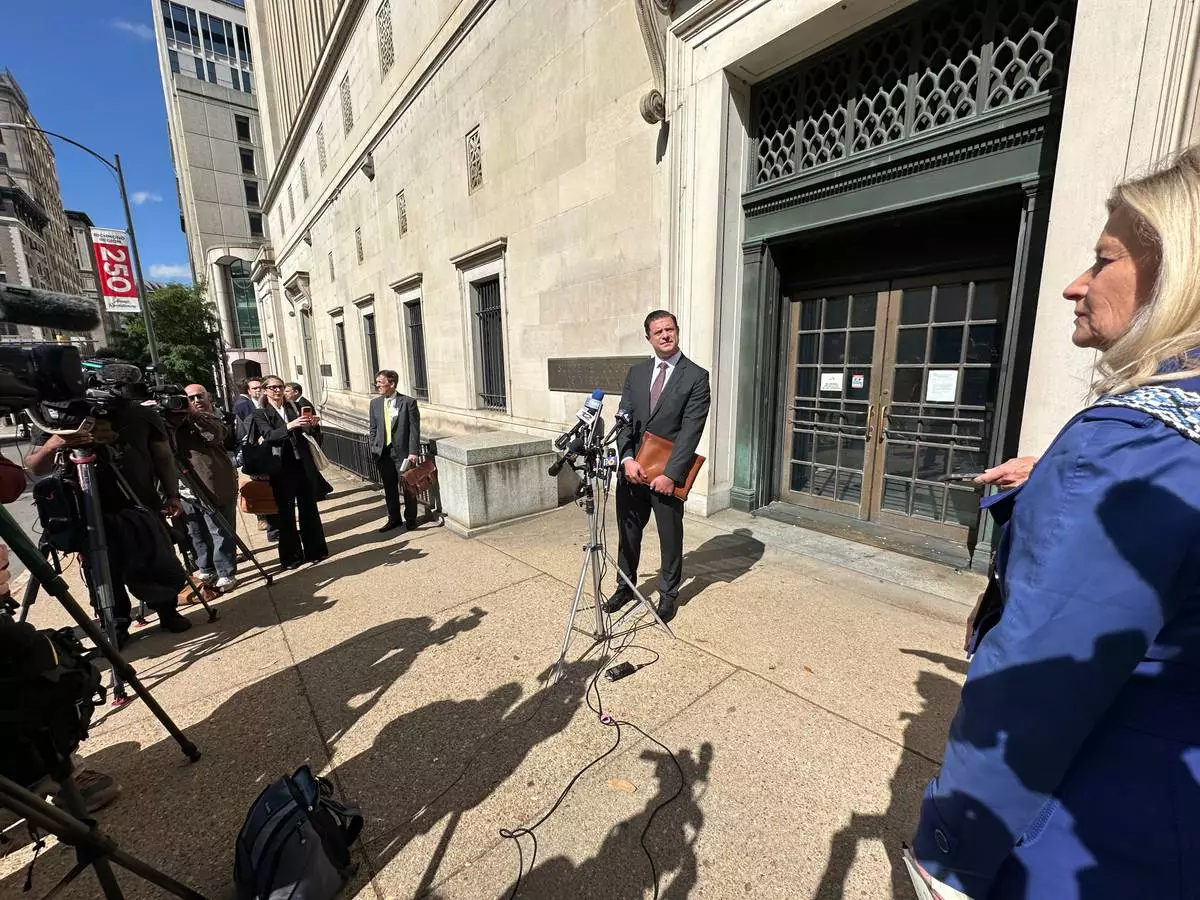
Attorney Matthew Seligman, representing Democratic state legislators, speaks with the media following a hearing on new congressional maps before the state Supreme Court in Richmond, Va., on Monday, April 27, 2026. (AP Photo/Allen G. Breed)
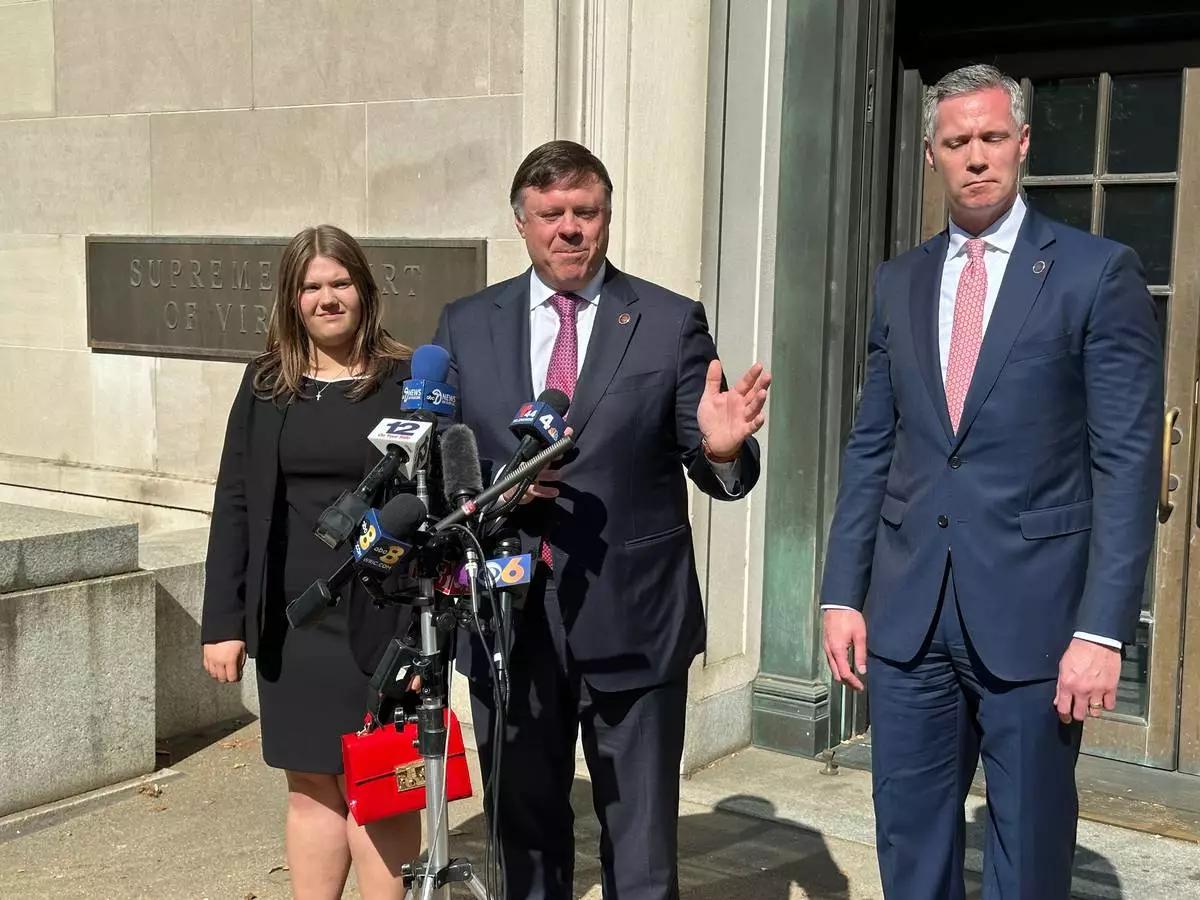
State Senate Minority Leader Ryan McDougle, center, speaks outside the Supreme Court of Virginia after arguments were heard in a redistricting-related case at the court in Richmond, Va., on Monday, April 27, 2026. (AP Photo/Allen G. Breed)