Skip to Content Facebook Feature Image

Myanmar opium cultivation hit highest level in a decade, UN report says

News

Myanmar opium cultivation hit highest level in a decade, UN report says
News

News

Myanmar opium cultivation hit highest level in a decade, UN report says

2025-12-03 15:04 Last Updated At:15:10

KUALA LUMPUR, Malaysia (AP) — Opium poppy cultivation in Myanmar surged to its highest level in a decade this year as the nation engaged in a civil war remains one of the world’s primary suppliers of illicit drugs, according to a United Nations survey.

The growth solidifies Myanmar’s position as the world’s main known source of illicit opium, especially following sharp declines in production in Afghanistan after the ruling Taliban imposed a ban following their 2021 takeover.

The Myanmar Opium Survey 2025, issued Wednesday by the United Nations Office on Drugs and Crime, found the area where opium is cultivated expanded by 17% from 2024 to 53,100 hectares (131,212 acres), the largest area since 2015.

UNODC also has described Myanmar as the largest methamphetamine producer in the world. Meth is easier to make on an industrial scale than labor-intensive opium and is distributed as tablets and crystal meth by land, sea and air around Asia and the Pacific.

Opium, which is processed into morphine and heroin, is harvested from poppy flowers and Myanmar's farmers have pushed deeper into harvesting as the country faces widespread poverty and instability during the country's ongoing civil war that erupted after its army ousted the elected government of Aung San Suu Kyi in February 2021.

A key driver of Myanmar's production growth has been surging opium prices. Fresh opium now fetches about $329 per kilogram, more than double the 2019 price of $145. The opium economy in Myanmar is worth about $641 million to $1.05 billion, which is roughly 0.9% to 1.4% of the country’s 2024 GDP, the report said.

The increase in cultivated land helped offset a 13% dip in average yields caused by intensifying conflict in some areas, resulting in a 1% rise in opium production to about 1,010 metric tons (1,113 tons), the report said.

The increase also reversed a slight drop last year in cultivation and production and signaled an upswing in the country’s entrenched drug trade. Myanmar already saw growth in cultivation and production from 2021 through 2023, driven by the civil war, the report said.

“Myanmar stands at a critical moment,” said Delphine Schantz, UNODC Representative for Southeast Asia and the Pacific. “This major expansion in cultivation shows the extent to which the opium economy has re-established itself over the past years — and points to potential further growth in the future.”

There were emerging signs that heroin from Myanmar is reaching markets in Europe previously supplied by Afghanistan, with several seizures over the past year that involved passengers travelling from Southeast Asia to Europe. While volume wasn't significant, it pointed to growing demand beyond the region to fill the gap left by Afghanistan's output collapse, the UNODC survey said.

“Driven by the intensifying conflict, the need to survive and the lure of rising prices, (Myanmar) farmers are drawn to poppy cultivation,” Schantz said. “Unless viable alternative livelihoods are created, the cycle of poverty and dependence on illicit cultivation will only deepen.”

Northeastern Myanmar is part of the infamous “Golden Triangle,” where the borders of Myanmar, Laos and Thailand meet. The production of opium and heroin historically flourished there, largely because of lawlessness in border areas where Myanmar’s central government exercises only minimum control over various ethnic minority militias, some of them partners in the drug trade.
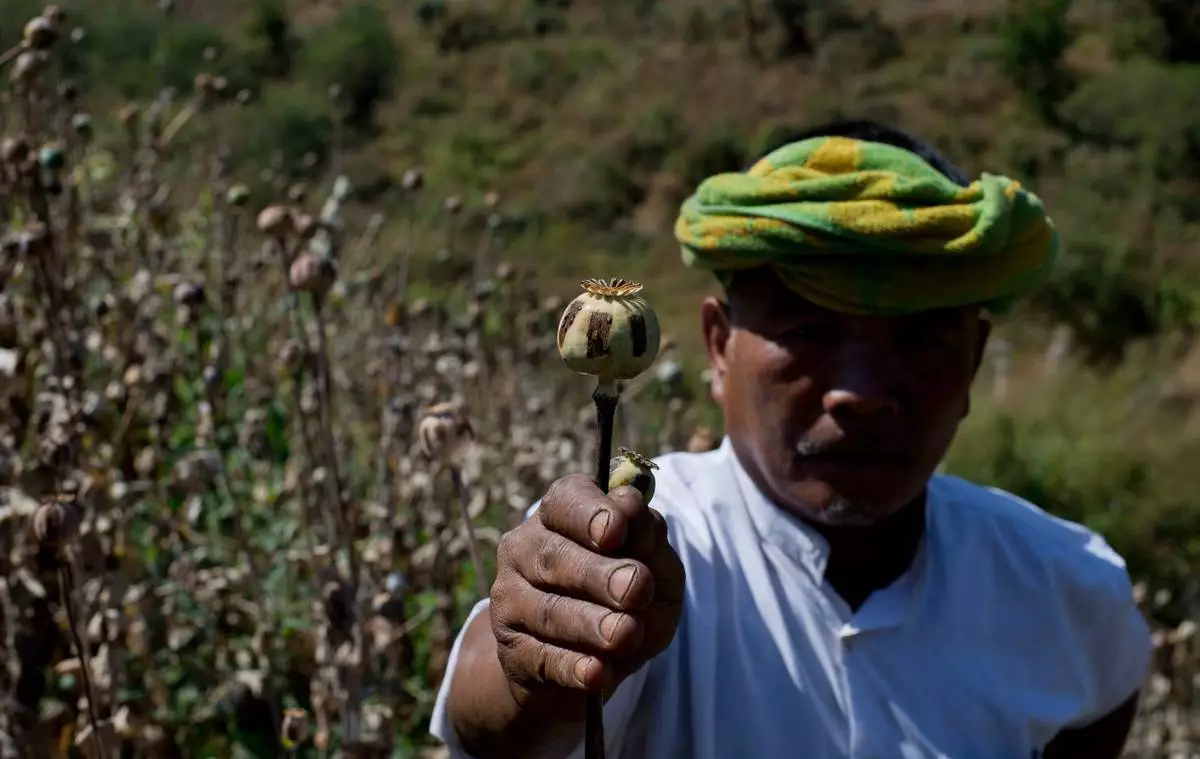
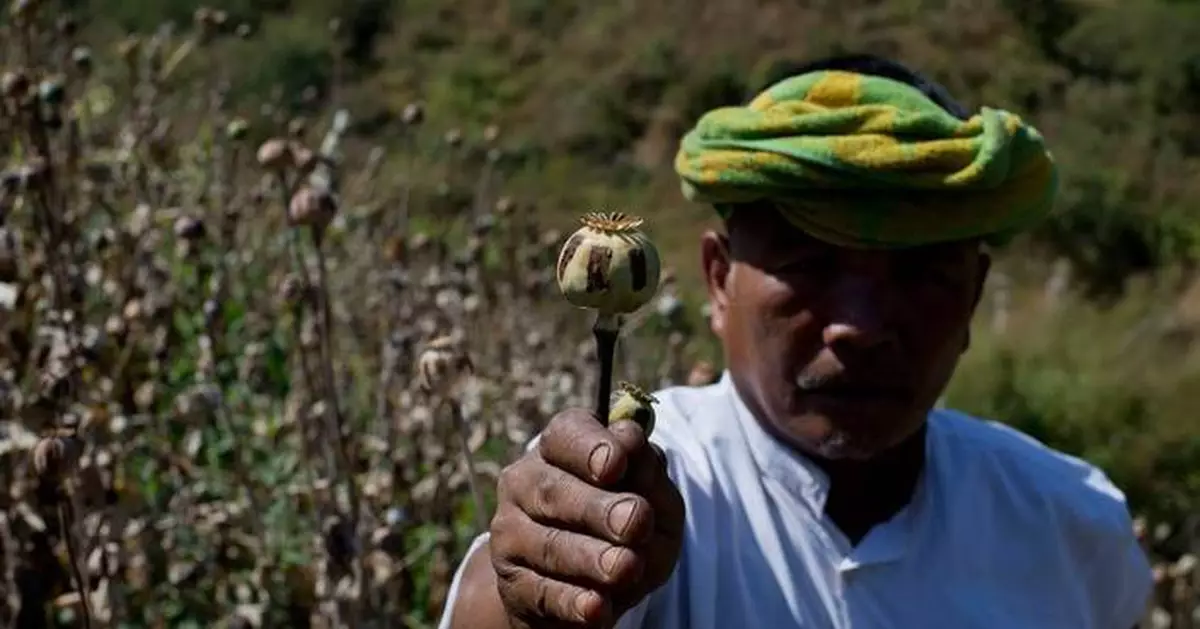
FILE - Ethnic Pa-O poppy farmer holds a harvested poppy stem with dried-up opium sap in a poppy cultivation in central Shan state, Myanmar on Feb. 19, 2013. (AP Photo/Gemunu Amarasinghe, File)


FILE - Ethnic Pa-O poppy farmer holds a harvested poppy stem with dried-up opium sap in a poppy cultivation in central Shan state, Myanmar on Feb. 19, 2013. (AP Photo/Gemunu Amarasinghe, File)

DENVER (AP) — Marcus Pettersson scored with 5:39 remaining, Brock Boeser had a hat trick and the last-place Vancouver Canucks blew a four-goal lead before beating the NHL-leading Colorado Avalanche 8-6 on Wednesday night.

The Canucks, who entered the game 58 points behind the Avalanche, scored in all sorts of ways, including 29 seconds into the game, short-handed, on the power play and into an empty net to snap a six-game slide.

They led 6-2 in the second only to see Colorado tie it up with 6:02 left. Just 23 seconds later, Pettersson knocked in his first goal since November. Boeser sealed it by lining the puck down the ice and into an empty net.

Teddy Blueger scored twice, while Max Sasson and Jake DeBrusk also added goals to spoil a night in which Nathan MacKinnon became the first player this season to reach 50 goals. Vancouver took advantage of the Avalanche juggling their defensive pairings with Cale Makar sidelined by an upper-body injury.

Kevin Lankinen made 24 saves.

Sam Malinski scored twice, while Gabriel Landeskog, Parker Kelly and Brent Burns also scored. MacKinnon notched his second 50-goal campaign of his career with his score early in the first.

Colorado goaltender Mackenzie Blackwood was pulled with 4:39 left in the second after allowing six goals on 19 shots. Scott Wedgewood stopped five shots in relief.

The Avalanche were rolling after a 9-2 win over Calgary on Monday.

Before fans had a chance to settle into their seats, the Canucks were up 1-0. Sasson's goal 29 seconds into the game was the fastest by the Canucks since Oct. 22, 2024 (21 seconds).

Burns had a goal and an assist as he played in his 999th straight game. The all-time Ironman streak belongs to Phil Kessel, who skated in 1,064 consecutive games.

Canucks: At Minnesota on Thursday.

Avalanche: At Dallas on Saturday.

AP NHL: https://apnews.com/hub/nhl

Vancouver Canucks center Teddy Blueger, front, scores a goal past Colorado Avalanche goaltender MacKenzie Blackwood in the first period of an NHL hockey game, Wednesday, April 1, 2026, in Denver. (AP Photo/David Zalubowski)

Vancouver Canucks center Teddy Blueger, front, scores a goal past Colorado Avalanche goaltender MacKenzie Blackwood in the first period of an NHL hockey game, Wednesday, April 1, 2026, in Denver. (AP Photo/David Zalubowski)

Colorado Avalanche center Nathan MacKinnon reacts after scoring his 50th goal of the season in the first period of an NHL hockey game against the Vancouver Canucks Wednesday, April 1, 2026, in Denver. (AP Photo/David Zalubowski)

Colorado Avalanche center Nathan MacKinnon reacts after scoring his 50th goal of the season in the first period of an NHL hockey game against the Vancouver Canucks Wednesday, April 1, 2026, in Denver. (AP Photo/David Zalubowski)

Vancouver Canucks right wing Brock Boeser, left, collects the puck as Colorado Avalanche left wing Joel Kiviranta defends in the second period of an NHL hockey game, Wednesday, April 1, 2026, in Denver. (AP Photo/David Zalubowski)

Vancouver Canucks right wing Brock Boeser, left, collects the puck as Colorado Avalanche left wing Joel Kiviranta defends in the second period of an NHL hockey game, Wednesday, April 1, 2026, in Denver. (AP Photo/David Zalubowski)

Vancouver Canucks center Linus Karlsson, left, congratulates center Max Sasson after his goal against the Colorado Avalanche in the first period of an NHL hockey game Wednesday, April 1, 2026, in Denver. (AP Photo/David Zalubowski)

Vancouver Canucks center Linus Karlsson, left, congratulates center Max Sasson after his goal against the Colorado Avalanche in the first period of an NHL hockey game Wednesday, April 1, 2026, in Denver. (AP Photo/David Zalubowski)

Recommended Articles