China has become the leading contributor to the worldwide earnings of Disney animation Zootopia 2, underscoring the vast potential and critical importance of Chinese film market as a driver of growth for the global film industry, according to an industry expert.
According to data from online platforms, as of 17:00 Monday, Zootopia 2's global box office had reached 818 million U.S. dollars, with the Chinese market contributing 278 million U.S. dollars, accounting for 33.9 percent of the global total.
Industry experts said the success of Zootopia 2 in China demonstrates that the Chinese film market is now mature, open, and inclusive, and has become a crucial revenue source for high-quality global films.
"This achievement particularly highlights the vast market foundation, immense consumption demand, and potential of China's film industry. The Chinese market's embrace of excellent films reflects the strong resilience of our film industry and our open and inclusive attitude toward globally advanced cinematic achievements. It especially underscores that the Chinese film market is a vital growth engine for the global film industry," said Zhang Jinfeng, deputy editor-in-chief of China Film News.
For most Chinese moviegoers, the film's refined visual production and storytelling were key factors driving its success.
"The animation and visual design are very well done, and so is the storyline," said an audience member.
"I think its pacing and innovative elements really resonate with children," said another moviegoer.
Amid the box office frenzy for Zootopia 2, nearly 83.3 percent of all film screenings in China are dedicated to Zootopia 2 as of Sunday.

Zootopia 2 box office highlights China's role as global film industry growth engine: expert
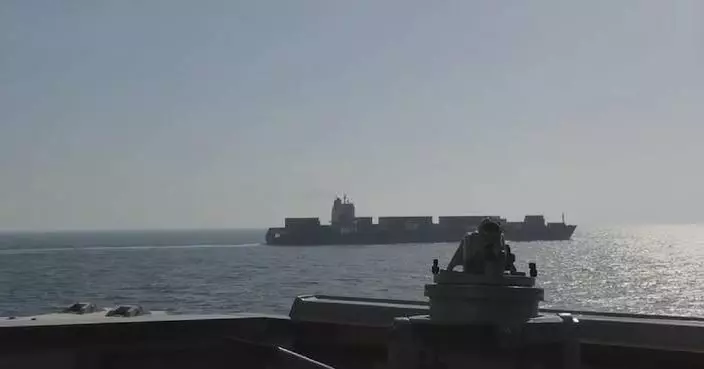
Iran has prepared a new law that will further tighten control over the Strait of Hormuz, including bans on Israeli-linked vessels, the Fars news agency reported on Sunday.
Mohammad Rezaei-Kouchi, chairman of the Iranian Parliament's Civil Engineering Committee, announced on Sunday that the draft law is nearing finalization.
According to details of the draft law, ships and cargoes connected to Israel would be completely prohibited from passing through the strait. Vessels from countries Iran considers hostile would require approval from the country's Supreme National Security Council.
Countries that have previously caused damage to Iran would be barred until they pay compensation.
The proposed rules would also require all vessels to pay transit fees exclusively in Iranian rials. Of the revenue collected, 30 percent would be allocated to strengthening Iran's armed forces, while 70 percent would be used to improve people's livelihood.
The moves come amid tensions between the United States and Iran escalated over the Strait of Hormuz.
Iran's Islamic Revolutionary Guard Corps Navy reimposed a blockade on the strait on Saturday, citing the U.S. failure to lift its naval blockade on Iranian ports in violation of a ceasefire commitment.
Bloomberg reported, based on shipping tracking data, at least 13 oil tankers turned back that day, and no vessels were observed transiting the strait on Sunday.
Iran has tightened control over the Strait of Horumuz since Feb 28, when it barred passage to vessels belonging to or affiliated with Israel and the United States after the two countries' joint strikes on Iranian territory.
The United States later imposed its own blockade on the waterway after peace negotiations with Iran in Pakistan's Islamabad collapsed.

Iran nears approval of new law to tighten control over Strait of Hormuz: official