Skip to Content Facebook Feature Image

Florida starts redistricting talks in a growing battle for House control in 2026 elections

News

Florida starts redistricting talks in a growing battle for House control in 2026 elections
News

News

Florida starts redistricting talks in a growing battle for House control in 2026 elections

2025-12-05 06:32 Last Updated At:06:40

TALLAHASSEE, Fla. (AP) — Florida’s Republican-controlled House officially kicked off the first meeting of its select committee on congressional redistricting Thursday, as the state becomes the latest to consider redrawing electoral maps amid a partisan battle for every edge in next year’s midterm elections.

But the prospect of mid-decade redistricting in President Donald Trump's adopted home state remains uncertain, with the top Republican on the committee stopping short of committing to draft new maps and appearing to draw a deeper divide among his party's leaders on how the process should move forward.

More Images
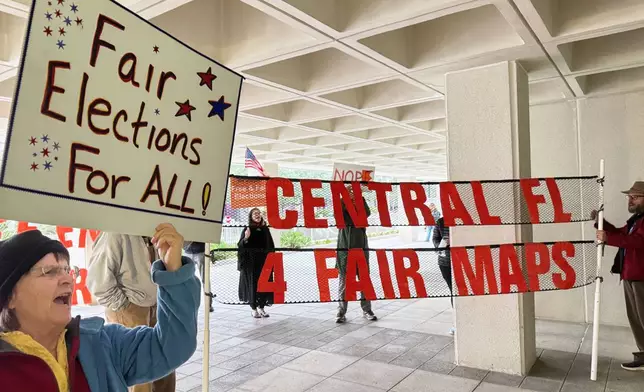
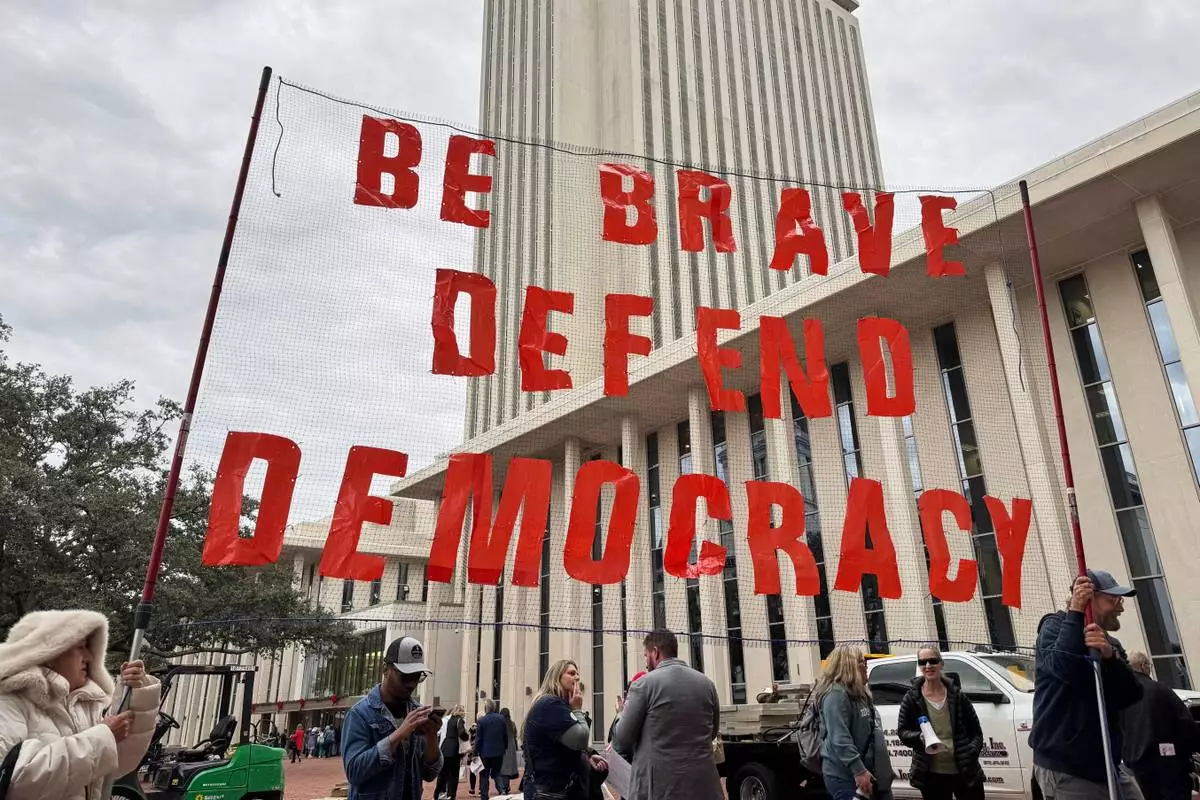
Protestors opposed to mid-decade redistricting wave signs outside of Florida’s Capitol building in Tallahassee, Fla. on Dec. 4, 2025. (AP Photo/Kate Payne)
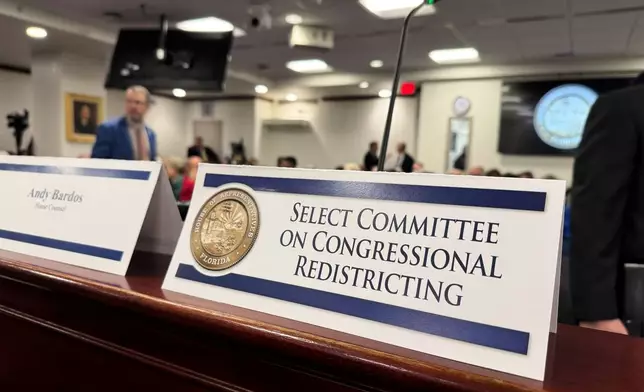
Protestors opposed to mid-decade redistricting wave signs outside of Florida’s Capitol building in Tallahassee, Fla. on Dec. 4, 2025. (AP Photo/Kate Payne)

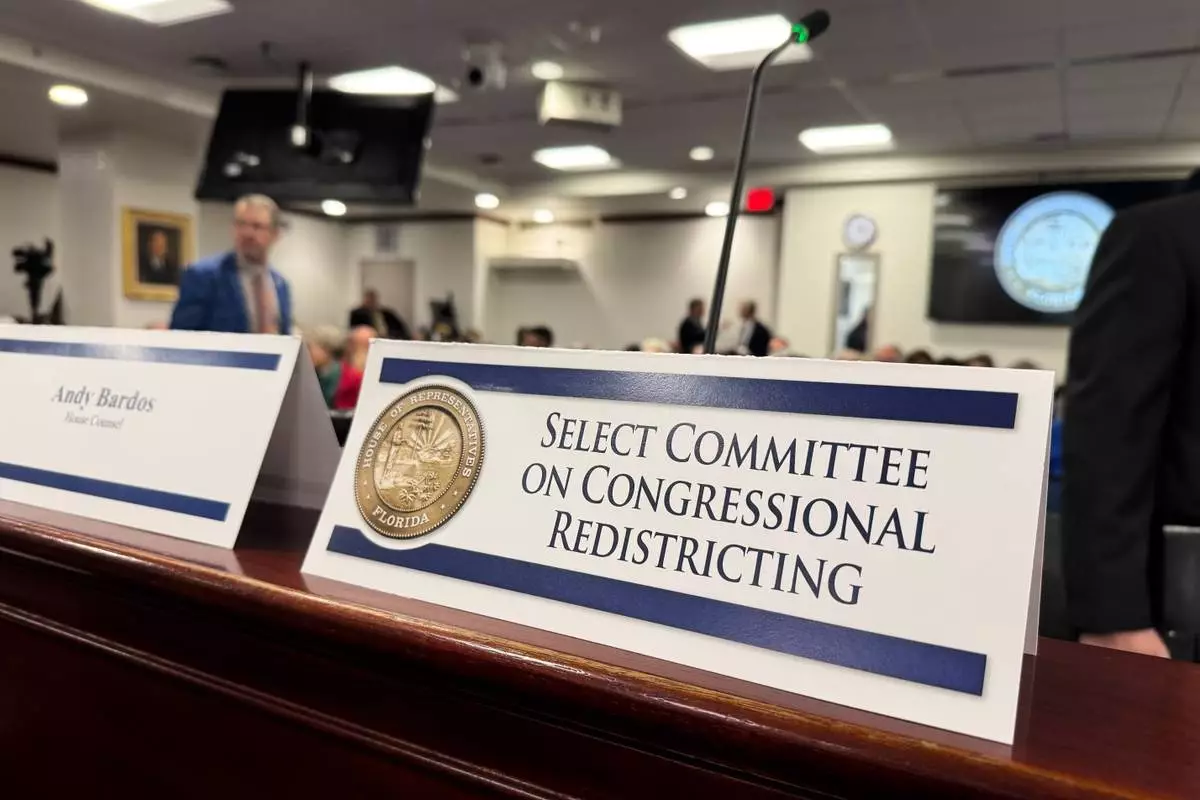
The Florida House kicks off the first meeting of its select committee on congressional redistricting at the Florida Capitol in Tallahassee, Fla. on Dec. 4, 2025. (AP Photo/Kate Payne)
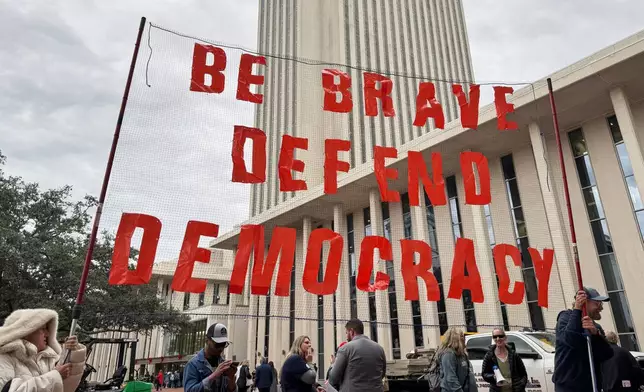
The Florida House kicks off the first meeting of its select committee on congressional redistricting at the Florida Capitol in Tallahassee, Fla. on Dec. 4, 2025. (AP Photo/Kate Payne)

Protestors opposed to mid-decade redistricting hold a sign outside of the Florida Capitol in Tallahassee, Fla. on Dec. 4, 2025. (AP Photo/Kate Payne)
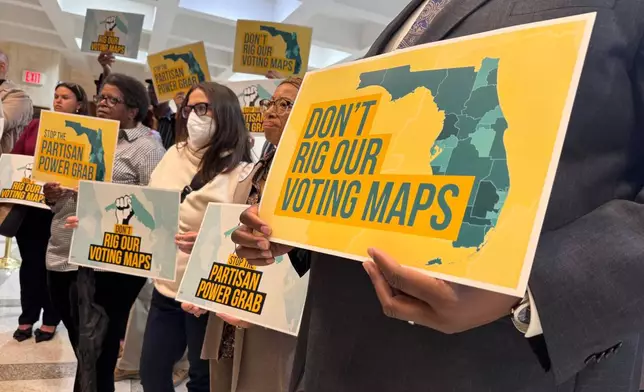
Protestors opposed to mid-decade redistricting hold a sign outside of the Florida Capitol in Tallahassee, Fla. on Dec. 4, 2025. (AP Photo/Kate Payne)

Opponents of mid-decade efforts to redraw congressional voting districts gather to protest in the Florida Capitol in Tallahassee, Fla., Dec. 2, 2025. (AP Photo/Kate Payne)

Opponents of mid-decade efforts to redraw congressional voting districts gather to protest in the Florida Capitol in Tallahassee, Fla., Dec. 2, 2025. (AP Photo/Kate Payne)

Republican state Rep. Mike Redondo, who chairs the committee, cemented his chamber's commitment to consider redistricting during Florida's regular session, which runs from Jan. 13 to March 13 — saying it would be “irresponsible" to wait until next spring, as the GOP-controlled state Senate and Republican Gov. Ron DeSantis have called for.

“It would be irresponsible to the citizens of Florida,” to delay the process, Redondo said.

The national wave of redistricting efforts was instigated by Trump, who hopes to buck the historical trend of the president’s party losing seats in midterms, and his allies are wagering that Florida could yield three to five more seats for Republicans. Each seat is crucial, because Democrats need a net gain of just three to control the chamber.

At Thursday's meeting, Redondo declared that any map drawing in Florida would not be done for partisan gain, a pledge that drew loud laughs from the crowd largely made up of progressive protesters and voting rights advocates.

“Our work as a committee and as a legislative body is not directed by the work of other states or partisan gamesmanship,” Redondo said, his words temporarily drowned out by laughter.

Opponents of the effort had crowded the meeting room in the bowels of the House office building on Thursday, only to be told lawmakers would not be hearing the testimony they had traveled hours to give. Instead, the committee got a slideshow presentation on the basics of redistricting, before gaveling out more than 30 minutes before the hourlong meeting was slated to end.

Donna Gillroy, who traveled more than 300 miles (482 kilometers) from Naples, Florida, to attend the meeting, described the proceedings as “death by PowerPoint.”

The push for redistricting faces still major challenges in Florida because of bitter infighting between DeSantis and leaders in the GOP-dominated Legislature, along with a provision in the state Constitution that explicitly bars redrawing maps with the intent to “favor or disfavor a political party or an incumbent.”

DeSantis has voiced support for redistricting and even called for a redo of the 2020 U.S. census, claiming that Florida was shortchanged in the count, which determines how many congressional seats each state gets. Florida currently has 28 congressional seats, with a Republican-Democratic split of 20-8.

“We are going to press this issue,” DeSantis said in August.

This week, in an interview with online outlet The Floridian, DeSantis floated the possibility of calling lawmakers back in a special session if they do not get redistricting done in the regular session.

The state Senate has declined to wade into the fray so far.

Senate President Ben Albritton, also a Republican, has said there is “no ongoing work” on the matter in his chamber, citing the governor's desire to address it in the spring.

Civil liberties and voting rights organizations have maintained that any redistricting for partisan gain in Florida is unconstitutional.

“To redraw the lines for partisan reasons is illegal. Period, full stop,” said Genesis Robinson, executive director of the voter engagement organization Equal Ground.

Nationwide, midcycle redistricting has resulted in nine more congressional seats that Republicans believe they can win and six that Democrats think they can win. The redistricting is being litigated in several states, however, and there is also no guarantee that the parties will win the remapped seats.

The last time Florida redrew its maps in 2022, DeSantis took over what is typically a legislature-led process, vetoing the maps drawn by lawmakers and muscling through his own, which dismantled two traditionally Black districts. Black lawmakers staged a sit-in on the House floor in protest of what they declared an overreach of executive power.

DeSantis argued that the previous maps — which kept the districts of Black representatives largely intact — represented racial gerrymandering. Earlier this year, the Florida Supreme Court upheld the maps pushed by DeSantis, finding that restoring the previously united Black communities in Florida’s Panhandle region would amount to impermissible racial gerrymandering in violation of the U.S. Constitution’s equal protection guarantees.

The ruling had weakened a provision in the state Constitution barring racial gerrymandering, but it left intact the ban against partisan mapmaking, citizen-led amendments that Florida voters approved in 2010.

Kate Payne is a corps member for The Associated Press/Report for America Statehouse News Initiative. Report for America is a nonprofit national service program that places journalists in local newsrooms to report on undercovered issues.
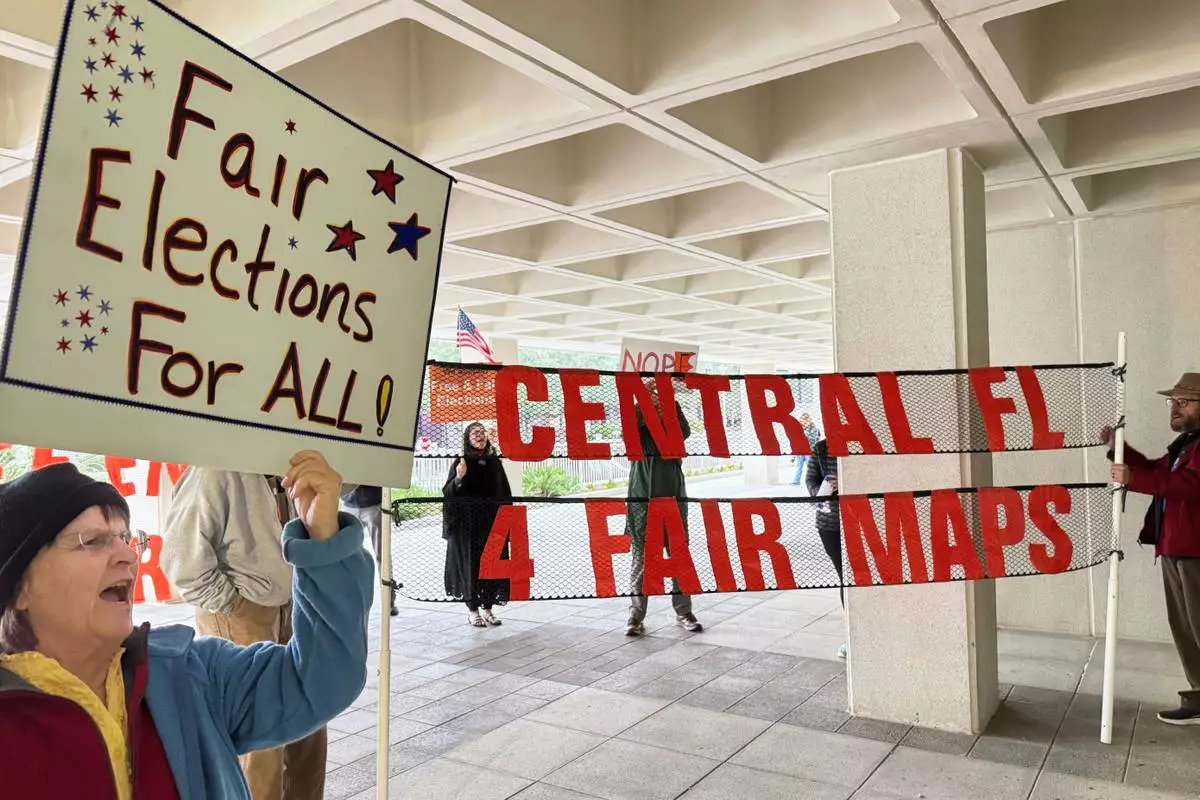
Protestors opposed to mid-decade redistricting wave signs outside of Florida’s Capitol building in Tallahassee, Fla. on Dec. 4, 2025. (AP Photo/Kate Payne)
Protestors opposed to mid-decade redistricting wave signs outside of Florida’s Capitol building in Tallahassee, Fla. on Dec. 4, 2025. (AP Photo/Kate Payne)

The Florida House kicks off the first meeting of its select committee on congressional redistricting at the Florida Capitol in Tallahassee, Fla. on Dec. 4, 2025. (AP Photo/Kate Payne)
The Florida House kicks off the first meeting of its select committee on congressional redistricting at the Florida Capitol in Tallahassee, Fla. on Dec. 4, 2025. (AP Photo/Kate Payne)

Protestors opposed to mid-decade redistricting hold a sign outside of the Florida Capitol in Tallahassee, Fla. on Dec. 4, 2025. (AP Photo/Kate Payne)
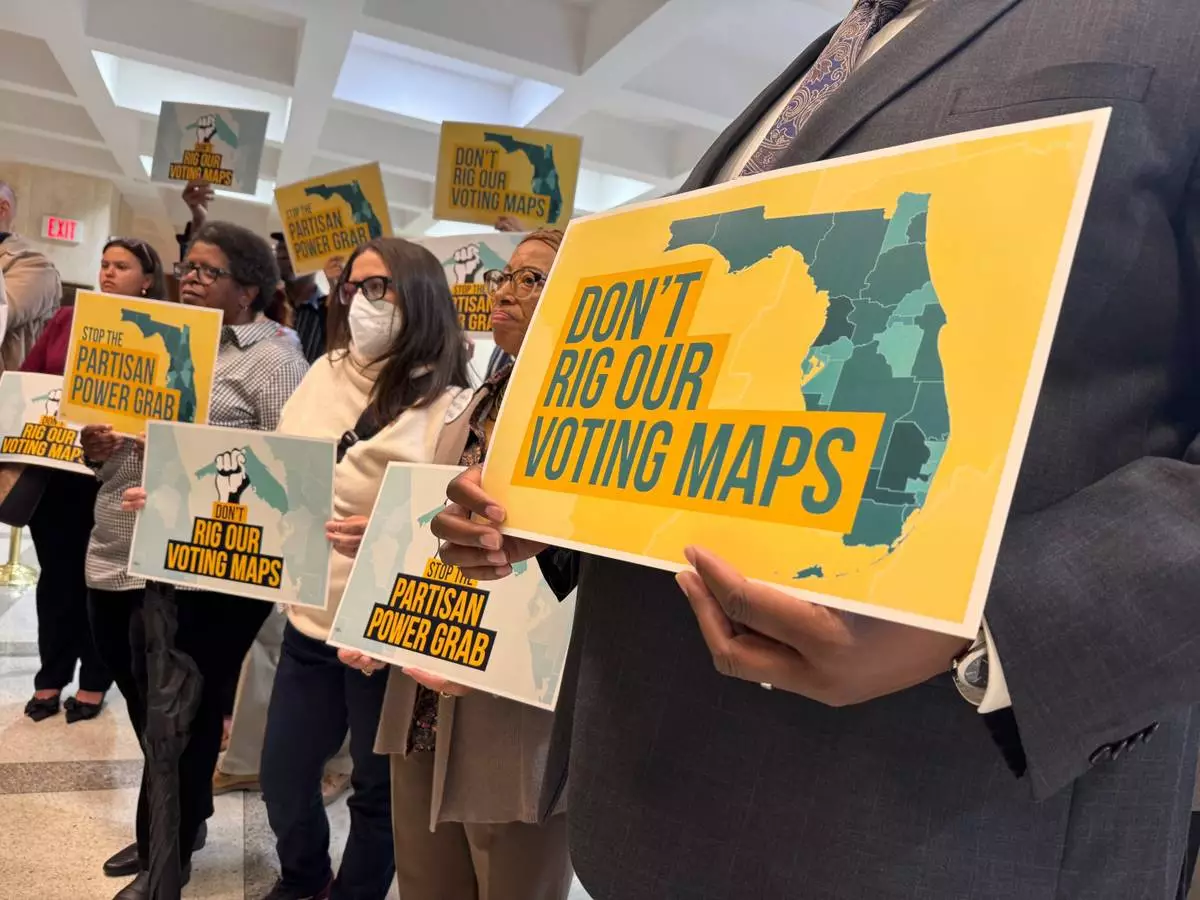
Protestors opposed to mid-decade redistricting hold a sign outside of the Florida Capitol in Tallahassee, Fla. on Dec. 4, 2025. (AP Photo/Kate Payne)

Opponents of mid-decade efforts to redraw congressional voting districts gather to protest in the Florida Capitol in Tallahassee, Fla., Dec. 2, 2025. (AP Photo/Kate Payne)
Opponents of mid-decade efforts to redraw congressional voting districts gather to protest in the Florida Capitol in Tallahassee, Fla., Dec. 2, 2025. (AP Photo/Kate Payne)
NEW ORLEANS (AP) — Trump administration officials overseeing the immigration crackdown launched this week in New Orleans are aiming to make 5,000 arrests, a target that some city leaders who oppose the operation say is unrealistic and would require detainining more than just violent offenders.

It's an ambitious goal that would surpass the number of arrests during a two-month enforcement blitz this fall around Chicago, a region with a much bigger immigrant population than New Orleans. Records tracking the first weeks of the Chicago operation also showed most arrestees didn’t have a violent criminal record.

In Los Angeles — the first major battleground in President Donald Trump's aggressive immigration plan — roughly 5,000 people were arrested over the summer in an area where about a third of LA County's roughly 10 million residents are foreign-born.

“There is no rational basis that a sweep of New Orleans, or the surrounding parishes, would ever yield anywhere near 5,000 criminals, let alone ones that are considered ‘violent’ by any definition,” New Orleans City Council President J.P. Morrell said Thursday.

Census Bureau figures show the New Orleans metro area had a foreign-born population of almost 100,000 residents last year, and that just under 60% were not U.S. citizens.

“The amount of violent crime attributed to illegal immigrants is negligible,” Morrell said, pointing out that crime in New Orleans is at historic lows.

Violent crimes, including murders, rapes and robberies, have fallen by 12% through October compared to a year ago, from a total of 2,167 violent crimes to 1,897 this year, according to New Orleans police statistics.

Federal agents in marked and unmarked vehicles began spreading out across New Orleans and its suburbs Wednesday, making arrests in home improvement store parking lots and patrolling neighborhoods with large immigrant populations.

Alejandra Vasquez, who runs a social media page in New Orleans that reports the whereabouts of federal agents, said she has received a flood of messages, photos and video since the operations began.

“My heart is so broken,” Vasquez said. “They came here to take criminals and they are taking our working people. They are not here doing what they are supposed to do. They are taking families.”

Several hundred agents from Customs and Border Protection and U.S. Immigration and Customs Enforcement are participating in the two-month operation dubbed “Catahoula Crunch.”

U.S. House Speaker Mike Johnson, who is from Louisiana, is among the state's Republicans supporting the crackdown. “Democrats’ sanctuary city policies have failed — making our American communities dangerous. The people of our GREAT city deserve better, and help is now on the ground,” Johnson posted on social media.

About two dozen protesters were removed from a New Orleans City Council meeting Thursday after chants of “Shame” broke out. Police officers ordered protesters to leave the building, with some pushed or physically carried out by officers.

Planning documents obtained last month by The Associated Press show the crackdown is intended to cover southeast Louisiana and into Mississippi.

Homeland Security Department spokesperson Tricia McLaughlin said agents are going after immigrants who were released after arrests for violent crimes.

"In just 24 hours on the ground, our law enforcement officers have arrested violent criminals with rap sheets that include homicide, kidnapping, child abuse, robbery, theft, and assault,” McLaughlin said Thursday in a statement. Border Patrol and immigration officials have not responded to requests for details, including how many have been arrested so far.

She told CNN on Wednesday that "we will continue whether that will be 5,000 arrests or beyond.”

To come close to reaching their target numbers in New Orleans, immigrant rights group fear federal agents will set their sights on a much broader group.

New Orleans City councilmember Lesli Harris said “there are nowhere near 5,000 violent offenders in our region” whom Border Patrol could arrest.

“What we’re seeing instead are mothers, teenagers, and workers being detained during routine check-ins, from their homes and places of work,” Harris said. “Immigration violations are civil matters, not criminal offenses, and sweeping up thousands of residents who pose no threat will destabilize families, harm our economy.”

During the “Operation Midway Blitz” crackdown in Chicago that began in September, federal immigration agents arrested more than 4,000 people across the city and its many suburbs, dipping into Indiana.

Homeland Security officials heralded efforts to nab violent criminals, posting dozens of pictures on social media of people appearing to have criminal histories and lacking legal permission to be in the U.S. But public records tracking the first weeks of the Chicago push show most arrestees didn’t have a violent criminal record.

Of roughly 1,900 people arrested in the Chicago area from early September through the middle of October — the latest data available — nearly 300 or about 15% had criminal convictions on their records, according to ICE arrest data from the University of California Berkeley Deportation Data Project analyzed by The Associated Press.

The vast majority of those convictions were for traffic offenses, misdemeanors or nonviolent felonies, the data showed.

New Orleans, whose international flavor comes from its long history of French, Spanish, African and Native American cultures, has seen a new wave of immigrants from places in Central and South America and Asia.

Across all of Louisiana, there were more than 145,000 foreign-born noncitizens, according to the Census Bureau. While those numbers don't break down how many residents of the state were in the country illegally, the Pew Research Center estimated the number at 110,000 people in 2023.

This story has been corrected to show that about a third of LA County’s 10 million residents are foreign-born, not 10 million total.

Seewer reported from Toledo, Ohio. Associated Press journalists Sara Cline in Baton Rouge, Louisiana; Sophia Tareen in Chicago; Aaron Kessler in Washington, D.C.; and Michael Schneider in Orlando, Florida, contributed.

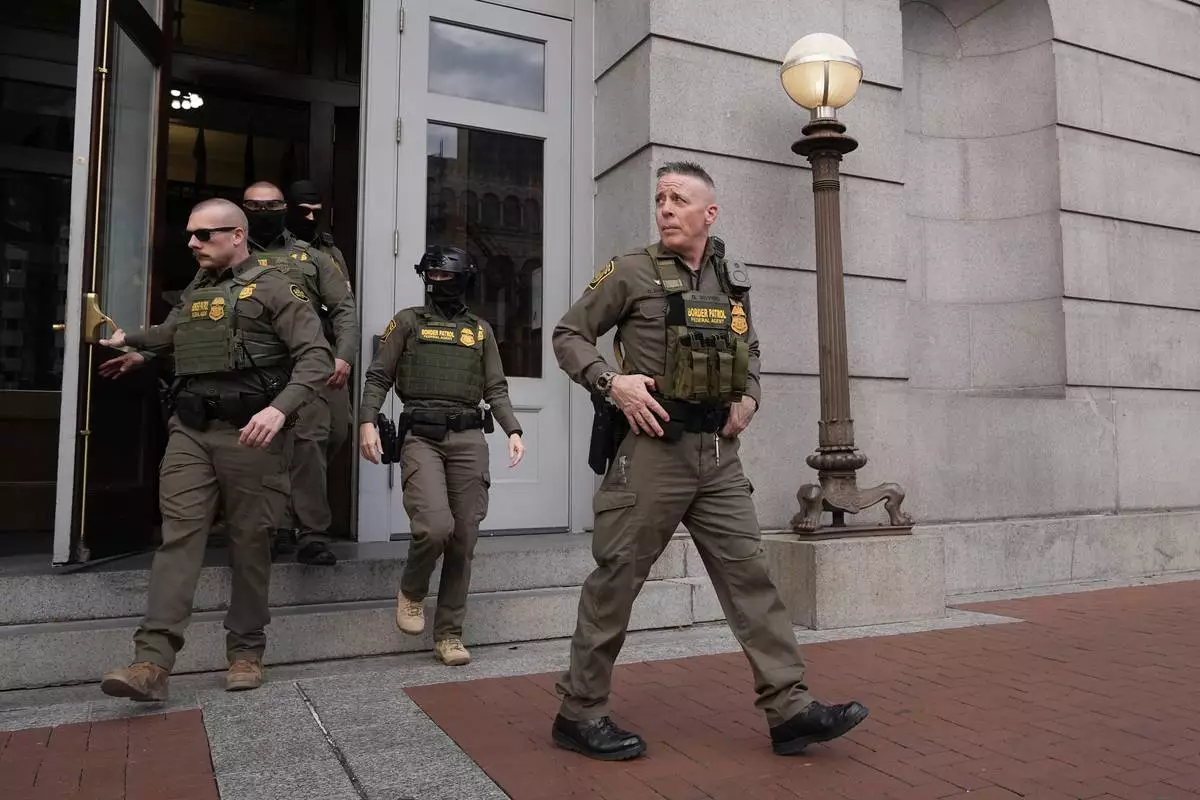
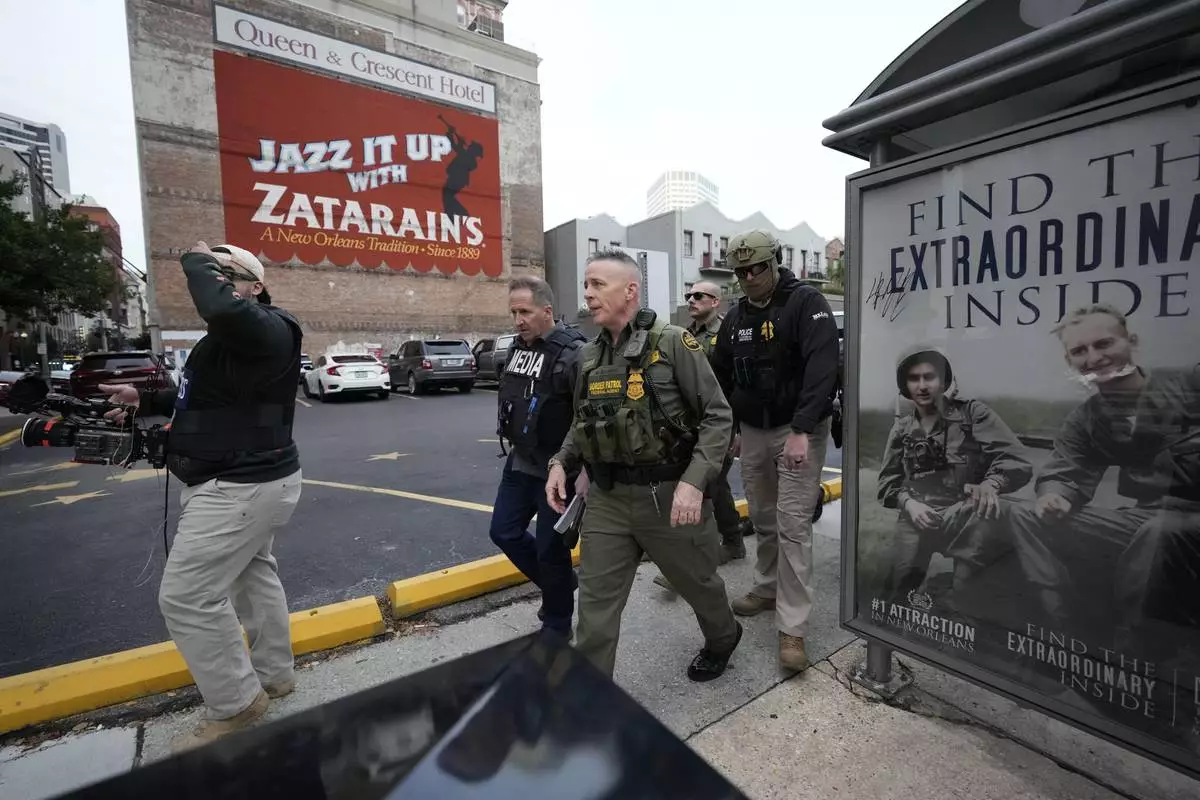
U.S. Border Patrol Commander at large Gregory Bovino, 1st right, walks on the street in New Orleans, La.,Wednesday, Dec. 3, 2025. (AP Photo/Gerald Herbert)

U.S. Border Patrol Commander at large Gregory Bovino, 1st right, walks on the street in New Orleans, La.,Wednesday, Dec. 3, 2025. (AP Photo/Gerald Herbert)

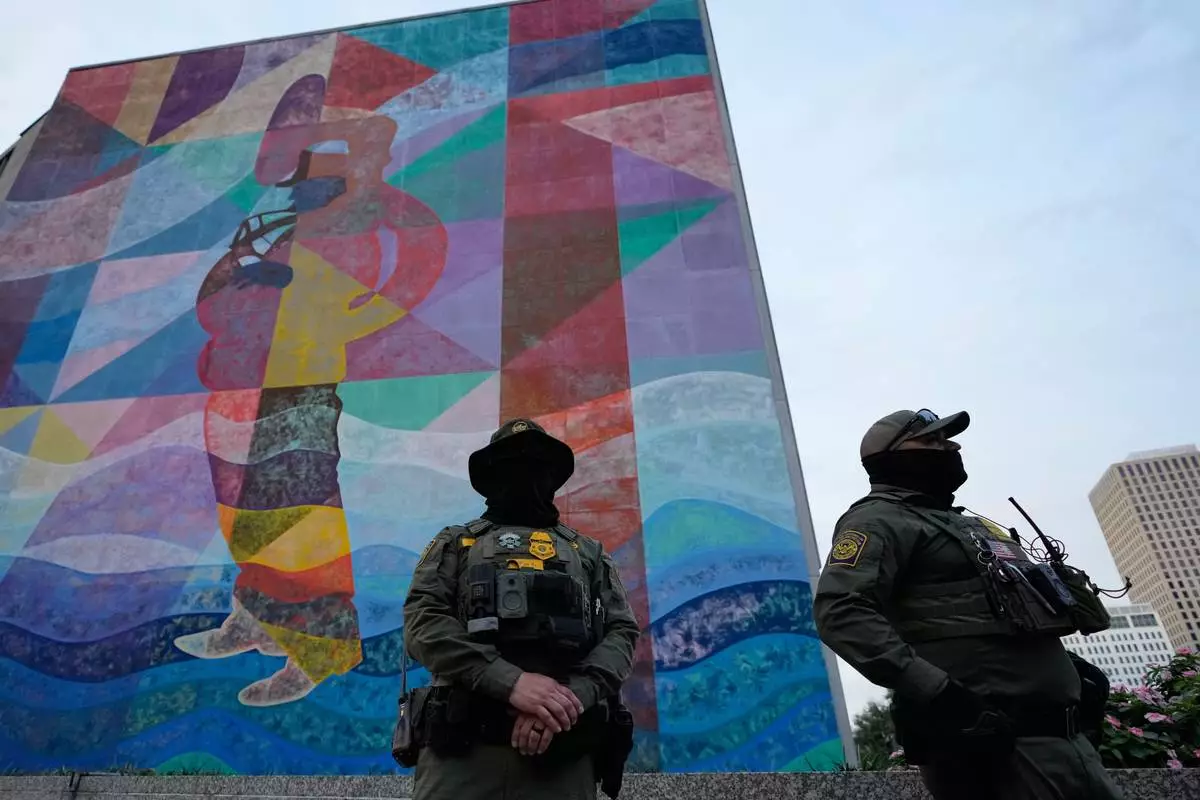
U.S. Border Patrol agents stand on the street in New Orleans, La.,Wednesday, Dec. 3, 2025. (AP Photo/Gerald Herbert)

U.S. Border Patrol agents stand on the street in New Orleans, La.,Wednesday, Dec. 3, 2025. (AP Photo/Gerald Herbert)

U.S. Border Patrol Commander at large Gregory Bovino, 3rd left, walks on the street in New Orleans, La.,Wednesday, Dec. 3, 2025. (AP Photo/Gerald Herbert)

U.S. Border Patrol Commander at large Gregory Bovino, 3rd left, walks on the street in New Orleans, La.,Wednesday, Dec. 3, 2025. (AP Photo/Gerald Herbert)

Recommended Articles