WASHINGTON (AP) — President Donald Trump praised the leaders of the Democratic Republic of Congo and Rwanda for their courage as they signed onto a deal on Thursday aimed at ending the conflict in eastern Congo and opening the region's critical mineral reserves to the U.S. government and American companies.
The moment offered Trump — who has repeatedly and with a measure of exaggeration boasted of brokering peace in some of the world's most entrenched conflicts — another chance to tout himself as a dealmaker extraordinaire on the global stage and make the case that he's deserving of the Nobel Peace Prize. The U.S. leader hasn't been shy about his desire to receive the honor.
Click to Gallery
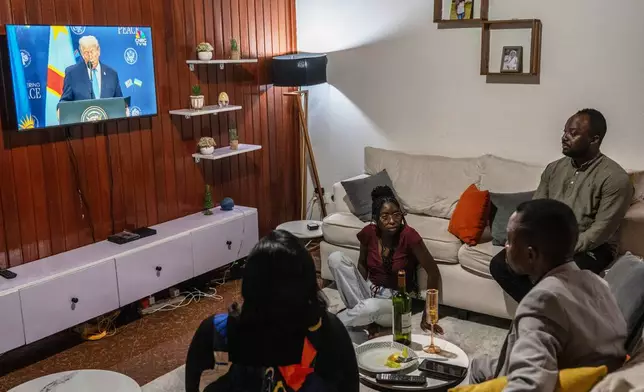
A family watches the live broadcast of the signing ceremony for the peace agreement between Rwanda and the DRC in Goma, Democratic Republic of the Congo, Dec. 4, 2025. (AP Photo/Moses Sawasawa)
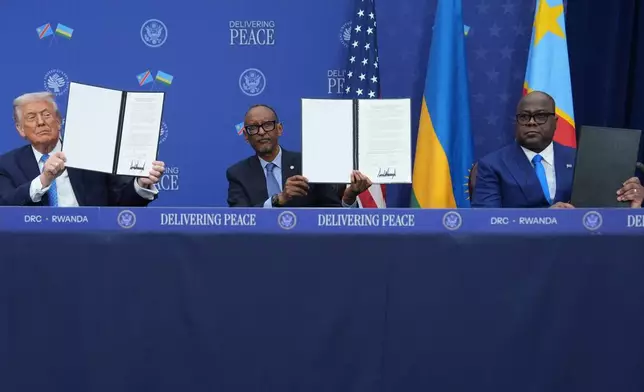
President Donald Trump, Rwanda's President Paul Kagame and Democratic Republic of Congo President Felix-Antoine Tshisekedi, during a signing ceremony at the Donald J. Trump Institute of Peace, Thursday, Dec. 4, 2025, in Washington. (AP Photo/Evan Vucci)
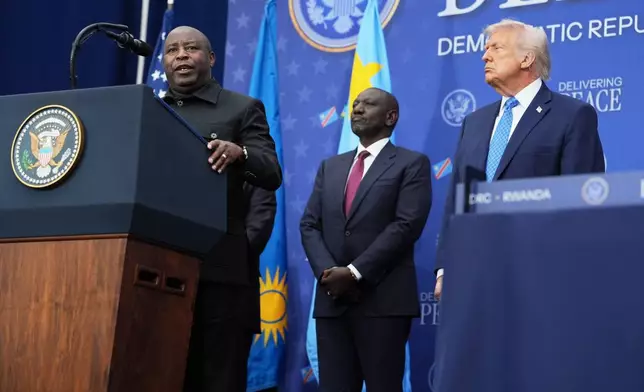
President of Burundi Évariste Ndayishimiye, speaks during ceremony with President Donald Trump at the Donald J. Trump Institute of Peace, Thursday, Dec. 4, 2025, in Washington. (AP Photo/Evan Vucci)
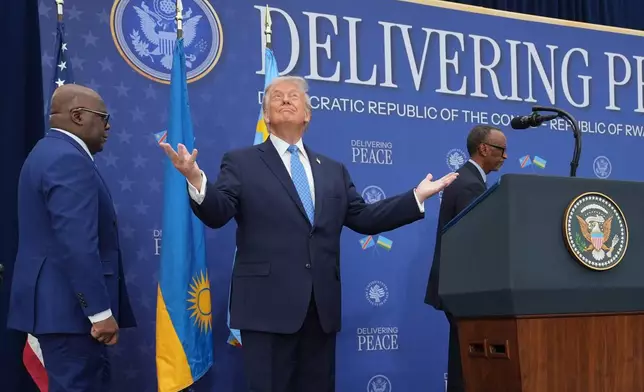
President Donald Trump arrives for a signing ceremony with Rwanda's President Paul Kagame and Democratic Republic of Congo President Felix-Antoine Tshisekedi at the Donald J. Trump Institute of Peace, Thursday, Dec. 4, 2025, in Washington. (AP Photo/Evan Vucci)
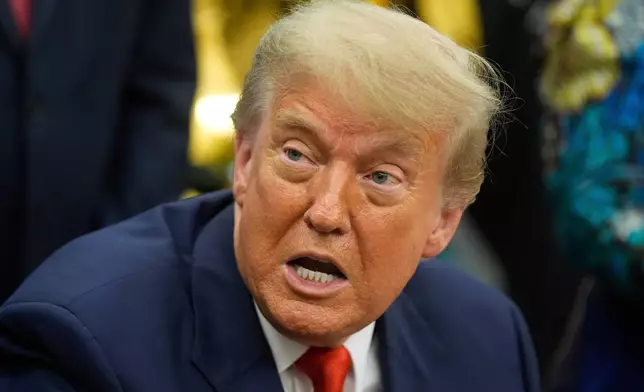
FILE - President Donald Trump answers questions from reporters as he meets with Congo's Foreign Minister Therese Kayikwamba Wagner, and Rwanda's Foreign Minister Olivier Nduhungirehe, Friday, June 27, 2025, in the Oval Office at the White House in Washington. (AP Photo/Manuel Balce Ceneta, File)
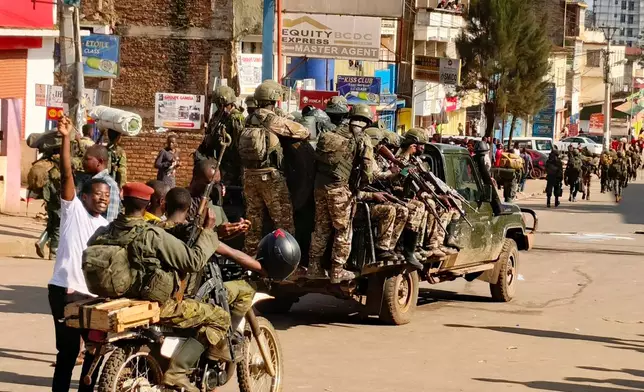
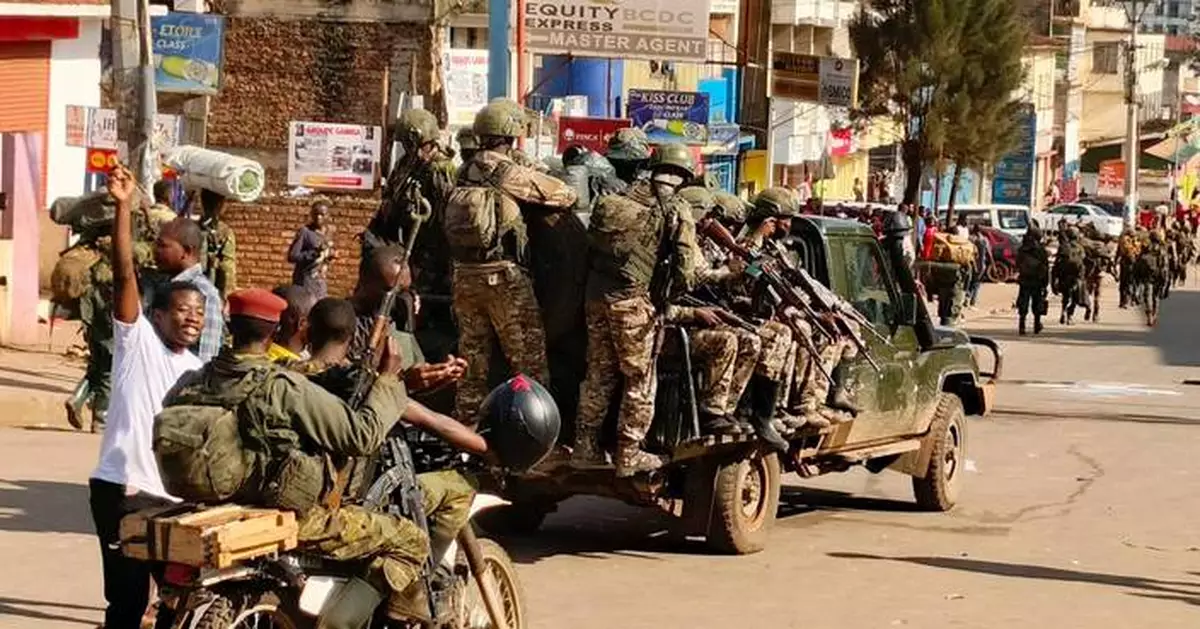
FILE - M23 rebels enter the centre of east Congo's second-largest city, Bukavu, and take control of the South Kivu province administrative office, Sunday, Feb. 16, 2025. (AP Photo/Janvier Barhahiga, File)
“It’s a great day for Africa, a great day for the world,” Trump said shortly before the leaders signed the pact. He added, "Today, we’re succeeding where so many others have failed.”
Trump welcomed Presidents Felix Tshisekedi of Congo and Paul Kagame of Rwanda, as well as several officials from other African nations who traveled to Washington to witness the signing, in the same week he contemptuously derided the war-torn country of Somalia and said he did he did not want immigrants from the East African nation in the U.S.
Lauded by the White House as a “historic” agreement brokered by Trump, the pact between Tshisekedi and Kagame follows monthslong peace efforts by the U.S. and partners, including the African Union and Qatar, and finalizes an earlier deal signed in June.
But the Trump-brokered peace is precarious.
The Central African nation of Congo has been battered by decadeslong fighting with more than 100 armed groups, the most potent being the Rwanda-backed M23 rebels. The conflict escalated this year, with M23 seizing the region’s main cities of Goma and Bukavu in an unprecedented advance, worsening a humanitarian crisis that was already one of the world’s largest, with millions of people displaced.
Fighting, meanwhile, continued this week in the conflict-battered region with pockets of clashes reported between the rebels and Congolese soldiers, together with their allied forces. Trump, a Republican, has often said that his mediation has ended the conflict, which some people in Congo say isn't true.
Still, Kagame and Tshisekedi offered a hopeful tone as they signed on to the agreement.
“No one was asking President Trump to take up this task. Our region is far from the headlines,” Kagame said. “But when the president saw the opportunity to contribute to peace, he immediately took it.”
“I do believe this day is the beginning of a new path, a demanding path, yes. Indeed, quite difficult," Tshisekedi said. "But this is a path where peace will not just be a wish, an aspiration, but a turning point.”
Indeed, analysts say Thursday's deal also isn't expected to quickly result in peace. A separate peace deal has been signed between Congo and the M23.
“We are still at war,” said Amani Chibalonza Edith, a 32-year-old resident of Goma, eastern Congo's key city seized by rebels early this year. “There can be no peace as long as the front lines remain active."
But Trump predicted with the signing the countries would leave behind “decades of violence and bloodshed” and “begin a new year of harmony and cooperation.”
“They spent a lot of time killing each other,” Trump said. “And now they’re going to spend a lot of time hugging, holding hands and taking advantage of the United States of America economically like every other country does.”
Tshisekedi and Kagame did not shake hands and barely looked at each other during the roughly 50-minute signing ceremony.
Thursday’s pact will also build on a Regional Economic Integration Framework previously agreed upon that officials have said will define the terms of economic partnerships involving the three countries.
Trump also announced the United States was signing bilateral agreements with the Congo and Rwanda that will unlock new opportunities for the United States to access critical minerals -- deals that will benefit all three nations’ economies.
“And we’ll be involved with sending some of our biggest and greatest U.S. companies over to the two countries,” Trump said. He added, “Everybody’s going to make a lot of money.”
The region, rich in critical minerals, has been of interest to Trump as Washington looks for ways to circumvent China to acquire rare earths, essential to manufacturing fighter jets, cell phones and more. China accounts for nearly 70% of the world’s rare earth mining and controls roughly 90% of global rare earths processing.
Trump hosted the leaders on Thursday morning for one-on-one meetings at the White House as well as a three-way conversation before the signing ceremony at the Institute of Peace in Washington, which the State Department announced on Wednesday has been rebranded “the Donald J. Trump Institute of Peace.”
In eastern Congo, meanwhile, residents reported pockets of clashes and rebel advances in various localities. Both the M23 and Congolese forces have accused each other of violating the terms of the ceasefire agreed earlier this year. Fighting has also continued in the central plateaus across South Kivu province.
The hardship in the aftermath of the conflict has worsened following U.S. funding cuts that were crucial for aid support in the conflict.
In rebel-held Goma, which was a regional hub for security and humanitarian efforts before this year’s escalation of fighting, the international airport is closed. Government services such as bank operations have yet to resume and residents have reported a surge in crimes and in the prices of goods.
The conflict can be traced to the aftermath of the 1994 genocide in Rwanda, where Hutu militias killed between 500,000 and 1 million ethnic Tutsi, as well as moderate Hutus and Twa, Indigenous people. When Tutsi-led forces fought back, nearly 2 million Hutus crossed into Congo, fearing reprisals.
Rwandan authorities have accused the Hutus who fled of participating in the genocide and alleged that elements of the Congolese army protected them. They have argued that the militias formed by a small fraction of the Hutus are a threat to Rwanda’s Tutsi population.
Congo's government has said there can't be permanent peace if Rwanda doesn't withdraw its support troops and other support for the M23 in the region. Rwanda, on the other hand, has conditioned a permanent ceasefire on Congo dissolving a local militia that it said is made up of the Hutus and is fighting with the Congolese military.
U.N. experts have said that between 3,000 and 4,000 Rwandan government forces are deployed in eastern Congo, operating alongside the M23. Rwanda denies such support, but says any action taken in the conflict is to protect its territory.
Asadu reported from Abuja, Nigeria, and Madhani from Washington. Justin Kabumba contributed to this report from Goma, Congo.
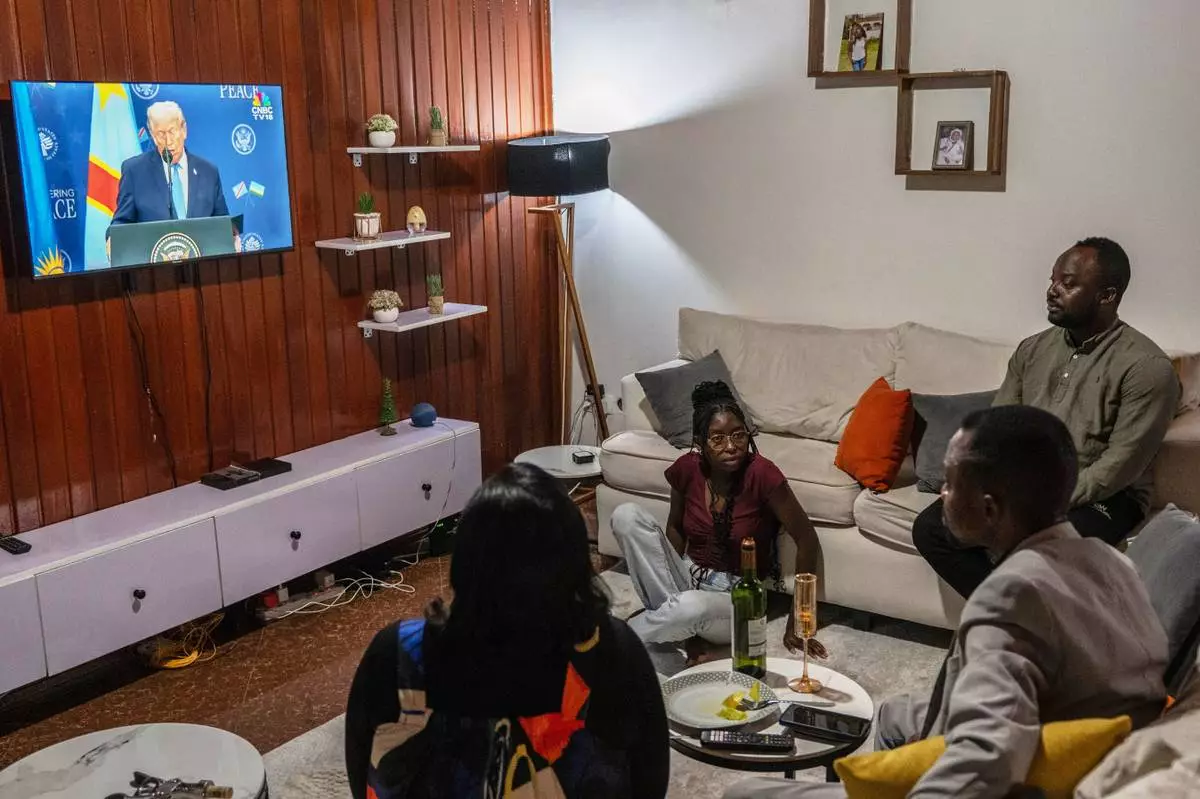
A family watches the live broadcast of the signing ceremony for the peace agreement between Rwanda and the DRC in Goma, Democratic Republic of the Congo, Dec. 4, 2025. (AP Photo/Moses Sawasawa)
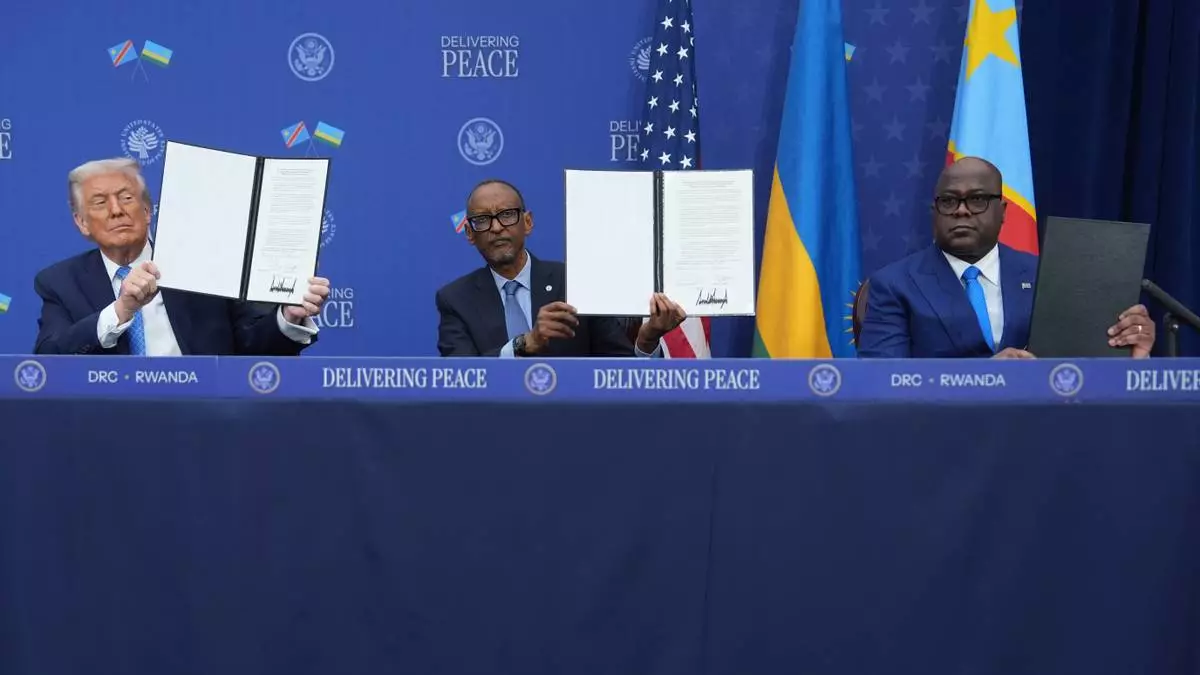
President Donald Trump, Rwanda's President Paul Kagame and Democratic Republic of Congo President Felix-Antoine Tshisekedi, during a signing ceremony at the Donald J. Trump Institute of Peace, Thursday, Dec. 4, 2025, in Washington. (AP Photo/Evan Vucci)
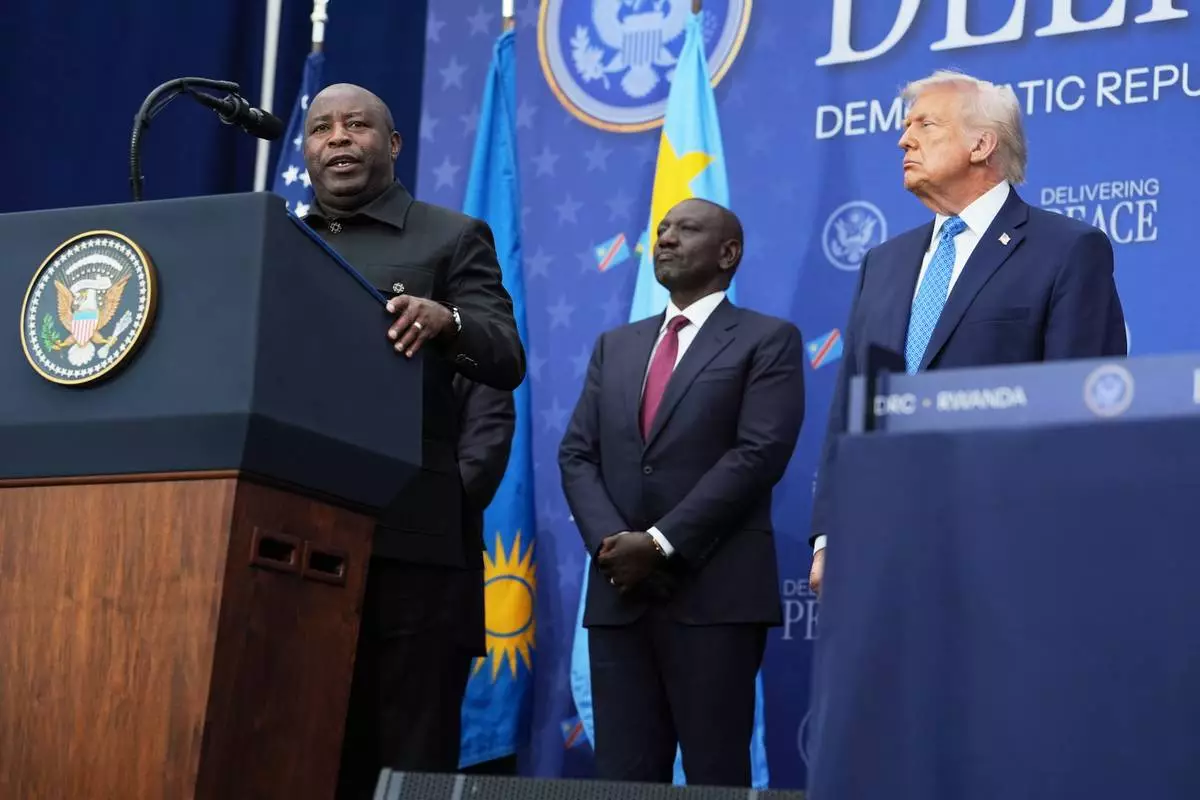
President of Burundi Évariste Ndayishimiye, speaks during ceremony with President Donald Trump at the Donald J. Trump Institute of Peace, Thursday, Dec. 4, 2025, in Washington. (AP Photo/Evan Vucci)
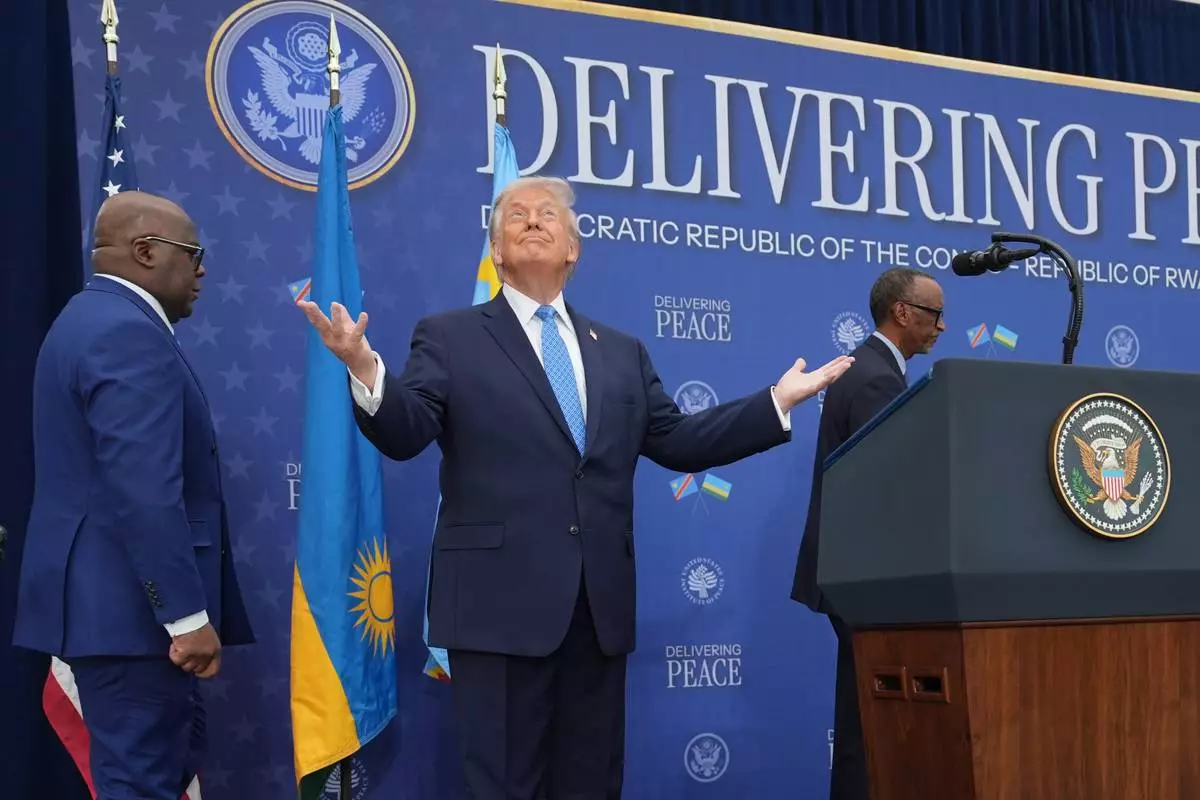
President Donald Trump arrives for a signing ceremony with Rwanda's President Paul Kagame and Democratic Republic of Congo President Felix-Antoine Tshisekedi at the Donald J. Trump Institute of Peace, Thursday, Dec. 4, 2025, in Washington. (AP Photo/Evan Vucci)
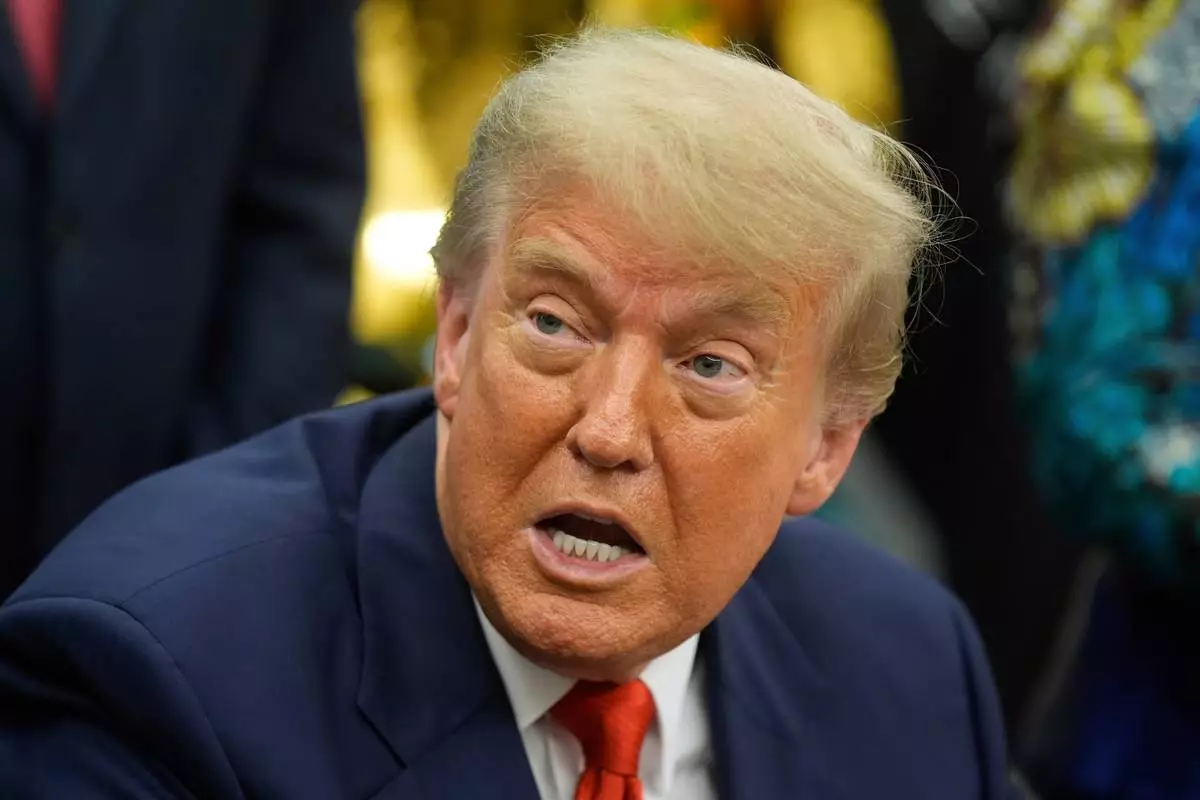
FILE - President Donald Trump answers questions from reporters as he meets with Congo's Foreign Minister Therese Kayikwamba Wagner, and Rwanda's Foreign Minister Olivier Nduhungirehe, Friday, June 27, 2025, in the Oval Office at the White House in Washington. (AP Photo/Manuel Balce Ceneta, File)
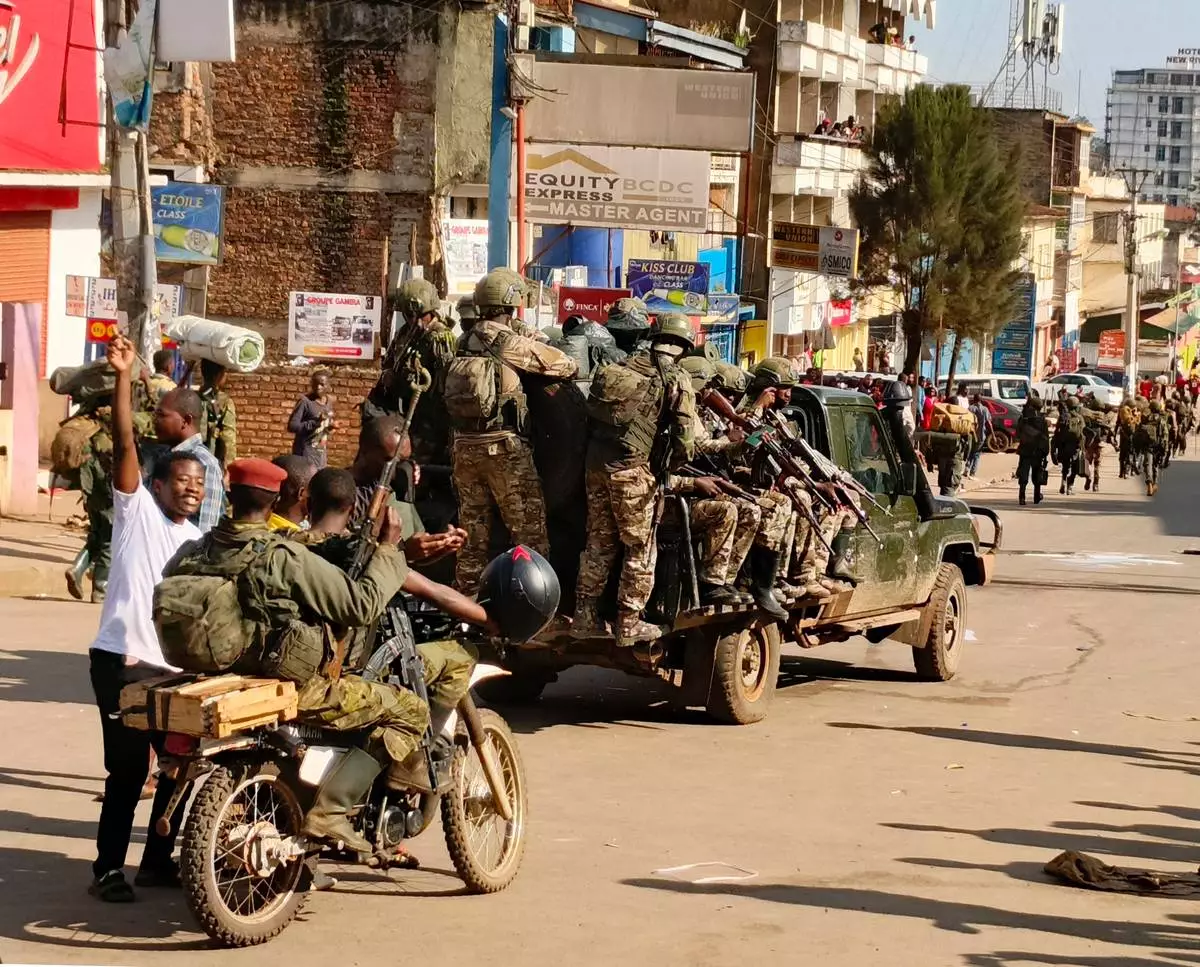
FILE - M23 rebels enter the centre of east Congo's second-largest city, Bukavu, and take control of the South Kivu province administrative office, Sunday, Feb. 16, 2025. (AP Photo/Janvier Barhahiga, File)