Skip to Content Facebook Feature Image

One Tech Tip: Up your Christmas shopping game with AI tools

TECH

One Tech Tip: Up your Christmas shopping game with AI tools
TECH

TECH

One Tech Tip: Up your Christmas shopping game with AI tools

2025-12-04 23:21 Last Updated At:12-05 15:00

Shopping assistant chatbots were a novelty a year ago. Now, they’re everywhere.

After rolling out AI-powered assistants, online retailers and tech companies have been adding more artificial intelligence features to make online shopping easier and more convenient.

More Images
JoJo Siwa greets shoppers at Mall of America for Black Friday deals, Friday, Nov. 28, 2025, in Bloomington, Minn. (AP Photo/Adam Bettcher)
JoJo Siwa greets shoppers at Mall of America for Black Friday deals, Friday, Nov. 28, 2025, in Bloomington, Minn. (AP Photo/Adam Bettcher)

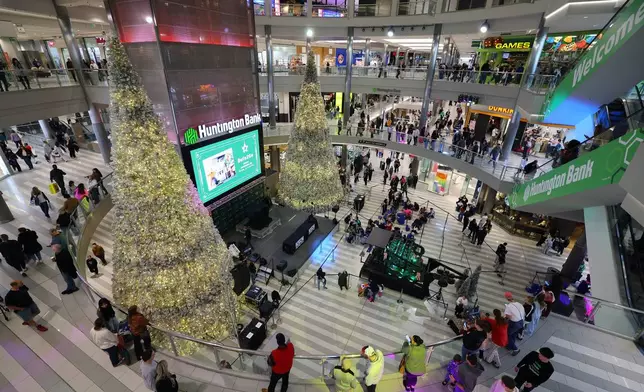
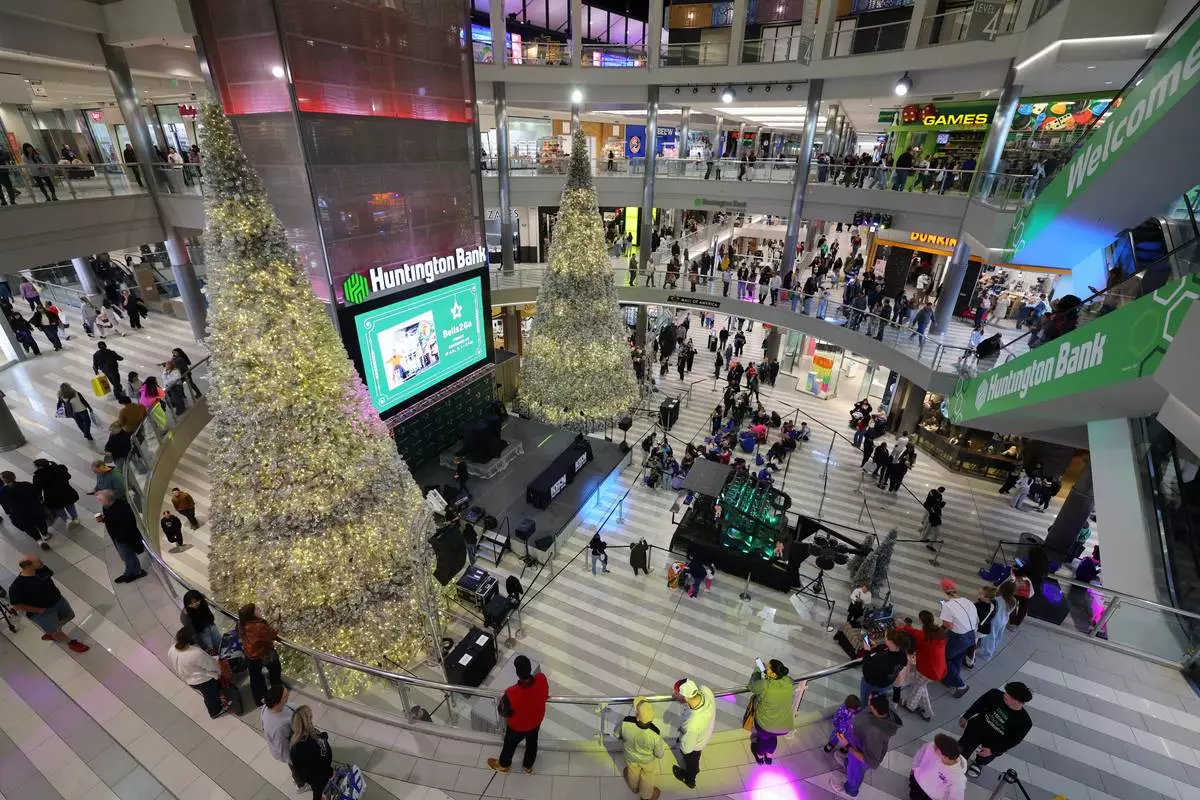
Shoppers browse through stores at Mall of America for Black Friday deals, Friday, Nov. 28, 2025, in Bloomington, Minn. (AP Photo/Adam Bettcher)
Shoppers browse through stores at Mall of America for Black Friday deals, Friday, Nov. 28, 2025, in Bloomington, Minn. (AP Photo/Adam Bettcher)

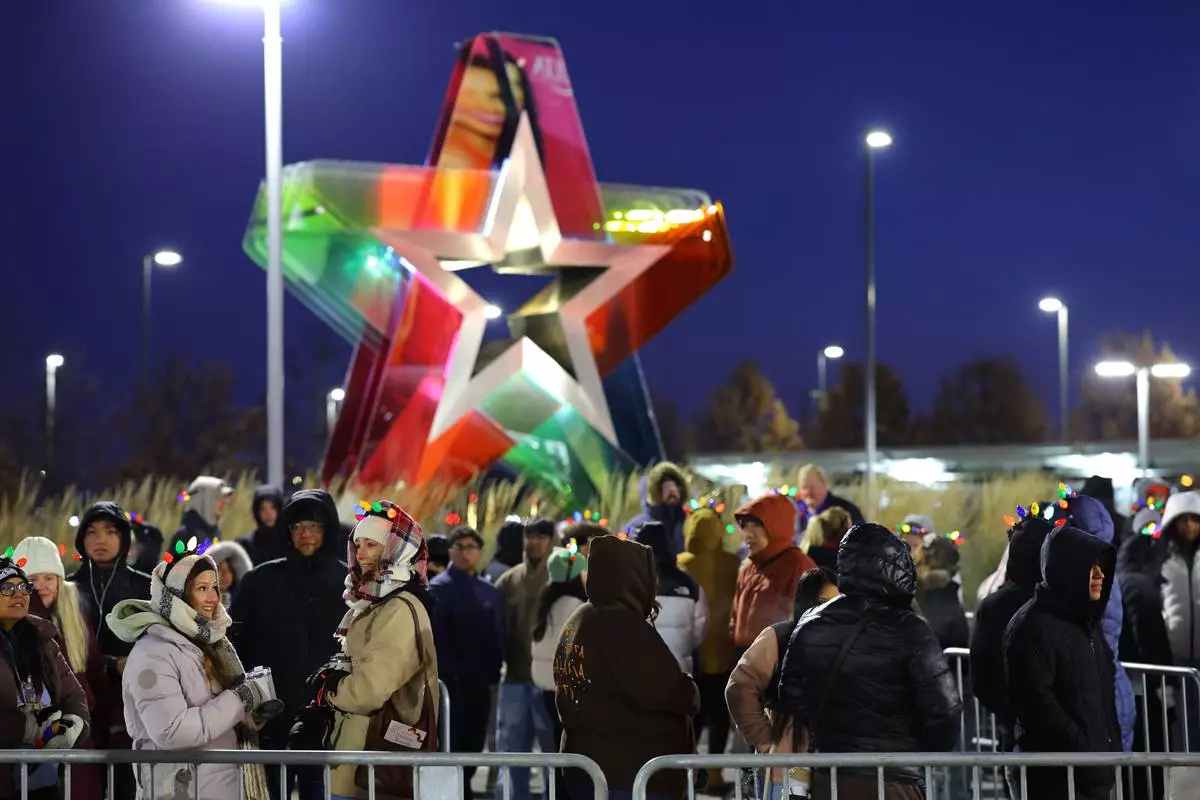
Shoppers line up to get into Mall of America for Black Friday deals, Friday, Nov. 28, 2025, in Bloomington, Minn. (AP Photo/Adam Bettcher)

Shoppers line up to get into Mall of America for Black Friday deals, Friday, Nov. 28, 2025, in Bloomington, Minn. (AP Photo/Adam Bettcher)

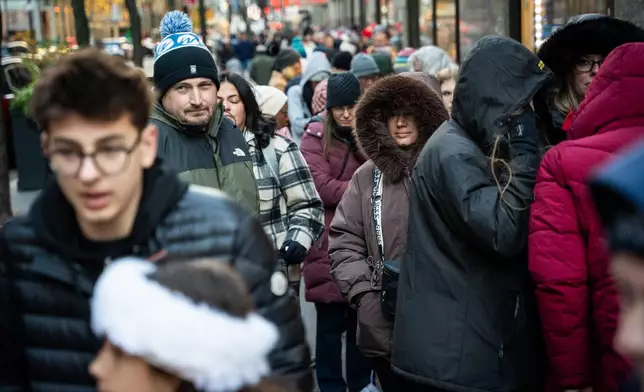
Black Friday shoppers queue to enter FAO Schwarz in New York on Friday, Nov. 28, 2025. (AP Photo/Angelina Katsanis)
Black Friday shoppers queue to enter FAO Schwarz in New York on Friday, Nov. 28, 2025. (AP Photo/Angelina Katsanis)

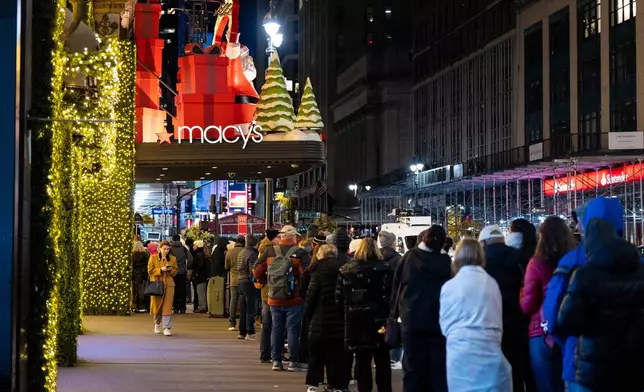
Black Friday Shoppers wait in line to enter Macy's flagship store on Friday, Nov. 28, 2025 in New York. (AP Photo/Angelina Katsanis)
Black Friday Shoppers wait in line to enter Macy's flagship store on Friday, Nov. 28, 2025 in New York. (AP Photo/Angelina Katsanis)

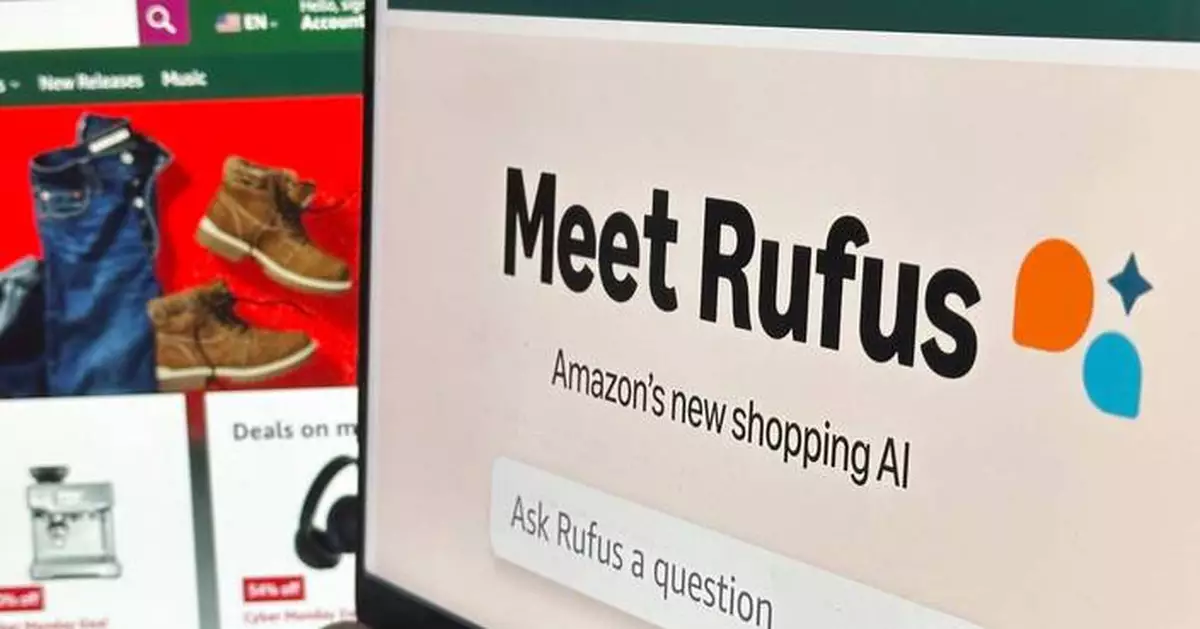
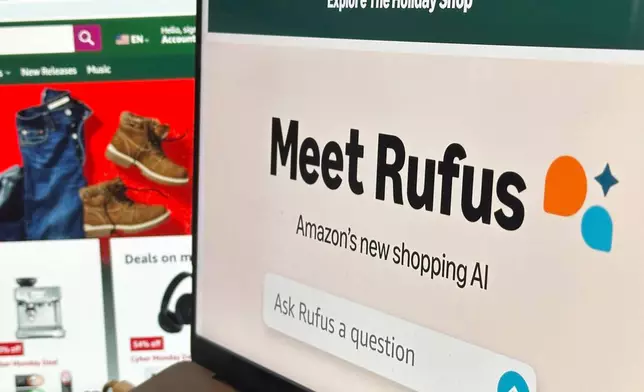
FILE - Amazon's generative AI-powered shopping assistant, Rufus, appears on a computer monitor, Dec. 1, 2024, in New York. (AP Photo/Peter Morgan, File)

FILE - Amazon's generative AI-powered shopping assistant, Rufus, appears on a computer monitor, Dec. 1, 2024, in New York. (AP Photo/Peter Morgan, File)

The latest crop of AI-powered shopping services and tools made their debut in recent weeks, just in time to kick off the holiday shopping season that begins with Black Friday.

Here’s a rundown of existing and newly released AI services that can help with your search for the perfect gift in the run-up to Christmas:

Amazon led the way by rolling out its Rufus chatbot in 2024. Other ecommerce websites followed with their own AI assistants to enhance the online shopping experience.

Walmart's Sparky chatbot is available on the retail giant’s app and can synthesize reviews or offer product recommendations based on occasions, such as Christmas. Target recently unveiled a gift finder chatbot on its app, but it's only available for the holiday season. Ralph Lauren partnered with Microsoft on the “Ask Ralph” chatbot to provide style recommendations.

The aim of deploying chatbots is to make it easier for people to find what they’re looking for. Instead of entering search terms and keywords, you can type or use voice dictation for a conversational back-and-forth.

The results, in my experience, can be mixed.

I tried Rufus recently to find a replacement aftermarket stainless steel pot for my rice cooker, as well as a protective trivet for my kitchen sink faucet. In both cases, the results weren’t quite right and didn’t seem to capture the wide range of products available. Sometimes the results were completely unsuitable.

I ended up doing a more painstaking search of product listings’ pictures and specifications to find the right items. The problem, I suspect, is partly because I was looking for generic products. Searches for name-brand products may produce better results.

Perhaps you don’t want to limit yourself to a single retailer’s website in your Christmas shopping search. Or you’re not sure where exactly to find that perfect gift.

Tech platforms have rolled out AI-powered shopping tools that can cast a wider net by searching multiple sites.

OpenAI added a new “shopping research” feature to ChatGPT last week that can provide personalized buying advice for products that are heavy on detailed specs, like electronics or appliances. The feature will activate if you ask ChatGPT a shopping-related question or manually turn it on in the chat window. OpenAI says it can go beyond simple questions, such as checking a price or feature that regular ChatGPT can easily answer.

Google users can get a similar experience when they use its search engine in AI Mode, which recently got a big update for shopping searches. The company says users can describe what they’re looking for as if talking to a friend and get an “intelligently organized response” based on 50 billion product listings, with pictures alongside prices, reviews and inventory info.

Google added similar shopping features to its Gemini AI chatbot app for U.S. users last month.

Meanwhile, Perplexity unveiled its own shopping assistant feature last week that can tailor recommendations based on previous searches.

I asked all three to find a soft cotton flannel shirt. Both ChatGPT and Perplexity asked me for specific requirements, such as budget and must-have features. ChatGPT's response was the most detailed, with options from six brands including its top pick, and included pictures, prices and point-form summaries for each shirt. It also compiled the results into a comparison table.

Results from Google, which didn't ask follow up questions after my initial request, felt the most general. Perplexity's results fell in between.

So, you think you've found a stylish cardigan for your spouse. But you're not sure about the silhouette or vibe.

Generative AI “try on” tools let users see what a piece of clothing might look like on the wearer.

Existing virtual dressing room tools have relied on complex 3D rendering, real photoshoots and augmented reality. Often, shoppers were limited to picking a model that best fit their body type to see how clothes fit.

Google is now tapping AI to allow shoppers to virtually try on garments and shoes using pictures of themselves in simple poses. Among the exceptions: accessories like hats or jewelry, bathing suits and lingerie.

To use this feature, which is available through Google's shopping desktop search and mobile app in Australia, Japan Canada and the U.S., just tap the “Try it on” button on a product's photo and then add a full-length photo of yourself. You can then save the image of yourself with the tested item or share it. The original photo is also saved to your account so you don't need to keep uploading fresh images.

If you're shopping for a gift for someone, Google says you can upload their photo, but only if you have their permission.

Now that you've figured out what exactly to get for those special people on your Christmas gift list, it's time to buy. But if you want to outsource some of the legwork involved, there are “agentic AI” tools that can help.

Amazon users can use an “AI agent” to buy a product on their behalf if the price falls to a desired level. Google has launched its own “agentic checkout” feature, which can automatically buy a product you're keeping an eye on with its price-tracking feature. Google's feature has rolled out to a small group of retailers, including Wayfair, Chewy and Quince we well as some Shopify merchants.

Both companies say they'll always confirm with you before the AI agent makes the purchase.

Amazon is taking it a step further by allowing shoppers to buy items that aren’t in stock directly from other brands’ websites. If you see a product on the Amazon Shopping app with a “Buy For Me” button, you can buy it through the usual Amazon checkout page but the AI agent will then carry out the transaction on the other brand’s website with your encrypted payment details. The feature was in test mode but is being rolled out more widely.

Prefer to buy in person? It's a good idea to make sure a bricks-and-mortar shop has the product you want before heading over. Google has launched an AI service that will call local stores to ask.

It's only available in the U.S. for toys, electronics and health and beauty products. When doing a Google search for the product you want, add “near me” to the end of your search query. Then, if you see “Let Google Call” when scrolling through the results, you can tap the “Get started” button. Answer some questions about what you’re shopping for, whether you want updates by email or text.

Google will then contact stores near your location to ask if the item is in stock.

The bot works swiftly but results might be limited. When an AP reporter in New Jersey asked Google to call around about a specific Acer monitor, the agent returned quickly with a reply from a local computer repair shop that sold refurbished monitors. It appeared to ignore nearby big-box outlets selling electronics.

According to Google's text update, the local repair shop didn't have the monitor, but did have a similar-sized one — sans the other bells and whistles — for a lower price.

Is there a tech topic that you think needs explaining? Write to us at onetechtip@ap.org with your suggestions for future editions of One Tech Tip.
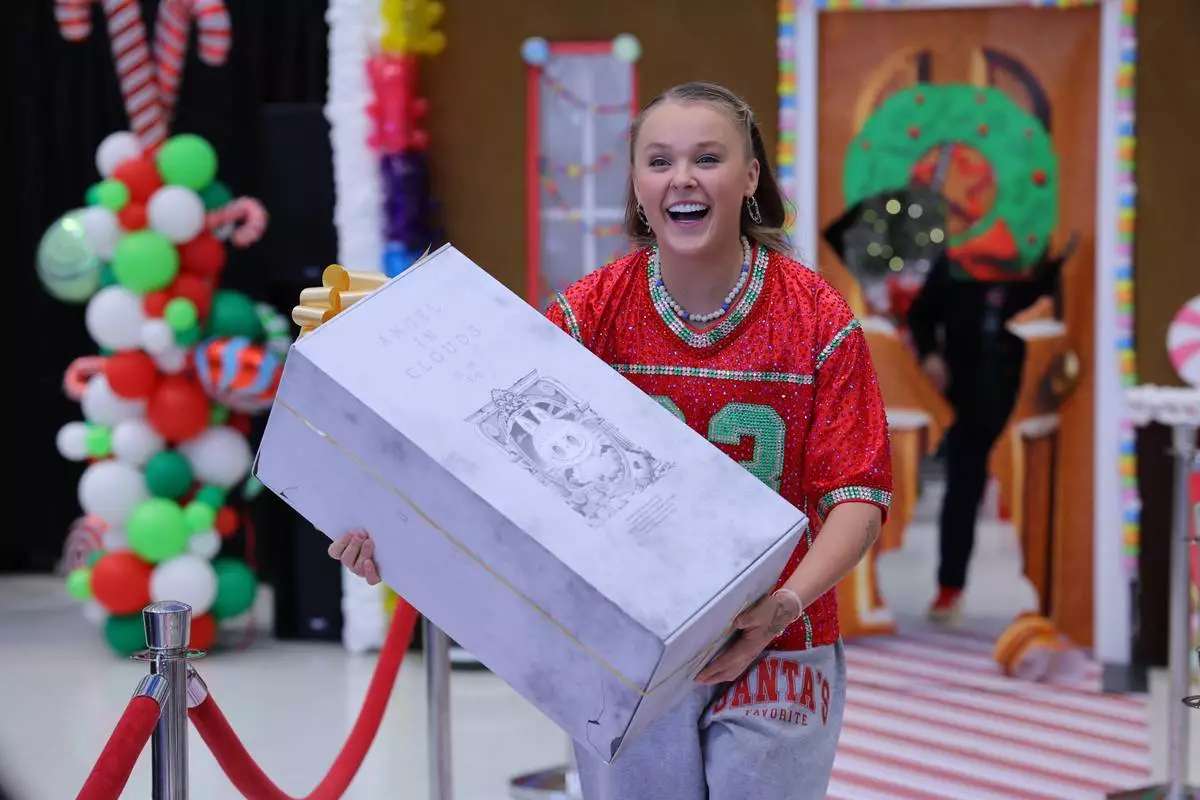
JoJo Siwa greets shoppers at Mall of America for Black Friday deals, Friday, Nov. 28, 2025, in Bloomington, Minn. (AP Photo/Adam Bettcher)
JoJo Siwa greets shoppers at Mall of America for Black Friday deals, Friday, Nov. 28, 2025, in Bloomington, Minn. (AP Photo/Adam Bettcher)
Shoppers browse through stores at Mall of America for Black Friday deals, Friday, Nov. 28, 2025, in Bloomington, Minn. (AP Photo/Adam Bettcher)
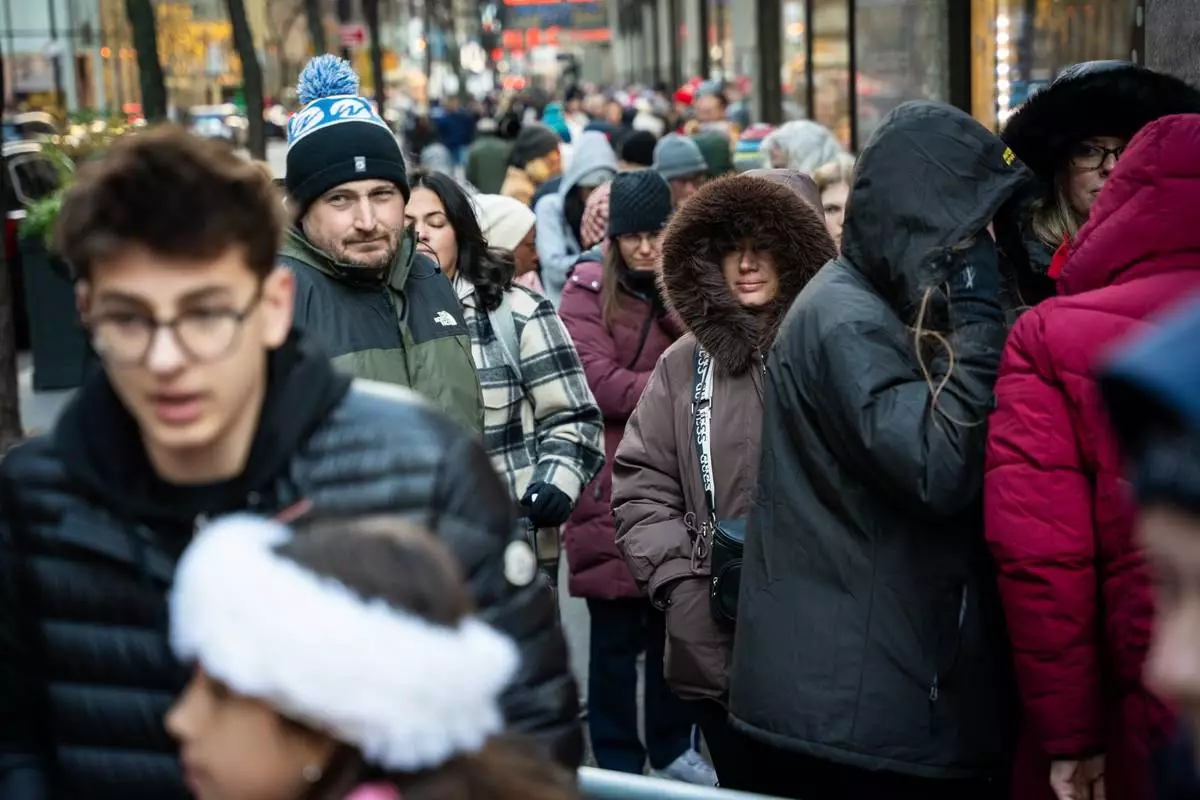
Shoppers browse through stores at Mall of America for Black Friday deals, Friday, Nov. 28, 2025, in Bloomington, Minn. (AP Photo/Adam Bettcher)

Shoppers line up to get into Mall of America for Black Friday deals, Friday, Nov. 28, 2025, in Bloomington, Minn. (AP Photo/Adam Bettcher)

Shoppers line up to get into Mall of America for Black Friday deals, Friday, Nov. 28, 2025, in Bloomington, Minn. (AP Photo/Adam Bettcher)

Black Friday shoppers queue to enter FAO Schwarz in New York on Friday, Nov. 28, 2025. (AP Photo/Angelina Katsanis)
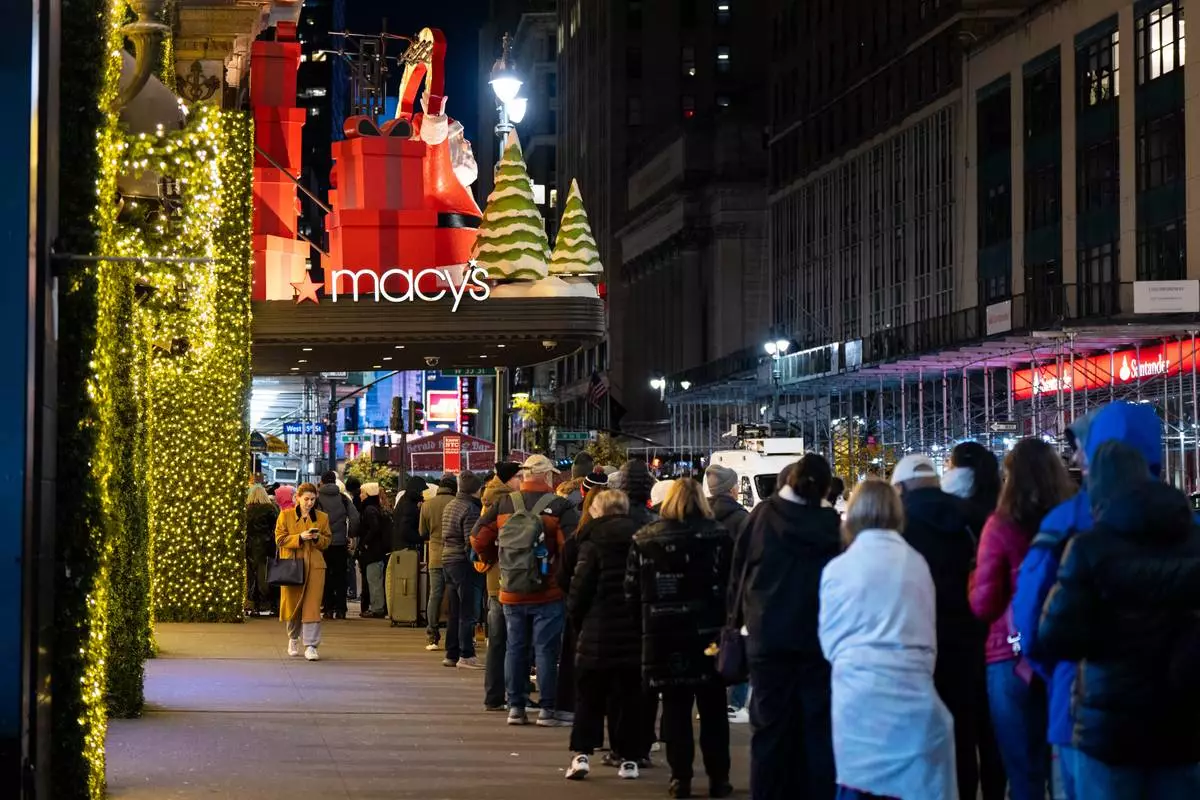
Black Friday shoppers queue to enter FAO Schwarz in New York on Friday, Nov. 28, 2025. (AP Photo/Angelina Katsanis)

Black Friday Shoppers wait in line to enter Macy's flagship store on Friday, Nov. 28, 2025 in New York. (AP Photo/Angelina Katsanis)
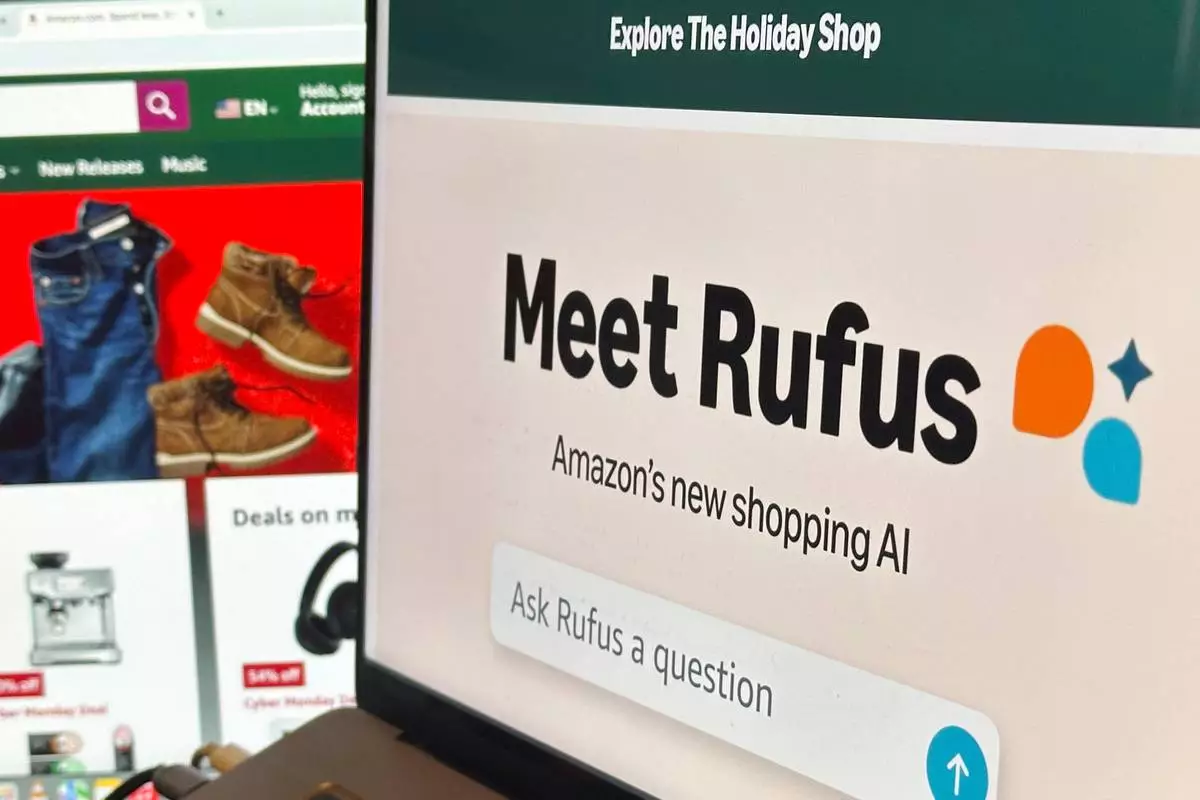
Black Friday Shoppers wait in line to enter Macy's flagship store on Friday, Nov. 28, 2025 in New York. (AP Photo/Angelina Katsanis)

FILE - Amazon's generative AI-powered shopping assistant, Rufus, appears on a computer monitor, Dec. 1, 2024, in New York. (AP Photo/Peter Morgan, File)

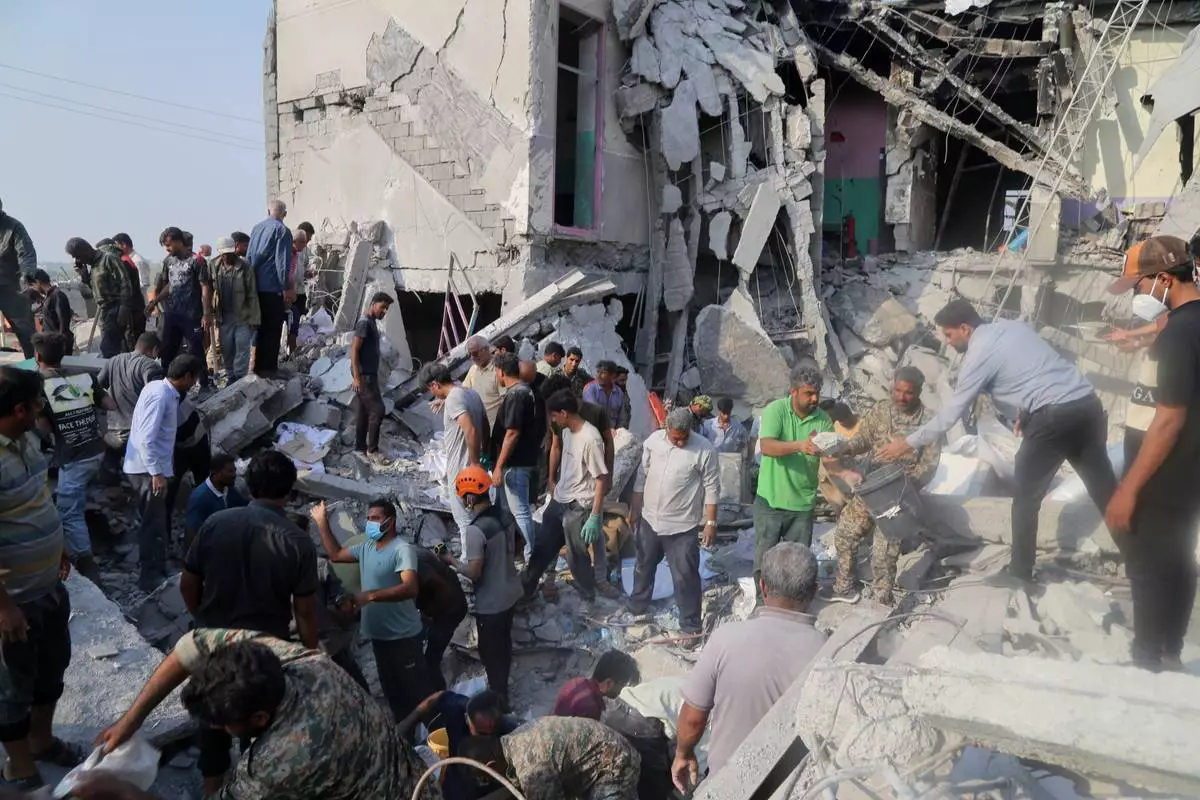
FILE - Amazon's generative AI-powered shopping assistant, Rufus, appears on a computer monitor, Dec. 1, 2024, in New York. (AP Photo/Peter Morgan, File)

WASHINGTON (AP) — Outdated intelligence likely led to the United States carrying out a deadly missile strike on an elementary school in Iran that killed over 165 people, many of them children, in the opening hours of the conflict, according to a U.S. official and a second person briefed on findings of a preliminary U.S military investigation into the incident.

The bombing of the school and its casualties involving children has become a focal point of the war, and if ultimately confirmed to be at the hands of the U.S., would also stand among the highest civilian casualty events caused by the American military operations in the last two decades.

President Donald Trump initially blamed Iran for the attack, later said he wasn’t certain who was to blame, and then said he would accept the results of the Pentagon’s investigation. The issue took on added urgency on Wednesday after the New York Times first reported that a preliminary investigation found that the U.S. was responsible.

U.S. Central Command relied on target coordinates for the strike using outdated data provided by the Defense Intelligence Agency, according to the person familiar with the preliminary finding.

The agency did not respond to a request for comment.

The preliminary finding prompted immediate calls for more information from the Pentagon. White House press secretary Karoline Leavitt said that “the investigation is still ongoing.”

Both the U.S. official and the person familiar with the matter spoke to The Associated Press on the condition of anonymity to discuss the sensitive matter.

Dozens of Democratic senators demanded answers from the Trump administration on Wednesday as a growing body of evidence suggested that the U.S. was likely responsible for a strike at an elementary school in Iran that killed over 165 people, many of them children.

The letter from more than 45 senators pressed Defense Secretary Pete Hegseth on whether the U.S. was culpable for the strike and what previous analysis of the building had been done. The senators also raised concerns about the Pentagon hollowing-out a congressionally mandated office set up specifically to reduce civilian casualties.

“Under this administration, budgetary and personnel cuts at the Department have robbed military commands of crucial resources to prevent and respond to civilian casualties,” the senators wrote. Those include cuts at U.S. Central Command, whose forces are leading the military campaign against Iran, and the Civilian Protection Center of Excellence, which was signed into law in 2022 as part of a Pentagon ambition to reduce death tolls from strikes.

The revelation could threaten to erode public support in the U.S. effort against Iran at a time when Trump, who as a candidate railed against American involvement in “stupid” overseas wars, faces persistent questions about the purpose and of the conflict and what would bring it to an end.

One former Pentagon official said the Feb. 28 strike that hit Shajareh Tayyebeh Elementary School, which is located near a neighboring base for the Iranian Revolutionary Guard, came as a natural result of changes made by the Trump administration to reduce staff to mitigate civilian harm and Hegseth’s emphasis on lethality over legality.

There are several indications that the strike on the school may have been avoidable.

It happened Saturday morning, the start of the Iranian school week, when the building was full of young children. Satellite analysis by the AP shows that the school, as well as other targets struck the same day, had characteristics visible from the air that could have identified them as civilian sites before they were struck.

The AP reported last week that satellite images, expert analysis, a U.S. official and public information released by the U.S. military all suggested it was likely a U.S. strike. That evidence grew stronger on Monday, as new footage emerged showing what experts identified as a U.S.-made Tomahawk cruise missile slamming into the military compound as smoke was already rising from the area where the school was located.

Publicly available satellite imagery shows the school building was part of the military compound until about 2017, when a new wall was added to separate the two. A watchtower on the property was also removed. Around the same time, the imagery shows the walls surrounding the building were painted with murals in vibrant colors, primarily blue and pink, so bright they're visible from space

The school was clearly labeled as such in online maps and has an easily-accessible website full of information about students, teachers and administrators.

International law governing warfare bars strikes on structures, vehicles and people that are not military objectives and combatants. Civilian homes, schools, medical facilities and cultural sites are generally off limits for military strikes. The proximity of a school to a valid military target does not change its status as a civilian site, said Elise Baker, a senior staff lawyer at the Atlantic Council, a Washington-based nonprofit think tank.

If the U.S. is found responsible, said Sen. Tim Kaine during a briefing with journalists on Wednesday: “It’s either we’ve changed our traditional targeting rules or we made a mistake.”

“If we’ve changed our traditional targeting rules and we no longer provide the same level of protection for civilians, that would be tragic,” Kaine said.

Some Republicans, too, are sounding alarms.

Sen. Kevin Cramer of North Dakota told reporters that an investigation needs to “get to the bottom of it,” and then “admit if you know whose fault it is.”

If the U.S. was behind it, Cramer said, the military must “do everything you can to eliminate those mistakes going forward.”

He added: “But you also can’t undo it.”

Congress directed the Pentagon to create the Civilian Protection Center of Excellence in late 2022 as part of the wide-ranging annual defense authorization bill, which passed both chambers with broad bipartisan support. The bill said the center was to “institutionalize and advance knowledge, practices, and tools for preventing, mitigating, and responding to civilian harm.”

The measure put into law an initiative that had already been started by Defense Secretary Lloyd Austin earlier that year. The 36-step action plan was “ambitious and necessary,” Austin said at the time.

In April 2023, that office had a full-time director hired by the Army and an initial core staff of 30 civilians, according to a 2024 Pentagon report that said that the workforce was expected to grow.

Wes Bryant began working there in 2024 as the Branch Chief of Civil Harm Assessments. One of the things the office was discussing was updating the “no strike list,” he said, a series of civilian targets in other countries that the Pentagon keeps. When he was working at the Pentagon, it was well known that the list was out-of-date, he said. But under Hegseth, the office's size was slashed and the work on updating the no-strike lists stopped, he said.

“They have no budget. They're just sitting there trying to maintain any semblance of the mission,” he said.

Capt. Tim Hawkins, the spokesman for U.S. Central Command, denied reports that the military command only had a single person assigned to the mission but would not offer any further details, citing the ongoing investigation.

Frankel reported from Jerusalem. Associated Press writers Mary Clare Jalonick, Konstantin Toropin and Joey Cappelletti in Washington contributed to this report.

The arm of a deceased person is seen protruding from the rubble as rescue workers and residents search in the aftermath a strike on a girls' elementary school in Minab, Iran, Saturday, Feb. 28, 2026. (Abbas Zakeri/Mehr News Agency via AP)

The arm of a deceased person is seen protruding from the rubble as rescue workers and residents search in the aftermath a strike on a girls' elementary school in Minab, Iran, Saturday, Feb. 28, 2026. (Abbas Zakeri/Mehr News Agency via AP)

Rescue workers and residents search through the rubble in the aftermath of a strike on a girls' elementary school in Minab, Iran, Saturday, Feb. 28, 2026. (Abbas Zakeri/Mehr News Agency via AP)

Rescue workers and residents search through the rubble in the aftermath of a strike on a girls' elementary school in Minab, Iran, Saturday, Feb. 28, 2026. (Abbas Zakeri/Mehr News Agency via AP)

Rescue workers and residents search through the rubble in the aftermath of a strike on a girls' elementary school in Minab, Iran, Saturday, Feb. 28, 2026. (Abbas Zakeri/Mehr News Agency via AP)

Rescue workers and residents search through the rubble in the aftermath of a strike on a girls' elementary school in Minab, Iran, Saturday, Feb. 28, 2026. (Abbas Zakeri/Mehr News Agency via AP)

Rescue workers and residents search through the rubble in the aftermath of a strike on a girls' elementary school in Minab, Iran, Saturday, Feb. 28, 2026. (Abbas Zakeri/Mehr News Agency via AP)

Rescue workers and residents search through the rubble in the aftermath of a strike on a girls' elementary school in Minab, Iran, Saturday, Feb. 28, 2026. (Abbas Zakeri/Mehr News Agency via AP)

Rescue workers and residents search through the rubble in the aftermath of a strike on a girls' elementary school in Minab, Iran, Saturday, Feb. 28, 2026. (Abbas Zakeri/Mehr News Agency via AP)

Rescue workers and residents search through the rubble in the aftermath of a strike on a girls' elementary school in Minab, Iran, Saturday, Feb. 28, 2026. (Abbas Zakeri/Mehr News Agency via AP)

Recommended Articles