LONDON--(BUSINESS WIRE)--Dec 4, 2025--
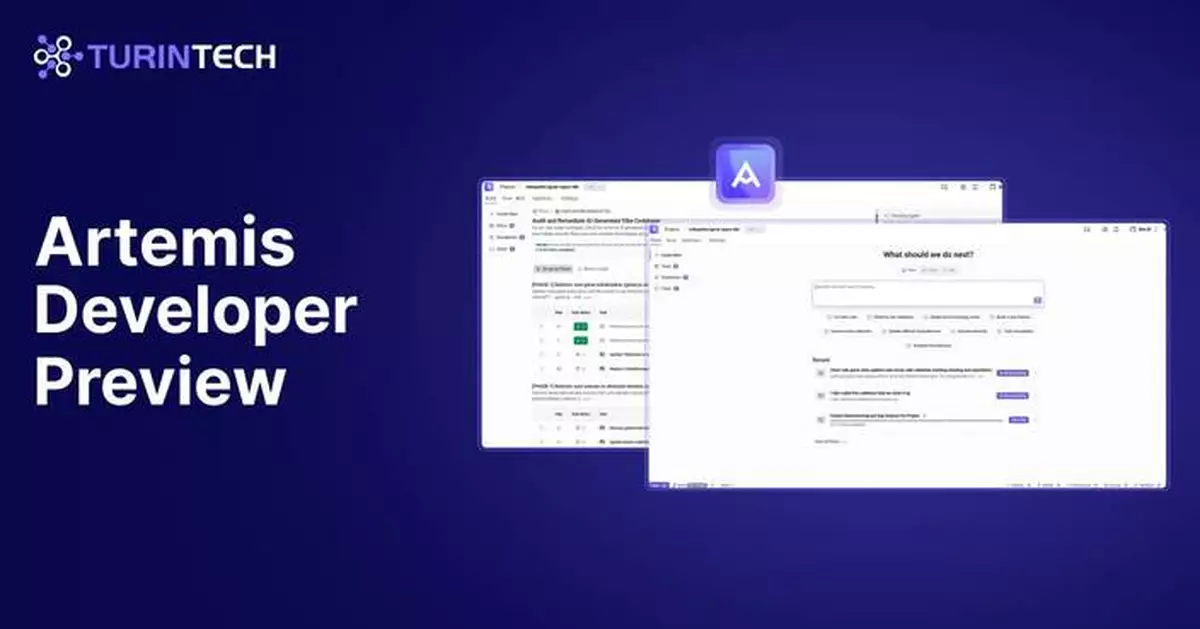
TurinTech today announced the Artemis Developer Preview, which gives developers early access to a structured, reliable way to work with today’s AI coding tools. These tools frequently guess at intent, overwrite files, and produce diffs that are hard to trust. Artemis offers a different approach.
This press release features multimedia. View the full release here: https://www.businesswire.com/news/home/20251203503066/en/
Artemis is a platform that improves existing code. It finds issues, fixes bugs, refactors messy or outdated code, modernizes legacy systems, cleans up unreliable AI-generated output, and validates every change before it reaches your repo. It clarifies intent up front, guides decisions, structures the work, applies changes safely in a sandboxed environment, and delivers clean, review-ready results. The result is a predictable, engineering-grade workflow that helps developers turn the code they have into the code they actually need.
AI coding tools have seen explosive adoption over the past two years across teams of every size. They feel fast at first, but most developers quickly hit the same problems: inaccurate assumptions, overwritten files, and diffs that break trust. Independent studies reinforce this gap between promise and reality. A recent evaluation from METRfoundthat while engineers expected AI tools to increase productivity by 24%, the tools actually slowed experienced developers down by 19%. It’s a reversal that highlights how unpredictable AI output creates more cleanup, more review overhead, and more rework than anticipated.
Artemis takes the opposite approach. It clarifies intent up front, structures the work before execution, and explains options and tradeoffs. By keeping changes scoped and predictable, developers can refactor confidently, modernize older code, fix issues, and clean up AI-generated mistakes. The experience is similar to working with a senior engineer: clear plans, structured tasks, safe changes, and a clean, review-ready pull request. This plan-first workflow is the foundation of the Developer Preview and the core of what developers can try today.
Artemis not only works alongside existing AI coding tools — it ensures the code they generate actually meets production standards. By validating every change, enforcing engineering rules, and catching hidden issues early, Artemis prevents the AI-driven technical debt that is now flooding modern codebases.
“AI is powerful, but it struggles in the messy middle where most real software lives. That’s why developers can feel like they’re playing a high-stakes game of prompt roulette,” said Michael Parker, VP of Engineering at TurinTech. “Modern codebases mix new and old patterns, in-house libraries, and edge cases that models don’t fully understand. Artemis bridges that gap at every level of complexity by capturing intent up front. It then builds a hybrid plan for humans and agents, and executes safely so developers get reliable results instead of guesswork. Whether it is a small fix or a large refactor, the goal is not to replace developers or the AI platforms that they now depend on, but to eliminate the guesswork and repetitive work that slows teams down.”
While the Developer Preview introduces the core workflow, the full Artemis platform goes further. Artemis Enterprise adds optimization, multi-objective scoring, deeper code analysis, and team and enterprise-level controls. It is available on-premise and on the web, supporting organizations that need stronger governance, performance, and deployment flexibility.
How Artemis Works
Artemis replaces prompt roulette with a predictable flow that captures intent, structures work, applies changes safely, and validates results.
“AI can be a powerful tool for developers, but without structure, it often creates more problems than it solves,” said Dr. Leslie Kanthan, CEO and co-founder of TurinTech. “Artemis gives developers a reliable and intelligent way to apply AI. It guides choices up front, executes work safely, and validates results so teams can trust what they ship.”
Early users are already seeing the impact
“ The Discovery and Planning Agent turned our initial requirements into a shared plan that both the team and the AI could execute against,” said Nikola Todev, VP of Information Technology at American Innovations.“It gave us traceability and confidence that the work stayed aligned with the intended outcome.”
Availability
The Developer Preview includes a focused set of Artemis’ full capabilities: planning, structured tasks, sandboxed execution, scanning, and end-to-end validation. Advanced optimization and enterprise features remain part of Artemis Enterprise and are not included in this Preview.
The Artemis Developer Preview is available today for free on the web, with Planning also available through VS Code. Access will roll out in stages as TurinTech scales the program. The preview will open to an initial group of developers and will expand the waitlist over time. The Preview provides early access to Artemis’s safe plan-first workflow and core capabilities. Feedback from participants will shape the next stages of the platform.
Sign up at www.turintech.ai/devpreview
For organizations interested in Artemis Enterprise, including advanced optimization and full code analysis capabilities, please contact TurinTech to learn more or speak with a member of our team.
About TurinTech
TurinTech is the company behind Artemis, the AI engineering platform that helps organizations turn code into measurable business outcomes. Artemis analyzes, plans, and optimizes code across the development lifecycle, improving performance, reducing cost, and ensuring every result is validated and production-ready.
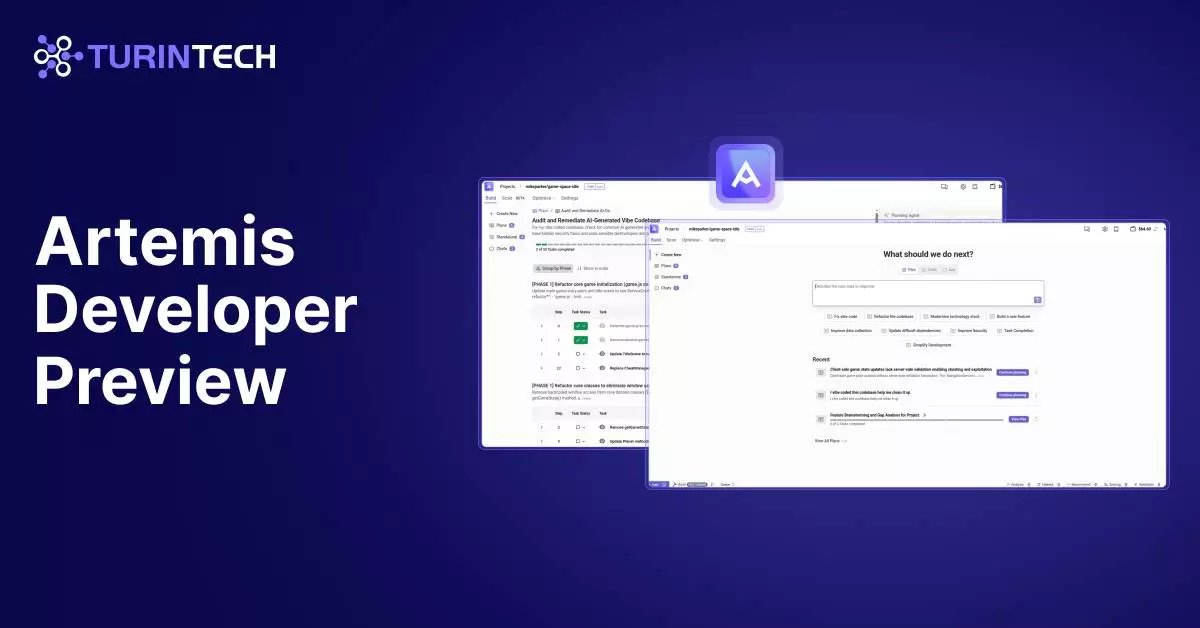
TurinTech launches Artemis Developer Preview, transforming the code developers have into the code they need