NEW ORLEANS (AP) — New Orleans’ mayor-elect said Friday that a federal immigration crackdown launched this week is already causing harm as encounters between masked agents and residents, including some caught on video, has prompted public backlash in the blue city.
Frustrated city officials pointed to the case of Jacelynn Guzman, a 23-year-old U.S. citizen who was walking back to her Louisiana home from a trip to the grocery store on Wednesday when a truck pulled up beside her and two masked federal agents approached her, according to security footage obtained by The Associated Press.
Guzman began running away as a second vehicle arrived and the agents pursued her down the sidewalk until she reached her family's home in Marrero, a neighborhood across the Mississippi River from downtown New Orleans. Guzman's mother has lived there her entire life.
“We’re legal, we are from here, born and raised,” Guzman shouted back at the agents. “Don’t chase me, that is disgusting.”
Guzman, who has no criminal record, told the AP that she panicked when agents approached.
“That was my only thought that they were going to take me and I wasn’t going to get to have a say in that decision,” Guzman said. “Because most likely they didn’t care that I was saying I was a U.S. citizen. So why would they care what else I had to say?”
Several hundred agents under Border Patrol commander Gregory Bovino have converged on Southeast Louisiana this week as part of an immigration enforcement operation seeking to arrest 5,000 people. The Department of Homeland Security has touted dozens of arrests with only limited details released. Many Hispanic residents have said they feel their community is at risk of being abused or detained by agents regardless of their legal status.
Alongside city council members, Democratic Congressman Troy Carter, Hispanic leaders and civil rights advocates, Mayor-elect Helena Moreno expressed “deep concern over recent actions” by federal agents. She said the operation is causing harm — forcing businesses to shutter and workers to stay home out of fear of mass arrests.
While federal officials have repeatedly said the goal of the operation is to target dangerous criminals who entered the country illegally, Moreno argued “that does not appear to be the case.”
Moreno said she is asking for regular public briefings from federal agencies, which she asks includes data on the stops, detentions, charges, warrants, outcomes and if any of the people detained have violent criminal histories.
“Without this full visibility into these enforcement actions, it is impossible to determine whether this particular operation is actually targeting the most dangerous offenders,” Moreno said.
Guzman’s stepfather, Juan Anglin, said he understood federal agents had a job to do but believed they were going about it in the wrong way.
Anglin heard his stepdaughter screaming outside and went out to confront the agents. He told the AP that Guzman ran from the agents because she was a young woman surrounded by aggressive masked men.
“I thought she was going to be kidnapped, honestly,” Anglin said. “I thought somebody was going to hurt her."
In response to the incident, the Department of Homeland Security said Border Patrol had been searching for a “criminal illegal alien previously charged with felony theft and convicted of illegal possession of stolen property.”
DHS said the agents “encountered a female matching the description of the target” and that agents “identified themselves" and left when they realized Guzman was not who they were seeking.
Anglin disputes the government's narrative and says she was stopped solely because of her appearance.
“Just because you look brown, you look Hispanic, you're going to get stopped,” he said. “Because now it doesn’t matter if you have papers, you speak English or you are a citizen, it’s not enough."
Sara Cline contributed reporting from Baton Rouge.
Brook is a corps member for The Associated Press/Report for America Statehouse News Initiative. Report for America is a nonprofit national service program that places journalists in local newsrooms to report on undercovered issues.
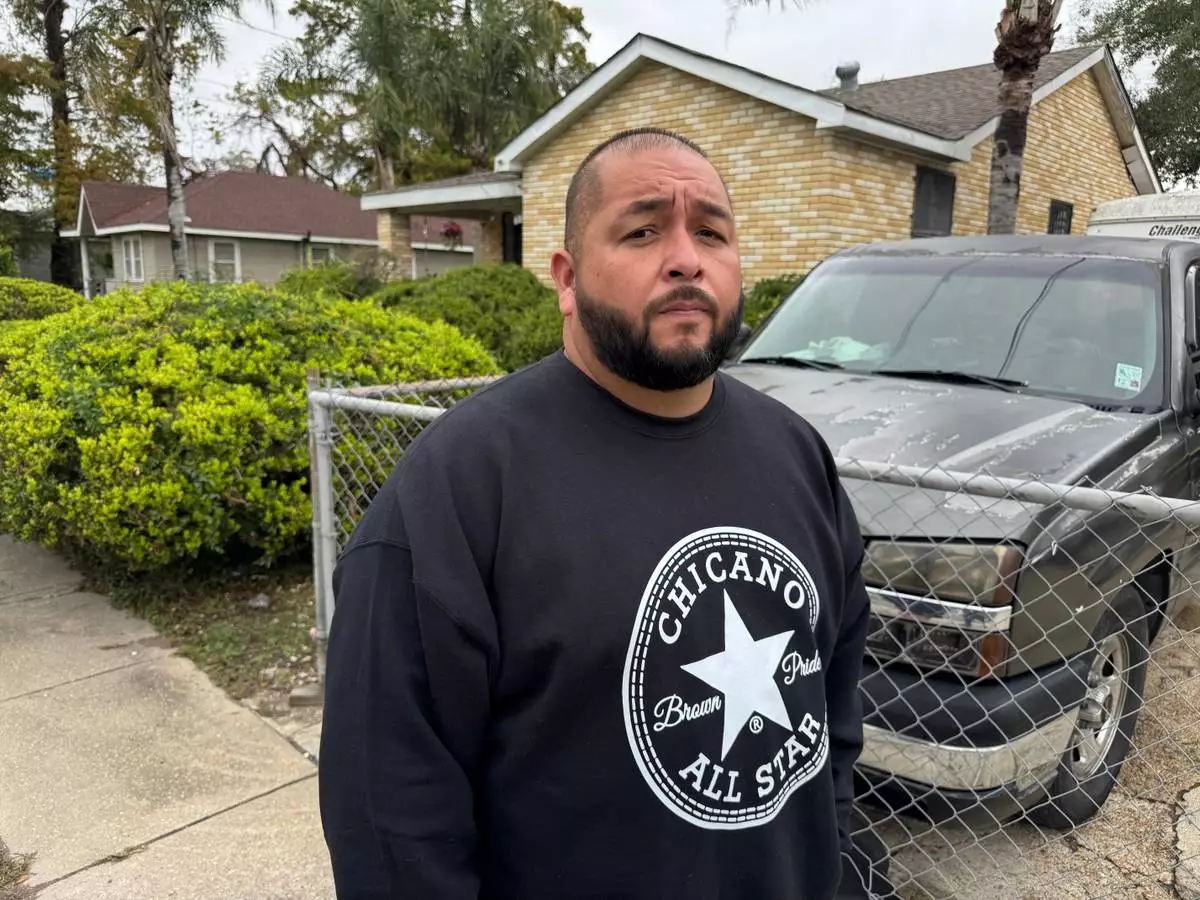
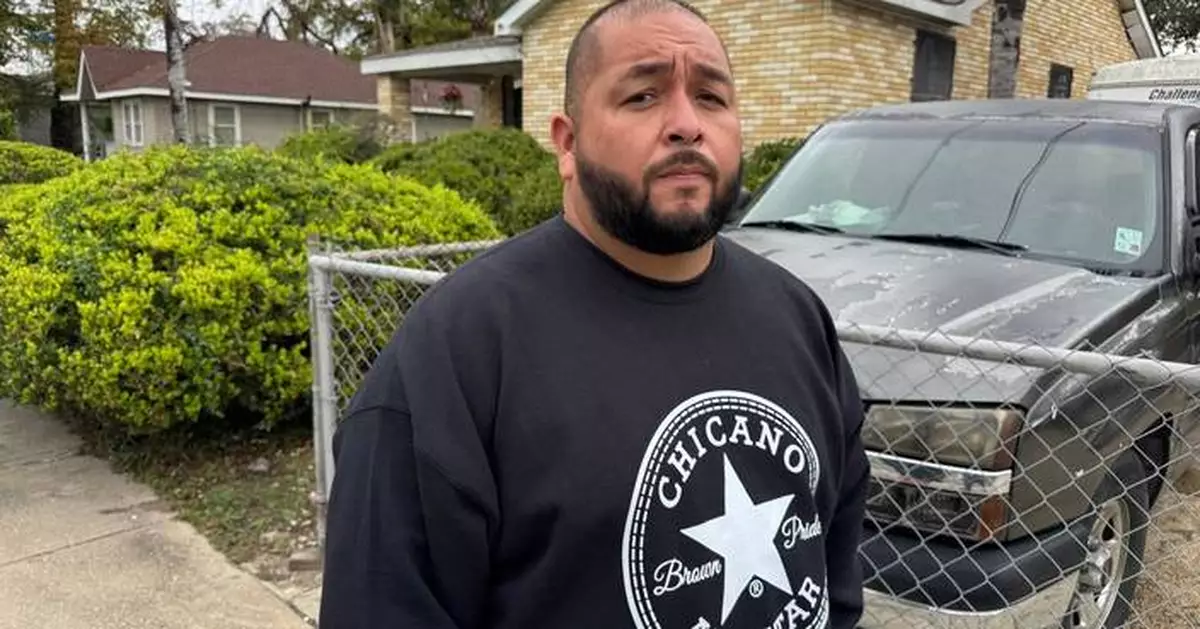
Juan Anglin, who watched federal agents chase his step-daughter Jacelynn Guzman, a 23-year-old U.S. citizen, as she was walking on the sidewalk, stands outside his home in Marrero, La., Thursday, Dec. 5, 2025. (AP Photo/Jack Brook)
BANGKOK (AP) — The price of a barrel of Brent crude oil briefly topped $100 a barrel early Thursday, just days after it spiked near $120 in the latest jolts to financial markets and the global economy as a whole.
Oil prices initially shot more than 9% higher as supply concerns worsened with Iranian attacks on commercial shipping around the Strait of Hormuz. The U.S. campaign of airstrikes in Iran is now in its 13th day.
U.S. benchmark crude oil jumped 4.5% to about $91 a barrel. Brent, the international standard, was trading 5.3% higher at about $97 per barrel.
Iran has escalated its attacks aimed at generating enough global economic pain to pressure the United States and Israel to end the war. But there was no sign the conflict was subsiding.
Iran has targeted oil fields and refineries in Gulf Arab nations and effectively stopped cargo traffic through the narrow Strait of Hormuz, through which a fifth of all traded oil passes.
In response, the International Energy Agency agreed Wednesday to release 400 million barrels of oil, the largest volume of emergency oil reserves in its history, in a bid to counter the war’s effects on energy markets. The U.S. planned to release 172 million barrels of oil next week from its Strategic Petroleum Reserve to combat steep prices.
The IEA’s announcement came a day after energy ministers from the Group of Seven — the leading industrialized nations of Canada, the United States, France, Italy, Japan, Germany and Britain — met in Paris to look at ways to bring down prices.
But the continued strife and uncertainty have fueled speculation prices could push still higher, and that pulled shares lower.
The future for the S&P 500 lost 0.4% while that for the Dow Jones Industrial Average was 0.5% lower.
Germany's DAX lost 0.4% to 23,533.60, while the CAC 40 in Paris lost 0.7% to 7,982.64. Britain's FTSE 100 sank 0.7% to 10,285.91.
During Asian trading, Tokyo's Nikkei 225 fell 1% to 54,452.96. In South Korea, the Kospi lost 0.5% to 5,583.25, while Hong Kong's Hang Seng gave up 0.7% to 25,716.76.
The Shanghai Composite index shed 0.1% to 4,129.10 and in Australia, the S&P/ASX 200 dropped 1.3% to 8,629.00.
On Wednesday, U.S. stocks were little changed as the S&P 500 edged 0.1% lower for a second day of modest moves following a wild stretch caused by the war with Iran. The Dow Jones Industrial Average dropped 0.6%, to its lowest level this year, and the Nasdaq composite rose 0.1%.
Since the start of the war, sharp moves for oil prices have triggered swings up and down for financial markets worldwide, sometimes by the hour. Oil prices briefly spiked to their highest levels since 2022 this week because of the possibility that production in the Middle East could be blocked for a long time, which in turn raised worries about a surge of debilitating inflation for the global economy.
In a report, Oxford Economics said “the swings in Brent crude oil prices over the past several days are eye-catching and odds are volatility will remain because of the absence of a timeline for when the conflict will de-escalate and when the Strait of Hormuz, which is effectively closed, will see traffic begin to recover.”
The level of volatility suggests that depending on news developments, oil prices could spike as high as $140 per barrel, it said.
A report released Wednesday showed U.S. consumers paid prices for groceries, gasoline and other costs of living that were 2.4% higher in February than a year earlier.
That's the same level as the month before and better than the 2.5% that economists expected, but it remains above the Federal Reserve's 2% target and doesn’t include the spike in gasoline prices this month due to the war.
High inflation combined with a stagnating economy would create a worst-case scenario called “stagflation” that the Federal Reserve has no good tools to fix. Stagflation fears are rising not just because of higher oil prices but also because of weakness in hiring by U.S. employers.
In other dealings early Thursday, the dollar fell to 158.84 Japanese yen from 158.95 yen. The euro fell to $1.1553 from $1.1566.
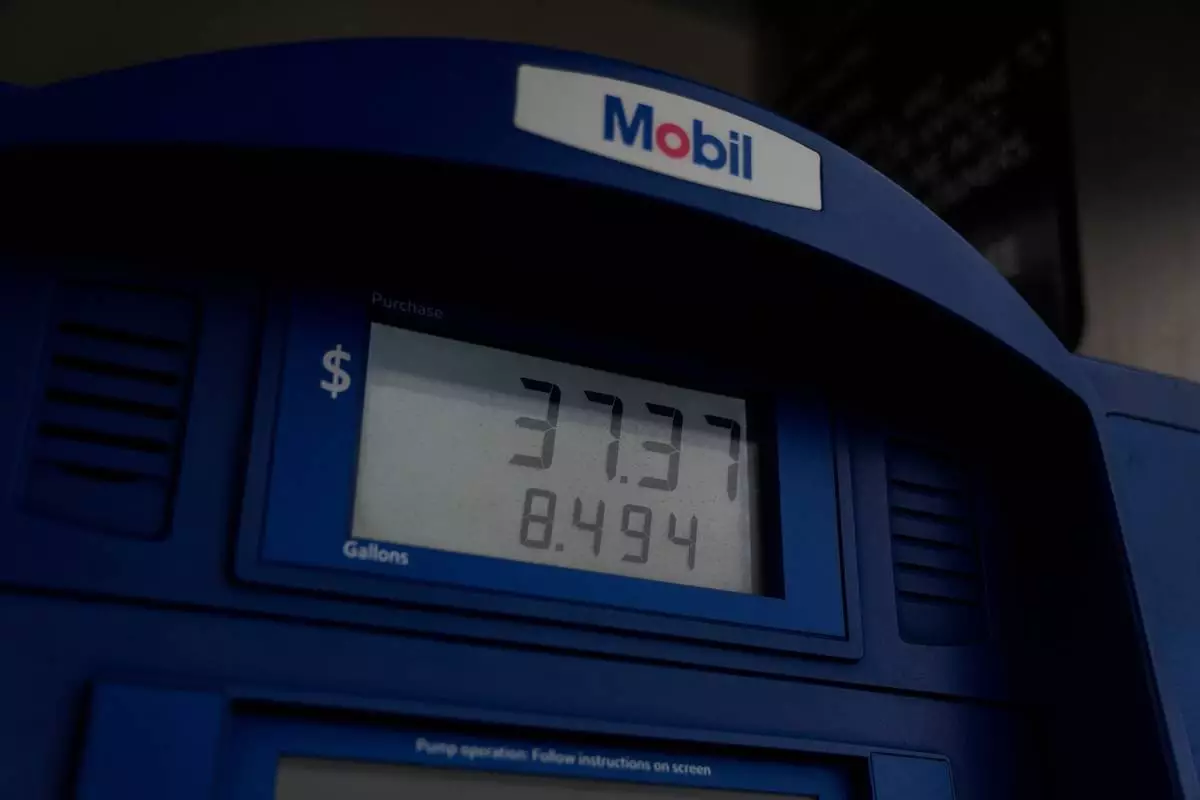
Gas prices are displayed at a station Wednesday, March 11, 2026, in Evanston Ill. (AP Photo/Erin Hooley)
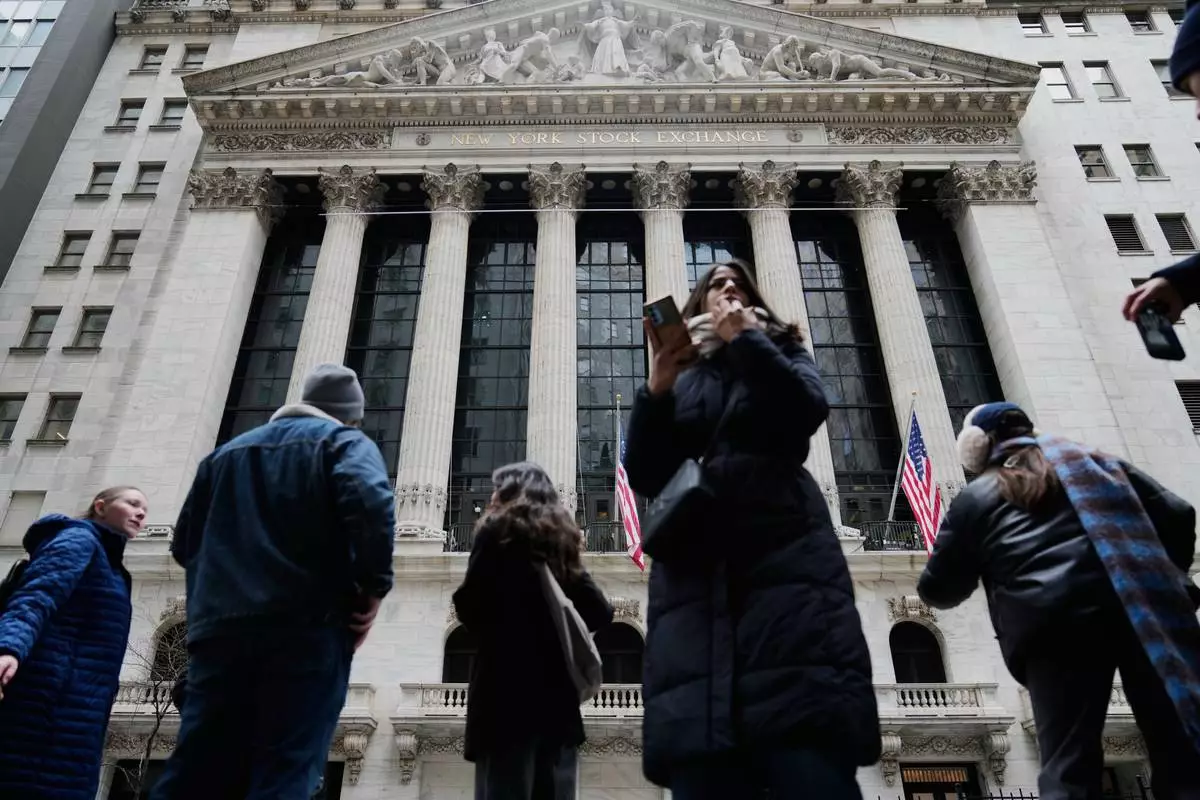
Pedestrians mill about outside the New York Stock Exchange in New York, Friday, March 6, 2026. (AP Photo/Seth Wenig)
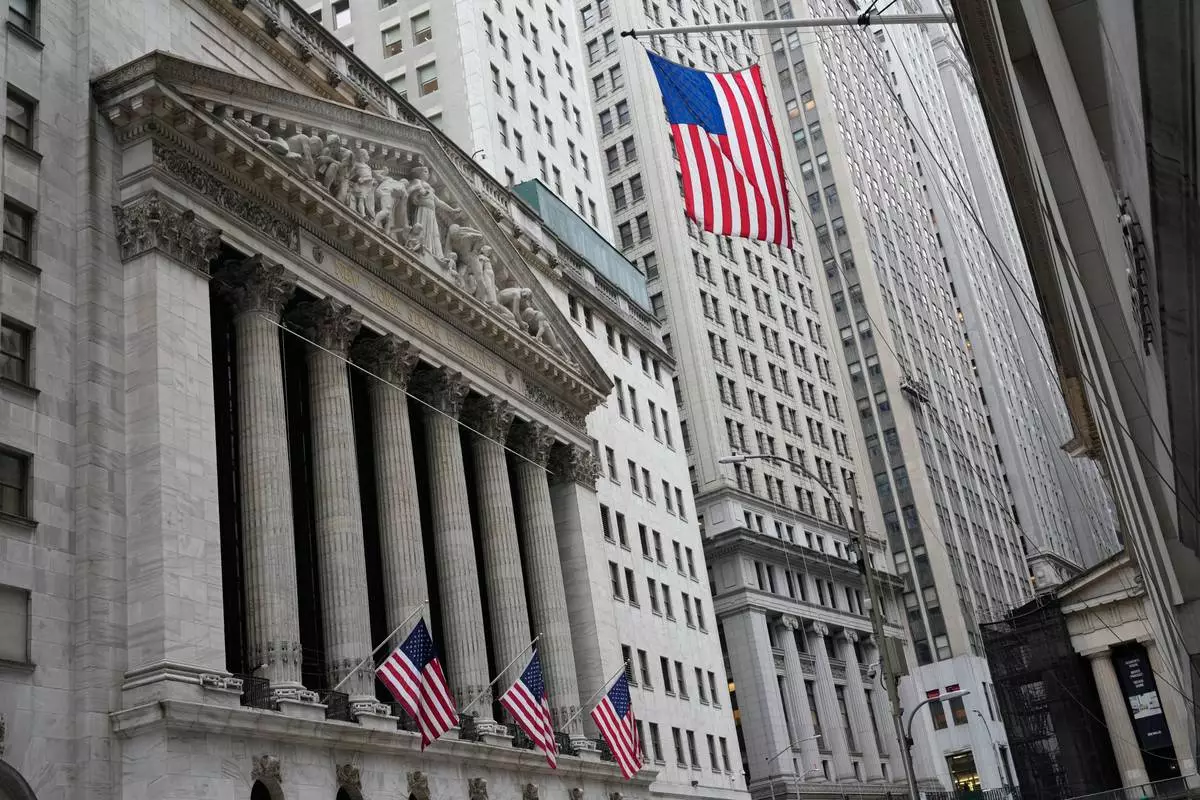
The New York Stock Exchange is seen in New York, Friday, March 6, 2026. (AP Photo/Seth Wenig)
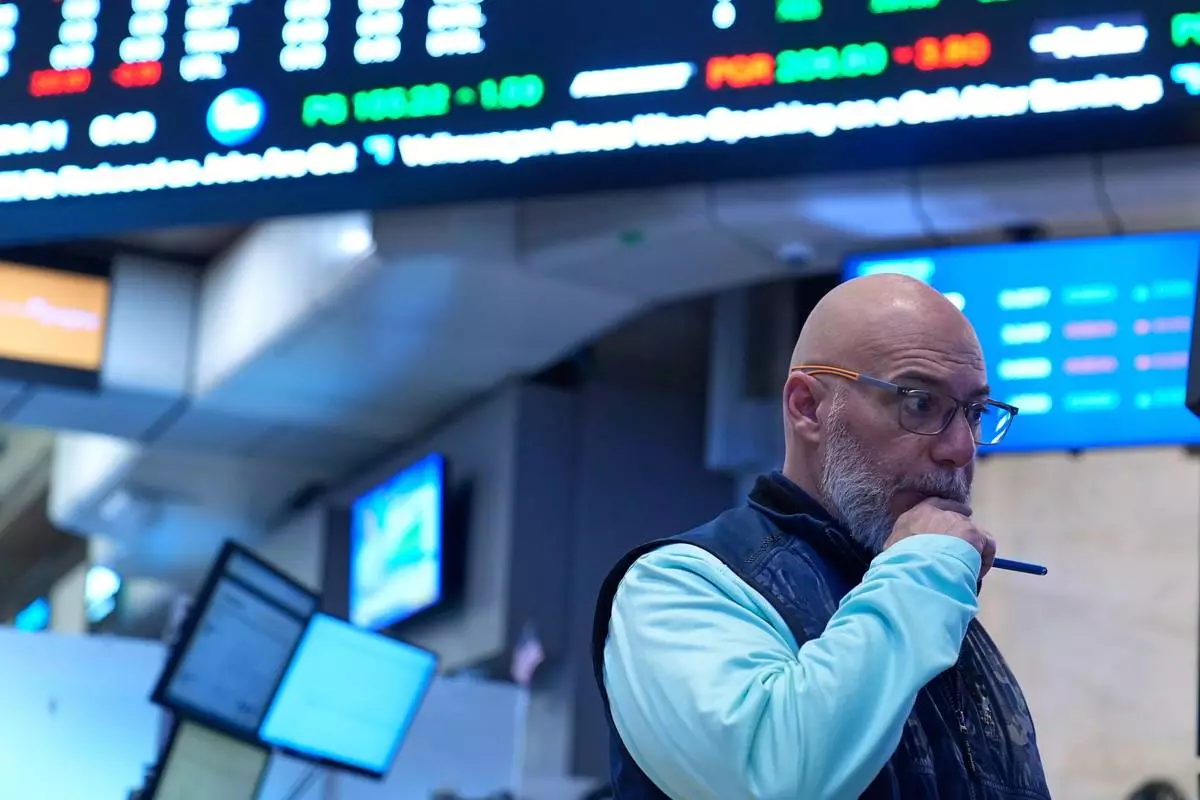
Traders work on the floor at the New York Stock Exchange in New York, Tuesday, March 10, 2026. (AP Photo/Seth Wenig)