DAKAR, Senegal (AP) — U.S. President Donald Trump is hosting the leaders of the Democratic Republic of Congo and Rwanda on Thursday for a deal-signing aimed at ending the conflict in Congo.
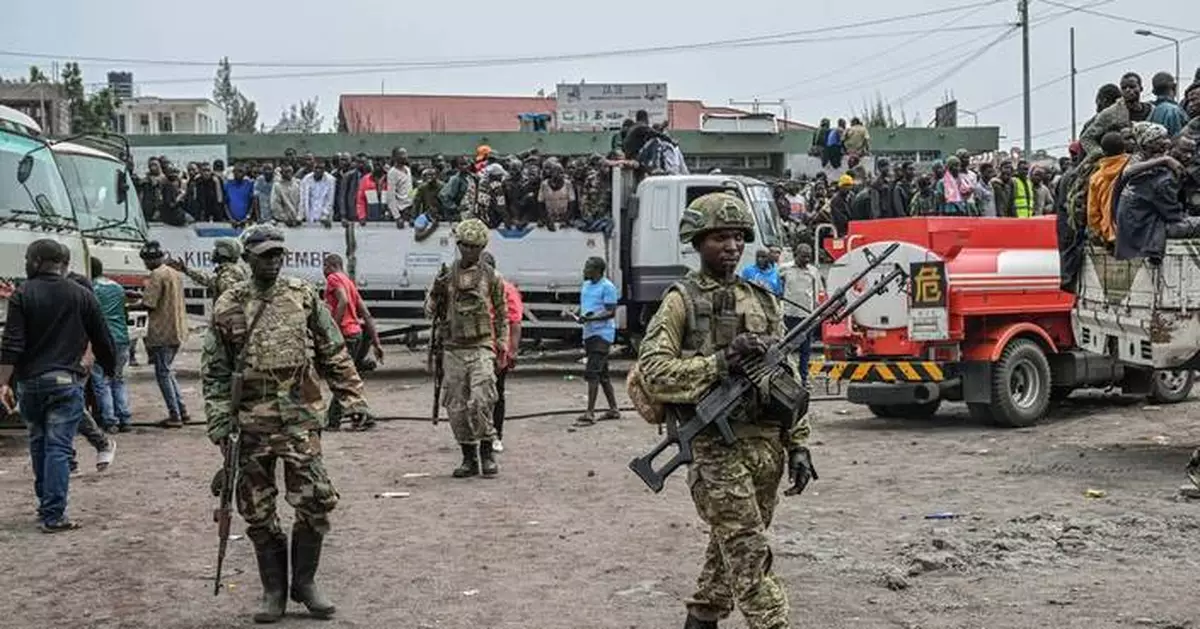
The Central African nation has been battered by decades-long fighting with more than 100 armed groups, the most potent being the Rwanda-backed M23 rebels. In a major escalation earlier this year, M23 seized Goma and Bukavu, two key cities in eastern Congo.
Peace efforts mediated by Qatar and the United States this year have failed to put an end the conflict.
In recent weeks, residents reported pockets of clashes and rebel advances in various localities. Both the M23 and Congolese forces have often accused each other of violating the terms of a ceasefire agreed to earlier this year.
Here is what to know about the conflict:
Congo and neighboring Rwanda have long accused each other of supporting various rival armed groups in eastern Congo, a mineral-rich region and major hub for humanitarian aid.
The conflict in Congo can be traced to the aftermath of the 1994 genocide in Rwanda, where Hutu militias killed between 500,000 and 1 million ethnic Tutsi, as well as moderate Hutus and Twa, Indigenous people.
When Tutsi-led forces fought back, nearly 2 million Hutus crossed into Congo, fearing reprisals. Tensions between Hutus and Tutsis have repeatedly flared in Congo since then.
Rwandan authorities have accused the Hutus who fled of participating in the genocide and alleged that elements of the Congolese army protected them. They have argued that the militias formed by a small fraction of the Hutus are a threat to Rwanda’s Tutsi population.
The M23 group is made up primarily of ethnic Tutsis who failed to integrate into the Congolese army and led a failed insurgency against the Congolese government in 2012. It was then dormant for a decade, until its resurgence in 2022.
M23 claims to defend Tutsi and Congolese of Rwandan origin from discrimination. Critics say it’s a pretext for Rwanda to obtain economic and political influence over eastern Congo.
Congo, the United States and U.N. experts accuse Rwanda of backing the M23, which had hundreds of members in 2021. Now, according to the U.N., the group has around 6,500 fighters.
While Rwanda denies that claim, it acknowledged last year that it has troops and missile systems in eastern Congo, allegedly to safeguard its security. U.N. experts estimate there are up to 4,000 Rwandan forces in Congo.
Access to Congo’s critical minerals used in electronics has played a central role in the fighting. The country is the world’s largest producer of cobalt, a metal essential for lithium-ion batteries that power electric vehicles, smartphones and other devices.
Congo is also a leading supplier of coltan, the mineral used to make tantalum, which is an essential component in fighter jets, laptops and other electronics. The country produced about 40% of the world’s coltan in 2023, according to the U.S. Geological Survey. Australia, Canada and Brazil are among the other major producers.
Although Rwanda says its involvement in Congo is to protect its territory and punish those connected to the 1994 genocide, its interests are also tied to the valuable minerals.
A team of U.N. experts said in a report in July that Rwanda was benefiting from minerals “fraudulently” exported from areas under the control of the M23 group. Rwanda denied this.
China and the United States also have financial interests in Congolese mines.
Critical minerals are of interest to Trump as Washington looks for ways to circumvent China to acquire rare earth elements. China accounts for nearly 70% of the world’s rare earth mining and controls roughly 90% of global rare earths processing.
Little of the region’s wealth has trickled down to Congolese citizens, with 60% out of its 100 million residents living below the poverty line. Instead, fighting over natural resources has destabilized the country.
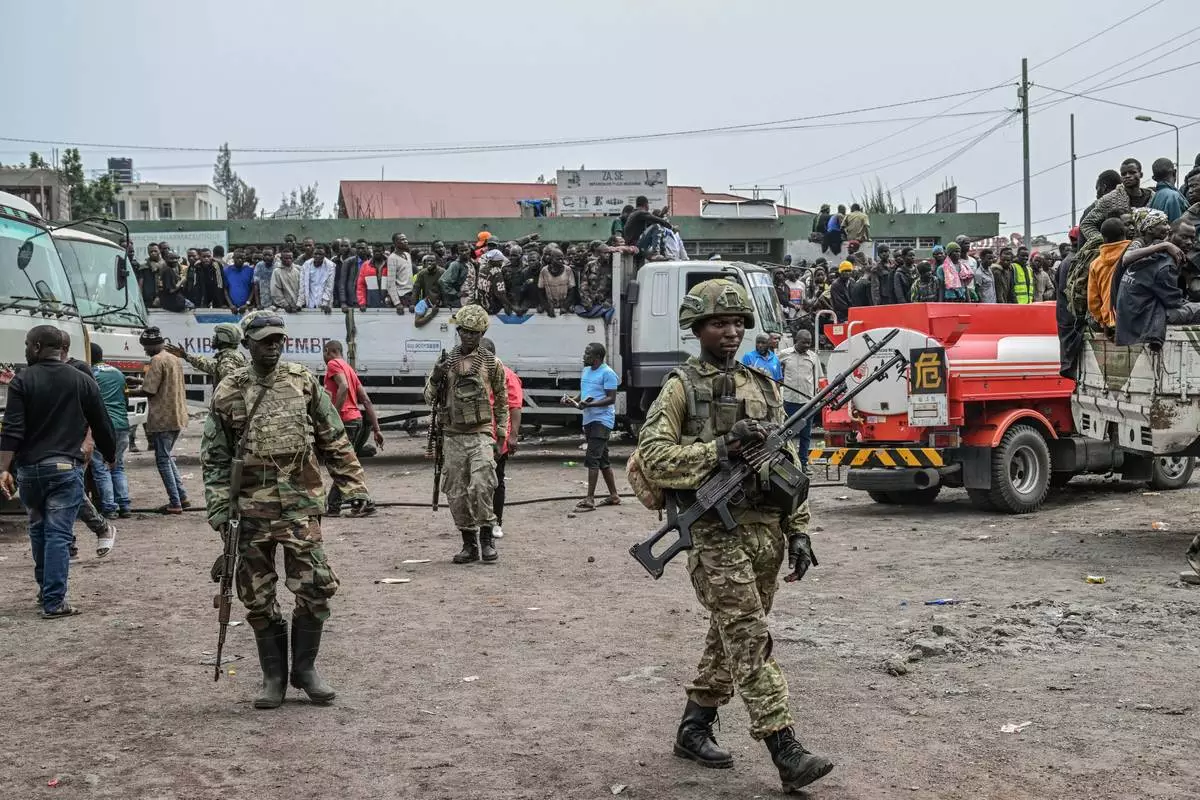
FILE - M23 rebels escort government soldiers and police who surrendered to an undisclosed location in Goma, Democratic republic of the Congo, Jan. 30, 2025. (AP Photo/Moses Sawasawa, File)
The risk of a catastrophic explosion at a damaged chemical tank in Southern California has been eliminated following a close overnight inspection that confirmed a crack in the tank relieved pressure and cooled the chemical, authorities said Monday.
Officials said crews conducted tank temperature checks at night to reduce risks to firefighters, avoiding daytime operations when heat from the tank made conditions around it most dangerous. The overnight mission allowed crews to verify the crack and confirm temperatures were falling, Orange County Fire Authority division chief Craig Covey said Monday morning.
Covey said the results of overnight evaluation of the tank — that the temperature inside had dropped and that pressure had been released — was “incredibly positive news.”
However, evacuation orders remained in place for about 50,000 people in Garden Grove, California, located south of Los Angeles.
Covey said falling temperatures and the release of pressure from the tank were allowing officials to “turn the corner on this incident” after days of concern about a possible explosion.
There has been no chemical leak as of early Monday, but the Orange County Fire Authority said the risk to public safety is “ongoing.”'
After the tank overheated Thursday and began venting vapors, firefighters have repeatedly sprayed the tank with water in an attempt to cool the chemical inside, methyl methacrylate, which is used to make plastic parts.
The tank's interior reached 100 degrees (37.7 Celsius) Sunday, an increase of 10 degrees Fahrenheit (5.5 Celsius) since Saturday, according to Democratic state Sen. Tom Umberg. On Monday, Covey said the temperature fell to 93 degrees F (33.9 degrees C).
Gov. Gavin Newsom declared a state of emergency Saturday and said he asked President Donald Trump to issue an emergency declaration to bolster federal support for local and state officials.
The tank at GKN Aerospace Transparency Systems, which makes parts for commercial and military aircraft, holds 6,000 to 7,000 gallons (22,700 to 26,500 liters) of methyl methacrylate used to make plastic parts.
The first goal of firefighters was to cool off the chemical inside the tank to prevent a leak or explosion.
Drones were monitoring temperatures at 10-minute intervals to watch for any spikes. Containment barriers were set up to prevent the chemical from getting into storm drains or reaching creeks or the nearby ocean in the event of a spill, Covey said earlier.
As the interior temperature rises, methyl methacrylate converts from a liquid to a gas and increases the pressure, according to Purdue University engineering professor Andrew Whelton, who had said earlier that the crack could mean product or pressure is being released, reducing the chance of explosion.
“Think of a soda can. If you leave it in a hot car it can explode,” Whelton said. “But if you put a hole in the can, the product is released and the can itself doesn’t explode.”
An explosion that could spread the chemical over a broad area and send shrapnel flying would be the worst-case scenario, he said.
Aerial photos taken by The Associated Press showed streets in the area were empty Sunday, while several evacuation shelters were open. At a high school in neighboring La Palma, people slept in cars or on mats and sleeping bags on the asphalt.
Garden Grove is next to Anaheim, home to Disneyland’s two theme parks, which were not under evacuation orders. Park officials said they were monitoring the situation.
Exposure to methyl methacrylate can cause serious respiratory problems, neurological problems and irritation to the skin, eyes and throat, according to fact sheets about the chemical.
Whelton said if an explosion occurs, it will be crucial to conduct detailed air monitoring specifically for methyl methacrylate and not just generic tests for volatile organic compounds as officials did after a 2023 train derailment in East Palestine, Ohio, which released more than 115,000 gallons (435,000 liters) of vinyl chloride after officials blew open five tank cars and burned the chemical.
Orange County health officials said the chemical is easy to smell and people may notice it over a large area without being harmed.
Some Garden Grove residents filed a class-action federal lawsuit Saturday against GKN Aerospace Transparency Systems, which operates the facility where the tank is located. Lawyers for the residents argued that regardless of what happens, property values in the surrounding community are sure to be impacted.
GKN Aerospace did not comment on the lawsuit but has apologized to residents and businesses forced to evacuate. It said Sunday it was “working around the clock to mitigate the risk of a leak.”
GKN Aerospace agreed in 2025 to pay state regulators more than $900,000 to settle violations involving recordkeeping, permitting issues and nitrogen oxide emissions, according to a report on the South Coast Air Quality Management District website.
Associated Press journalist Ethan Swope in Garden Grove, California, contributed to this report.
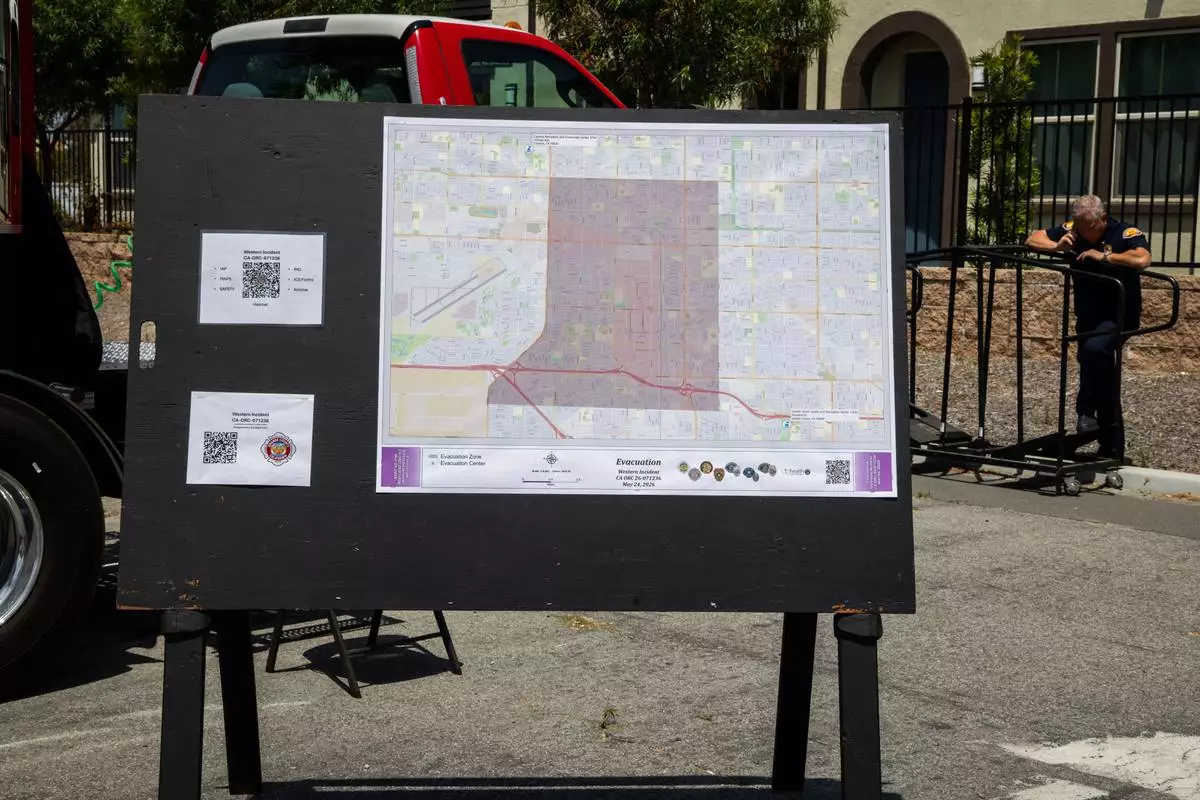
An evacuation map is displayed at the incident command post at the Los Alamitos Race Course in Cypress, Calif., on Sunday, May 24, 2026. (AP Photo/Ethan Swope)
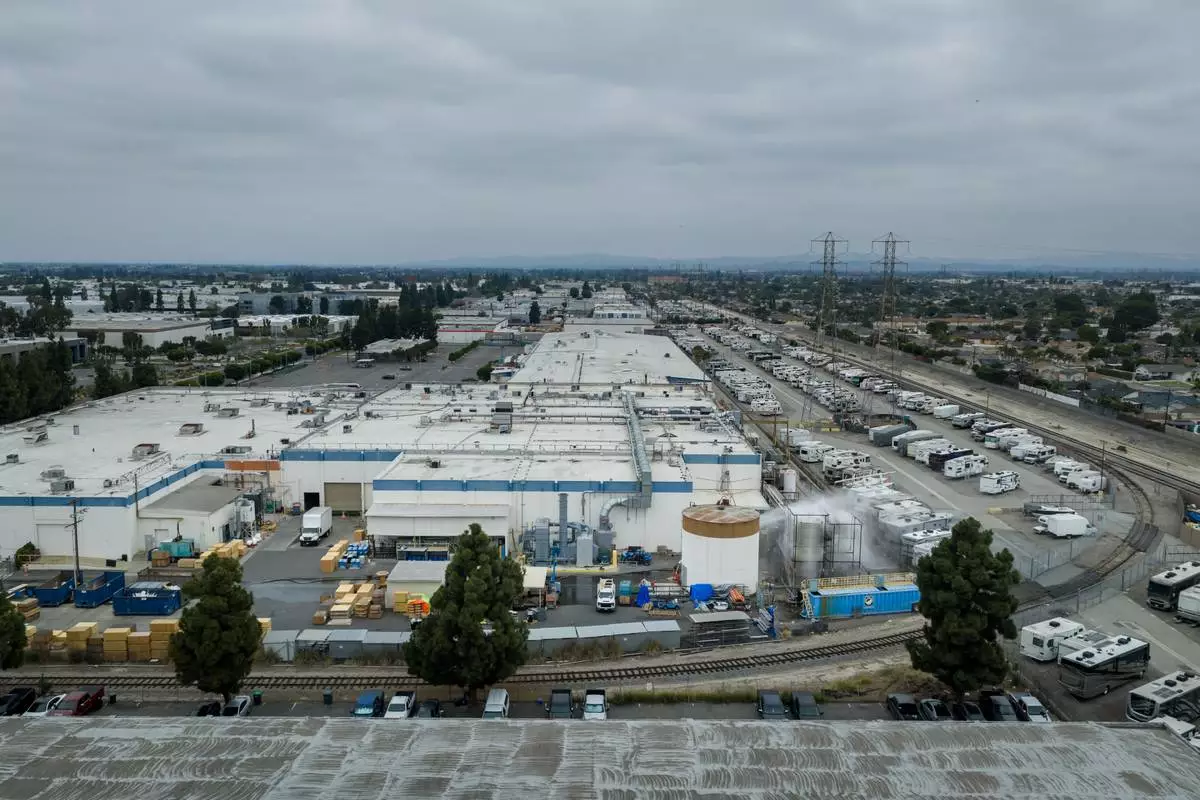
Water is sprayed on a damaged tank at GKN Aerospace in Garden Grove, Calif., on Sunday, May 24, 2026, after the tank containing a chemical used to make plastic parts overheated Thursday. (AP Photo/Ethan Swope)
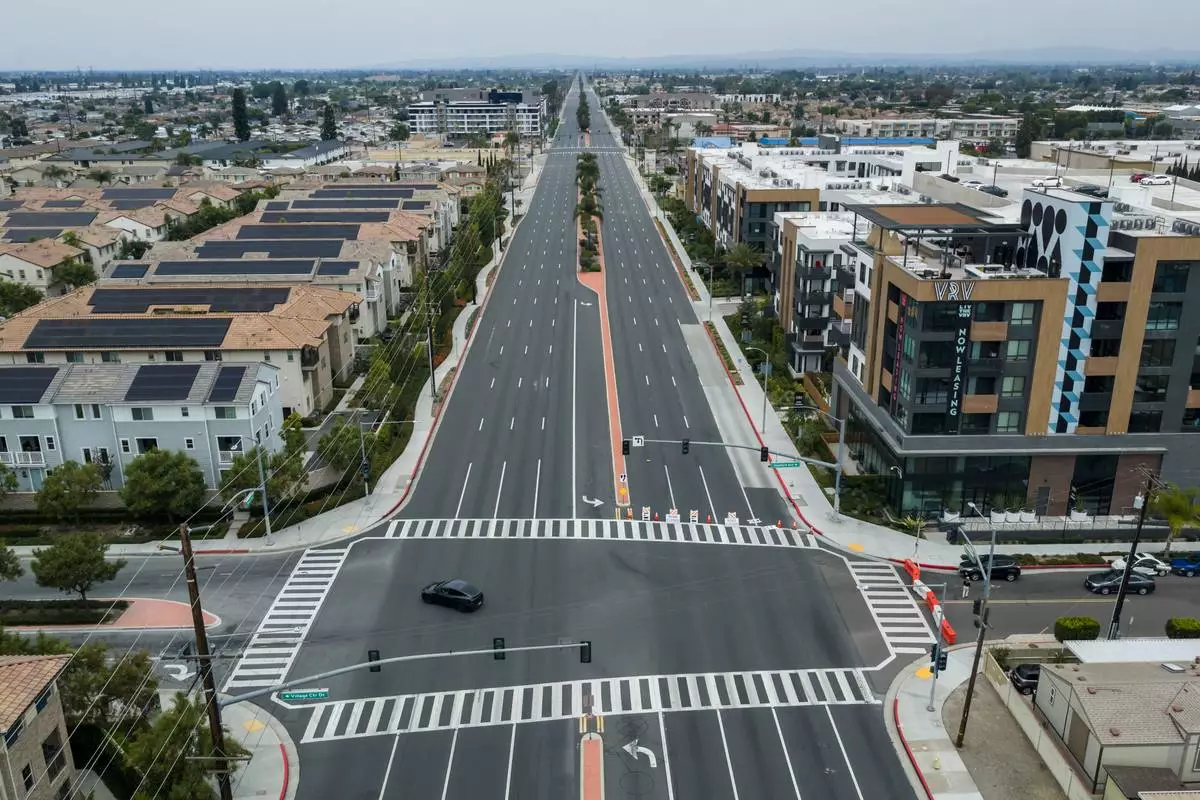
The streets remain empty in Garden Grove, Calif., on Sunday, May 24, 2026, after a storage tank containing a chemical used to make plastic parts overheated Thursday at an aerospace plastics facility. (AP Photo/Ethan Swope)

Emergency personnel work at the incident command post at the Los Alamitos Race Course Sunday, May 24, 2026, in Cypress, Calif. (AP Photo/Ethan Swope)
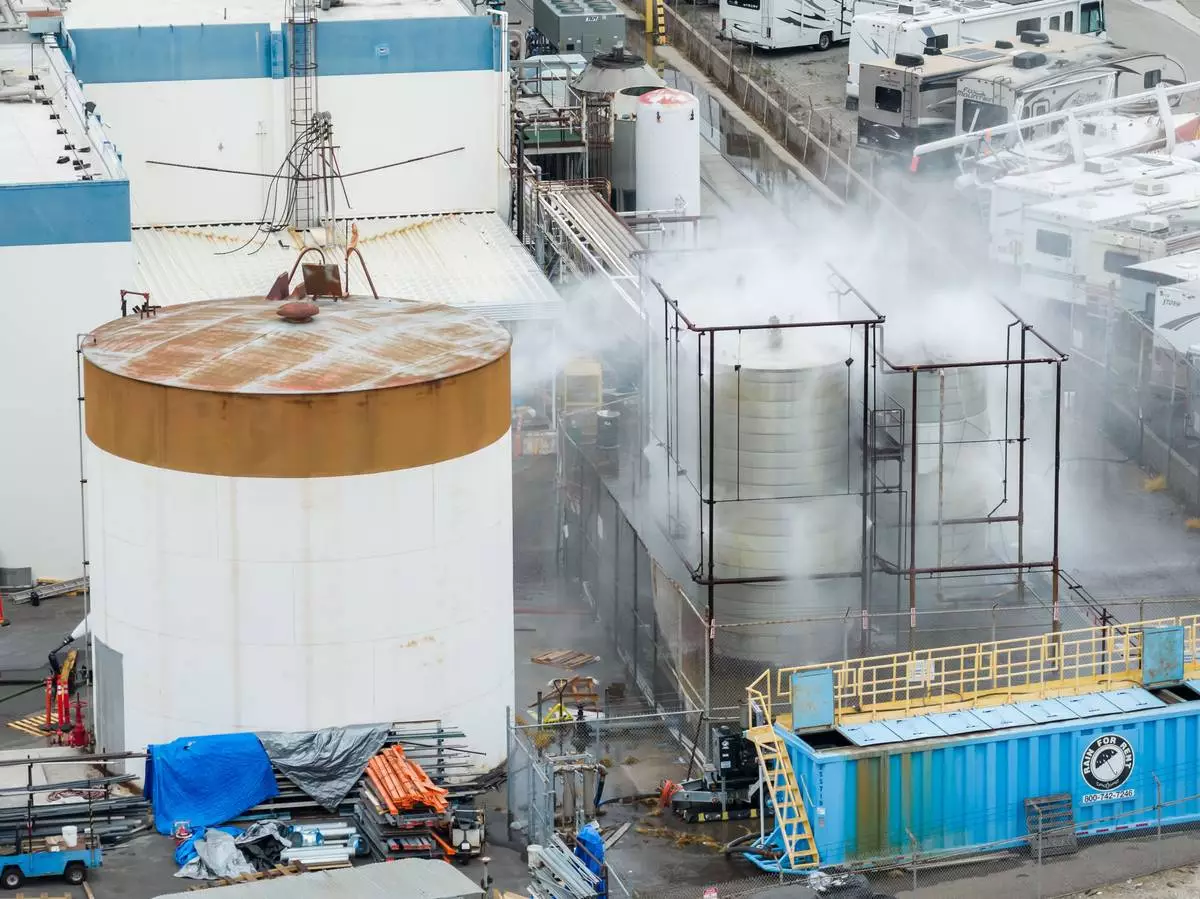
Water is sprayed on a damaged tank at GKN Aerospace in Garden Grove, Calif., on Sunday, May 24, 2026, after the tank containing a chemical used to make plastic parts overheated Thursday. (AP Photo/Ethan Swope)