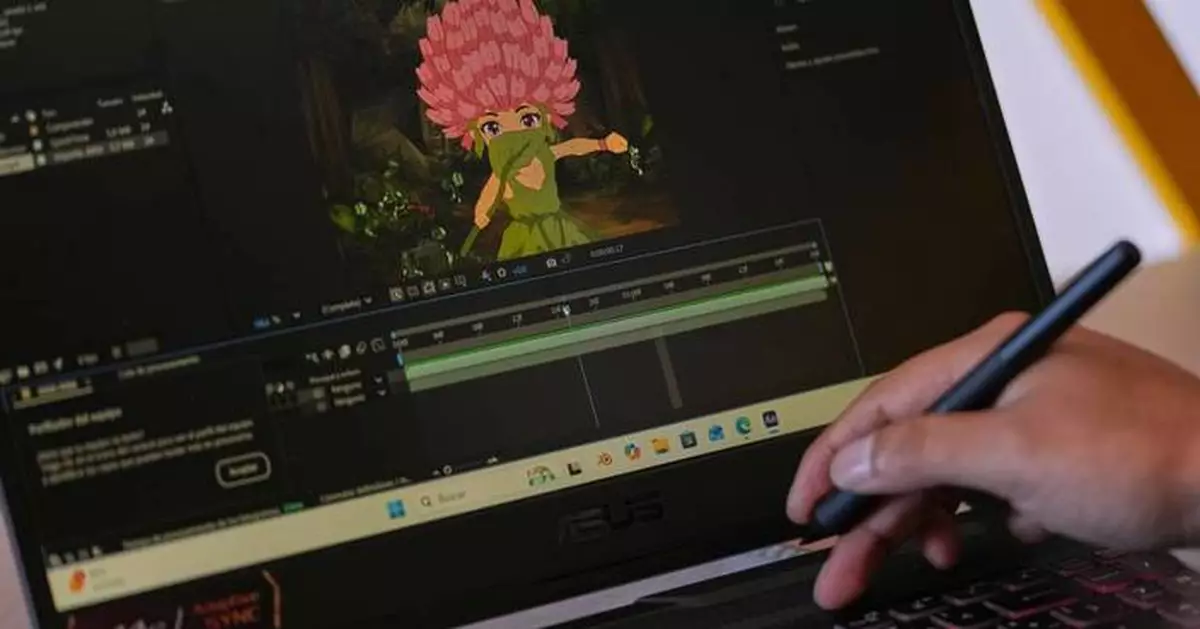
JATUN RUMI, Ecuador (AP) — High in the mountains of the Ecuadorian Andes, a group of young Otavalo Indigenous people is using anime to inspire pride in their ancient culture and language, especially among Otavalo children.
They produced an animated short film titled “We’re Aya” that follows the adventures of Aya, a mythical Otavalo warrior, and other characters who interact under the watchful eye of a condor — an iconic bird for Andean Indigenous cultures that symbolizes power and energy.
Click to Gallery
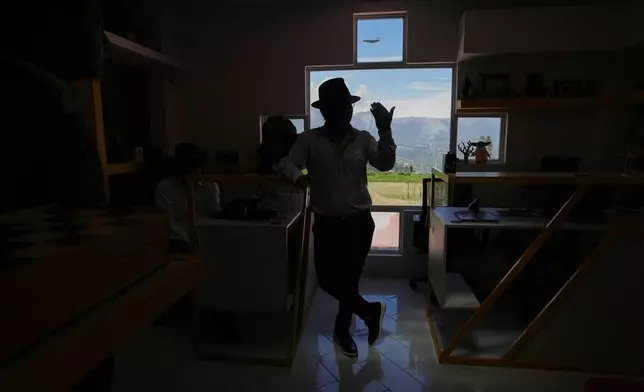
Tupac Amaru, the director of "Aya Somos," the first Quichua animated short, blending Otavalo culture with Japanese-style anime, gives an interview in Hatun Rumi, Ecuador, Wednesday, Dec. 3, 2025. (AP Photo/Dolores Ochoa)

Yarik Sisa, an artist with Yay Animación, sketches in his notebook while his colleagues talk about their project "Aya Somos," the first Quichua animated short, blending Otavalo culture with Japanese-style anime, in Hatun Rumi, Ecuador, Wednesday, Dec. 3, 2025. (AP Photo/Dolores Ochoa)
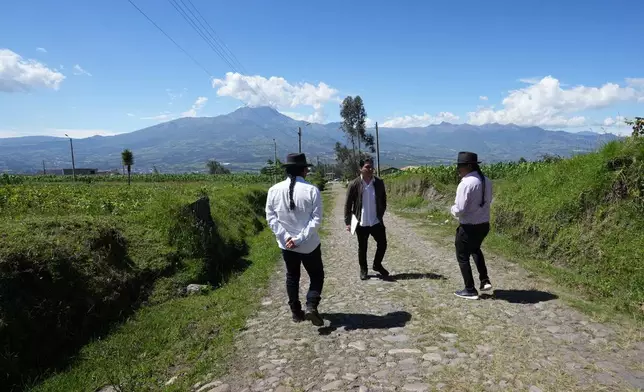
From left, Malkik Anrango, Yarik Sisa and Tupac Amaru walk among landscape they aim to capture in "Aya Somos," the first Quichua animated short, blending Otavalo culture with Japanese-style anime, in Hatun Rumi, Ecuador, Wednesday, Dec. 3, 2025. (AP Photo/Dolores Ochoa)
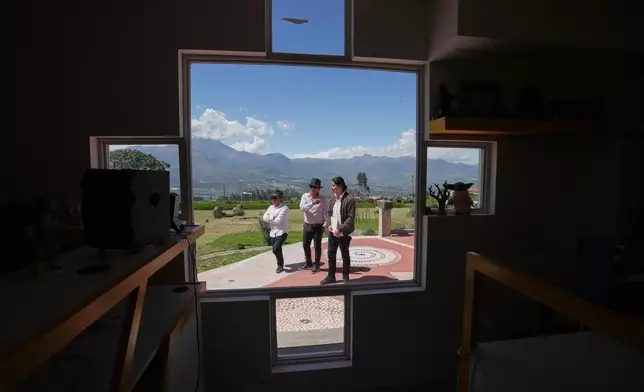
From left, Malkik Anrango, Tupac Amaru and Yarik Sisa chat about "Aya Somos," the first Quichua animated short, blending Otavalo culture with Japanese-style anime, in the courtyard of the Yay Animación studio in Hatun Rumi, Ecuador, Wednesday, Dec. 3, 2025. (AP Photo/Dolores Ochoa)
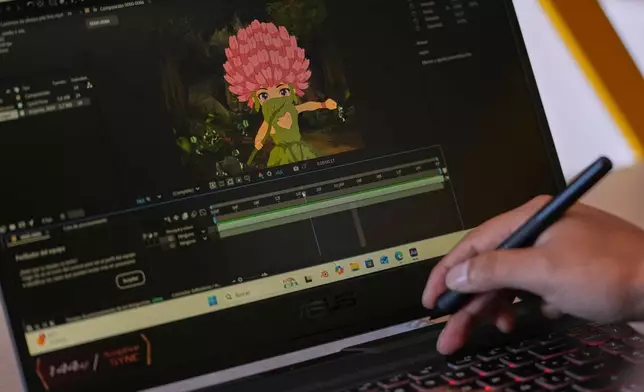
Yarik Sisa, an artist with Yay Animación, works on "Aya Somos," the first Quichua animated short, blending Otavalo culture with Japanese-style anime, in Hatun Rumi, Ecuador, Wednesday, Dec. 3, 2025. (AP Photo/Dolores Ochoa)
Inspired by the work of legendary Japanese animator Hayao Miyazaki, the story takes place in the mountains of Imbabura, a province in the northern Andes that is home to the Otavalo people, known for their handicrafts and textiles.
Tupac Amaru, director and producer of the 9-minute film, said the movie is part of an effort to maintain Otavalo customs and language, which began to erode as globalization created a more interconnected world and influenced their culture.
His people faced two options, “lock ourselves out (from the world) and defend our culture, language, spirituality and clothing or stand tall and fight back,” Amaru said.
The film with 12 Quichua-speaking characters is a first step in trying to get Otavalo children to appreciate their heritage, he said. Indigenous themes have been explored before in short and feature-length films produced in Peru and Ecuador but most of those films have had Spanish-speaking characters.
“Quichua is the vibration that gives meaning to existence and without the language, the meaning of life and our energy comes to an end,” Amaru said.
“Our children no longer know Quichua,” which means they have lost a communication tool and “are losing their sense of belonging, their energy,” he added.
Quichua, an Indigenous language that is part of the Quechua language family, is primarily spoken in Ecuador.
Yarik Sisa, creative manager for the film, said the story is inspired by ancestral practices that have survived the passage of time, including taking musical instruments to energetic points of the land the night before a celebration so that the instruments are endowed with “soul.”
The film also includes characters such as Ayaruku, which represents an indomitable spirit; Ayawa, a representation of the sublime and the feminine; and Ayaku, a child symbolizing tenderness.
These characters play their traditional instruments and stomp their feet as part of a rhythmic dance as they enter a dark cavern, which symbolizes globalization, where the spirits give them the mission of becoming new seeds of their people.
The film then shows an Indigenous grandfather talking to his granddaughter who promises her elder she will become a woman strong as a rock and a defender of their culture. Her grandfather then asks her to never stray from that path.
The team behind “We’re Aya” hopes to release more films and even video games in Quichua in the coming years and even enter the international video game market with games “made by Quichuas in a Quichua environment,” said Malkik Anrango, the film's creative director.
Follow AP’s coverage of Latin America and the Caribbean at https://apnews.com/hub/latin-america
This version has been updated to correct the name of the film’s creative director to Malkik Anrango.
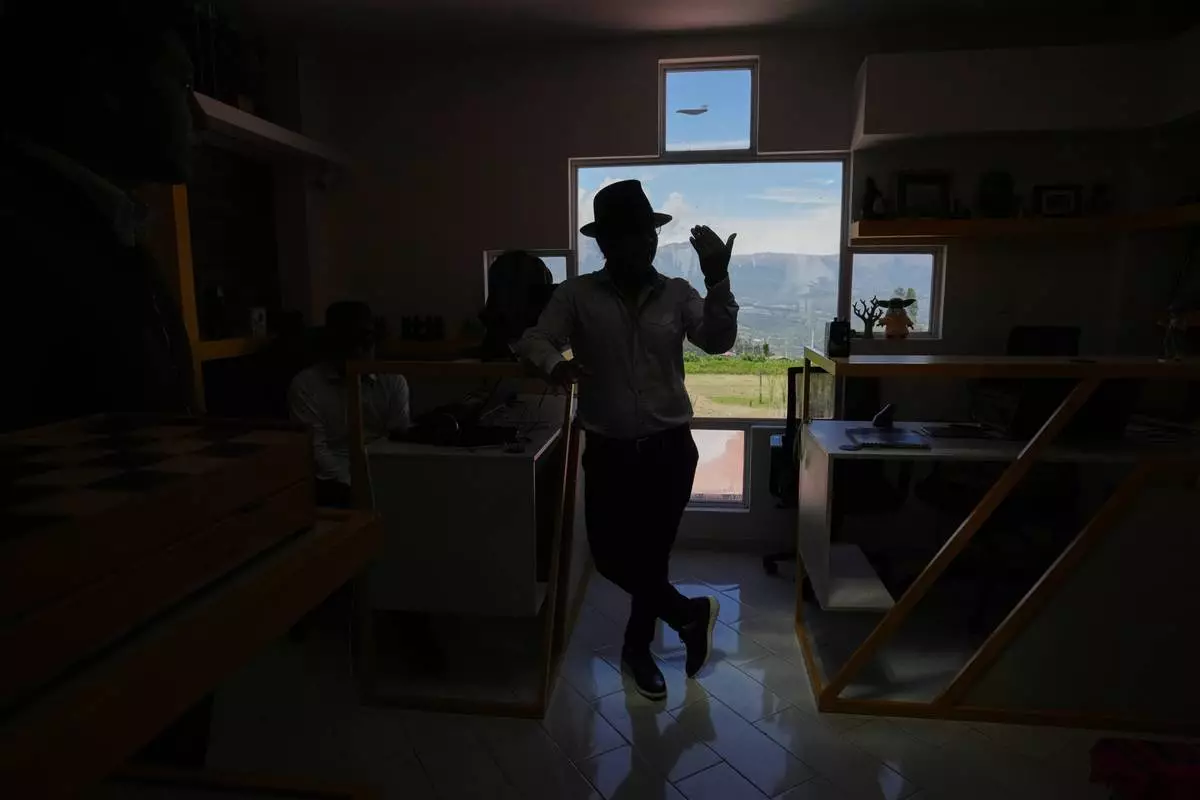
Tupac Amaru, the director of "Aya Somos," the first Quichua animated short, blending Otavalo culture with Japanese-style anime, gives an interview in Hatun Rumi, Ecuador, Wednesday, Dec. 3, 2025. (AP Photo/Dolores Ochoa)
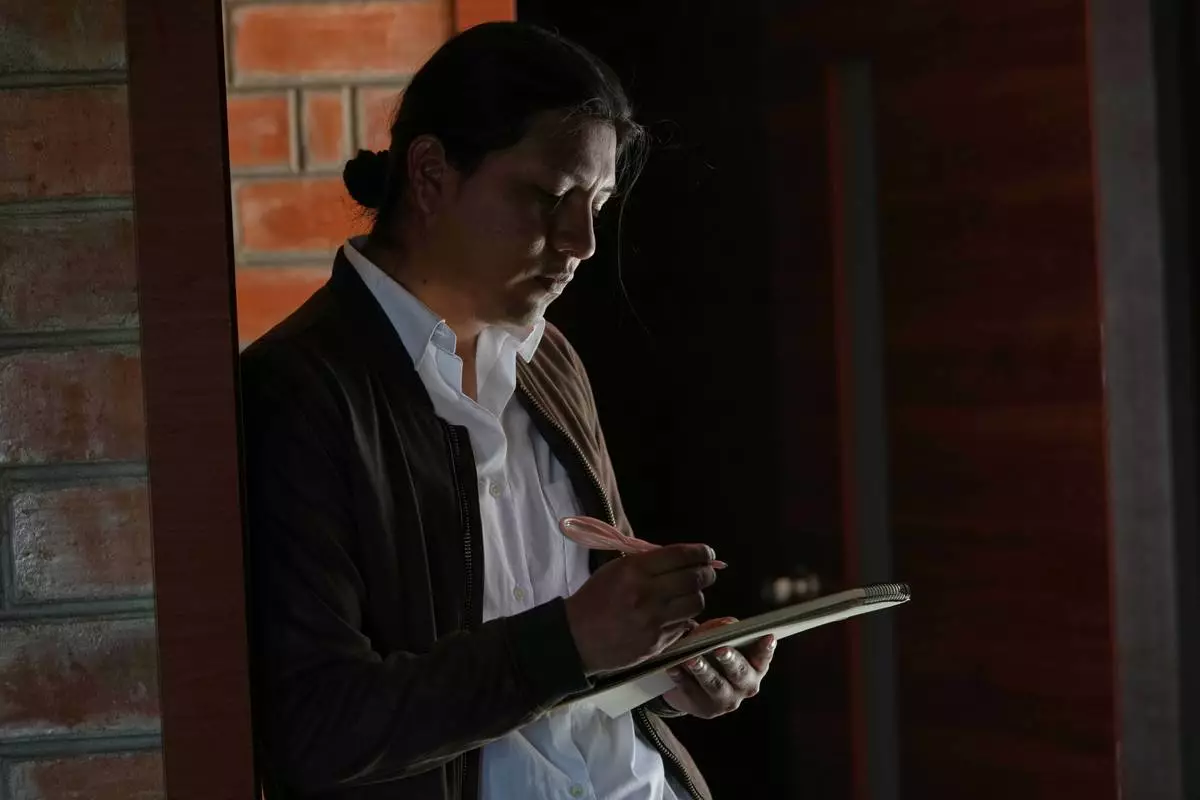
Yarik Sisa, an artist with Yay Animación, sketches in his notebook while his colleagues talk about their project "Aya Somos," the first Quichua animated short, blending Otavalo culture with Japanese-style anime, in Hatun Rumi, Ecuador, Wednesday, Dec. 3, 2025. (AP Photo/Dolores Ochoa)

From left, Malkik Anrango, Yarik Sisa and Tupac Amaru walk among landscape they aim to capture in "Aya Somos," the first Quichua animated short, blending Otavalo culture with Japanese-style anime, in Hatun Rumi, Ecuador, Wednesday, Dec. 3, 2025. (AP Photo/Dolores Ochoa)
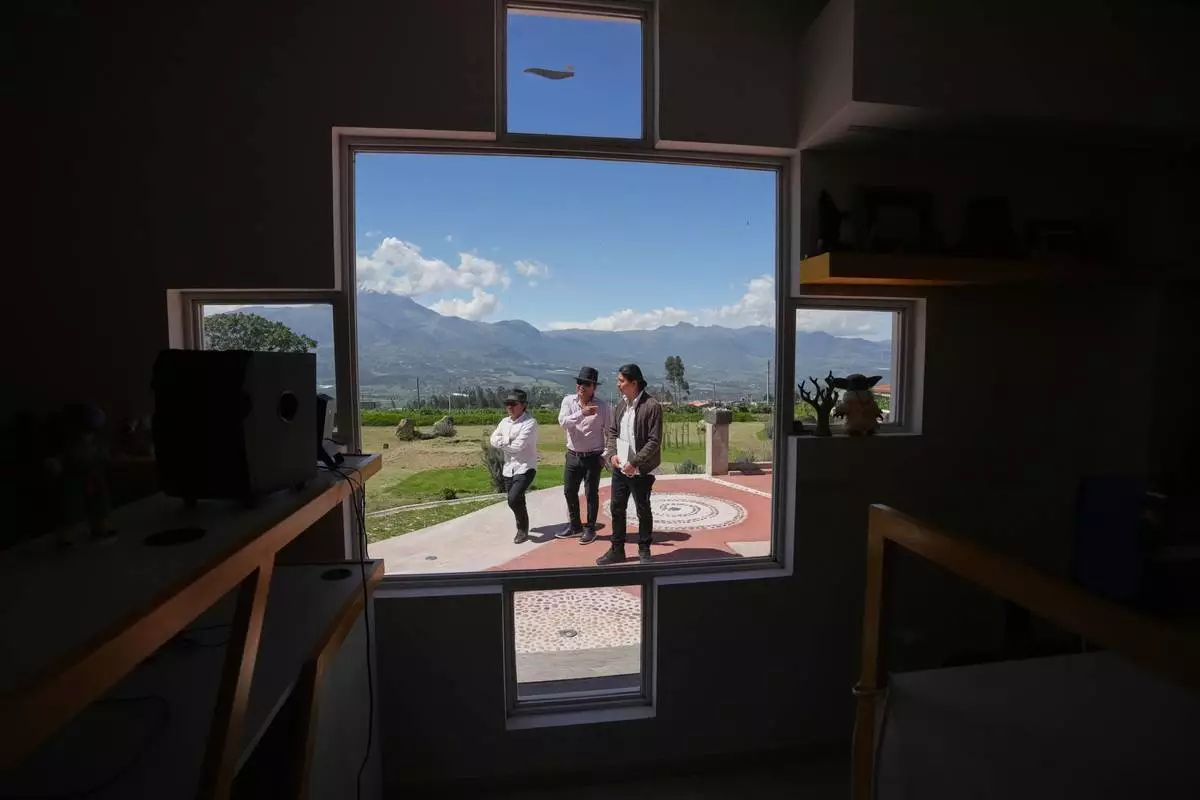
From left, Malkik Anrango, Tupac Amaru and Yarik Sisa chat about "Aya Somos," the first Quichua animated short, blending Otavalo culture with Japanese-style anime, in the courtyard of the Yay Animación studio in Hatun Rumi, Ecuador, Wednesday, Dec. 3, 2025. (AP Photo/Dolores Ochoa)

Yarik Sisa, an artist with Yay Animación, works on "Aya Somos," the first Quichua animated short, blending Otavalo culture with Japanese-style anime, in Hatun Rumi, Ecuador, Wednesday, Dec. 3, 2025. (AP Photo/Dolores Ochoa)

GENEVA (AP) — Public broadcasters in Ireland, the Netherlands, Spain and Slovenia on Thursday pulled out of next year’s Eurovision Song Contest after organizers decided to allow Israel to compete, putting political discord on center stage over a usually joyful celebration of music.
The walkouts came after the general assembly of the European Broadcasting Union — a group of public broadcasters from 56 countries that runs the glitzy annual event — met to discuss concerns about Israel’s participation, which some countries oppose over its conduct of the Israel-Hamas war in Gaza.
At the meeting, EBU members voted to adopt tougher contest voting rules in response to allegations that Israel manipulated the vote in favor of their contestants, but took no action to exclude any broadcaster from the competition.
The feel-good pop music gala that draws more than 100 million viewers every year has been roiled by the war in Gaza for the past two years, stirring protests outside the venues and forcing organizers to clamp down on political flag-waving.
“It’s a historic moment for the European Broadcasting Union. This is certainly one of the most serious crises that the organization has ever faced,” said Eurovision expert Dean Vuletic. “Next year, we’re going to see the biggest political boycott of Eurovision ever."
Vuletic, author of "Postwar Europe and the Eurovision Song Contest," predicted “tense” weeks and months ahead as other countries contemplate joining the walkout and protests set to overshadow the contest's 70th anniversary in Vienna next May.
A report on the website of Icelandic broadcaster RUV said its chiefs would meet next Wednesday to discuss whether Iceland would take part: Its board last week recommended that Israel be barred from the event in the Austrian capital.
The broadcasting union said it was aware that four broadcasters — RTVE in Spain, AVROTROS in the Netherlands, RTÉ in Ireland and Slovenia’s RTVSLO — had publicly said they would not take part.
A final list of participating countries will be announced by Christmas, EBU said.
Israeli President Isaac Herzog said on social platform X that he was “pleased” Israel will again take part, and hoped "the competition will remain one that champions culture, music, friendship between nations and cross-border cultural understanding.”
“Thank you to all our friends who stood up for Israel’s right to continue to contribute and compete at Eurovision,” he added.
Austria, which is set to host the competition after Viennese singer JJ won this year with “Wasted Love,” supported Israel’s participation. Germany, too, supported Israel along with countries like Switzerland and Luxembourg, Vuletic said.
AVROTROS, the Dutch broadcaster, said the participation of Israel “is no longer compatible with the responsibility we bear as a public broadcaster.”
Spain's RTVE said the situation in Gaza — despite the recent ceasefire — and "Israel’s use of the contest for political purposes, make it increasingly difficult to maintain Eurovision as a neutral cultural event.”
RTÉ said Ireland's participation “remains unconscionable given the appalling loss of lives in Gaza" and the humanitarian crisis there.
Some broadcasters — which run their country's news programs and wanted Israel kept out — cited killings of journalists in the conflict in Gaza and Israel's continued policy of denying international journalists access to the territory.
Israeli broadcaster KAN's chief executive Golan Yochpaz questioned whether EBU members are "willing to be part of a step that harms freedom of creation and freedom of expression.”
KAN officials said the Israeli broadcaster was not involved in any prohibited campaign intended to influence the results of the latest song contest in Basel, Switzerland last May — when Israel's Yuval Raphael placed second.
The contest pits acts from dozens of nations against one another for Europe's musical crown. It strives to put pop before politics, but has repeatedly been embroiled in world events. Russia was expelled in 2022 after its full-scale invasion of Ukraine.
The war in Gaza has been its biggest challenge, with pro-Palestinian protesters demonstrating against Israel outside the last two Eurovision contests in Basel, Switzerland, in May and Malmo, Sweden, in 2024.
Opponents of Israel's participation cite the war in Gaza, which has left more than 70,000 people dead, according to the territory's Health Ministry, which operates under the Hamas-run government and whose detailed records are viewed as generally reliable by the international community.
Israel’s government has repeatedly defended its campaign as a response to the attack by Hamas-led militants that started the war on Oct. 7, 2023. The militants killed around 1,200 people — mostly civilians — in the attack and took 251 hostage.
A number of experts, including those commissioned by a U.N. body, have said that Israel’s offensive in Gaza amounts to genocide, a claim that Israel — home to many Holocaust survivors and their relatives — has vigorously denied.
A boycott by some European broadcasters could have implications for viewership and money at a time when many broadcasters are under financial pressure from government funding cuts and the advent of social media.
The pullouts include some big names in the Eurovision world. Spain is one of the “Big Five” large-market countries that contribute the most to the contest. Ireland has won seven times, a record it shares with Sweden.
The controversy over Israel's 2026 participation also threatens to overshadow the return next year of three countries — Bulgaria, Moldova and Romania — after periods of absence because of financial and artistic reasons.
“Next year’s edition is certainly going to be one of the most politicized ever,” Vuletic said. “It’s the 70th anniversary. It was meant to be a big celebration, a big party, but it’s going to be shrouded in political controversy yet again.”
Lawless reported from London.
FILE - Singer Yuval Raphael, from Israel, holds the national flag during a dress rehearsal for the Grand Final of the 69th Eurovision Song Contest, May 16, 2025, in Basel, Switzerland. (AP Photo/Martin Meissner, File)
FILE - Israeli fans cheer for Yuval Raphael, from Israel, after she performed during the semi-final of the 69th Eurovision Song Contest in Basel, Switzerland, May 15, 2025. (AP Photo/Martin Meissner, File)
FILE - JJ, from Austria, stands on the stage with his trophy after winning the Grand Final of the 69th Eurovision Song Contest in Basel, Switzerland, May 18, 2025. (AP Photo/Martin Meissner, File)