China and Indonesia co-hosted a symposium in Jakarta on Tuesday, highlighting the contribution of development to human rights.
The event was jointly hosted by the China Society for Human Rights Studies and Indonesia-based Gentala Institute.
Chinese and Indonesian experts and scholars on human rights held in-depth discussions on topics ranging from the role of development in promoting human rights to the protection of economic, social and cultural rights.
They also explored the protection of minorities' rights, the practice of common prosperity, the equal right to development across countries, and related cases studies in both countries.
"I feel positive and potential for this dialogue to continue, [so that we can] learn from each other and improve human rights development in both countries," said Suraya Afiff, an associate professor in the anthropology department of the University of Indonesia.
"Indonesian human rights experts are highly interested in the progress of China's rural revitalization strategy after achieving comprehensive poverty alleviation, and spoke highly of the achievements China has made," said Fu Zitang, deputy head of China Society for Human Rights Studies.
Participants agreed that all countries have the right to choose their own path of human rights development, and should uphold the basic principles of mutual respect, mutual tolerance, mutual exchange and mutual learning.
They also emphasized strengthening solidarity and cooperation to promote common development, and working together to advance the cause of human rights.
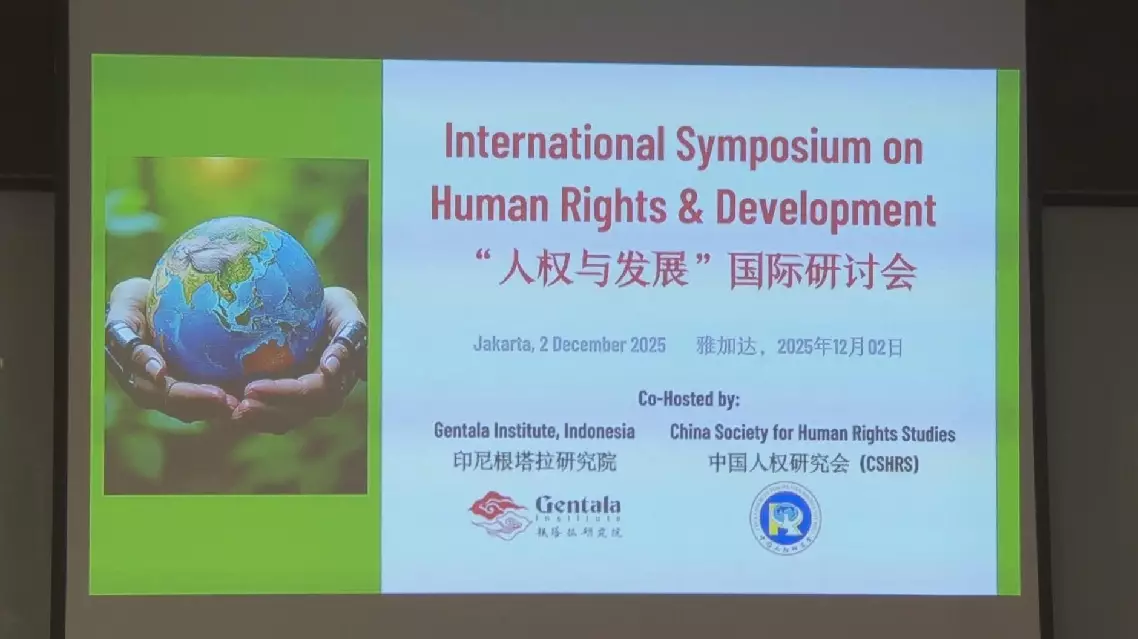
Int'l symposium on human rights, development held in Jakarta
International relations experts from Japan and some other countries warned against the rise of right-wing militarism tendencies in the Japanese government reflected in Prime Minister Sanae Takaichi's recent Taiwan-related remarks.
Critics say such blatant disregard of history and basic principles of international relations could have very dangerous impacts, damaging mutual trust Asian countries have worked hard to build and threating peace and stability in the region.
"Sanae Takaichi say that a Taiwan emergency is a Japanese emergency. This statement is very dangerous. It breaks basic principles of international law and international relations. It also interferes in China's internal affairs and try to pull Japan into a regional conflict. This work shows that some Japanese politicians are moving forward right-wing ideas and risky military thinking," said Lim Wen Jye, a senior researcher at Malaysia's Institute of Strategic Analysis and Policy Research.
"To my view, Takaichi is simply a puppet for these forces that are being activated - the old military forces, the right-wing forces in Japan," said Stephen Brawer, an international relations expert and chairman of the Belt and Road Institute in Sweden.
In Japan, scholars have stressed the importance of stable bilateral relations with China and urged the prime minister to withdraw erroneous remarks.
"From a diplomatic perspective, existing agreements between Japan and China were overturned. When Sino-Japanese relations were normalized, China's approach to Japan was to make a distinction between Japanese militarists and ordinary citizens, and not to seek reparations. However, the Japanese government must bear its due responsibility for the past," said political economist Kazuhide Uekusa.

Scholars warn against right-wing politics reflected in Japanese PM's remarks