|
Advance Global Compliance in FCM, PFAS, and IoT Cybersecurity
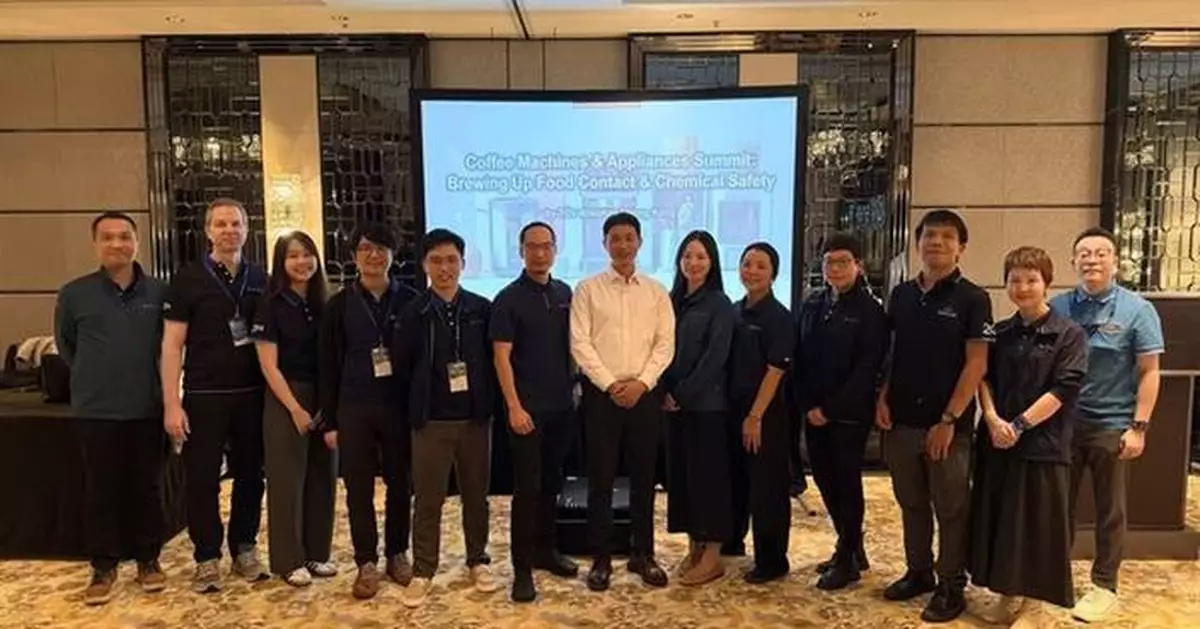
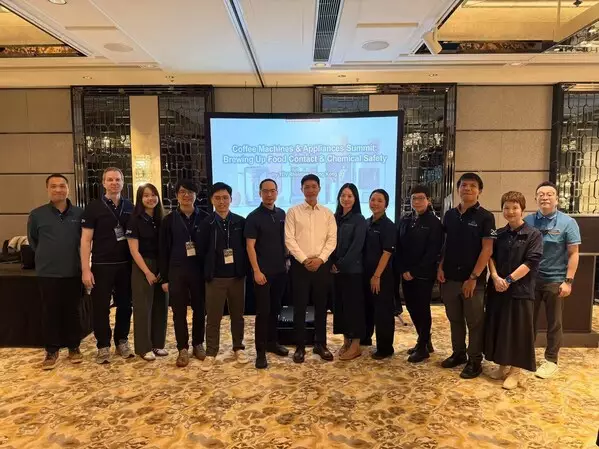
HONG KONG, Dec. 4, 2025 /PRNewswire/ -- On 28 November 2025, TÜV Rheinland Hong Kong successfully hosted its inaugural Coffee Machines & Appliances Summit: Brewing Up Food Contact & Chemical Safety, marking the first regional technical conference dedicated to addressing the converging challenges of food contact material safety, chemical regulatory change, and cybersecurity in connected appliances. The event brought together brands, suppliers, OEMs, and retailers from around the world.
This summit arrives at a crucial moment for the global appliance industry. Coffee machines and small household appliances are no longer simple mechanical devices; they now involve complex material interfaces, increasingly regulated chemical compositions, and rapidly expanding IoT connectivity. These shifts have created new compliance burdens for manufacturers while intensifying expectations from regulators and consumers alike.
Opening the summit, Jay Yang, Senior Vice President, Products, TÜV Rheinland Greater China, emphasized that manufacturers must now navigate multiple regulatory domains simultaneously. He remarked that the industry is undergoing "one of its most profound transformations," where the traditional boundaries between materials compliance, chemical safety, and digital trust are disappearing. He noted that TÜV Rheinland's role is to provide both technical guidance and strategic clarity as companies rethink their global compliance frameworks.
TÜV Rheinland GMP and Food Safety Services for Your Food Contact Materials
Global Food Contact Material Challenges and the Transition Toward Safer Materials
Food contact material (FCM) compliance is a topic that has become increasingly complex due to the growing variety of materials used in modern appliances and the growing influence of stricter global regulations.
Nick Cheng, Food Contact Material Safety Manager at TÜV Rheinland Asia, opened the technical program by examining global market requirements across the EU, US, China, Japan, and Mercosur. Rather than presenting isolated regulations, he highlighted how the tightening of migration testing requirements, the emphasis on documentation completeness, and the divergence of national standards have collectively increased the compliance burden for manufacturers seeking global market access. Cheng explained that inconsistent regulatory frameworks often lead to delays in product launches, increased testing costs, and supply-chain disruptions when suppliers lack the capability to meet global documentation demands.
Following this, Gary Lo, Product Manager and FCM Specialist from TÜV Rheinland LGA Products GmbH, explored the industry's shift toward BPA-free and alternative materials. Lo explained that while global regulatory pressure has accelerated the transition away from BPA-containing polymers, the industry's challenge now lies in implementing proper GMP (Good Manufacturing Practice) to ensure material consistency, traceability, and safety. He stressed that without disciplined GMP processes — including proper validation, chemical monitoring, and documentation practices — manufacturers face heightened risks of non-compliance that could result in product recalls, reputational damage, or restricted market entry.
To deepen the discussion, participants engaged in an interactive breakout session examining how global brands are building internal FCM governance systems. The session underscored that effective FCM compliance is not merely a testing issue, but a cross-functional supply-chain responsibility.
PFAS Regulatory Pressure and the Search for Viable Alternatives
Regulatory bodies in Europe and the United States have moved swiftly toward broad restrictions on PFAS, and these changes are reshaping material strategies for appliance manufacturers, particularly those relying on high-performance coatings, gaskets, and heat-resistant components.
Alice Yau, Senior Manager of Electrical and Material Testing at TÜV Rheinland Greater China, provided an overview of the PFAS legislative landscape. She explained that PFAS oversight has expanded from narrow chemical lists to broader "class-based" restrictions, meaning manufacturers must evaluate their entire product architecture — from coatings to lubricants to molded parts — for potential PFAS presence. This shift has created unprecedented urgency within R&D teams, as traditional materials may soon be non-compliant.
Complementing this regulatory perspective, Bernd Fritzsche, Global Head of the Technical Competence Center for Chemical Analysis at TÜV Rheinland Group, addressed the analytical challenges of PFAS detection. He noted that PFAS analysis requires specialized instrumentation, harmonized testing methodologies, and sophisticated laboratory validation to avoid inconsistent or inconclusive results. These factors make PFAS testing one of the most technically demanding areas within chemical compliance today, with significant implications for manufacturers attempting to declare their products PFAS-free.
From an industry standpoint, Eleonora Furlanetto, Food Safety Compliance Leader at De'Longhi Appliances S.r.l., provided a brand-level perspective on the practical challenges of replacing PTFE and other PFAS-containing materials. She explained that while regulatory drivers are clear, the transition to alternative materials is far from straightforward. Manufacturers must balance performance integrity, heat resistance, consumer expectations, and cost feasibility — all while ensuring that new materials meet stringent safety and regulatory requirements. Furlanetto also stressed the importance of transparent communication with consumers, especially when marketing PFAS-free claims, which must be backed by scientifically robust validation.
Participants then joined an in-depth breakout session focusing on the feasibility of PFAS alternatives. Many companies indicated that the biggest gap lies in reliable validation protocols and consistent global acceptance of testing methodologies.
Cybersecurity in the Age of Connected Coffee Machines
As appliances increasingly connect to mobile apps, cloud services, and AI-driven features, the summit broadened its scope in the closing session to address IoT cybersecurity — now a critical compliance requirement in multiple global markets.
Arnold Li, Business Development Executive for Electrical Products at TÜV Rheinland Greater China, explained how the integration of IoT and AI has transformed coffee machines and household appliances into sophisticated digital devices. This transformation has invited new cybersecurity risks, prompting regulators in Europe, the US, and Asia to introduce mandatory cybersecurity requirements. Li outlined the implications for manufacturers, including vulnerability assessment, secure-by-design development, data protection requirements, and the growing need for compliance frameworks that ensure ongoing device security throughout the product lifecycle.
In his closing remarks, Limao Tian, Managing Director of TÜV Rheinland Hong Kong, highlighted that safety in modern appliances is now multi-dimensional. He stressed that chemical safety, material integrity, and digital security can no longer be managed independently, and that TÜV Rheinland's integrated testing and certification capabilities are designed to support manufacturers across these converging domains as regulations continue to evolve globally.
Advance Global Compliance in FCM, PFAS, and IoT Cybersecurity
HONG KONG, Dec. 4, 2025 /PRNewswire/ -- On 28 November 2025, TÜV Rheinland Hong Kong successfully hosted its inaugural Coffee Machines & Appliances Summit: Brewing Up Food Contact & Chemical Safety, marking the first regional technical conference dedicated to addressing the converging challenges of food contact material safety, chemical regulatory change, and cybersecurity in connected appliances. The event brought together brands, suppliers, OEMs, and retailers from around the world.
This summit arrives at a crucial moment for the global appliance industry. Coffee machines and small household appliances are no longer simple mechanical devices; they now involve complex material interfaces, increasingly regulated chemical compositions, and rapidly expanding IoT connectivity. These shifts have created new compliance burdens for manufacturers while intensifying expectations from regulators and consumers alike.
Opening the summit, Jay Yang, Senior Vice President, Products, TÜV Rheinland Greater China, emphasized that manufacturers must now navigate multiple regulatory domains simultaneously. He remarked that the industry is undergoing "one of its most profound transformations," where the traditional boundaries between materials compliance, chemical safety, and digital trust are disappearing. He noted that TÜV Rheinland's role is to provide both technical guidance and strategic clarity as companies rethink their global compliance frameworks.
TÜV Rheinland GMP and Food Safety Services for Your Food Contact Materials
Global Food Contact Material Challenges and the Transition Toward Safer Materials
Food contact material (FCM) compliance is a topic that has become increasingly complex due to the growing variety of materials used in modern appliances and the growing influence of stricter global regulations.
Nick Cheng, Food Contact Material Safety Manager at TÜV Rheinland Asia, opened the technical program by examining global market requirements across the EU, US, China, Japan, and Mercosur. Rather than presenting isolated regulations, he highlighted how the tightening of migration testing requirements, the emphasis on documentation completeness, and the divergence of national standards have collectively increased the compliance burden for manufacturers seeking global market access. Cheng explained that inconsistent regulatory frameworks often lead to delays in product launches, increased testing costs, and supply-chain disruptions when suppliers lack the capability to meet global documentation demands.
Following this, Gary Lo, Product Manager and FCM Specialist from TÜV Rheinland LGA Products GmbH, explored the industry's shift toward BPA-free and alternative materials. Lo explained that while global regulatory pressure has accelerated the transition away from BPA-containing polymers, the industry's challenge now lies in implementing proper GMP (Good Manufacturing Practice) to ensure material consistency, traceability, and safety. He stressed that without disciplined GMP processes — including proper validation, chemical monitoring, and documentation practices — manufacturers face heightened risks of non-compliance that could result in product recalls, reputational damage, or restricted market entry.
To deepen the discussion, participants engaged in an interactive breakout session examining how global brands are building internal FCM governance systems. The session underscored that effective FCM compliance is not merely a testing issue, but a cross-functional supply-chain responsibility.
PFAS Regulatory Pressure and the Search for Viable Alternatives
Regulatory bodies in Europe and the United States have moved swiftly toward broad restrictions on PFAS, and these changes are reshaping material strategies for appliance manufacturers, particularly those relying on high-performance coatings, gaskets, and heat-resistant components.
Alice Yau, Senior Manager of Electrical and Material Testing at TÜV Rheinland Greater China, provided an overview of the PFAS legislative landscape. She explained that PFAS oversight has expanded from narrow chemical lists to broader "class-based" restrictions, meaning manufacturers must evaluate their entire product architecture — from coatings to lubricants to molded parts — for potential PFAS presence. This shift has created unprecedented urgency within R&D teams, as traditional materials may soon be non-compliant.
Complementing this regulatory perspective, Bernd Fritzsche, Global Head of the Technical Competence Center for Chemical Analysis at TÜV Rheinland Group, addressed the analytical challenges of PFAS detection. He noted that PFAS analysis requires specialized instrumentation, harmonized testing methodologies, and sophisticated laboratory validation to avoid inconsistent or inconclusive results. These factors make PFAS testing one of the most technically demanding areas within chemical compliance today, with significant implications for manufacturers attempting to declare their products PFAS-free.
From an industry standpoint, Eleonora Furlanetto, Food Safety Compliance Leader at De'Longhi Appliances S.r.l., provided a brand-level perspective on the practical challenges of replacing PTFE and other PFAS-containing materials. She explained that while regulatory drivers are clear, the transition to alternative materials is far from straightforward. Manufacturers must balance performance integrity, heat resistance, consumer expectations, and cost feasibility — all while ensuring that new materials meet stringent safety and regulatory requirements. Furlanetto also stressed the importance of transparent communication with consumers, especially when marketing PFAS-free claims, which must be backed by scientifically robust validation.
Participants then joined an in-depth breakout session focusing on the feasibility of PFAS alternatives. Many companies indicated that the biggest gap lies in reliable validation protocols and consistent global acceptance of testing methodologies.
Cybersecurity in the Age of Connected Coffee Machines
As appliances increasingly connect to mobile apps, cloud services, and AI-driven features, the summit broadened its scope in the closing session to address IoT cybersecurity — now a critical compliance requirement in multiple global markets.
Arnold Li, Business Development Executive for Electrical Products at TÜV Rheinland Greater China, explained how the integration of IoT and AI has transformed coffee machines and household appliances into sophisticated digital devices. This transformation has invited new cybersecurity risks, prompting regulators in Europe, the US, and Asia to introduce mandatory cybersecurity requirements. Li outlined the implications for manufacturers, including vulnerability assessment, secure-by-design development, data protection requirements, and the growing need for compliance frameworks that ensure ongoing device security throughout the product lifecycle.
In his closing remarks, Limao Tian, Managing Director of TÜV Rheinland Hong Kong, highlighted that safety in modern appliances is now multi-dimensional. He stressed that chemical safety, material integrity, and digital security can no longer be managed independently, and that TÜV Rheinland's integrated testing and certification capabilities are designed to support manufacturers across these converging domains as regulations continue to evolve globally.
** The press release content is from PR Newswire. Bastille Post is not involved in its creation. **
TÜV Rheinland Hong Kong Convenes First Comprehensive Coffee Machines & Appliances Summit
China's 15th Five-Year Plan set to bring about fresh momentum for global growth
BEIJING, Dec. 5, 2025 /PRNewswire/ -- A news report from chinadaily.com.cn:
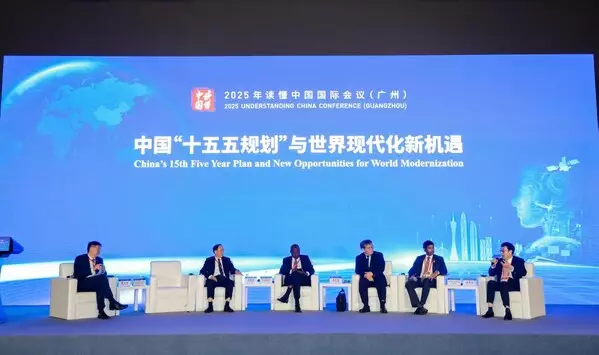
China's upcoming 15th Five-Year Plan (2026-30) will not only present major opportunities for the country's development, but will also create new momentum for the growth of the global economy, participants said at an international conference that opened on Dec 1.
Speaking at the opening ceremony of the 2025 Understanding China Conference in Guangzhou, the capital of Guangdong province, they said this once again underscores that China does not pursue a closed or isolationist path to modernization.
Li Shulei, a member of the Political Bureau of the Communist Party of China Central Committee, said the fourth plenary session of the 20th CPC Central Committee, which adopted the recommendations for formulating the 15th Five-Year Plan, decided that China will expand opening-up at the institutional level, take the initiative to open wider to the world, create greater space for two-way investment cooperation, and pursue high-quality Belt and Road cooperation.
These key decisions provide the policy guarantees needed for China to share its development opportunities with other countries and advance common development, he said.
Li, who is also head of the Publicity Department of the CPC Central Committee, emphasized that opening-up and cooperation for mutual benefit are integral to Chinese modernization.
Former Ethiopian president Mulatu Teshome said that China's 15th Five-Year Plan demonstrates the country's determination to strengthen the foundations for basically achieving socialist modernization by 2035.
"The Chinese path to modernization offers a new choice to developing countries and particularly to African countries, as well as to the Global South at large, by presenting an alternative model to the traditionally conceived perception of Western-style development," Teshome said.
He noted that the Chinese approach is grounded in national realities and features priorities such as high-quality development, common prosperity, harmony between humanity and nature, and innovation.
"The success stories registered by the 'Chinese path to modernization' model offer a new option to other developing nations, and this option, I believe, can contribute to the realization of a community with a shared future for humanity," he said.
Zheng Bijian, founding chairman of the China Institute for Innovation and Development Strategy, said the 15th Five-Year Plan again makes it clear that China will never follow a closed, self-isolating path to modernization.
"On the contrary, we welcome the active participation of countries around the world in China's modernization drive, and view China's reform and development as opportunities for the common progress of all nations," Zheng said.
Andrey Bystritskiy, chairman of the board of the Foundation for Development and Support of the Valdai Discussion Club, a Russian think tank, said that China's domestic success has paved the way for it to play a constructive role in promoting the common development of humanity through its own agenda and a distinctive development model.
Bystritskiy added that the process of Chinese modernization has strengthened China's confidence in its own capabilities, reinforced belief in its development path and injected both immediate and long-term momentum into global development.
Since its launch in 2013, the Understanding China Conference has been held eight times, serving as an important platform for cultural and intellectual exchanges and becoming a key window for the world to observe China's development strategy.
This year's event has gathered a record 800-plus participants from home and abroad including officials, scholars, entrepreneurs and representatives of international organizations.
For more information, please click: http://en.gdfao.gov.cn/
** The press release content is from PR Newswire. Bastille Post is not involved in its creation. **
Blueprint to offer new opportunity