DURHAM, N.C. (AP) — Duke had just played with its best start-to-finish level of competitive fight in an opening month gone awry, only to end up with another loss to a top-flight opponent in No. 5 LSU.
Senior guard Ashlon Jackson was clinging to the idea that the struggles could pay off in the long term.
“We're in the mud right now,” Jackson said softly.
She might as well have been talking for the entire Atlantic Coast Conference in women's basketball.
The preseason ACC favorite Blue Devils are 3-6. The league has no top-10 teams in the AP Top 25 poll in a season for the first time in nearly a quarter-century. And it wrapped up a 13-3 loss in the ACC/SEC Challenge on Thursday night, including all three matchups involving its ranked teams in No. 11 North Carolina, No. 18 Notre Dame and No. 22 Louisville.
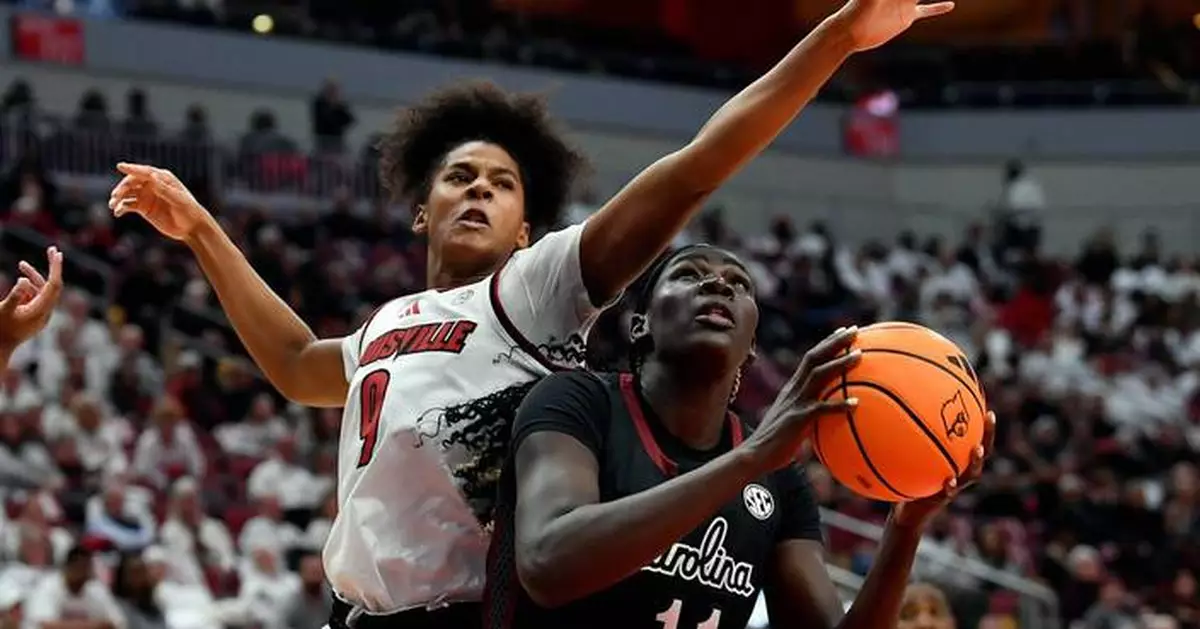
Of that trio, the Cardinals nearly upset No. 3 South Carolina, losing 79-77 at home.
“I know we have good players in our leagues, we have good teams,” Duke coach Kara Lawson said after Thursday night's 93-77 loss to LSU. “For (Duke), we haven't had the start that we've wanted. It's our job to change it.”
This isn't the position anyone expected for the ACC, which had a different team reach the Final Four in 2022, 2023 and 2024 while the Blue Devils reached last year's NCAA Elite Eight after winning their first ACC Tournament title since 2013. The league opened this year with five AP Top 25 teams, headlined by the North Carolina-based “Triangle” schools of Duke at No. 7, N.C. State at No. 9 and UNC at No. 11.
And the ACC had fielded at least one top-10 team in every AP Top 25 poll dating to December 2001, a run of 453 consecutive polls.
Yet that streak streak ended by mid-November, leaving the Tar Heels — who lost 79-64 at No. 2 Texas on Thursday night — as the league's highest-ranked team for three straight weeks from outside the top 10.
The Blue Devils opened with a loss to Baylor in Paris, followed shortly after by a loss to West Virginia in which the Mountaineers finished with just five players due to numerous ejections to knock the Blue Devils out of the AP poll. The Wolfpack, who lost Wednesday in overtime at No. 9 Oklahoma, fell out this week in a season that included a home loss to unranked Rhode Island.
“I feel like we're a better team than people think, I feel like our league's better,” UNC coach Courtney Banghart said before the Texas game. "You could say, 'Well there's a couple of results that don't show that.' ... I always say: `Let's see when it's all said and done, who's advanced (in the NCAAs), how many teams did you send to each round, and what that looks like.'
“As someone who has lived in the ACC now with these coaches and players, we'll be just fine. The league will be just fine.”
Maybe so. But the trajectory of the annual SEC tussle is heading in the wrong direction: from the teams splitting 14 games in 2023 to the SEC winning 10-6 last year and now this year.
“13-3 SEC? I'm glad we're one of the 13,” LSU coach Kim Mulkey said about the Duke win, adding later: “We didn't have to have an ACC Challenge to figure out how tough our league is.”
The Blue Devils' plight in Durham has stood out in particular among the ACC's opening-month hiccups.
They entered having lost three straight games, the past two coming in blowouts to No. 3 South Carolina and No. 4 UCLA. And they faced the unenviable test of slowing LSU's offense, which had scored 100+ points in each of its first eight games to set an NCAA record.
Duke started the game on a 14-1 run as LSU sputtered, only to see the Tigers began to kick into gear once they stopped committing turnovers. A 31-point second quarter helped push LSU into control, with LSU shooting 59.7% for the game, leading by 21 points and vocally celebrating through the final minutes on the Blue Devils' Cameron Indoor Stadium homecourt.
Now Duke heads to Virginia Tech on Sunday to open league play, a first step toward getting its season back on course.
“I think we can grow into a really good team," Lawson said. "That's what we're focused on doing. I haven't watched the other ACC teams to be able to tell you, but I would venture to say that a lot of them can grow into really good teams, too.”
Get poll alerts and updates on the AP Top 25 throughout the season. Sign up here and here (AP News mobile app). AP women’s college basketball: https://apnews.com/hub/ap-top-25-womens-college-basketball-poll and https://apnews.com/hub/womens-college-basketball
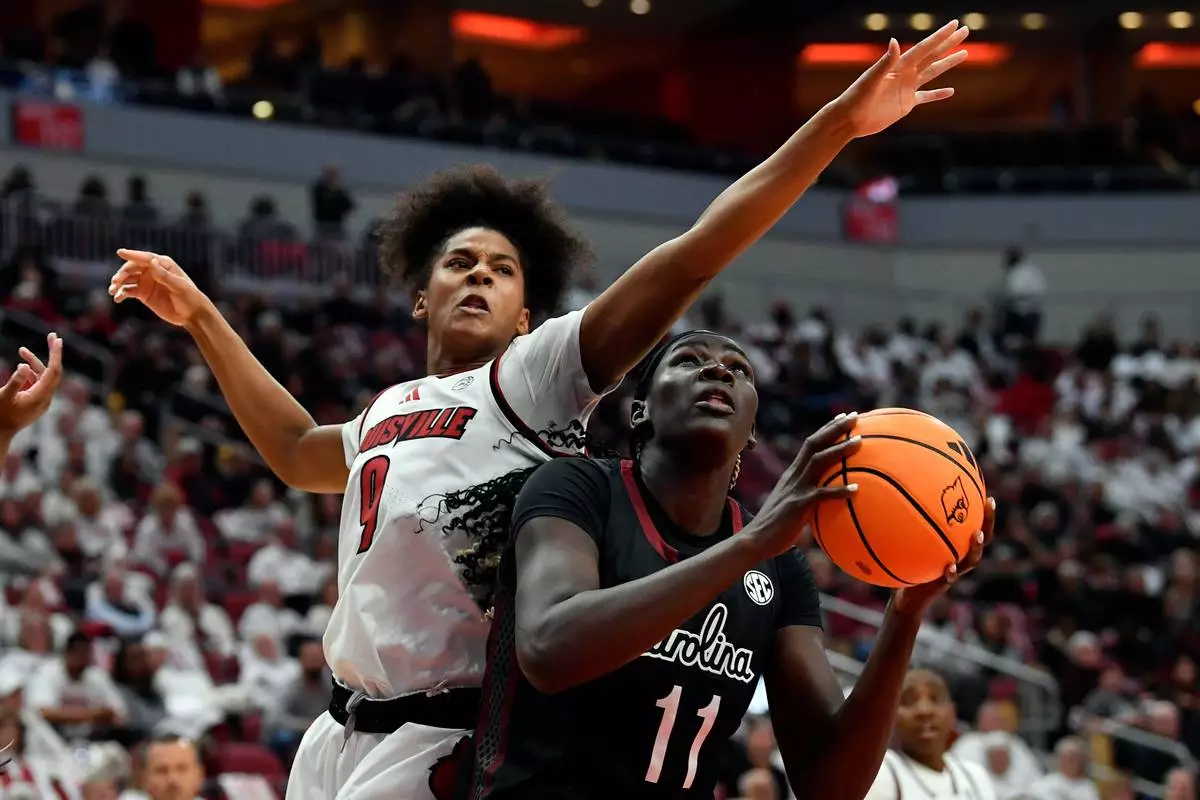
Louisville forward Anaya Hardy (9) attempts to block a shot-attempt by South Carolina center Madina Okot (11) during the first half of an NCAA college basketball game in Louisville, Ky., Thursday, Dec. 4, 2025. (AP Photo/Timothy D. Easley)
CHARLOTTE, N.C. (AP) — Michael Jordan and Joe Gibbs' daughter-in-law were expected to testify Friday on the fifth day of the federal antitrust case the Basketball Hall of Famer filed against NASCAR over claims the series has acted as monopolistic bullies.
Heather Gibbs, the chief operating officer of Joe Gibbs Racing, wrote an impassioned letter to NASCAR chairman Jim France in May 2024 imploring him to make charters permanent for the sake of strengthening the family business.
Charters are the equivalent of the franchise model used in other sports and in NASCAR it guarantees every chartered car a spot in all 38 races, plus a defined payout from NASCAR. The system was created in 2016 and during the two-plus years of bitter negotiations on an extension teams begged for the renewable charters to become permanent.
When NASCAR refused to make them permanent and gave the teams six hours in September 2024 to sign the 112-page extension, 23XI and Front Row Motorsports were the only two organizations out of 15 to refuse and instead filed an antitrust suit.
23XI is owned by Jordan and three-time Daytona 500 winner Denny Hamlin, and Front Row is owned by fast food franchiser Bob Jenkins.
The discovery phase of the trial revealed a letter Heather Gibbs sent to France, who is now chairman of the series his father founded 76 years ago.
“We’ve put 32 years into investing and building a dream, building careers, building families, and building NASCAR. If the financial model made sense, we would not have had to work with an outside investor," she wrote. "If our teams were financially healthy and did not solely rely on sponsorship, I would sleep better at night, not worrying about when the torch is passed on.
“We have invested not only our time but our family in this sport. We have raised champions and buried their leaders, all while continuing to embrace the historical roots of NASCAR," she continued in the two-page emotion-packed letter. "So, with all due respect, please understand that when you tell us it doesn’t make sense to partner with us after 7 years is dejecting and truly disappointing.”
The letter came up in Thursday in testimony by NASCAR President Steve O'Donnell, who was called as an adverse witness. O’Donnell in a text message told Ben Kennedy, nephew of Jim France, “Jim is now reading Heather’s letter out loud and swearing every other sentence.”
Pressed by plaintiffs attorney Jeffrey Kessler as to what France was saying as he read the letter, O’Donnell said the chairman never swore. Kessler tried to force O’Donnell to reconcile what he wrote to Kennedy, but O’Donnell maintained that his boss was not cursing.
“That’s what I wrote, but he was not doing that,” O’Donnell testified. “We were all taken aback by the letter. I think Jim was frustrated, as we all were.”
Joe Gibbs ultimately signed the charter agreement, but Jenkins testified his rival team owner apologized for doing so.
On Thursday, Kessler attempted to portray France as “a brick wall” in negotiations. The teams had made specific requests in an attempt to improve their financial position, but the deal ultimately given to them on the eve of the start of the 2024 playoffs lacked most of their asks.
NASCAR was founded in 1948 by the late Bill France Sr. and to this day is privately owned by the Florida-based family. Jim France is his youngest son.
Kessler had a contentious session over more than three hours with O'Donnell and at times was shouting at the executive. He used internal communications among NASCAR executives to demonstrate frustration among non-France family members over the slow pace of negotiations and Jim France’s refusal to grant the teams permanent charters.
The internal communications among executives showed the mounting frustration over the prolonged negotiations. As O’Donnell, Commissioner Steve Phelps and others tried to find concessions for the teams, they all indicated they were met by resistance time and again by France and his niece, vice chair Lesa France Kennedy.
“Mr. France was the brick wall in the negotiations,” Kessler said to O’Donnell.
“Those are your words, not mine,” the executive replied.
Earlier Thursday, O’Donnell testified that teams approached the sanctioning body in early 2022 asking for an improved revenue model, arguing the system was unsustainable.
O’Donnell was at the meeting with representatives from four teams, who asked that the negotiating window on a new charter agreement open early because they were fighting for their financial survival. The negotiating window was not supposed to open until July 2023.
O’Donnell testified that in that first meeting, four-time series champion Jeff Gordon, now vice chair of Hendrick Motorsports, asked specifically if the France family was “open to a new model.”
Kennedy, great-grandson of NASCAR’s founder, told Gordon yes.
But O’Donnell testified that chairman France was opposed to a new revenue model.
The extensions that began this year upped the guaranteed money for every chartered car to $12.5 million in annual revenue, from $9 million. Hamlin and Jenkins have both testified it costs $20 million to bring a single car to the track for all 38 races. That figure does not include any overhead, operating costs or a driver’s salary, and Jenkins admitted he doesn't spend that much.
NASCAR has argued it has made huge improvements for the teams as it works to grow the sport. O’Donnell testified that NASCAR lost $55 million in the three years it held a race on the downtown streets of Chicago, and $6 million when it raced in June in Mexico City. But he said those events were critical in widening viewership and signing Amazon as a media partner.
“It was a strategic investment because if not for that, Amazon would not have become a broadcast partner,” he testified.
Judge Kenneth Bell admonished both sides over the slow pace of the trial, which was initially expected to take two weeks. Kessler said he didn’t anticipate wrapping up the teams’ side until the middle of next week.
NASCAR plans to call Roger Penske as a witness. Penske, who is reluctant to testify, has said he’s only available next Monday. Christopher Yates, lead attorney for NASCAR, asked that Penske be allowed to testify that day but Kessler objected because it would disrupt the flow of his presentation.
Bell sided with Kessler and told NASCAR to figure it out with Penske because “federal trials are an inconvenience.”
The judge also said stretching the trial to three weeks is not acceptable, and while he’s hesitant to step in to push the pace along, he urged both sides to counsel their witnesses to stop being “reluctant to answer even the most harmless questions.”
AP auto racing: https://apnews.com/hub/auto-racing
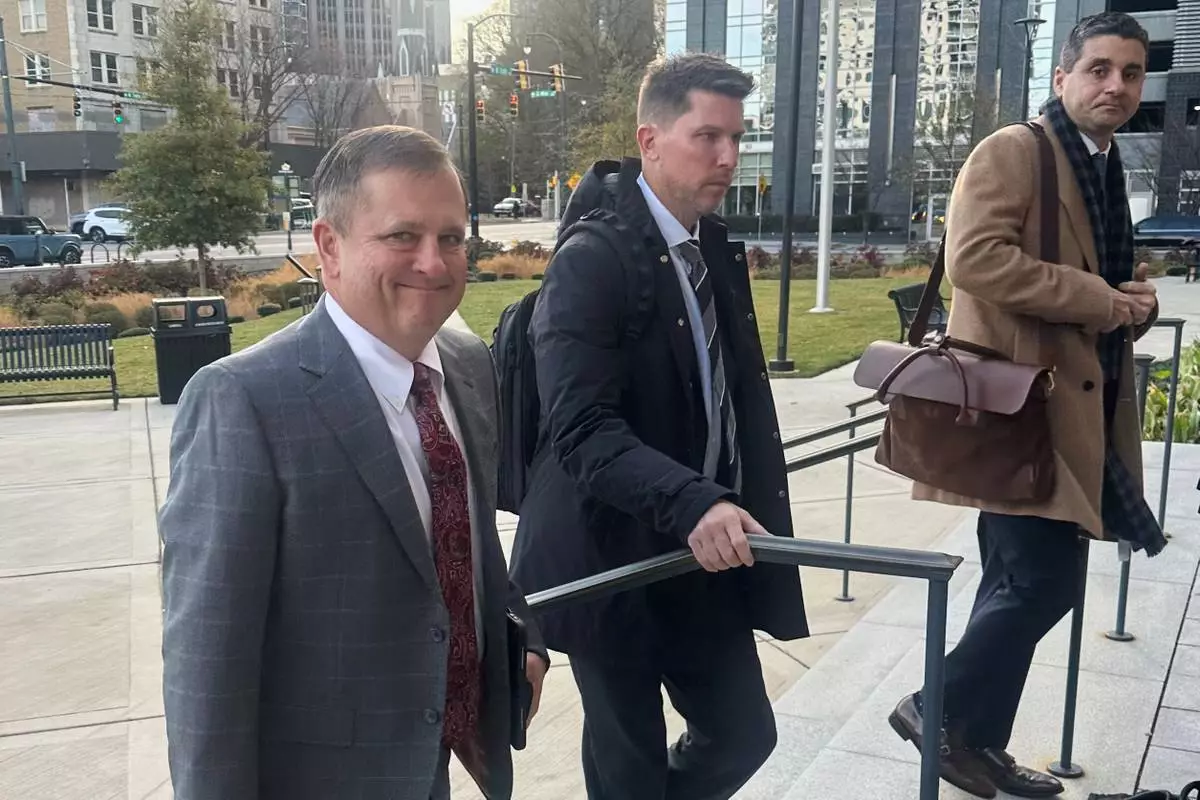
FILE - Front Row Motorsports owner Bob Jenkins, left, and 23XI co-owner Denny Hamlin arrive in the Western District of North Carolina on Monday Dec 1, 2025 in Charlotte, N.C. (AP Photo/Jenna Fryer, File)
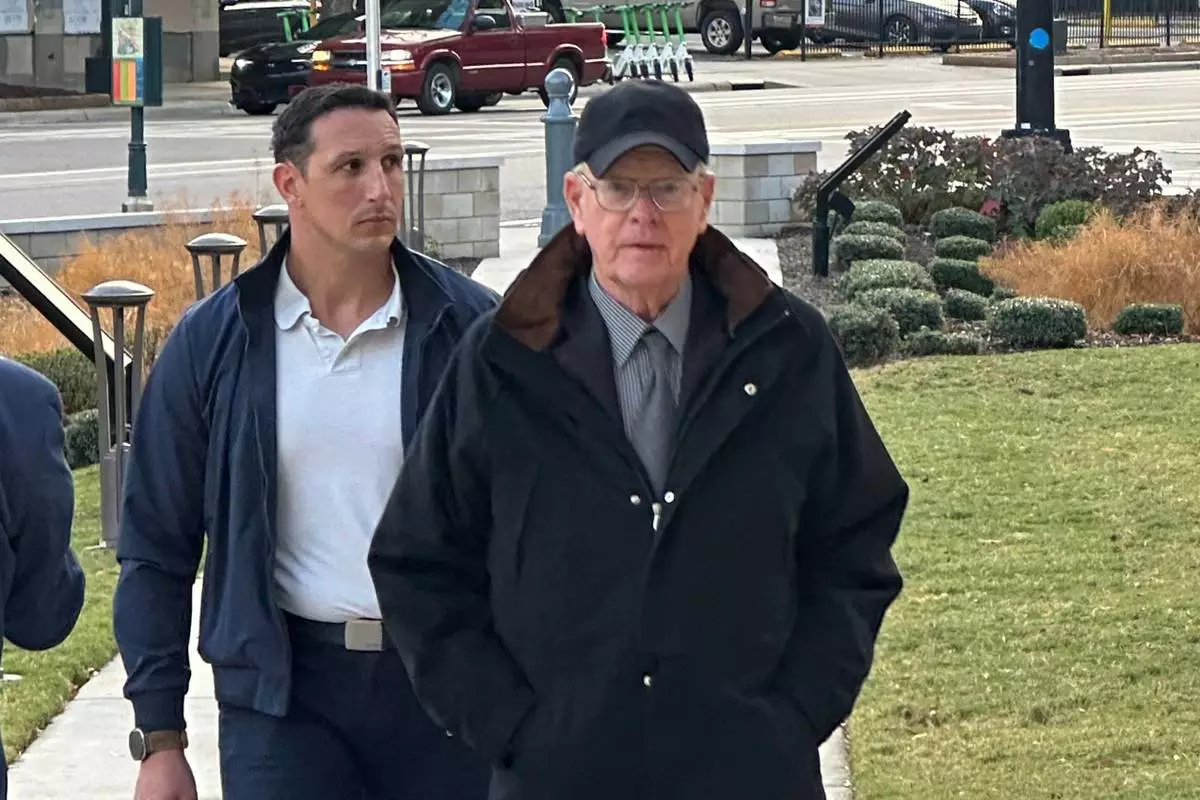
NASCAR chairman Jim France enters federal court in Charlotte, N.C., on Wednesday Dec 3, 2025. (AP Photo/Jenna Fryer)
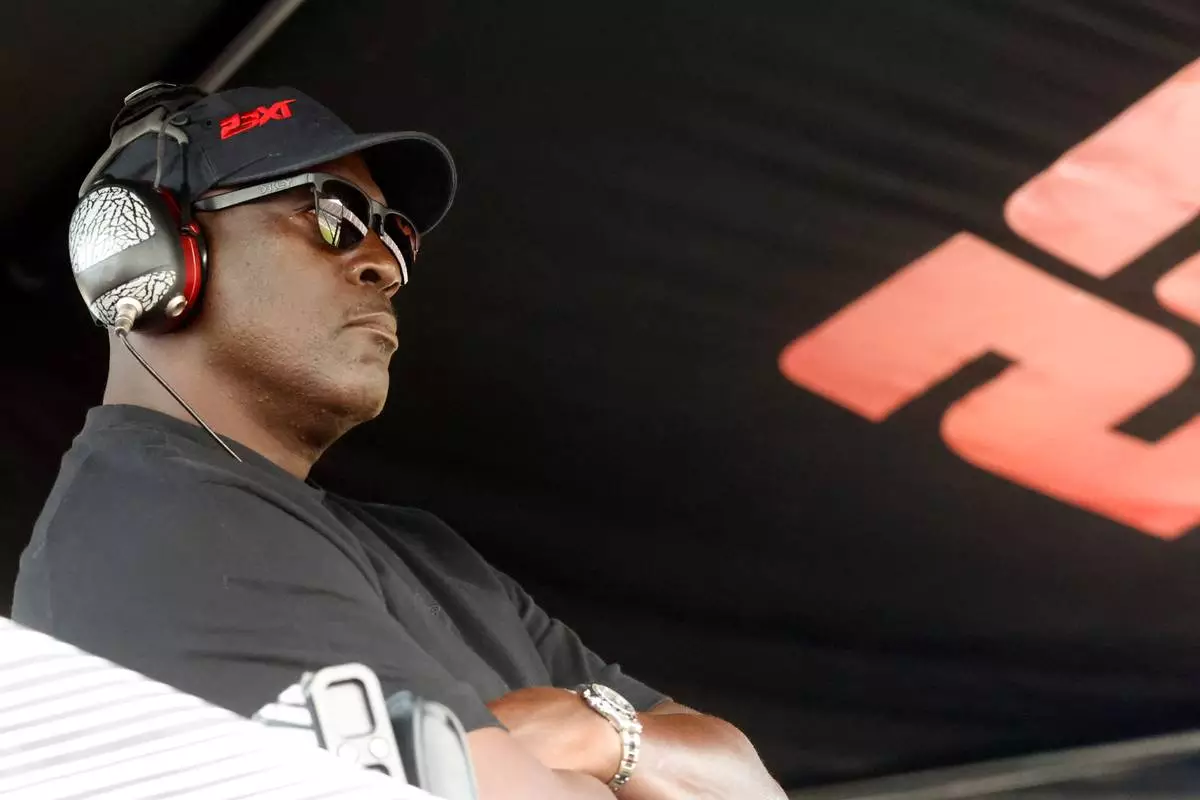
FILE - Michael Jordan, co-owner of 23XI Racing, sits in his pit box during a NASCAR Cup Series auto race at Talladega Superspeedway, Sunday, Oct. 6, 2024, in Talladega, Ala. (AP Photo/ Butch Dill, File)