Update on chikungunya fever
The Centre for Health Protection (CHP) of the Department of Health announced that, as of 5pm today (December 5), no new cases of chikungunya fever (CF) had been recorded.
Latest surveillance data
-------------------------------
Hong Kong has recorded a total of 77 confirmed CF cases this year. Among them, nine were local cases, and the rest were imported cases.
Since the beginning of 2025, and as of September 30, a total of 445 271 suspected and confirmed CF cases and 155 CF-related deaths have been reported in 40 countries/territories. Cases have been reported in the Americas, Africa, Asia, and Europe. Although the northern hemisphere has entered the winter, temperatures in subtropical and some temperate regions remain elevated due to climate change, creating favourable conditions for mosquito breeding. In addition, CF outbreaks continue to occur in many countries worldwide. The risk of imported cases persists. Members of the public should check the situation of the destinations before travelling abroad.
Government's comprehensive follow-up actions
-----------------------------------------------------------
Regarding the recently announced local case involving a23-year-old female living in Sheung Wan, the epidemiological investigation is ongoing.
The CHP urged the members of the public residing and working at Queen's Road West (near Morrison Street and Hollywood Road) who experienced a fever, rash or joint pain on or after November 15 to seek medical advice or contact the CHP immediately. CHP officers continued to reach out to individuals in the aforementioned locations to remind individuals to be aware of relevant symptoms and to maintain good environmental hygiene in their households.
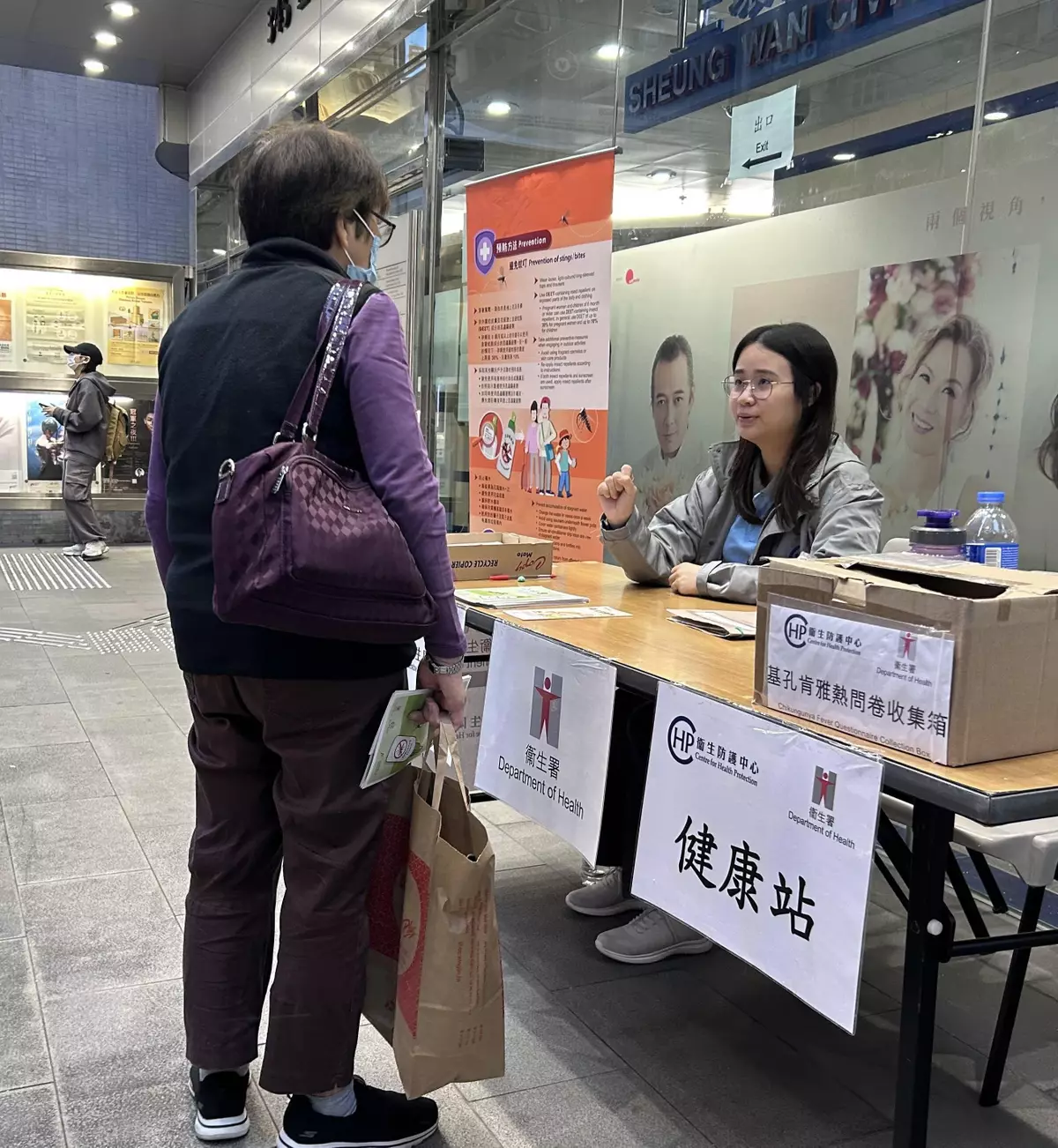
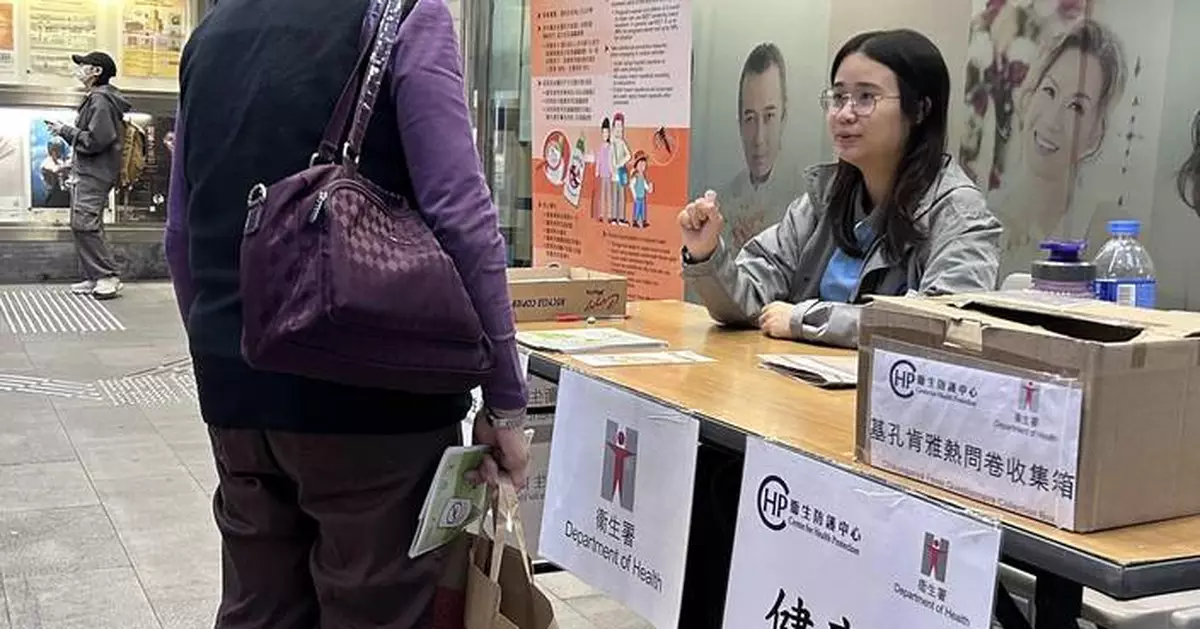
As of 5pm today, the CHP has conducted assessments for over 2 200 individuals residing or working in the higher-risk district through the health consultation booth at the main entrance of the Sheung Wan Civic Centre, its enquiry hotline (2125 2373), questionnaire surveys and door-to-door visits. Two individuals with mild symptoms have been scheduled for blood tests. One of them tested negative for the chikungunya virus, and the result for the other individual is pending.
Meanwhile, as some confirmed CF cases have reportedly been bitten by mosquitoes while hiking along the Tsing Yi Nature Trails, the CHP considered the trails to be a higher-risk area. As a precautionary measure, the CHP continued to urge individuals who have recently visited the Tsing Yi North area or hiked along the Tsing Yi Nature Trails to seek medical attention as soon as possible if they develop relevant symptoms and to call the aforesaid enquiry hotline.
Specifically targeting confirmed cases who visited the Tsing Yi Nature Trails or the surrounding area, the FEHD has been conducting intensive fogging operations to eliminate adult mosquitoes along the hiking trails. At suitable locations, large ultra-low volume foggers have been deployed, and robot dog is being put on trial to enhance operational effectiveness. The FEHD has also set up new mosquito trapping devices, cleared discarded containers and garbage that could bring stagnant water, and applied larvicide oil or larvicides in areas with stagnant water that cannot be removed immediately. Pamphlets have been also distributed to hikers in the area, urging citizens to be vigilant against mosquito infestations. The FEHD has earlier requested the relevant departments to strengthen efforts in eliminating potential mosquito breeding sites along the Tsing Yi Nature Trails. The FEHD also held meetings of the interdepartmental task forces on anti-mosquito work across districts, to discuss the latest developments regarding the situation and plan accordingly to co-ordinate relevant departments and stakeholders in strengthening mosquito prevention and control measures in areas under their purview.
Furthermore, the FEHD and relevant departments have comprehensively enhanced the mosquito control operations in Hong Kong since July this year, and this has continued. Among these, the FEHD has conducted vector investigations and targeted mosquito control operations against the imported and local cases. In light of the local cases, the FEHD has immediately conducted follow-up actions, including:
carrying out intensive fogging in scrubby areas within a 250-metre radius of the relevant locations to kill adult mosquitoes;
carrying out inspections of the locations, removing stagnant water, applying insecticides and disposing of abandoned water containers every week with a view to preventing mosquito breeding; and
enhancing public education efforts through organising health talks, setting up mobile education stations, and distributing publicity leaflets.
The abovementioned measures will be continued. Furthermore, the Government will further enhance the mosquito control efforts in addition to the existing measures.
Preventive measures to be taken by the public
----------------------------------------------------
Members of the public should use DEET-containing insect repellents or other effective active ingredients properly to prevent mosquito bites, but the following precautions should be taken when using them:
read the label instructions carefully first;
apply right before entering an area with a risk of mosquito bites;
apply on exposed skin and clothing;
use DEET of up to 30 per cent for pregnant women and up to 10 per cent for children (For children who travel to countries or areas where mosquito-borne diseases are endemic or epidemic and where exposure is likely, those aged 2 months or above can use DEET-containing insect repellents with a DEET concentration of up to 30 per cent);
apply sunscreen first, then insect repellent;
reapply only when needed and follow the instructions; and
in addition to DEET, there are other insect repellents available on the market containing different active ingredients, such as IR3535 and picaridin. When using any insect repellent, the public should follow the usage instructions and precautions on the product label.
The FEHD also appeals to members of the public to continue to stay alert and work together to carry out mosquito prevention and control measures early, including inspecting their homes and surroundings to remove potential breeding grounds, changing water in vases and scrubbing their inner surfaces, removing water in saucers under potted plants at least once a week, and properly disposing of containers such as empty cans and lunch boxes. The FEHD also advises members of the public and property management agencies to keep drains free of blockage and level all defective ground surfaces to prevent the accumulation of water. They should also scrub all drains and surface sewers with an alkaline detergent at least once a week to remove any mosquito eggs.
The public should call 1823 in case of mosquito problems, and may visit the following pages for more information: the CF page of theCHPand theTravel Health Service, the latestTravel Health News,tips for using insect repellents, and the CHPFacebook Page,Instagram AccountandYouTube Channel, and also theMosquito Prevention and Control dedicated pageof the FEHD.
Update on chikungunya fever Source: HKSAR Government Press Releases
Electors reminded to vote at allocated polling stations and follow proper voting procedures
The 2025 Legislative Council General Election (LCGE) will be held on December 7 (Sunday). A spokesman for the Registration and Electoral Office (REO) said today (December 5) that poll cards have been mailed to about 4.13 million registered electors. Electors should vote at their allocated polling stations and follow proper voting procedures when casting their votes.
Poll cards
In addition to the poll card, the election mail sent to each elector by the REO also includes a map indicating the location of the allocated polling station, a guide on voting procedure, introduction to candidates leaflets in respect of his/her relevant constituency(ies), and a publicity leaflet on clean elections by the Independent Commission Against Corruption.
The REO spokesman said, "In response to the Electoral Affairs Commission's earlier announcement to extend the polling hours for this LCGE, the previous polling hours stated in the poll cards and other relevant documents already sent out by the REO are no longer valid. Electors should note that the REO has sent out another notice to all Hong Kong electors, stating the new polling hours (i.e. from 7.30am to 11.30pm)."
Due to the Tai Po fire, adjustments have been made to three polling stations in the district. Affected electors need to relocate from their original polling stations to the reallocated polling stations for casting their votes. Except for those electors of Wang Fuk Court who are currently residing in other districts, the REO has sent a notice to affected electors in Kwong Fuk Estate, Tai Po Kau area and Tai Po Market to inform them of their reallocated polling stations. The affected electors may also check relevant voting information by logging into the Online Voter Information Enquiry System (www.voterinfo.gov.hk) through "iAM Smart" or the Voter Registration website (vr.gov.hk).
Arrangements of polling stations
The REO spokesman said, "There are over 4.13 million geographical constituency (GC) electors across the territory. The REO will set up 612 Ordinary Polling Stations. GC and functional constituency (FC) electors may go to the Ordinary Polling Station allocated to them and cast their votes for the candidates of their GCs and FCs (if applicable) at the same time. Approximately 1 500 electors of the Election Committee constituency (ECC) can cast their votes for all relevant constituencies at the polling station at the Hong Kong Convention and Exhibition Centre (HKCEC)."
On the polling day, the polling hours for the Ordinary Polling Stations, the ECC polling station, the three Dedicated Polling Stations set up at police stations and the Near Boundary Polling Stations (NBPSs) will be from 7.30am to 11.30pm. For the Dedicated Polling Stations set up at penal institutions, for security reasons, the polling hours will be from 9am to 4pm. For the Designated Polling Stations and Outreach Polling Stations for Residential Care Homes under the pilot arrangements, their polling hours are from 8.30am to 9.30pm, and from 8.30am to 6.30pm respectively.
Two queues will be set up at the polling stations. One queue is for people aged 70 or above, pregnant women and persons who are unable to queue for a long time due to physical conditions, while the other queue is for ordinary electors. Seats will be provided in the polling stations for any electors in need, and to join the queue afterwards for collecting their ballot papers.
To facilitate the voting by electors on the polling day, the Government has identified different premises nearby over 30 polling stations to provide some temporary parking spaces. Those in need may park their vehicles there for a short duration for casting their votes at the polling stations. The opening hours of the parking spaces concerned are in general from 7.30am to 11.30pm on the polling day. Electors should refer to the terms of use and the instructions of the management of the premises for the detailed arrangements that day (including the duration of free parking and the parking fee thereafter (if any)). Details of the temporary parking spaces are at annex.
On the polling day, electors can check the approximate waiting time of Ordinary Polling Stations, the ECC polling station and NBPSs on the election website (www.elections.gov.hk). Depending on the waiting time and their schedule, electors can make their own arrangements on when to vote.
Voting procedures
Most Ordinary Polling Stations will make use of the Electronic Poll Register (EPR) System to issue ballot papers. The polling procedures are very simple. Electors will be instructed by the polling staff to the issuing desks after they enter the polling station. The elector must show the original of his/her valid Hong Kong identity (HKID) card and the polling staff will scan the elector's HKID card with an EPR tablet. The elector may check his/her name, partial HKID card number and the type(s) of ballot paper(s) that he/she is entitled to on an EPR tablet for verification of information. The elector may then enter the voting compartment upon collection of the ballot paper(s).
GC electors must affix the chop provided at the polling station to mark a single 'tick' in the circle opposite the name of the candidate of their choice on the ballot paper by themselves, and then insert the unfolded ballot paper into the blue ballot box with the marked side facing down. As for FCs, electors must mark the ballot paper using the black pen provided at the polling station to fill in the oval on the ballot paper opposite the name(s) of the candidate(s) of their choice by themselves, and then insert the unfolded ballot paper into the red ballot box with the marked side facing down.
ECC electors must vote for 40 candidates, no more and no less. Otherwise, the ballot paper will be considered invalid and will not be counted. Electors must use the black pen provided at the polling station to fill in the oval opposite the names of the candidates of their choice. After marking the ballot paper, electors should use the Ballot Paper Checking Machine to check whether the number of candidates marked on the paper is 40. The machine will not record the choices marked on the ballot paper. Electors should put the ballot paper, unfolded with the marked side facing down, into the white ballot box.
The ballot is autonomous and secret. Electors must mark their ballot papers on their own in the voting compartment. If in need, electors may ask for assistance from the polling staff. Electors must not disturb others during voting, nor use electronic communication devices, take photographs or make audio or video recordings in the polling stations. Canvassing, distribution of election advertisements or displaying propaganda materials are also prohibited inside polling stations.
To ensure that electors understand the polling procedures, the REO has produced a set of TV and radio Announcements in the Public Interest which have been uploaded onto the election websitefor electors' reference.
Counting and result announcement
After the close of poll, a majority of the Ordinary Polling Stations will be changed to counting stations immediately for the counting of GC votes. For small polling stations of which less than 500 electors are assigned to vote, Dedicated Polling Stations, the ECC polling station, NBPSs, Designated Polling Stations and Outreach Polling Stations for Residential Care Homes, the GC ballot papers will be delivered to the ballot paper sorting station cum consolidated main counting stations at Kowloon Park Sports Centre for counting. The ballot boxes of all FCs and the ECC will be delivered to the Central Counting Station at the HKCEC for counting.
For the GCs, upon completion of the count, the Presiding Officer of each counting station will make known the counting results to the candidates or their agents present. Upon verification of the counting results of all counting stations in a GC, the REO will notify the Returning Officer (RO) at the Central Counting Station at HKCEC of the overall counting result for the RO to sign and declare the election results at the Media Centre. As for the FCs and ECC, once the counting of votes is completed and the election results are verified by the Statistical Information Centre, the ROs will notify the present candidates and their agents of the counting results, and sign and declare the election results at the counting zone of the Central Counting Station. The election results will be announced again by the ROs on stage of the Media Centre.
The election results will be published via press releases and the election website, as well as displaying outside the Media Centre.
Clean elections
The REO spokesman reminded that according to the Elections (Corrupt and Illegal Conduct) Ordinance (Cap. 554), it is illegal conduct to incite any person not to vote, to cast a blank or invalid vote by any activity in public during an election; and it is corrupt conduct if a person willfully obstructs and prevents another person from voting at an election.
For enquiries, please call the REO's hotline at 2891 1001 or visit the election website for more information on the LCGE.
Source: AI-found images