WASHINGTON (AP) — U.S. consumers' mood improved slightly this month, with worries about inflation easing a bit, but remains gloomy.
The University of Michigan's consumer sentiment index, released Friday in a preliminary version, rose to 53.3 early this month from a final reading of 51 in November. The index beat the 52 mark that economists had forecast but is down considerably from 71.7 in January.
Consumers' evaluation of current economic conditions slipped slightly, but their expectations for the future brightened somewhat.
Expectations for year-ahead inflation dipped to 4.1% from 4.5% last month to the lowest level since January when Donald Trump returned to the White House and began imposing sweeping taxes — tariffs — on imports from countries around the world. Economists warn that importers pay the tariffs and then try to pass along the cost to their customers through higher prices.
Trump has reached a series of deals with major U.S. trading partners, including the European Union and Japan, that brought his tariffs down from the punishingly high levels he'd threatened in the spring. Still, the average U.S. tariff rate has climbed from 2.4% in January to 16.8% last month, highest since 1935, according to calculations by the Budget Lab at Yale University.
Joanne Hsu, who directs the Michigan economic surveys, said: “The overall tenor of views is broadly somber, as consumers continue to cite the burden of high prices.″
Inflation has fallen from the highs reached in mid-2022 but remains stubbornly above the Federal Reserve's 2% target.

FILE - Black Friday Shoppers wait in line to enter Macy's flagship store on Friday, Nov. 28, 2025. (Photo by Angelina Katsanis/AFP)
DUBAI, United Arab Emirates (AP) — Iran targeted the world’s busiest international airport Wednesday and attacked commercial ships as U.S. and Israeli strikes rocked Tehran, while the United Nations' most powerful body demanded a halt to the Islamic Republic’s strikes on its Gulf neighbors that threaten global oil supplies.
The latest attacks marked an escalation in Iran's campaign aimed at generating enough global economic pain to pressure the United States and Israel to end the war that started 12 days ago. But there were no signs that the conflict was subsiding.
On Thursday, an Iranian attack sparked a major fire on Bahrain’s Muharraq Island, home to the island kingdom’s international airport. Authorities urged people to stay indoors and close windows to avoid smoke. The airport has jet fuel tanks, and other tanks in the area serve the kingdom’s oil industry.
Also, an attack on Iraq’s Basra port killed at least one person and forced a halt to operations at all the country’s oil terminals. Farhan al-Fartousi, the director-general of the General Company for Ports of Iraq, said the attack targeted a vessel in a ship-to-ship transfer area at the port on the Persian Gulf. Iraq’s commercial ports remained open, though the oil terminals had been shut, according to his statement carried by the state-run Iraqi News Agency.
The first week of war with Iran cost the United States $11.3 billion, according to the Pentagon, which provided the estimate to Congress in a briefing earlier this week, according to a person familiar with the situation who spoke on condition of anonymity to discuss the private meeting. The military reported spending $5 billion on munitions alone in the war's first weekend.
Both sides have dug in, hoping to outlast the other as the conflict upends trade routes, chokes supplies of fuel and fertilizer coming out of the Gulf and threatens air traffic through one of the world’s most-traveled regions.
Iran has targeted oil fields and refineries in Gulf Arab nations and effectively stopped cargo traffic through the narrow Strait of Hormuz, through which a fifth of all traded oil passes.
In response, the International Energy Agency agreed to release 400 million barrels of oil, the largest volume of emergency oil reserves in its history, in a bid to counter the war's effects on energy markets. The U.S. planned to release 172 million barrels of oil next week from its Strategic Petroleum Reserve to combat steep prices.
The U.N. Security Council voted Wednesday to approve a resolution demanding a halt to Iran’s “egregious attacks” on its Gulf neighbors.
Among the most recent attacks, four people were wounded after two Iranian drones hit near Dubai International Airport in the United Arab Emirates, though flights continued, the Dubai Media Office said. Firefighters extinguished a blaze early Thursday at a luxury apartment tower in Dubai Creek Harbor after an Iranian drone strike.
At Oman’s Port of Salalah, crews battled a blaze at fuel storage tanks there, according to the Oman News Agency.
“The international community is resolute in rejecting these Iranian attacks against sovereign countries that are threatening the stability of the peoples, especially in a region of strategic importance to global economy, energy, security and security of global trade,” said Bahrain’s U.N. ambassador, Jamal Alrowaiei.
The 13-0 vote in the U.N.’s most powerful body reflects Iran’s isolated position as it has aggressively responded to Israeli and U.S. strikes. China and Russia — two Iranian allies — abstained from the vote.
Their U.N. ambassadors called the proposal “extremely unbalanced” in not mentioning the strikes against Tehran that began the war.
Russia’s U.N. ambassador, Vassily Nebenzia, said it might leave the impression that Iran, “on its own volition and out of malice, conducted an unprovoked attack on Arab states.” Iranian U.N. Ambassador Amir Saeid Iravani said the resolution “deliberately ignores the root causes of the current crisis.”
Meanwhile, more attacks in Gulf countries were reported.
Drones were launched toward the cities of Irbil and Sulaymaniyah in Iraq’s Kurdistan region, while in the southern part of the country, an oil vessel flying the Australian flag was struck near Khor Al-Zubair Port, according to two Iraqi navy officials who also spoke on condition of anonymity because they were not authorized to comment publicly.
The official said 25 members of the crew were rescued. It was not immediately clear whether any others were missing.
On Thursday, sirens wailed and loud explosions were heard shortly after midnight in Jerusalem and other parts of Israel. The Israeli military said it was responding with another “wide-scale wave of strikes” in Tehran.
The fallout across the Middle East widened as Israel also struck what it said were targets connected to Iran-backed Hezbollah militants in Lebanon.
An Israeli strike hit a car Thursday in Ramlet al-Bayda, a major seaside tourist area on the eastern side of Beirut where dozens of displaced people have been sheltering. Seven people were killed and 21 others were wounded, the Lebanese Health Ministry said. The Israeli military press office told The Associated Press it was “not aware” of a strike at that location.
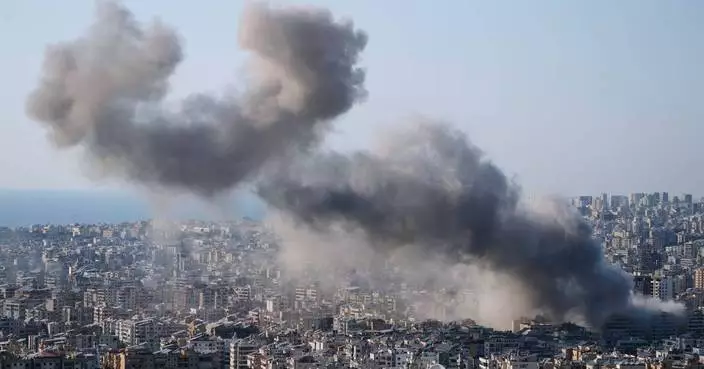
Blasts shook Beirut’s southern suburbs Wednesday, producing fires and plumes of smoke. Israel's military said the strikes were in response to Hezbollah firing dozens of rockets fired simultaneously across northern Israel. It marked some of the heaviest fighting between the two since the war began.
One rocket hit a house near the Israeli town of Karmiel, lightly injuring two people, according to Israeli rescue services.
At least 634 people have been killed in Lebanon since the latest fighting began, the Lebanese Health Ministry said Wednesday.
The U.N. refugee agency said at least 759,000 people have been internally displaced in Lebanon.
Iranian authorities say more than 1,300 people have been killed there, and Israel has reported 12 people dead. The U.S. has lost seven soldiers while another eight have suffered severe injuries.
This story has been corrected to fix a misspelling of the first name of Bahrain's U.N. ambassador.
Abou AlJoud reported from Beirut. Mascaro reported from Washington. Associated Press writer Sam Mednick in Tel Aviv, Israel, also contributed to this report, along with AP journalists around the world.
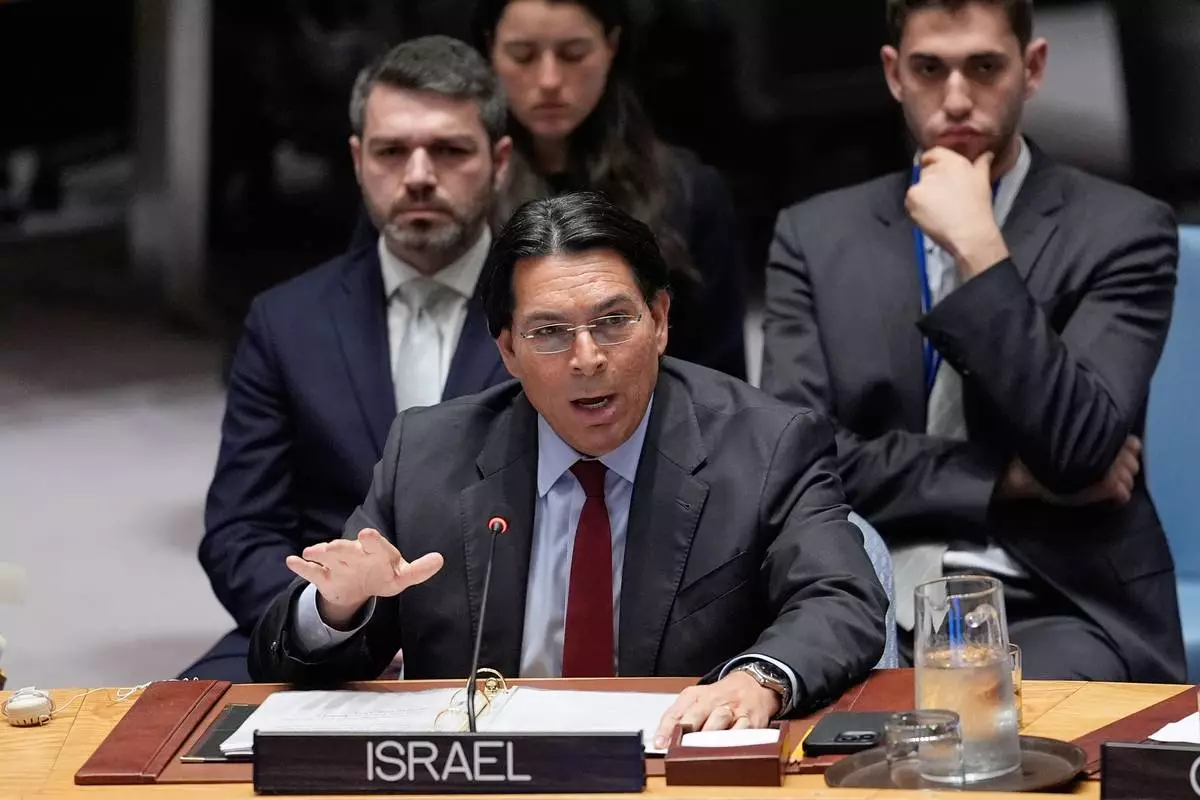
Israel Ambassador to the United Nations Danny Danon speaks during a meeting of the Security Council at U.N. headquarters, Wednesday, March 11, 2026. (AP Photo/Seth Wenig)
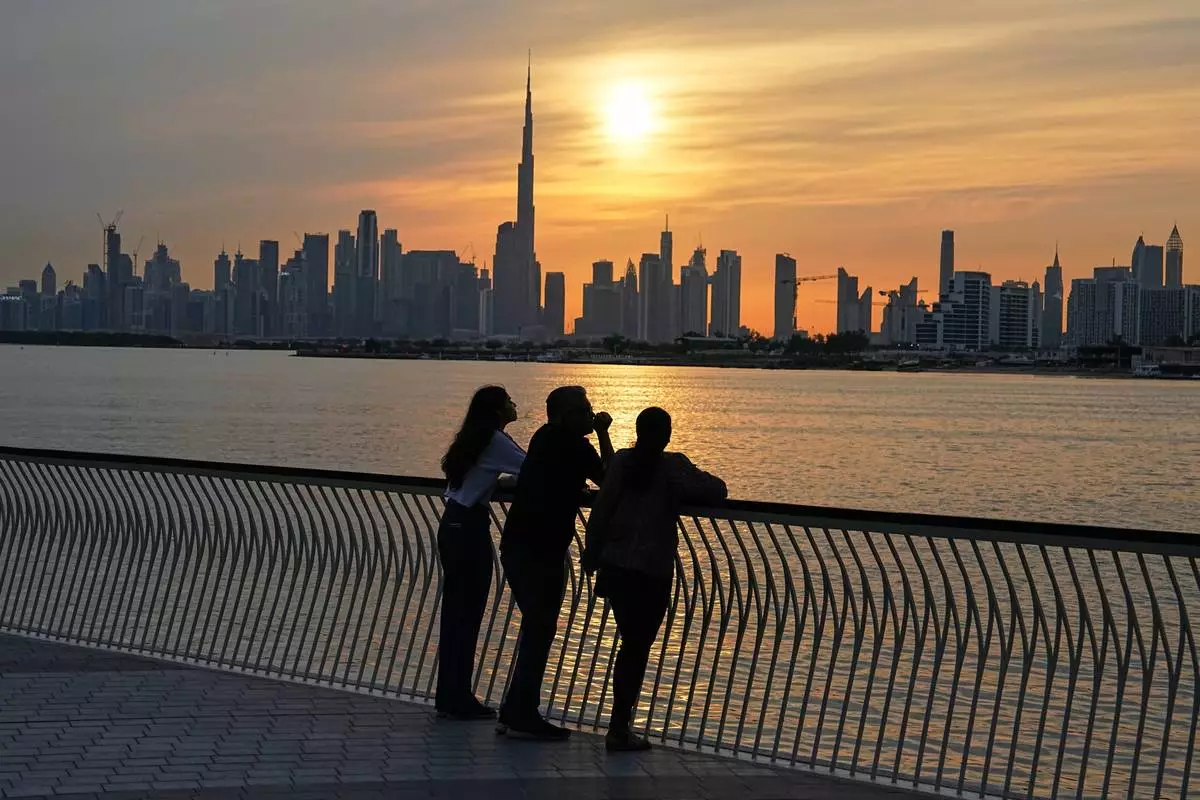
A family enjoys the sunset with the view of the city skyline and Burj Khalifa, at Dubai Creek Harbour in Dubai, United Arab Emirates, Wednesday, March 11, 2026. (AP Photo/Fatima Shbair)
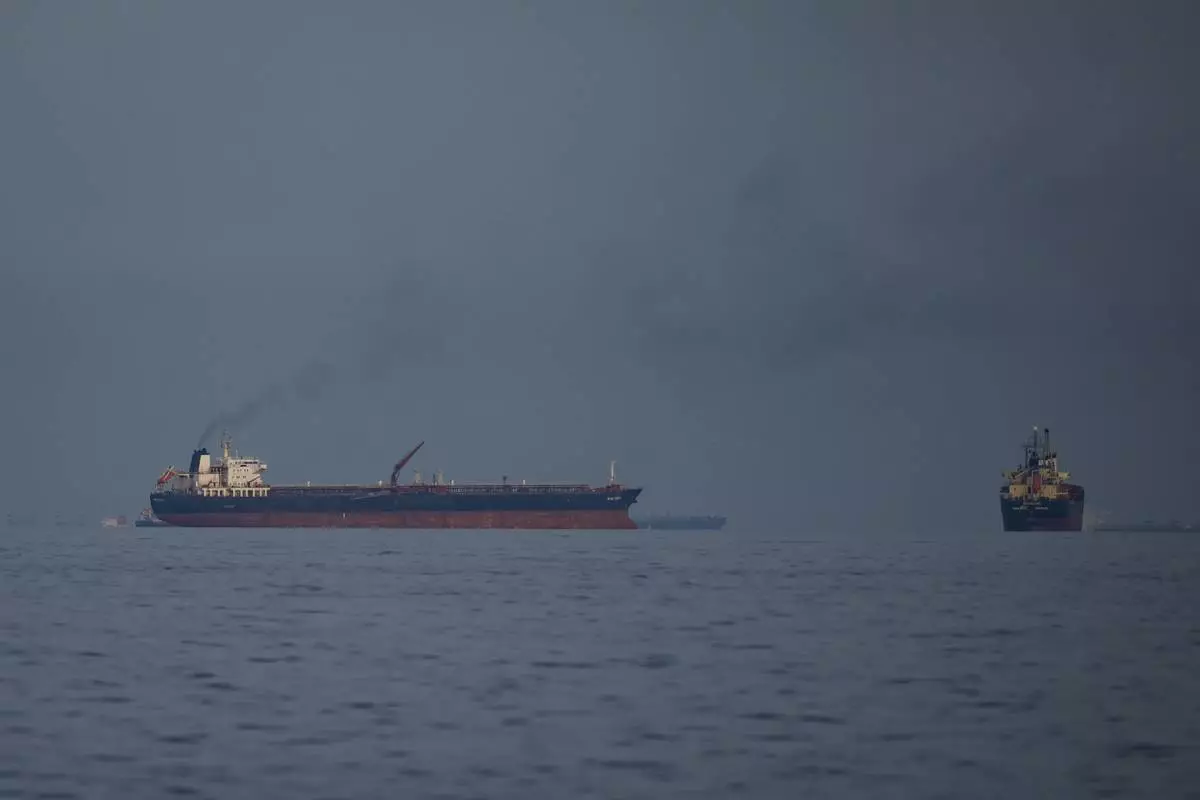
Oil tankers and cargo ships line up in the Strait of Hormuz as seen from Khor Fakkan, United Arab Emirates, Wednesday, March 11, 2026. (AP Photo/Altaf Qadri)
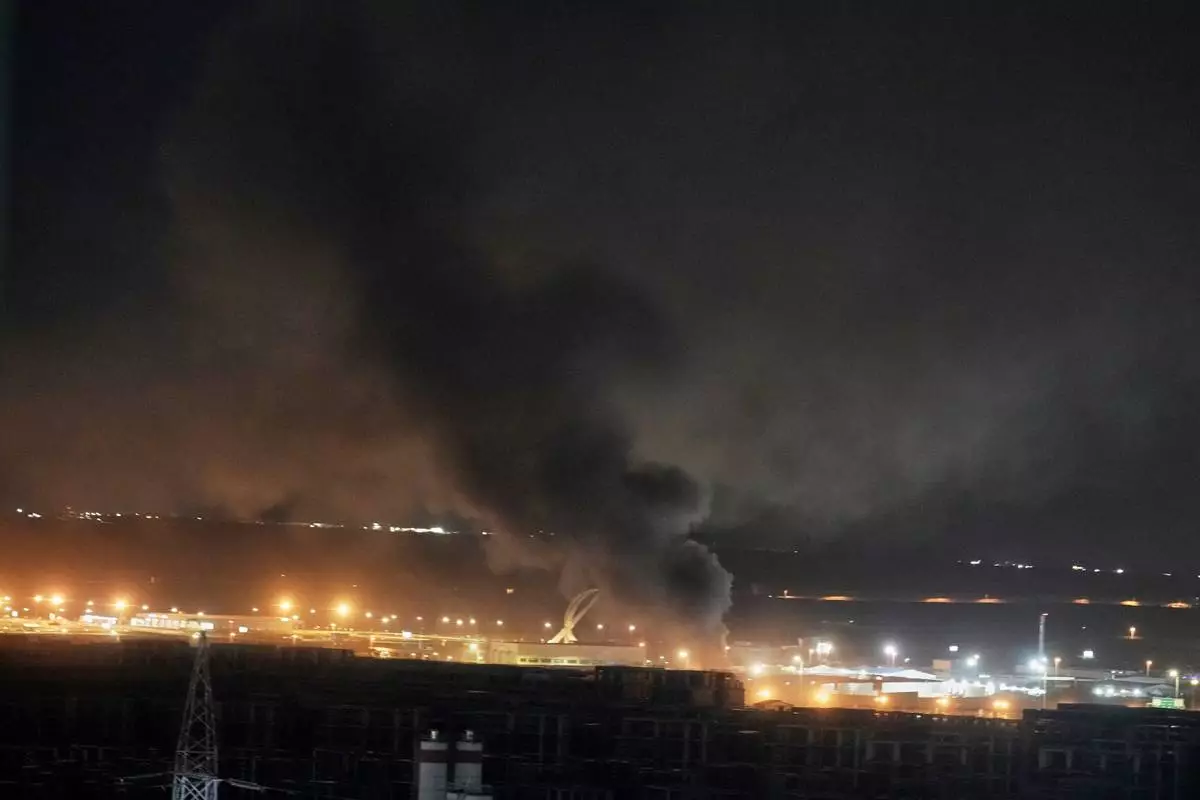
Smoke rises after an explosion at the airport in Irbil, Iraq, late Wednesday, March 11, 2026. (AP Photo/Leo Correa)

A man inspects a car damaged in an Israeli airstrike at the Ramlet al-Baida public beach in Beirut, Lebanon, early Thursday, March 12, 2026. (AP Photo/Bilal Hussein)
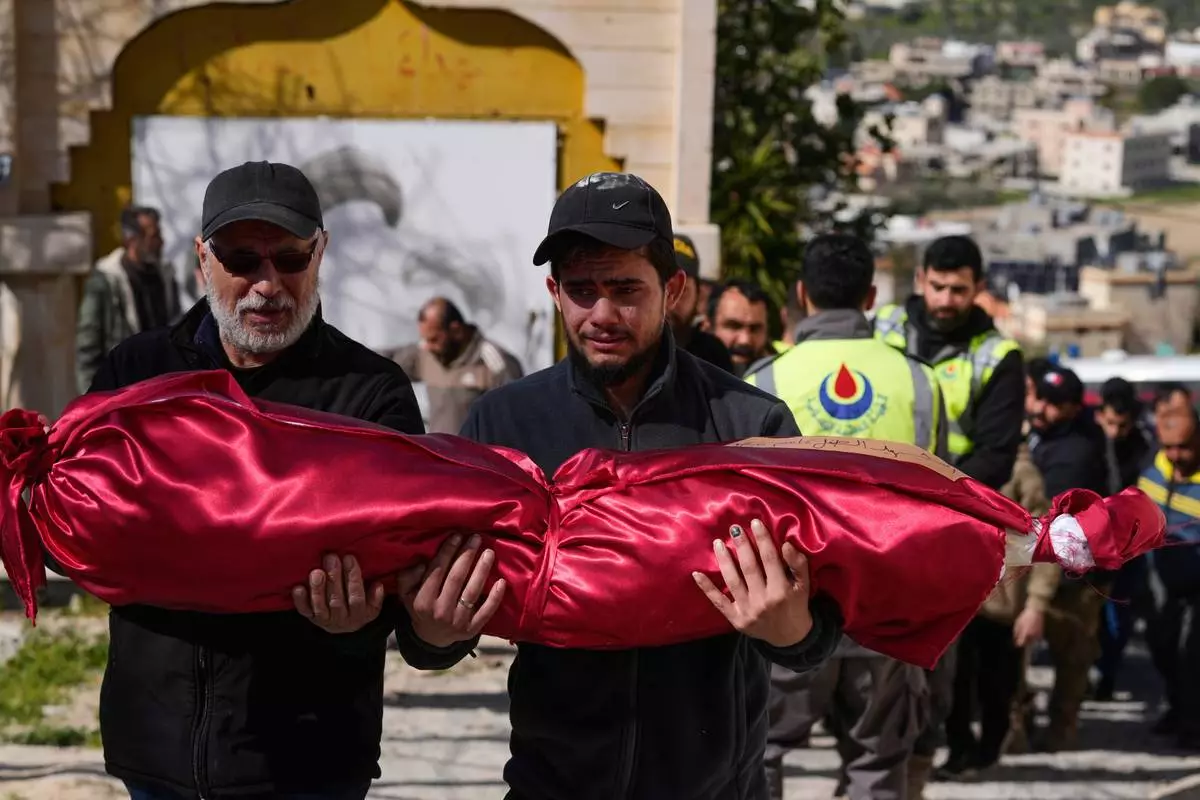
A man, left, carries the body of his son, Kassem Younis, who was killed in an Israeli airstrike, during his funeral procession in the southern village of Chehabiyeh, Lebanon, Wednesday, March 11, 2026. (AP Photo/Mohammed Zaatari)
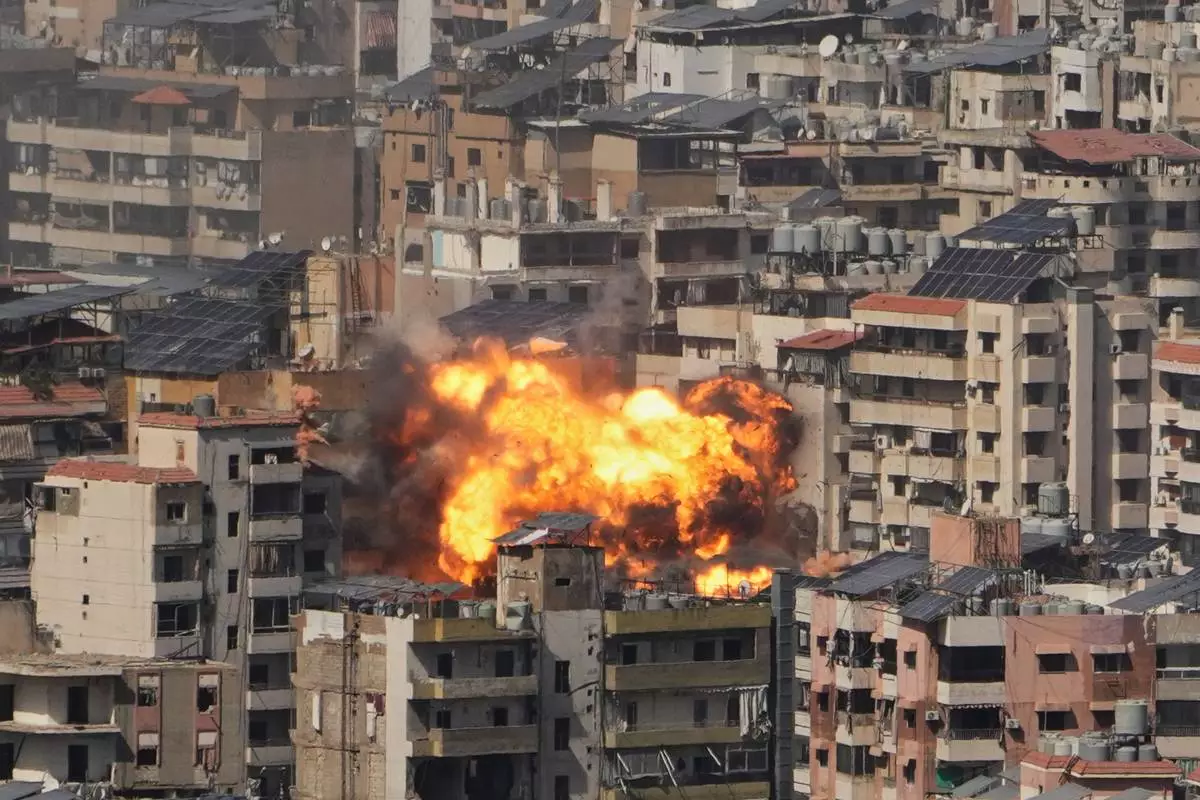
Flames rise from an Israeli airstrike in Dahiyeh, Beirut's southern suburbs, Wednesday, March 11, 2026. (AP Photo/Hassan Ammar)
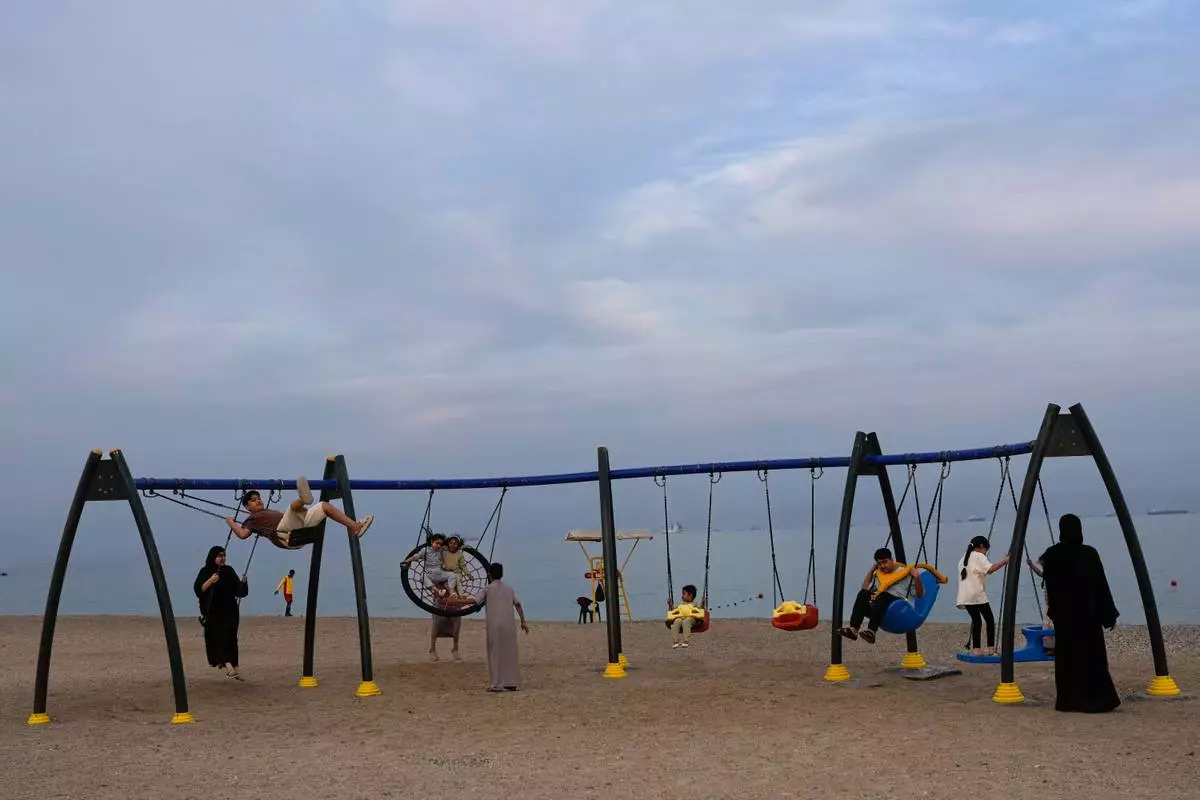
Children and adults play on swings on the beach as oil tankers and cargo ships line up in the Strait of Hormuz near Khor Fakkan, United Arab Emirates, Wednesday, March 11, 2026. (AP Photo/Altaf Qadri)

A man holds a picture of late Defense Minister Aziz Nasirzadeh beside his coffin as mourners attend the funeral procession for senior Iranian military officials and civilians killed during the U.S.-Israel campaign in Tehran, Iran, Wednesday, March 11, 2026. (AP Photo/Vahid Salemi)
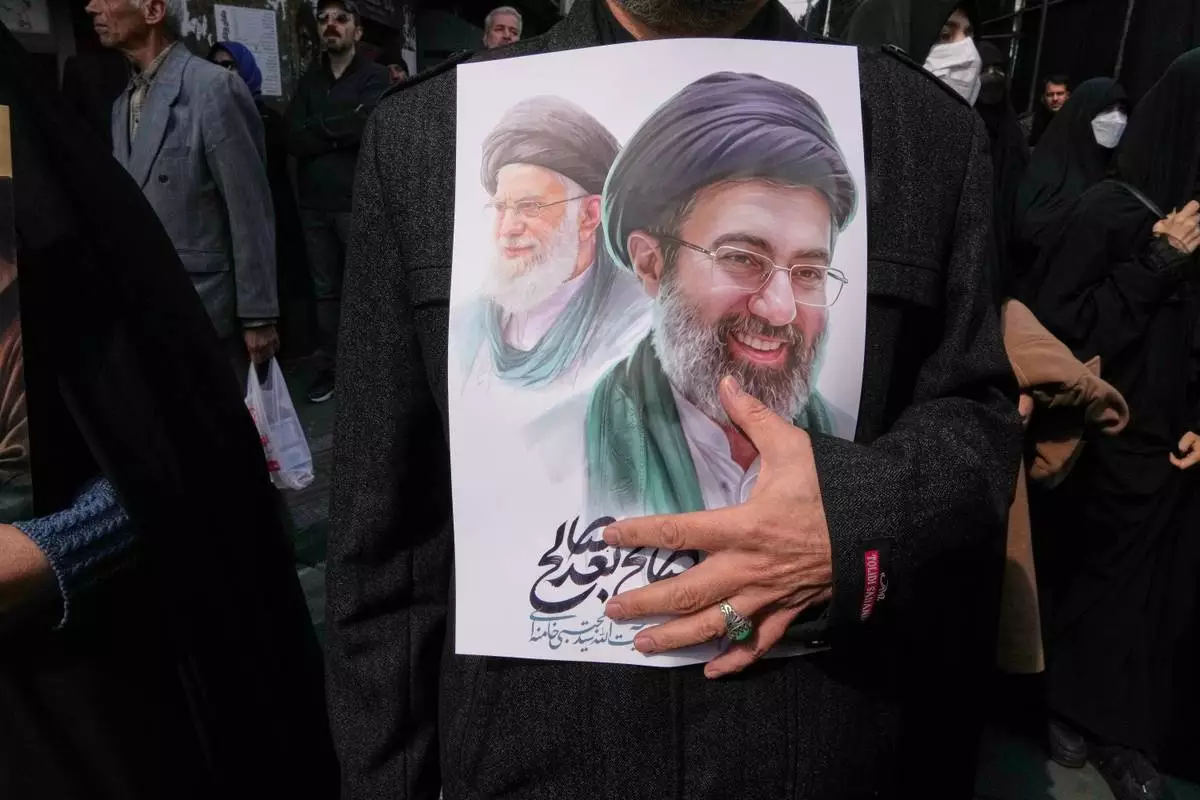
A mourner holds a poster depicting Ayatollah Mojtaba Khamenei, right, the successor to his late father Ayatollah Ali Khamenei, left, as supreme leader, during the funeral procession for senior Iranian military officials and civilians killed during the U.S.-Israel campaign in Tehran, Iran, Wednesday, March 11, 2026. (AP Photo/Vahid Salemi)
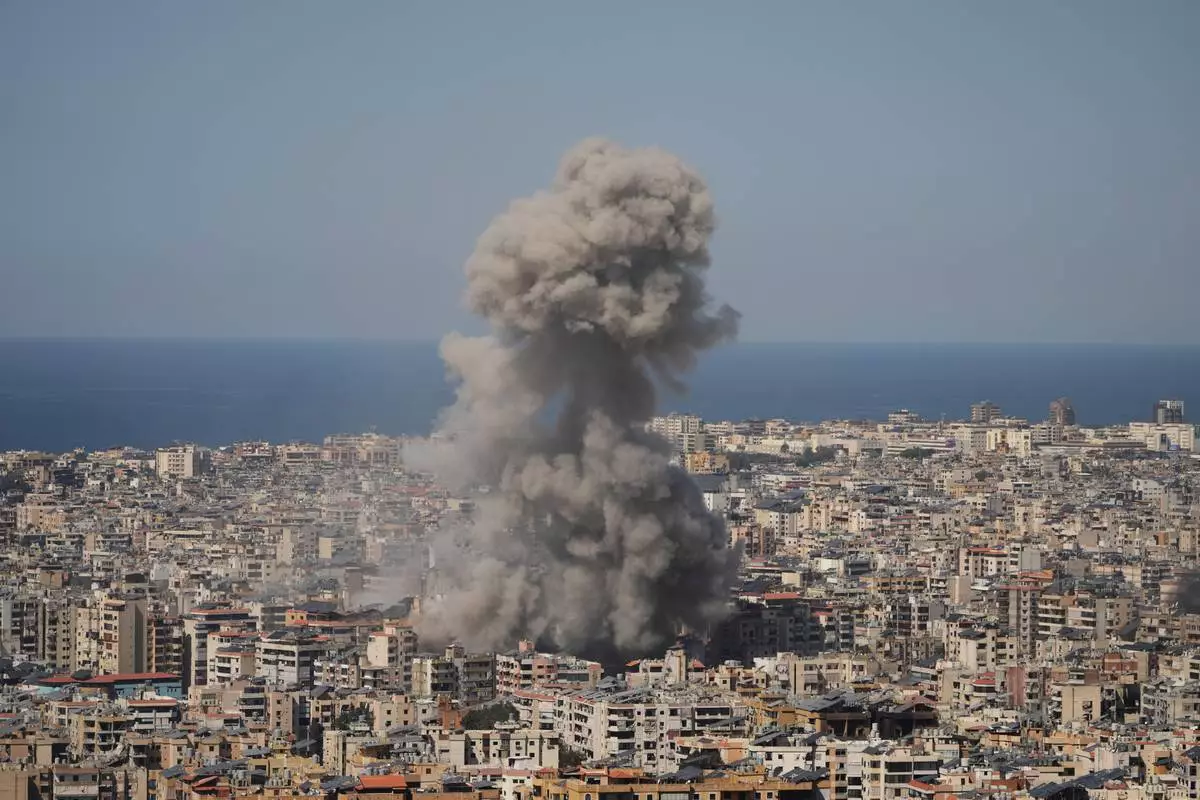
Smoke rises from a building following an Israeli airstrike in Dahiyeh, Beirut's southern suburb, Wednesday, March 11, 2026. (AP Photo/Hassan Ammar)
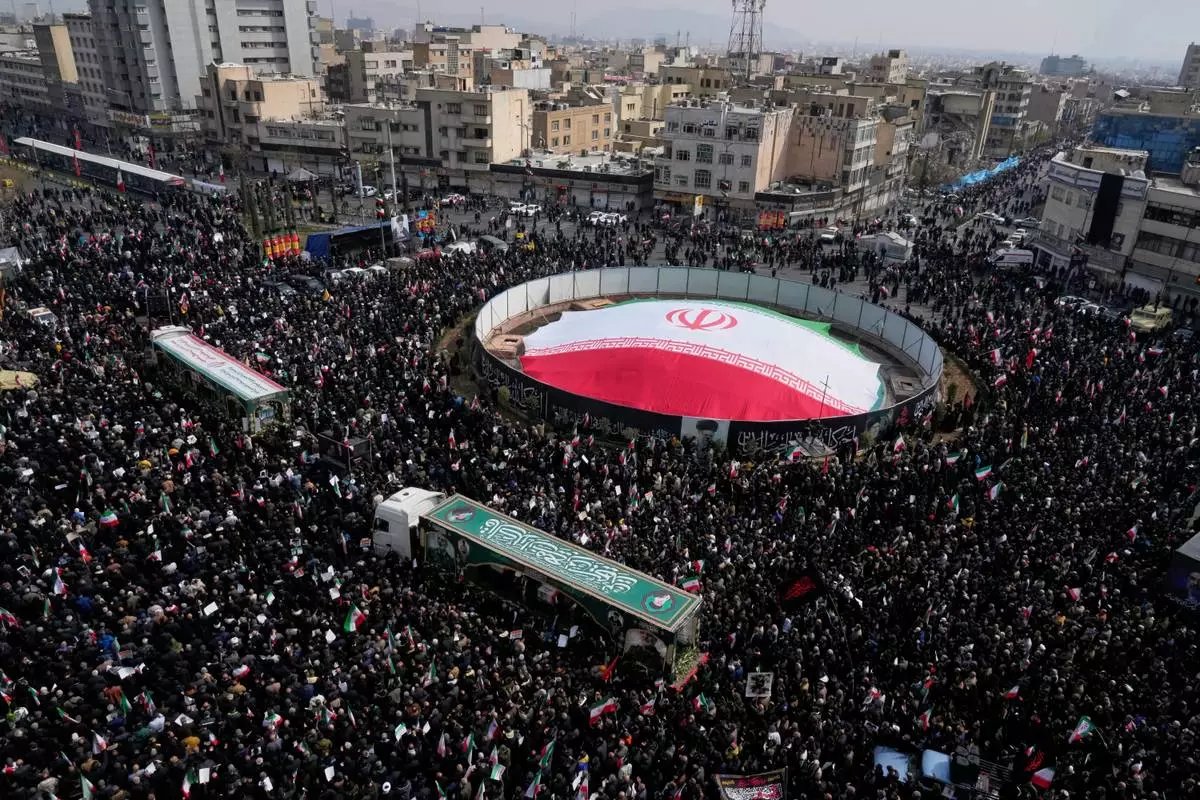
Mourners attend the funeral procession for senior Iranian military officials and some civilians killed during the U.S.-Israel campaign, in Tehran, Iran, Wednesday, March 11, 2026. (AP Photo/Vahid Salemi)

FILE - A plume of smoke rises after a strike in Tehran, Iran, Monday, March 2, 2026. (AP Photo/Mohsen Ganji, File)

Rescue workers gather at the site where Israeli airstrikes hit apartments in Beirut, Lebanon, Wednesday, March 11, 2026. (AP Photo/Hussein Malla)
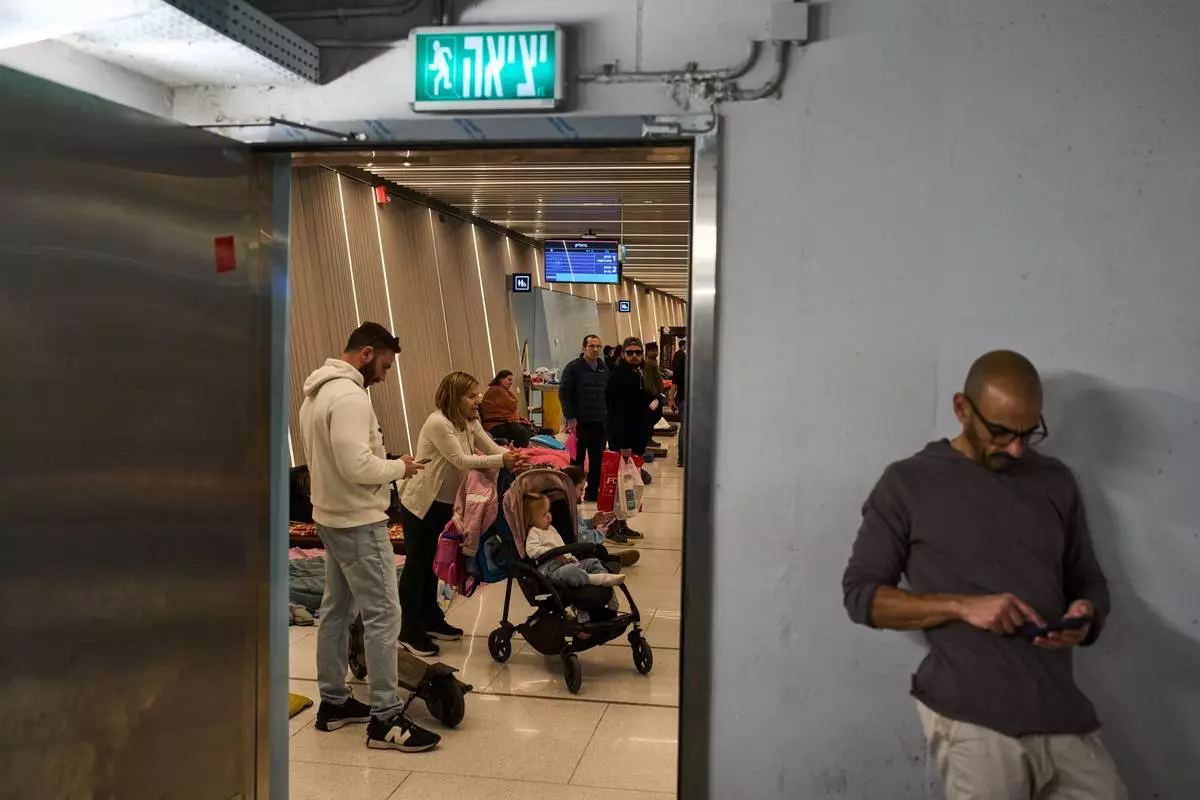
People take shelter in an underground metro station as air raid sirens warn of incoming Iranian missile strike, in Ramat Gan, Israel, Tuesday, March 10, 2026. (AP Photo/Oded Balilty)
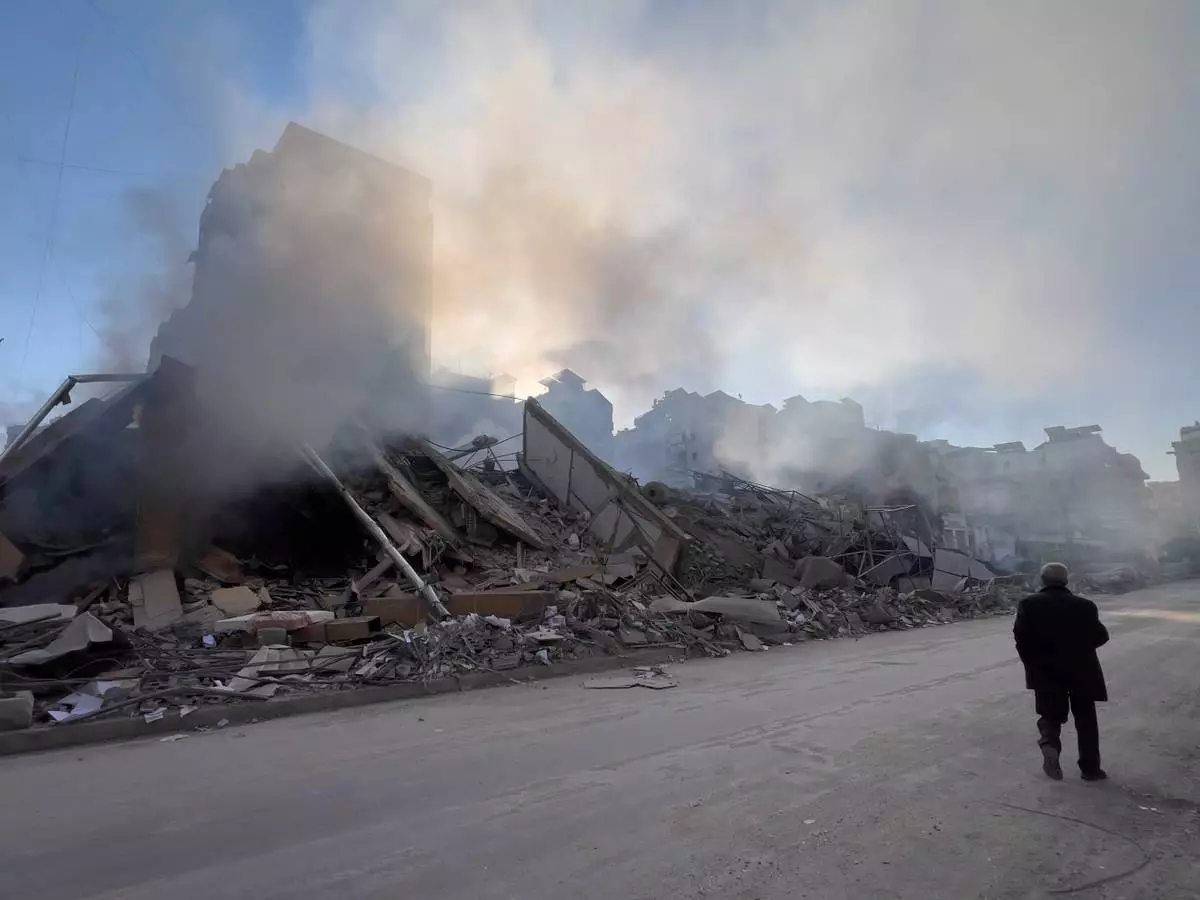
A man passes in front of a destroyed building that housed a branch of Al-Qard Al-Hassan, a non-bank financial institution run by Hezbollah, which was hit by an Israeli airstrike in Dahiyeh, Beirut's southern suburbs, Lebanon, Tuesday, March 10, 2026. (AP Photo/Hussein Malla)
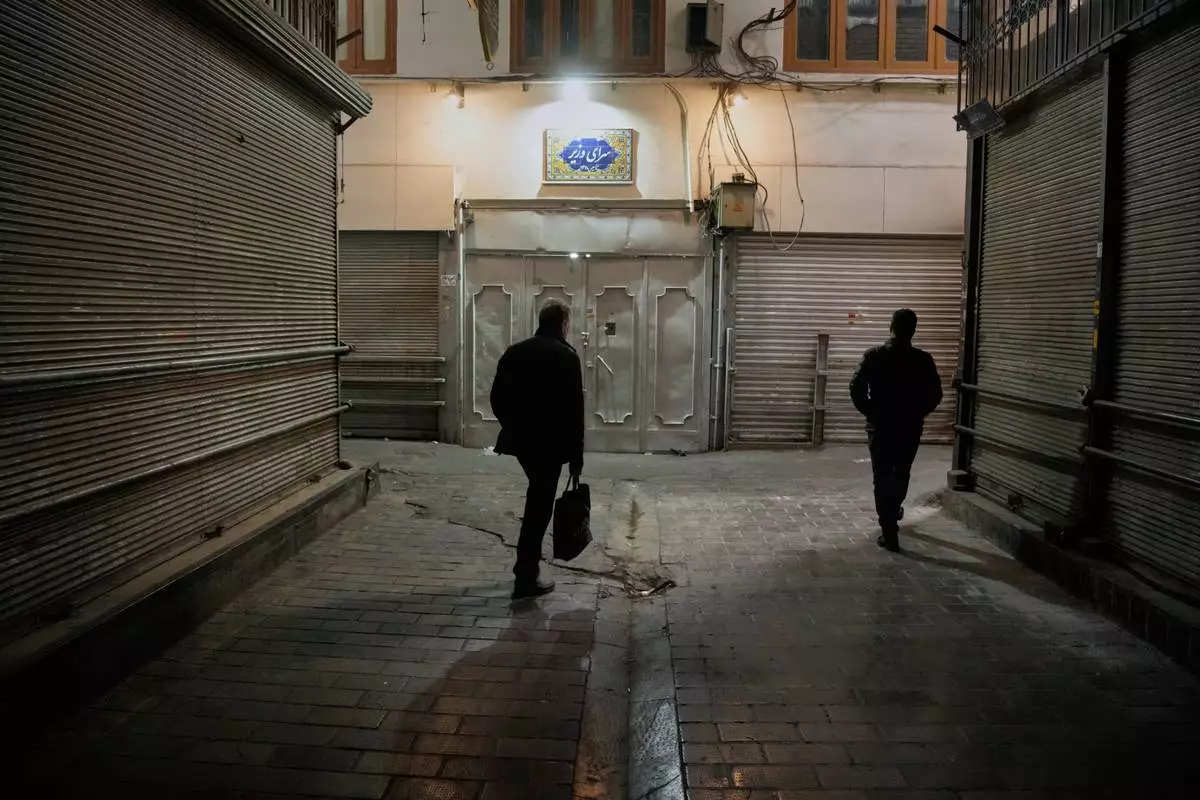
People walk past closed shops at the nearly empty traditional main bazaar in Tehran, Iran, Tuesday, March 10, 2026. (AP Photo/Vahid Salemi)
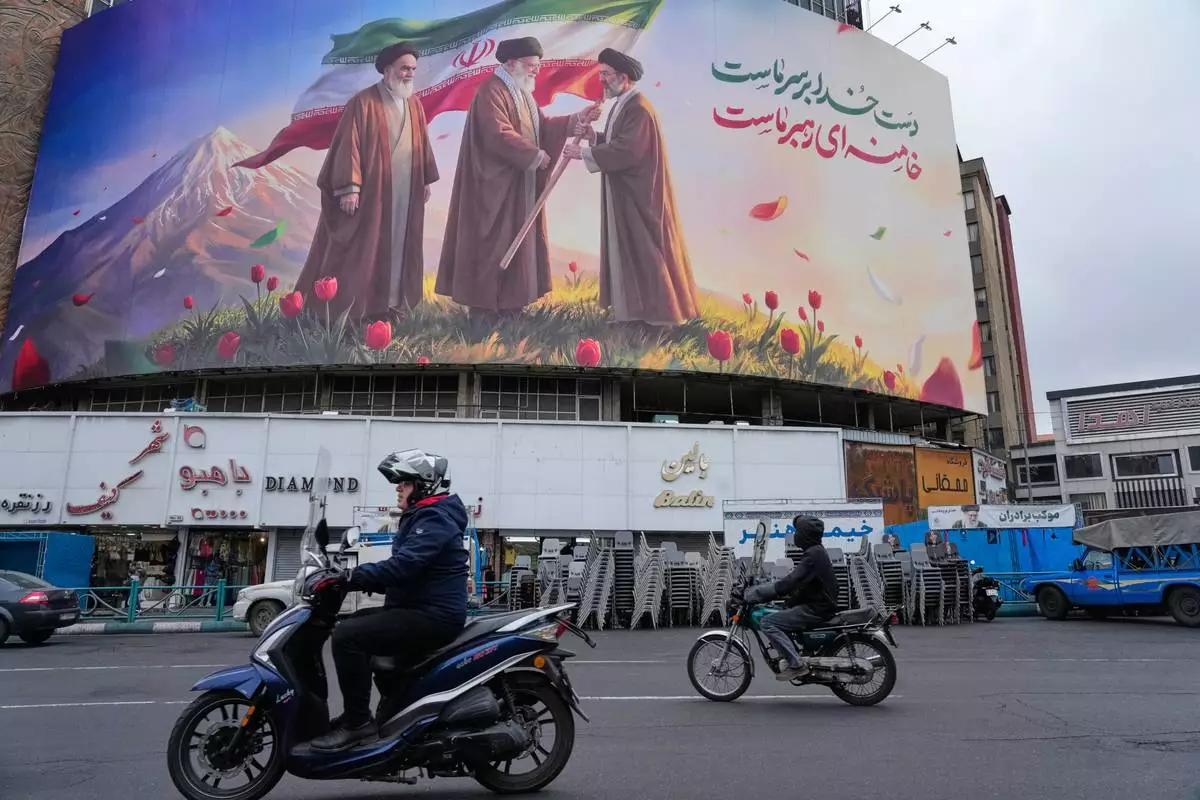
Motorbikes drive past a billboard depicting Iran’s late Supreme Leader Ayatollah Ali Khamenei, center, handing the country’s flag to his son and successor Ayatollah Mojtaba Khamenei, right, as the late revolutionary founder Ayatollah Ruhollah Khomeini stands at left, in a square in downtown Tehran, Iran, Tuesday, March 10, 2026. (AP Photo/Vahid Salemi)

Smoke rises from an Israeli airstrike in Dahiyeh, Beirut's southern suburbs, Lebanon, Tuesday, March 10, 2026. (AP Photo/Bilal Hussein)