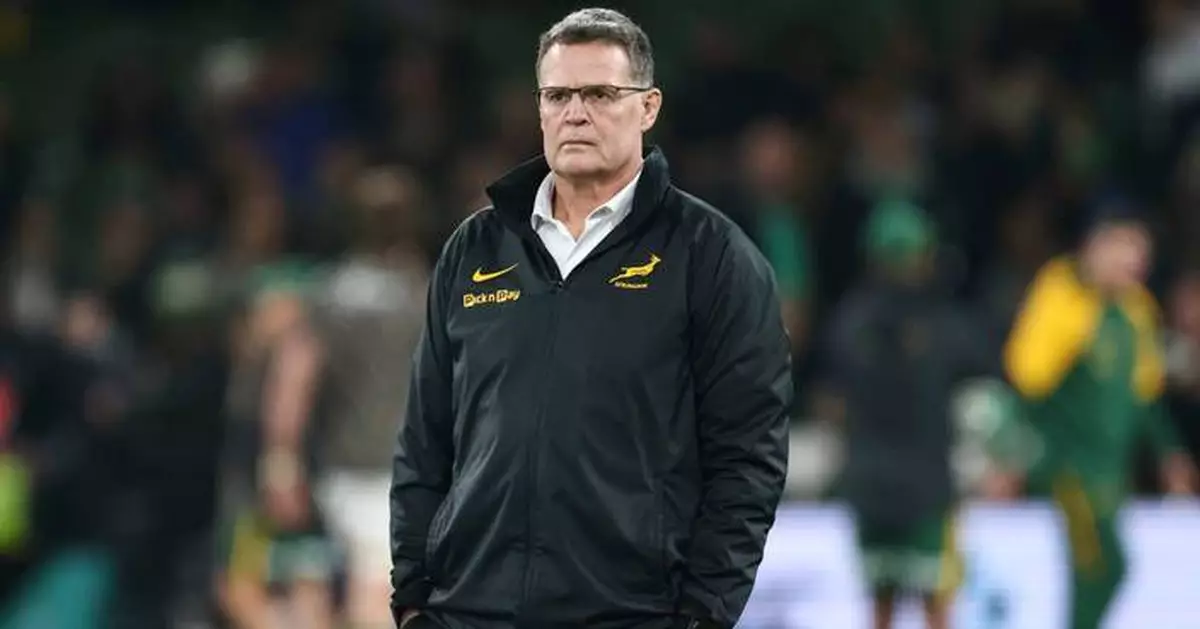
JOHANNESBURG (AP) — Rassie Erasmus will coach South Africa to the 2031 Rugby World Cup in the United States after his contract was extended by four years on Friday.
SA Rugby president Mark Alexander made the announcement at the general meeting of member unions.
Erasmus, a former Springboks captain, was the mastermind behind South Africa's back-to-back Rugby World Cup triumphs in 2019 and 2023 as head coach and then director of rugby.
His title was changed in 2024 back to head coach and South Africa has won the last two Rugby Championships. His second stint as the coach has netted 23 wins in 27 tests (85%).
The team has finished the last three international seasons ranked No. 1.
“This was a quick and easy conversation to reach agreement,” the 53-year-old Erasmus said in a statement. “I have always said that I would find it hard to coach any other international team, and I'm very happy to continue as long as the South African public wants me.”
He acknowledged that support from SA Rugby and the franchises “hasn't always been easy but we're improving.”
“Although this is a long-term agreement we're not looking beyond a really tough 2026 schedule right now.”
The Springboks open 2026 against England at Ellis Park on July 4 to kick off the new Nations Championship, and also host a full three-test tour by New Zealand.
Alexander said Erasmus has made “an enduring impact in shaping the identity of our game.”
“His ability to adapt, innovate and inspire has positioned South African rugby as a benchmark for others, while safeguarding the traditions and values that make our game a source of national pride.”
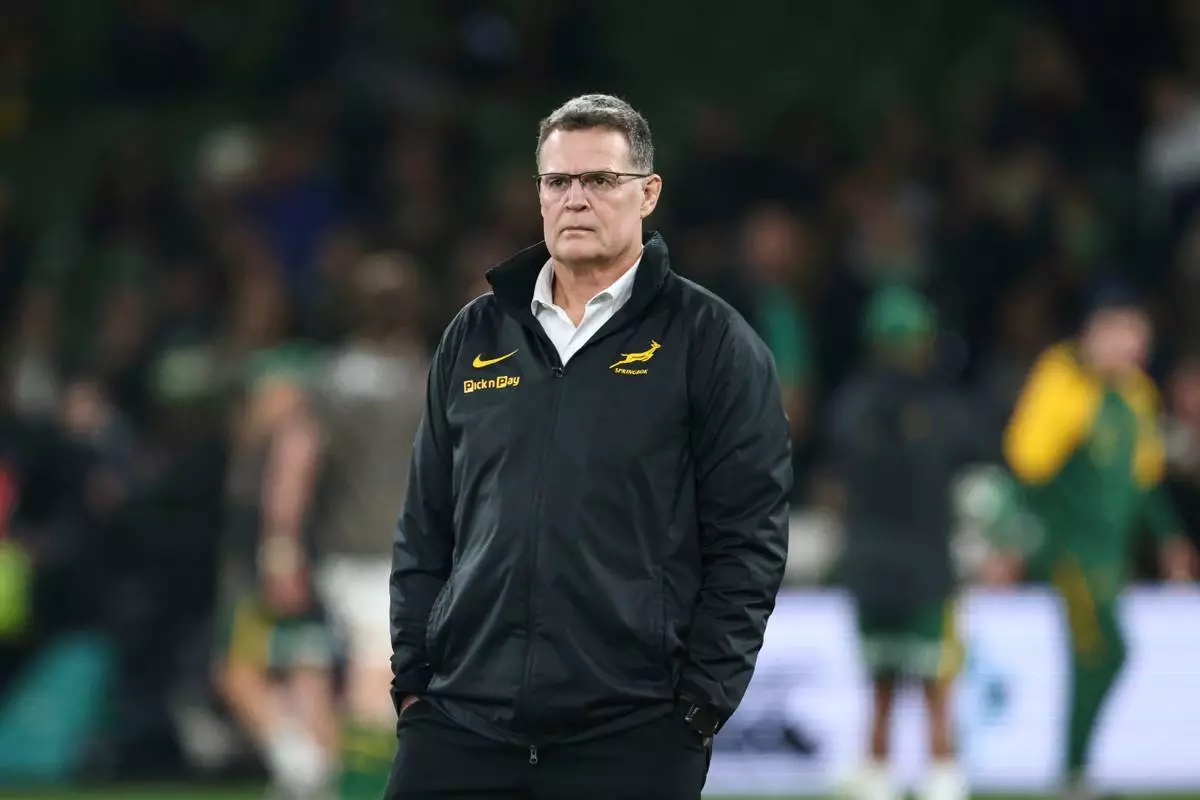
South Africa's head coach Rassie Erasmus during his team's players warm up for the rugby union Nations Series match between Ireland and South Africa in Dublin, Ireland, Saturday, Nov. 22, 2025. (AP Photo/Peter Morrison)
KYIV, Ukraine (AP) — Ukraine is awaiting White House approval for a major drone production agreement proposed by Kyiv last year, Ukrainian President Volodymyr Zelenskyy said Thursday, as countries scramble to modernize their air defenses after the Iran war exposed shortcomings.
The proposed U.S.-Ukraine deal would cover various types of drones and air defenses that operate as a single system capable of protecting against swarms of hundreds or even thousands of Iranian-designed Shahed drones and missiles, Zelenskyy said in a message on social media.
“We have not yet had the opportunity to sign this document,” he said.
Russia has fired tens of thousands of Iranian-designed Shahed drones at Ukraine since it invaded its neighbor just over four years ago. It launched a swarm of more than 800 drones and decoys in its biggest nighttime barrage. Iran has responded to joint U.S.-Israeli strikes by firing the same type of drones at targets in the Middle East.
Ukraine has pioneered the development of cut-price drone killers, some of which cost a few thousand dollars, that have rewritten the air defense rule book.
The conflict unfolding in the Middle East might prompt American officials to sign the drone production proposal, Zelenskyy said.
Ukraine is keen to lock in future foreign support for its ongoing effort to thwart Russia’s invasion, and drone production agreements could bring Kyiv some diplomatic leverage in negotiations with Moscow.
U.S.-mediated talks seeking to stop Europe’s biggest conflict since World War II are on hold due to the Iran war.
Zelenskyy arrived in NATO member Romania on Thursday, a day before he visits French President Emmanuel Macron in Paris, as new research indicated Russian oil revenue that helps drive its invasion of Ukraine has risen since the Iran war began.
Russia’s daily revenue from oil sales during the Middle East conflict, which has brought a sharp increase in the price of crude, has been on average 14% higher than in February, according to the nonprofit Centre for Research on Energy and Clean Air. Oil revenue is crucial for Moscow's war effort.
Macron’s office said his talks with the Ukrainian leader will focus on efforts to counter Russia’s so-called shadow fleet of tankers that are shipping oil in violation of international sanctions but are hard to stop.
Zelenskyy was to meet in Bucharest with Romanian President Nicușor Dan, Prime Minister Ilie Bolojan and visit a training center for Ukraine’s F-16 pilots.
Ukraine has exported a significant amount of its grain through Romania during the war, and Bucharest has provided energy support to Kyiv as Moscow’s forces blast Ukraine’s power grid.
Associated Press writer Samuel Petrequin in Paris contributed to this story.
Follow AP’s coverage of the war in Ukraine at https://apnews.com/hub/russia-ukraine
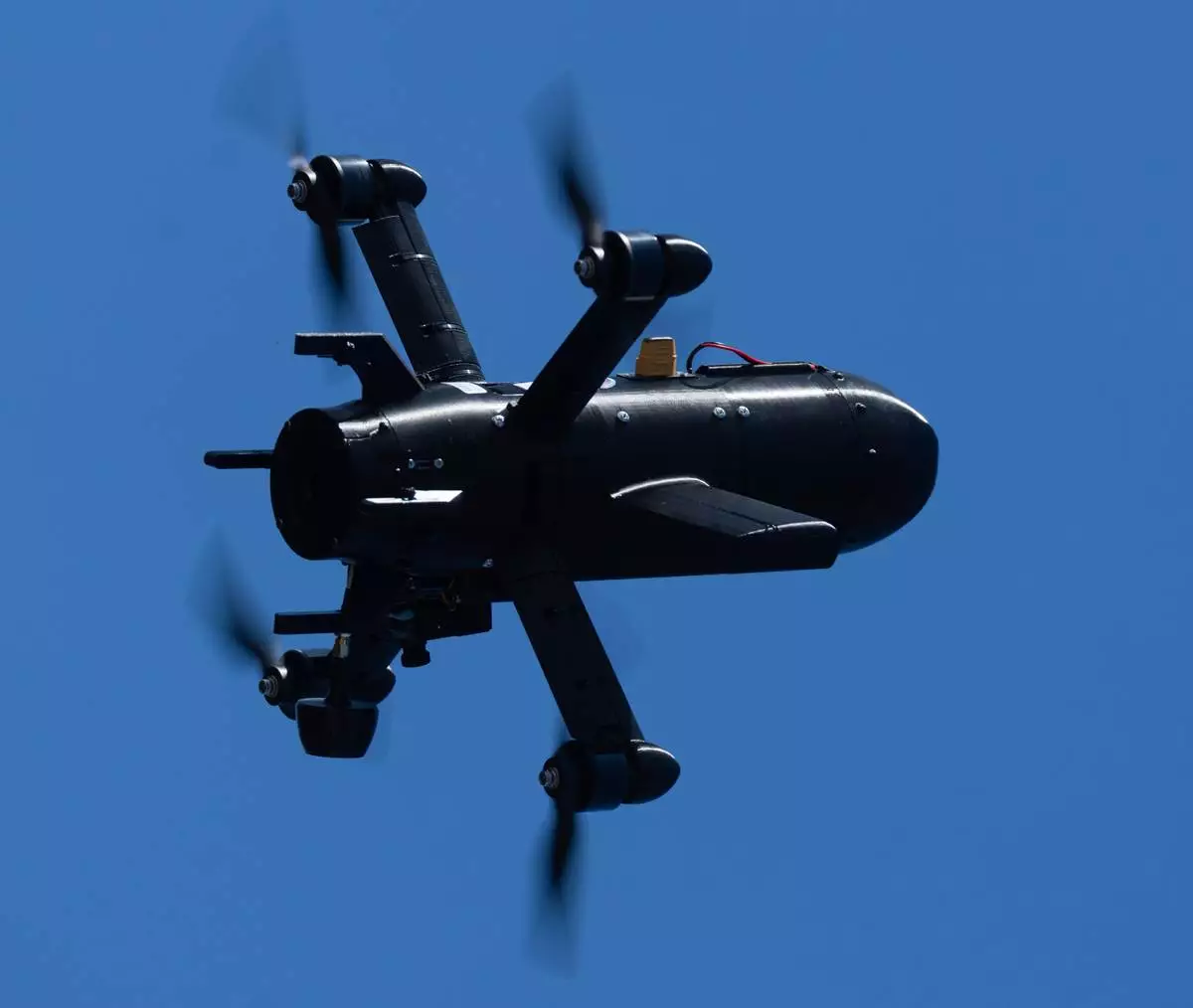
An anti-air interceptor drone designed to destroy Russian attack drones from the Ukrainian company General Cherry is seen during a demonstration in Kyiv region, Wednesday, March 11, 2026. (AP Photo/Efrem Lukatsky)
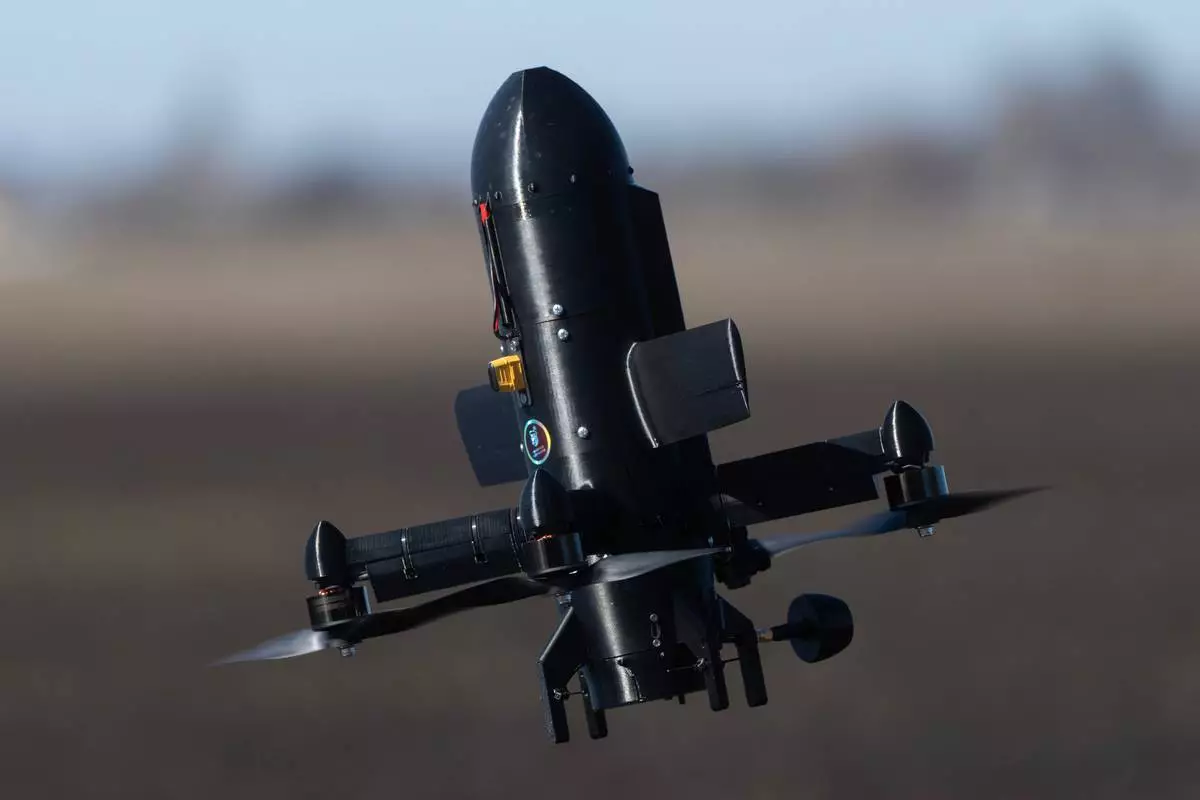
An anti-air interceptor drone designed to destroy Russian attack drones from the Ukrainian company General Cherry is seen during a demonstration in Kyiv region, Wednesday, March 11, 2026. (AP Photo/Efrem Lukatsky)
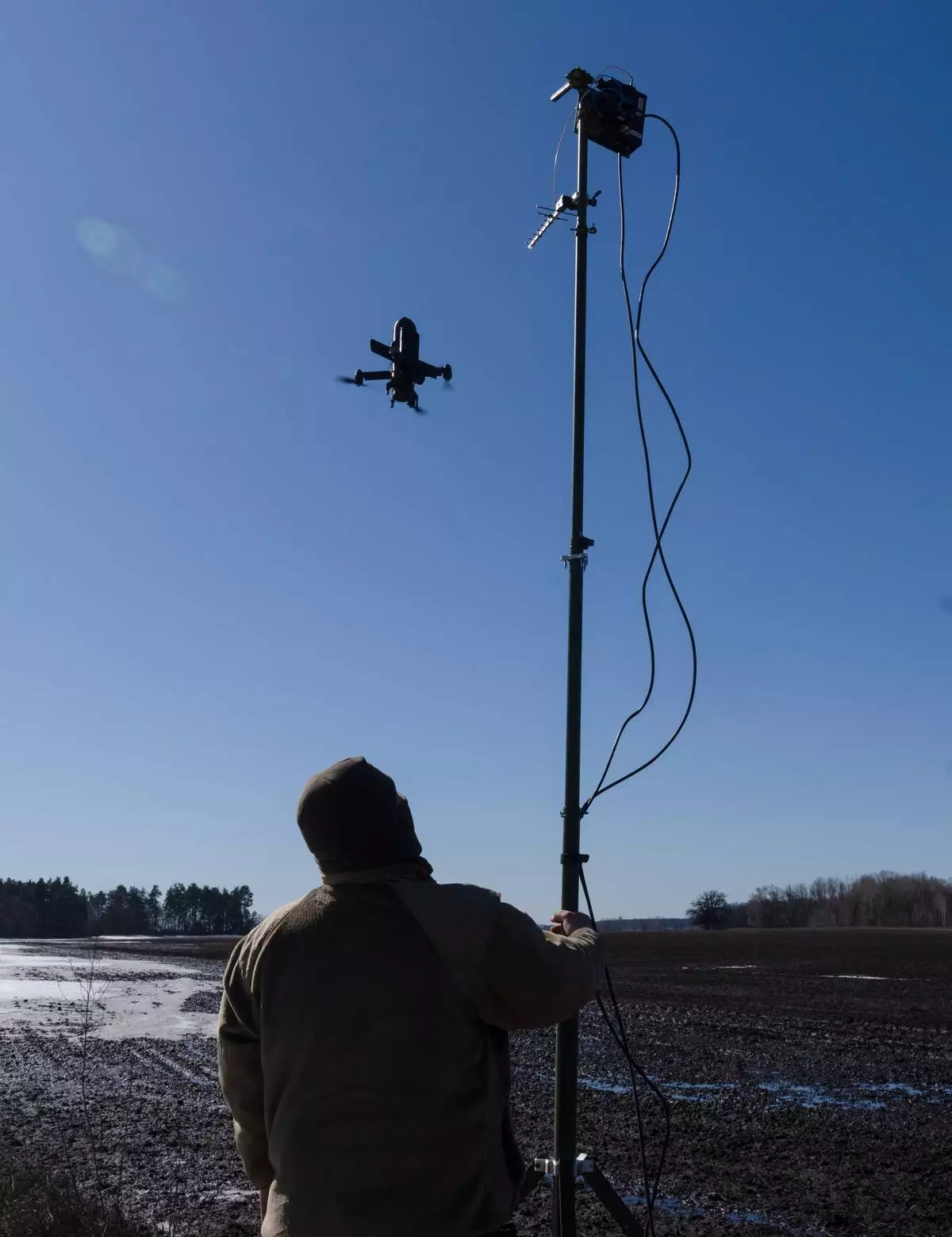
An instructor from the Ukrainian company General Cherry demonstrates the operation of an anti-air interceptor drone designed to destroy Russian attack drones in Kyiv region, Wednesday, March 11, 2026. (AP Photo/Efrem Lukatsky)
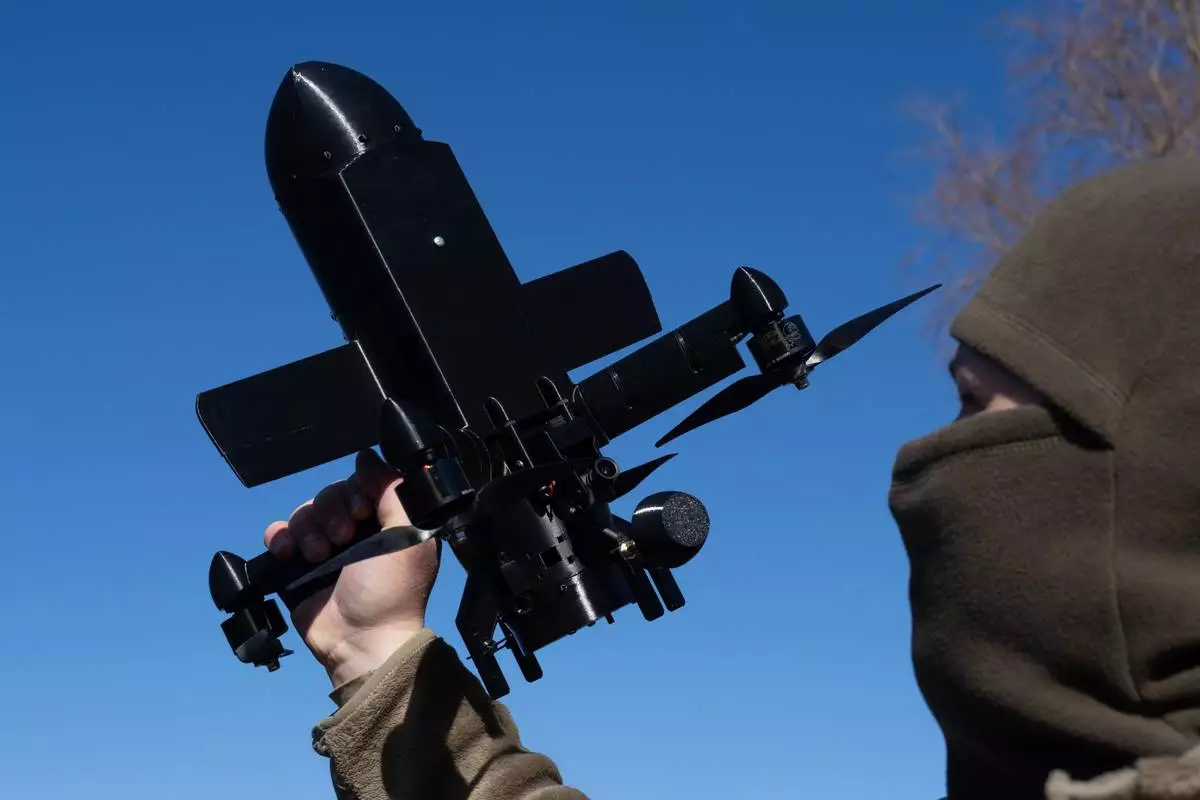
An instructor from the Ukrainian company General Cherry demonstrates the operation of an anti-air interceptor drone designed to destroy Russian attack drones in Kyiv region, Wednesday, March 11, 2026. (AP Photo/Efrem Lukatsky)