
DETROIT (AP) — The Detroit Lions are getting a brief break.
Detroit earned a desperately needed 44-30 win over the Dallas Cowboys on Thursday night, going 2-1 in a three-game stretch of home games over 12 days.
Click to Gallery

Detroit Lions head coach Dan Campbell speaks during a press conference following an NFL football game against the Green Bay Packers in Detroit, Thursday, Nov. 27, 2025. (AP Photo/Paul Sancya)

Detroit Lions quarterback Jared Goff works out prior to an NFL football game against the Dallas Cowboys Thursday, Dec. 4, 2025, in Detroit. (AP Photo/Ryan Sun)
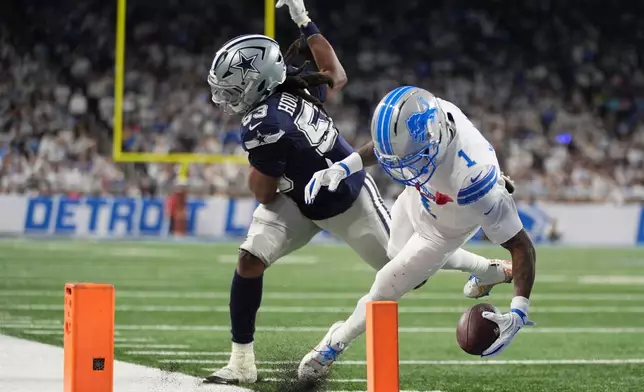
Detroit Lions wide receiver Jameson Williams (1) is stopped short of the goal line by Dallas Cowboys defensive end James Houston (53) during the first half of an NFL football game Thursday, Dec. 4, 2025, in Detroit. (AP Photo/Ryan Sun)

Dallas Cowboys wide receiver Ryan Flournoy (19) takes a hit from Detroit Lions safety Brian Branch (32) during the second half of an NFL football game Thursday, Dec. 4, 2025, in Detroit. (AP Photo/Ryan Sun)

Detroit Lions running back Jahmyr Gibbs (0) runs for a touchdown against the Dallas Cowboys during the second half of an NFL football game Thursday, Dec. 4, 2025, in Detroit. (AP Photo/Paul Sancya)
“We handled our business,” Lions coach Dan Campbell said. "Now, we get a little breather. We get a couple of days here to catch our breath and then we get ready for the Rams.”
The Lions (8-5) would not be in the playoffs if they started next week, but the two-time defending NFC North champions have a chance to play their way in.
It won't be easy, especially after Pro Bowl safety Brian Branch tore his left Achilles tendon against Dallas.
Detroit’s playoff probability is 54%, according to the NFL, with four games left in the regular season.
The banged-up Lions will have the weekend off before reporting to the team's training facility on Monday to begin preparing to face former Detroit quarterback Matthew Stafford and the Los Angeles Rams on the road Dec. 14.
Detroit plays the Pittsburgh Steelers in its home finale on Dec. 21 before visiting Minnesota on Christmas Day and closing the regular season at Chicago — potentially with a lot at stake.
“We want to kind of be on this up ramp by the time we hit the playoffs, where we’re this dangerous team who can kind of go toe to toe with anybody,” Lions quarterback Jared Goff said. “That’s what you want and we’re right there.”
Jahmyr Gibbs had 120 yards of offense and three scores in his latest sensational performance. He joined Hall of Famers Barry Sanders, Eric Dickerson and Earl Campbell as the four players in NFL history with 4,500 yards from scrimmage and 45 touchdowns during the first three seasons of a career.
Detroit didn't adequately replace veteran guard Kevin Zeitler when he left in free agency to sign with Tennessee and that has become a glaring problem.
Christian Mahogany had the first opportunity to fill the role before breaking his leg last month. Against Dallas, the Lions rotated 27-year-old Trystan Colon and fifth-round pick Miles Frazier into the game and they had mixed results.
“There were some mistakes certainly that want to be cleaned up, but for the most part did a good job,” Campbell said.
Jameson Williams is coming off the most productive games of his career, matching a career high with seven catches for 96 yards against the Cowboys a week after setting career highs with seven receptions and 144 yards along with a touchdown in a loss to Green Bay.
Injuries in the secondary are piling up. Branch tore his left Achilles tendon, according to a person familiar with the situation. Tests revealed the significant injury on Friday, the person told The Associated Press. The person spoke on condition of anonymity because the results were not announced.
Free safety Thomas Harper, filling in for injured All-Pro Kerby Joseph, suffered a concussion in the first quarter against the Cowboys. Cornerback Terrion Arnold was put on injured reserve earlier this week.
Branch's injury is a big blow for a team that counts on the hard-hitting defensive back with coverage skills. Receiver and punt returner Kalif Raymond has missed two straight games. Brock Wright, filling in for injured tight end Sam LaPorta, was put on injured reserve on Thursday.
58 — The Lions will play their 58th game without losing back-to-back regular-season games at Los Angeles, the league's longest run since San Francisco's 60-game run without dropping consecutive games from 1995 to 1999, according to Sportradar. The Rams have the second-longest active streak, going 24 games without losing two in a row in the regular season.
Rest from a grueling, three-game stretch and recover from injuries to get healthy for the final part of the season.
AP NFL: https://apnews.com/hub/nfl

Detroit Lions head coach Dan Campbell speaks during a press conference following an NFL football game against the Green Bay Packers in Detroit, Thursday, Nov. 27, 2025. (AP Photo/Paul Sancya)

Detroit Lions quarterback Jared Goff works out prior to an NFL football game against the Dallas Cowboys Thursday, Dec. 4, 2025, in Detroit. (AP Photo/Ryan Sun)
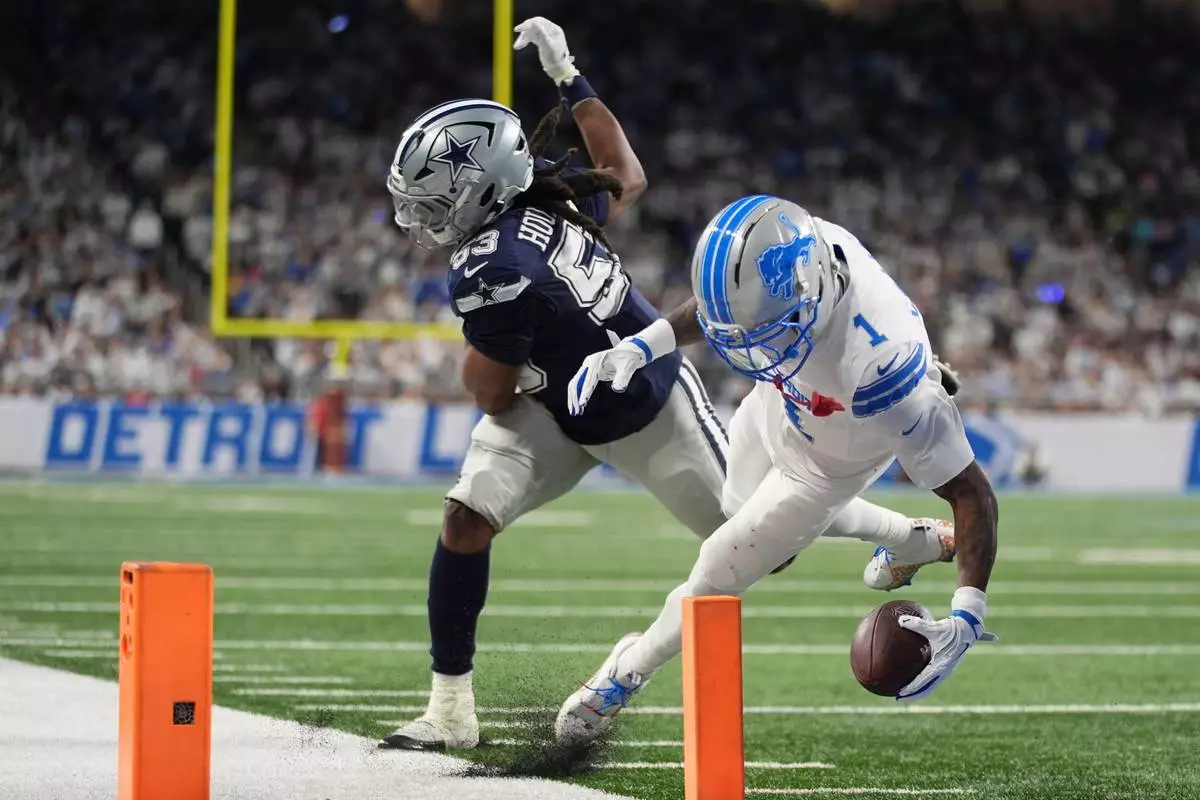
Detroit Lions wide receiver Jameson Williams (1) is stopped short of the goal line by Dallas Cowboys defensive end James Houston (53) during the first half of an NFL football game Thursday, Dec. 4, 2025, in Detroit. (AP Photo/Ryan Sun)

Dallas Cowboys wide receiver Ryan Flournoy (19) takes a hit from Detroit Lions safety Brian Branch (32) during the second half of an NFL football game Thursday, Dec. 4, 2025, in Detroit. (AP Photo/Ryan Sun)

Detroit Lions running back Jahmyr Gibbs (0) runs for a touchdown against the Dallas Cowboys during the second half of an NFL football game Thursday, Dec. 4, 2025, in Detroit. (AP Photo/Paul Sancya)

WASHINGTON (AP) — The Senate passed a broad bill on Thursday to make U.S. housing more accessible and affordable, a rare bipartisan effort in Congress to address a growing national problem.
The bill, which passed 89-10, would reduce regulations, regulate corporate investors and expand how housing dollars can be used to build affordable homes and rentals. It will now head back to the House, which passed a similar bill earlier this year.
“We have a housing shortage all across America,” said Massachusetts Sen. Elizabeth Warren, who worked with Republicans to win overwhelming support from both parties for the legislation. “We need more housing of every kind. More housing for first-time home buyers, more housing for renters, more housing for seniors, more housing for people with disabilities, more rural housing, more urban housing, more, more, and more."
The legislation, she said, "will help drive down prices.”
Senate Banking Committee Chairman Tim Scott, R-S.C., led the effort with Warren. He said ahead of the vote that the Senate would “do what so many people failed to do in this legislative body for the last few decades, and that is pass consequential legislation that makes it easier to become a homeowner.”
Despite the bipartisan vote in the Senate and a shared eagerness to pass the legislation ahead of the midterm elections, It’s unclear whether the House will take up the bill again — or if President Donald Trump will sign it.
Trump has backed the legislation through the bipartisan negotiations, but he has also slowed its momentum with a declaration last weekend that he won’t sign any new measures unless Congress passes legislation that would require voters to show proof of citizenship and end most mail-in balloting. The Senate is expected to begin consideration of that bill next week, but it is unlikely to pass as all Democrats oppose it.
At the same time, House leaders have indicated that they are unlikely to accept the Senate version of the housing legislation and have suggested they could launch a formal conference process to negotiate a final deal between the chambers — a process that could take months.
Senate Majority Leader John Thune, R-S.D., said ahead of the bill’s passage that conference negotiations are a possibility, “but obviously the quickest way to do this would be to pick up the Senate bill and pass it.”
If the White House wants that to happen, he said, “they’ll probably have to make that argument to House leadership.”
House Financial Services Chairman French Hill, R-Ark., said in a statement that Senate passage is “an important step” but added that, “it is critical we get the details right and mitigate some of the concerns raised by House members with the Senate bill.”
Both Republicans and Democrats have embraced the legislation as there has been a national shortage of home construction and as prices have climbed faster than incomes. The bill would give local governments more power on housing issues, allow banks to invest more in affordable housing and lift limits on the number of public housing units that can receive private financing through Section 8 funding to rehabilitate properties.
“You’ve got many provisions in this bill that stop treating the U.S. like one single housing market and start giving local leaders the tools they need to fix their unique regional puzzle,” said Peter Carroll with Cotality, a company that tracks housing data.
The bill aims to make homebuilding easier by streamlining some regulations that require environmental reviews and inspections. It also lifts a limit on a grant for emergency shelter beds and street homelessness outreach.
As many affordable housing developers are leaning on manufactured and modular homes that can be transported to areas that need housing, the legislation also would eliminate the requirement that they have to be built on a permanent chassis, reducing costs and making them easier to build and design.
One of the more contested provisions of the bill would bar institutional investors from buying single-family homes — a top priority for Trump.
The bill defines such investors as any that directly or indirectly own 350 or more single-family homes. Investors of any size would not be required to sell single-family homes bought before the date that the bill becomes a law.
They would still be allowed to buy or build single-family homes if they rent them out, but would be required to sell them to an individual homebuyer after seven years.
Trump has pushed the ban as he has been under pressure to address voters’ concerns about affordability ahead of the midterm elections. “People live in homes, not corporations,” Trump said in a social media post in January, calling on Congress to act.
Critics of the bill’s limits on large institutional investors say it will lead to less rental housing inventory and higher rents as landlords face less competition. At the same time, it’s unclear how a ban that targets institutional investors that own 350 or more single-family homes would meaningfully reduce competition that ordinary homebuyers may face when they shop for a home.
The U.S. housing market has been in a slump dating back to 2022, when mortgage rates began to climb from pandemic-era lows.
Sales of previously occupied U.S. homes have been hovering close to a 4-million annual pace now going back to 2023 — well short of the 5.2-million annual pace that’s historically been the norm. They slowed last year to a 30-year low and have remained sluggish so far this year, declining in January and February versus a year earlier.
A sharp run-up in home prices, especially in the early years of this decade, and a chronic shortage of homes nationally worsened by years of below-average home construction have left many aspiring homeowners priced out of the market.
Meanwhile, while the median U.S. monthly rent has been declining for more than two years, it was still 15.2% higher in January than it was at the start of 2020, according to data from Realtor.com.
Kramon reported from Atlanta and Veiga reported from Los Angeles.
A Capitol Police Officer watches from his post on a foggy morning in front of the Capitol dome, Thursday, March 5, 2026, in Washington. (AP Photo/Allison Robbert)
The U.S. Capitol photographed Wednesday, March 11, 2026, in Washington. (AP Photo/Mariam Zuhaib)