Skip to Content Facebook Feature Image

What to know as lawmakers disclose vivid new details of US boat strikes

News

What to know as lawmakers disclose vivid new details of US boat strikes
News

News

What to know as lawmakers disclose vivid new details of US boat strikes

2025-12-06 06:09 Last Updated At:06:10

WASHINGTON (AP) — The U.S. military opened fire on two people clinging to the wreckage of a boat allegedly carrying drugs, congressional lawmakers learned this week as they seek more answers about the attack and the legal underpinnings of President Donald Trump's military campaign in international waters near Venezuela.

The Sept. 2 strikes on an alleged drug boat were the first foray by the U.S. military into blowing up vessels allegedly carrying drugs. But this particular attack and the broader military campaign, which so far has destroyed more than 20 boats and killed more than 80 people, is now under intense scrutiny. Lawmakers who oversee national security committees heard this past week from the Navy admiral who ordered the initial strikes, including the follow-up that killed the two survivors.

While Adm. Frank “Mitch” Bradley stated clearly that Defense Secretary Pete Hegseth did not issue a “kill them all” order on the survivors, Democratic lawmakers say the scope of the mission was clear — to destroy the drugs and kill the 11 people on board. The lawmakers and military experts say the sequence of events is alarming, potentially violating the laws of armed conflict that safeguard human rights and protect American troops.

What lawmakers learn in the weeks ahead, and how far they are willing to press the administration for answers, presents a defining moment for the U.S. military under Trump's second-term command. It is testing the scope of laws that have long governed soldiers on the battlefield and will almost certainly influence the course of the tense standoff between Trump's White House and the government of Venezuela.

Here’s what’s known about the boat strikes and what other information lawmakers are still pursuing.

Bradley told lawmakers that he ordered a second attack on the wreckage of a boat that was carrying cocaine because it was believed that bales of the drug were still in the hull of the boat, according to a person with knowledge of the briefing who spoke on the condition of anonymity because they were not authorized to discuss it.

For several minutes, two people, shirtless and at one point waving, had climbed on the piece of the boat that was still floating.

They were “drifting in the water — until the missiles come and kill them,” said Rep. Adam Smith, the ranking Democrat on the House Armed Services Committee, adding that their slaying was “deeply concerning.”

However, Sen. Tom Cotton, the Republican chair of the Senate Intelligence Committee, said he believed the video shows the two people trying to flip over the piece of the boat. For him, that was enough of an indication that the survivors were trying to “stay in the fight” and were therefore still justifiable targets.

Bradley told the lawmakers that the rationale for the second strike was to ensure that the cocaine in the boat could not be picked up later by cartel members. Lawmakers previously had been told the second strike was ordered to sink the boat.

That rationale grows out of the legal opinion that the Department of Defense is using as the entire basis for its military operation against drug cartels, especially because Congress has not explicitly authorized the Trump administration to conduct the campaign.

Under the Trump administration's legal opinion, drugs and drug smugglers en route to the U.S. are essentially viewed as terrorist threats and can be targeted with the same rules that apply to the global war on terror.

That's a dramatic shift from traditional practice that views drug running as a serious criminal crime, but one to be handled typically by law enforcement, usually the Department of Homeland Security's Coast Guard, rather than the military.

"The people in the boat, as a matter of the law of armed conflict, are not fighters,” said Michael Schmitt, a former Air Force lawyer and professor emeritus at the U.S. Naval War College. “All they are is transporting drugs.”

Democrats say the conclusions of the Trump administration's legal argument are troublesome. “That incredibly broad definition, I think, is what sets in motion all of these problems about using lethal force and using the military,” Smith said.

That's led lawmakers to call for the public release of the legal argument that undergirds the military campaign, a roughly 40-page opinion from the Justice Department’s Office of Legal Counsel.

“This briefing confirmed my worst fears about the nature of the Trump administration’s military activities,” Sen. Jack Reed, the top Democrat on the Armed Services committee, said in a statement. “This must and will be the only beginning of our investigation into this incident.”

The Office of Legal Counsel's opinion, which has been classified by the Trump administration and was only made available to lawmakers in November, was signed on Sept. 5, according to lawmakers who have reviewed it. The attack in question, however, was conducted three days before, on Sept. 2.

Lawmakers want to know under what orders and instructions the operation was conducted.

Bradley told lawmakers this week that he had not personally read through the entire legal opinion, according to the person with knowledge of the briefing. And while Hegseth has said that military lawyers, known as judge advocate generals or JAGs, were kept in the loop on the operation, lawmakers found out Thursday that the JAGs for special operations command and southern command, the two command posts for the operation, did not have access to the legal opinion until mid-November.

Bradley also told lawmakers that the orders did not contain a directive to kill all the boat occupants, and Cotton pointed out that the military was still operating under the same orders when it picked up the survivors of a later, separate attack.

Lawmakers on the armed services committees are requesting the written execute order for the operation, which would include the rules of engagement that soldiers were expected to follow. Democratic lawmakers also want to understand what Hegseth communicated verbally to military officials, either by reviewing a transcript of his remarks or interviewing those involved.

The armed services committees also want to hear from Navy Adm. Alvin Holsey, who is retiring as the commander of U.S. forces in Central and South America. He had been commanding the overall campaign, but Hegseth announced last month that Holsey would be retiring early.

Lawmakers also want to find out why Hegseth was not in the operation room when the second strike was carried out. He has said he stepped out for other business after the first strike.

So far, Hegseth has been defiant in the face of criticism from Capitol Hill. Just after the briefings concluded Thursday, the military announced that it had struck another boat that it believed was carrying drugs, killing four people. That latest strike, the 22nd of the campaign, brought the death toll to at least 87 people.

Associated Press writer Ben Finley in Washington contributed.

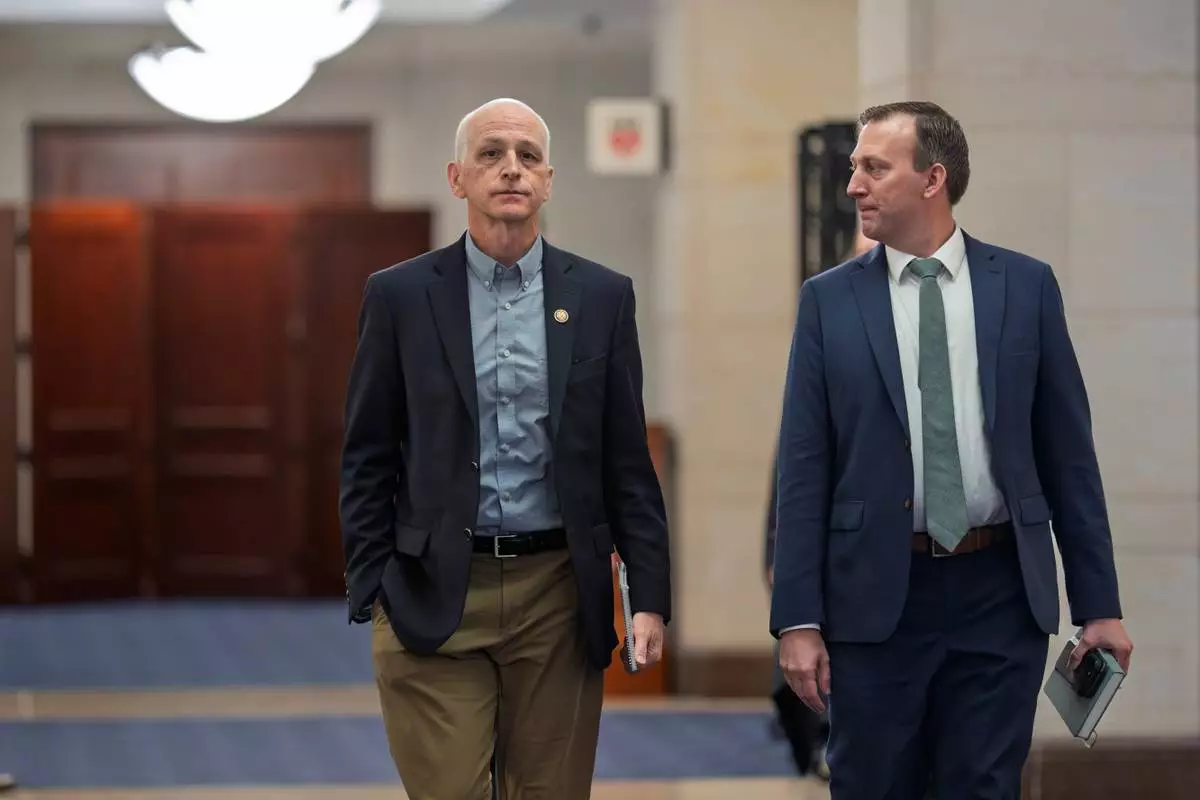
Rep. Adam Smith, D-Wash., the ranking member of the House Armed Services Committee, leaves after meeting with Adm. Frank "Mitch" Bradley, commander of the U.S. Special Operations Command, and Gen. Dan Caine, chairman of the Joint Chiefs of Staff, at a classified briefing at the Capitol in Washington, Thursday, Dec. 4, 2025. (AP Photo/J. Scott Applewhite)
Rep. Adam Smith, D-Wash., the ranking member of the House Armed Services Committee, leaves after meeting with Adm. Frank "Mitch" Bradley, commander of the U.S. Special Operations Command, and Gen. Dan Caine, chairman of the Joint Chiefs of Staff, at a classified briefing at the Capitol in Washington, Thursday, Dec. 4, 2025. (AP Photo/J. Scott Applewhite)

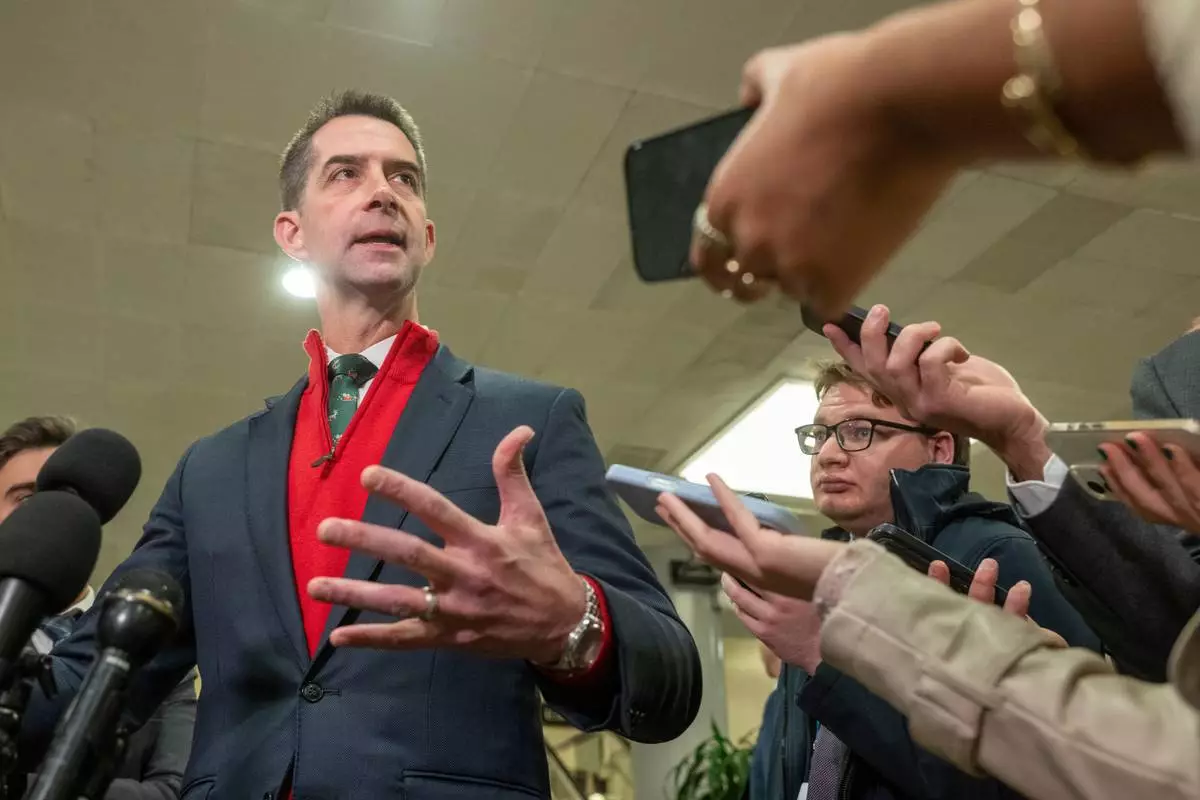
Sen. Tom Cotton, R-Ark., speaks to reporters following a classified briefing for top congressional lawmakers overseeing national security as they investigate how Defense Secretary Pete Hegseth handled a military strike on a suspected drug smuggling boat and its crew in the Caribbean near Venezuela Sept. 2, at the Capitol in Washington, Thursday, Dec. 4, 2025. (AP Photo/Kevin Wolf)
Sen. Tom Cotton, R-Ark., speaks to reporters following a classified briefing for top congressional lawmakers overseeing national security as they investigate how Defense Secretary Pete Hegseth handled a military strike on a suspected drug smuggling boat and its crew in the Caribbean near Venezuela Sept. 2, at the Capitol in Washington, Thursday, Dec. 4, 2025. (AP Photo/Kevin Wolf)

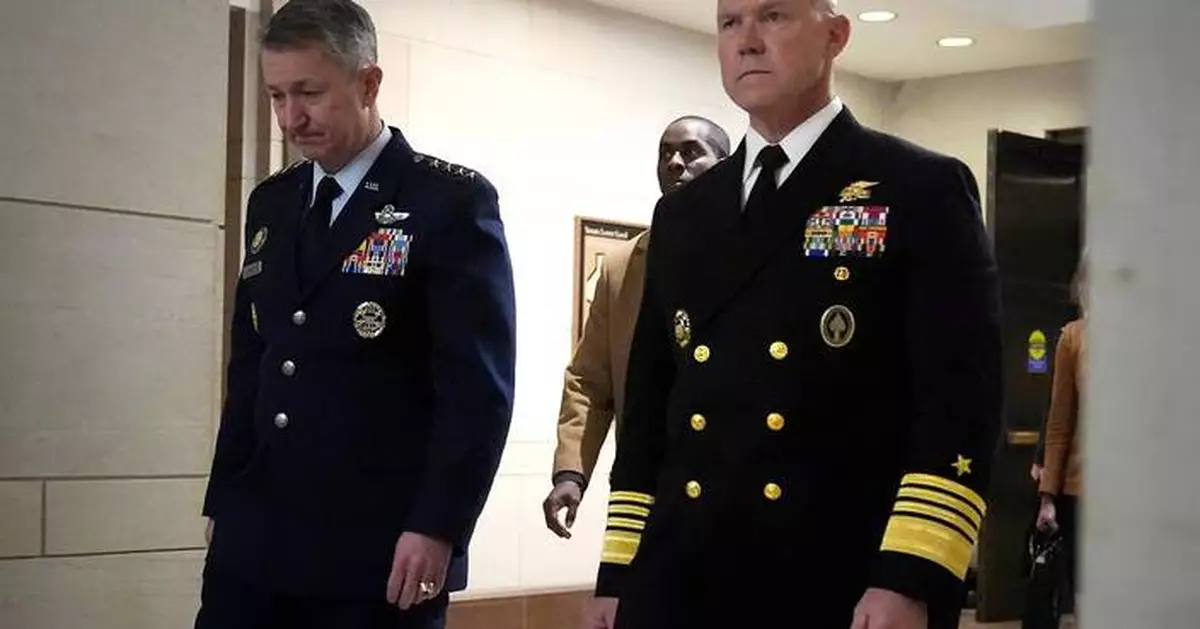
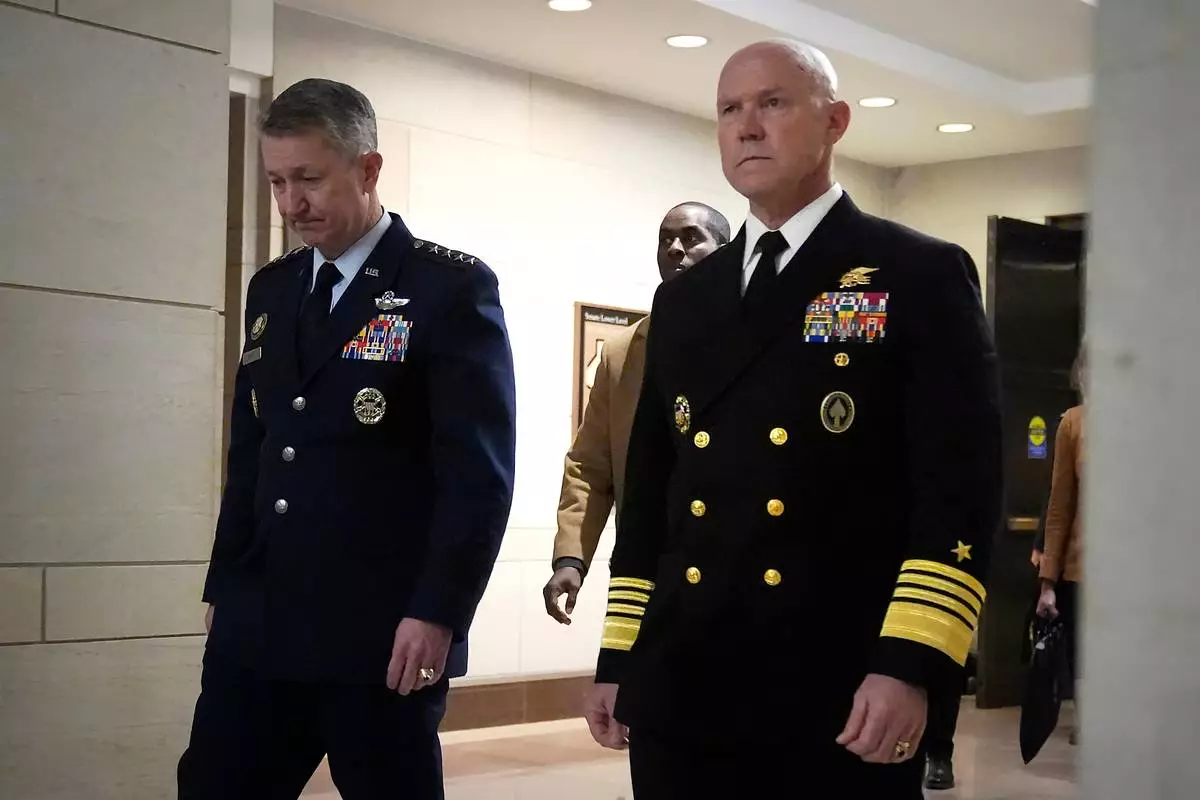
U.S. Navy Adm. Frank M. Bradley, right, accompanied by Gen. Dan Caine, chairman of the Joint Chiefs of Staff, left, walks to a meeting with senators on Capitol Hill, Thursday, Dec. 4, 2025, in Washington. (AP Photo/Mark Schiefelbein)

U.S. Navy Adm. Frank M. Bradley, right, accompanied by Gen. Dan Caine, chairman of the Joint Chiefs of Staff, left, walks to a meeting with senators on Capitol Hill, Thursday, Dec. 4, 2025, in Washington. (AP Photo/Mark Schiefelbein)

KENNER, La. (AP) — The doors of Carmela Diaz's taco joint are locked, the tables are devoid of customers and no one is working in the kitchen. It's one of many once-thriving Hispanic businesses, from Nicaraguan eateries to Honduran restaurants, emptied out in recent weeks in neighborhoods with lots of signs in Spanish but increasingly fewer people on the streets.

In the city of Kenner, which has the highest concentration of Hispanic residents in Louisiana, a federal immigration crackdown aiming for 5,000 arrests has devastated an economy already struggling from ramped-up enforcement efforts this year, some business owners say, and had far-reaching impacts on both immigrants and U.S. citizens alike.

“Fewer and fewer people came,” said a crying Diaz, whose Taqueria La Conquistadora has been closed for several weeks now with both customers and workers afraid to leave home. “There were days we didn’t sell anything. That’s why I made the decision to close the business — because there was no business.”

On Wednesday, convoys of federal vehicles began rumbling back and forth down Kenner's main commercial streets as the Department of Homeland Security commenced the latest in a series of immigration enforcement operations that have included surges in Los Angeles, Chicago and Charlotte, North Carolina. Bystanders have posted videos of federal agents detaining people outside Kenner businesses and at construction sites.

Border Patrol commander Gregory Bovino also made an appearance in the city, surrounded by agents in tactical gear, to tout to reporters the launch of the operation dubbed Catahoula Crunch, a name derived from the big game hound that is the Louisiana state dog.

The state's Hispanic population has boomed in the last two decades, with many of them arriving in the aftermath of 2005's Hurricane Katrina to help rebuild. In Kenner, just west of New Orleans between the Mississippi River and Lake Pontchartrain, Hispanics make up about 30% of residents.

Diaz, who is from El Salvador, arrived in 2006 after years of doing farm work in Texas. She opened food trucks, earning enough to buy a home in Kenner, and her business has since expanded to a fleet of trucks and two brick-and-mortar restaurants.

Nearly all that is shuttered at the moment because of the crackdown, and Diaz is scraping by through making home deliveries to people fearful of being swept up by agents regardless of their legal status.

“They don’t respect anyone,” Diaz said. “They don’t ask for documents. They don’t investigate. They slap the handcuffs on them and take them away.”

Mayra Pineda, CEO of the Louisiana Hispanic Chamber of Commerce and a Kenner resident for decades, fears for the future if the crackdown continues for months as planned.

“How are these business owners going to survive?” she said. “I don’t know. But let’s be clear — it’s not only on the Hispanic community but bad for all of us, for the economy in general.”

Kenner Police Chief Keith Conley described the federal immigration operation as a “prayer answered for us.”

The chief said while crime is decreasing in the city, he has raised concerns about violent crimes involving immigrants who entered the U.S. illegally. The police department shared a dozen press releases documenting crimes – between 2022 and 2025 – where they say the person arrested had entered the country illegally. The cases included sex crimes, a murder, gang activity and shootings.

Based on the most recent crime report published by the Louisiana Statistical Analysis Center, in 2023 in Kenner a total of 4,436 total “offenses” were committed, which included 863 “crimes against persons.”

Conley said that while violent crimes are concerning, one of the “blights" that “we see and feel every day” are traffic stops and car accidents, that involve drivers who are illegal immigrants that are uninsured and unlicensed.

State Sen. Kirk Talbot, a Republican who represents a portion of Kenner, said he believes the federal operation will ultimately “benefit the city” and that residents who are in the U.S. legally have “nothing to be afraid of.”

“I think the people that come here illegally – who flee authorities and, especially, ones that have criminal records -- need to obey the law and they need to be caught and deported,” Talbot said.

While Kenner has closely worked with federal immigration agents before, especially under the 287(g) program that allows local police to question the immigration status of suspects in their custody, Conley said local officers are not currently aiding in the federal operation. However, he said, the department is ready to assist in the operation if asked.

DHS spokesperson Tricia McLaughlin said Thursday that federal agents have already made dozens of arrests, though the agency has not released a full list of people detained.

“Americans should be able to live without fear of violent criminal illegal aliens harming them, their families, or their neighbors,” McLaughlin said in a statement. “In just 24 hours on the ground, our law enforcement officers have arrested violent criminals with rap sheets that include homicide, kidnapping, child abuse, robbery, theft, and assault.”

The office of Mayor Michael Glaser, a former police chief, declined to comment on his stance on the operation. But it said the crackdown “falls under federal jurisdiction” and the mayor expects all agencies operating in the city to conduct themselves “professionally, lawfully and with respect for our community.”

However, the city's police are among the hundreds of local and state law enforcement agencies nationwide that have signed agreements to be part of an Immigration and Customs Enforcement program that authorizes them to hold detainees for potential deportation.

Sergio Perez, a Guatemalan immigrant and U.S. citizen who has lived in Kenner since 2010, said he has loved ones there who lack legal permission to be in the country and risk being detained or deported. He also worries that anyone who is Hispanic is at risk of abuse by federal agents, regardless of their immigration status.

While Perez considers Kenner home — a place where it is easy to find favorite dishes like “caldo de res,” a hearty beef and vegetable stew — he is prepared to leave the country if family members are deported.

“They don’t want us here,” Perez said. “It’s like you are in someone’s house and you don’t feel welcome. They’re just killing our spirit.”

Cline reported from Baton Rouge, Louisiana. Associated Press writer Valerie Gonzalez in McAllen, Texas, contributed.

Brook is a corps member for The Associated Press/Report for America Statehouse News Initiative. Report for America is a nonprofit national service program that places journalists in local newsrooms to report on undercovered issues.

Carmela Diaz speaks inside her closed restaurant in the midst of a Customs and Border Protection immigration crackdown in Kenner, La., Thursday, Dec. 4, 2025. (AP Photo/Gerald Herbert)

Carmela Diaz speaks inside her closed restaurant in the midst of a Customs and Border Protection immigration crackdown in Kenner, La., Thursday, Dec. 4, 2025. (AP Photo/Gerald Herbert)

U.S. Border Patrol agents arrive at a Home Depot in Kenner, La.,Wednesday, Dec. 3, 2025. (AP Photo/Gerald Herbert)

U.S. Border Patrol agents arrive at a Home Depot in Kenner, La.,Wednesday, Dec. 3, 2025. (AP Photo/Gerald Herbert)

A Customs and Border Protection agent exits a vehicle after agents apprehended two people during an operation Thursday, Dec. 4, 2025, in Kenner, La. (AP Photo/Gerald Herbert)

A Customs and Border Protection agent exits a vehicle after agents apprehended two people during an operation Thursday, Dec. 4, 2025, in Kenner, La. (AP Photo/Gerald Herbert)

Carmela Diaz poses inside her closed restaurant in the midst of a Customs and Border Protection immigration crackdown in Kenner, La., Thursday, Dec. 4, 2025. (AP Photo/Gerald Herbert)

Carmela Diaz poses inside her closed restaurant in the midst of a Customs and Border Protection immigration crackdown in Kenner, La., Thursday, Dec. 4, 2025. (AP Photo/Gerald Herbert)

Carmela Diaz speaks inside her closed restaurant in the midst of a Customs and Border Protection immigration crackdown in Kenner, La., Thursday, Dec. 4, 2025. (AP Photo/Gerald Herbert)

Carmela Diaz speaks inside her closed restaurant in the midst of a Customs and Border Protection immigration crackdown in Kenner, La., Thursday, Dec. 4, 2025. (AP Photo/Gerald Herbert)

Recommended Articles