NEW YORK (AP) — A former high-level agent with the U.S. Drug Enforcement Administration and an associate have been charged with conspiring to launder millions of dollars and obtain military-grade firearms and explosives for a Mexican drug cartel, according to an indictment unsealed Friday in New York.
Paul Campo, 61, of Oakton, Virginia, who retired from the DEA in 2016 after a 25-year career, and Robert Sensi, 75, of Boca Raton, Florida, were caught in sting involving a law enforcement informant who posed as a member of the Jalisco New Generation Cartel, prosecutors said.
The cartel, also know as CJNG, was designated as a foreign terrorist organization by the U.S. in February.
U.S. Attorney Jay Clayton said Campo betrayed his DEA career by helping the cartel, which he said was responsible for “countless deaths through violence and drug trafficking in the United States and Mexico.”
Campo and Sensi appeared Friday afternoon before a magistrate judge in New York, who ordered them detained without bail. Their lawyers entered not guilty pleas on their behalf.
Campo’s lawyer, Mark Gombiner, called the indictment “somewhat sensationalized and somewhat incoherent.” He denied the two men had agreed to explore obtaining weapons for the cartel.
Over the past year, Campo and Sensi agreed to launder about $12 million in drug proceeds for the cartel and converted about $750,000 in cash to cryptocurrency, thinking it was going to the group when it really went to the U.S. government, the indictment said. They also provided a payment for about 220 kilograms of cocaine they were told would be sold in the U.S. for about $5 million, thinking they would get a cut of the proceeds, prosecutors said.
The two men also said they would look into procuring commercial drones, AR-15 semiautomatic rifles, M4 carbines, grenade launchers and rocket-propelled grenades for the cartel, the indictment said.
Campo boasted about his law enforcement experience during conversations with the informant and offered to be a “strategist” for the cartel, authorities said. He began his career as a DEA agent in New York and rose to become deputy chief of financial operations for the agency, the indictment said.
Evidence in the case includes hours of recordings of the two men talking with the informant, as well as cellphone location data, emails and surveillance images, Assistant U.S. Attorney Varun Gumaste said in court Friday.
Sensi's attorney, Amanda Kramer, unsuccessfully argued that Sensi should be freed while he awaits trial, saying he wouldn't flee partly because he has multiple health problems, including injuries from a fall two months ago, early-stage dementia and Type II diabetes.
Sensi was convicted in the late 1980s and early 1990s of mail fraud, defrauding the government and stealing $2.5 million, said the prosecutor, Gumaste. He said evidence shows Sensi also was engaged in a scheme to procure military-grade helicopters for a Middle East country.
DEA Administrator Terrance Cole said in a statement that while Campo is no longer employed by the DEA, the allegations undermine trust in law enforcement.
The DEA has been roiled in recent years by several embarrassing instances of misconduct in its ranks. The Associated Press has tallied at least 16 agents over the past decade brought up on federal charges ranging from child pornography and drug trafficking to leaking intelligence to defense attorneys and selling firearms to cartel associates, revealing gaping holes in the agency’s supervision.
Starting in 2021, the agency placed new controls on how DEA funds can be used in money laundering stings, and warned agents they can now be fired for a first offense of misconduct if serious enough, a departure from prior administrations.
Campo and Sensi are charged with four conspiracy counts related to narcoterrorism, terrorism, narcotics distribution and money laundering.
Collins reported from Hartford, Connecticut. Associated Press writer Joshua Goodman in Miami contributed to this report.

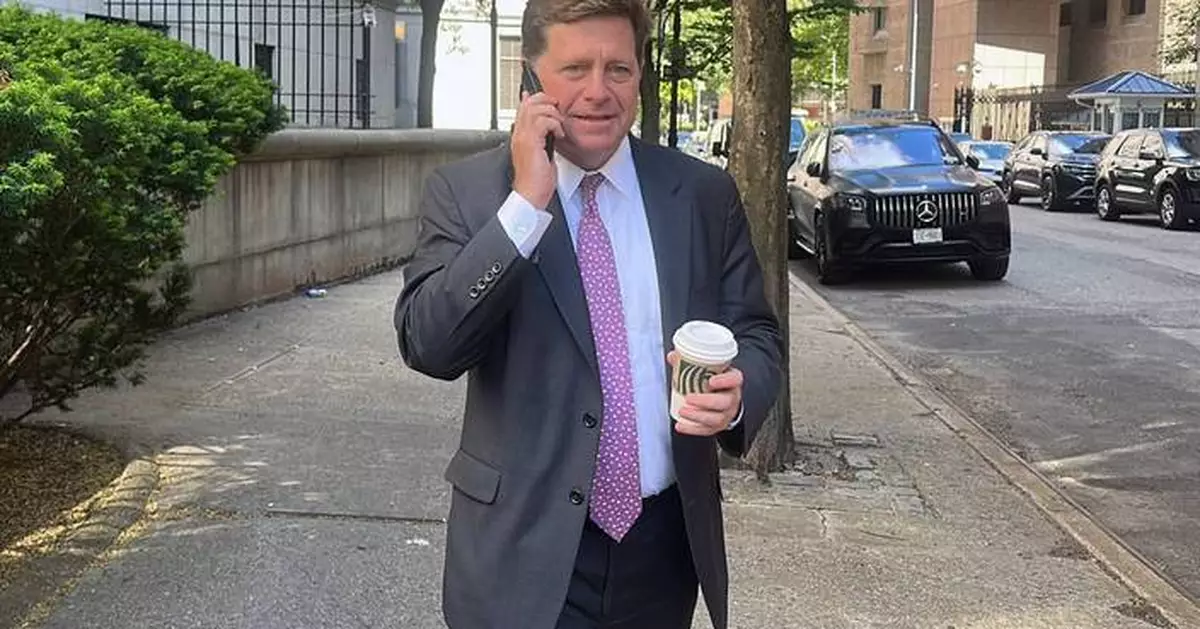
FILE - Acting U.S. Attorney for the Southern District of New York Jay Clayton talks on a phone as he exits court in New York, May 19, 2025. (AP Photo/Ted Shaffrey, File)
TYRE, Lebanon (AP) — Iran on Saturday said it had closed the Strait of Hormuz because of Israel’s continued attacks in Lebanon and warned that while negotiators were going to Switzerland for talks with the United States on their interim agreement, not much likely will happen if the fighting doesn’t stop.
Key mediator Pakistan said technical-level talks will begin on Sunday in Burgenstock, Switzerland, with Qatari mediators also participating.
Iran’s joint military command said the strait was closed because of the U.S. “clear breach of its commitments” by failing to end the war. The interim deal is meant to stop fighting on all fronts.
Shortly after that, the state broadcaster said Iran’s negotiating team was leaving for Switzerland, a trip originally planned for Friday. State media said the team includes parliamentary Speaker Mohammad Bagher Qalibaf, Foreign Minister Abbas Araghchi and central bank and oil officials, among others.
The U.S. disputed Iran's announcement on the strait. “Iran does not control the Strait of Hormuz. Traffic continues to flow, and U.S. forces are monitoring the situation to ensure this remains the case,” said Capt. Tim Hawkins, a spokesperson for U.S. Central Command. The military said 55 merchant ships transited Saturday with more than 17 million barrels of oil.
Foreign Ministry spokesperson Esmail Bagahei signaled that little might happen in talks until Iran feels the U.S. is living up to the deal.
Negotiations toward a final agreement will begin only once key commitments are upheld, Bagahei said. If they are not, “the memorandum of understanding as a whole will be jeopardized.”
In Washington, Vice President JD Vance confirmed that top U.S. negotiators Jared Kushner and Steve Witkoff were already in Switzerland and working through technical details of anticipated negotiations on Iran’s nuclear program. The interim deal gives negotiators 60 days to reach a nuclear agreement, but that can be extended.
Vance told Fox News that he expects to leave for Switzerland in "the next couple of days” but acknowledged that “it’s always a delicate coordination dance.”
As part of efforts to revive the direct talks, Pakistani Interior Minister Mohsin Naqvi met Araghchi in Tehran earlier Saturday, according to officials in Islamabad who spoke on condition of anonymity because of the sensitivity of the issue.
The global economy braced for more uncertainty. Ships began transiting after the interim U.S.-Iran agreement was signed earlier in the week, a milestone that left plenty of questions unanswered.
Following the signing, the U.S. lifted its blockade of Iran’s ports and is allowing Tehran to sell its oil freely. The deal also calls for Iran’s assets to be unfrozen at some point.
In Lebanon, an official with Hezbollah told The Associated Press that Iran has informed the militant group that Tehran will not reopen the Strait of Hormuz until Israel announces publicly that it will comply with a “comprehensive ceasefire” in Lebanon and an end to military operations there. The official spoke on condition of anonymity because he was not authorized to speak publicly.
The official also said Hezbollah will commit to a ceasefire if Israel does. There was no immediate Israeli comment.
Earlier Saturday, Israeli strikes on southern Lebanon killed at least 16 people, including two children, hours after reports emerged of a ceasefire agreement there. Seven people remained trapped under the rubble after the strikes hit the southern city of Nabatiyeh and nearby villages, Lebanon’s National News Agency said.
The death toll in the latest war between Israel and Hezbollah has now surpassed 4,000, Lebanon’s health ministry later announced.
Mediators were scrambling to halt the fighting after a heavy exchange on Friday killed at least 47 people in Lebanon and four Israeli soldiers.
An Israeli military official, speaking anonymously in line with regulations, said Hezbollah fired more than 50 projectiles at Israeli forces in southern Lebanon overnight. Israel's army said it struck dozens of Hezbollah targets and militants in southern Lebanon, including Hezbollah command centers.
On Friday, the Israeli ambassador to Washington, Yechiel Leiter, said Israel “remains firmly committed to an immediate ceasefire” if Hezbollah honors the agreement and ceases hostilities.
Earlier Saturday, Hezbollah said it had committed to the ceasefire but blamed Israel for violating it several times Friday night and said it would repel attacks by Israeli troops.
A new round of U.S.-backed talks between the Lebanese government and Israel is expected to take place in Washington next week.
Hezbollah and Israel went to war two days after the U.S. and Israel launched strikes on Iran on Feb. 28, with Hezbollah firing rockets and drones at northern Israel and Israel seizing large swaths of southern Lebanon.
Neither Israel nor Hezbollah are signatories to the deal between the U.S. and Iran, which calls for a halt to military operations in Lebanon and for the country's sovereignty to be respected.
Israeli Prime Minister Benjamin Netanyahu has vowed to keep Israeli forces in southern Lebanon until any threat to Israel is eliminated. Hezbollah has refused to halt its attacks unless Israel commits to withdrawing from Lebanon, which Iran says is also a condition of the deal.
A strike on Barish village killed four members of a family: parents and two children. In Arab Salim village, a body was pulled from a destroyed house, and in Doueir and Kfar Rumman villages, drone strikes killed a person on a motorcycle and a Lebanese soldier. Nine people were killed in strikes in Qannarit, Sohmor and Shehour villages.
Smoke rose into the sky over southern Lebanon and Israeli jets flew low over the coastal city of Tyre. Residents told The Associated Press they were relieved that Tyre had been spared in recent days, but now they were reminded that the war is not over.
“Our entire lives would change if there’s a ceasefire,” said one resident, Hussein Khoshman.
Military spokesman Brig. Gen. Effie Defrin said Israeli forces were operating in a “forward defense zone” and would continue doing so.
Some residents of northern Israel doubted the fighting would stop. “I don’t believe in a ceasefire because it doesn’t exist,” said Miriam Hod in Metula.
Mroue reported from Beirut and Munir from Islamabad. Associated Press writers Abby Sewell in Beirut, Samy Magdy in Cairo, Seung Min Kim and Konstantin Toropin in Washington and Jamey Keaten in Zurich, Switzerland, contributed to this report.

Signs indicating planned US-Iran peace talks are displayed at the Bürgenstock Resort in Obbuergen, near Lucerne, in Switzerland, Friday June 19, 2026. (Anas Mallick via AP)
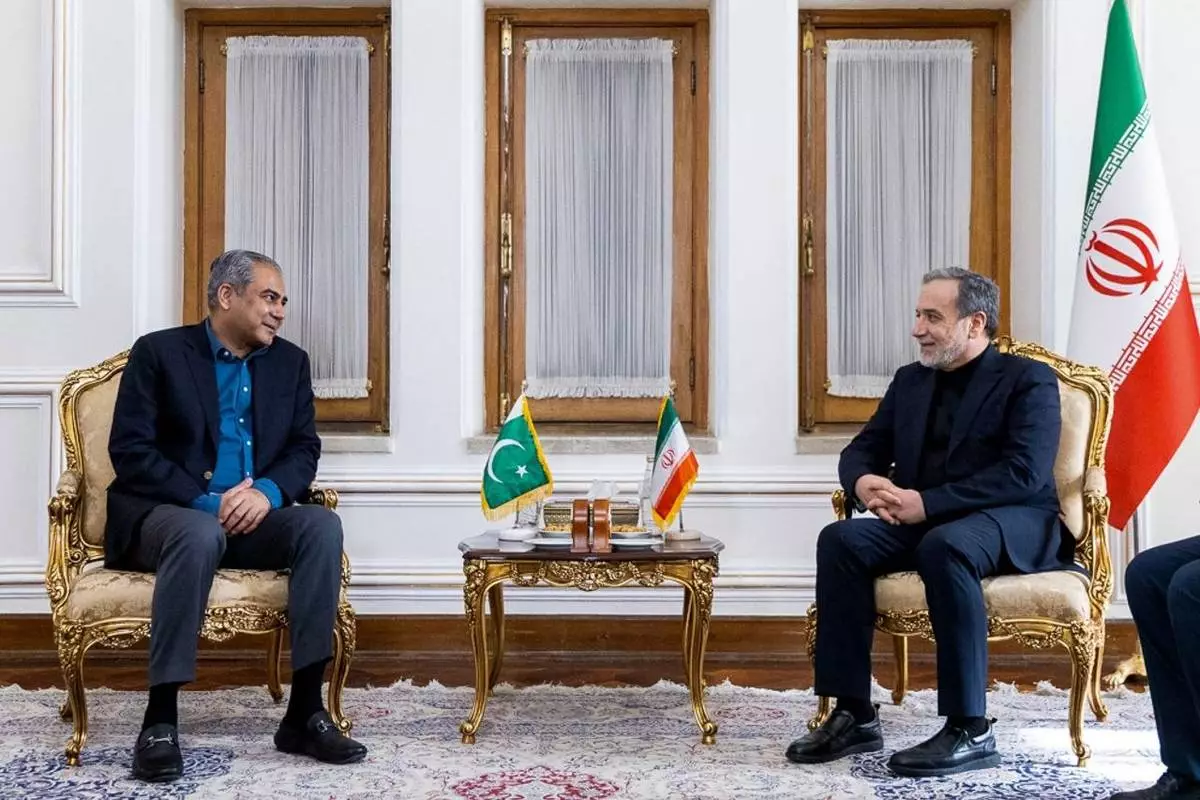
In this photo, released by the Iranian Foreign Ministry, Foreign Minister Abbas Araghchi, right, meets Pakistan's Interior Minister Mohsin Naqvi, in Tehran, Iran, Saturday, June 20, 2026. (Iran's Foreign Ministry, via AP)
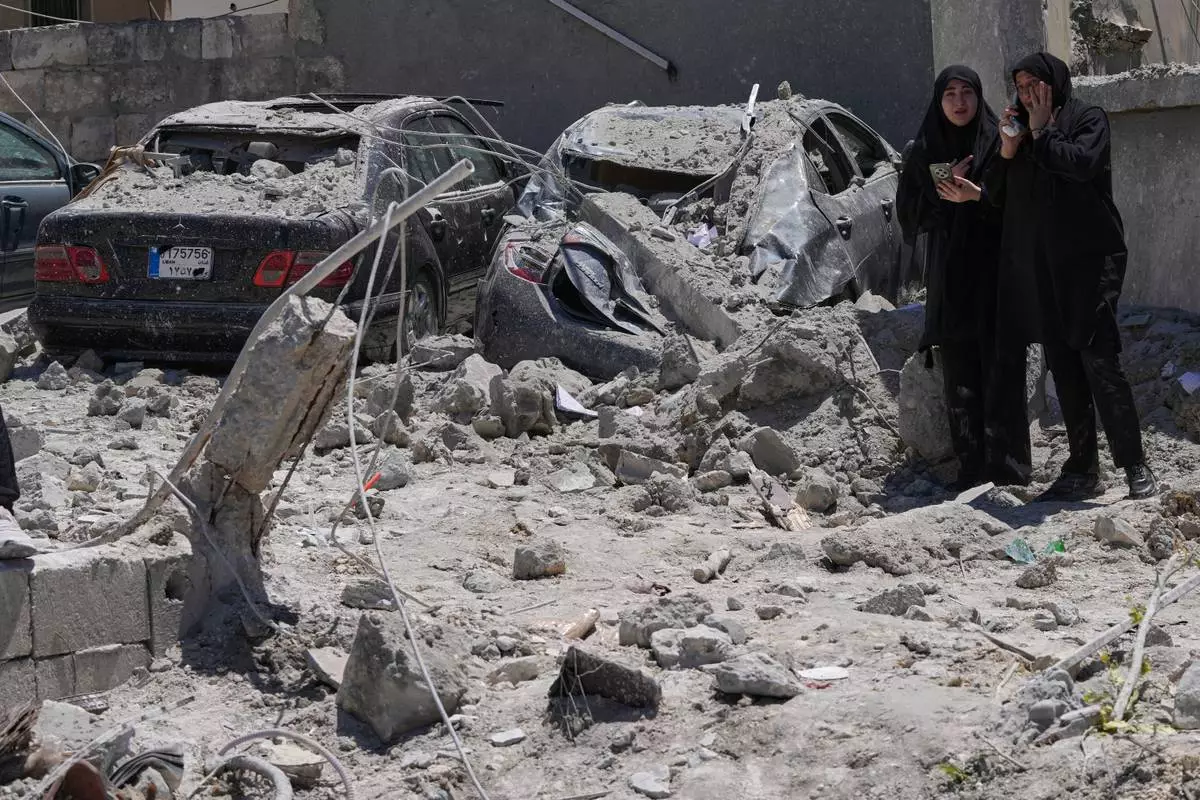
Relatives of missed victims weep, as they gather at the site of destroyed buildings that were hit in an Israeli airstrike in Qannarit village, southern Lebanon, Saturday, June 20, 2026. (AP Photo/Mohammed Zaatari)
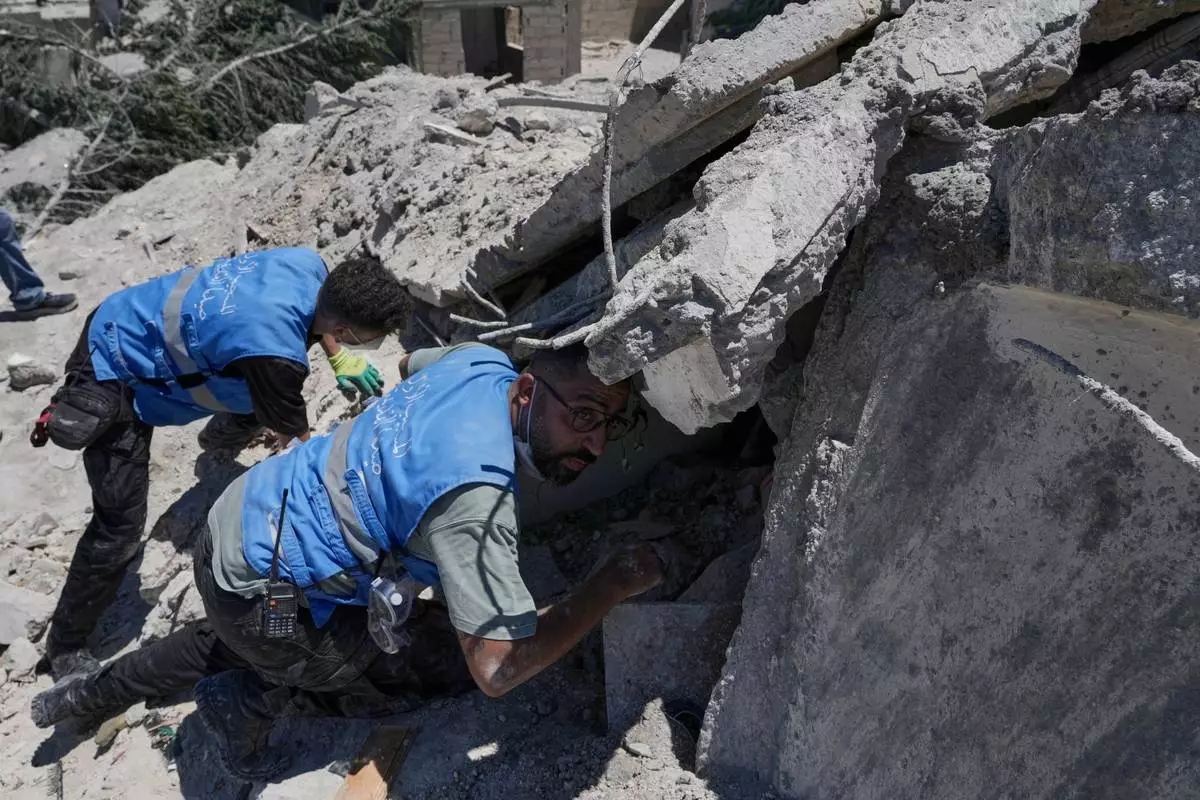
Rescue workers search for victims under the rubble of a destroyed building that was hit in an Israeli airstrike in Qannarit village, southern Lebanon, Saturday, June 20, 2026. (AP Photo/Mohammed Zaatari)
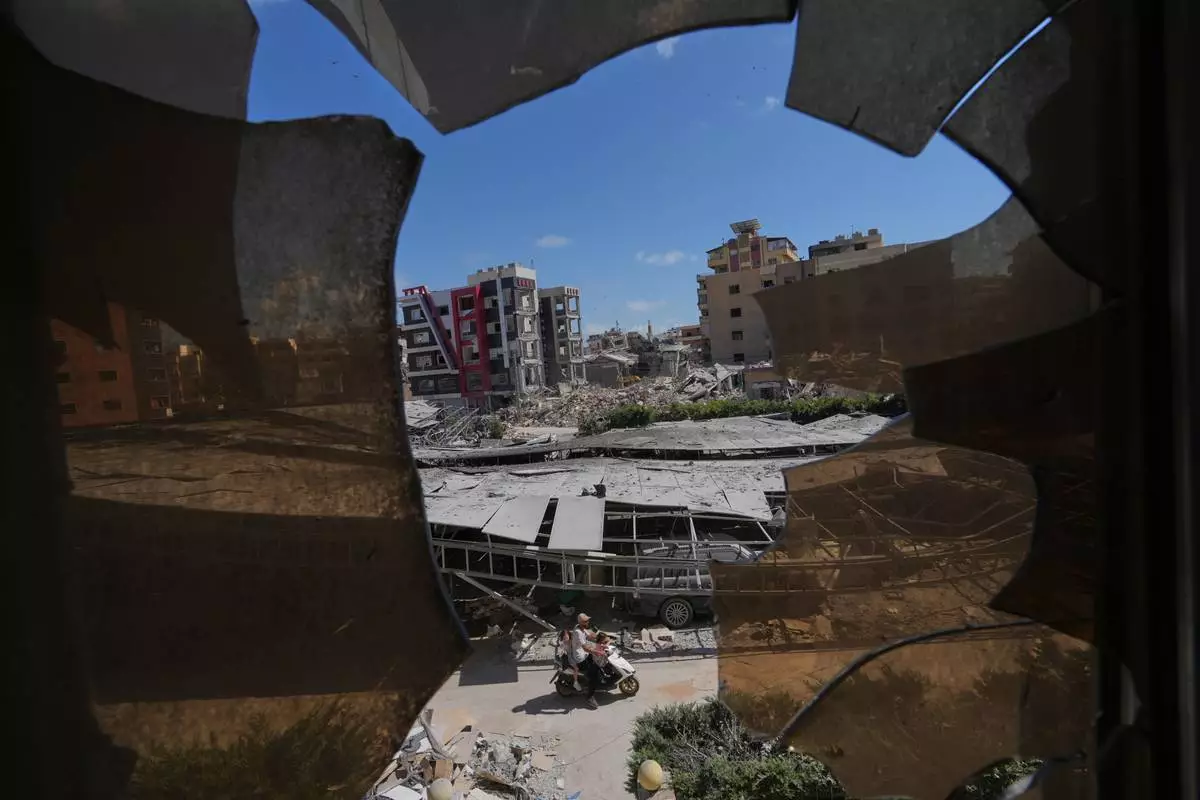
Buildings damaged by Israeli strikes are seen through shattered glass from the Jabal Amel Hospital in the southern port city of Tyre, Lebanon, Thursday, June 18, 2026. (AP Photo/Hassan Ammar)
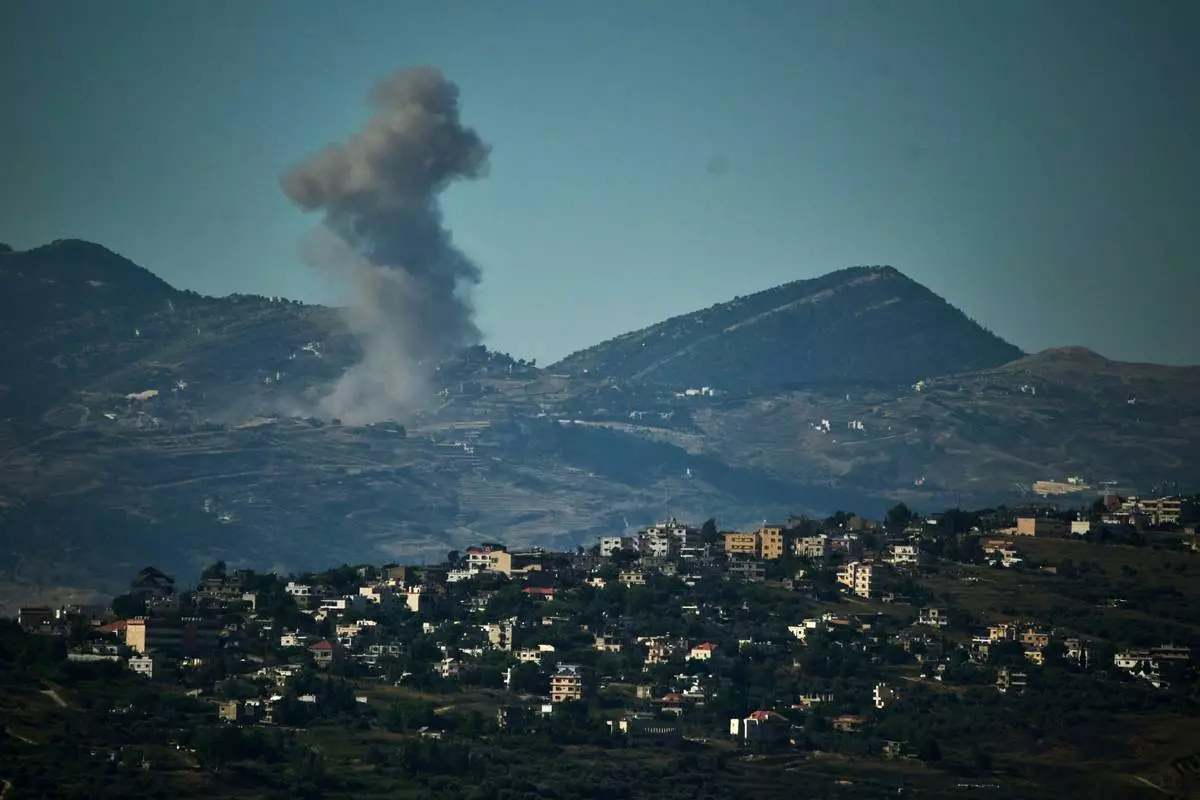
Smoke rises to the sky following an Israeli military strike in southern Lebanon as seen from northern Israel, Friday, June 19, 2026. (AP Photo/Leo Correa)