NEW YORK (AP) — A New York City high school senior was jailed Friday on a federal arson charge after authorities say he set a fire that severely burned a sleeping subway passenger.
Hiram Carrero, 18, was not required to enter a plea during his arraignment in Manhattan federal court. The fire early Monday morning is the latest in a string of incidents of people being lit ablaze on public transit across the U.S.
U.S. District Judge Valerie E. Caproni ordered Carrero detained, citing the “heinousness of the crime,” after prosecutors appealed Magistrate Judge Robert W. Lehrburger’s decision to release him to home confinement under his mother's supervision.
“It’s hard for me to understand why an 18-year-old young man who’s in high school is out at 3 o’clock in the morning setting people on fire,” Caproni said.
Carrero is accused in a criminal complaint of igniting a piece of paper and dropping it near the 56-year-old passenger around 3 a.m. Monday on a northbound 3 train at the 34th Street—Penn Station stop near Madison Square Garden and Macy’s flagship store in midtown Manhattan.
The passenger stumbled to the platform at the next station, 42nd Street—Times Square, with his legs and torso on fire, according to surveillance images included in Carrero’s criminal complaint. Police officers quickly extinguished the flames and the passenger was taken to a hospital, where he was listed in critical condition.
“The victim very well could have died in this case,” prosecutor Cameron Molis said.
Carrero was arrested Thursday in Harlem, where his lawyer said he lives with his disabled mother and acts as her primary caregiver, bringing her to medical appointments. She attended his arraignment but declined to speak to reporters.
According to the complaint, Carrero stepped onto the train only briefly, lit the fire and then fled the station while the passenger lay burning. He then took a bus home.
Carrero faces at least seven years in prison if he’s convicted. A preliminary hearing is scheduled for Jan. 4, though that will be canceled if prosecutors bring the case to a grand jury and secure an indictment by then.
Carrero’s lawyer, Jennifer Brown, said there was “no disagreement that the allegations are extremely serious.”
But, she said, Carrero is a “very young man with no (criminal) record and a mother willing to take him in.”
Before Caproni stepped in, Lehrburger had agreed to release Carrero to home confinement with electronic monitoring and a requirement that he undergo a mental health evaluation and submit to drug testing.
Caproni reversed the decision at an after-hours hearing on Friday.
Brown, attempting to convince her to uphold Carrero’s release, cited news reports that investigators had been looking into whether the passenger had lit himself on fire.
Carrero’s case went to federal court in part because it was investigated by a federal task force, the New York Arson and Explosives Task Force that is run by the Bureau of Alcohol, Tobacco, Firearms and Explosives in conjunction with the city’s police and fire departments. He is not facing charges in state court.
According to the complaint, investigators zeroed in on Carrero by comparing images from the incident to body-worn camera footage recorded in October when police stopped him for riding his bicycle through a red light. Brown said he was delivering for Uber Eats at the time.
Carrero and the man investigators were searching for had the same distinctive mustache, hat with white lettering across the front, backpack and gray hooded sweatshirt in both sets of images, the complaint said.
Last month, federal prosecutors in Chicago charged a man with pouring gasoline on a woman, chased her through a train car and setting her on fire. In December 2024, a woman asleep a stopped subway train in Brooklyn was killed when a stranger set her clothing on fire.

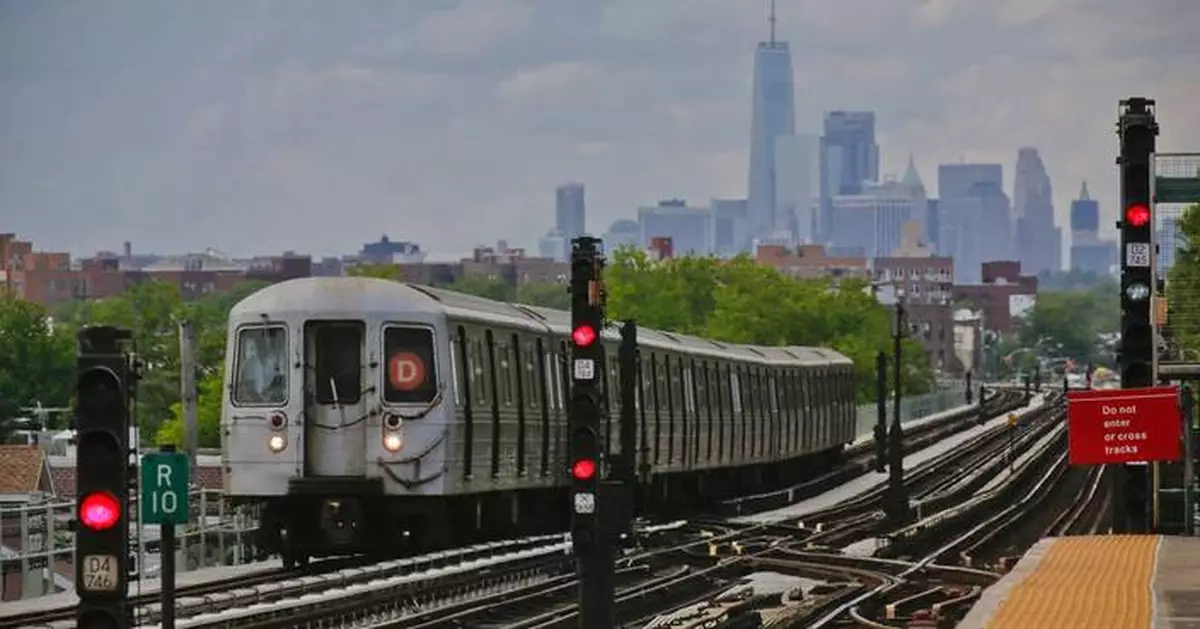
FILE - A subway approaches an above ground station in the Brooklyn borough of New York with the New York City skyline in the background, June 21, 2017. (AP Photo/Bebeto Matthews, File)
PROVO, Utah (AP) — The man accused of killing Charlie Kirk on a Utah college campus was back in court Friday as a state judge denied some efforts by his attorneys to limit public access to certain documents while not ruling out the possibility of closing portions of an upcoming hearing.
The outcome sets the stage for an April hearing in which attorneys for Tyler Robinson will make their case to exclude TV cameras, microphones and photographers from the courtroom.
Judge Tony Graf has been weighing the public’s right to know details about the case against concerns by defense attorneys that the media attention could undermine Robinson’s right to a fair trial. Prosecutors, Kirk’s widow and attorneys for news organizations have urged Graf to keep the proceedings open.
Prosecutors intend to seek the death penalty for Robinson, 22, who is charged with aggravated murder in the Sept. 10 shooting of the conservative activist on the Utah Valley University campus in Orem. They have said DNA evidence connects Robinson to the killing.
Robinson has not yet entered a plea.
Attorneys on Friday debated whether the defense's written request to exclude cameras, which was classified by the court as private, should be made public.
Graf said the defense failed to make its case to keep the motion private but that he will continue “balancing all the factors” when deciding which portions of the upcoming hearing may be closed.
Staci Visser, an attorney for Robinson, told the judge that the defense is not arguing in the court of public opinion.
“There seems to be an idea that flooding the public sphere with information from this courtroom will somehow dispel conspiracy theories or shift public narratives. That, in and of itself, is concerning to the defense,” Visser said. “All we should be worried about is protecting what happens in this courtroom.”
Robinson’s defense team went on to say that the April hearing will involve discussions about prejudicial pretrial publicity — for example, evidence that has yet to be admitted, confessions, personal opinions about guilt or public statements that would otherwise be inadmissible in court.
“We don’t want to be in that position of bringing in front of the court all of this prejudicial information and having the press regurgitate it yet one more time, and reinflicting a wound that we’re seeking to avoid,” defense attorney Michael Burt said.
Christopher Ballard, a prosecutor with the Utah County Attorney’s Office, dismissed those arguments. He said careful questioning during jury selection and tools like expanding the jury pool can ensure a defendant gets a fair trial.
“So just saying that this a content tornado or there's been a barrage of media coverage doesn't necessarily mean that there is going to be prejudice to the defendant,” Ballard said.
Ballard noted that most of the evidence that will be discussed at the April 17 hearing is already public, so most of it should be open.
Coalitions of national and local news organizations, including The Associated Press, are fighting to preserve media access in the case.
Media access has been a focal point of several recent hearings, with the judge placing temporary restrictions on local TV stations for showing Robinson's shackles in violation of a court order and filming close-up shots that might allow viewers to interpret what he was discussing with his attorneys.
The judge also has prevented full video recordings of Kirk’s shooting from being shown in court after defense attorneys argued the graphic footage would interfere with a fair trial. An estimated 3,000 people attended the outdoor rally to hear Kirk, a co-founder of Turning Point USA who helped mobilize young people to vote for President Donald Trump.
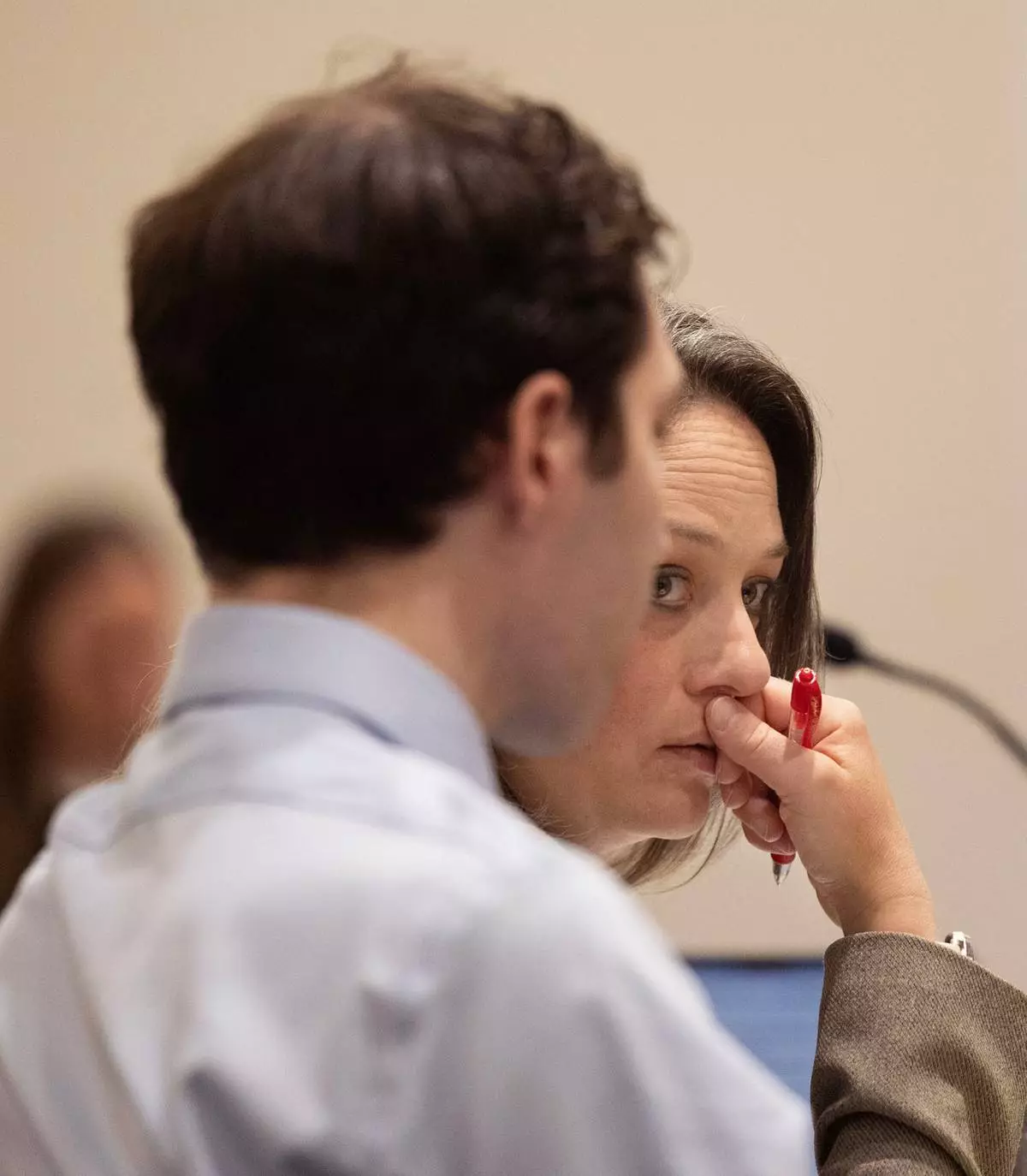
Defense attorney Staci Visser, left, and defendant Tyler Robinson, accused in the fatal shooting of conservative activist Charlie Kirk, attend a hearing in 4th District Court, Friday, March. 13, 2026, in Provo, Utah. (Laura Seitz/The Deseret News via AP, Pool)

Prosecuting and defense attorneys and defendant Tyler Robinson, right, accused in the fatal shooting of conservative activist Charlie Kirk, attend a hearing in 4th District Court, Friday, March. 13, 2026, in Provo, Utah. (Laura Seitz/The Deseret News via AP, Pool)

Prosecutor Chad Grunander, center, listens, Friday, March. 13, 2026, in 4th District Court in Provo, Utah, during a hearing for Tyler Robinson, who is accused in the fatal shooting of conservative activist Charlie Kirk. (Laura Seitz/The Deseret News via AP, Pool)

Attorney Richard Novak, left, and defendant Tyler Robinson, accused in the fatal shooting of conservative activist Charlie Kirk, attend a hearing, in 4th District Court, Friday, March. 13, 2026, in Provo, Utah. (Laura Seitz/The Deseret News via AP, Pool
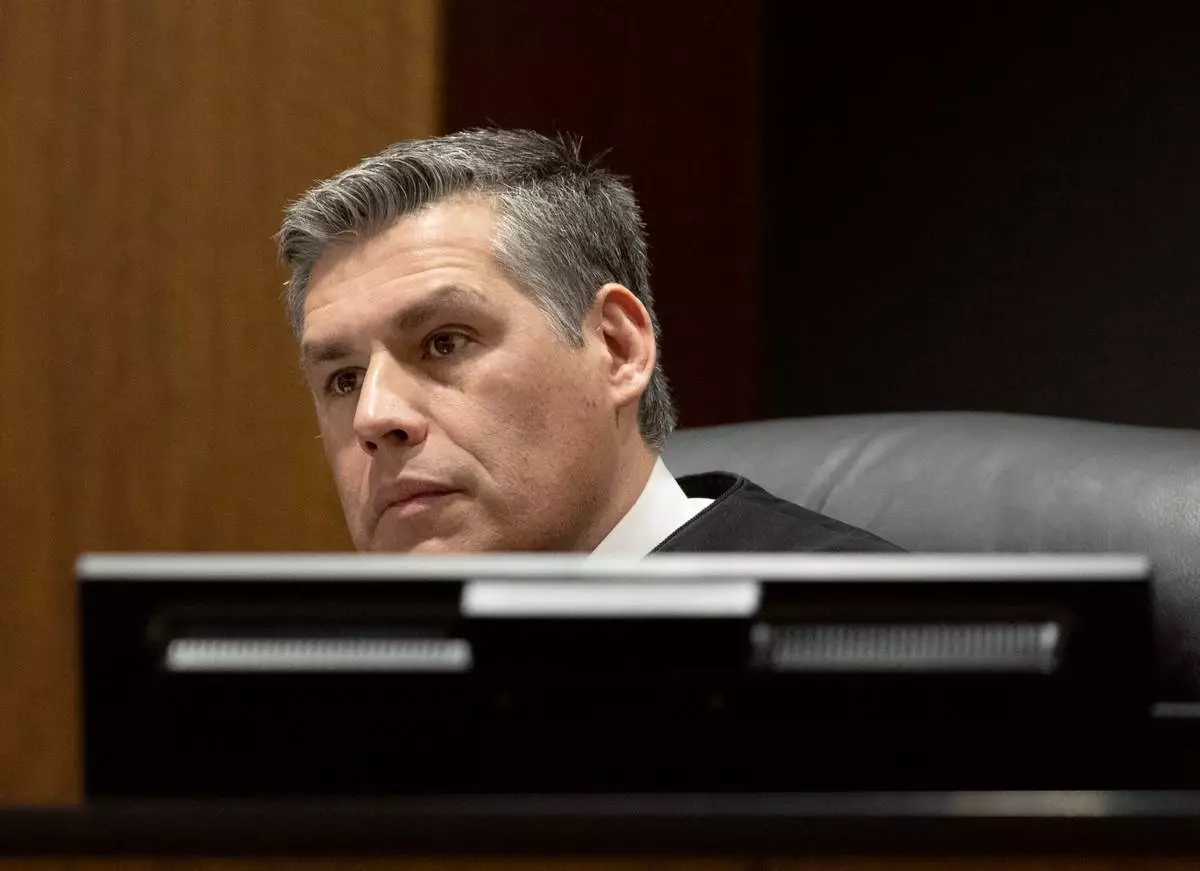
Fourth District Court Judge Tony Graf presides, Friday, March. 13, 2026, in 4th District Court in Provo, Utah, during a hearing for Tyler Robinson, who is accused in the fatal shooting of conservative activist Charlie Kirk. (Laura Seitz/The Deseret News via AP, Pool)

FILE - Tyler Robinson, who is accused of fatally shooting Charlie Kirk, appears during a hearing in Fourth District Court, in Provo, Utah, Dec. 11, 2025. (Rick Egan/The Salt Lake Tribune via AP, Pool, File)

FILE - Fourth District Court Judge Tony Graf presides over a hearing for Tyler Robinson, accused in the fatal shooting of conservative activist Charlie Kirk, in 4th District Court, Feb. 3, 2026, in Provo, Utah. (Trent Nelson/The Salt Lake Tribune via AP, Pool, File)