NEW YORK (AP) — The New York Knicks jumped on the Utah Jazz for a 23-0 lead Friday night, the largest game-opening run in the NBA since the league began keeping detailed play-by-play for all four quarters.
The Knicks pitched a shutout for half the first quarter and led by 28 by the time it was over.
Click to Gallery
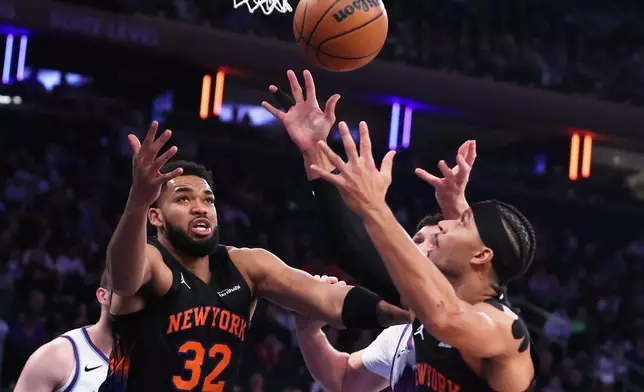
New York Knicks center Karl-Anthony Towns (32) and teammate Josh Hart, right, reach up for the ball during the first half of an NBA basketball game against the Utah Jazz, Friday, Dec. 5, 2025, in New York. (AP Photo/Heather Khalifa)
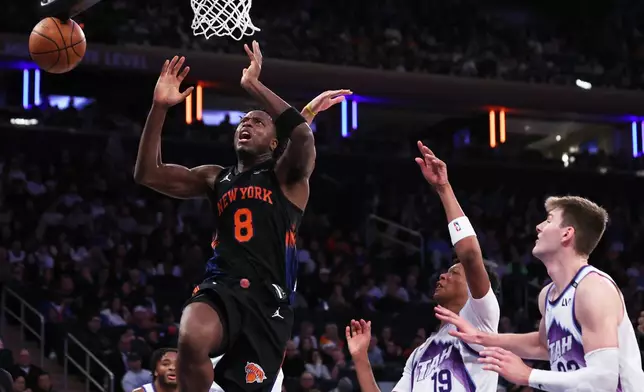
New York Knicks forward OG Anunoby (8) is fouled by Utah Jazz defenders during the second half of an NBA basketball game, Friday, Dec. 5, 2025, in New York. (AP Photo/Heather Khalifa)
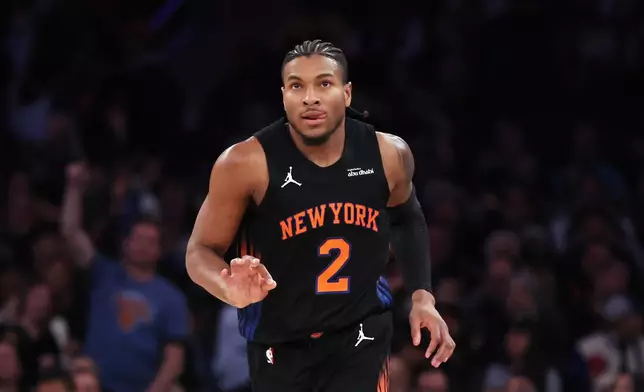
New York Knicks guard Miles McBride reacts after scoring a 3-point basket during the first half of an NBA basketball game against the Utah Jazz, Friday, Dec. 5, 2025, in New York. (AP Photo/Heather Khalifa)
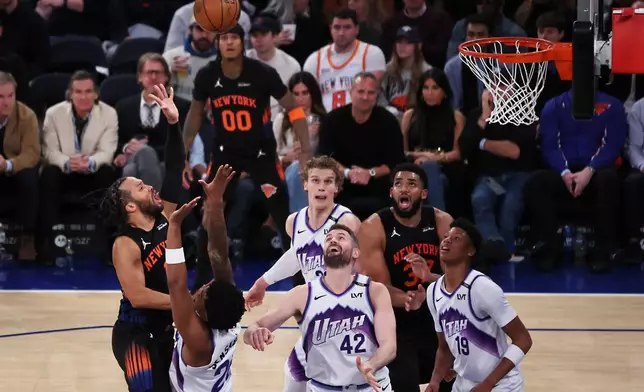
New York Knicks guard Jalen Brunson, left, shoots over Utah Jazz defenders during the second half of an NBA basketball game, Friday, Dec. 5, 2025, in New York. (AP Photo/Heather Khalifa)
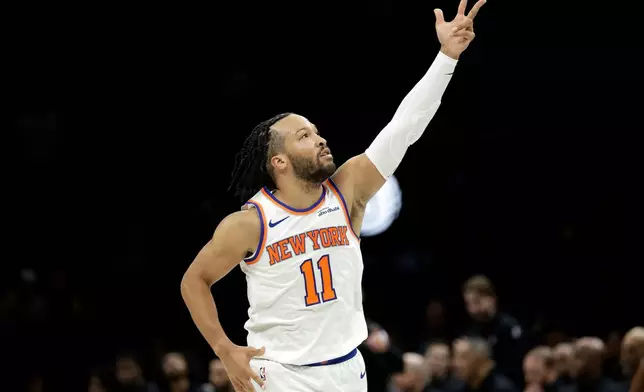
New York Knicks guard Jalen Brunson reacts after making a three-point basket during the second half of an NBA basketball game against the Brooklyn Nets, Monday, Nov. 24, 2025, in New York. (AP Photo/Adam Hunger)
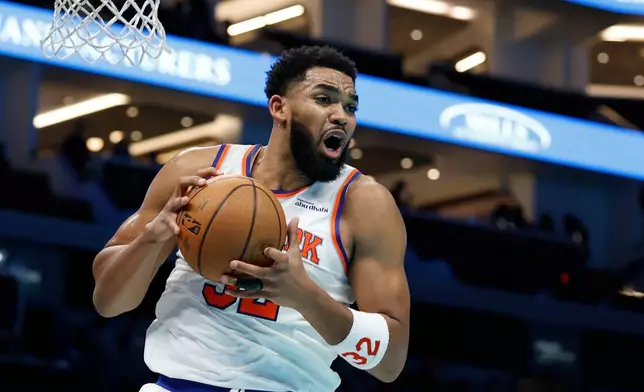
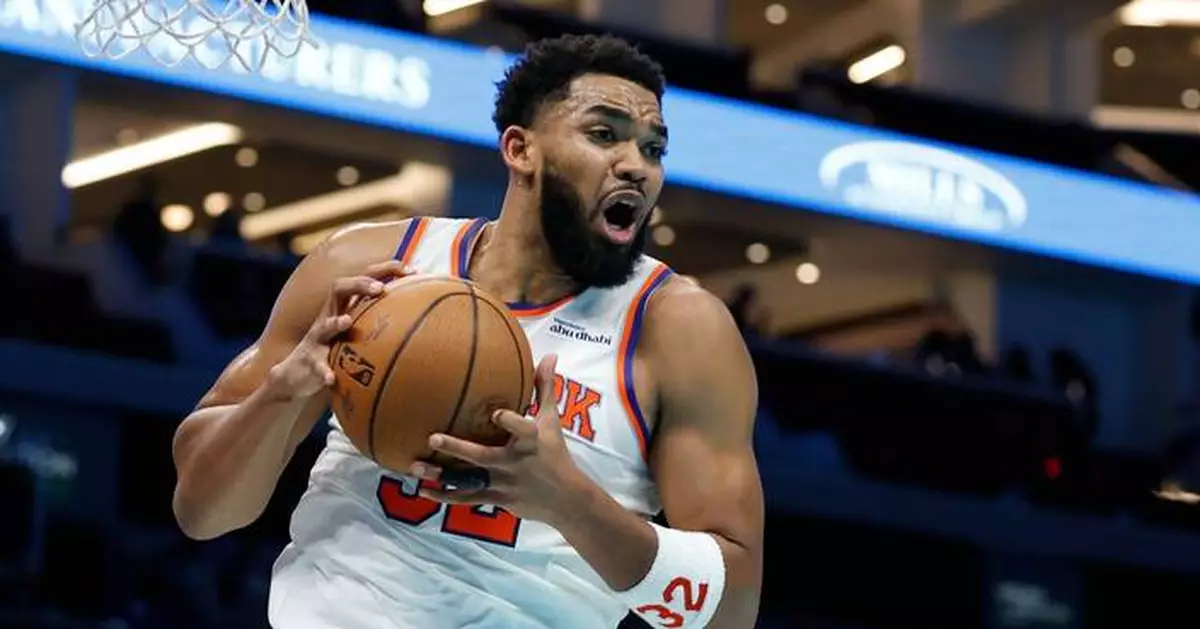
New York Knicks center Karl-Anthony Towns pulls down an offensive rebound during the second half of an Emirates NBA Cup basketball game against the Charlotte Hornets in Charlotte, N.C., Wednesday, Nov. 26, 2025. (AP Photo/Nell Redmond)
Karl-Anthony Towns opened the scoring with a 3-pointer and when Jalen Brunson made one midway through the period, the Knicks had scored the first 23 points.
That was the most one team had before the other scored since the NBA began keeping detailed play-by-play for the entire game in 1997.
“You’re not really thinking about it,” Brunson said. “You’re just going out there and executing and that’s what it turned out to be.”
The Jazz missed their first 12 shots before Keyonte George finally got them on the scoreboard when he converted a three-point play with 5:27 remaining in the quarter.
Deuce McBride, who went back to his reserve role with OG Anunoby returning from a nine-game absence with a strained left hamstring, hit a 3-pointer during the run. He said he was aware of how crooked the numbers were above him.
“I definitely do pay attention to the scoreboard,” said McBride, who made seven 3-pointers and scored 22 points. “As a point guard, always looking up. But those starters got us rocking, so it was easy to do my job.”
It was 41-13 after one quarter, with the 28-point lead after one quarter also the Knicks' biggest in the play-by-play era. Utah shot 4 for 23 (17.4%).
“I think we were getting pretty good looks at the start of the game and we just couldn't make a shot,” Utah's Lauri Markkanen said. “Against a good team like this it’s hard to climb back up.”
The Knicks went on to win 146-112, their highest-scoring game of the season.
The Jazz were also on the wrong end of the other 28-point deficit after one quarter in the NBA this season. Minnesota led 43-15 in its eventual 137-97 victory over Utah on Nov. 7.
The Jazz were playing on the second night of a strange cross-country trip, consisting solely of a back-to-back set in New York. They rallied to beat Brooklyn on Thursday with a 42-point fourth quarter.
Coach Will Hardy acknowledged that “10 hours on a plane to play two games seems like a lot,” but said that all teams face difficult portions of their schedule.
“I thought energy level was fine and we can execute better on both ends of the floor,” Markkanen said. “But obviously shooting that percentage doesn't help you.”
AP NBA: https://apnews.com/hub/nba
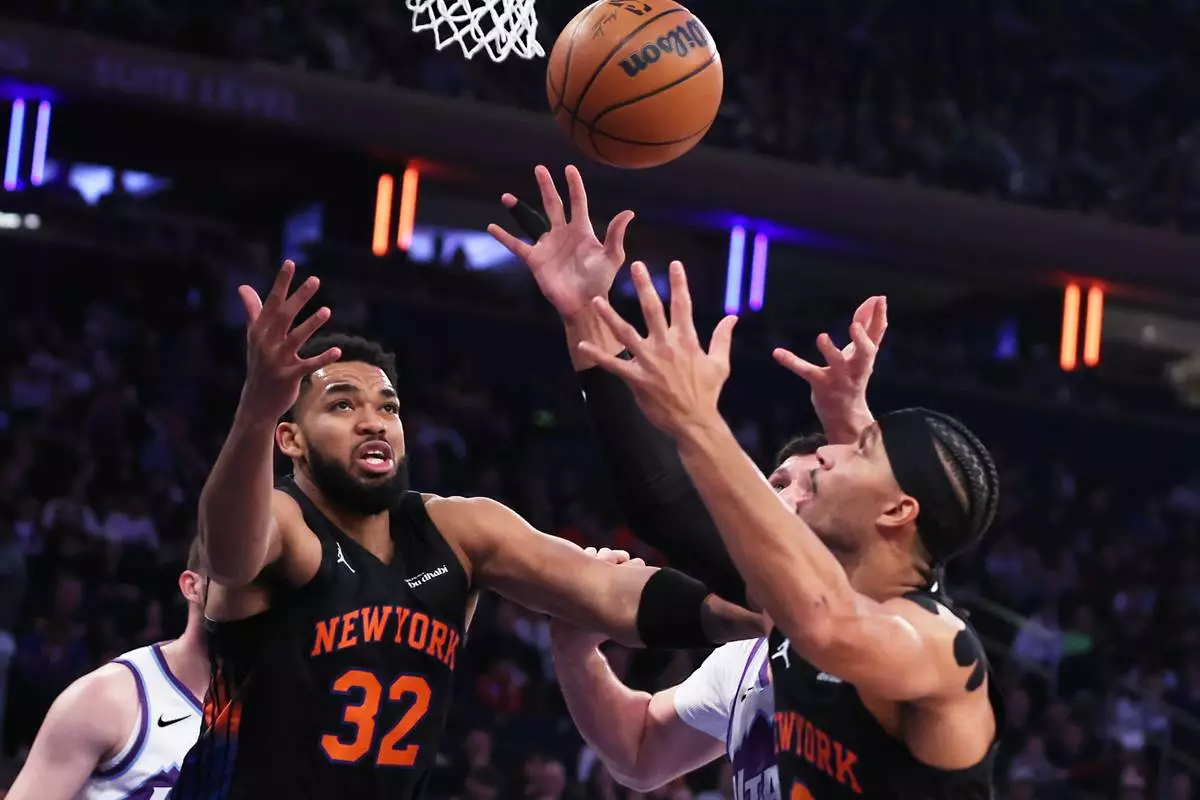
New York Knicks center Karl-Anthony Towns (32) and teammate Josh Hart, right, reach up for the ball during the first half of an NBA basketball game against the Utah Jazz, Friday, Dec. 5, 2025, in New York. (AP Photo/Heather Khalifa)
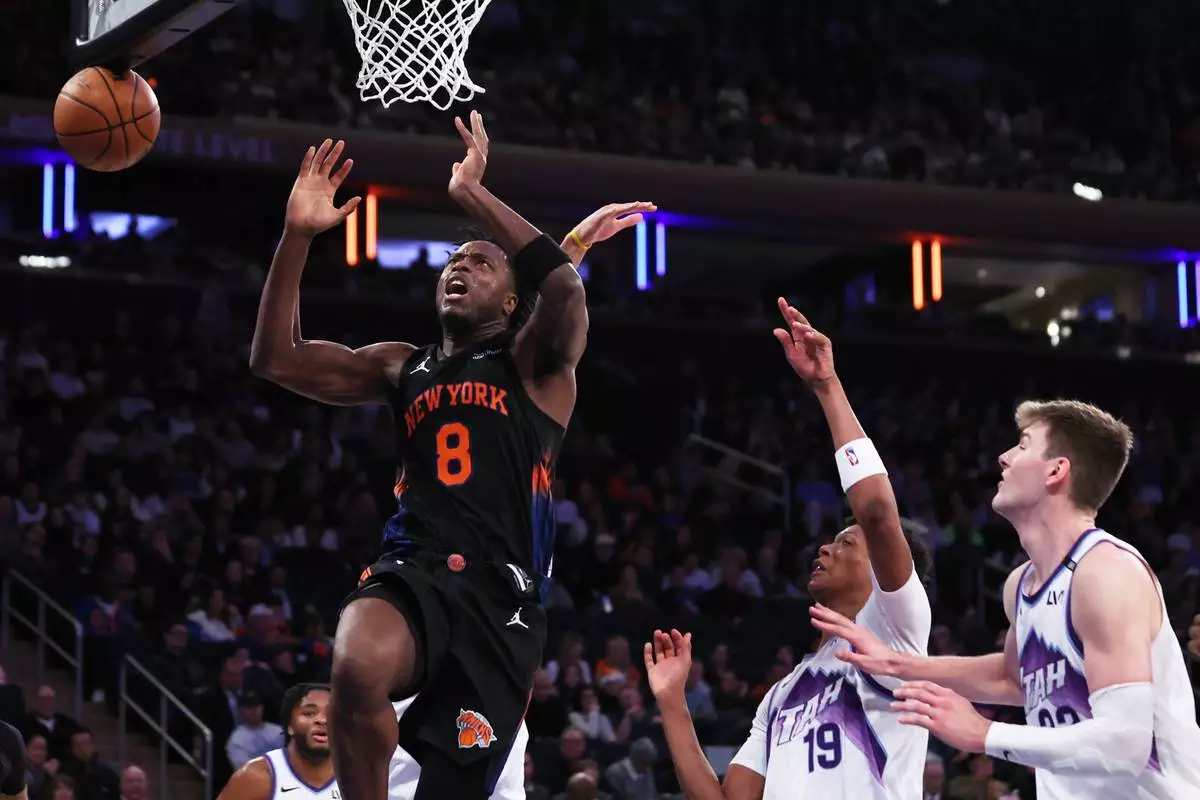
New York Knicks forward OG Anunoby (8) is fouled by Utah Jazz defenders during the second half of an NBA basketball game, Friday, Dec. 5, 2025, in New York. (AP Photo/Heather Khalifa)
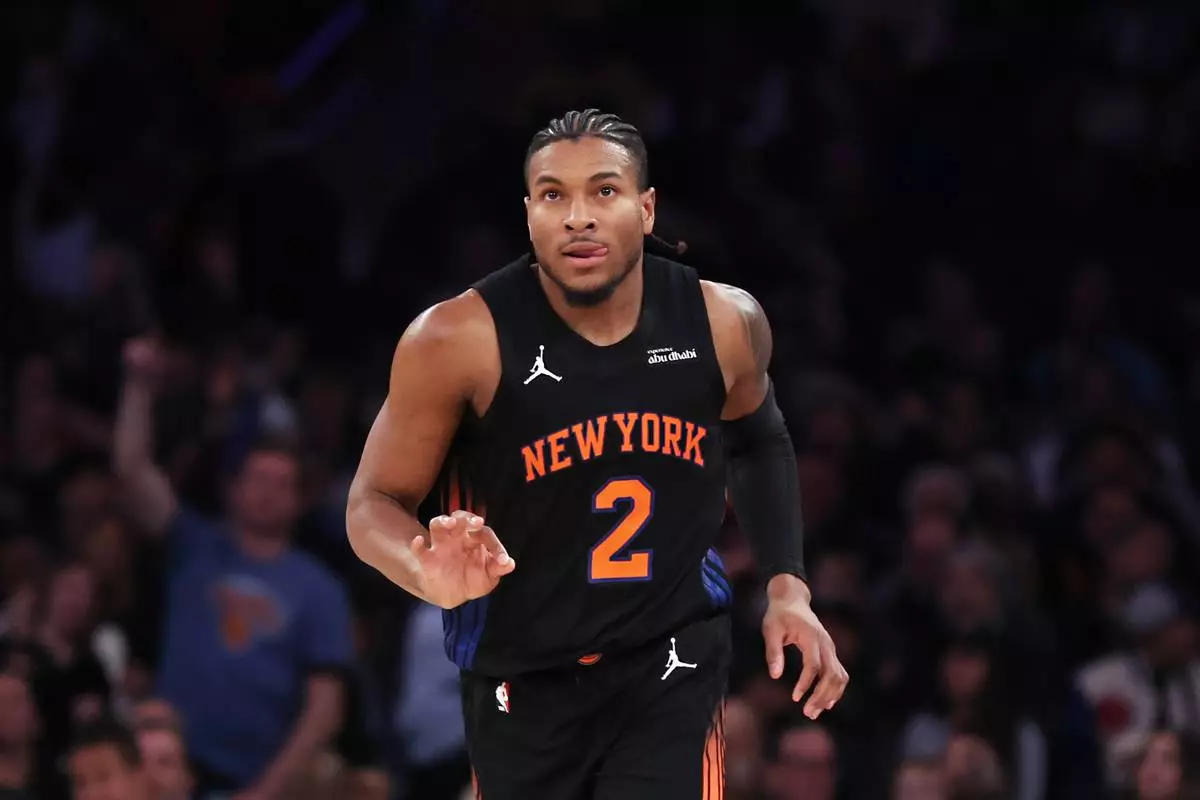
New York Knicks guard Miles McBride reacts after scoring a 3-point basket during the first half of an NBA basketball game against the Utah Jazz, Friday, Dec. 5, 2025, in New York. (AP Photo/Heather Khalifa)
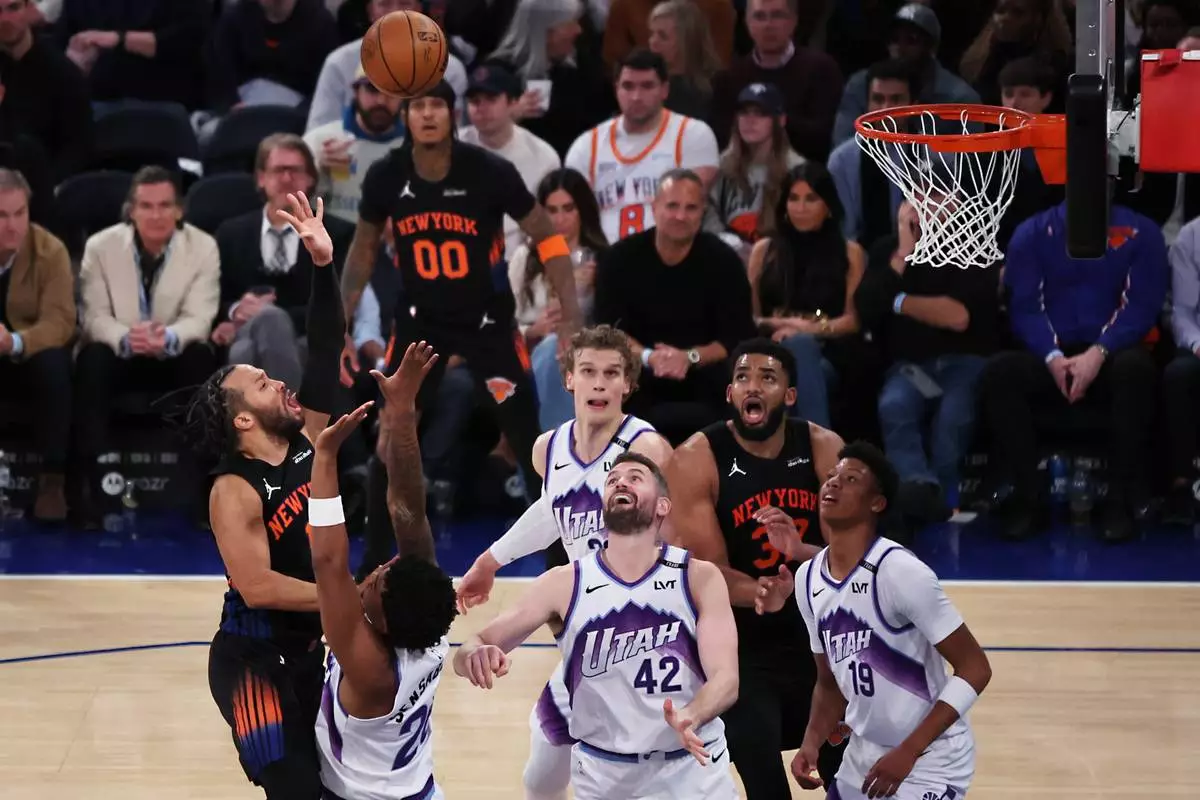
New York Knicks guard Jalen Brunson, left, shoots over Utah Jazz defenders during the second half of an NBA basketball game, Friday, Dec. 5, 2025, in New York. (AP Photo/Heather Khalifa)
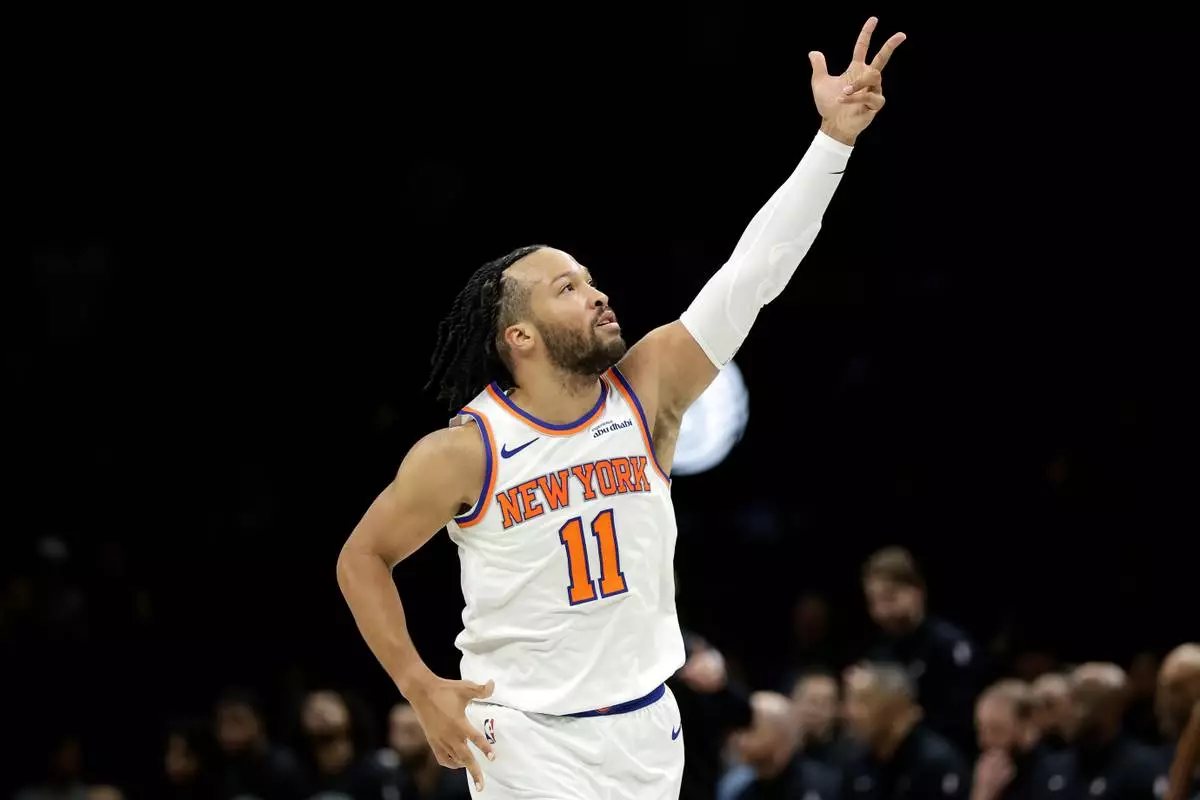
New York Knicks guard Jalen Brunson reacts after making a three-point basket during the second half of an NBA basketball game against the Brooklyn Nets, Monday, Nov. 24, 2025, in New York. (AP Photo/Adam Hunger)

New York Knicks center Karl-Anthony Towns pulls down an offensive rebound during the second half of an Emirates NBA Cup basketball game against the Charlotte Hornets in Charlotte, N.C., Wednesday, Nov. 26, 2025. (AP Photo/Nell Redmond)