HONG KONG (AP) — Hong Kong’s national security police arrested a man on Saturday in the first publicly confirmed arrest relating to criticism of authorities over a high-rise apartment blaze that killed at least 159 people.
Police said he had been accused of posting “information with seditious intention” on social media.
“That mainly included (materials intending to) incite hatred among (others) toward the Hong Kong government and the central government,” Steve Li, chief superintendent of the police National Security Department, told reporters.
“For example, he pointed to the Hong Kong and the central governments as instigators of exploiting the tragedy to cause chaos and turmoil,” he said. “That’s something totally impossible.”
Local media reported other arrests earlier but authorities have not confirmed them.
The fire, which broke out Nov. 26 at the Wang Fuk Court housing complex, has prompted a debate about government accountability.
Authorities have warned against attempts to use the fire to try to undermine the local government or the central government in Beijing. Hong Kong is part of China but, like nearby Macao, has its own legal system and laws. Both are former European colonies that were returned to China in the late 1990s.
Police said the man had also been arrested on suspicion of disclosing information related to a national security probe, possibly with the intent of prejudicing the investigation.
On Dec. 2, he was asked to come to a police station to assist with a national security investigation, according to police. “But on the following day, we discovered that he had brazenly released all (or) some of those details on social media,” said Li, despite being warned not to disclose the information publicly.
He said officials believed the 71-year-old man was attempting to tip off others involved in the case.
The initial cause of last month's blaze was unknown, but the government said it would set up an independent committee to probe the cause.
At least 21 people have been arrested by authorities as officials investigate suspected corruption and negligence over a major renovation project that had been taking place at the housing complex before the fire broke out.
Substandard green netting covering the scaffolding that enveloped the buildings, as well as foam boards installed on windows of the buildings, have been identified as among the main causes for the fire's rapid spread to seven of the eight residential towers in the complex. Some fire alarms were also found to be not working.
Last weekend, the organizer of a petition calling for government accountability over the fire was arrested by national security police on suspicion of sedition, local media including HK01 and Sing Tao Daily reported.
Li did not confirm nor deny any other arrests but said officials had spotted a lot of fake information about the fire that they believed was intended in part to incite hatred against Hong Kong and Beijing.
Li also said that some people were attempting to provoke conflict by distributing pamphlets and putting up slogans near the scene of the fire, which he said resembled scenes from massive anti-government protests in Hong Kong in 2019.
The protests led to a crackdown that has effectively silenced political dissent in the city. There are no opposition candidates in a legislative election on Sunday, with all those running vetted to ensure they are loyal to Beijing.
John Lee, Hong Kong’s leader, has warned that authorities would take action against those who exploit the tragedy.
“For anybody who tries to sabotage the commitment of society, I will do all I can to ensure justice is done,” he said.
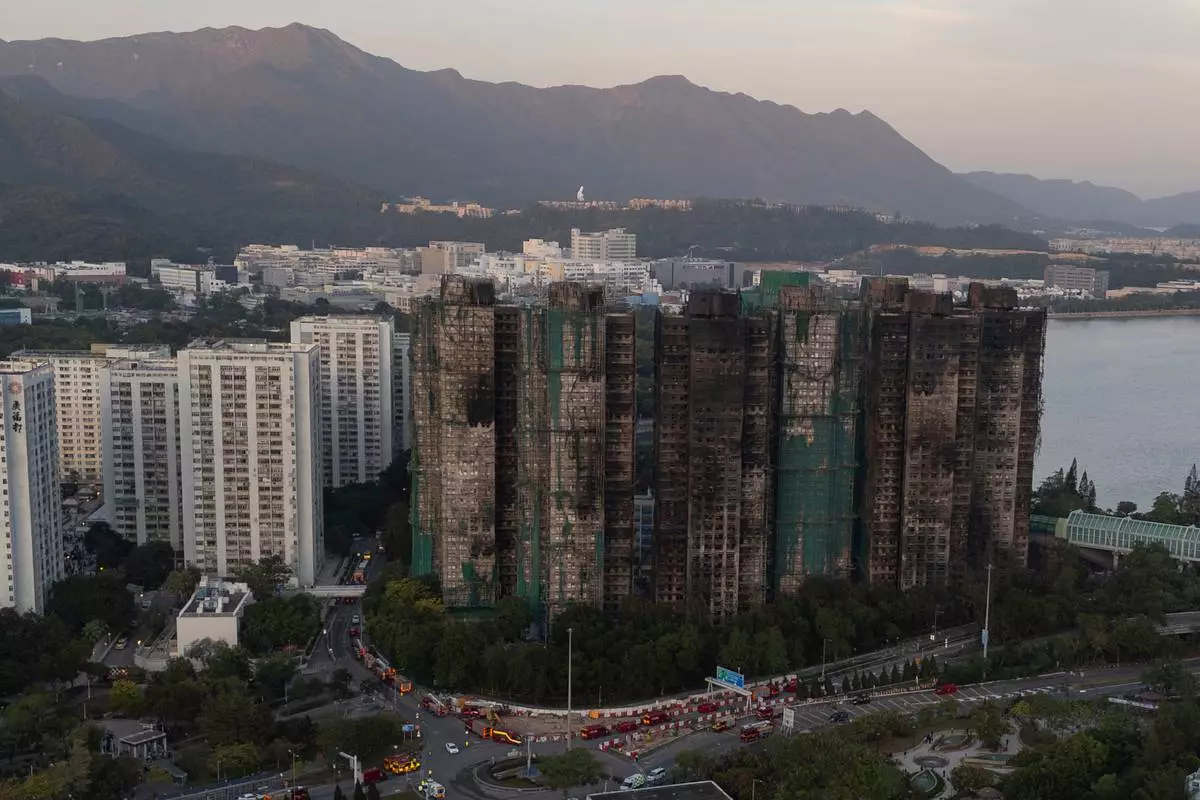
An aerial view of the burnt buildings after a deadly fire that started Wednesday at Wang Fuk Court, a residential estate in the Tai Po district of Hong Kong's New Territories, Friday, Nov. 28 2025. (AP Photo/Ng Han Guan)
POINTE-AU-CHIEN, La. (AP) — Cherie Matherne looked out into Bayou Pointe au Chien, wide enough for several boats to pass through. In the distance, a stand of dead trees marked where saltwater comes and goes during storm-driven flooding.
It wasn't always this way. The bayou was once shallower and just wide enough for a small boat to pass. Land that cattle once roamed is submerged now, and elders tell stories of tree canopies once so lush they nearly shut out the day.
The delicate lattice of Louisiana's coastline has been steadily retreating for generations. As it does, the Pointe-au-Chien Indian Tribe and other Indigenous people are fighting to protect what's left and to adapt to their changing environment. That includes a painstaking effort to build makeshift reefs that slow erosion and sturdier homes and buildings to better withstand storms.
“We want to be able to make it so that people can stay here for as long as possible, for as long as they want to stay,” said Matherne, who as the tribe's director of daily operations helped coordinate its response to the erosion threat.
They hope to avoid the fate of the Jean Charles Choctaw Nation, a nearby tribe that was forced to move three years ago about 40 miles (64 kilometers) north from the encroaching Gulf of Mexico. Isle de Jean Charles — their island home southwest of New Orleans — has lost 98% of its land.
Louisiana's coast has been steadily retreating for several reasons.
Levees along the Mississippi River have severed the natural flow of land-creating sand, silt and clay, starving wetlands of sediment they need to survive. Canals have allowed saltwater to flow into wetlands, killing freshwater vegetation that holds them together and accelerating erosion. Groundwater pumping is causing land to sink, and planet-warming emissions from burning coal, oil and gas are fueling hurricanes and accelerating sea level rise.
Since the 1930s, Louisiana has lost about 2,000 square miles (5,180 square kilometers) of land — sometimes fast, sometimes slow. A U.S. Geological Survey analysis found that when erosion was at its worst, a football field's worth of coastal wetlands was disappearing every 34 minutes.
It’s a difficult problem to solve without being able to count on the Mississippi River to periodically drop sediment to maintain the land, said Sam Bentley, geology professor at Louisiana State University.
“That’s going to displace ecosystems, it’s going to displace communities, it’s going to isolate infrastructure that’s along the coastline," Bentley said. "And there are going to be a lot of changes that are very hard to deal with.”
Indigenous burial and cultural sites risk eroding, and traditional ways of life — shrimping, fishing and subsistence farming — are under pressure. Without action, researchers estimate the state could lose up to 3,000 square miles (7,770 square kilometers) — an area larger than Delaware — over the next 50 years.
Reefs built from oyster shells are one attempt to stem the erosion.
The oysters are collected from restaurants, stuffed into bags and stacked just off shore to form the reefs. The program, launched in 2014 by the Coalition to Restore Coastal Louisiana, has recycled more than 16 million pounds (7.3 million kilograms) of shells in that time. That's enough to protect about 1.5 miles (about 2.4 kilometers) of shoreline.
Since the Pointe-au-Chien tribe had a 400-foot (123-meter) reef built in 2019 to protect a historic mound, the coalition has measured a 50% reduction in the rate of land loss where the reefs were built, said coalition spokesman James Karst.
But there are limits to what reclaimed oyster shells can do. There just aren't enough shells for Louisiana's estimated 7,721-mile (12,426 kilometer) coastline, said Karst, and moving them is expensive, so they have to be strategic. Many reefs they've built protect sites of cultural importance. They're also limited to areas where the water is salty enough for the oyster shells to last.
Their work might seem like a tiny drop in the bucket, "but when you are losing land at the rate you are,” Karst said, “you need all the drops in the bucket you can get.”
Some of the coalition's most recent work came about 30 miles to the southwest of the Pointe-au-Chien's land, in a project with the Grand Caillou/Dulac Band of Biloxi-Chitimacha-Choctaw Tribe that wrapped up in November. It was built at the Louisiana Universities Marine Consortium, a location easy for the public to see and learn about oyster reefs, said Chief Devon Parfait.
When Hurricane Ida hit in 2021, it made landfall in the region with maximum sustained winds of 150 mph (241 kph).
Scores of homes in and around Pointe-au-Chien were damaged or destroyed. Some families moved inland or left the area entirely, but most came back. With help from groups like the Lowlander Center, a nonprofit working with Indigenous and coastal communities facing risks such as climate threats and land loss, the tribe is rebuilding in a stronger way.
Homes are higher off the ground and fortified with hurricane straps, heavy-duty windows and doors that can take pummeling winds and waters. Electrical equipment is elevated to stay above storm surge. They've rebuilt or repaired 13 homes; about five new homes are planned and they're raising money to fortify the remaining dozen or so.
“We know that doing just one home in a community doesn’t make the community safe. It’s only safe if the whole community is included in raising that level of safety,” said Kristina Peterson, director and co-founder of the Lowlander Center.
But challenges remain. The state-recognized tribes have struggled to get federal recognition, they said, and without it, it's hard to get grants and other help from the federal government. Instead, they rely on partnerships with organizations and institutions.
The Trump administration's funding cuts are also making it harder for tribes to meet their goals.
The Grand Caillou/Dulac Band of Biloxi-Chitimacha-Choctaw applied for a federal grant to build a community center stocked with food, water and renewable energy in case of emergencies that's designed to hold up during hurricanes. When cuts happened, their application was tabled.
Similarly, the Pointe-au-Chien applied for money to install solar panels on every home, but they're not hopeful their application will get approved.
Pointe-au-Chien elder Theresa Dardar said much has changed in the five decades she's lived there. The pond behind her home has gotten bigger, and she could once identify lakes Chien and Felicity. Now it’s just one large body of water. People once hunted deer and walked through wooded areas.
What hasn't changed is the quiet and the close ties. Everybody knows everybody. And people still fish like generations did before them.
“This is where our ancestors were, and we feel like we would be abandoning them” to leave, Dardar said. “We have sacred sites that we still visit.”
By slowing erosion and building more homes, the tribe hopes younger families will move to Pointe-au-Chien. They also know that protecting their lands from going underwater will protect regions further inland.
As Dardar put it: “We're the buffer."
The Associated Press receives support from the Walton Family Foundation for coverage of water and environmental policy. The AP is solely responsible for all content. For all of AP’s environmental coverage, visit https://apnews.com/hub/climate-and-environment
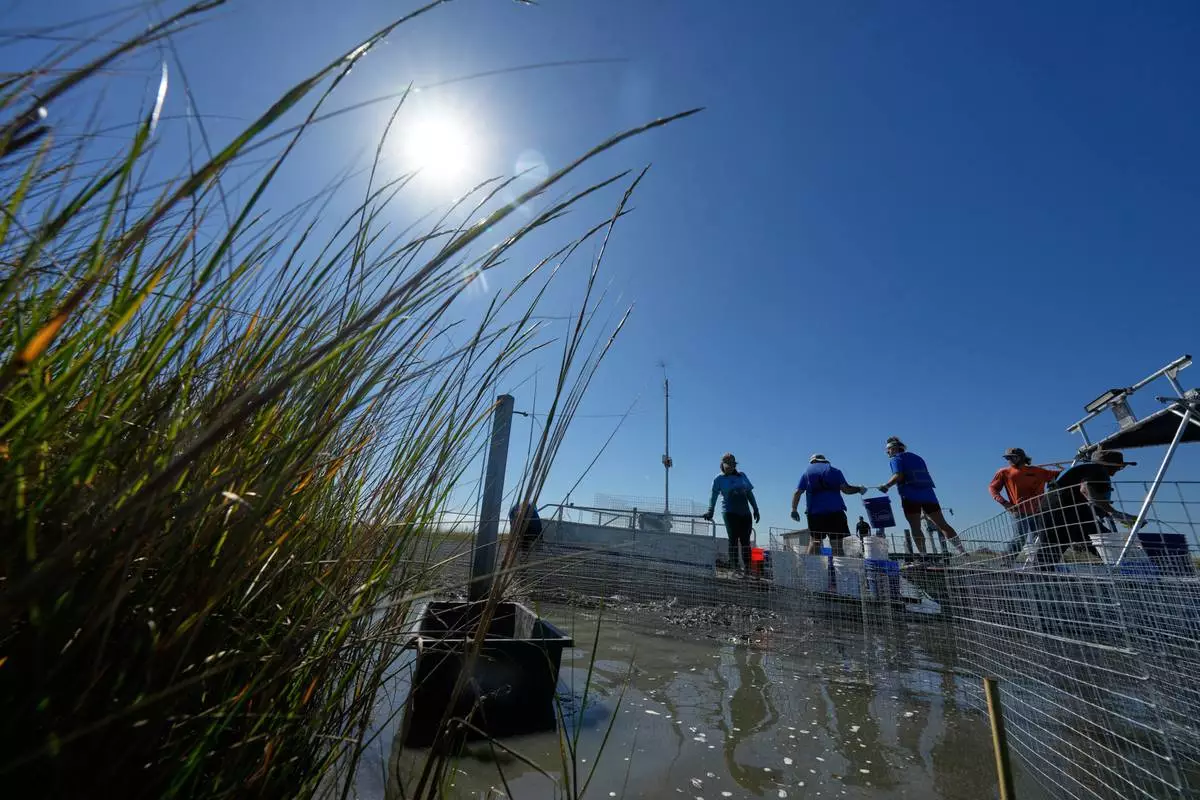
Volunteers fill mesh containments with oyster shells during a reef barrier project organized by the Coalition To Restore Coastal Louisiana in Cocodrie, La., Friday, Oct. 24, 2025. (AP Photo/Gerald Herbert)
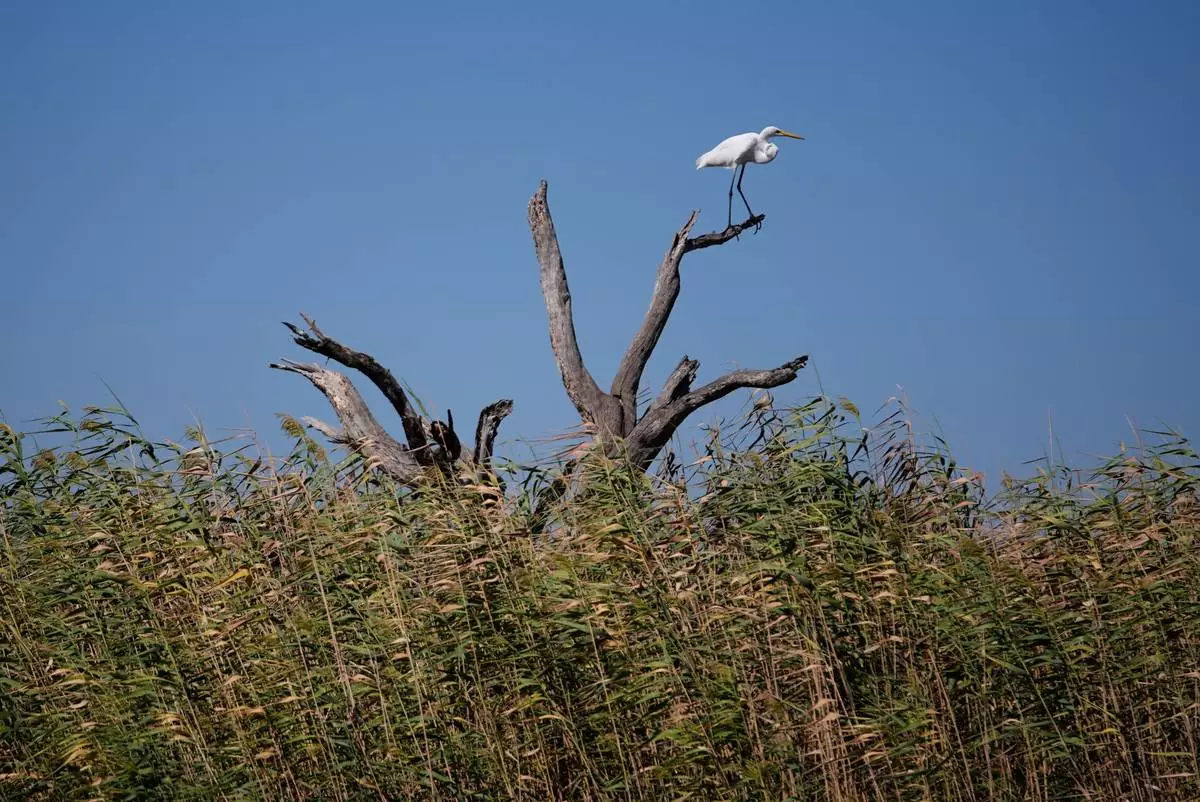
An egret sits on a tree that died from salt water intrusion, showing the fragility of the ecosystem, during a reef barrier project organized by the Coalition To Restore Coastal Louisiana in Cocodrie, La., Friday, Oct. 24, 2025. (AP Photo/Gerald Herbert)
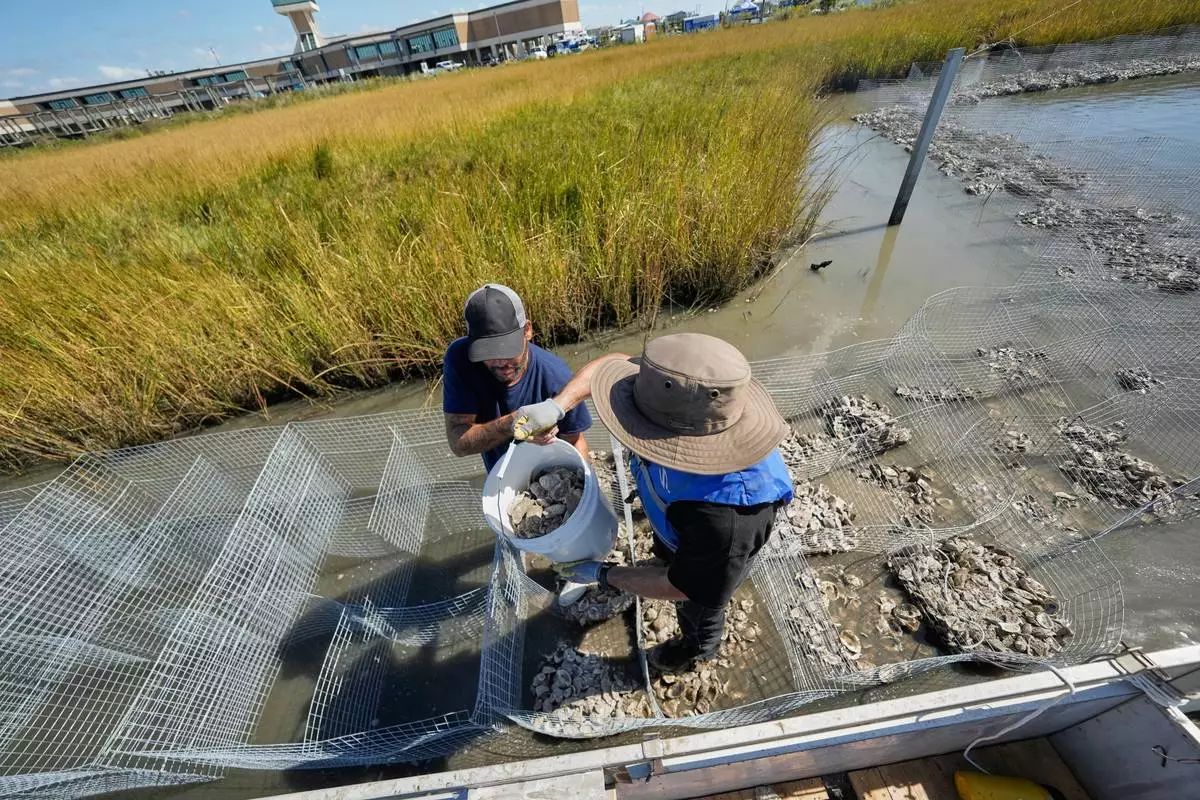
Volunteers fill mesh containments with oyster shells during a reef barrier project organized by the Coalition To Restore Coastal Louisiana in Cocodrie, La., Friday, Oct. 24, 2025. (AP Photo/Gerald Herbert)
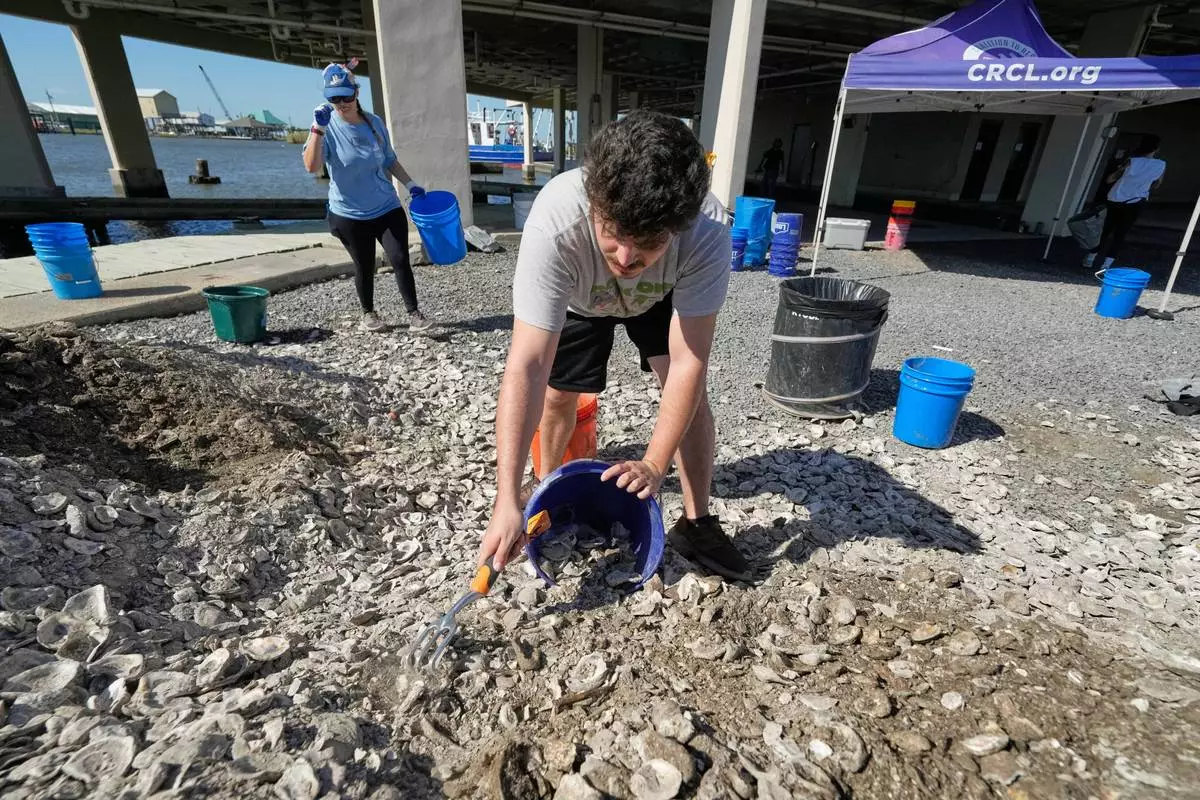
Grand Caillou/Dulac Band of Biloxi-Chitimacha-Choctaw Tribal Chief Devon Parfait scoops oyster shell into a bucket during a reef barrier project organized by the Coalition To Restore Coastal Louisiana in Cocodrie, La., Friday, Oct. 24, 2025. (AP Photo/Gerald Herbert)
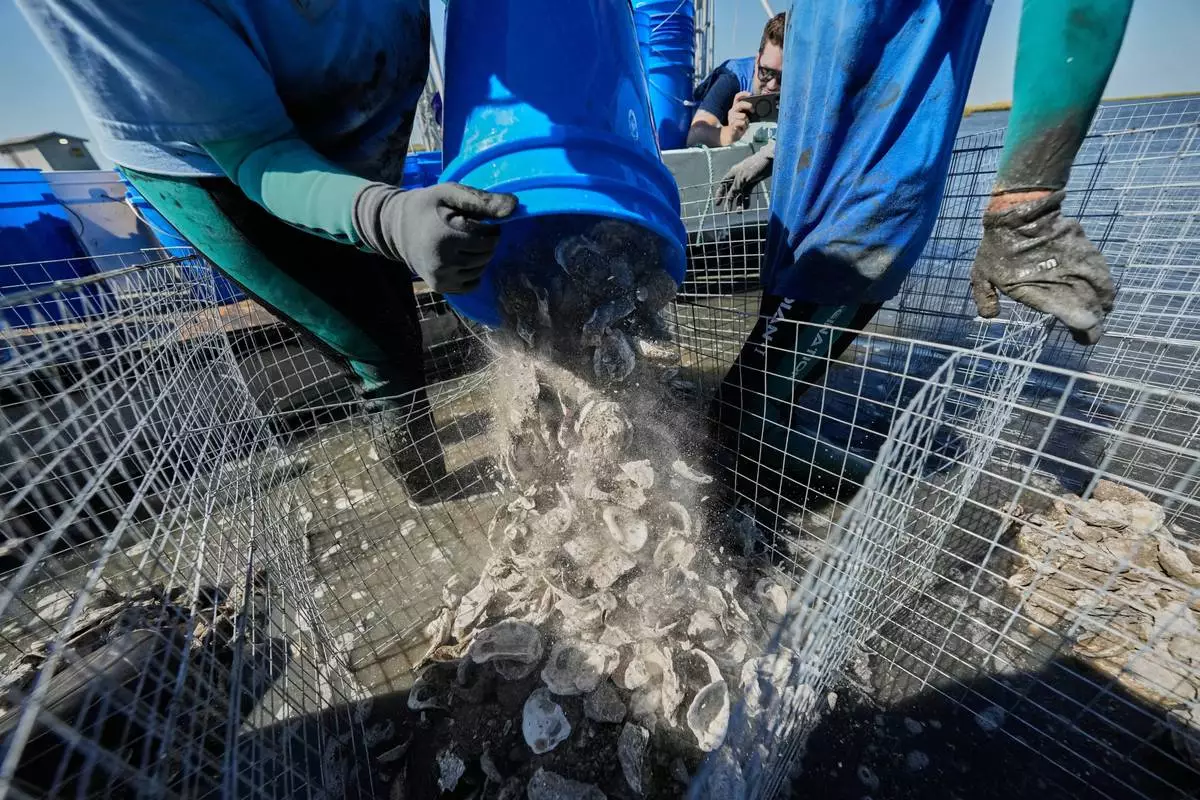
A volunteer pours oyster shells into a wire containment during a reef barrier project organized by the Coalition To Restore Coastal Louisiana in Cocodrie, La., Friday, Oct. 24, 2025. (AP Photo/Gerald Herbert)
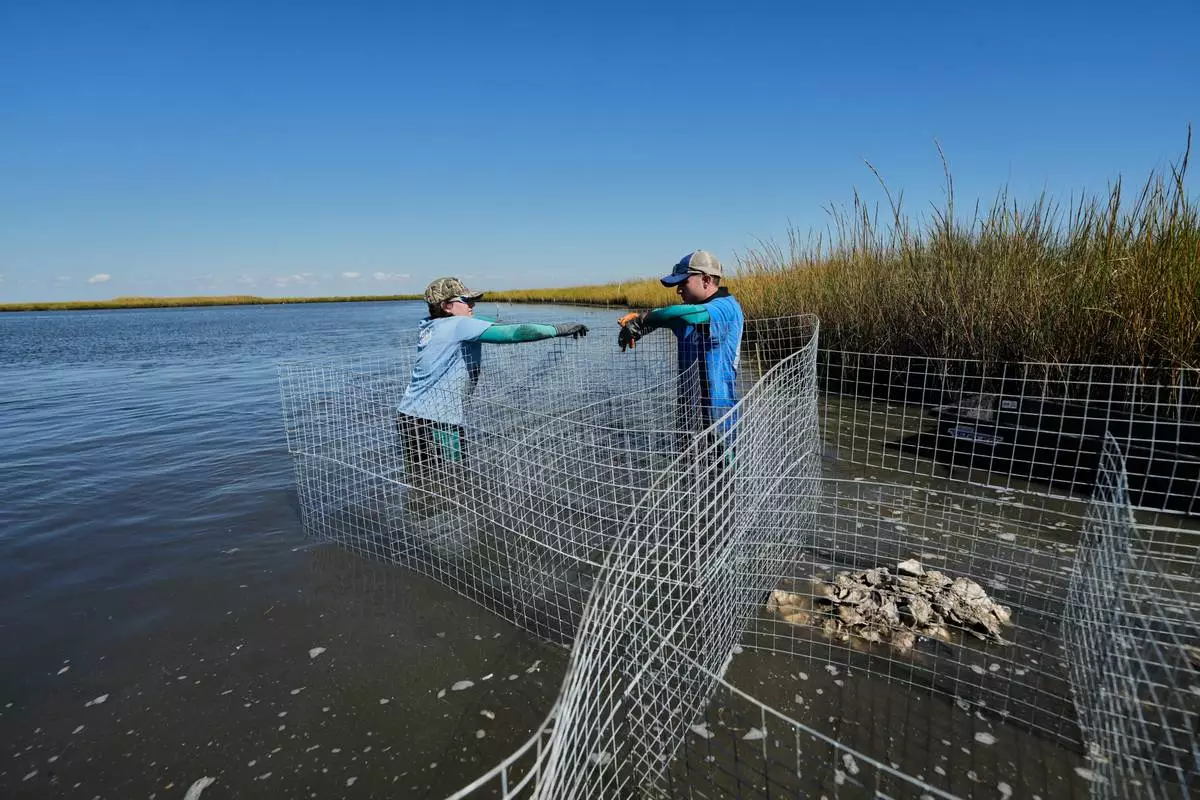
Volunteers set up wire mesh containment during a reef barrier project organized by the Coalition To Restore Coastal Louisiana in Cocodrie, La., Friday, Oct. 24, 2025. (AP Photo/Gerald Herbert)
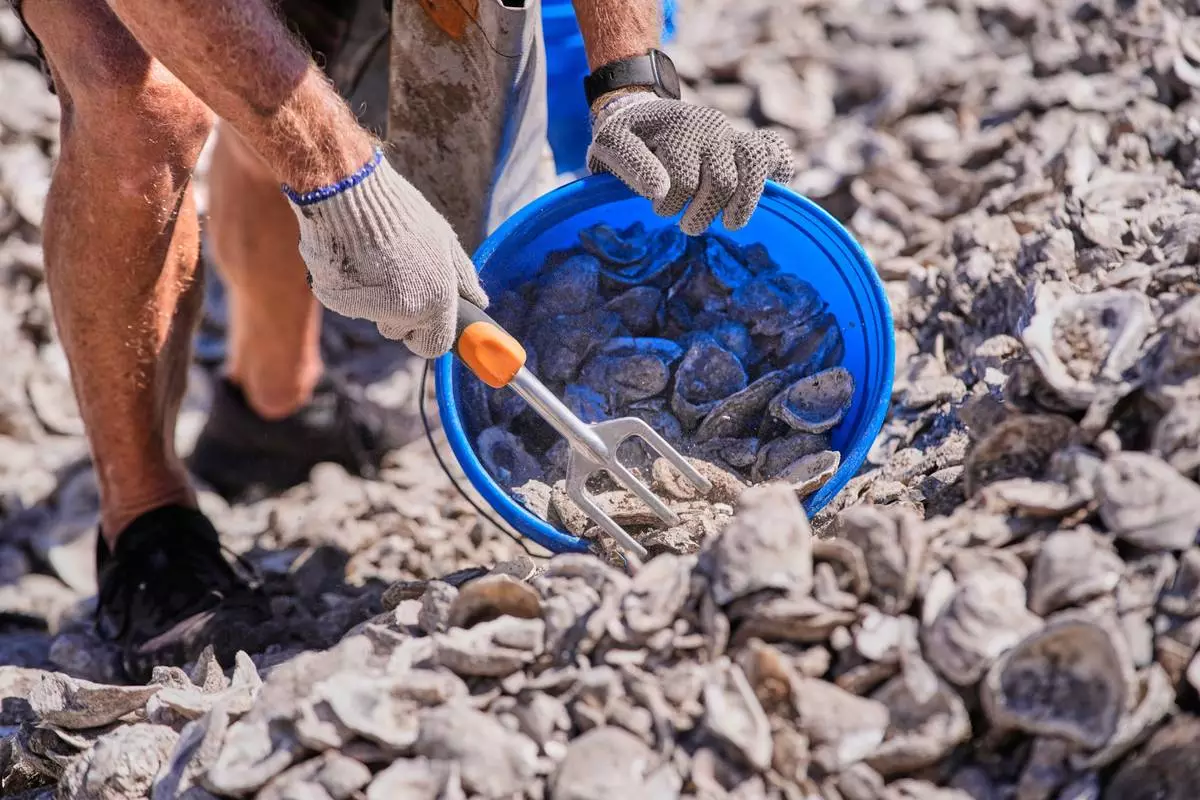
Volunteers fill buckets from piles of oyster shells during a reef barrier project organized by the Coalition To Restore Coastal Louisiana in Cocodrie, La., Friday, Oct. 24, 2025. (AP Photo/Gerald Herbert)
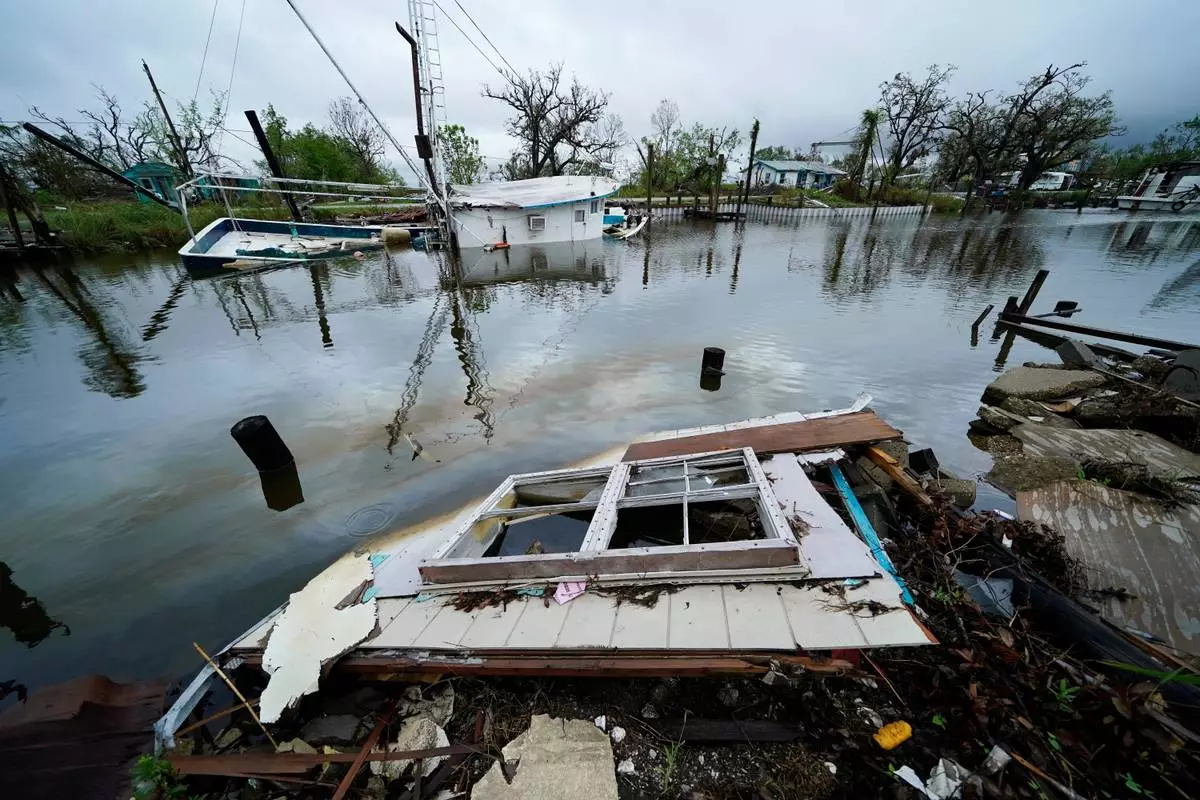
FILE - An oil sheen drifts between a sunken shrimp boat and pieces of a destroyed home along Bayou Pointe au Chien in the aftermath of Hurricane Ida in Pointe-aux-Chenes, La., Tuesday, Sept. 14, 2021. (AP Photo/Gerald Herbert, File)
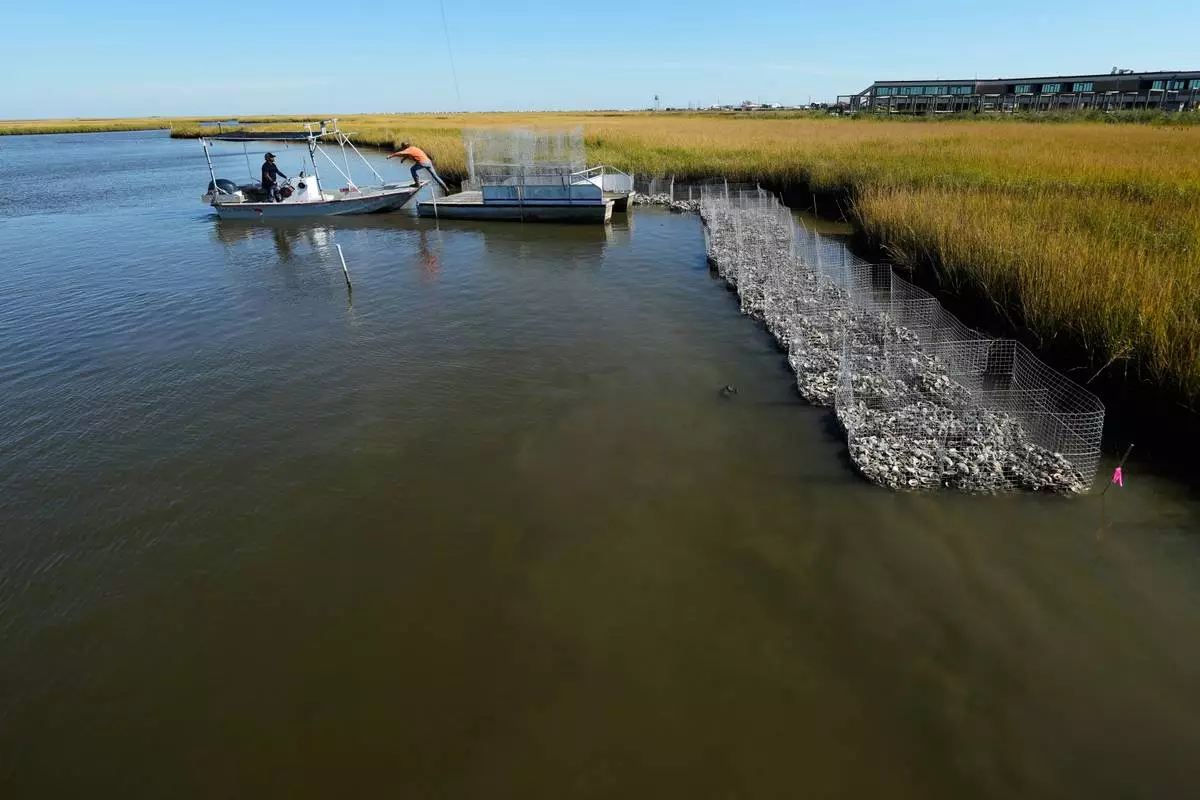
Volunteers maneuver a small barge during a reef barrier project organized by the Coalition To Restore Coastal Louisiana in Cocodrie, La., Friday, Oct. 24, 2025. (AP Photo/Gerald Herbert)
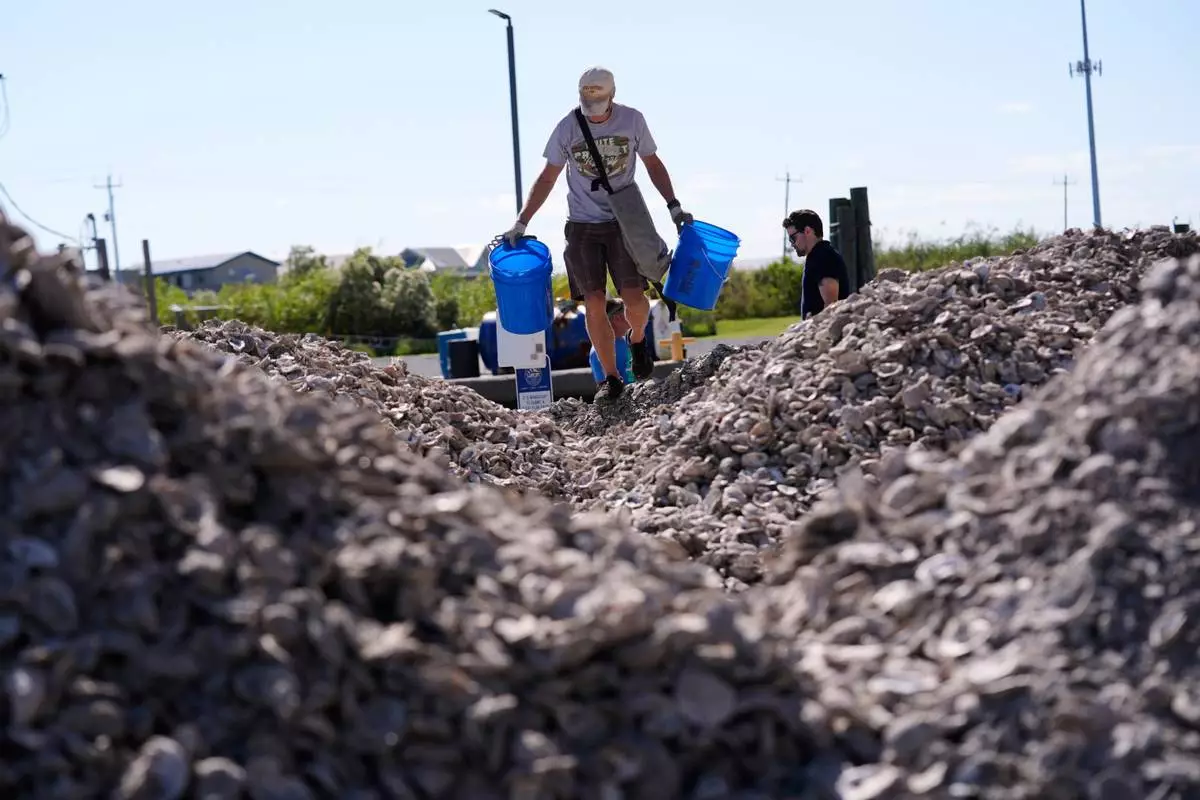
Volunteers fill buckets from piles of oyster shells during a reef barrier project organized by the Coalition To Restore Coastal Louisiana in Cocodrie, La., Friday, Oct. 24, 2025. (AP Photo/Gerald Herbert)
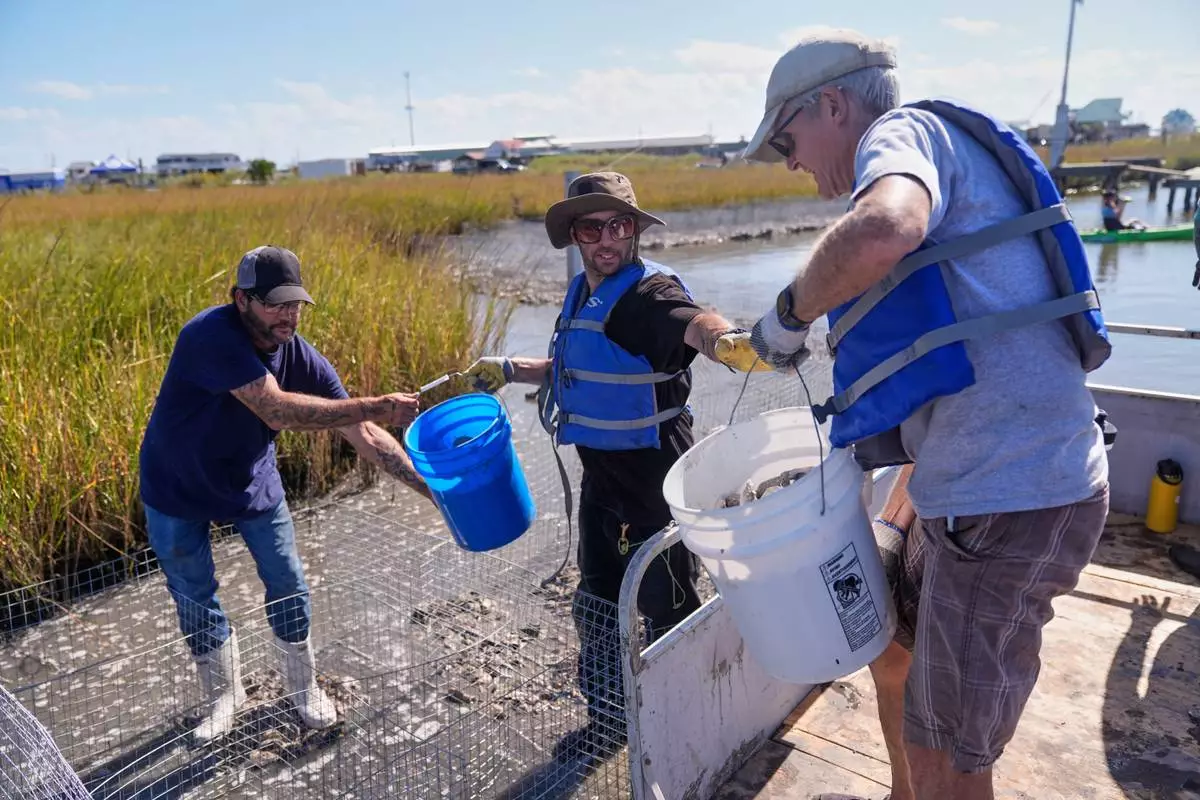
Volunteers fill mesh containments with oyster shells during a reef barrier project organized by the Coalition To Restore Coastal Louisiana in Cocodrie, La., Friday, Oct. 24, 2025. (AP Photo/Gerald Herbert)