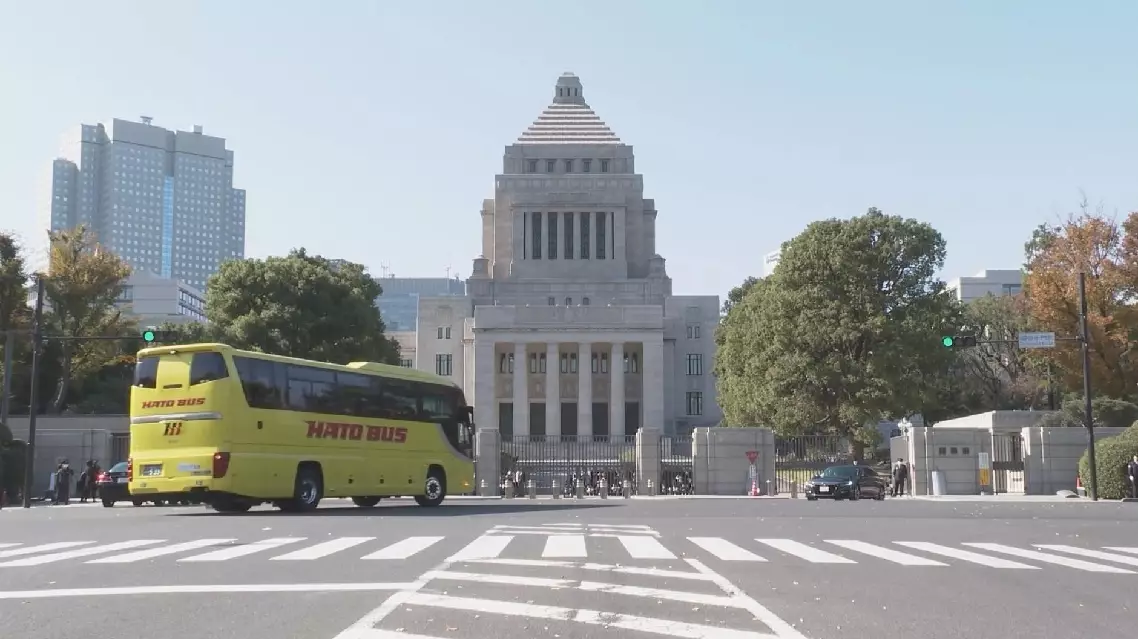
A Japanese political economist has recently criticized Prime Minister Sanae Takaichi's wrongful remarks on Taiwan, charging that they violate established diplomatic agreements between Japan and China, deviate from Japan's long-held peace path, and risk destabilizing regional security while distorting historical awareness among younger generations.
Uekusa Kazuhide, the political economist, made the statement in an interview with China Media Group (CMG) on Thursday.
"Judging from a diplomatic perspective, the prime minister's remarks overturn the existing agreements between Japan and China, and cross the principle of 'resolving issues by peaceful means.' Regarding the Taiwan question, the China-Japan Joint Statement clearly states that the Government of Japan recognizes the Government of the People's Republic of China as the sole legal Government of China, and Japan understands and respects the position that Taiwan is an inalienable part of the territory of the People's Republic of China. While Japan can study the conditions for exercising collective self-defense, it belongs to a completely different category and can be described as a serious transgression to specify Taiwan and suggest that Japan would invoke this right in the event of a 'Taiwan contingency'," he said.
The scholar said that the Japanese government has in recent years continuously expanded the country's defense budget, promoted constitutional revision, and adjusted security policies. These policy trends are altering the post-war security framework formed by Japan and heightening regional tensions.
"The fundamental stance of the Takaichi cabinet can be interpreted as actively promoting military expansion while also advancing constitutional revision, including amendments to Article 9 of Japan's pacifist Constitution. Japan's defense-related expenditures, originally set at 27 trillion yen (around 173.77 billion U.S. dollars) over five years, have now increased to 43 trillion yen (around 276.75 billion U.S. dollars) for the same period. A further development is the move to expand Japan's defense spending to 2 percent of its gross domestic product, indicating the advancement of a so-called 'major military power' trajectory," he said.
Over recent years, Japan's Ministry of Defense has intensified propaganda targeting adolescents and children, distributing child-friendly versions of defense white paper to elementary schools.
The scholar pointed out that such practices not only challenge the principle of neutrality that education should maintain but may also profoundly influence the next generation's perception of history and of Japan's relations with neighboring countries.
"Materials distributed by the Ministry of Defense to elementary and junior high schools mention the issue of insufficient personnel in the Self-Defense Forces and contain substantial rhetoric encouraging military enlistment. These materials also explicitly name Russia, the Democratic People's Republic of Korea and China, portraying them as hypothetical adversaries. Imposing Japan's one-sided claims on children without presenting historical facts could cultivate unnecessary negative sentiments toward China among the younger generation. This would not only damage Japan-China friendly relations but also negatively impact Japan's future peace and stability, making it an issue that Japan must address seriously," he said.
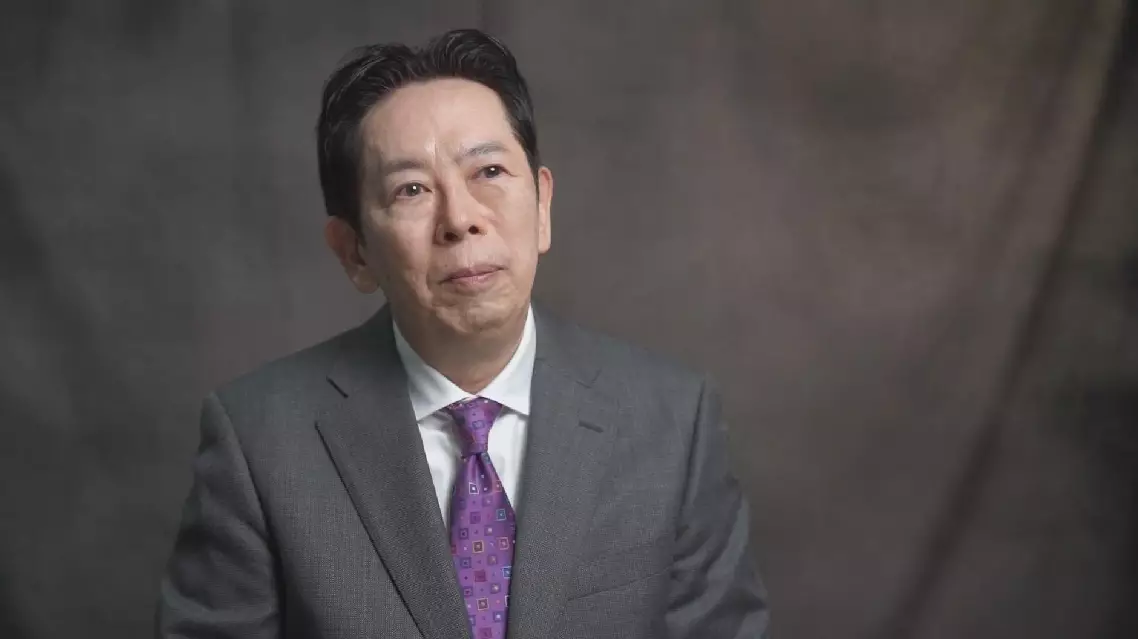
Japanese scholar criticizes prime minister's remarks as violating diplomatic pacts, peace principles
Japanese scholar criticizes prime minister's remarks as violating diplomatic pacts, peace principles