Displaced from Al-Shati' Camp in northern Gaza Strip, 38-year-old Palestinian boat carpenter Atiya Mustafa Miqdad is struggling to preserve his livelihood amid severe shortages caused by an ongoing brutal conflict in the Middle East.
Miqdad, now living in Rafah after being forced to flee since the conflict between Hamas and Israel erupted on Oct 7, 2023, recalled how dramatically his life and work had changed.
"Before the Oct 7 war, I used to do the job of building new boats. We headed out early in the morning to go to work, and came home to the sound of rockets. After five days, we were displaced to Rafah. Some fishermen who had old and small boats went down to the sea to fish, and there were also young guys on foam boats who went down to the sea to fish. From that point, I decided to make a small fishing boat with paddles," said Miqdad.
However, worsening shortages have made even basic craftsmanship extremely difficult. Materials once readily available are now diverted to meet the urgent need of displaced families.
"During this period, the materials that used to be available, such as wood and other things, people started using them for making tents for the displaced. So wood became very scarce in the area, and fiber was also limited and barely available. So we were forced to work differently: I started collecting broken small boats, placing the pieces inside the mold, fixing them with screws, welding them together, and then rehabilitating them again, bringing them back as new boats," he said.
To help fishermen who could no longer afford proper building materials, Miqdad began seeking wood from unlikely sources.
He explained that a single boat requires wood costing between 4,000 and 5,000 shekels (about between 1,234 and 1,545 U.S. dollars). He used to ask fishermen whether they had damaged wooden door frames that could be repurposed, saying he would clean and restore the old wood to ease their financial burden.
Before the conflict intensified, Miqdad had been contributing to Gaza's modest tourism sector by building leisure vessels and investing in specialized molds and parts.
"Before the war, I had built a tourist boat, and I was engaged in tourism. I had nine molds for building boats and the boat parts that carry small and large engines for the small boats with two horse-power engine. And I had plenty of work, thank God. But the whole area was burned, and the molds broke and were destroyed, including boats that were still under construction and got damaged because of the war," he said.
Looking ahead, he expressed a wish shared by local Gaza residents who are suffering enduring hardship across the enclave.
"I wish what I'm experiencing is just a bad dream, because many people were humiliated and suffered a lot. This war must stop," said Miqdad.
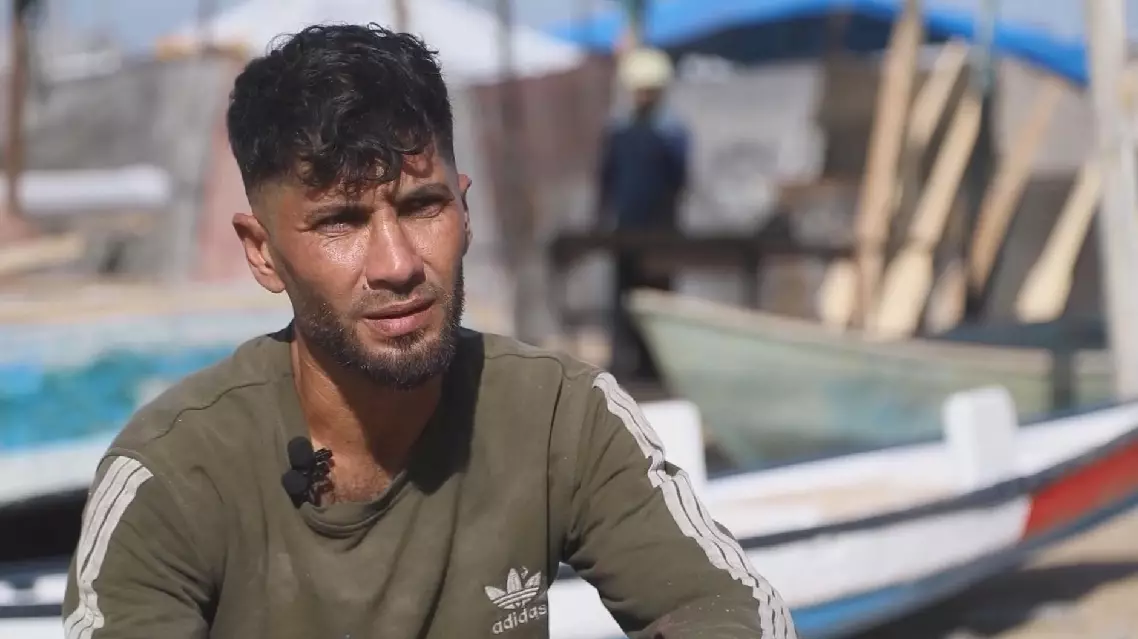
Displaced Gazan boat builder crafts boats from ruins, hoping for end of war
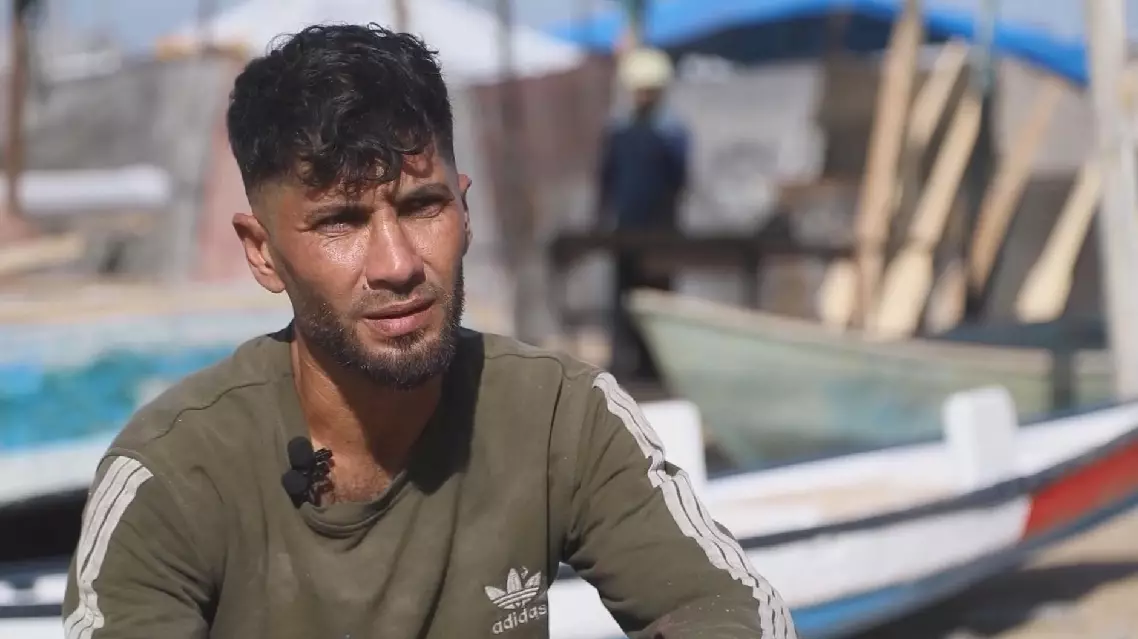

After the devastating fire at the housing complex Wang Fuk Court in Hong Kong Special Administrative Region (HKSAR), the central government, Hong Kong authorities, and people from across China have joined forces in a massive outpouring of relief and support.
The blaze, the deadliest Hong Kong had witnessed for decades, broke out at around 14:50 on Nov 26 at the eight-towered residential estate Wang Fuk Court, which was under renovation, in Tai Po district. The fire quickly engulfed seven of the towers, leaving at least 159 dead, 79 injured and thousands of families homeless.
According to the latest official update, the Support Fund for Wang Fuk Court in Tai Po, established by the HKSAR government, has received 3 billion Hong Kong dollars in external donations. Together with the HKSAR government's start-up capital of 300 million Hong Kong dollars, the fund stands at around 3.3 billion Hong Kong dollars in total. It will be used to help residents rebuild their homes and provide long-term support.
Following the fire, the HKSAR government has made comprehensive, multi-tiered rescue and resettlement efforts.
On the night of the blaze, the government promptly established temporary shelters at multiple locations across Tai Po district, coordinating accommodations in youth hostels, hotels, and transitional housing for affected residents. Emergency subsidies and living allowances were distributed to those impacted, while support was also provided through a "one household, one social worker" mechanism.
People from across Hong Kong have joined volunteer efforts, hoping to bring warmth to the wounded community, with donated supplies such as clothing, food, drinking water continuously arriving at temporary shelters.
Many taxi drivers have also volunteered to provide free rides.
"We work here from 08:00 in the morning to past 22:00 at night. We only leave when there are no passengers. That's how it is. It does affect earnings a bit. It definitely has an impact. But that's not important. The most important thing is to help others first," said Wong Chi-chuen, a taxi driver .
At the request of the HKSAR government, the Hong Kong and Macao Affairs Office of the State Council has coordinated the Ministry of Emergency Management to provide batches of supplies for the Tai Po fire relief effort, including portable outdoor charging stations, heavy-duty conveyors, blowers, respirators, goggles, protective suits, headlamps, and waterproof boots.
Mainland companies and residents, and various sectors in Macao also provided support following the devastating fire in Hong Kong, donating funds and supplies for emergency relief and post-disaster recovery.
"A large amount of supplies was collected and delivered to our disaster-stricken areas in a very short time. It made me realize what it means to be bound by blood. Because this kind of bond runs deep. I want to express my heartfelt thanks to everyone," said Peter Lam, chairman of Tai Po Rural Committee.
Support from across China pours in after devastating fire in Hong Kong