MEXICO CITY (AP) — The number of victims killed in an explosion outside a police station in the western Mexican state of Michoacán over the weekend has risen to five, the Attorney General’s Office said Sunday.
Twelve others were injured following Saturday’s explosion, according to the office.
The blast happened at midday in the center of the town of Coahuayana, on the coast of Michoacán, a state where numerous criminal groups operate, including the powerful Jalisco New Generation Cartel. It's also where the government recently launched a major security operation given the ongoing violence.
The state prosecutor’s office said the vehicle that exploded was a pickup truck and that the remains of two people were found at the scene. Authorities said three of those killed and five of those injured were members of a community police force.
One of the people who died at the scene was the driver of the truck that exploded, officials have said.
The use of explosives — dropped from drones, buried like mines or hidden along roads — has been an increasingly common technique used by criminal groups in the region, although it is not typical for them to be placed in cars.
According to Héctor Zepeda, commander of the community police, the explosion was so powerful that human remains were scattered throughout the area.
The police force is one of several that formed more than a decade ago during a civilian self-defense movement to fight the cartels. The community police forces were later formalized by the state, although in some areas they had been infiltrated by criminals.
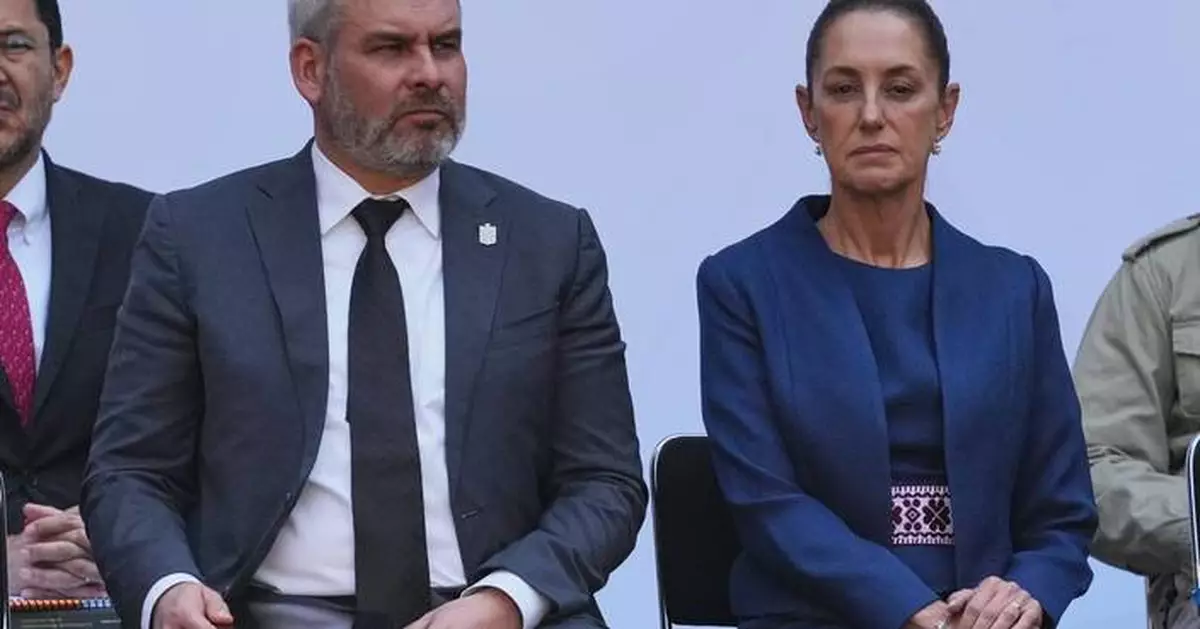
The explosion happened while the state governor, Alfredo Ramírez Bedolla, was participating in a public event with President Claudia Sheinbaum in Mexico City to celebrate seven years of government by the ruling Morena party.
For two decades, various organized crime groups have fought for control of the territory because Michoacán is a gateway for chemical precursors used in the manufacture of synthetic drugs. They also have another lucrative business: extortion.
At least three of the six drug cartels that the Trump administration has designated as terrorist organizations — Jalisco New Generation, United Cartels and The New Michoacan Family — operate in Michoacán, in addition to a slew of homegrown armed splinter groups, some supported by the Sinaloa Cartel.
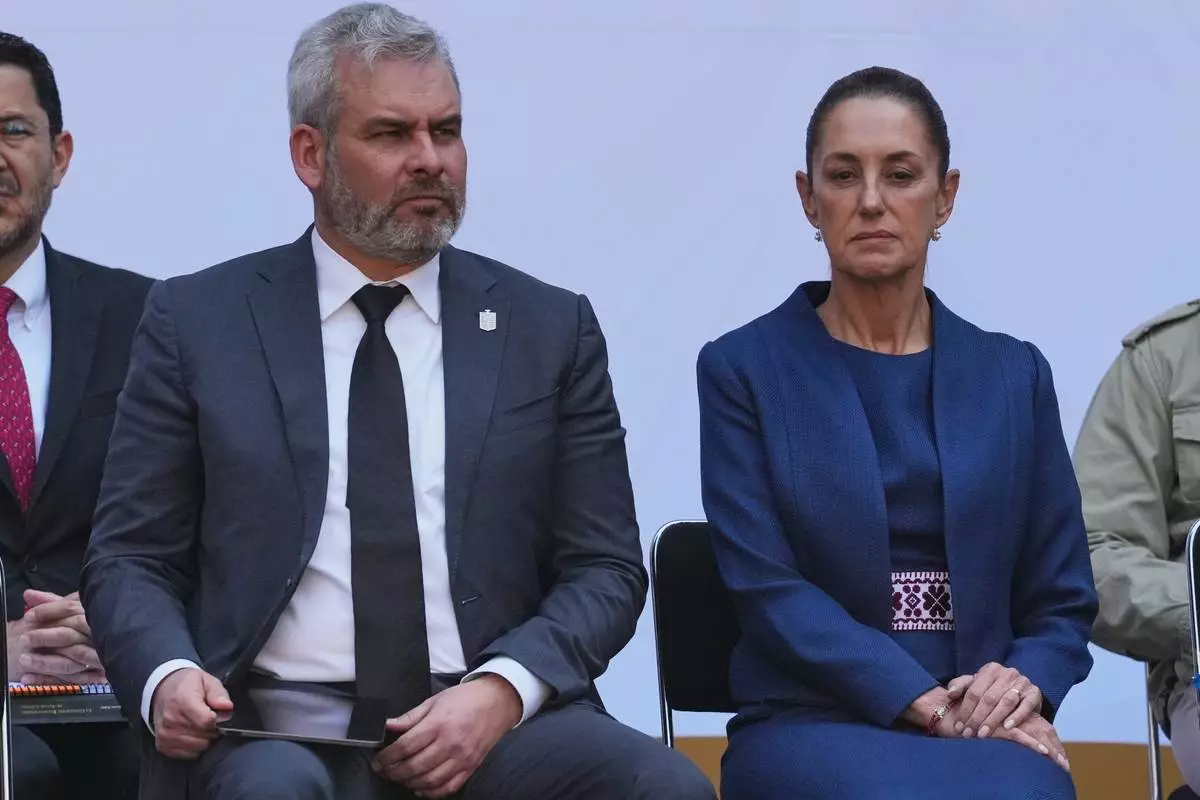
FILE - Michoacán State Governor Alfredo Ramirez Bedolla, left, and Mexican President Claudia Sheinbaum attend a presentation of the new security strategy against violence for the state of Michoacan, at the National Palace in Mexico City, Nov. 9, 2025. (AP Photo/Claudia Rosel, File)
WASHINGTON (AP) — Outdated intelligence likely led to the United States carrying out a deadly missile strike on an elementary school in Iran that killed over 165 people, many of them children, in the opening hours of the conflict, according to a U.S. official and a second person briefed on findings of a preliminary U.S military investigation into the incident.
The bombing of the school and its casualties involving children has become a focal point of the war, and if ultimately confirmed to be at the hands of the U.S., would also stand among the highest civilian casualty events caused by the American military operations in the last two decades.
President Donald Trump initially blamed Iran for the attack, later said he wasn’t certain who was to blame, and then said he would accept the results of the Pentagon’s investigation. The issue took on added urgency on Wednesday after the New York Times first reported that a preliminary investigation found that the U.S. was responsible.
U.S. Central Command relied on target coordinates for the strike using outdated data provided by the Defense Intelligence Agency, according to the person familiar with the preliminary finding.
The agency did not respond to a request for comment.
The preliminary finding prompted immediate calls for more information from the Pentagon. White House press secretary Karoline Leavitt said that “the investigation is still ongoing.”
Both the U.S. official and the person familiar with the matter spoke to The Associated Press on the condition of anonymity to discuss the sensitive matter.
Dozens of Democratic senators demanded answers from the Trump administration on Wednesday as a growing body of evidence suggested that the U.S. was likely responsible for the strike.
The letter from more than 45 senators pressed Defense Secretary Pete Hegseth on whether the U.S. was culpable for the strike and what previous analysis of the building had been done. The senators also raised concerns about the Pentagon hollowing-out a congressionally mandated office set up specifically to reduce civilian casualties.
“Under this administration, budgetary and personnel cuts at the Department have robbed military commands of crucial resources to prevent and respond to civilian casualties,” the senators wrote. Those include cuts at U.S. Central Command, whose forces are leading the military campaign against Iran, and the Civilian Protection Center of Excellence, which was signed into law in 2022 as part of a Pentagon ambition to reduce death tolls from strikes.
The revelation could threaten to erode public support in the U.S. effort against Iran at a time when Trump, who as a candidate railed against American involvement in “stupid” overseas wars, faces persistent questions about the purpose and of the conflict and what would bring it to an end.
One former Pentagon official said the Feb. 28 strike that hit Shajareh Tayyebeh Elementary School, which is located near a neighboring base for the Iranian Revolutionary Guard, came as a natural result of changes made by the Trump administration to reduce staff to mitigate civilian harm and Hegseth’s emphasis on lethality over legality.
There are several indications that the strike on the school may have been avoidable.
It happened Saturday morning, the start of the Iranian school week, when the building was full of young children. Satellite analysis by the AP shows that the school, as well as other targets struck the same day, had characteristics visible from the air that could have identified them as civilian sites before they were struck.
The AP reported last week that satellite images, expert analysis, a U.S. official and public information released by the U.S. military all suggested it was likely a U.S. strike. That evidence grew stronger on Monday, as new footage emerged showing what experts identified as a U.S.-made Tomahawk cruise missile slamming into the military compound as smoke was already rising from the area where the school was located.
Publicly available satellite imagery shows the school building was part of the military compound until about 2017, when a new wall was added to separate the two. A watchtower on the property was also removed. Around the same time, the imagery shows the walls surrounding the building were painted with murals in vibrant colors, primarily blue and pink, so bright they're visible from space
The school was clearly labeled as such in online maps and has an easily-accessible website full of information about students, teachers and administrators.
International law governing warfare bars strikes on structures, vehicles and people that are not military objectives and combatants. Civilian homes, schools, medical facilities and cultural sites are generally off limits for military strikes. The proximity of a school to a valid military target does not change its status as a civilian site, said Elise Baker, a senior staff lawyer at the Atlantic Council, a Washington-based nonprofit think tank.
If the U.S. is found responsible, said Sen. Tim Kaine during a briefing with journalists on Wednesday: “It’s either we’ve changed our traditional targeting rules or we made a mistake.”
“If we’ve changed our traditional targeting rules and we no longer provide the same level of protection for civilians, that would be tragic,” Kaine said.
Some Republicans, too, are sounding alarms.
Sen. Kevin Cramer of North Dakota told reporters that an investigation needs to “get to the bottom of it,” and then “admit if you know whose fault it is.”
If the U.S. was behind it, Cramer said, the military must “do everything you can to eliminate those mistakes going forward.”
He added: “But you also can’t undo it.”
Congress directed the Pentagon to create the Civilian Protection Center of Excellence in late 2022 as part of the wide-ranging annual defense authorization bill, which passed both chambers with broad bipartisan support. The bill said the center was to “institutionalize and advance knowledge, practices, and tools for preventing, mitigating, and responding to civilian harm.”
The measure put into law an initiative that had already been started by Defense Secretary Lloyd Austin earlier that year. The 36-step action plan was “ambitious and necessary,” Austin said at the time.
In April 2023, that office had a full-time director hired by the Army and an initial core staff of 30 civilians, according to a 2024 Pentagon report that said that the workforce was expected to grow.
Wes Bryant began working there in 2024 as the Branch Chief of Civil Harm Assessments. One of the things the office was discussing was updating the “no-strike lists,” lists of protected sites in other countries, such as hospitals, schools, churches and mosques, that the Pentagon keeps. When he was working at the Pentagon, it was well known that the list was out-of-date, he said. But under Hegseth, the office's size was slashed and the work on updating the no-strike lists stopped, he said.
“They have no budget. They're just sitting there trying to maintain any semblance of the mission,” he said.
Capt. Tim Hawkins, the spokesman for U.S. Central Command, denied reports that the military command only had a single person assigned to the mission but would not offer any further details, citing the ongoing investigation.
This story was first published on March 11, 2026. It was published again on March 12, 2026, to make clear that no-strike lists are lists of protected sites in other countries, such as hospitals, schools, churches and mosques, that the Pentagon keeps.
Frankel reported from Jerusalem. Associated Press writers Mary Clare Jalonick, Konstantin Toropin and Joey Cappelletti in Washington contributed to this report.

The arm of a deceased person is seen protruding from the rubble as rescue workers and residents search in the aftermath a strike on a girls' elementary school in Minab, Iran, Saturday, Feb. 28, 2026. (Abbas Zakeri/Mehr News Agency via AP)
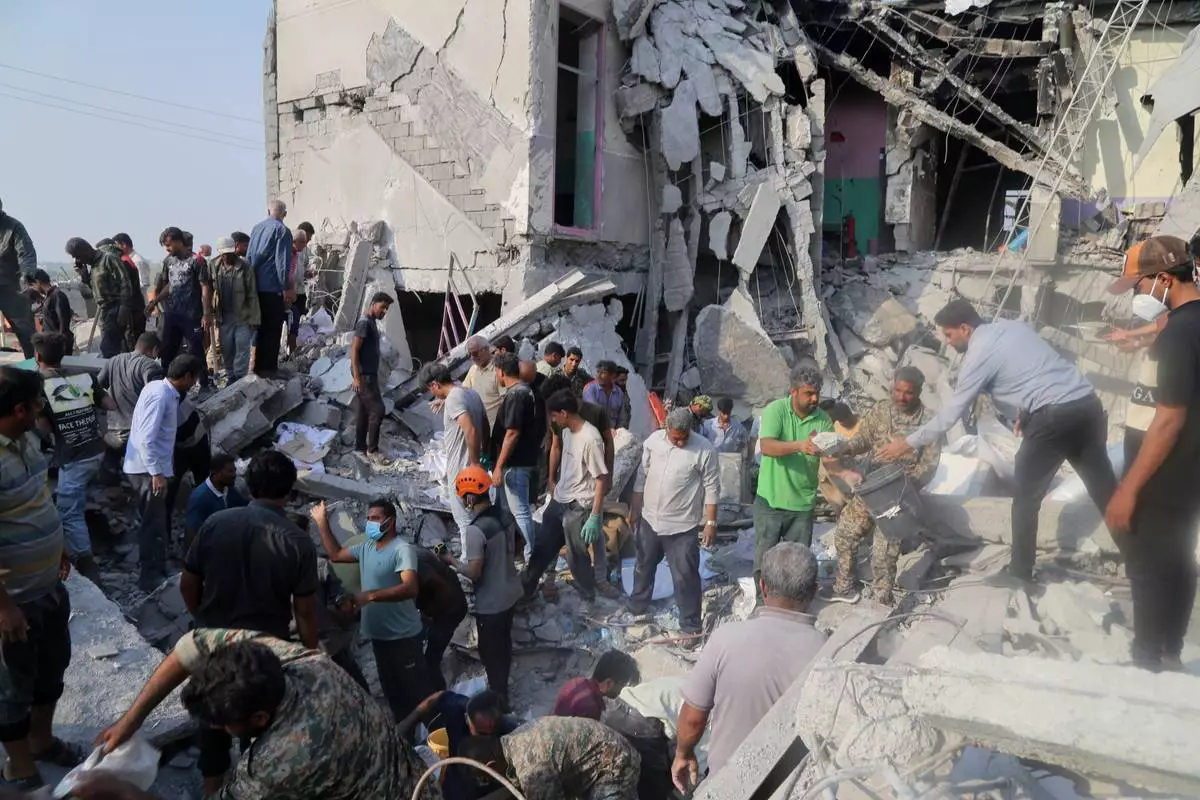
Rescue workers and residents search through the rubble in the aftermath of a strike on a girls' elementary school in Minab, Iran, Saturday, Feb. 28, 2026. (Abbas Zakeri/Mehr News Agency via AP)
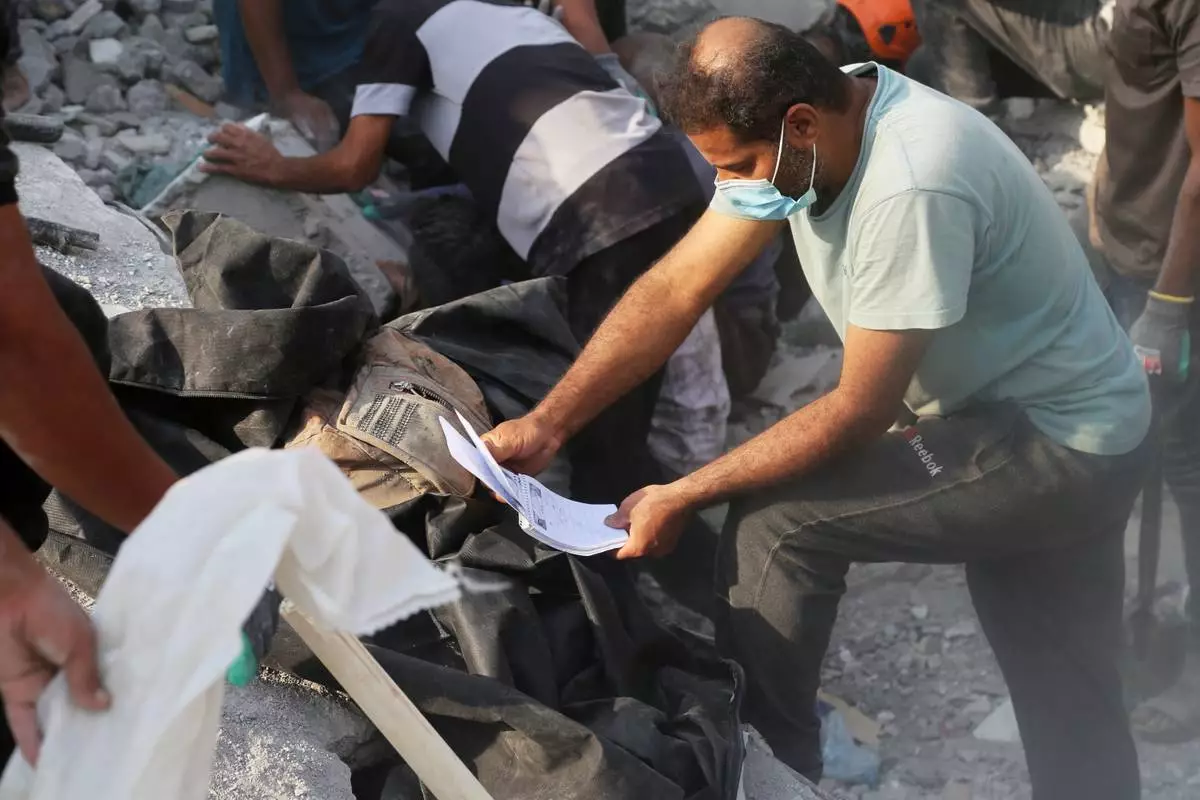
Rescue workers and residents search through the rubble in the aftermath of a strike on a girls' elementary school in Minab, Iran, Saturday, Feb. 28, 2026. (Abbas Zakeri/Mehr News Agency via AP)
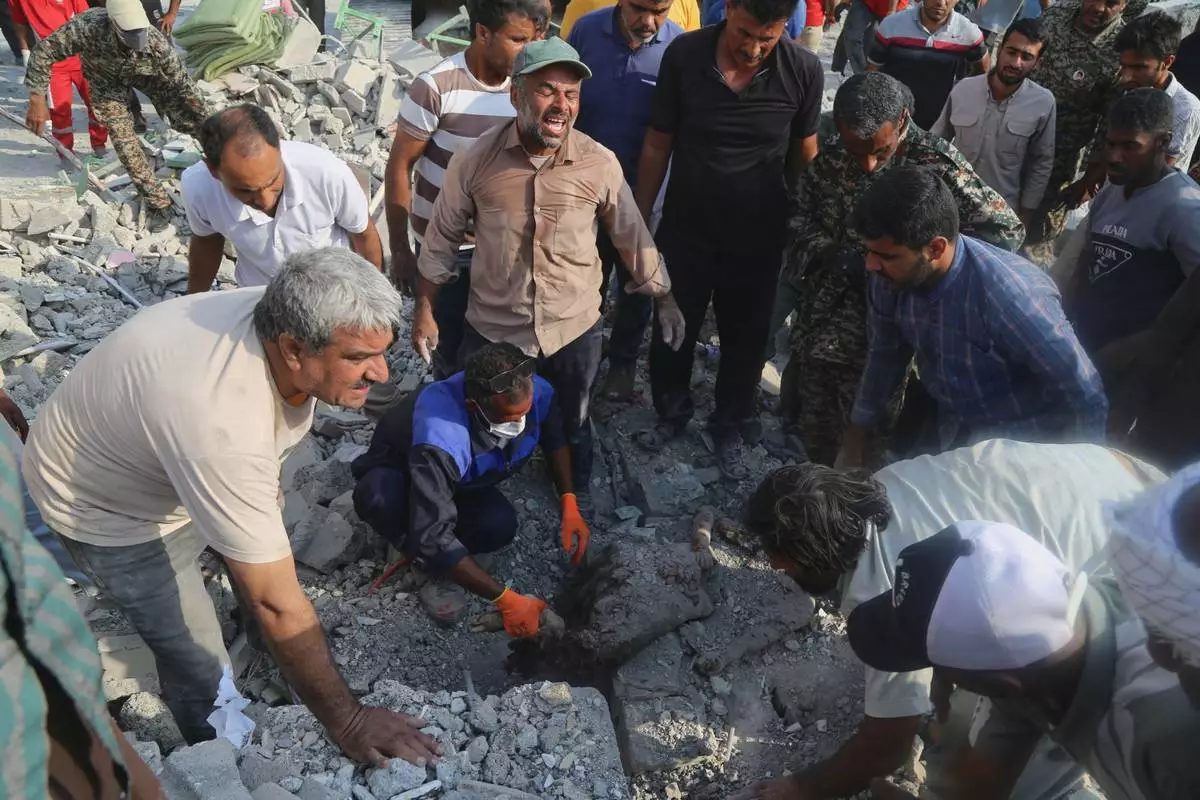
Rescue workers and residents search through the rubble in the aftermath of a strike on a girls' elementary school in Minab, Iran, Saturday, Feb. 28, 2026. (Abbas Zakeri/Mehr News Agency via AP)
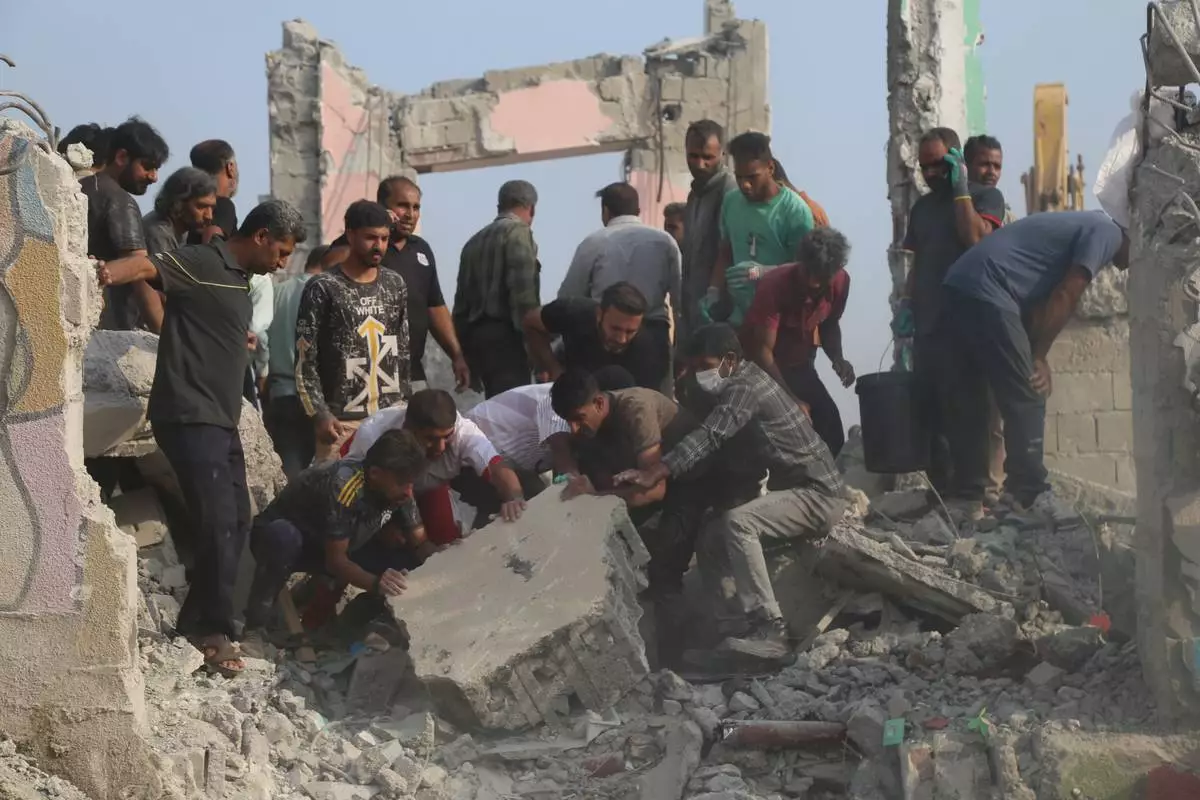
Rescue workers and residents search through the rubble in the aftermath of a strike on a girls' elementary school in Minab, Iran, Saturday, Feb. 28, 2026. (Abbas Zakeri/Mehr News Agency via AP)