Donald Trump is angry that Rep. Henry Cuellar is running again as a Democrat rather than switch parties after the president pardoned the Texas congressman and his wife in a federal bribery and conspiracy case.
Trump blasted Cuellar for “Such a lack of LOYALTY,” suggesting the Republican president might have expected the clemency to bolster the GOP's narrow House majority heading into the 2026 midterm elections.
Cuellar, in a television interview Sunday after Trump's social media post, said he was a conservative Democrat willing to work with the administration “to see where we can find common ground.” The congressman said he had prayed for the president and the presidency at church that morning “because if the president succeeds, the country succeeds.”
Citing a fellow Texas politician, the late President Lyndon Johnson, Cuellar said he was an American, Texan and Democrat, in that order. "I think anybody that puts party before their country is doing a disservice to their country,” he told Fox News Channel's “Sunday Morning Futures.”
Trump noted on his Truth Social platform that the Democratic President Joe Biden's administration had brought the charges against Cuellar and that the congressman, by running once more as a Democrat, was continuing to work with “the same RADICAL LEFT” that wanted him and his wife in prison — “And probably still do!”
“Such a lack of LOYALTY, something that Texas Voters, and Henry’s daughters, will not like. Oh’ well, next time, no more Mr. Nice guy!” Trump said. Cuellar’s two daughters, Christina and Catherine, had sent Trump a letter in November asking that he pardon their parents.
Trump explained his pardon he announced Wednesday as a matter of stopping a “weaponized” prosecution. Cuellar was an outspoken critic of Biden's immigration policy, a position that Trump saw as a key alignment with the lawmaker.
Cuellar said he has good relationships within his party. “I think the general Democrat Caucus and I, we get along. But they know that I’m an independent voice,” he said.
A party switch would have been an unexpected bonus for Republicans after the GOP-run Legislature redrew the state's congressional districts this year at Trump's behest. The Texas maneuver started a mid-decade gerrymandering scramble playing out across multiple states. Trump is trying to defend Republicans’ House majority and avoid a repeat of his first term, when Democrats dominated the House midterms and used a new majority to stymie the administration, launch investigations and twice impeach Trump.
Yet Cuellar's South Texas district, which includes parts of metro San Antonio, was not one of the Democratic districts that Republicans changed substantially, and Cuellar believes he remains well-positioned to win reelection.
Federal authorities had charged Cuellar and his wife with accepting thousands of dollars in exchange for the congressman advancing the interests of an Azerbaijan-controlled energy company and a bank in Mexico. Cuellar was accused of agreeing to influence legislation favorable to Azerbaijan and deliver a pro-Azerbaijan speech on the floor of the U.S. House.
Cuellar has said he his wife were innocent. The couple’s trial had been set to begin in April.
In the Fox interview,, Cuellar insisted that federal authorities tried to entrap him with “a sting operation to try to bribe me, and that failed.”
Cuellar still faces a House Ethics Committee investigation.
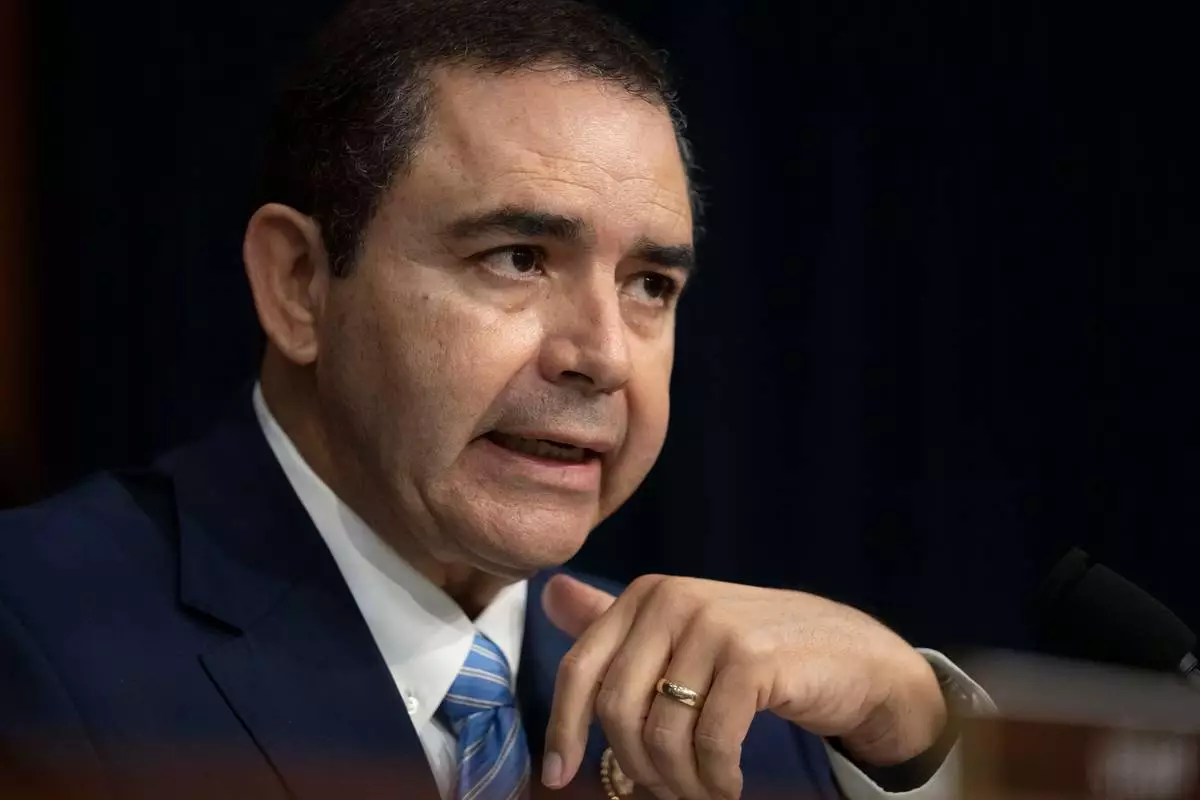
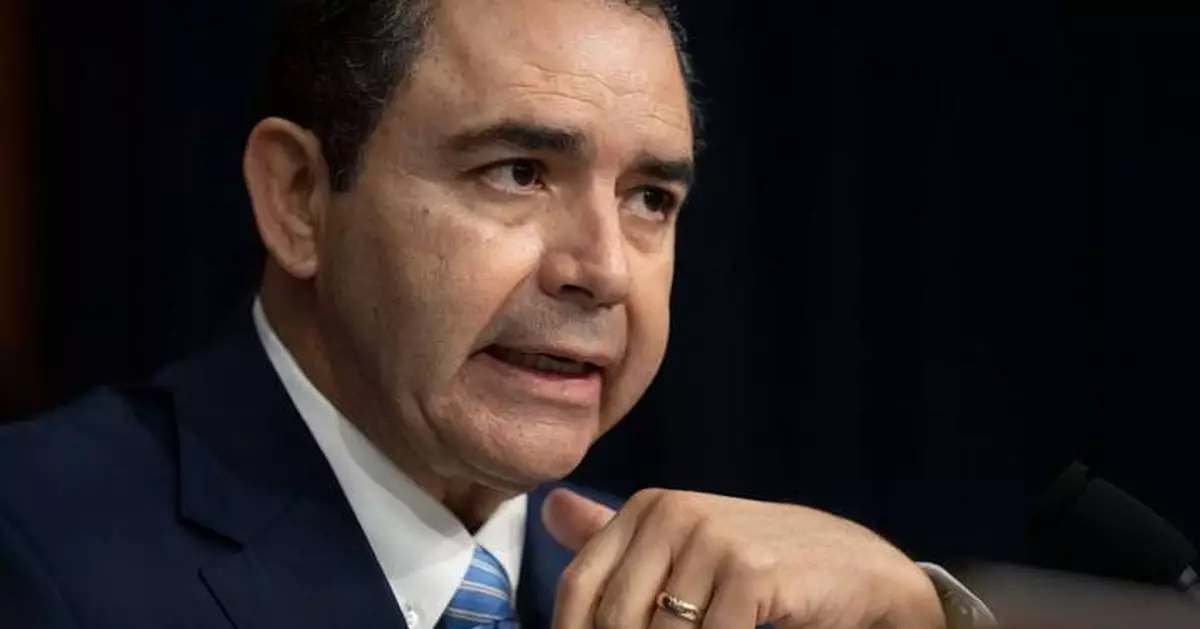
FILE - Rep. Henry Cuellar, D-Texas, speaks during a hearing of the Homeland Security Subcommittee of the House Committee on Appropriations on Capitol Hill, April 10, 2024, in Washington. (AP Photo/Mark Schiefelbein, File)
WASHINGTON (AP) — Americans are divided along party lines on U.S. military action against Iran, according to polls conducted since the war began, with most polls showing opposition is higher than support.
Polls suggest that many Americans are worried the military action is making the U.S. “less safe,” even as they see Iran as a threat to U.S. security. There are also warning signs for President Donald Trump as he confronts the possibility of a prolonged conflict that could come with significant economic turmoil. Trump gave conflicting messages on Monday about the war’s timeline, suggesting it could be near its end while also threatening additional force against Iran if the country disrupted the global flow of oil.
Fluctuating oil prices may already be alarming voters. Polls conducted over the weekend found a large majority of Americans are worried about the war causing oil and gasoline prices to rise. The vast majority expect the U.S. action against Iran will last at least “months,” if not longer.
Republicans are largely behind the president, a Republican, the polls show, but there are indications that they are wary of any response that would lead to U.S. troops on the ground in Iran. And after Trump campaigned on the pledge of putting “America first” and ending U.S. involvement in “forever wars,” the Iran conflict could become a particular point of friction.
About half of registered voters — 53% — oppose U.S. military action against Iran, according to a new Quinnipiac Poll conducted over the weekend. Only 4 in 10 support it, and about 1 in 10 are uncertain. A new Ipsos poll also found more disapprove than approve of the strikes.
That's similar to the results of text message snap polls from The Washington Post and CNN, both conducted shortly after the joint U.S.-Israel attacks began, which also indicated that more Americans rejected the military action than embraced it.
A recent Fox News poll found opinions more evenly divided: Half of registered voters approved of the U.S. military action, while half disapproved.
Several of the recent polls show a majority of Americans believe the Trump administration has not provided a clear explanation of the reasons behind the military strikes, and there are some divisions about whether Iran truly posed an “imminent and direct threat” to the United States, as the White House has said.
Most voters in the Quinnipiac poll — 55% — said they did not believe Iran posed an “imminent military threat” to the U.S. before the current military action. On the other hand, about 6 in 10 registered voters in the Fox News poll said Iran poses a “real national security threat,” and a recent AP-NORC poll found about half of U.S. adults were highly concerned that Iran’s nuclear program posed a direct threat to the U.S.
As oil prices oscillate, the vast majority of voters are “very” or “somewhat” concerned about oil and gasoline prices rising in the U.S., according to the Quinnipiac poll. Only about one-quarter of voters are “not so concerned” or “not concerned at all.”
The highest levels of concern are driven by Democrats and independents, but about half of Republicans are also at least somewhat concerned about the war increasing gas prices.
About two-thirds of Americans expect U.S. gas prices will “get worse” over the next year as a result of the U.S. military action, according to the Ipsos poll conducted March 6-9. Republicans were more likely to say gas prices would worsen than improve as a result of the war: 44% said they would get worse, while 26% expected they would improve. About 2 in 10 thought they would remain the same. Democrats and independents overwhelmingly expect gas prices will worsen.
On Monday, Trump said the U.S. would take further action against Iran if they made any attempt to stop the global oil supply.
As the Iran war spreads into the Middle East, many Americans also worry Trump's military decisions have made the U.S. less safe.
About half of voters in both the Quinnipiac and Fox News polls said the U.S. military action in Iran makes the U.S. “less safe,” while only about 3 in 10 in each poll said it made the country safer. The CNN poll found about half of U.S. adults thought the strikes would make Iran “more of a threat” to the U.S., while only about 3 in 10 thought it would lessen the danger.
About 6 in 10 U.S. adults said they trusted Trump “not much” or “not at all” to make the right decisions about the U.S. use of force in Iran, according to the CNN poll. Republicans expressed more trust in the president than Democrats or independents.
An AP-NORC poll conducted before the strikes similarly found that 56% of U.S. adults trusted Trump “only a little” or “not at all” to make the right decisions about the use of military force abroad.
Most voters are concerned about a possible expansion in the war’s scope.
About three-quarters of voters oppose the idea of sending ground troops into Iran, according to the Quinnipiac poll that was conducted after the deaths of six U.S. service members were announced. The death of a seventh service member was reported later..
The Trump administration has acknowledged the likelihood of American casualties, and has not ruled out sending American soldiers to Iran. Defense Secretary Pete Hegseth said last week that it was “foolishness” to expect U.S. officials to say publicly “here’s exactly how far we’ll go.”
Only about 2 in 10 in the Quinnipiac poll supported sending troops to Iran. Even among Republican voters, the poll found more oppose than support sending ground troops, 52% to 37%.
The new Ipsos poll found bipartisan concern that the U.S. military action would risk the lives of American military personnel. About 9 in 10 U.S. adults are “very” or “somewhat” concerned about this, including 86% or Republicans and 93% of Democrats.
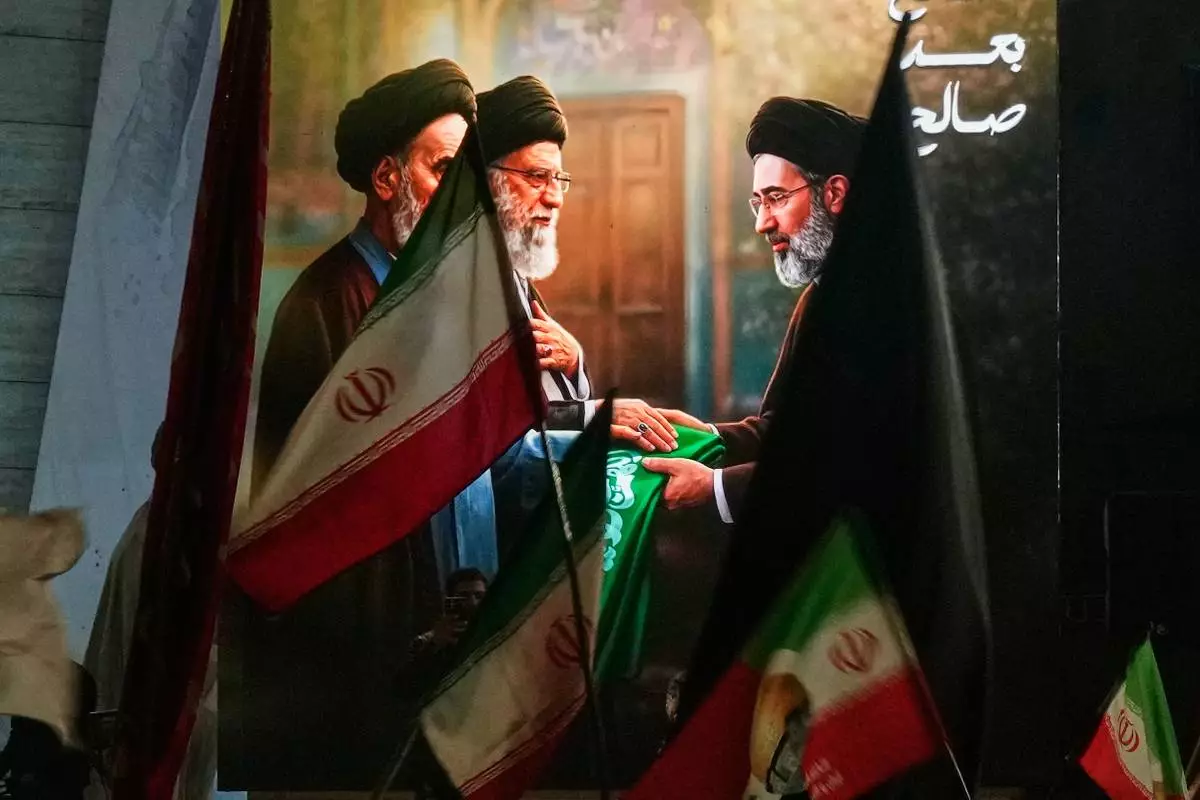
Protesters wave Iranian flags and hold a portrait of the late Iran's Supreme Leader Ayatollah Ali Khamenei and his son Ayatollah Mojtaba Khamenei to support his selection as the new Iran's Supreme Leader in Baghdad, Monday, March 9, 2026. (AP Photo/Hadi Mizban)
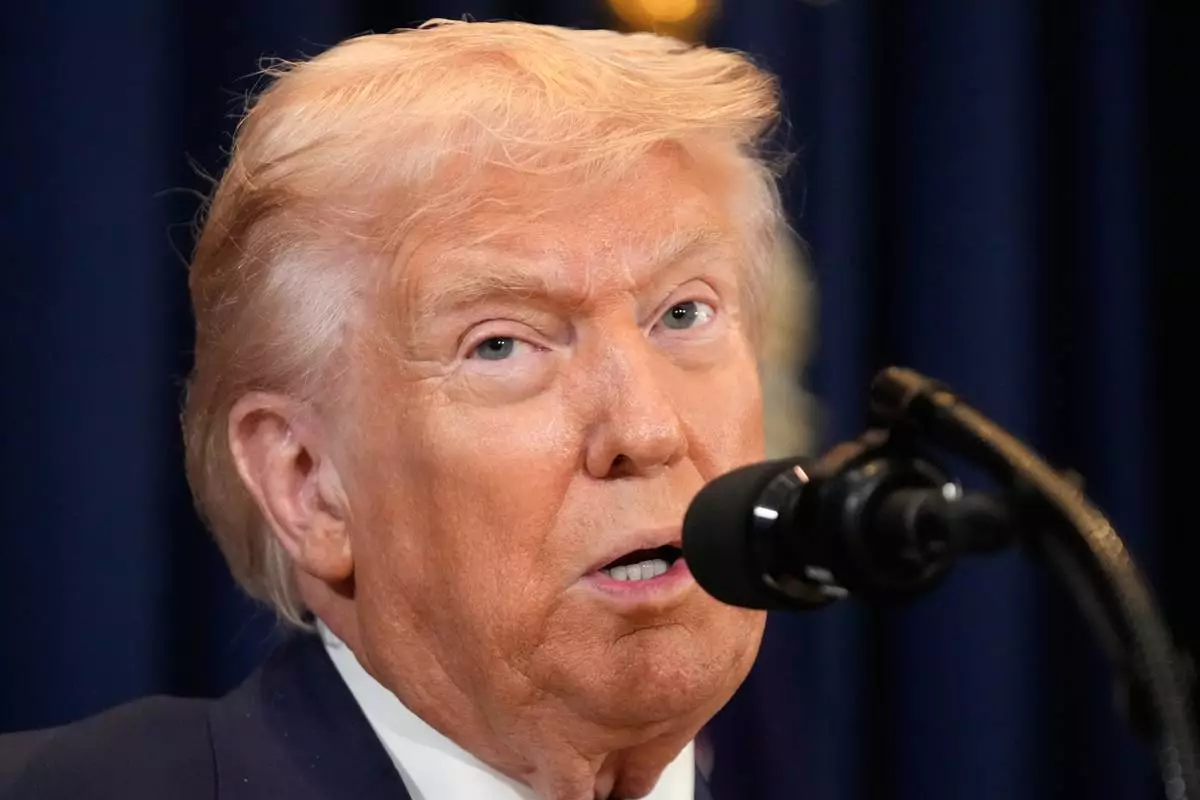
President Donald Trump speaks at a news conference, Monday, March 9, 2026, at Trump National Doral Miami in Doral, Fla. (AP Photo/Mark Schiefelbein)