ATLANTA (AP) — With the game tied after a lackluster first half, Mike Macdonald knew his team needed a spark.
The Seattle coach called on newcomer Rashid Shaheed to provide it.
Click to Gallery
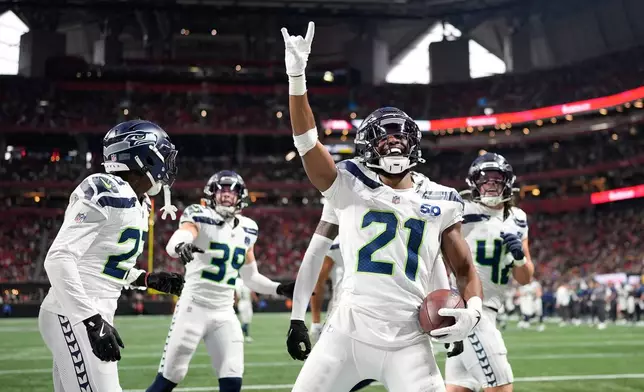
Seattle Seahawks cornerback Devon Witherspoon celebrates a fumble recovery against the Atlanta Falcons during the second half of an NFL football game, Sunday, Dec. 7, 2025, in Atlanta. (AP Photo/Mike Stewart)
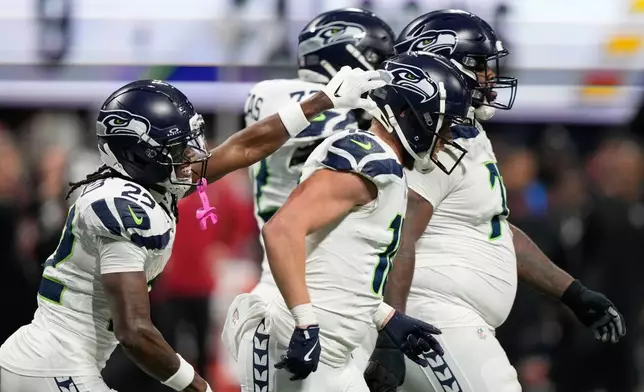
Seattle Seahawks wide receiver Cooper Kupp, center, celebrates his touchdown with wide receiver Rashid Shaheed, left, during the second half of an NFL football game against the Atlanta Falcons, Sunday, Dec. 7, 2025, in Atlanta. (AP Photo/Brynn Anderson)
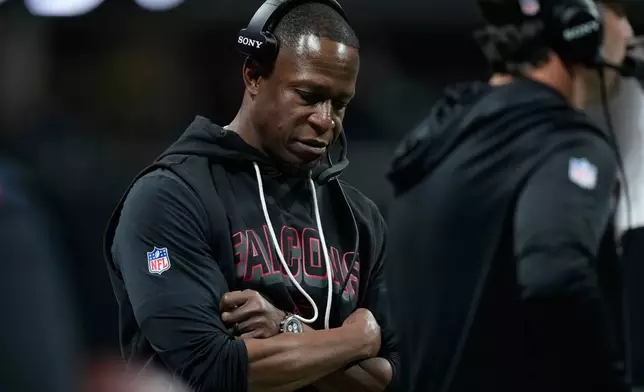
Atlanta Falcons head coach Raheem Morris looks down on the sideline as his team trails against the Seattle Seahawks during the second half of an NFL football game, Sunday, Dec. 7, 2025, in Atlanta. (AP Photo/Brynn Anderson)
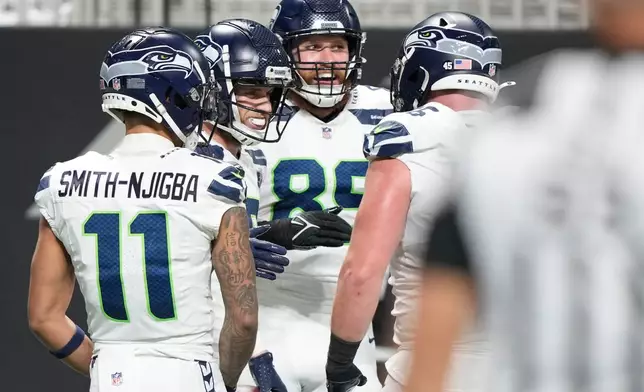
Seattle Seahawks wide receiver Cooper Kupp, second from left, celebrates his touchdown with teammates Jaxon Smith-Njigba (11) and Nick Kallerup (89) against the Atlanta Falcons during the second half of an NFL football game, Sunday, Dec. 7, 2025, in Atlanta. (AP Photo/Brynn Anderson)
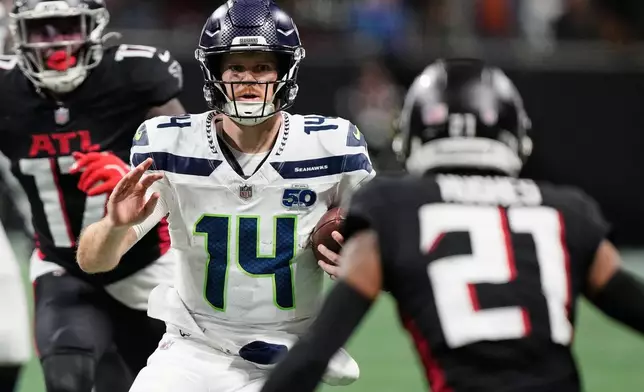
Seattle Seahawks quarterback Sam Darnold (14) runs the ball against Atlanta Falcons cornerback Mike Hughes (21) during the second half of an NFL football game, Sunday, Dec. 7, 2025, in Atlanta. (AP Photo/Brynn Anderson)
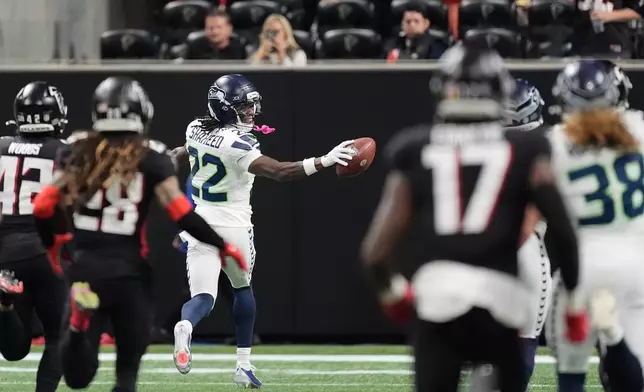
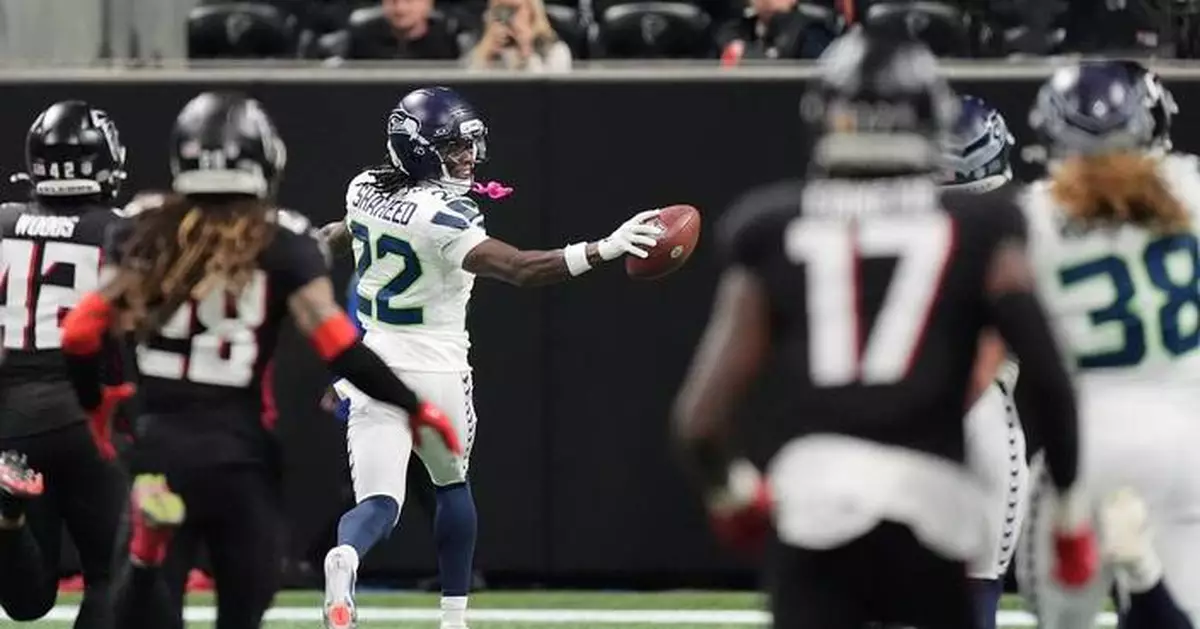
Seattle Seahawks wide receiver Rashid Shaheed (22) looks back as he runs for a touchdown on a kickoff return against the Atlanta Falcons during the second half of an NFL football game, Sunday, Dec. 7, 2025, in Atlanta. (AP Photo/Mike Stewart)
Shaheed returned the second-half kickoff 100 yards for a touchdown and the Seahawks never looked back, beating the hapless Atlanta Falcons 37-9 on Sunday.
“Coach Mike, he called it,” safety Nick Emmanwori said, breaking into a big grin. “Right before we went back out from halftime, he literally called it out. He was like, 'Sheed, go take one back to the house.'”
Shaheed was acquired a month ago from the New Orleans Saints for a pair of draft picks, leaving one of the league's worst teams for one of its best.
He's starting to get accustomed to his new surroundings, also making four catches for 67 yards as he develops a connection with quarterback Sam Darnold.
“I've not been able to play for a playoff team yet,” Shaheed said. “This feels different. This feels like everyone has bought in.”
The Seahawks (10-3) broke away from a 6-6 tie at halftime with a 31-point beatdown of the Falcons over the final two quarters.
Seattle's defense came up with three turnovers as the Seahawks won for the seventh time in eight games. Darnold threw for 249 yards and three touchdowns, with a pair of scores to Jaxon Smith-Njigba and another to Cooper Kupp.
As for the Falcons, this all feels very familiar.
With its seventh loss in eight games, Atlanta (4-9) sealed an eighth straight losing campaign — matching the worst stretch in franchise history — and was officially eliminated from playoff contention with a month to go in the regular season.
Atlanta hasn't made the postseason since 2017, a year after its infamous Super Bowl meltdown to Tom Brady and the Patriots.
“The kickoff return was a backbreaker,” said embattled coach Raheem Morris, whose future is sure to remain a major topic in the A-T-L.
Shaheed's TD marked the third week in a row that Atlanta has given up a huge kickoff return. He was barely touched on his way to the longest touchdown of the NFL season, according to the Elias Sports Bureau. It was the longest return for the Seahawks since Tyler Lockett's 105-yarder against Chicago in 2015.
That wasn’t the only miscue on another awful day for Atlanta's special teams. Zane Gonzalez’s 50-yard field goal attempt was swatted away by Emmanwori, who streaked in off the edge without being blocked.
“We’ve got to go figure it out," Morris said. "We’ve got to put more people out there. We’ve got to change it up.”
The Seattle defense forced a fumble by Bijan Robinson when the Falcons were driving for a potential tying touchdown in the third quarter. DeMarcus Lawrence knocked the ball away and Devon Witherspoon scooped it up at the Seahawks 12.
On Atlanta's next possession, Kirk Cousins' pass for Kyle Pitts was deflected and picked off by Emmanwori, his first career pick. Witherspoon also had an interception on a wacky play when the ball ricocheted high in the air on a short throw by Cousins.
The Seahawks were bolstered on the defensive side by the return of safety Julian Love and tackle Jarran Reed from injured reserve, making the first time all season that unit was at full strength.
The Seahawks have one of the league's top defensive units, and they're not shying away from expectations.
Coming off a shutout of the Minnesota Vikings, Seattle held the Falcons to three field goals. Even in the closing minutes, with the outcome no longer in doubt, the defense took pride in stopping Atlanta near the goal line on fourth down.
“This defense is super special,” Emmanwori said. “We've got a lot of special dudes on this team, from the first level on the D-line to the linebackers to the secondary. I think this defense can be historic almost.”
The Falcons appeared to score the game’s first touchdown late in the first half when Darnell Mooney hauled in a 26-yard pass from Cousins down the left sideline.
But the Atlanta receiver stepped out of bounds just short of the end zone, and officials ruled that he did not re-establish himself on the field before making the catch. The Falcons were forced to settle for Gonzalez’s 43-yard field goal and a 6-3 lead with 1:01 left in the half.
That left enough time for Seattle to tie up before halftime. Darnold scrambled for a 12-yard gain and connected with Shaheed on a 16-yard pass, setting up Jason Myers’ 48-yard field goal on the final play of the half.
Seahawks: TE Elijah Arroyo and NT Brandon Pili both went down in the first half with knee issues. Macdonald said Pili should be OK, but Arroyo's injury could be more serious and will require further evaluation.
Falcons: WR Drake London (knee) missed his third straight game with a knee injury and was joined on the inactive list by DL Brandon Dorlus (groin). Edge Jalon Walker (quad) was injured in the first half.
Seahawks: Return home to face the Indianapolis Colts next Sunday.
Falcons: A short week before they travel to Tampa Bay on Thursday night to face their NFC South rival Buccaneers.
AP NFL: https://apnews.com/hub/nfl
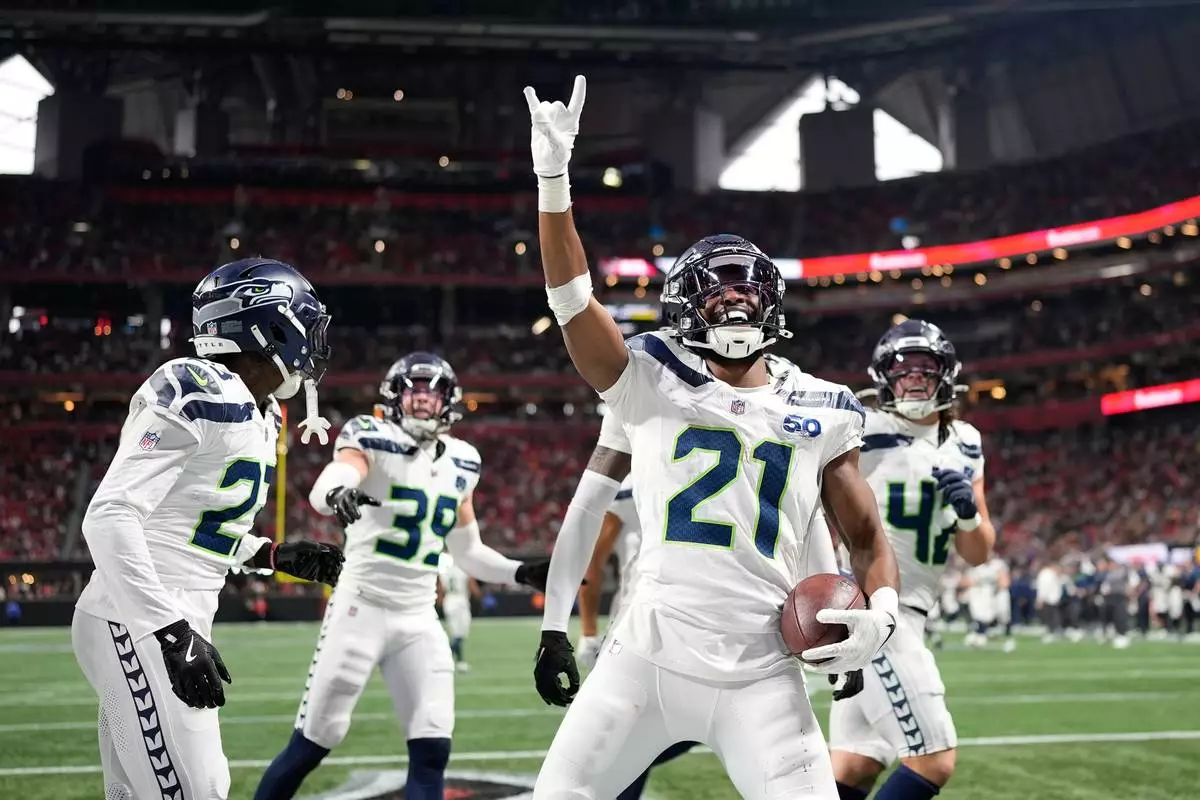
Seattle Seahawks cornerback Devon Witherspoon celebrates a fumble recovery against the Atlanta Falcons during the second half of an NFL football game, Sunday, Dec. 7, 2025, in Atlanta. (AP Photo/Mike Stewart)
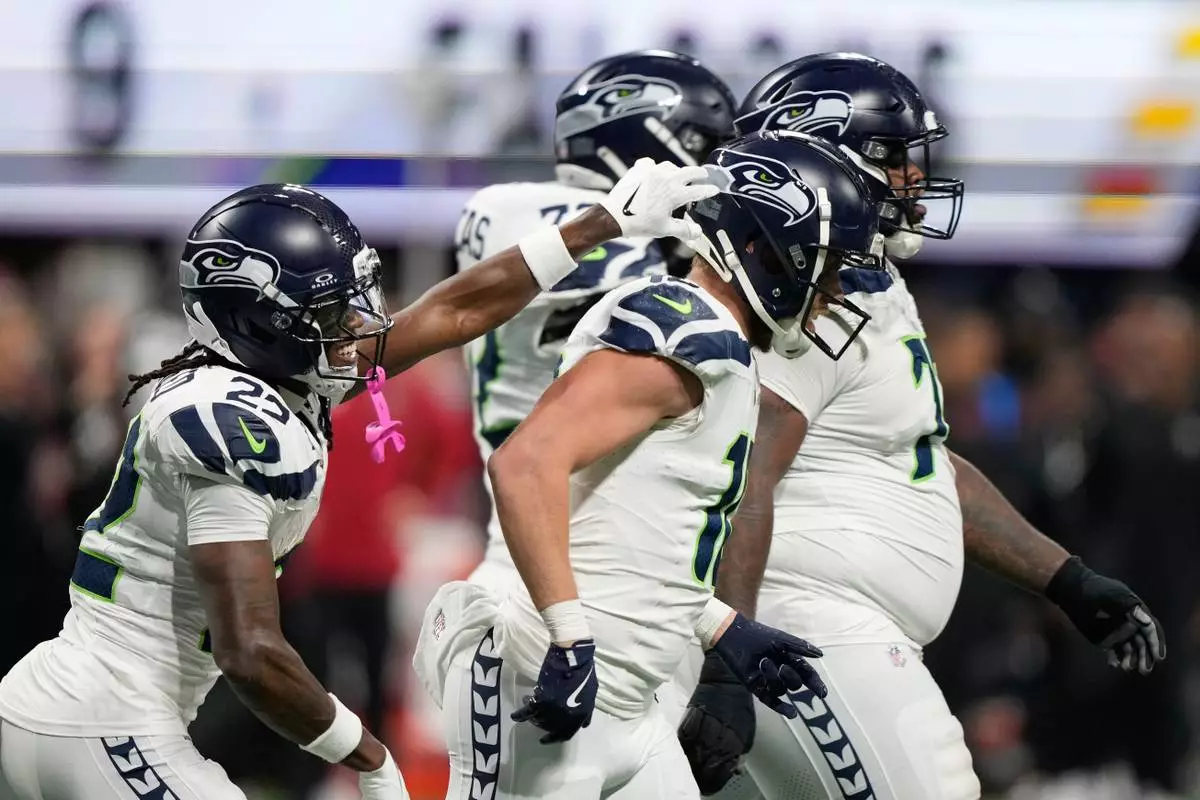
Seattle Seahawks wide receiver Cooper Kupp, center, celebrates his touchdown with wide receiver Rashid Shaheed, left, during the second half of an NFL football game against the Atlanta Falcons, Sunday, Dec. 7, 2025, in Atlanta. (AP Photo/Brynn Anderson)
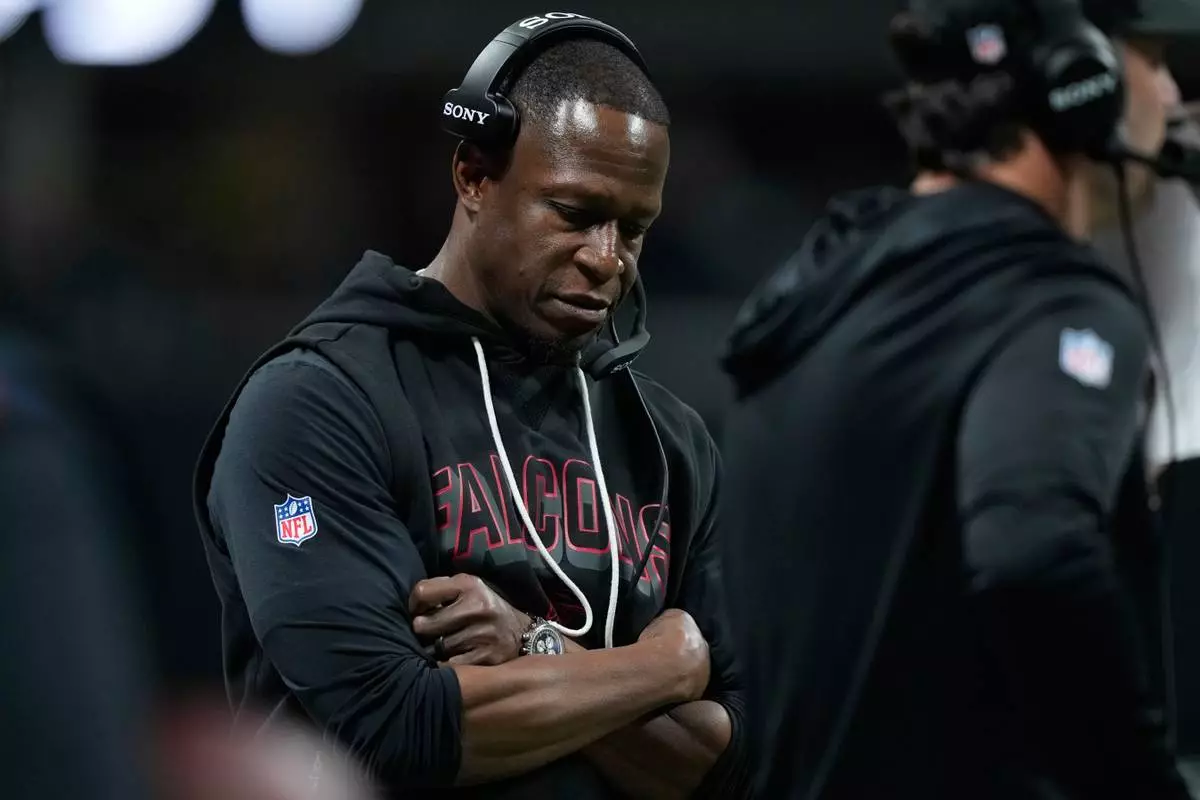
Atlanta Falcons head coach Raheem Morris looks down on the sideline as his team trails against the Seattle Seahawks during the second half of an NFL football game, Sunday, Dec. 7, 2025, in Atlanta. (AP Photo/Brynn Anderson)
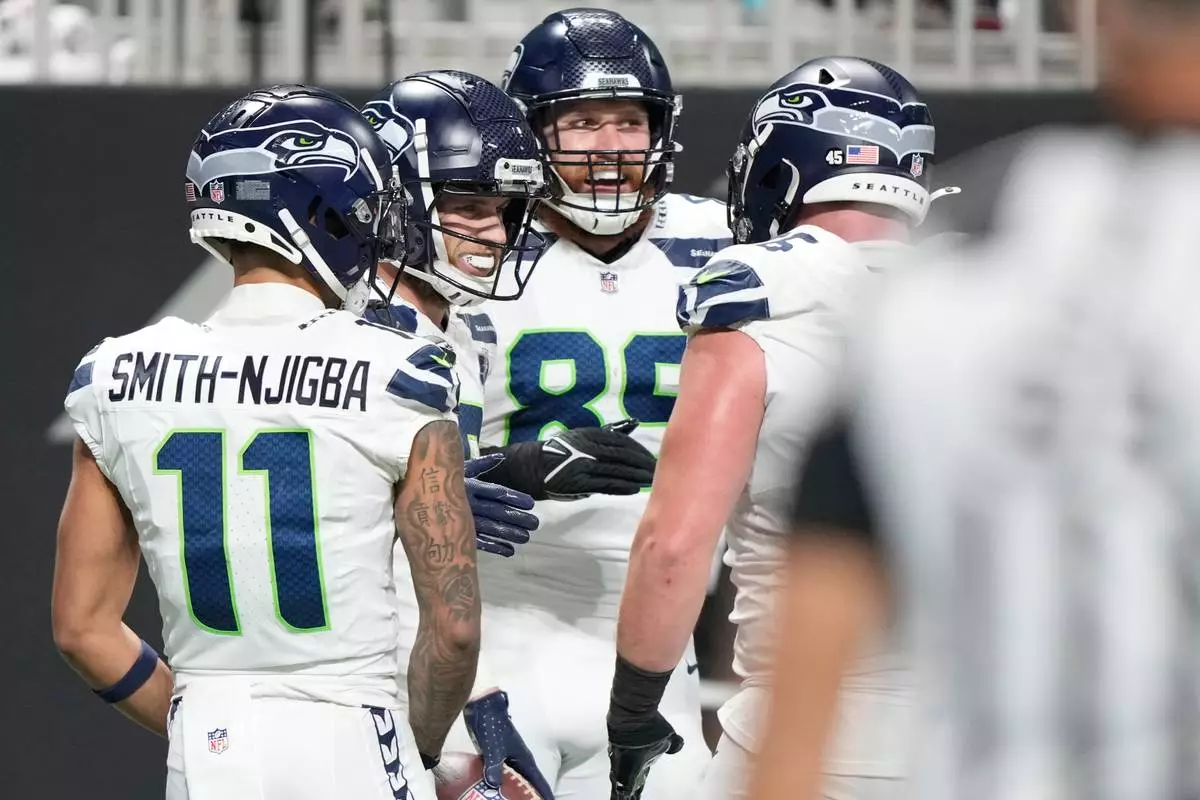
Seattle Seahawks wide receiver Cooper Kupp, second from left, celebrates his touchdown with teammates Jaxon Smith-Njigba (11) and Nick Kallerup (89) against the Atlanta Falcons during the second half of an NFL football game, Sunday, Dec. 7, 2025, in Atlanta. (AP Photo/Brynn Anderson)
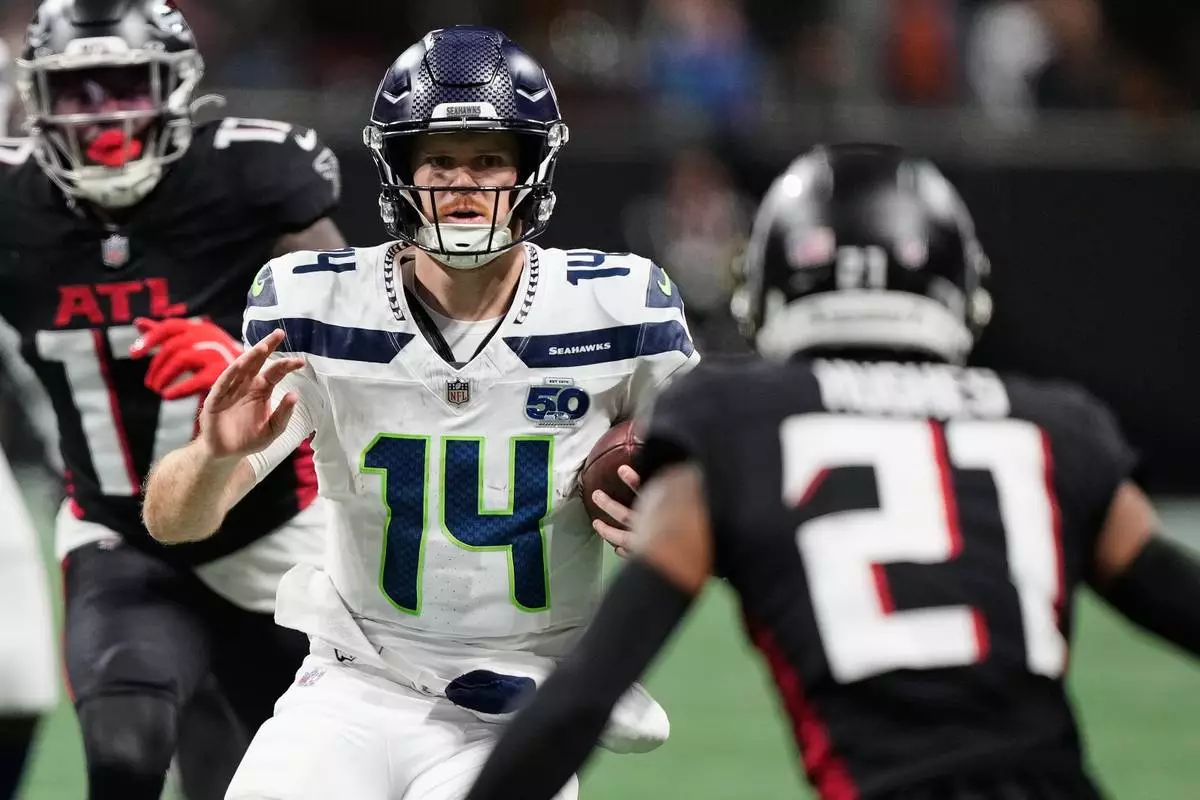
Seattle Seahawks quarterback Sam Darnold (14) runs the ball against Atlanta Falcons cornerback Mike Hughes (21) during the second half of an NFL football game, Sunday, Dec. 7, 2025, in Atlanta. (AP Photo/Brynn Anderson)
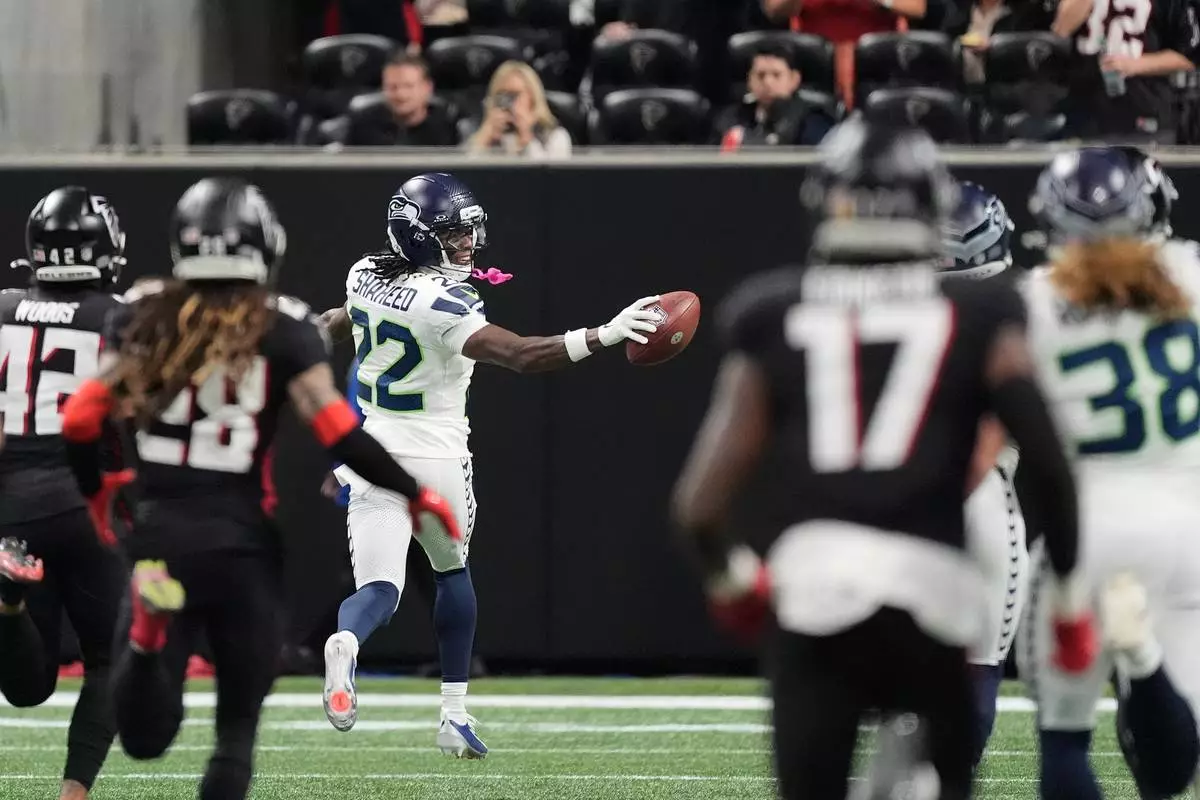
Seattle Seahawks wide receiver Rashid Shaheed (22) looks back as he runs for a touchdown on a kickoff return against the Atlanta Falcons during the second half of an NFL football game, Sunday, Dec. 7, 2025, in Atlanta. (AP Photo/Mike Stewart)