MOGADISHU, Somalia (AP) — In a theater where a suicide bomber detonated years ago, Hassan Barre stepped forward to offer a different hallmark of Somalia: poetry.
In one of the world's most volatile nations, Somalis must be aware of their responsibility to their country and each other, he said in a recital emphasizing good citizenship.
The 70-year-old Barre cut a somber figure at the podium. His message echoed in the largely empty hall of the National Theater in Mogadishu, the capital, where aging poets in austere suits gather to share verses and recall the good old days.
The men, some with hennaed beards and glaucoma eyes, represent a fading measure of hope for a country that has been slowly stripped of its cultural wealth during decades of conflict.
There may be no higher art in Somalia than oral poetry, which is recited in the most remote outposts and even by militants in the bush. Somalis, after all, are often described as "a nation of poets." Their work often venerates pastoral well-being and the traditional roles of men and women in the predominantly Islamic society.
Some poets like Hadraawi — the “Shakespeare of Somalia” who died in 2022 — have achieved universal recognition. “Hadraawi’s oeuvre includes a broad repertoire, from love songs to laments of war,” Harvard University's Archive of World Music noted after his death.
Poets flourished during the reign of Siad Barre, who ruled Somalia with an iron hand but was known to respect the intellectual work of artists. His removal in 1991 by clan-based militias provoked a civil war as warlords fought for authority — chaos that eventually led to the deadly rise of the al-Qaida-affiliated al-Shabab.
Somalia is now known far more for bombings than poetry. The violence has not spared its cultural institutions, now mostly in limbo as the fragile federal government spends the bulk of its budget on national security.
The National Theater, like the National Museum next door, is largely inactive. To reach the venue in a heavily guarded area near the presidential palace, visitors traveling in a vehicle must notify the intelligence agency in advance, part of security precautions that demand not just the car’s license plate number but even its make and color.
On the morning Hassan Barre sang his poem, a group of young Somalis were practicing a folk dance that emphasized traditional values, like dutifully cultivating the land. A group of poets, including one woman, sat nearby, talking quietly.
Some told The Associated Press they are trying to keep Somalia’s poetic tradition alive despite security concerns and financial challenges that limit programming.
Traditional poets still perform at community gatherings like weddings, and poems are recited daily on local radio stations.
But during Siad Barre’s reign “we were treated like kings,” with some receiving free housing, said the poet Barre, who is not related to the former president. “The present administration, they are not giving much treatment to the poets and singers. We expect them to treat us the way we used to be treated.”
Daud Aweis, Somalia's culture minister, said poets still play “a vital role in Somali society, serving as a foundational pillar for cultural vitality, individual well-being and peaceful coexistence." While his ministry provides limited funding for culture and the arts at the National Theater, "the long-term goal is to expand support,” he told the AP.
Inaugurated in 1967, less than a decade after independence, the National Theater shut down in 1991 following Barre's ouster. It reopened in 2012 after African Union peacekeepers pushed al-Shabab fighters out of Mogadishu in a counter-terrorism campaign.
Months later, however, a suicide bomber blew herself up at the theater during a speech by the prime minister, killing the head of Somalia’s Olympic committee and at least seven others. The prime minister survived.
Still, the poets who meet at the National Theater are not giving up. Gathering there fosters a sense of community in a sandbagged city ringed by checkpoints.
Hirsi Dhuuh Mohamed, who chairs the Somali Council of Poets, said the group has 400 members, including many in the diaspora. He said things had improved from “the worst” in the late 1990s, when Mogadishu was divided into zones as warlords fought for dominance.
"One thing that unites all Somali poets, whether in Eritrea, whether in Somalia, everywhere, we stand for peace,” he said, adding that they never engage directly in politics. Instead, he said, the overarching message of their work is security, good governance and community integration.
Another poet, Maki Haji Banaadir, a curmudgeon with gold-rimmed glasses, is among those trying to keep the National Theater operational as its deputy director.
In 2003, he and six other poets traveled across Somalia to preach reconciliation. That kind of journey is impossible now. The federal government has little hold on territory outside of Mogadishu, and at least two semi-autonomous regions are seeking secession.
Maki, as he is commonly known, is a popular cultural figure in Somalia. A decade ago, he composed a song about the apparent uselessness of the Somali shilling, which is no longer accepted in local markets amid the dollarization of Somalia’s economy.
Asked if he and his peers were grooming the next generation of Somali poets, he said he hoped so: “We are working day and night."
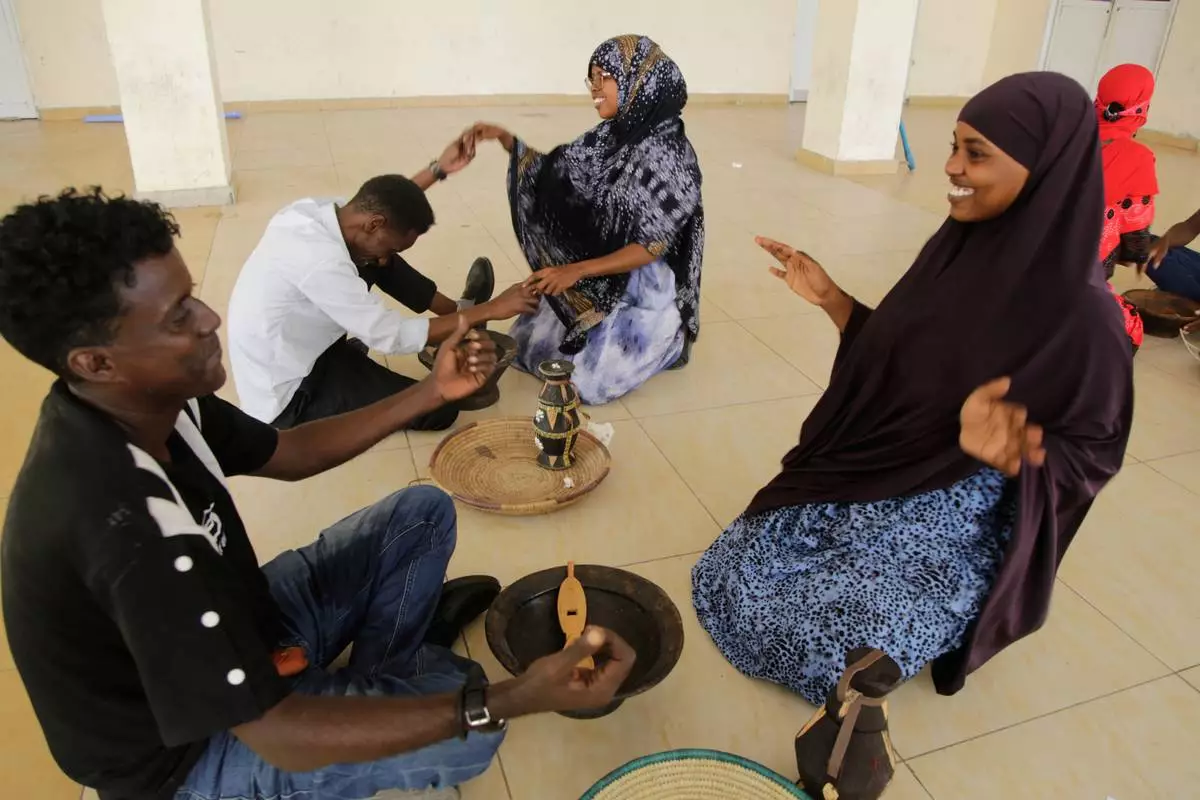
Somali poets perform during a cultural event, in Mogadishu, Somalia, Tuesday, Nov. 11, 2025. (AP Photo/Farah Abdi Warsameh)
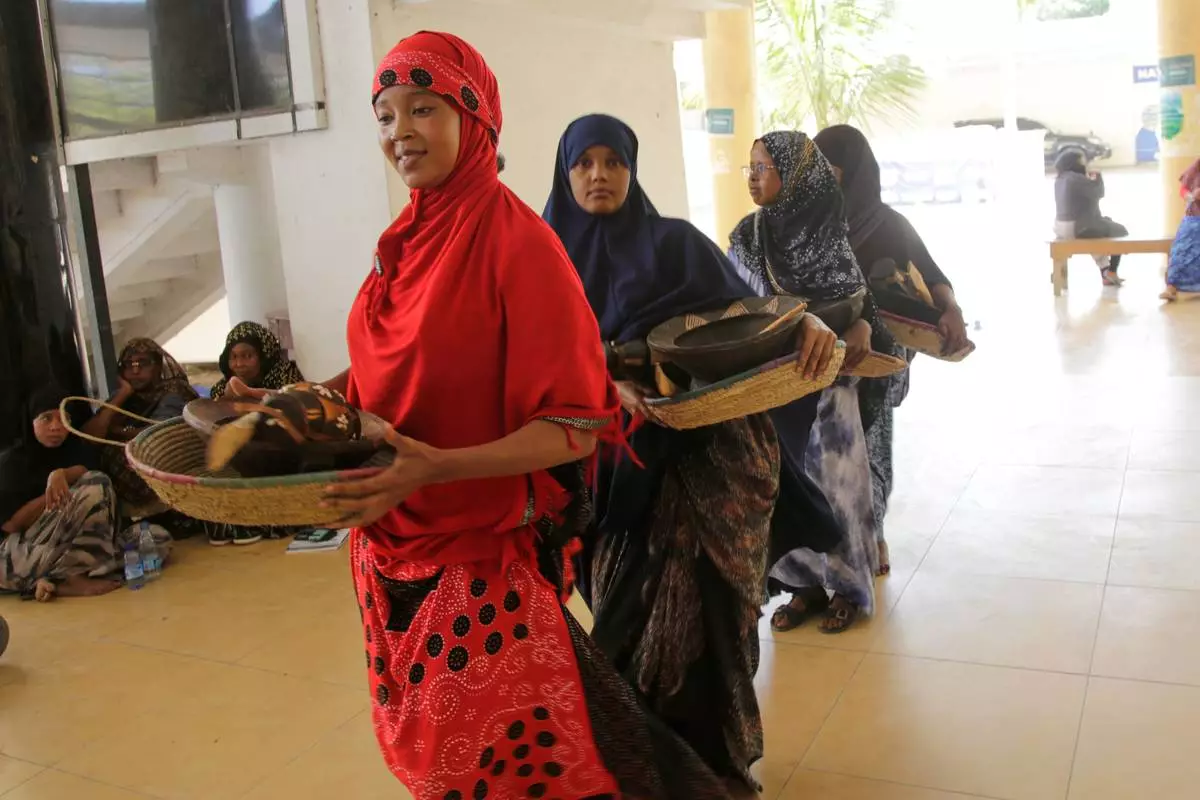
Somali poets perform during a cultural event, in Mogadishu, Somalia, Tuesday, Nov. 11, 2025. (AP Photo/Farah Abdi Warsameh)

A Somali poet performs during a cultural event in Mogadishu, Somalia, Tuesday, Nov. 11, 2025. (AP Photo/Farah Abdi Warsameh)
MINNEAPOLIS (AP) — Target is investing another $2 billion in its business this year to spruce up and remodel stores among other projects as it tries to turn around a persistent sales malaise and reclaim its authority on style.
The investment, announced Tuesday at its annual investor meeting in at its headquarters in Minneapolis, comes as the discounter reported another quarter of declining sales and profits amid its struggles to regain its footing with customers who are going elsewhere for fashion, home and other needs.
Tuesday's report offered some hope for the business. The company delivered a solid annual profit outlook that was better than Wall Street had been projecting. It also said it believes net sales will grow every quarter this year.
Target said comparable-store sales rose to start the current quarter.
“This is a new chapter, and it's all about growth,” said CEO Michael Fiddelke, a 20-year company veteran who succeeded longtime CEO Brian Cornell last month.
Fiddelke and other executives detailed plans to turn around Target as investors have been hungry for a return to Target’s former dominance in affordable chic for which it earned it the nickname “Tarzhay” in years past.
Target said that its stores will get the biggest refresh this year than they have had in roughly a decade. The company will invest hundreds of millions of dollars for additional store labor and training. And it plans to open 30 new stores and aims to remodel 130 of its existing stores.
In particular, Target is launching a new beauty area called Target Beauty Studio in 600 stores this fall, which will offer upscale beauty products and beauty services. The new area will partly replace its shops with Ulta, which is ending its partnership in August, the company said.
Fiddelke takes over with Target’s hometown of Minneapolis a front line of sorts in President Donald Trump’s campaign to curb illegal immigration. Some of the company’s stores have become a flashpoint in a pushback against U.S. Immigration and Customs Enforcement. The company has faced pressure to take a public stand against the immigration crackdown.
Even before the immigration clashes, Target had been facing protests and boycotts over the company’s decision to roll back its diversity, equity and inclusion initiatives. Critics believe it's a betrayal of Target’s philanthropic commitment to fighting racial disparities and promoting progressive values in liberal Minneapolis and beyond.
That is outside of a volatile economic and political environment that has been intensified by an aggressive trade campaign under Trump. The White House is now seeking a global tariff of 15%, after the U.S. Supreme Court struck down many of the far-reaching taxes on imports that he had imposed over the last year.
While the pace of inflation has cooled, consumer prices have soared about 25% over the past five years. U.S. companies are facing a hazy outlook with American households hurting, and the Trump administration is trying to work around the Supreme Court ruling to keep his duties in place.
And Target customers have soured on what they see as untended and messy stores with lackluster merchandise.
As the company’s nearly 2,000 store locations have become shipping hubs for online operations, customers say the in-store shopping experience has suffered with staff fulfilling digital orders rather than tending to store aisles.
Target is also facing stiffer competition from Walmart, which has stepped up its focus on fashion and other goods. As many Americans trade down because of inflation, Walmart has gained market share, particularly among households with annual income above $100,000.
Fiddelke has already reshuffled the leadership team at Target, boosted spending on in-store store staffing and made cuts at distribution facilities and regional offices, according to a memo sent to employees in February.
Target said it's focusing merchandise category by category and infusing its assortment with new differentiated items to set itself from its competitors. For example, in the home area, 75% of the company's home decorative assortment will be new.
The company is also reworking its store label brands such as its home goods brand called Threshold. It announced a merchandise collaboration with Roller Rabbit, a brand known for its 1960s-inspired silhouettes and colorful playful prints. The collection of clothing, pajamas and accessories is expected to make its debut at Target this month for a limited time.
The company said it's adding more fashion drops this year and using an artificial intelligence tool to better spot trends. In some examples, it's cutting the time frame from a design concept to store shelves to a matter of weeks from over a year, according to Cara Sylvester, Target’s chief merchandising officer.
And in food, the company is hoping to drive more trips by expanding its fresh produce while also offering innovative items. This year, it plans to increase the amount of newness across the assortment by nearly 50%, it said.
The company earned $2.30 per share, or $1.05 billion, for the three-month period ended Jan. 31. That compares with $2.41 per share, or $1.10 billion, during the year-ago period. Adjusted earnings per share for the most recent quarter was $2.44.
Sales fell 1.5% to $30.45 billion during the latest period. For the full year, sales fell nearly 2% to $104.78 billion.
Analysts were expecting $2.16 per share on sales of $30.46 billion, according to a survey by FactSet.
Comparable sales — sales at established stores and online channels — fell 2.5%, followed by a 2.7% dip in the fiscal third quarter. The latest figure marks 11 quarters out of the past 13 that Target has posted either declines or flattish growth for this measure.
Tuesday’s report offered some hopeful signs for the business. Target said that sales and customer traffic accelerated in the final two months of the quarter. And it saw sales growth in food and beverage, beauty and toys for the latest quarter.
Target said that it expects net sales for the year to increase by 2%, which would mean it expects sales to reach $106.88 billion. That’s a bit above analysts’ expectations of $106.7 billion. Target also anticipates earnings per share to be in the range of $7.50 to $8.50. Analysts are expecting $7.30 per share for the year, according to analysts polled by FactSet.
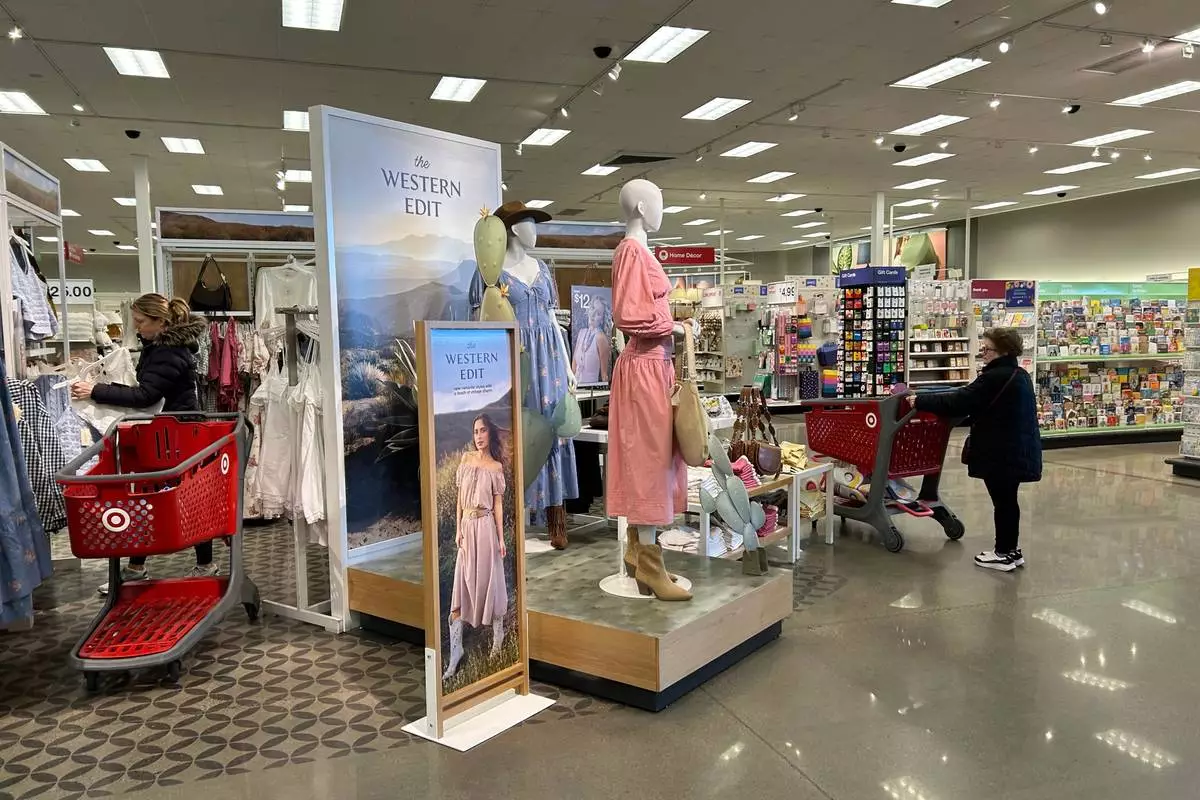
Products sit on display at a Target store, Monday, March 2, 2026, in Edina, Minn. (AP Photo/Anne D'Innocenzio)
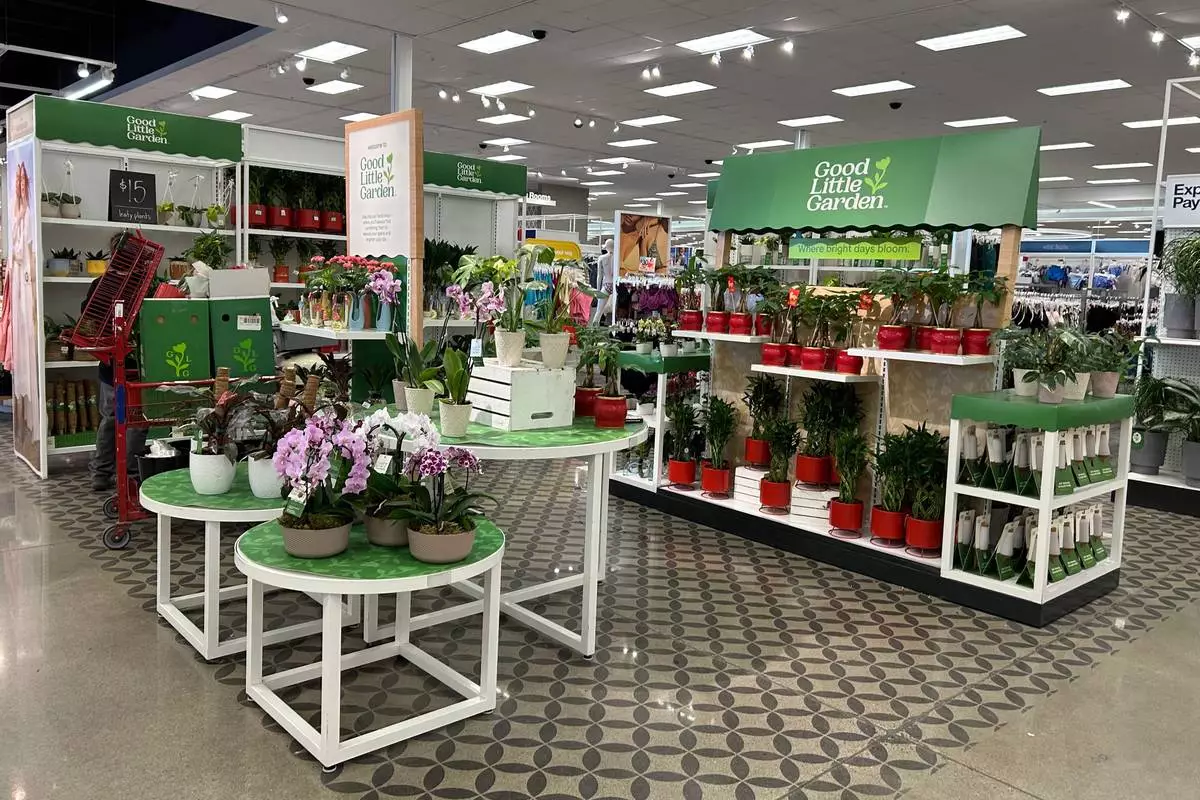
Products sit on display at a Target store, Monday, March 2, 2026, in Edina, Minn. (AP Photo/Anne D'Innocenzio)
FILE - The Target logo displayed on a sign outside a store, Nov. 18, 2025, in Salem, N.H. (AP Photo/Charles Krupa, File)
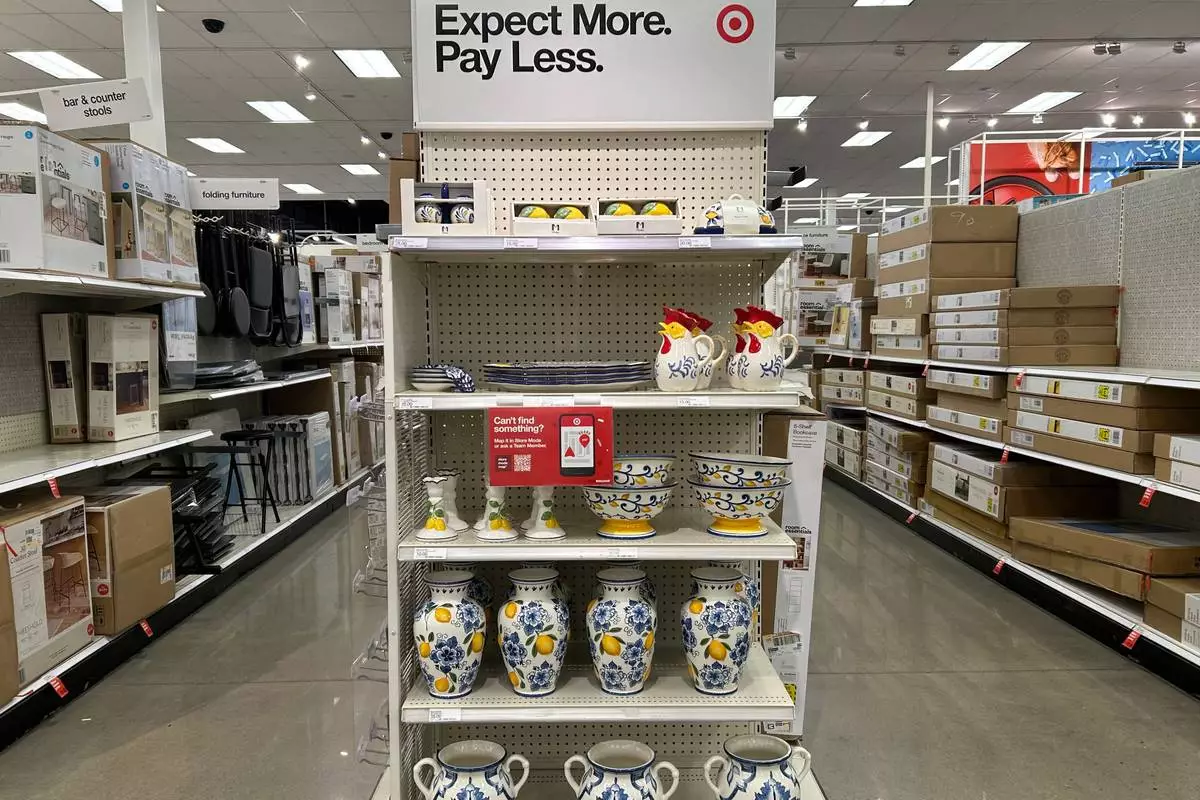
Products sit on display at a Target store, Monday, March 2, 2026, in Edina, Minn. (AP Photo/Anne D'Innocenzio)