LONDON (AP) — Damage to three Amazon Web Services facilities in the Middle East from Iranian drone strikes highlights the rapid growth of data centers in the region, as well as the industry's vulnerability to conflict.
The company's cloud computing division, Amazon Web Services, said late Monday that two data centers in the United Arab Emirates were “directly struck” and another facility in Bahrain was also damaged after a drone landed nearby.
“These strikes have caused structural damage, disrupted power delivery to our infrastructure, and in some cases required fire suppression activities that resulted in additional water damage,” AWS said in an update on its online dashboard.
It said by late Tuesday that recovery efforts at the UAE data centers were making progress.
Unlike previous AWS disruptions involving software that resulted in widespread global outages, these attacks involving physical damage appear to have resulted only in localized and limited disruption.
Amazon Web Services hosts many of the world’s most-used online services, providing behind-the-scenes cloud computing infrastructure to many government departments, universities and businesses.
The company advised customers using servers in the Middle East to migrate to other regions, and direct online traffic away from the UAE and Bahrain.
“Amazon has generally configured its services so that the loss of a single data center would be relatively unimportant to its operations,” said Mike Chapple, an IT professor at the University of Notre Dame’s Mendoza College of Business.
Other data centers in the same zone can take over, and most of the time this happens seamlessly every day to balance workloads, he said.
“That said, the loss of multiple data centers within an availability zone could cause serious issues, as things could reach a point where there simply isn’t enough remaining capacity to handle all the work.”
Amazon doesn’t typically disclose the exact number of data centers it operates around the world.
It says only that its data centers are clustered in 39 geographic regions, with three such regions in the Middle East, covering the United Arab Emirates, Bahrain and Israel.
Each AWS region is split up into at least three data center availability zones, with each zone isolated and physically separated “by a meaningful distance,” although they are all within 100 kilometers (60 miles) of each other and connected by "ultra-low-latency networks” that reduce the time lag for data transmission.
AWS says its data centers have redundant water, power, telecom, and internet connections “so we can maintain continuous operations in an emergency.”
They also have physical security, but those measures, including security guards, fences, video surveillance and alarm systems, are designed to keep out intruders rather than defend against missile attacks.
Chapple said the attacks are a reminder that cloud computing isn’t “magical” and “still requires physical facilities on the ground, which are vulnerable to all sorts of disaster scenarios.”
Data centers run by AWS and other operators are massive facilities that are hard to hide, he added.
“Organizations using services from any cloud provider in the Middle East should immediately take steps to shift their computing to other regions,” Chapple said.
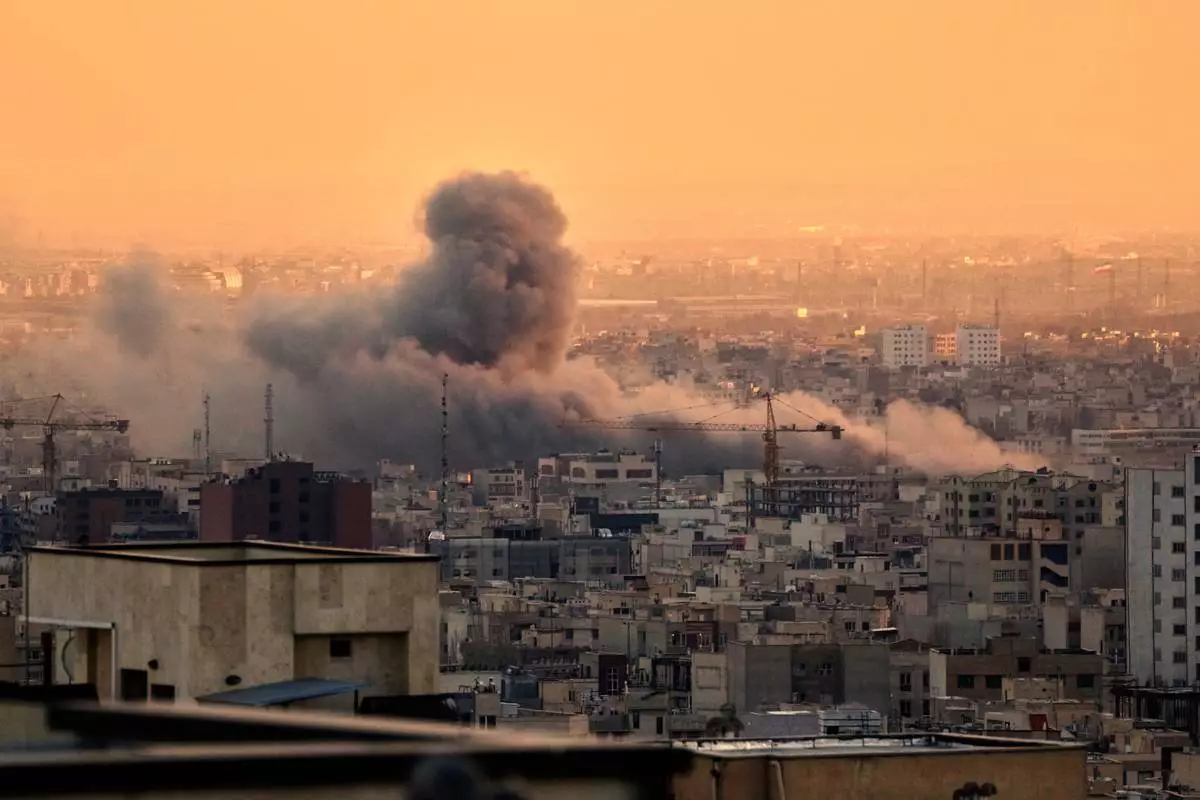
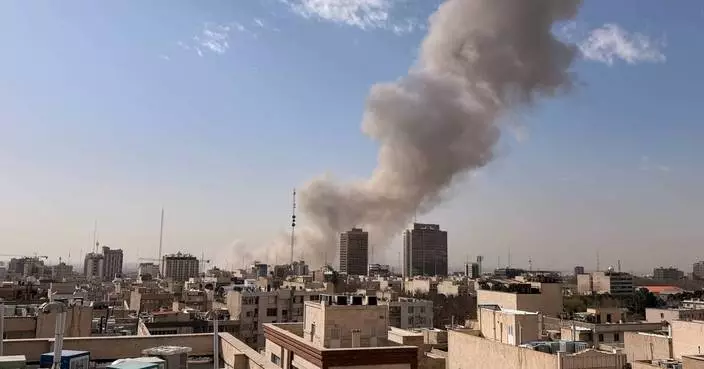
A plume of smoke rises following a U.S.-Israeli military strike in Tehran, Iran, Tuesday, March 3, 2026. (AP Photo/Vahid Salemi)
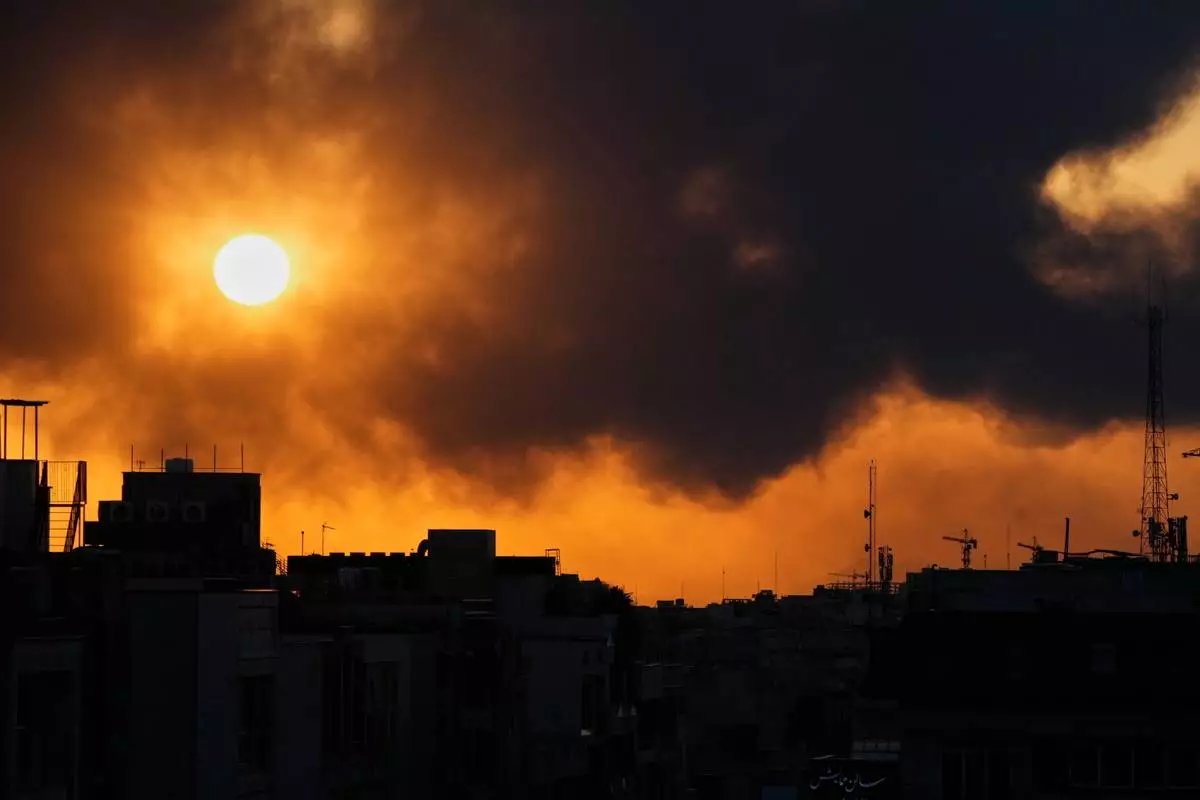
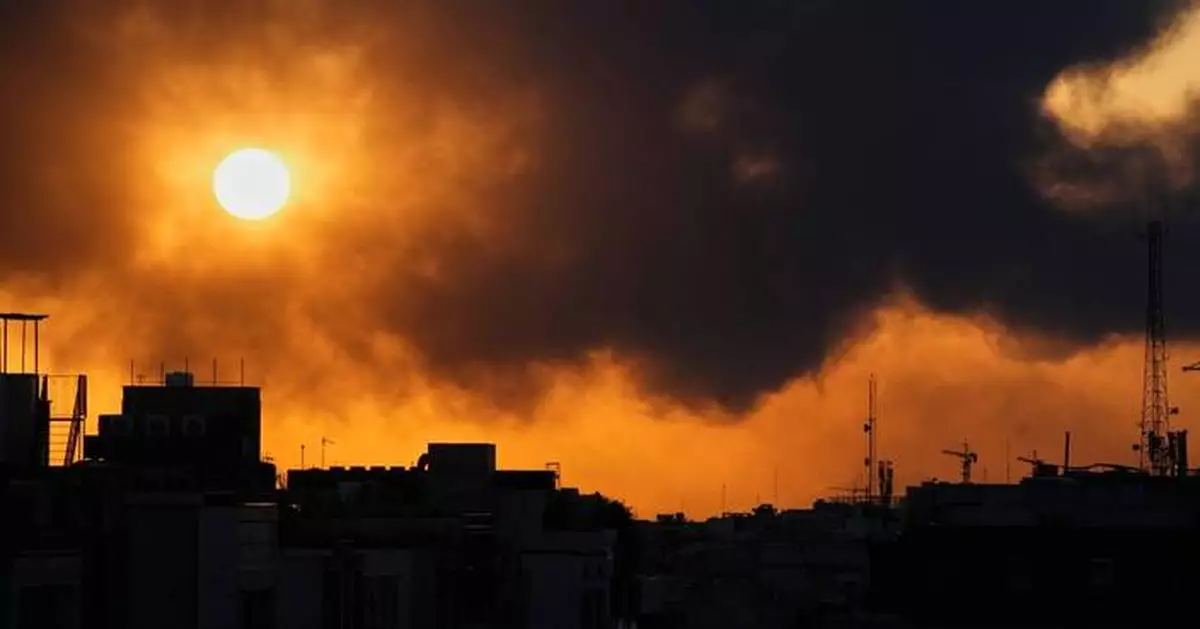
The sun sets behind a plume of smoke rising after a U.S.–Israeli military strike in Tehran, Iran, Tuesday, March 3, 2026. (AP Photo/Vahid Salemi)
Iran struck the U.S. Embassy in Saudi Arabia’s capital with a drone early Tuesday, as it continued to target areas around the region.
Across Iran’s capital, Tehran, explosions rang out overnight as the U.S. and Israel pounded Iran with airstrikes since killing its Supreme Leader Ayatollah Ali Khamenei on Saturday. Iran and its allies have hit back against Israel, neighboring Gulf states and targets critical to the world’s oil and natural gas production.
Airstrikes by the United States and Israel have killed at least 787 people in Iran since the start of the war, the Iranian Red Crescent Society said Tuesday.
The conflict has also spread to Lebanon, where the Iranian-supported militant group Hezbollah fired missiles at Israel on Monday, prompting Israel to retaliate. On Tuesday, the Israeli military hit Beirut with more airstrikes and said it had moved additional troops into southern Lebanon and taken new positions on several strategic points close to the border.
Here is the latest:
Israeli firefighters hosed down charred vehicles after Iranian missiles struck and, in some places, ignited fires on city streets Tuesday.
Missile and drone strikes — as well as the debris from projectiles intercepted by Israel’s Iron Dome — have crashed down in central Israel. They’ve hit residential buildings and street-level property, sending shockwaves booming, damaging shopfronts and reducing some structures to rubble.
Iranian missiles set off air raid sirens and sent Israelis into shelters across the country, although the pace of attacks appeared to be slowing on Tuesday. Israel says it has intercepted most of the incoming strikes, but some missiles have landed, killing 11 people.
No deaths or injuries have been reported so far Tuesday.
As governments race to evacuate citizens from the Middle East, Israel is preparing to fly home its citizens who are stranded abroad.
Transportation Minister Miri Regev said Ben-Gurion Airport will reopen for limited incoming flights around the clock starting early Thursday.
Israel’s airspace has been closed since Saturday, when the joint U.S.-Israeli war on Iran began, although some land crossings remain open. Regev said thousands have returned that way.
Under the plan, one passenger flight per hour will be allowed in the first 24 hours, totaling about 5,000 people, with more later depending on security.
It is unclear whether only Israelis will be permitted on the flights, and no commercial departures leaving Israel have been approved.
Neel Kashkari, president of the Federal Reserve Bank of Minneapolis, said Tuesday that before the Iran war he had supported at least one interest rate cut this year as inflation slowly cooled. But now with the conflict pushing up oil and gas prices, he isn’t so sure.
“With the geopolitical events that we talked about, I just need to see,” he said at the Bloomberg Invest conference in New York City, referring to the U.S. and Israeli attacks on Iran. “We need to get a lot more data in.” Kashkari is one of 12 voting members of the Fed’s rate-setting committee.
Kashkari’s comment is a sign of how the war threatens to push up inflation and therefore interest rates. The Fed raises its short-term rate — or keeps it unchanged — to cool the economy and combat inflation. A cut in the Fed’s rate, over time, can lower mortgages, auto loan rates, and other consumer borrowing costs.
Financial markets have forecast two rate cuts this year, according to futures prices, and Trump has loudly demanded many more reductions. But the odds of those two cuts occurring this year have fallen since the Iran war began.
The State Department said Tuesday it is “actively securing” military and charter aircraft to fly Americans stranded in the Middle East to safety following the onset of U.S.-Israel military operations against Iran that has disrupted commercial air travel.
“The State Department is actively securing military aircraft and charter flights for American citizens who wish to leave the Middle East,” said Dylan Johnson, the assistant secretary of state for public affairs.
In a post on X, Johnson said the department has been in contact with nearly 3,000 Americans seeking to leave to region or seeking information about how to leave.
In Israel specifically, a second official said nearly 500 Americans had been in touch with the department about leaving and that it had assisted more than 130 in departing so far. Another 100 Americans are expected to leave Israel on Tuesday, the official said.
In a control room surrounded by large screens with maps of the country, medical emergency responders debriefed Tuesday on the latest strike.
The Magen David Adom headquarters in central Israel is the command center for dispatching medical teams to sites after they’ve been struck.
Their systems provide early warning when missiles are launched and they can sometimes identify locations where missiles have struck before calls come in.
Nadav Matzner, deputy spokesperson for Magen David Adom, says missiles coming from Iran to Israel take about 10-12 minutes whereas missiles from Lebanon to the center of Israel take a minute and a half.
He said so far during this war, missiles from Hezbollah in Lebanon have only struck the north.
A correspondent and cameraman with CNN’s Turkish-language affiliate were reporting Tuesday outside Israel’s military headquarters in Tel Aviv when police detained them on live television. Israeli police said they were held “on suspicion of documenting a security facility” and later released.
Israeli officials vowed to crack down on reporters who allegedly “expose sensitive locations” while Iran strikes the country.
Israel’s military censor requires media to submit certain security-related information for review and in 2025 expanded its authority to mandate prior approval before publishing the locations of missile strikes.
In a statement after the arrests, National Security Minister Itamar Ben-Gvir and Communications Minister Shlomo Karhi pledged to “intensify the fight against foreign media broadcasting in violation of censorship directives.”
“We will not allow broadcasts that assist the enemy,” Ben-Gvir said, warning that journalists would face a “determined and forceful police response.”
Press freedom groups, including the Committee to Protect Journalists, criticized Israel’s military censor during last year’s 12-day war with Iran, accusing it of suppressing an unfiltered view of the war.
Burhanettin Duran, the head of Turkey’s Communications Directorate, called Tuesday’s detentions “an attempt to conceal the truth.”
The president revived his complaints about the U.K.’s deal to hand sovereignty of the Chagos Islands to Mauritius, despite his administration previously supporting the move. The remote Indian Ocean archipelago is home to a strategically important American naval and bomber base.
“The U.K. has been very, very uncooperative with that stupid island that they have,” he said.
He also criticized the British for their windmills and immigration policies and said they need to open up drilling in the North Sea.
The president acknowledged that oil and gas prices were going to rise as the U.S. remains engaged in the ongoing Middle East conflict — yet argued that prices would drop once the war ends.
“We have a little high oil prices for a little while, but as soon as this ends, those prices are going to drop, I believe, lower than even before,” Trump told reporters in the Oval Office.
The average price for a gallon of gasoline jumped 11 cents overnight Tuesday to about $3.11 in the United States, according to the American Automobile Association.
Ahead of a briefing by Trump administration officials to Congress, senior House Democrats are questioning what the costs of the Iran strikes will be and what impact they will have on the U.S. stockpile of munitions.
“The American people are entitled to clear answers including why this conflict began, what objectives justify continued military engagement, and what guardrails are in place to prevent a broader or protracted regional war,” said the five Democrats, who hold top positions on committees overseeing national security, in a letter to the Trump administration.
Lawmakers will receive a briefing later Tuesday as Trump tries to win over support for his campaign.
Trump said he wants to “cut off all trade with Spain” over NATO spending, adding “we don’t want anything to do with Spain.” Trump cited his ability to impose an embargo on Spain, based on the recent Supreme Court decision over the president’s ability to impose tariffs.
Treasury Secretary Scott Bessent agreed with the president’s claim that he could end trade with Spain.
Bessent told the president, “I agree that the Supreme Court reaffirmed your ability to implement an embargo.”
He said his predecessor, former President Joe Biden, “gave away a lot,” but said “we have plenty.”
He added that the U.S. had an “unlimited” supply of “middle and upper ammunition, which is really what we’re using in this war.”
The German chancellor says that “we are hoping that the Israeli and the American army are doing the right things to bring this to an end and to have really a new government in place.”
“If anything, I might have forced Israel’s hand,” Trump told reporters at the start of the Oval Office meeting with Merz.
The Trump administration’s shifting rationale for launching joint strikes with Israel against Iran is spurring criticism, including some from Trump’s MAGA base, that the White House was dragged into the conflict by Israel.
Some prominent allies of Trump stepped up their criticism that the U.S. was following Israel’s lead after Secretary of State Marco Rubio said on Monday that the U.S. decided to strike because, “we knew that there was going to be an Israeli action.”
“And we knew that if we didn’t preemptively go after them before they launched those attacks, we would suffer higher casualties,” Rubio added.
“We are, on the same page in terms of getting this terrible regime in Tehran away,” Merz said
during a visit at the White House on Tuesday.
The German chancellor said he also wants to talk with Trump about “our trade agreement, which I would like to be in place as soon as possible,” and the Ukraine war.
“There are too many bad guys in this world, actually,” Merz added.
Russia and China have blocked approval of the Trump administration’s program of work as it took over the rotating presidency of the U.N. Security Council for March because it included a meeting on Iran, three diplomats familiar with the negotiations said Tuesday.
Traditionally, ambassadors from the 15 council nations meet on the first day of the presidency to approve work planned for the month and the president then holds a press conference to present it. That hasn’t happened.
The diplomats spoke on condition of anonymity to discuss private council negotiations.
The dispute was over a U.S.-proposed meeting on sanctions on Iran, which Russia and China claim were illegally reimposed last year, one diplomat said.
As the U.S. and Israel struck Iran, U.S. first lady Melania Trump presided over an approved Security Council meeting Monday on children in conflict.
The president made the comment at the White House while meeting with German Chancellor Friedrich Merz.
“They have no navy. It’s been knocked out. They have no air force. It’s been knocked out,” Trump said.
He added about Iran: “They have no air detection, that’s been knocked out. Their radar has been knocked out. And, just about everything has been knocked out.”
The U.S. president told reporters that ‘someone from within’ Iranian regime might be best choice to take power once the U.S.-Israel military campaign is completed.
In an exchange in the Oval Office Tuesday, Trump said Reza Pahlavi, the exiled crown prince of Iran’s last shah, is not someone that his administration has considered in depth to take over leadership in Iran.
“He looks like a very nice person, but it would seem to me that somebody that’s there that’s currently popular, if there’s such a person ... we have people like that,” Trump said.
Trump noted that “some people like” Pahlavi but that he was not someone the administration had thought about too much as Iran’s next ruler.
Trump said the U.S. would continue its campaign in Iran during his Oval Office meeting with Merz. “The big scale hitting goes now.”
“They’re going to be in for a lot of hurt,” Trump said, “first we have to finish off the military.”
The president told reporters at the White House that in addition to that group of people that he says the U.S. had been eying for leadership, “We have another group. They may be dead also.”
Trump said there is a “third wave” coming in but “we don’t know those people.”
The president said: “I guess the worst case would be do this, and then somebody takes over who’s as bad as the previous person, right? That could happen. We don’t want that to happen.”
From Romanian religious pilgrims to tourists and diplomats’ families, tens of thousands remain stranded across the Middle East as the war spreads and continues to disrupt air travel.
Gulf airspace is largely closed, cruise ships can’t pass through the Strait of Hormuz and major airlines have canceled flights.
The U.S. State Department says it has evacuated nonemergency personnel and families in six nations, adding the United Arab Emirates to its list on Tuesday, while governments from Russia to Germany and France also scrambled to run repatriation flights.
Some evacuees described fear and relief.
“We called our children at 3 a.m. to ask forgiveness because we might die,” Romanian pilgrim Mariana Muicaru said.
In Germany, after landing Tuesday in Frankfurt following a flight from Dubai, Wassim Mahlas said he was happy to be home: “I’m breathing German air again.”
The embassy says it is closed to the public “due to ongoing regional tensions.”
The U.S. State Department has advised Americans to leave Lebanon and avoid travel to the tiny Mediterranean nation on Israel’s northern border.
The Iran-backed Hezbollah militant group fired rockets into Israel late Saturday in solidarity with Iran, sparking ongoing retaliatory strikes across the Lebanon.
Elsewhere in the Mideast, U.S. bases and diplomatic missions have been targeted in attacks by Iran and its proxies in Iraq.
U.S. embassies and consulates in conflict zones often close to the public for consular services like visa and passport applications and renewals, but they remain operational even after non-essential staffers are ordered to leave for security reasons or remaining personnel work remotely.
Since the onset of the war with Iran, only the U.S. consulate in Karachi, Pakistan, has completely suspended operations.
Prime Minister Keir Starmer said Tuesday that Britain is sending a warship and helicopters to Cyprus after a drone hit a U.K. base on the eastern Mediterranean island.
Starmer said he told the president of Cyprus that the U.K. is deploying helicopters with counter-drone capabilities and the air-defense destroyer HMS Dragon to the region.
It comes after an Iran-made drone hit RAF Akrotiri base over the weekend, causing minor damage and no injuries.
Trump has lambasted the British prime minister over his reluctance to join the U.S.-Israeli war on Iran.
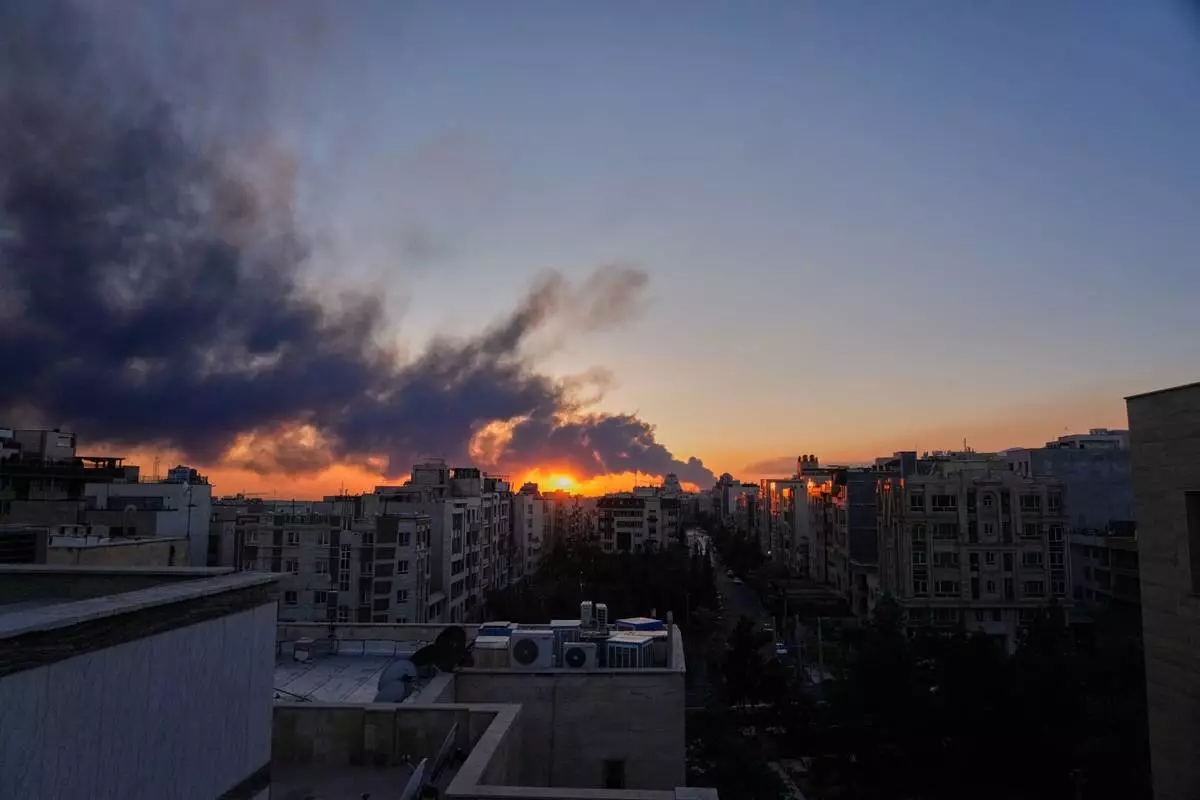
The sun sets behind a plume of smoke rising after a U.S.–Israeli military strike in Tehran, Iran, Tuesday, March 3, 2026. (AP Photo/Vahid Salemi)
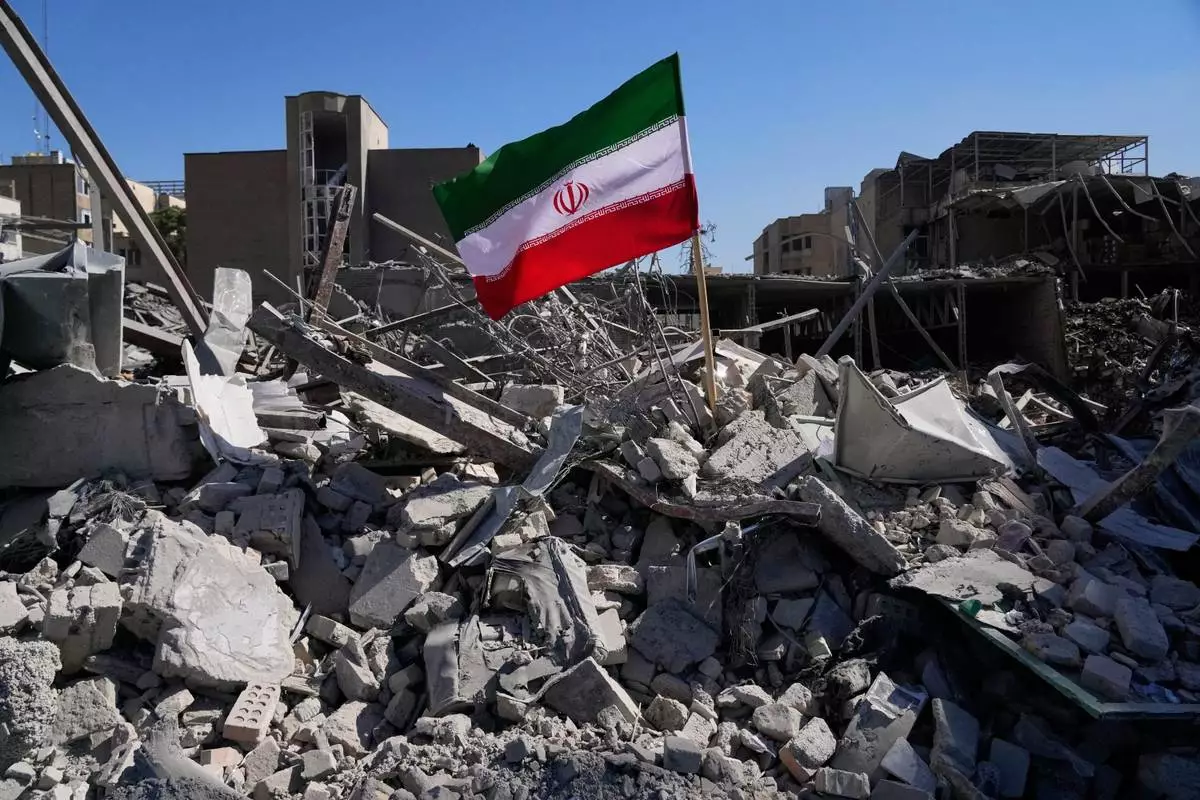
An Iranian flag is placed among the ruins of a police station struck Monday during the U.S.–Israeli military campaign in Tehran, Iran, Tuesday, March 3, 2026. (AP Photo/Vahid Salemi)
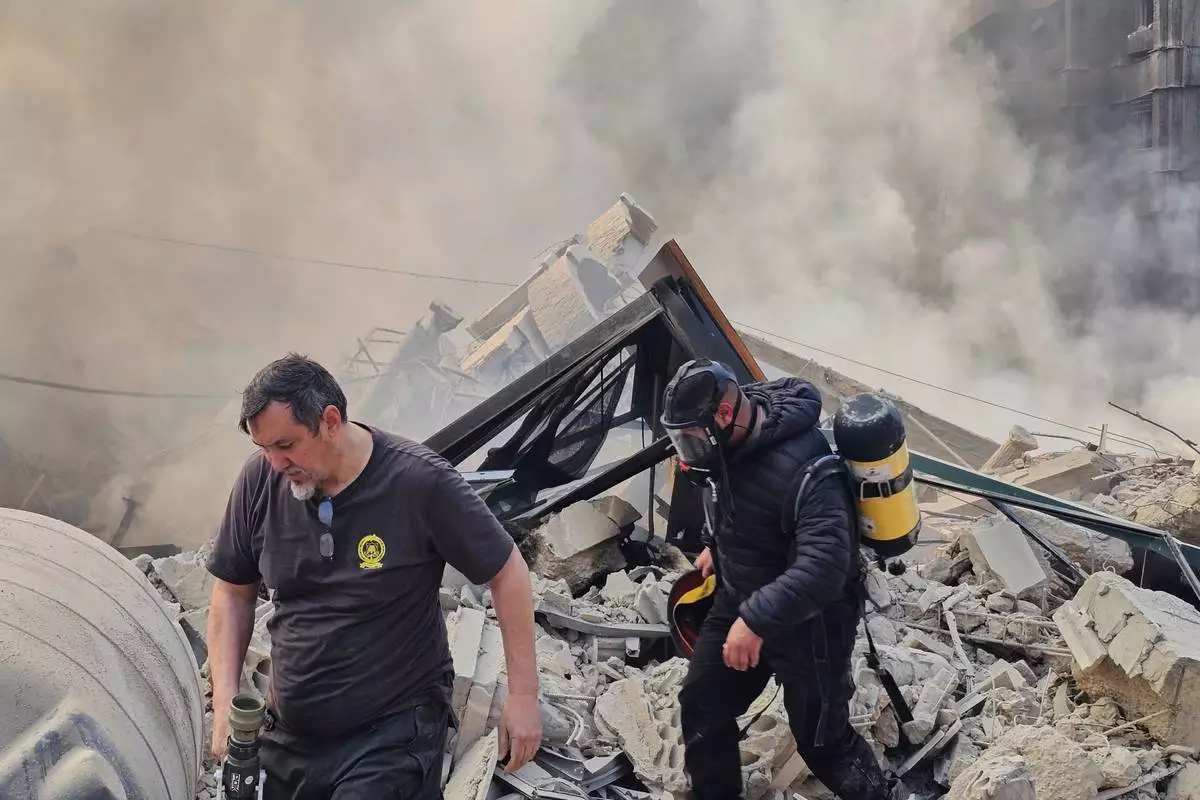
Firefighters inspect the rubble as smoke rises from a building hit by an Israeli airstrike in Dahiyeh, a southern suburb of Beirut, Lebanon, Tuesday, March 3, 2026. (AP Photo/Hassan Ammar)
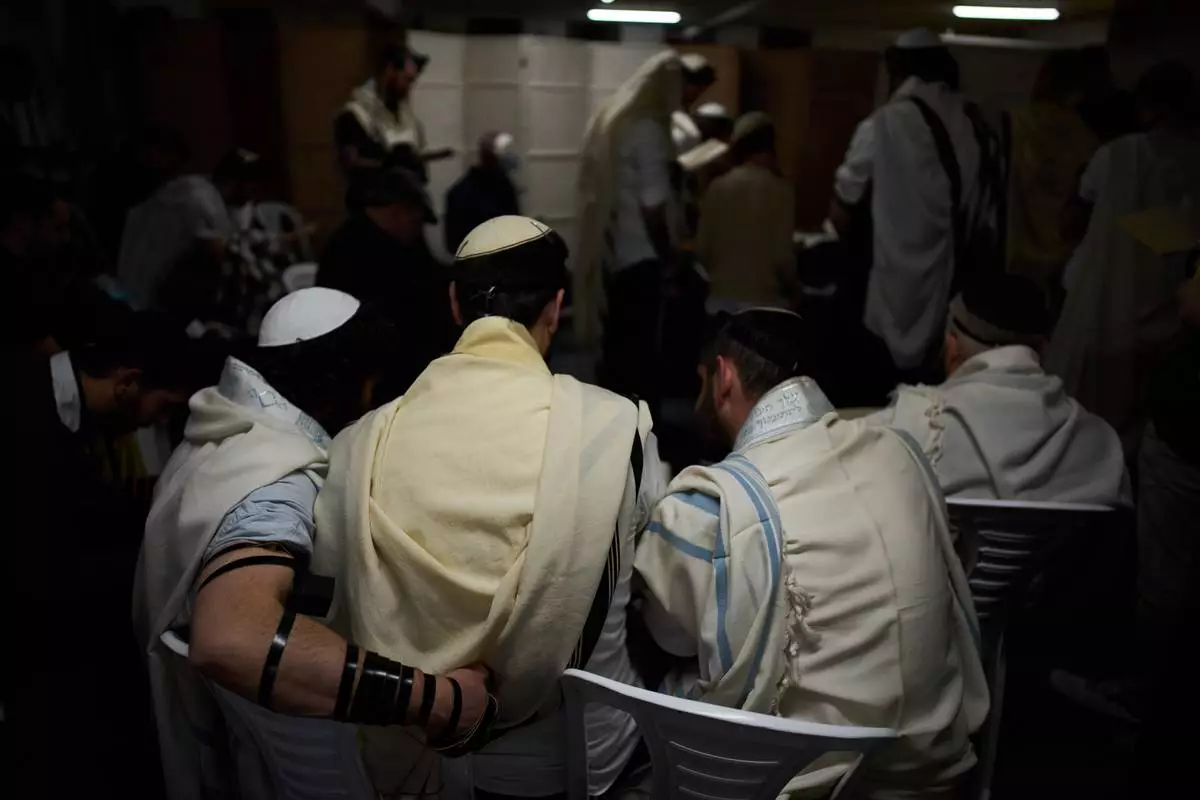
Jewish men covered in prayer shawls pray in an underground parking garage as a precaution against possible Iranian missile attacks, in Tel Aviv, Israel, Tuesday, March 3, 2026. (AP Photo/Oded Balilty)
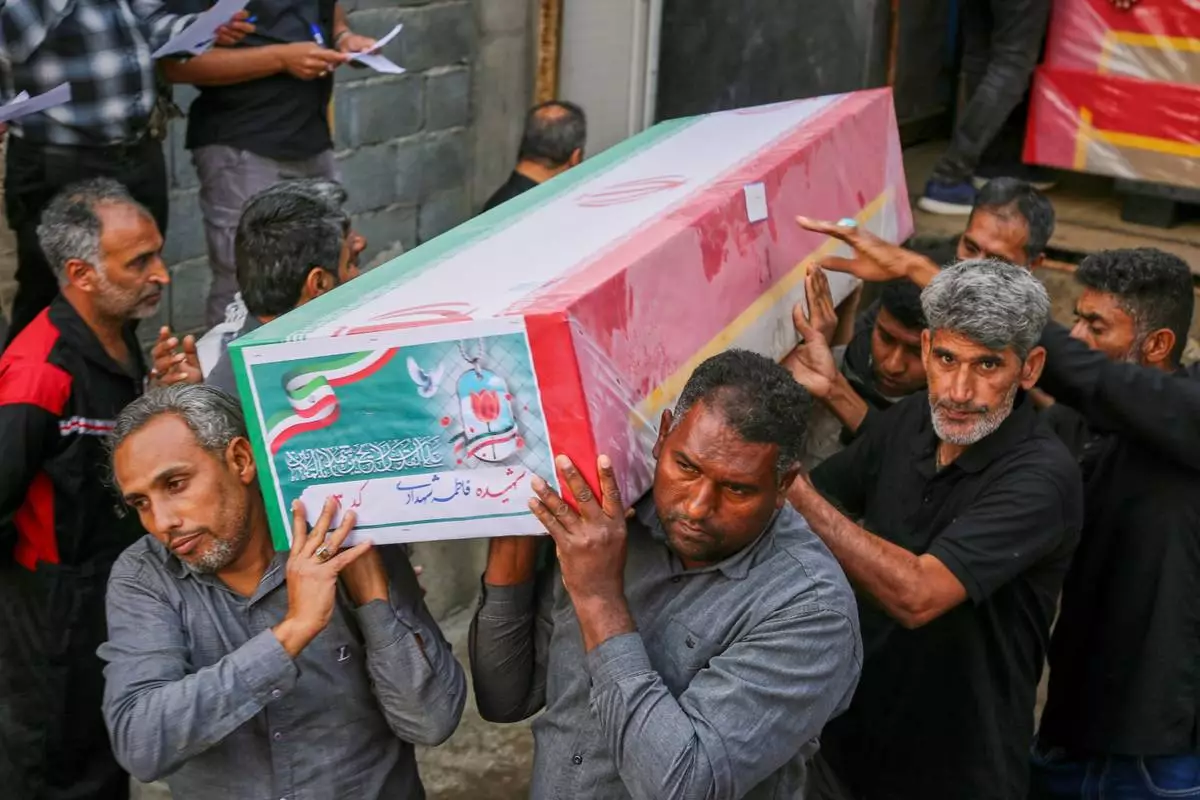
A coffin is carried during the funeral of mostly children killed in what Iranian officials said was an Israeli-U.S. strike Feb. 28 at a girls' elementary school in Minab, Iran, Tuesday, March 3, 2026. (Abbas Zakeri/Mehr News Agency via AP)
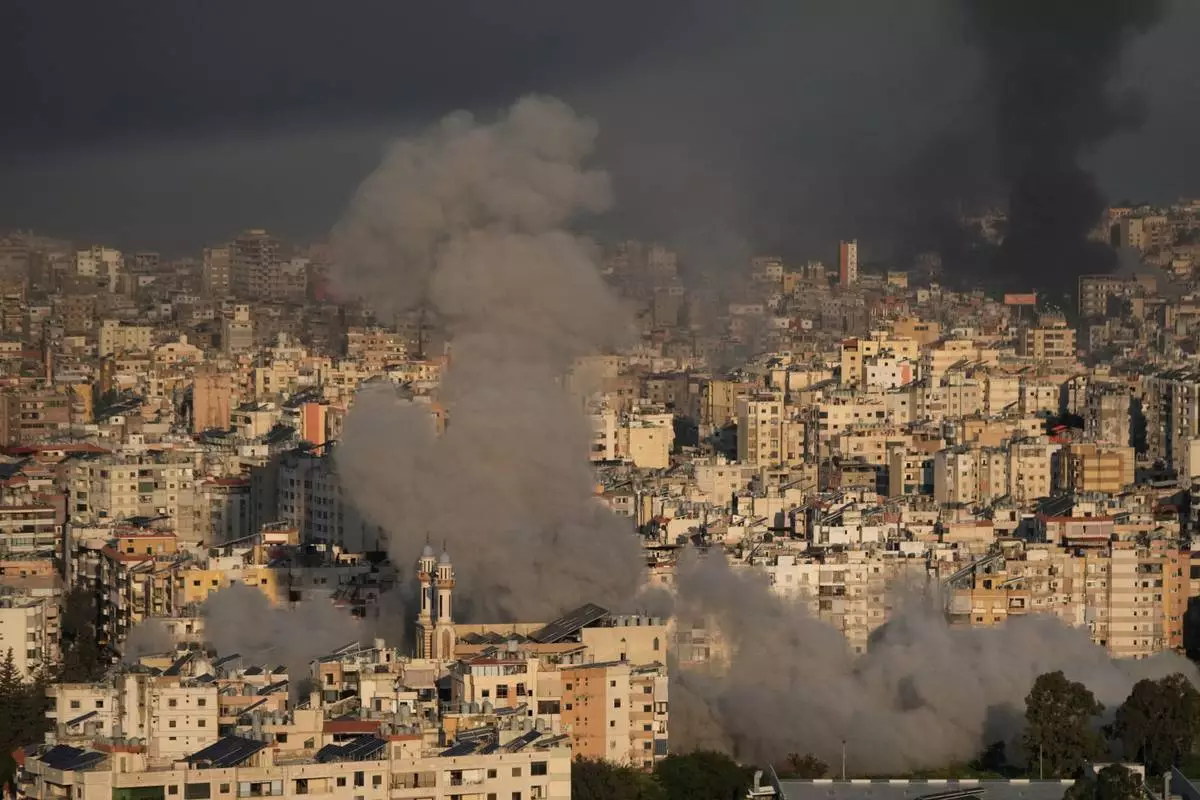
Smoke rises from Israeli airstrikes in Dahiyeh, a southern suburb of Beirut, Lebanon, Tuesday, March 3, 2026. (AP Photo/Hussein Malla)
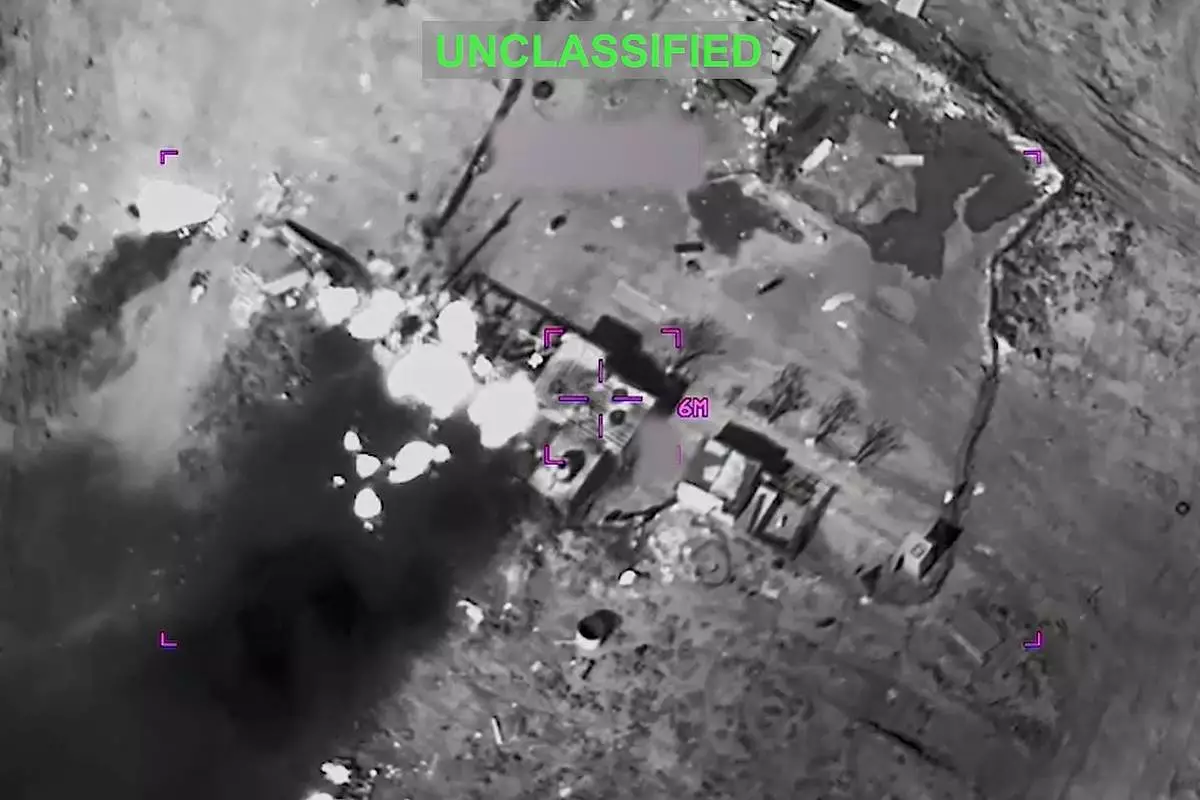
This partially redacted image from video provided by U.S. Central Command shows a complex of structures in Iran being struck by missiles fired by U.S. forces on Sunday, March 1, 2026. (U.S. Central Command via AP)

President Donald Trump walks past Defense Secretary Pete Hegseth as he exist the East Room of the White House following the Medal of Honor ceremony, Monday, March 2, 2026, in Washington. (AP Photo/Mark Schiefelbein)
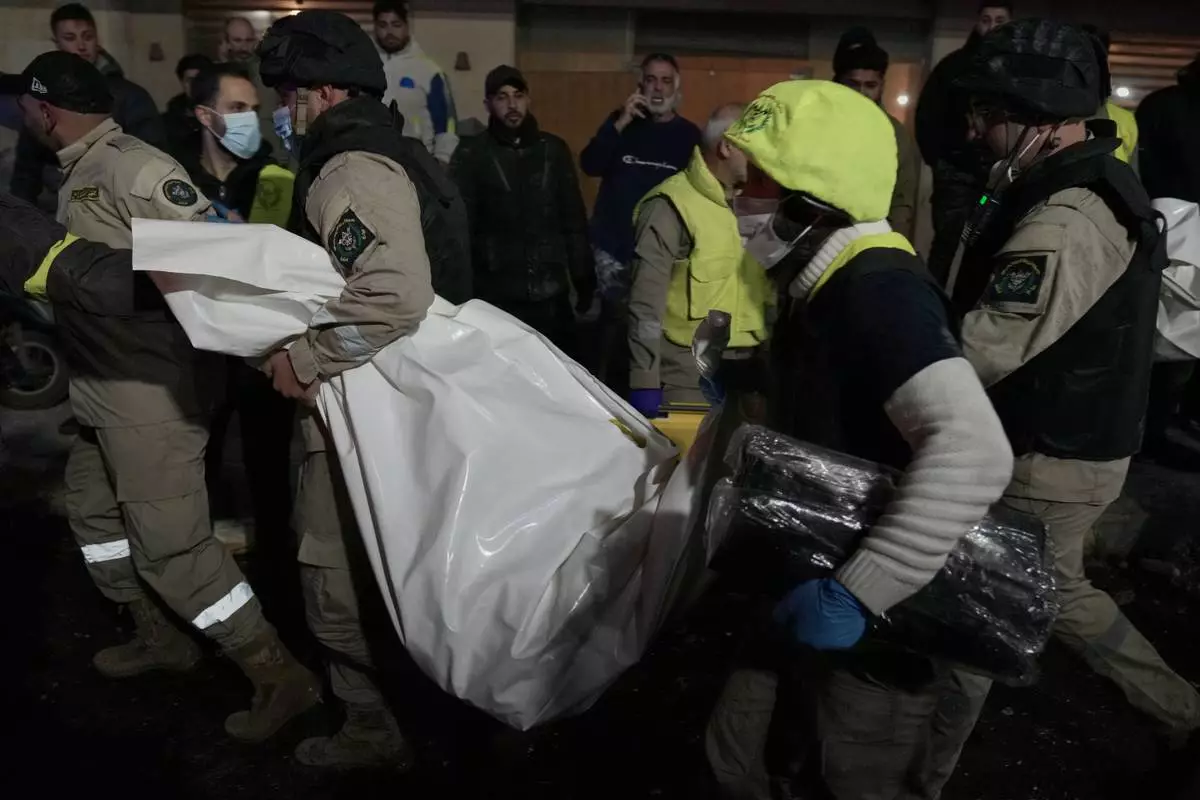
Rescue workers carry a dead body in a plastic bag from a building that was hit by Israeli strike, in Jnah neighborhood, south of Beirut, Lebanon, Monday, March 2, 2026. (AP Photo/Hussein Malla)
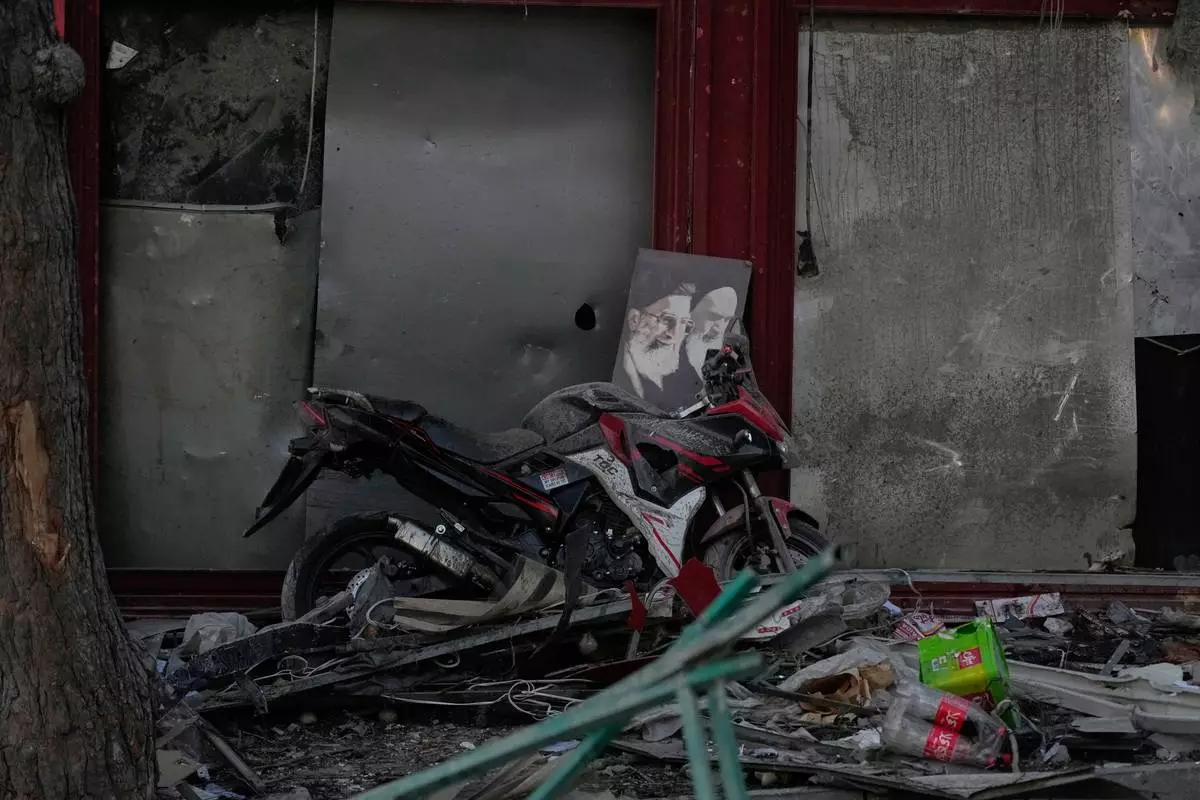
A poster of the late Supreme Leader Ayatollah Ali Khamenei, who was killed during the ongoing joint U.S.-Israeli military campaign, and the late Iranian Revolutionary founder Ayatollah Khomeini, right, lays on a motorcycle amid debris left by a strike in Tehran, Iran, Monday, March 2, 2026. (AP Photo/Vahid Salemi)
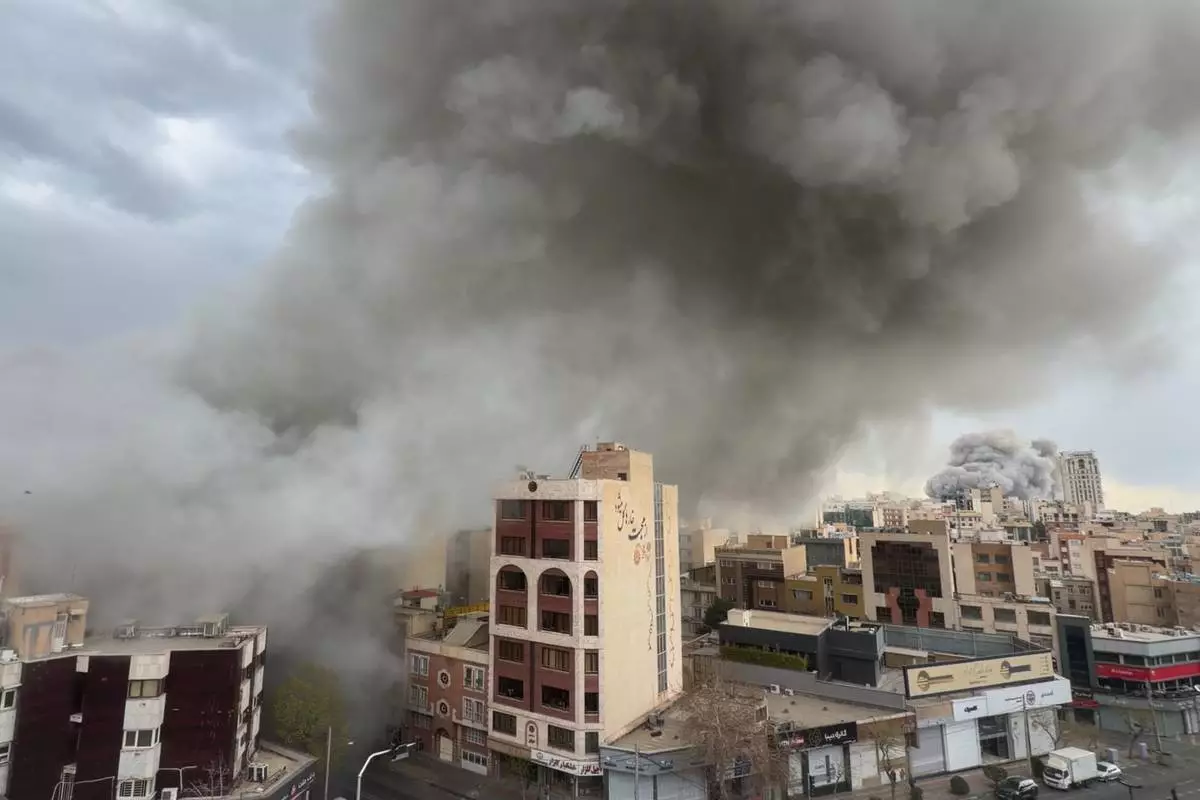
Plumes of smoke from two simultaneous strikes rise over Tehran, Iran, Monday, March 2, 2026. (AP Photo/Mohsen Ganji)