ORLANDO, Fla. (AP) — Changes that Disney made to a popular program that lets qualifying disabled people skip long lines at its California and Florida theme parks are too restrictive, disabled fans contend in a federal lawsuit and shareholder proposal that seek to expand eligibility.
The battle over who can skip long lines on popular rides because of their disabilities marks the latest struggle by Disney to accommodate disabled visitors while cracking down on past abuses. But some Disney fans say the company has gone too far and has no right to determine who is disabled.
“This isn't right. This isn't what Walt and Roy would have wanted,” said Shannon Bonadurer, referring to the Disney brothers who founded the entertainment empire. Despite being unable to wait for long periods of time in the heat because she uses an ileostomy bag, Bonadurer was denied a pass for the disability program.
In a statement, Disney said it was committed to providing a great experience to all visitors, particularly those with disabilities who may require special accommodations.
Here’s a look at changes to Disney parks’ policies for disabled visitors.
The Disability Access Service, or DAS, program allows pass-holders and their immediate family members to make an online reservation for a ride while in the park and then get into an expedited line that typically takes about 10 minutes when they're ready to go on the ride. DAS guests never have to wait in normal standby lines, which on the most popular attractions can be two hours or more.
The DAS program started in 2013 in response to past abuses by disabled “tour guides” who charged money, sometimes hundreds of dollars, to accompany able-bodied guests, enabling such guests to go to the front of lines. Disney says the DAS program needed changing because it had grown fourfold. Before last year’s changes, the percentage of guests having DAS passes jumped from around 5% to 20% over the past dozen years “and showed no signs of slowing,” the company said in court papers.
Disney parks make other accommodations for disabled visitors, including maps in Braille, a device that helps transfer visitors from wheelchairs to ride seats, quiet break locations and American Sign Language interpreters for some live shows. The parks permit some service animals on rides and allow some disabled guests to leave a line and rejoin their party before boarding a ride.
Disney narrowed the scope from people with a wider range of disabilities to mostly guests who “due to a developmental disability such as autism or similar” have difficulties waiting in a long line. Under the changes, guests seeking a DAS pass must be interviewed via video chat by a Disney worker and a contracted medical professional who determine if the person is eligible. Visitors found to have lied can be barred from the parks.
Some people with disabilities who have been denied say the new policy is too restrictive. Not only was Bonadurer denied a pass, but so was her 25-year-old son, who is blind and has cerebral palsy and autism.
“They are making a determination about whether you're disabled enough,” said Bonadurer, a professional travel adviser from Michigan. “I would love to wait in line with everyone else, and so would my son, since that would mean he has a normal life. But we don't, and unfortunately for us, we need adaptations to how we wait.”
Disney says the Americans with Disabilities Act doesn’t require equal treatment of people with varying disabilities. The company accommodates those visitors who don’t meet the new DAS criteria with alternatives, Disney said in court filings responding to a federal lawsuit in California.
“For example, in a crowded movie theater, a person using a wheelchair may be entitled to priority seating even if they arrive shortly before the movie starts, while a deaf person may only be entitled to a seat with closed captioning,” the company said.
At Disney's main theme park rival, Universal, disabled visitors can get shorter lines if they have a card issued by an international board that certifies venues for their accessibility.
A shareholder proposal submitted on behalf of DAS Defenders, an advocacy group of Disney fans opposed to the DAS changes, calls on the company next year to commission an independent review of its disability policies and publicly release the findings. The shareholder proposal claims the change to the DAS program has contributed to lower park attendance.
Disney’s attorneys told the Securities and Exchange Commission in a November letter that it intends to block the proposal ahead of the company’s 2026 shareholder meeting, saying it was false and misleading about the reasons for an attendance decline, which the company attributed to hurricanes. The company also argued the shareholder proposal amounts to micromanaging day-to-day operations.
Follow Mike Schneider on Bluesky: @mikeysid.bsky.social

FILE - Guests arrive at Disney's Magic Kingdom theme park in Lake Buena Vista, Fla., June 15, 2016. (AP Photo/Phelan M. Ebenhack, File)
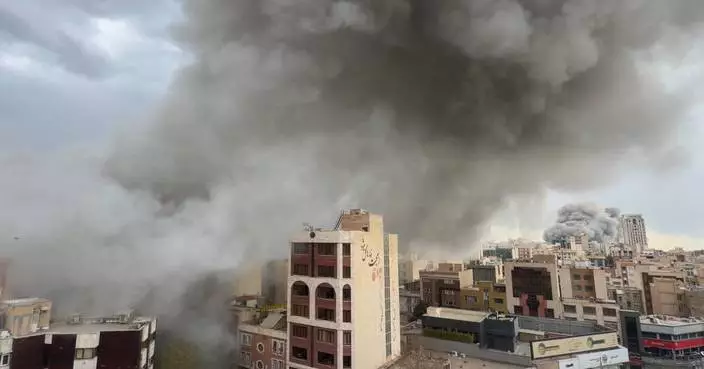
VIENNA (AP) — Iran struck the U.S. Embassy in Saudi Arabia’s capital with a drone early Tuesday as it kept hitting targets around the region, while the United States and Israel pounded Iran with airstrikes in what U.S. President Donald Trump suggested was just the start of a relentless campaign that could last more than a month.
The attack from two drones on the U.S. Embassy in Riyadh caused a “limited fire” and minor damage, according to Saudi Arabia’s Defense Ministry, and the embassy urged Americans to avoid the compound. It followed an attack on the U.S. Embassy in Kuwait, which announced Tuesday it had been closed until further notice. The U.S. State Department also ordered the evacuation of non-emergency personnel and family in Kuwait, as well as Bahrain, Iraq, Qatar, Jordan and the United Arab Emirates as a precaution.
The expanding conflict has so far killed hundreds of people, the vast majority in Iran.
Across Iran’s capital, explosions rang out throughout the night into Tuesday, with aircraft heard overhead. It was not immediately clear what had been hit. The United Nations’ nuclear watchdog, the International Atomic Energy Agency, said Iran’s Natanz nuclear enrichment site had sustained “some recent damage,” though there was “no radiological consequence expected.” Natanz earlier came under attack by the U.S. in the 12-day Iran-Israel war in June.
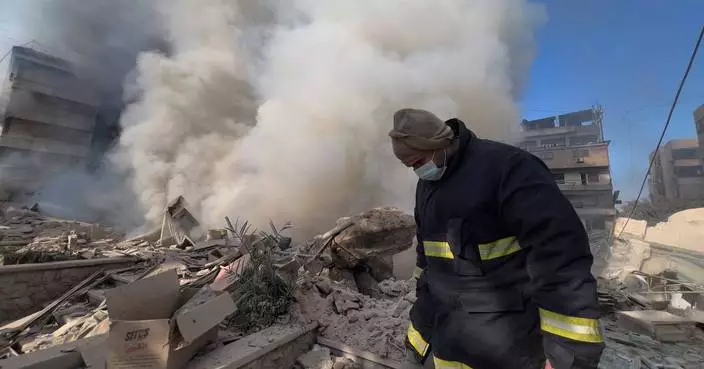
In Lebanon, Israel launched more strikes on Hezbollah, the Iran-backed militia group. Explosions could be heard and smoke seen in a southern suburb of Beirut. Israel also said its soldiers were “operating in southern Lebanon.” Lebanon’s state-run National News Agency said the Lebanese army was evacuating some of its positions along the border.
The expansion of Iranian retaliation across the Gulf and the intensity of the Israeli and American attacks, the killing of Iranian Supreme Leader Ayatollah Ali Khamenei and the lack of any apparent exit plan portend a possibly prolonged conflict with far-reaching consequences.
Iran has hit many countries deemed safe havens in the Mideast in retaliation for the U.S. and Israeli strikes. Recent targets include two Amazon data centers in the UAE and a drone impact near another in Bahrain that caused damage, the company said Tuesday. Iran has also hit energy facilities in Qatar and Saudi Arabia, and attacked several ships in the Strait of Hormuz, the narrow mouth of the Persian Gulf through which a fifth of all oil traded passes, sending global oil and natural gas prices soaring.
“The Strait of Hormuz is closed," declared Iranian Brig. Gen. Ebrahim Jabbari, an adviser to the paramilitary Revolutionary Guard, threatening to set fire to any ships attempting to transit. “Don’t come to this region.”
The U.S. State Department urged U.S. citizens to leave more than a dozen Middle Eastern countries due to safety risks, as have many other countries, though with much of the airspace closed many remain stranded.
Trump said operations are likely to last four to five weeks but that he was prepared “to go far longer than that.” He later added that the U.S. had a “virtually unlimited supply” of munitions and pre-positioned “high grade weaponry.”
“Wars can be fought ‘forever,’ and very successfully, using just these supplies,” he wrote on social media.
The Iranian Red Crescent Society said the U.S.-Israeli operation has killed at least 787 people. In Israel, where several locations were hit by Iranian missiles, 11 people were killed. The semiofficial Tasnim news agency reported airstrikes killed 13 Iranian troops in Kerman, 800 kilometers (500 miles) southeast of Iran’s capital, Tehran.
Israel’s retaliatory strikes against Hezbollah killed 52 people in Lebanon.
“Military escalation would force more families from their homes and hit civilians hard,” said Amy Pope, director general of the International Organization on Migration, calling for the international community to press for de-escalation. “Millions are already displaced in the region.”
The U.S. military has confirmed six deaths of American service members. All six were Army soldiers in a logistics unit in Kuwait, according to a U.S. official who was not authorized to comment publicly and spoke on condition of anonymity.
Three people were killed in the UAE, and one each in Kuwait and Bahrain.
The chaos of the conflict became apparent when the U.S. military said Kuwait had “mistakenly shot down” three American fighter jets while Iran was attacking it with aircraft, ballistic missiles and drones. U.S. Central Command said all six pilots ejected safely.
Iranian state TV said strikes caused two explosions early Tuesday at a broadcasting facility in Tehran, but said no one was injured.
Reza Najafi, Iran’s ambassador to the International Atomic Energy Agency, told reporters that airstrikes targeted the Natanz nuclear enrichment site on Sunday.
“Their justification that Iran wants to develop nuclear weapons is simply a big lie,” he said.
Israel and the U.S. have not acknowledged strikes at the site, which the U.S. bombed in the 12-day war between Iran and Israel in June. Israel has said it is targeting the “leadership and nuclear infrastructure.”
Trump said the military campaign’s objectives are to destroy Iran’s missile capabilities, wipe out its navy, prevent it from obtaining a nuclear weapon and ensure that it cannot continue to support allied groups like Lebanon’s Hezbollah, which fired missiles at Israel on Monday.
Iran has said it has not enriched uranium since June, though it has maintained its right to do so and says its nuclear program is peaceful.
Israeli Prime Minister Benjamin Netanyahu maintained, however, that Iran was rebuilding “new sites, new places” underground for making atomic bombs. He offered no evidence to support his claim.
“We had to take the action now and we did,” Netanyahu told Fox News Channel’s Hannity.
Satellite photos analyzed by The Associated Press showed limited activity at two nuclear sites in Iran before the war. Analysts said Tehran was likely assessing damage from the 2025 U.S. strikes and possibly salvaging what remained.
The conflict has also spread to Lebanon, where the Iranian-supported militant group Hezbollah fired missiles at Israel on Monday, prompting Israel to retaliate.
At least 52 people have been killed and 154 wounded, Lebanese authorities said.
Israel hit Beirut with more airstrikes early Tuesday, saying it was targeting “Hezbollah command centers and weapons storage facilities.”
Hezbollah also said it launched drones targeting an Israeli air base. The Israeli military said it downed two drones.
An Iranian-linked militant in Iraq has also claimed strikes on U.S. military facilities there. The Israeli military said its troops operating in southern Lebanon were positioned at several points near the border in what it described as a “forward defense posture.”
The army said there were no plans to evacuate Israeli residents of border areas.
David Rising in Bangkok, Melanie Lidman in Tel Aviv, Israel, Hallie Golden in Seattle, and Giovanna Dell'Orto in Miami contributed to this report. Becatoros reported from Athens, Greece, and Magdy reported from Cairo.

Jewish men covered in prayer shawls pray in an underground parking garage as a precaution against possible Iranian missile attacks, in Tel Aviv, Israel, Tuesday, March 3, 2026. (AP Photo/Oded Balilty)
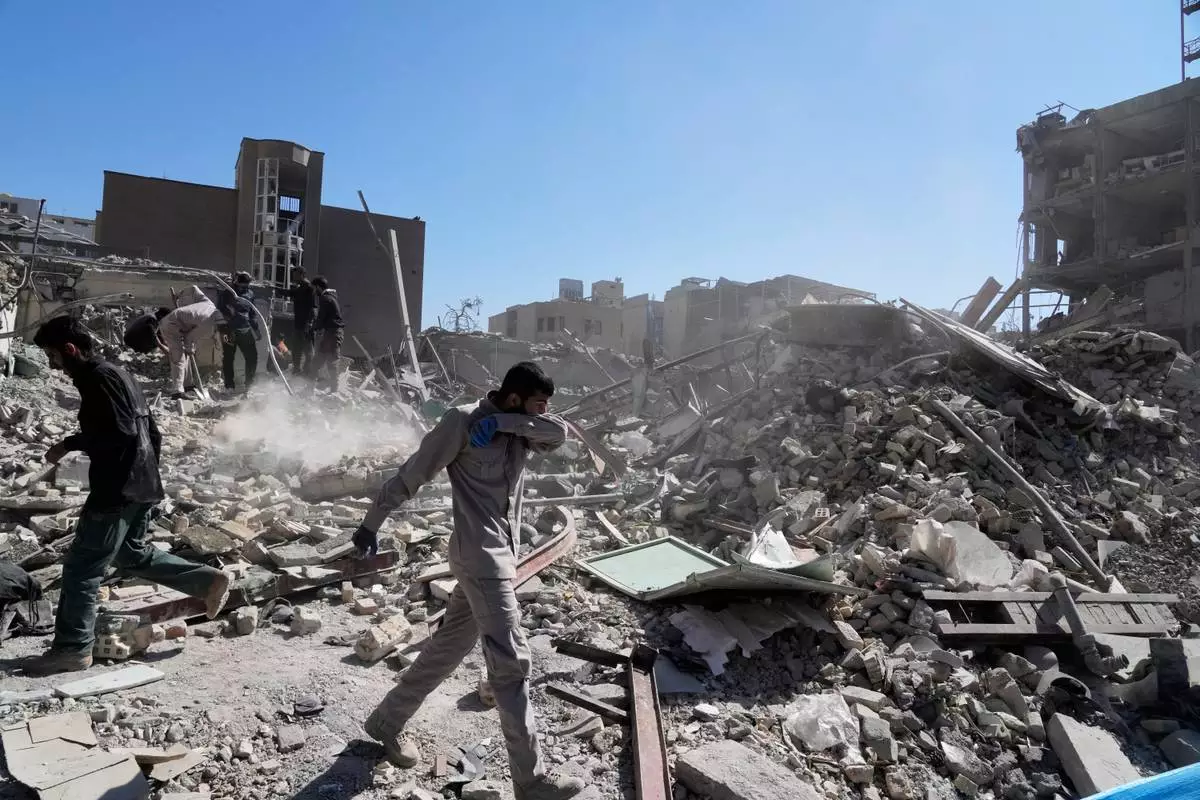
A group of men inspects the ruins of a police station struck Monday amid the U.S.–Israeli military campaign in Tehran, Iran, Tuesday, March 3, 2026. (AP Photo/Vahid Salemi)

Smoke rises from Israeli airstrikes in Dahiyeh, a southern suburb of Beirut, Lebanon, Tuesday, March 3, 2026. (AP Photo/Hussein Malla)
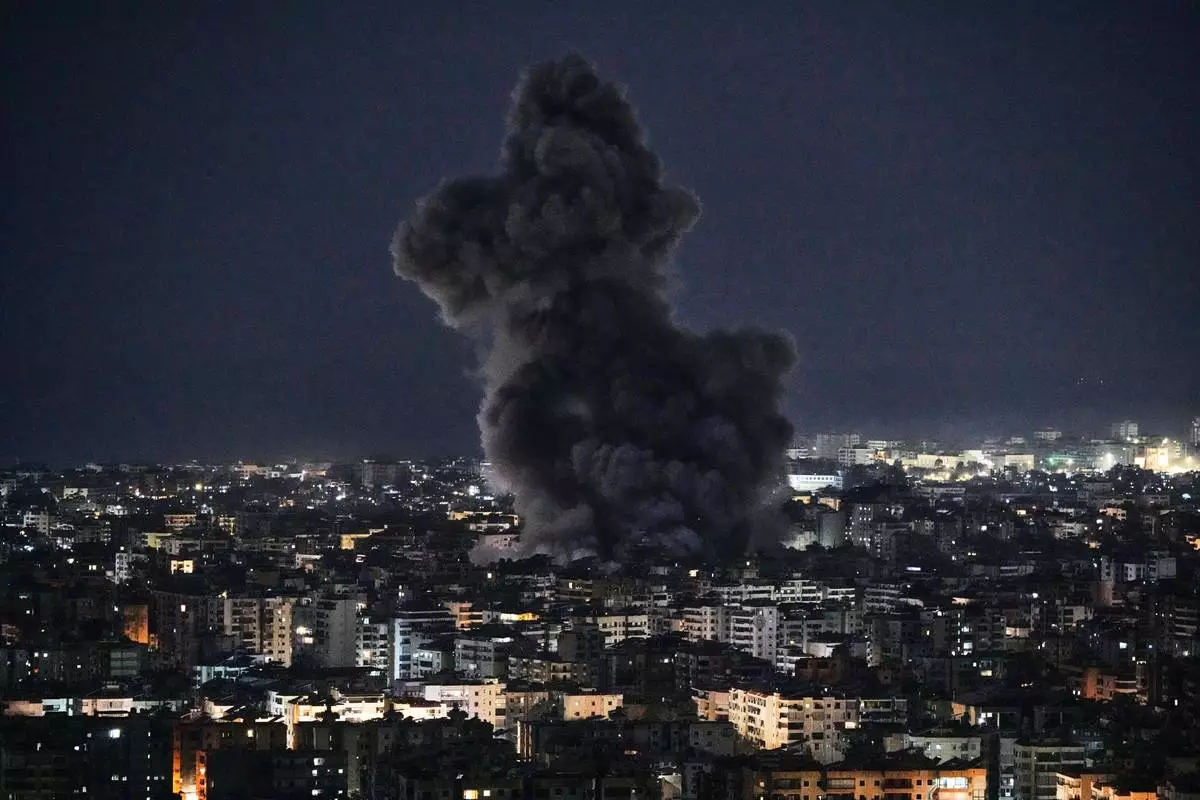
Smoke rises from Israeli airstrikes in Dahiyeh, a southern suburb of Beirut, Lebanon, early Tuesday, March 3, 2026. (AP Photo/Bilal Hussein)
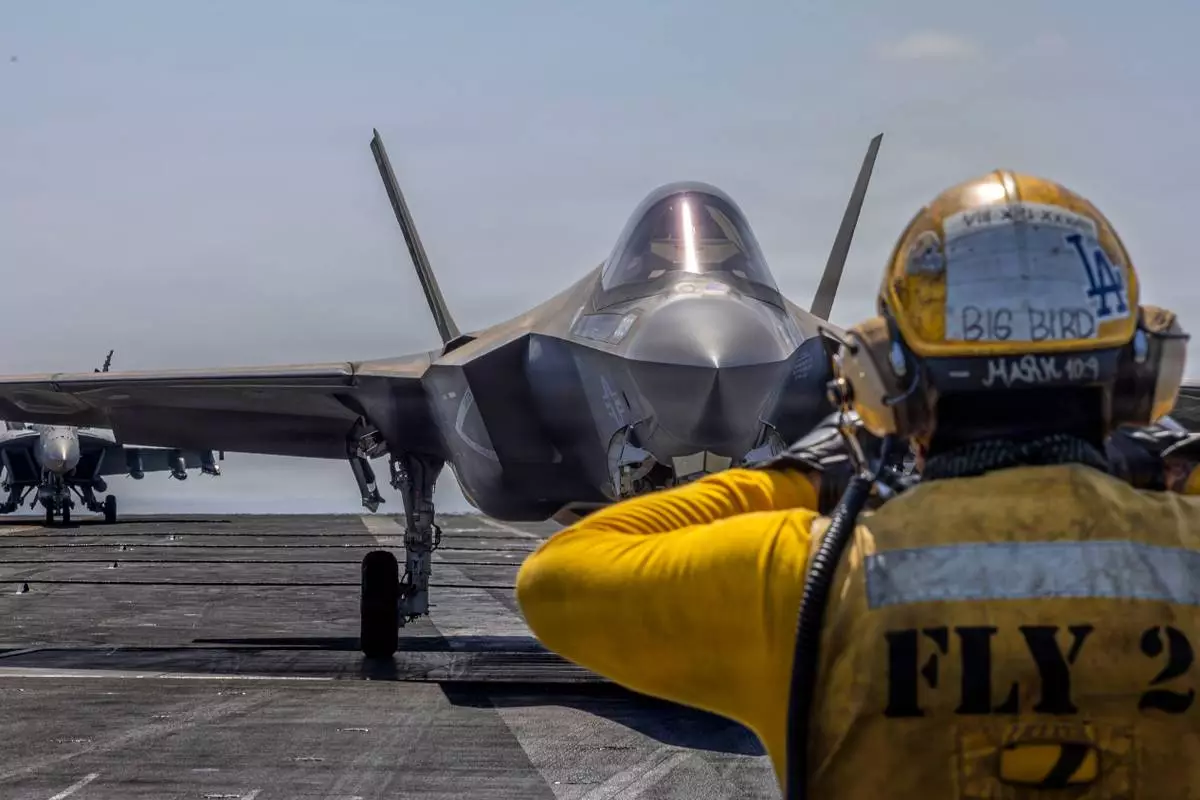
This image provided by U.S. Central Command shows a F-35C Lightning II preparing for launch on the flight deck of the USS Abraham Lincoln (CVN 72) in support of Operation Epic Fury on Monday, March 2, 2026. (U.S. Navy via AP)

Mourners take cover while air-raid sirens warn of incoming missiles launched by Iran toward Israel during the funeral of Sarah Elimelech and her daughter Ronit who were killed in an Iranian missile attack, in Beit Shemesh, Israel, Monday, March 2, 2026. (AP Photo/Ohad Zwigenberg)

A worker instals a billboard on an overpass containing a portrait of the late Iranian Supreme Leader Ayatollah Ali Khamenei, who was killed during the ongoing joint U.S.-Israeli military campaign, in Tehran, Iran, Monday, March 2, 2026. (AP Photo/Vahid Salemi)
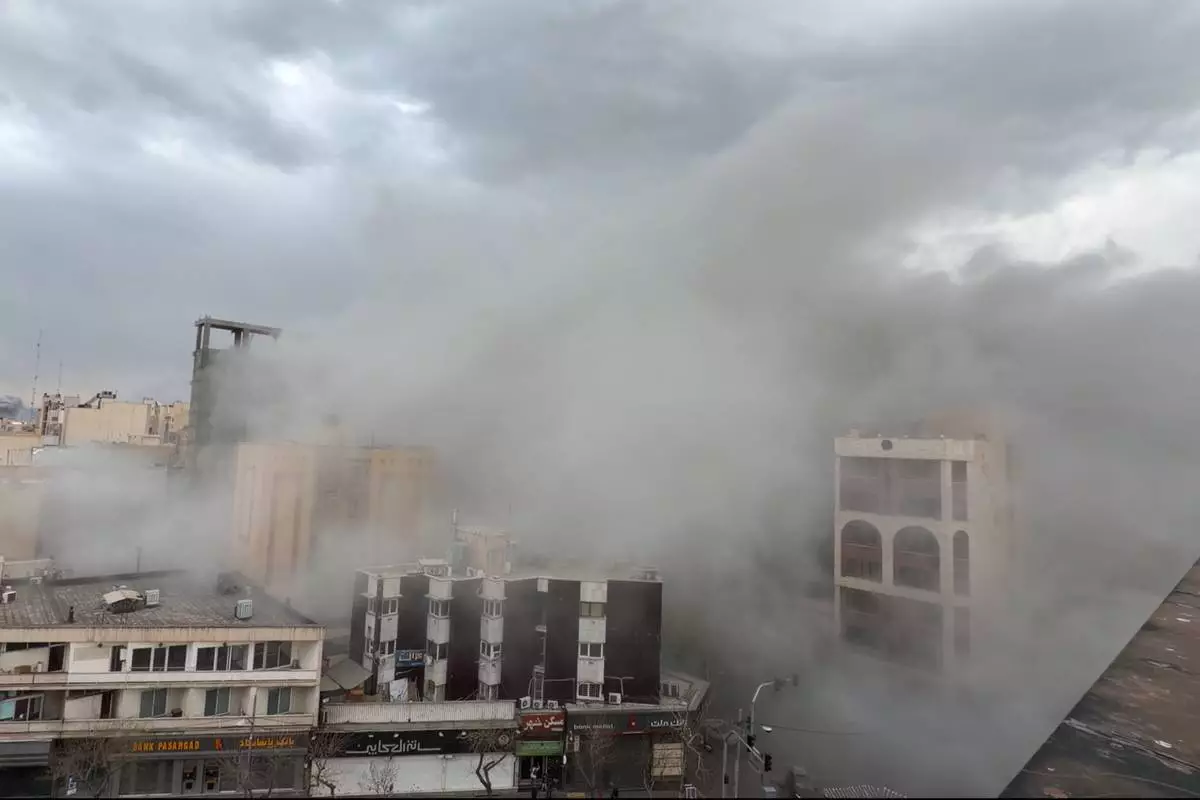
Smoke engulfs a street after a strike in Tehran, Iran, Monday, March 2, 2026. (AP Photo/Mohsen Ganji)