Throughout his political career, Israeli Prime Minister Benjamin Netanyahu has steered his country along two pillars of foreign policy: an ironclad partnership with the United States and a relentless diplomatic and covert battle against the rulers of the Islamic Republic of Iran.
Now, with Israel and the U.S. in a joint war against Iran’s leadership, those two strategic paths risk clashing with each other. By enlisting the U.S. in what he views as Israel’s existential battle against Iran, Netanyahu is taking a gamble that could open up the relationship to the strain of a war with far-reaching consequences.
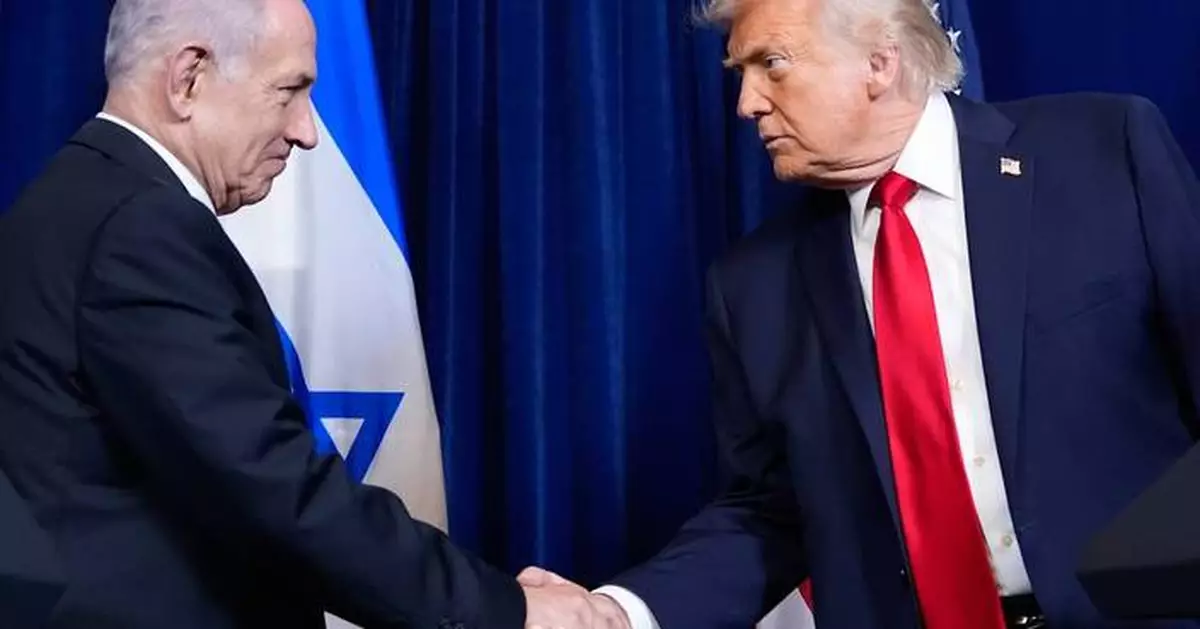
To be sure, persuading U.S. President Donald Trump to join the war was a coup for Netanyahu and highlights the strong ties between the two leaders. If they are successful, they could quickly realize their shared goal of toppling the Iranian government and spare the region a protracted conflict.
But if the war drags on, the two allies' ties could again be tested.
“A large part of the American public will view it as the Israeli tail wagging the American dog and that it is dragging the United States to a war in the Middle East that isn’t theirs,” said Ofer Shelah, a research fellow at the Institute for National Security Studies, a Tel Aviv, Israel-based think tank. The drop in public support that might unleash “will be very harmful for Israel in the medium and long term,” he said.
But, he added, in a nod to the Israeli leader's political ambitions: “Netanyahu is not interested in the medium and long term.”
For Netanyahu, successfully persuading Trump to strike Iran together is the apex of decades of proximity between the Israeli leader and Washington. Netanyahu, Israel's longest-serving leader, speaks flawless English after having spent part of his youth in the U.S. and has always portrayed himself as Israel's bridge to America.
Although he boasts about his tight relationships with multiple American presidents and members of Congress, Netanyahu over the past two years has seen support for Israel among the American public drop. According to Gallup polling, American sympathies in the Middle East have shifted dramatically toward the Palestinians.
That shift in sentiment has been driven in large part by Democrats. But some Republicans, and even Trump's own backers, have been more outspoken against the diplomatic and financial support the U.S. has continued to grant Israel throughout the past two and a half years, when it has been embroiled in a war on multiple fronts sparked by Hamas' Oct. 7, 2023, attacks. The devastating images from the war in Gaza deepened Israel's international isolation.
With a new war against Iran — the second in less than a year — Netanyahu is tackling an enemy that he and many Israelis view as an existential threat, citing its support for anti-Israeli militias across the region, its ballistic missile arsenal, and its nuclear program. He has led the crusade against Iran on the world stage for much of his career.
Netanyahu said Sunday in a statement that the U.S. involvement “allows us to do what I have been hoping to do for 40 years — to deliver a crushing blow to the terror regime.” Netanyahu’s office did not immediately respond to an Associated Press request for comment.
Days into the war, Israel and the U.S. military appear to be working hand in glove to strike targets — from the initial attack that killed top Iranian leaders, including Supreme Leader Ayatollah Ali Khamenei, to assaults that allowed the forces free rein in Iranian skies.
But the conflict has already set off aftershocks that could reverberate in the American heartland. At least six U.S. troops have been killed. Travel was disrupted across the region, leaving hundreds of thousands of travelers stranded. Oil prices surged, raising the prospect of costlier gasoline for U.S. drivers as well as increased prices for other goods at a time when people have been stung by a rising cost of living.
Questions remain about the direction and aim of the war. It's unclear whether the air power will be enough to topple Iran's leadership, who or what should replace that leadership, and what role Israel or the U.S. will have in either. Every day presents new potential land mines.
“Many people will blame Israel if things go badly wrong,” wrote Nadav Eyal, a commentator with the Israeli Yediot Ahronoth daily newspaper. “Israel cannot afford to lose the American public’s support under any circumstances. That is more important than striking any individual military facility.”
Still, Aaron David Miller, who served as an adviser on Middle East issues to Democratic and Republican administrations over two decades, said that Netanyahu has little to lose from the war.
With elections scheduled for the fall, Netanyahu can use the war in Iran to divert attention away from the failures of the Oct. 7, 2023, attacks, the worst in Israel's history. Instead, Netanyahu can set himself up as a brave wartime leader who fulfilled a pledge he has made much of his life to confront Iran.
He can say he did so with support from the American president, who Miller said can pull the breaks on the war whenever he pleases.
“If Trump feels as if it’s going south, he’ll find a way to de-escalate,” he said, “and his good friend Benjamin Netanyahu will follow.”
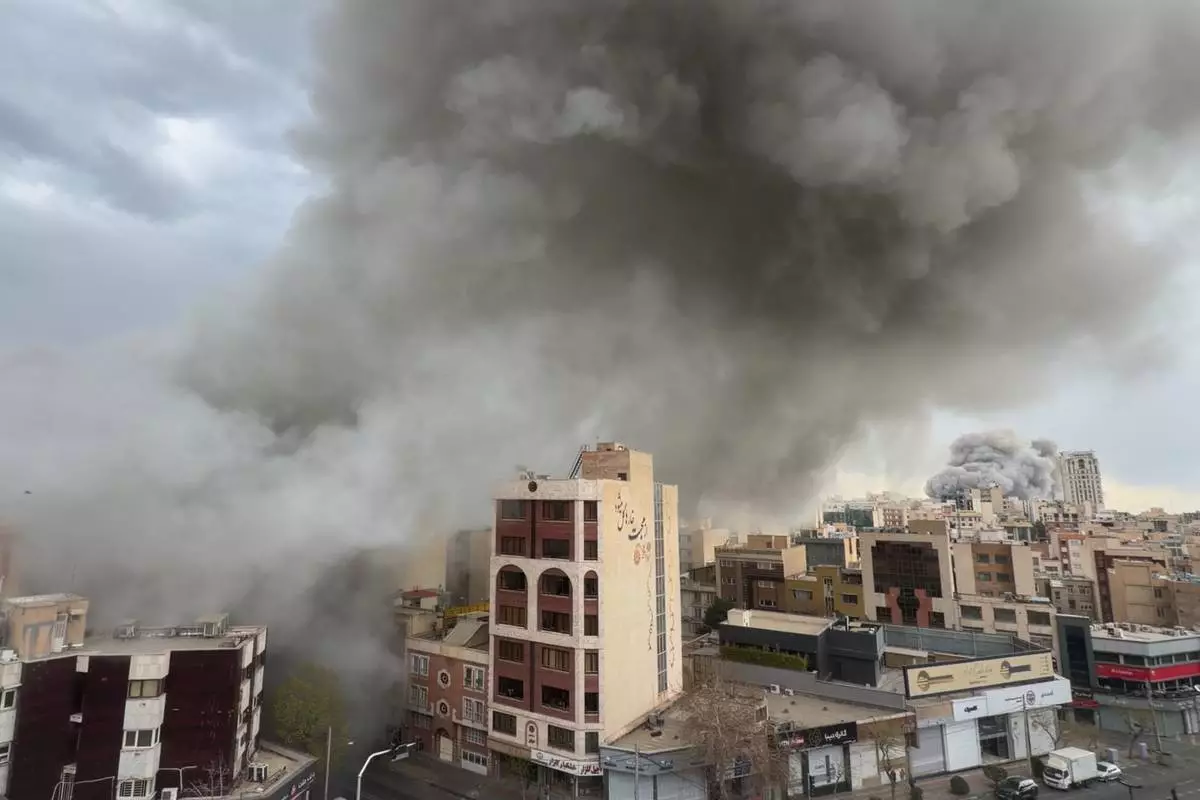
Plumes of smoke from two simultaneous strikes rise over Tehran, Iran, Monday, March 2, 2026. (AP Photo/Mohsen Ganji)
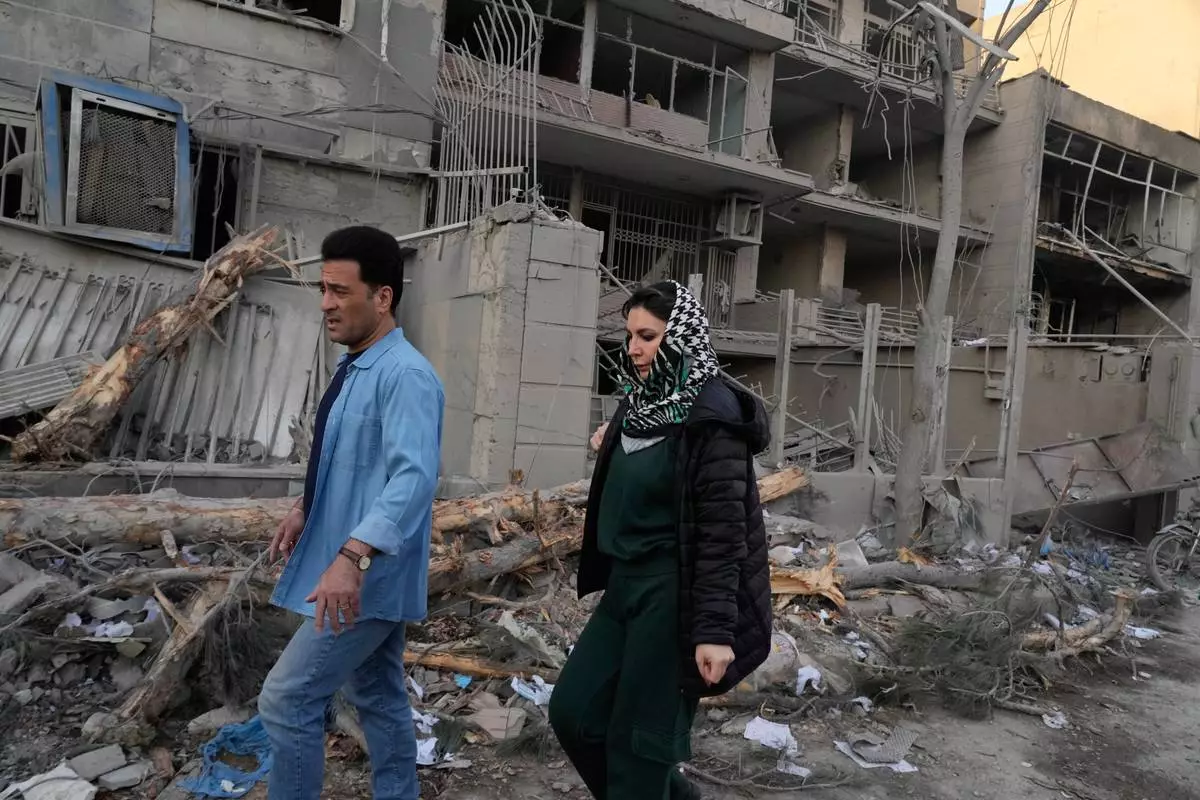
People walk past buildings damaged during a strike on a police station during ongoing, joint U.S.-Israeli military attacks in Tehran, Iran, Monday, March 2, 2026. (AP Photo/Vahid Salemi)
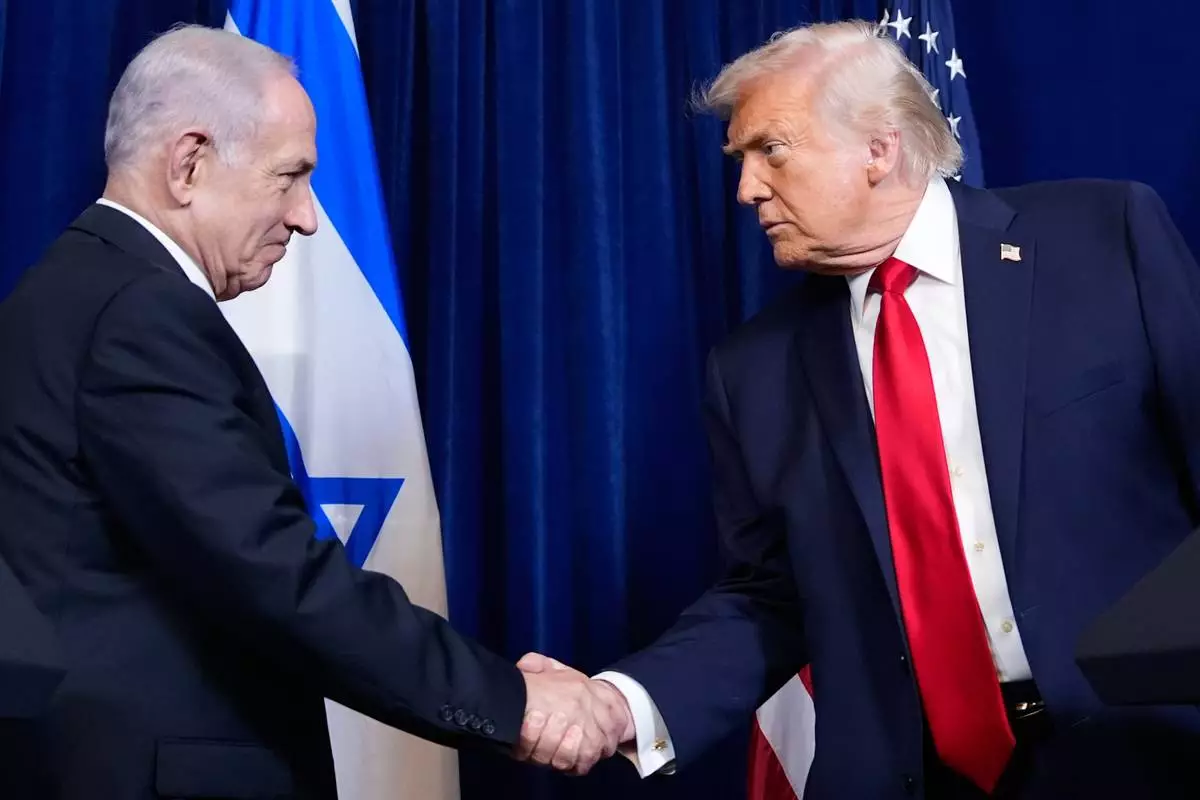
FILE - President Donald Trump shakes hands with Israel's Prime Minister Benjamin Netanyahu during a news conference at Mar-a-Lago, Dec. 29, 2025, in Palm Beach, Fla. (AP Photo/Alex Brandon, File)
As the war in the Middle East intensifies, U.S. President Donald Trump said that the U.S. has “the capability to go far longer" than its projected four-to-five-week time frame for its military operations against Iran.
Across Tehran, the sound of explosions rang out through the night and into the early morning hours Tuesday, as the U.S. and Israel have continued to pound Iran since killing its Supreme Leader Ayatollah Ali Khamenei on Saturday.
Tehran and its allies have hit back against Israel, neighboring Gulf states, and targets critical to the world’s production of oil and natural gas.
The intensity of the attacks and the lack of any apparent exit plan set the stage for a prolonged conflict with far-reaching consequences. Israel and the U.S. have given conflicting answers about what exactly the war’s objectives are or what the endgame might be.
Israeli Prime Minister Benjamin Netanyahu late Monday defended the decision to go to war, contending in an interview on Fox News Channel’s "Hannity" that Iran was rebuilding “new sites, new places” that would make “their ballistic missile program and their atomic bomb program immune within months,” without providing evidence.
Satellite photos analyzed by The Associated Press showed limited activity at two nuclear sites in Iran before the war, with analysts saying it was likely Tehran was trying to assess damage from American strikes in June and possibly salvage what remained there.
Here is the latest:
The United Nations’ nuclear watchdog said Tuesday that Iran’s Natanz nuclear enrichment site sustained “some recent damage” during a U.S.-Israeli airstrike campaign, though it said there was “no radiological consequence expected” from it.
The International Atomic Energy Agency said the damage was focused on “entrance buildings” to the underground portion of the atomic site.
Natanz earlier came under attack by the U.S. in the 12-day Iran-Israel war in June.
The IAEA said it saw “no additional impact” detected at Natanz’s fuel enrichment plant, which is buried underground.
Nuclear material is still believed to be buried at the plant alongside damaged and destroyed centrifuges. However, the IAEA has not been allowed to visit any of the attacked sites by Iran since that war.
Airstrikes by the United States and Israel have killed at least 787 people in Iran since the start of the war, the Iranian Red Crescent Society said Tuesday.
The organization offered the toll in a message on X.
Israel’s military said Iran launched missiles at the country and it was working to intercept them.
The Israeli military struck a building in a southern suburb of Beirut housing Hebzollah’s TV and radio station, causing heavy damage.
The strike after midnight Monday came after a warning by the Israeli military to evacuate the building. Hezbollah’s Al-Manar TV was interrupted for about an hour before the station resumed its programs.
During the 2006 Israel-Hezbollah war, Al-Manar TV and al-Nour Radio station were both struck but continued broadcasts from secret locations.
Cypriot officials say France will dispatch a warship to Cyprus to help bolster the country’s anti-drone defenses after a Rashed drone struck a British military base on the east Mediterranean island.
France also will send additional land-based, anti-drone and anti-missile systems to the country, officials confirmed Tuesday.
Germany also responded positively to a request to send a warship, according to three officials who spoke on condition of anonymity because they were not permitted to provide details publicly.
The equipment will arrive in Cyprus as soon as possible, they said
The French military did not respond immediately to a request for information from The Associated Press.
The drone struck the British base, RAF Akrotiri, shortly after midnight Monday and caused only minor material damage to an aircraft hangar. Another two drones were intercepted by British warplanes around midday Monday after they were scrambled from the air base, officials said.
Greece has sent four F-16 fighter jets to Cyprus while two of its state-of-the-art frigates are on their way.
A fire broke out in an oil industrial facility Fujairah, one of the seven emirates of the United Arab Emirates, as forces intercepted a drone attack, authorities said.
No casualties were reported.
The government media office in Fujairah said the drone was intercepted and that shrapnel landed in the Fujairah Oil Industry Zone.
The office said the fire was put down and operations resumed.
At least five people were killed or wounded in airstrikes in Iran’s western city of Hamadan, the state-run IRNA news agency reported.
Strikes also were reported across other cities, including Isfahan and Shiraz.
Lebanon’s state-run National News Agency said the Lebanese army is evacuating some of its positions along the border with Israel.
The agency said the troops are redeploying to other posts.
The report comes after Israel’s military said it is conducting operations inside Lebanon along the border with Israel.
Israel’s army said Tuesday that Iran’s firepower has been weakened.
Army spokesman Lt. Col. Nadav Shoshani said Israeli and U.S. attacks on Iran have “limited significantly” Iran’s ability to fire.
Shoshani said Israel has been going after Iran’s missile launchers and have taken out dozens of them.
Iran has fired hundreds of missiles but it’s hard to tally the total amount with Iran also striking other countries, he said.
The pace of missiles being launched at Israel has slowed since the first two days of the war.
Shoshani said the slowdown also could be partly attributed to Iran understanding the war could go on for longer than they had thought and they are trying to pace themselves.
Iran has started the process of returning Iranian pilgrims from the shrine cities of Mecca and Medina, state media said Tuesday.
Alireza Enayati, Iran’s ambassador to Saudi Arabia, said the process of returning 9,000 Iranians currently in the cities of Mecca and Medina began Monday.
In a report carried by the Iranian judiciary’s Mizan news agency, Enayati said the departure is taking place in the same manner as during the 12-day war between Israel and Iran in 2025. Iranian pilgrims will leave Saudi Arabia through Saudi–Iraqi border crossings and return to Iran from Iraq.
The announcement came during the Muslim holy month of Ramada and a widening that has seen Iran target sites in Saudi Arabia.
The U.S. ambassador in Israel told Americans there that the best way to leave is through Egypt’s Sinai Peninsula.
Mike Huckabee said in a social media post early Tuesday that the embassy was receiving lots of evacuations requests as embassy staff “are sheltering in place.”
“There are VERY LIMITED options,” he wrote. “Not sure when Ben Gurion Airport in Tel Aviv will reopen.”
He advised Americans to take buses to Egypt’s resorts of Sharm el-Sheikh and Taba in southern Sinai, describing that route as “best.”
The U.S. State Department evacuations of non-emergency personnel and family reached six nations on Tuesday with the inclusion of the United Arab Emirates.
The UAE, home to Dubai and Abu Dhabi and long considered a safe corner of the Middle East, has been dragged into the Iran war with interceptions and attacks.
The other countries include Bahrain, Iraq, Jordan. Kuwait and Qatar.
The U.S. Embassy in Abu Dhabi also warned there could be militant attacks in the UAE as well.
“Terrorists may attack with little or no warning and may target tourist locations, transportation hubs, shopping areas, government facilities, places of worship, and in particular locations associated with the Jewish and Israeli communities,” it added.
A camp for Iranian Kurdish opposition in the semiautonomous region of Kurdistan in northern Iraq was attacked Tuesday morning, an official said.
A missile and drone hit the Azadi camp in Irbil and slightly injured one person, according to Kareem Parwizi, a senior official with the Kurdistan Democratic Party of Iran.
Oman said a drone hit a fuel tank at its port in Duqm on Tuesday.
The state-run Oman News Agency said no one was hurt in the attack.
Duqm has been a key resupply route for the USS Abraham Lincoln aircraft carrier, which is operating in the Arabian Sea.
The Israeli military says one of its divisions is operating inside southern Lebnaon and took positions on several strategic points close to the border.
The Arabic language spokesperson of the Israeli military posted on X that the troops’ move inside Lebanon is part of its efforts to bolster the forward defense system and create an addition layer of security.
The military said that at the same time the air force is conducting strikes against Hezbollah infrastructure in the area to thwart threats and prevent infiltration attempts into Israel.
The Israeli operations inside Lebanon came after a long night of airstrikes on southern Lebanon and Beirut’s southern suburbs.
The Israeli military says there are no immediate plans to deploy ground troops in Iran.
Asked about the possibility of sending in ground forces, spokesman Lt. Col. Nadav Shoshani told reporters it is “not very likely.”
Thailand is intensifying security around the U.S., Israeli and Iranian embassies as the conflict in the Middle East intensifies.
Public broadcaster Thai PBS quoted the head of the National Security Council, Chatchai Bangchua, describing the additional measures as he said authorities would also monitor sites linked to the countries.
Thailand depends heavily on tourism and is one of Asia’s most-visited countries, attracting more than 32 million foreigners last year. It is a popular destination for Americans, Israelis and citizens of Gulf countries and before recent airspace closures received dozens of direct flights from the Middle East each week.
The Israeli military says soldiers are “operating in southern Lebanon’ as it continues strikes against Hezbollah.
In a statement, it said the troops are positioned at a several points near the border in what it described as a “forward defense posture” as it battles Hezbollah militants.
It says the deployment is part of a broader effort to increase security for residents in northern Israel near the border with Lebanon. It has also beefed up troops and air defenses in the area.
The army says there are no plans to evacuate Israeli residents of border areas.
Israel has been occupying five positions in southern Lebanon since a November 2024 ceasefire ended more than a year of fighting with Hezbollah. Lt. Col. Nadav Shoshani says the new deployment is in addition to those five positions, with the aim of preventing attacks on Israeli border towns.
The U.S. State Department added Kuwait and Qatar to the evacuation list from its Mideast diplomatic outposts.
The U.S. Embassy in Kuwait is shutting down as the Middle East is grabbed in a widening war.
The embassy said in a social media post Tuesday that it is closing “until further notice” due to the war.
Iran on Tuesday held a mass funeral ceremony for 165 people killed in what it described as an attack on a girls’ school in the southern city of Minab.
Iranian state television showed thousands of people filling a public square. Men waved the Islamic Republic flag while largely standing apart from women draped in black chadors.
From the stage, a women who said she was the mother of “Atena” held up a printed image of portraits that she called “a document of American crimes.” She added, “They died in the way of God.”
The crowd erupted into chants of “Death to America,” “Death to Israel” and “No surrender.”
U.S. Central Command spokesperson Capt. Tim Hawkins said he was aware of reports that a girls’ school was struck and officials were looking into them.
An Israeli military spokesperson said Sunday he was not aware of any Israeli or U.S. strikes in the area.
Qatar Airways said it would remain grounded Tuesday over the war.
Amazon said Monday that two of its data centers in United Arab Emirates were hit by drones, while a drone strike near one of its facilities in Bahrain “caused physical impacts to our infrastructure.”
The tech giant said on its website that the strikes have caused structural damage and gotten in the way of power getting to infrastructure. The company did not say who was responsible for the strikes.
“We are working to restore full service availability as quickly as possible, though we expect recovery to be prolonged given the nature of the physical damage involved,” Amazon said.
Iran is continuing to threaten shipping in the Strait of Hormuz, the narrow mouth of the Perisan Gulf through which a fifth of all oil traded passes.
Brig. Gen. Ebrahim Jabbari, an adviser to the paramilitary Revolutionary Guard, issued the threat on Iranian state television on Monday.
“The Strait of Hormuz is closed. Anyone who wants to pass, our devotee heroes in the IRGC navy and the army will set those ships on fire,” he said. “Don’t come to this region.”
The Israeli military said Tuesday it was conducting “simultaneous targeted strikes against military targets in Tehran and Beirut,” without elaborating.
The U.S. State Department said it added Iraq to the evacuation list from its Mideast diplomatic outposts.
The U.S. State Department on Tuesday ordered the evacuation of non-emergency personnel and family in Bahrain and Jordan.
The State Department announcement online said the decision came “due to safety risks.” The department has urged Americans across the Mideast to leave over the ongoing war with Iran.
The U.S. Embassy in Saudi Arabia acknowledged coming under attack from Iranian drones Tuesday and urged Americans to avoid the diplomatic post for the time being.
The Saudi Defense Ministry earlier Tuesday said the embassy was attacked by two drones.
Across Iran’s capital, the sound of explosions rang out throughout the night into the early morning hours.
Witnesses described hearing aircraft overhead as well.
It wasn’t immediately clear what had been hit.
Iranian state television early Tuesday read a statement from the country’s paramilitary Revolutionary Guard, saying that it launched a missile and drone attack targeting an air base in Bahrain.
Israeli airstrikes hit the Lebanese capital Tuesday morning.
The Israeli military said it was targeting “Hezbollah command centers and weapons storage facilities in Beirut.”
Hezbollah also said it launched drones targeting an Israeli air base.
The Israeli military said it downed two drones.
Tokyo has told Japanese shipowners to have their ships stay away from the Persian Gulf to ensure the safety of their crew members.
Chief Cabinet Secretary Minoru Kihara told reporters Tuesday that the Transport Ministry has notified the Japanese Shipowners’ Association to do the utmost to protect crews on board the ships in the region.
Kihara said those already in the Gulf are urged to lie at anchor where it is safe to do so.
On Monday, Japan’s Foreign Minister Toshimitsu Motegi met with Iranian ambassador to Japan Peiman Seadat and conveyed Japan’s consistent stance that Iran must stop attacks on neighboring countries and other actions destabilizing the region.
Motegi also noted the importance of ensuring safety in the Strait of Hormuz, which is key to Japan’s energy security.
Iran’s top diplomat early Tuesday sought to turn the tables on the United States, describing it as entering “a war of choice on behalf of Israel.”
After Trump urged Iranians to take over their government, Foreign Minister Abbas Araghchi made the same call to Americans.
“Shedding of both American and Iranian blood is thus on Israel Firsters,” Araghchi wrote on X. “American people deserve better and should take back their country.”
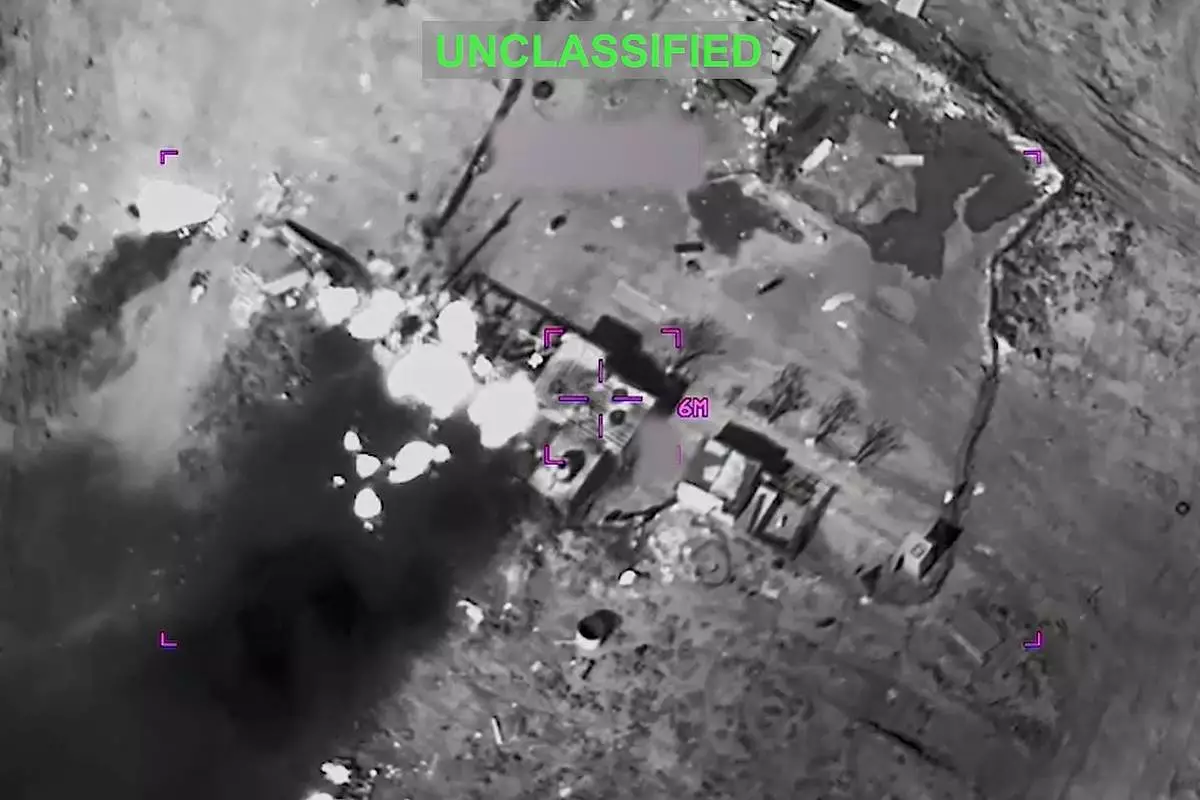
This partially redacted image from video provided by U.S. Central Command shows a complex of structures in Iran being struck by missiles fired by U.S. forces on Sunday, March 1, 2026. (U.S. Central Command via AP)
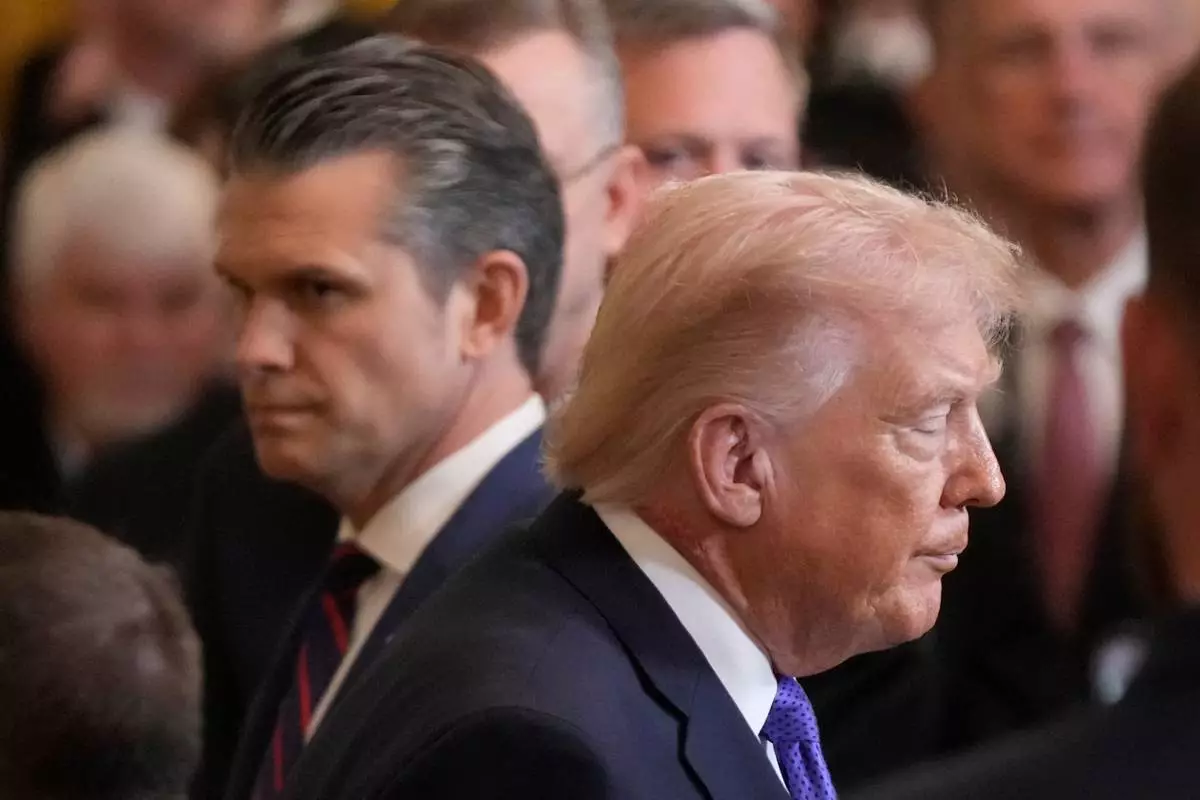
President Donald Trump walks past Defense Secretary Pete Hegseth as he exist the East Room of the White House following the Medal of Honor ceremony, Monday, March 2, 2026, in Washington. (AP Photo/Mark Schiefelbein)
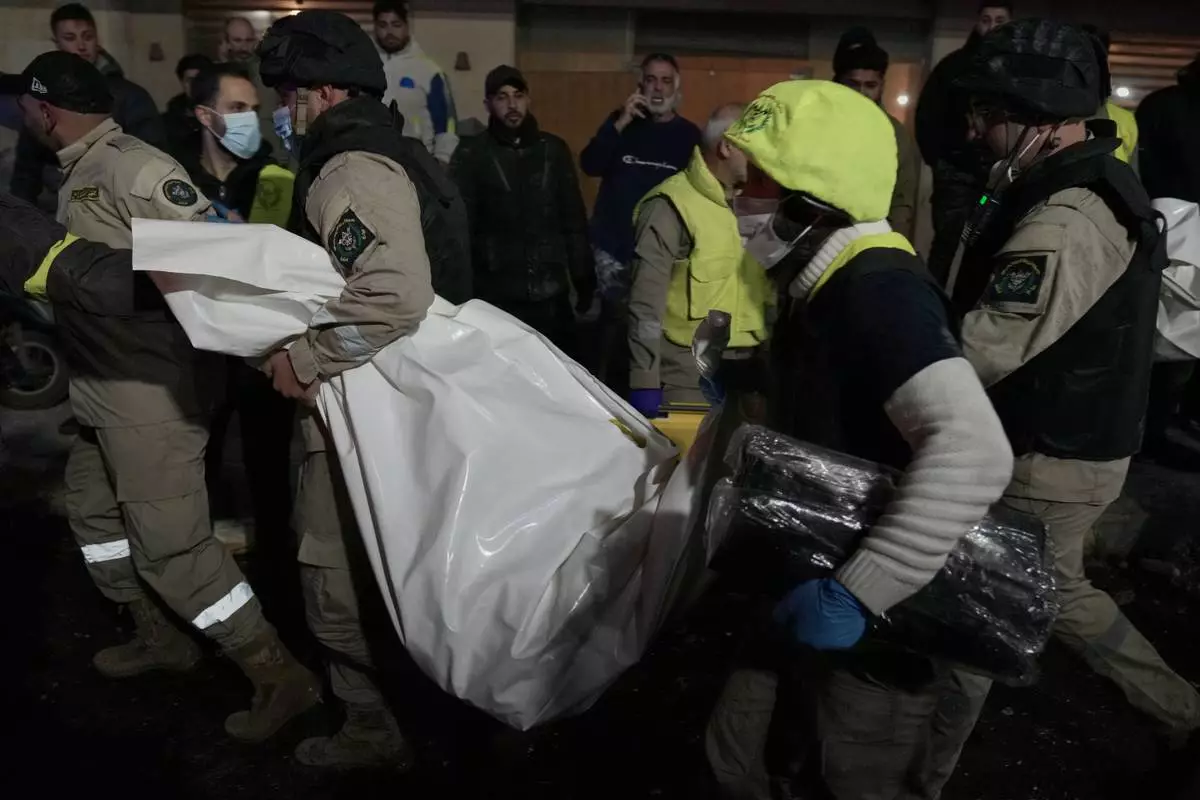
Rescue workers carry a dead body in a plastic bag from a building that was hit by Israeli strike, in Jnah neighborhood, south of Beirut, Lebanon, Monday, March 2, 2026. (AP Photo/Hussein Malla)
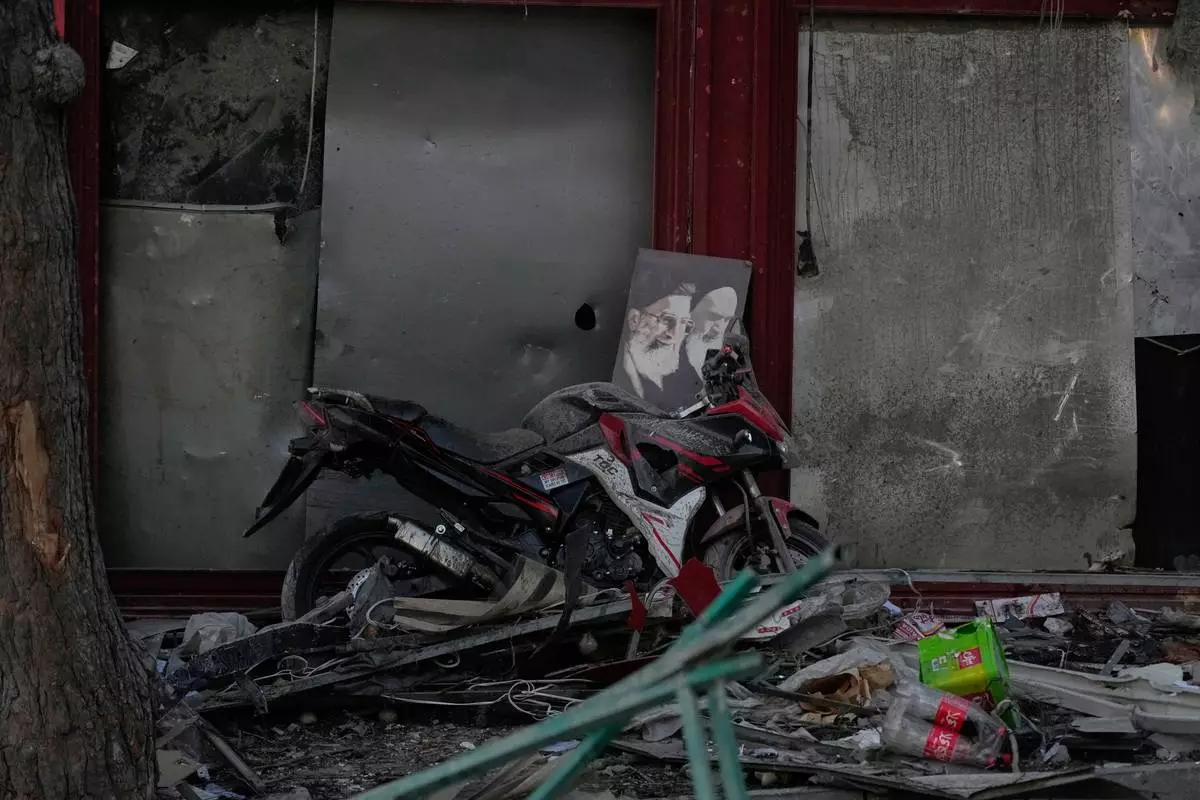
A poster of the late Supreme Leader Ayatollah Ali Khamenei, who was killed during the ongoing joint U.S.-Israeli military campaign, and the late Iranian Revolutionary founder Ayatollah Khomeini, right, lays on a motorcycle amid debris left by a strike in Tehran, Iran, Monday, March 2, 2026. (AP Photo/Vahid Salemi)
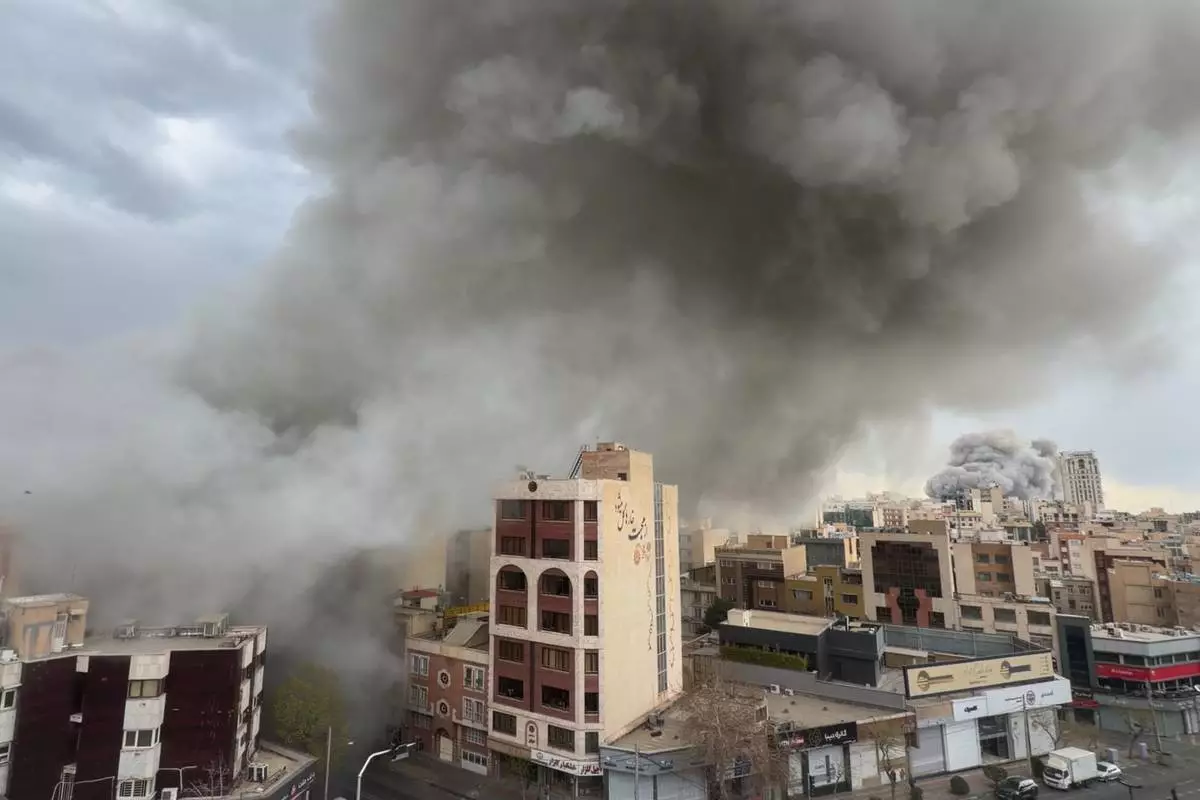
Plumes of smoke from two simultaneous strikes rise over Tehran, Iran, Monday, March 2, 2026. (AP Photo/Mohsen Ganji)