HONG KONG--(BUSINESS WIRE)--Dec 8, 2025--
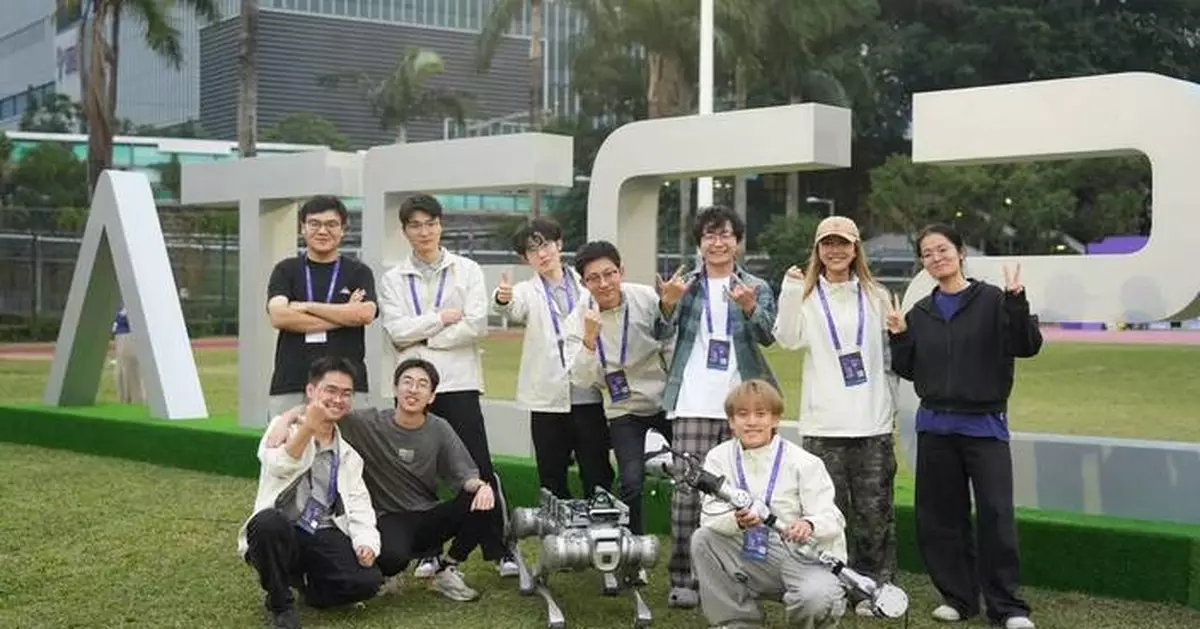
The ATEC2025·Real-World Extreme Challenge successfully concluded on December 7 on the campus of The Chinese University of Hong Kong. A team from Zhejiang University emerged victorious from a field of 13 talented international squads by demonstrating exceptional fully autonomous embodied intelligence, securing the top prize of $150,000 USD.
This press release features multimedia. View the full release here: https://www.businesswire.com/news/home/20251207877880/en/
Organized by the Chinese University of Hong Kong and co-hosted by Advanced Technology Exploration Community (ATEC), Peking University, Beijing Normal University, and Ant Group, ATEC2025·Real-World Extreme Challenge was the world’s first intelligent robotics challenge held entirely outdoors on natural terrain—featuring rugged hills, stone steps, swaying bridges, and uneven slopes—to rigorously test robots’ ability to operate without human intervention.
Under a bold “no remote control” rule, teams were challenged to develop systems capable of completing complex tasks entirely through self-contained perception, reasoning, decision-making, and execution. This approach is aimed at driving the evolution of robots from remotely controlled tools toward truly autonomous agents.
Achieving “no remote control” requires robots to independently close the full operational loop—from environmental perception and analysis to decision-making and physical action—in highly uncertain real-world conditions. Any failure at any stage can lead to mission interruption, putting the robot’s perceptual robustness, decision-making intelligence, and overall system stability to the ultimate test.
Professor Yunhui Liu, Co-Chair of ATEC2025 and Fellow of the Hong Kong Academy of Engineering, noted, “This year’s competition sought to answer a fundamental question: Can robots truly leave the lab and adapt to our unpredictable world? Through this challenge, we’re exploring how robots can evolve beyond ‘demo-ready’ toward ‘deployment-ready.’”
Professor Liu’s framework of the “Three Core Capabilities of Robotics”—locomotion, manipulation, and environmental modification—served as the technical pillars of the challenge. The four tasks in this challenge were designed to test one or more of these pillars:
Despite inevitable setbacks—such as slips, misidentifications, and navigation errors—the competition encouraged teams to rely solely on fully autonomous systems. In response, participants explored diverse technical approaches and innovative solutions.
“The algorithms that work flawlessly in simulated environments often crumble under real-world uncertainties,” said Chengrui Zhu, leader of the winning team from Zhejiang University. “This competition forced us to rethink how to build robots that can really make decisions by themselves.”
ATEC2025·Real-World Extreme Challenge drew global talent, with participants from leading universities and research laboratories across North America, Europe, and Asia, including competitors as young as 19 years old. The judging panel included approximately 70 world-renowned experts, including Lihua Xie, Fellow of the Singapore Academy of Engineering, and Masayoshi Tomizuka, Fellow of the U.S. National Academy of Engineering.
“Real-world environments are full of uncertainties,” Tomizuka remarked during the competition. “ATEC2025 provides a proving ground to prepare robots and AI for real-world deployment. The true value of this event lies not only in success—but in learning from every failure and continuously evolving. This is the essential path for robotics to move from the lab to reliable, real-world application.”
As one of the founding organizations, Ant Group’s support for the ATEC2025 is rooted in a core belief that the future of artificial general intelligence lies in the deep integration of machine intelligence with the physical world. As AI advances from “data cognition” toward “environmental interaction” and “action execution,” this transition demands new fundamental breakthroughs in technology, and the competition is poised to accelerate progress.
To learn more about the ATEC2025, please visit the official website:
https://www.atecup.cn/matchHome/100009.
About ATEC
ATEC (Advanced Technology Exploration Community) focuses on real-world applications of cutting-edge technologies in the information field. It is dedicated to building an industry-university-research collaboration platform for the new-generation Internet-related technologies, accelerating the industry application research on innovative technologies, and supporting the development of application-oriented technological talents. The community is initiated by Tsinghua University, Zhejiang University, Xi'an Jiaotong University, Shanghai Jiao Tong University and Ant Group, among others.
About Ant Group
Ant Group is a global digital technology provider and the operator of Alipay, a leading internet services platform in China, connecting over one billion users to more than 10,000 types of consumer services from partners. Through innovative products and solutions powered by AI, blockchain and other technologies, Ant Group supports partners across industries to thrive through digital transformation in an ecosystem for inclusive and sustainable development. For more information, visit www.antgroup.com.
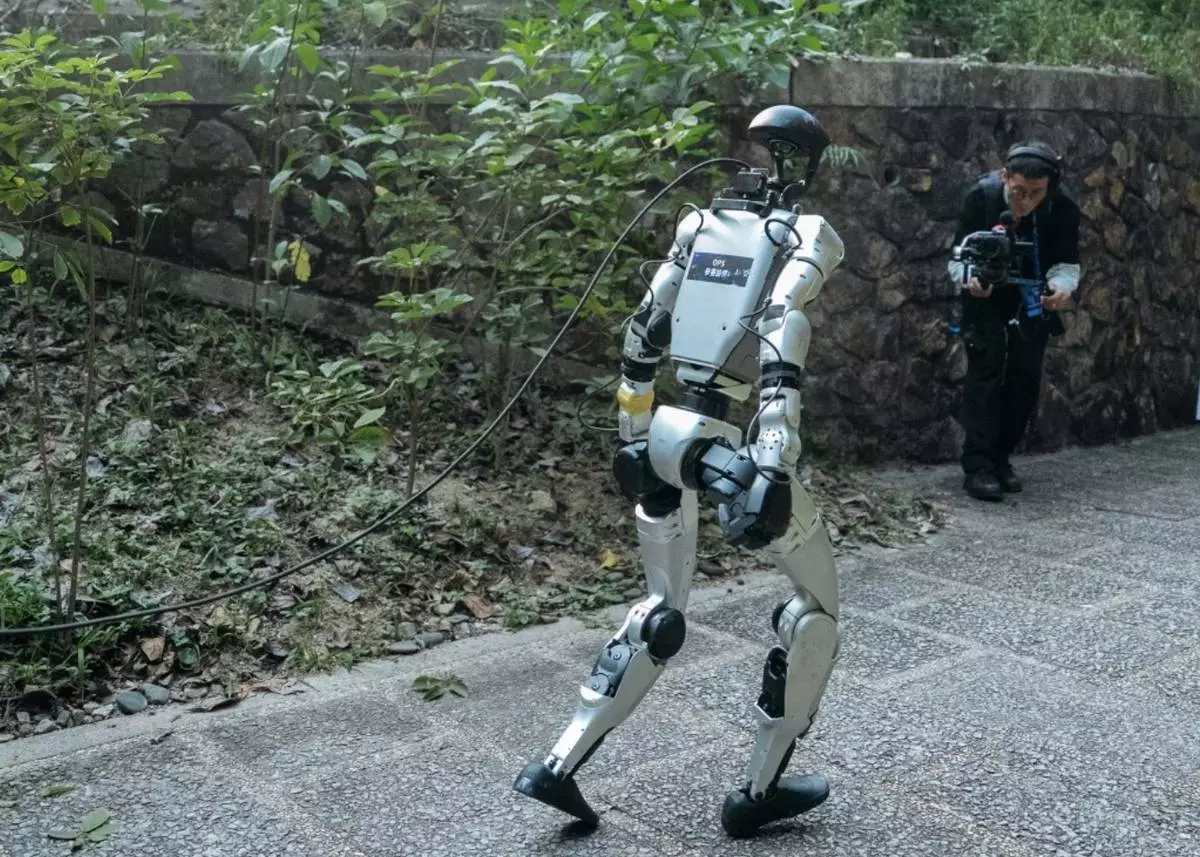
ATEC2025·Real-World Extreme Challenge implements a “no remote control” rule, encouraging teams to rely solely on fully autonomous systems
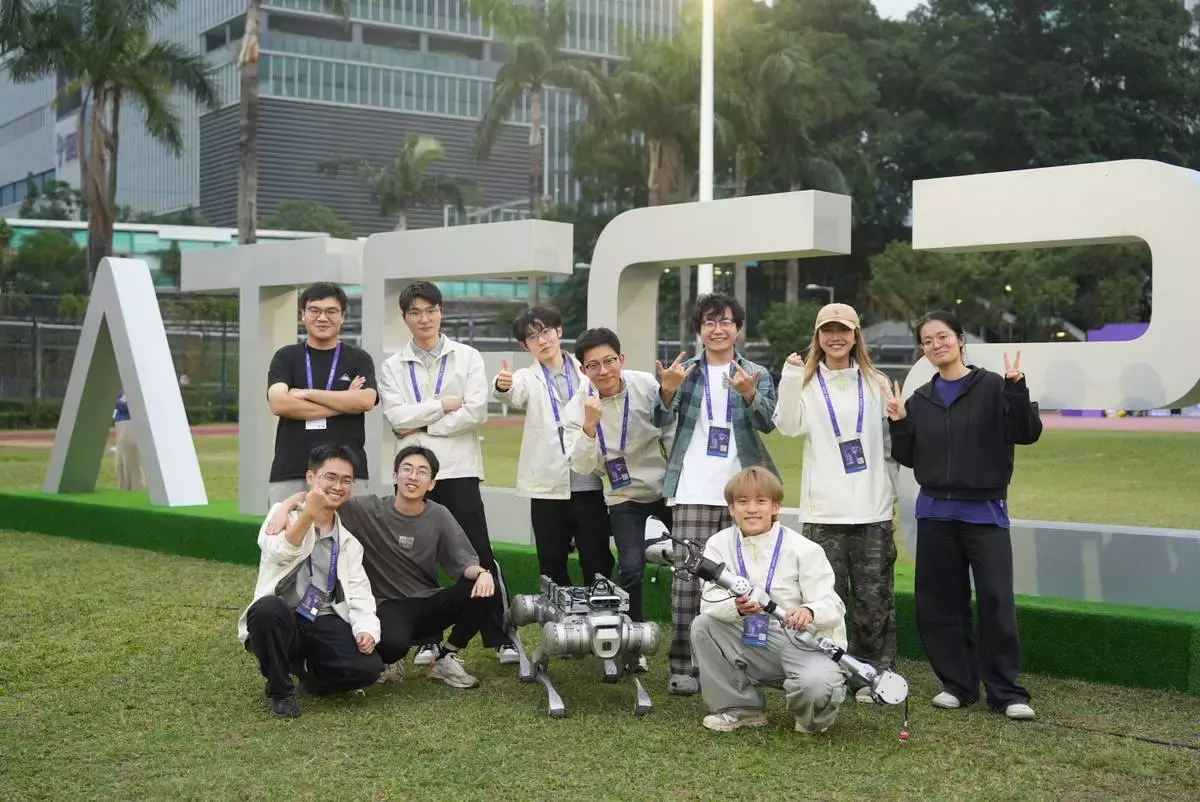
A Zhejiang University team wins ATEC2025·Real-World Extreme Challenge