VILLA RICA, Ga. (AP) — A 12-year-old girl was taken to a hospital and died days after she collapsed in the street following a fistfight near a school bus stop in her Georgia neighborhood, according to police.
The death of sixth grader Jada West is being investigated by police in suburban Villa Rica, about 30 miles (48 kilometers) west of Atlanta.
Sgt. Spencer Crawford, a police spokesman, said Wednesday that investigators are reviewing evidence, including cellphone video of the fight, and are awaiting autopsy results. He said police plan to meet later this week with prosecutors, who will ultimately decide whether to bring charges.
The fight between Jada and another student from Mason Creek Middle School broke out at an intersection near the girl's home on Thursday afternoon, Crawford said.
Cellphone video posted by Jada's aunt on social media shows a school bus leaving the scene more than 90 seconds before any punches get thrown. The video shows Jada and another girl yelling and taunting each other while standing a good distance apart. A group of classmates stands watching them.
Someone can be heard saying, “Who is going to fight you over some noise?”
The video shows both girls putting down their backpacks at roughly the same time. They approach each other and then begin throwing punches. Within seconds, they fall to the pavement, clutching each other, with Jada landing on her back and rolling backward feet-first over her head and neck.
Both girls stand up before a woman intervenes, and the adult can be heard telling Jada to go home. The video shows Jada picking up her backpack and appearing to walk away when the clip ends.
It's unclear what happened next, but Jada didn't make it home. Crawford said police were dispatched on a call of “a young juvenile who was in cardiac arrest laying in the street.”
“When we actually arrived, paramedics were on the scene, and they were already loading her up and performing CPR,” Crawford said. "Paramedics told us there was an adult on the scene performing CPR when they arrived.”
Jada was taken to a hospital. On Sunday, her mother, Rashunda McClendon, posted a video to Facebook asking people to “please pray for my baby. She's fighting for her life.”
Jada's aunt, De'Quala McClendon, later announced on Facebook on Sunday that her niece had died.
“Now you got your spiritual crown,” she wrote, “it hurts so so bad but I know you are ok.”
Rashunda McClendon declined to speak with an Associated Press reporter who came to her home on Wednesday.
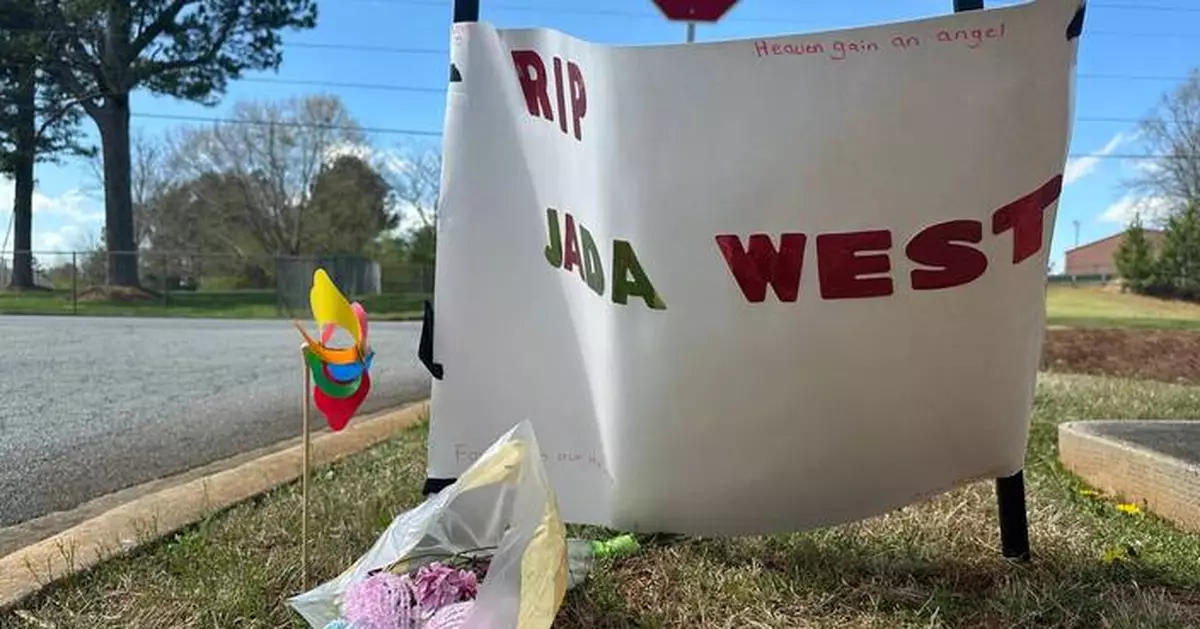
A paper sign staked into the ground near the scene of the fight said, “RIP JADA WEST,” and bore the message: “Heaven gain an angel.” A bouquet and a plastic pinwheel were left beside it.
Douglas County District Attorney Dalia Racine said in a statement that her office is aware of the police investigation into Jada's death but gave no further comment.
The Douglas County School System, in a statement, described Jada as “an upbeat, kind, and vibrant student.” It said counselors were made available at the school to speak with students and staff.
“This incident did not occur on school property or during school hours, and there is nothing to indicate that this is related to any on-campus activity,” the school district's statement said.
Bynum reported from Savannah, Georgia.
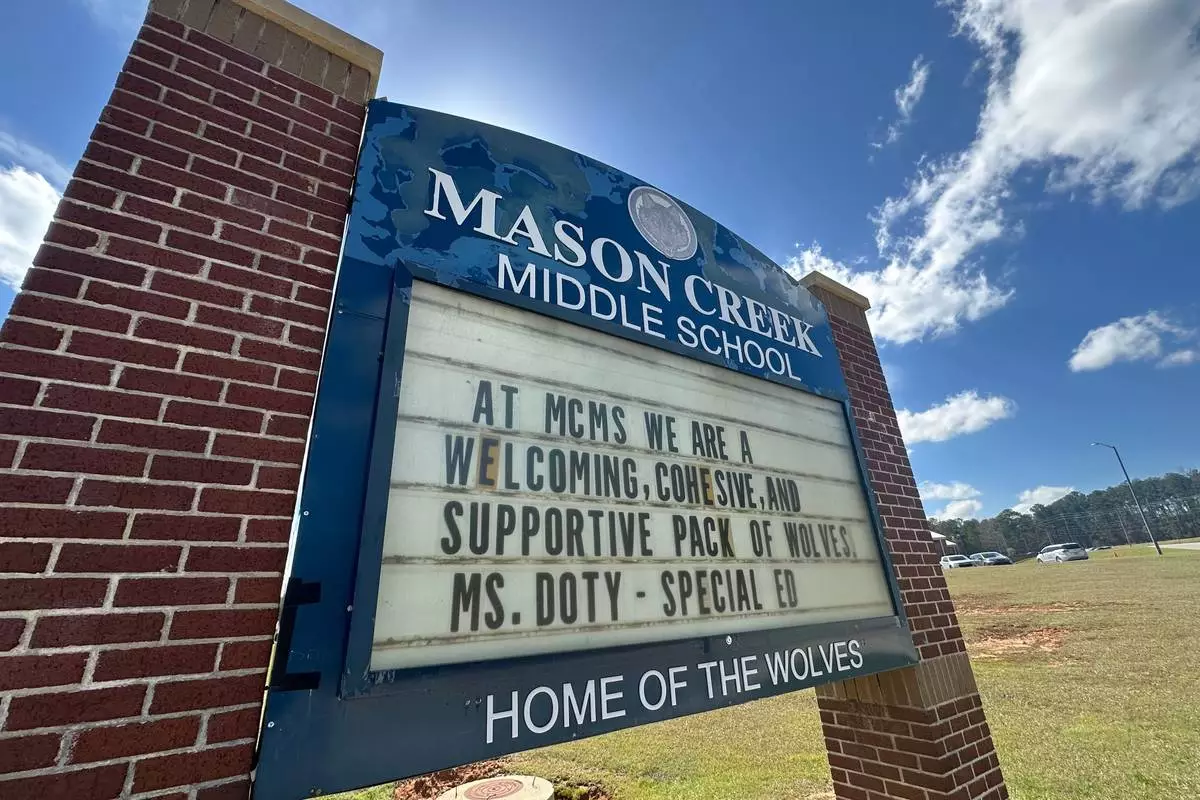
A sign outside Mason Creek Middle School in Winston, Ga., displays a message, Wednesday March 11, 2026. (AP Photo/Kate Brumback)
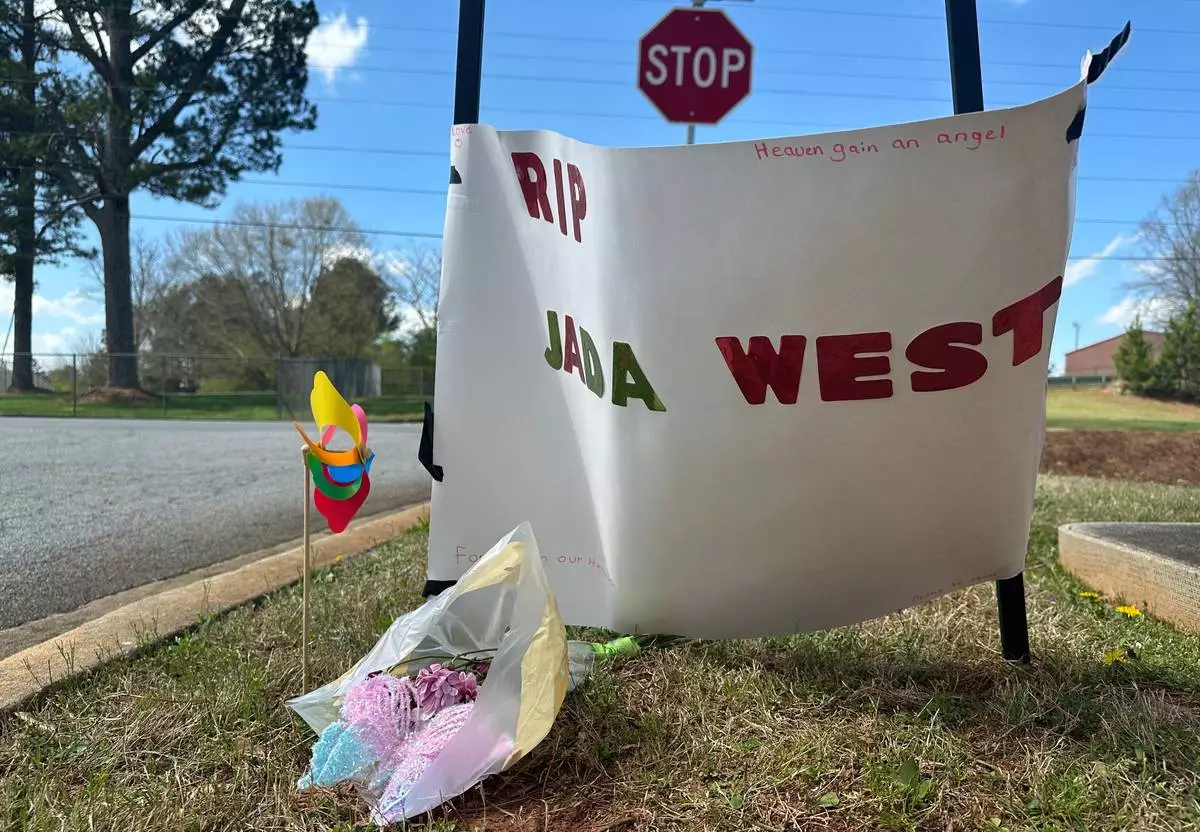
A paper sign left in memory of Jada West stands in her neighborhood in Villa Rica, Ga., Wednesday, March 11, 2026. (AP Photo/Kate Brumback)
President Donald Trump's administration is arguing that the war in Iran has already ended because of the ceasefire that began in early April, an interpretation that would allow the White House to avoid the need to seek congressional approval.
The statement furthers an argument laid out by Defense Secretary Pete Hegseth during testimony in the Senate on Thursday, when he said the ceasefire effectively paused the war. Under that rationale, the administration has not yet met the requirement mandated by a 1973 law to seek formal approval from Congress for military action that extends beyond 60 days.
While the ceasefire has since been extended, Iran maintains its chokehold on the Strait of Hormuz, and the U.S. Navy is maintaining a blockade to prevent Iran’s oil tankers from getting out to sea.
Here's the latest:
Many Republicans who have been uneasy with Trump’s war in Iran emphasized that there would be a May 1 deadline for Congress to intervene. But the date is now set to pass with no action from GOP lawmakers who continue to defer to the White House.
Under the War Powers Resolution of 1973, Congress must declare war or authorize the use of force within 60 days — a deadline that falls on Friday — or within 90 days if the president asks for an extension. But Congress made no attempt at enforcing that requirement, leaving town for a week on Thursday after the Senate rejected a Democratic attempt to halt the war for a sixth time.
The Trump administration has shown no interest in seeking congressional approval at all. It is arguing that the deadlines set by the law don’t apply because the war in Iran effectively ended when a ceasefire began in early April.
Senate Majority Leader John Thune, R-S.D., said Thursday he doesn’t plan on a vote to authorize force in Iran or otherwise weigh in.
▶ Read more
President Donald Trump granted a key approval Thursday for a major new oil pipeline from Canada into the U.S. that’s been dubbed “Keystone Light” over its similarities to a contentious project blocked by the Biden administration.
The three-foot-wide (1 meter) Bridger Pipeline Expansion would carry up to 550,000 barrels (87,400 cubic meters) of oil a day from Canada through Montana and Wyoming, where it would link with another pipeline.
The pipeline needs additional state and federal environmental approvals before construction, which company officials expect to start next year. Environmentalists hope to stop the project over worries that the pipeline could break and spill.
At peak volume, the 650-mile (1,050-kilometer) pipeline would move two-thirds as much oil as the better-known Keystone XL pipeline that got partially built before President Joe Biden, citing climate change, canceled its permit on the day he took office in 2021.
▶ Read more
Federal prosecutors released a video Thursday showing the moment authorities say a man armed with guns and knives tried to storm the White House Correspondents’ Association dinner and attempt to kill Trump.
Jeanine Pirro, the U.S. attorney for Washington, posted the video on social media amid questions over whose bullet struck a Secret Service officer as Cole Tomas Allen ran through security with a long gun toward the hotel ballroom packed with journalists, administration officials and others.
Prosecutors had previously claimed the agent was shot in the bullet-resistant vest during the melee, but had not confirmed it was Allen who shot the agent. Pirro, however, said Thursday that there is no evidence that the officer was hit by friendly fire.
Allen was injured but was not shot during the Saturday night attack at the Washington Hilton, which disrupted one of the highest-profile annual events in the nation’s capital.
▶ Read more
The Trump administration is arguing that the war in Iran has already ended because of the ceasefire that began in early April, an interpretation that would allow the White House to avoid the need to seek congressional approval.
The statement furthers an argument laid out by Defense Secretary Pete Hegseth during testimony in the Senate earlier Thursday, when he said the ceasefire effectively paused the war. Under that rationale, the administration has not yet met the requirement mandated by a 1973 law to seek formal approval from Congress for military action that extends beyond 60 days.
A senior administration official, who spoke on condition of anonymity to discuss the administration’s position, said for purposes of that law, “the hostilities that began on Saturday, Feb. 28 have terminated.” The official said the U.S. military and Iran have not exchanged fire since the two-week ceasefire that began April 7.
While the ceasefire has since been extended, Iran maintains its chokehold on the Strait of Hormuz, and the U.S. Navy is maintaining a blockade to prevent Iran’s oil tankers from getting out to sea.
▶ Read more
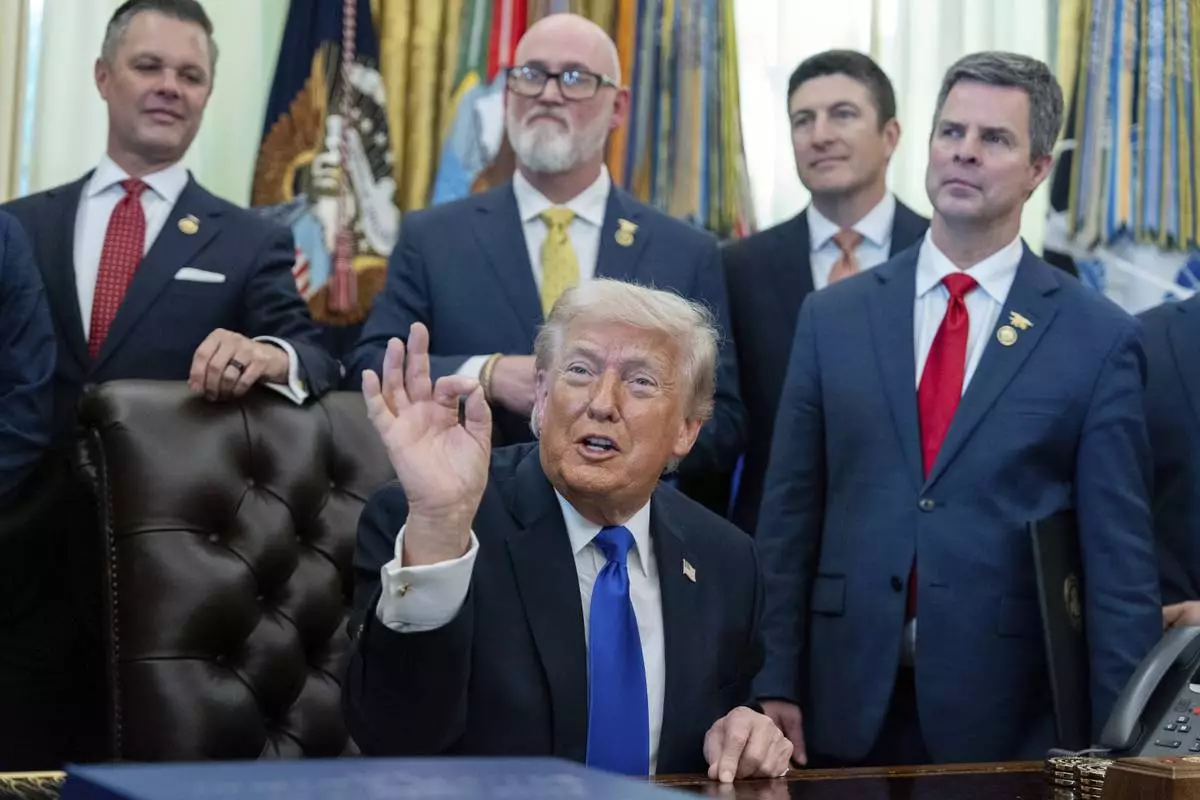
President Donald Trump speaks in the Oval Office of the White House, Thursday, April 30, 2026, in Washington. (AP Photo/Alex Brandon)
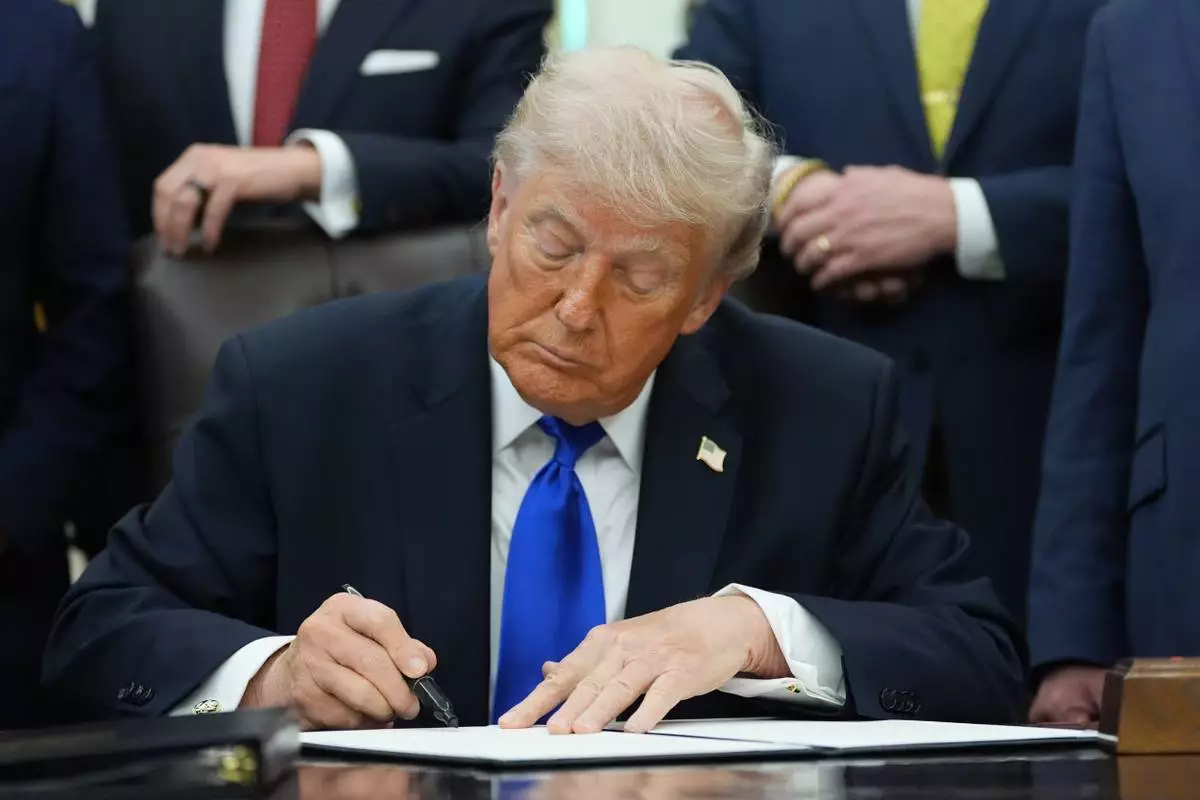
President Donald Trump signs a presidential permit regarding pipeline construction in the Oval Office of the White House, Thursday, April 30, 2026, in Washington. (AP Photo/Alex Brandon)