AUSTIN, Texas--(BUSINESS WIRE)--May 1, 2026--
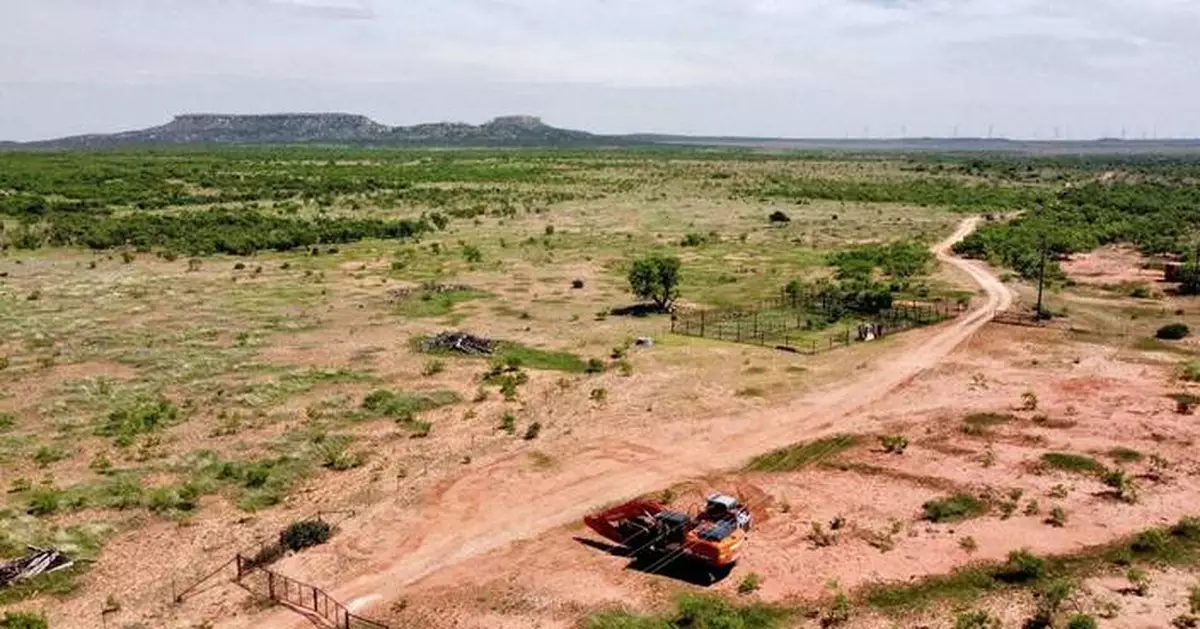
Energea, a global renewable energy developer and operator that manages four renewable energy investment portfolios, announced that construction has begun on Iron Spur Solar, a 140 MW DC utility-scale solar power project in Snyder, Texas, for which Energea has provided financing. Construction is expected to reach full operation in early 2029. Iron Spur's has secured an exclusivity agreement with an investment-grade corporate energy user for a long-term Power Purchase Agreement.
This press release features multimedia. View the full release here: https://www.businesswire.com/news/home/20260501012610/en/
Energea will provide up to $5 million of secured convertible financing for the Iron Spur project. An initial $762,000 initial investment was made through its Solar in the USA Portfolio. The financing is Energea’s first for an industrial-scale solar project in the U.S., utilizing an innovative convertible loan structure that generates immediate income while maintaining a clear path to majority project ownership.
“Iron Spur is a strategic evolution for our Solar in the USA portfolio, adding utility-scale exposure and immediate cash generation during the traditionally non-income-producing construction phase,” said Mike Silvestrini, Co-Founder and Managing Partner at Energea. “We see excellent investment opportunities in industrial-scale solar and anticipate expanding further beyond distributed generation projects for which we are known, while maintaining Energea's focus on immediate cash yield and strong contractual protection. The Iron Spur Project speaks to our focus on risk-adjusted returns, providing secured debt protection today while preserving the optionality to convert to majority equity ownership as the project reaches key milestones.”
The Iron Spur project is strategically located in West Texas, one of the most established and liquid utility-scale solar markets in the United States. The ground-mounted, single-axis tracked facility is expected to generate approximately 317 GWh of electricity annually once operational, supported by a 35-year land lease and a de-risked interconnection strategy that avoids costly substation upgrades.
Rather than acquiring the project outright, Energea is providing development capital through a secured, convertible loan to the project's special purpose entity, CT Solar One, LLC. The structure features monthly cash interest payments providing immediate income, a five-year maturity on each loan advance, and a first-priority security interest in 100% of the project's equity.
Iron Spur has secured key development milestones including site control, interconnection applications, and an exclusivity agreement with an investment grade buyer for a long-term Power Purchase Agreement. The project is eligible for the 30% federal Investment Tax Credit with potential domestic content upside, and benefits from a structured EPC procurement process aligned with ERCOT utility-scale benchmarks.
The Iron Spur project is being developed by Levona Renewables, a U.S.-based utility-scale solar developer, and is set to be part of a broader platform, with Levona and Energea exploring additional opportunities to collaborate on future utility-scale solar projects in the region.
About Energea
Energea is a U.S.-based renewable energy investment platform that connects individual investors with solar projects worldwide. Energea manages four investment portfolios consisting of solar energy projects, including Solar in the USA, LATAM Energy, Solarize Africa, and Community Solar in Brazil. Since launching in 2020, Energea has raised over $450 million and generated a 12% realized IRR for investors. By combining financial returns with measurable environmental and social impact, Energea enables people to participate in the global energy transition. Learn more at energea.com.
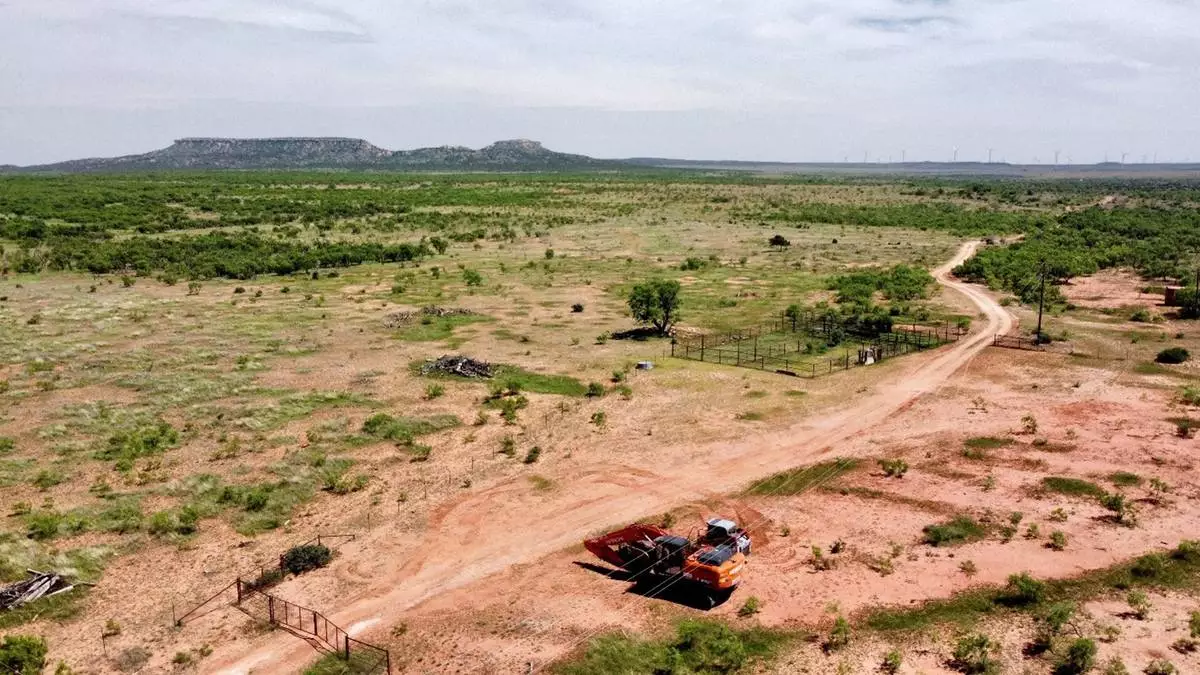
Construction has begun at the 140 MW Iron Spur Solar Project in Snyder, Texas
LONDON (AP) — The Eurovision Song Contest is turning 70, with a few political clouds hanging over its glitter-drenched party.
The annual musical extravaganza that has been likened to a pop music Olympics takes place in Vienna, Austria, May 12-16. It will see singers and bands from 35 countries compete onstage for the continent’s musical crown — but with some high-profile absentees who are boycotting to protest Israel’s participation.
Here’s a guide to all things Eurovision: What it is, who to watch for and how to take part.
Eurovision is an international pop music competition founded in 1956 to test new live-broadcasting technology and foster unity after the trauma of World War II. From an initial seven contestants, it grew to include dozens of nations from across Europe, as well as farther-flung Israel and Australia.
The contest is a campy yet heartfelt celebration of diversity, national pride and the joyous power of pop with a global fanbase. Organizers say last year’s competition was watched by 166 million people around the world, and fans from 75 countries have bought tickets for the live shows in Vienna.
The contest has displayed moments of supreme silliness — winning songs “La, La, La” and “Boom Bang-a-Bang,” anyone? — as well as pieces of pop perfection like ABBA ’s 1974 winner “Waterloo."
Other memorable winners include Canadian chanteuse Celine Dion — who competed for Switzerland in 1988 — Austrian drag diva Conchita Wurst in 2014, Italian rock band Måneskin in 2021 and Ukrainian folk-rap group Kalush Orchestra in 2022.
Eurovision’s motto is “United by Music,” but it has repeatedly been embroiled in world events. Russia was expelled in 2022 after its full-scale invasion of Ukraine.
The 2024 contest in Malmo, Sweden, and last year’s event in Basel, Switzerland, saw pro-Palestinian protests that called for Israel to be expelled over its conduct of its war against Hamas in Gaza and allegations it tried to manipulate voting in favor of its contestant.
Tensions came to a head in December when five countries — Iceland, Ireland, the Netherlands, Slovenia and Spain — pulled out of the contest after organizers decided to allow Israel to compete.
Bulgaria, Moldova and Romania have returned after skipping the event for artistic or financial reasons in recent years, meaning 35 countries will compete in Vienna, down from 37 in 2025. Several pro-Palestinian protests are planned during Eurovision week.
Eurovision historian Dean Vuletic said “Eurovision is Europe’s biggest election,” with winners decided by a mix of national juries and viewers' votes.
Finland is the oddsmakers’ favorite with “Liekinheitin” (“Flamethrower”), a high-intensity mashup featuring violinist Linda Lampenius and pop singer Pete Parkkonen.
Also highly rated are 17-year-old French singer Monroe with pop-operatic love ballad “Regarde!” and Denmark’s Søren Torpegaard Lund with the sultry “Før Vi Går Hjem” (“Before We Go Home”).
Australia, a keen Eurovision participant despite being thousands of miles from Europe, has sent established star Delta Goodrem with “Eclipse,” a slick midtempo ballad. Greece’s Akylas is becoming a fan favorite with party-rap track “Ferto” (“Bring It”).
Vuletic also tipped Cyprus' entry, the folk-influenced dance-pop song “Jalla” by Antigoni. It's already a hit on YouTube and “could be the up-tempo feelgood song that people vote for,” he said.
Israel, which has won Eurovision four times and came second in 2025, has sent crooner Noam Bettan with the ballad “Michelle.” Singer Senhit, representing tiny San Marino, has enlisted 1980s icon Boy George to make a guest appearance on party anthem “Superstar.”
Paul Jordan, an expert known as Dr. Eurovision, said the contest has moved beyond its reputation for “sugary pop.” This year's entries range from classically influenced “popera” to electro-pop, power ballads and folk-influenced songs.
“There’s not a lot of cheesy pop numbers,” Jordan said. “There’s such diversity that I don’t think there is such a thing as a ‘Eurovision sound’ anymore.”
Traditionally the competition is hosted by the previous year’s winner, and last year’s victor was Austrian singer JJ with pop-opera song “Wasted Love.” The 2026 contest is being held at the Wiener Stadthalle in Vienna, the third time Austria’s capital has hosted Eurovision.
The competition will be aired by national broadcasters in participating nations, on streaming service Peacock in the United States and on the Eurovision YouTube channel in some countries.
Participating countries each enter a singer or band with an original song that can be no more than three minutes long and is performed live, often with spectacular staging.
Two semifinals, on May 12 and 14, will winnow the field of competitors down to 25 who will compete in the grand final on May 16, hosted by Austrian singer/crystal heiress Victoria Swarovski and actor Michael Ostrowski.
Viewers in participating countries can vote during the live final by phone or text message, but aren’t allowed to vote for their own country’s act. Viewers in the U.S. and other nonparticipating countries can vote online at www.esc.vote.
Each country's public vote is translated into points, on a scale of one to 12, for the highest-ranked acts.
The European Broadcasting Union, which runs Eurovision, has toughened voting rules in response to vote-rigging allegations, halving the number of votes per payment to 10 and tightening safeguards against “suspicious or coordinated voting activity.”
After a voting interval, each country in turn announces its jury and public voting results, with the points tallied on-screen until a winner emerges. The fast-changing rankings and suspense about whether any country gets the dreaded “nul (zero) points” are all part of the excitement.
The withdrawal of countries including seven-time winner Ireland and Spain — one of the “big five” nations that pay the most to the contest — is a major blow at a time when many public broadcasters face funding pressures and social media has lured away some eyeballs.
Eurovision is looking to the future, and to other continents, with the first Eurovision Song Contest Asia due to take place in Bangkok in November.
Jordan said that, at 70, Eurovision is “part of our European culture” and can weather the latest storm.
“It still gets people talking. It still brings us all together. It still gets huge viewing figures, it’s still creating hits,” he said. “At a time when broadcasting is changing, people still make a date with their television set on that Saturday night.”
For more coverage of the Eurovision Song Contest, visit: https://apnews.com/hub/eurovision-song-contest
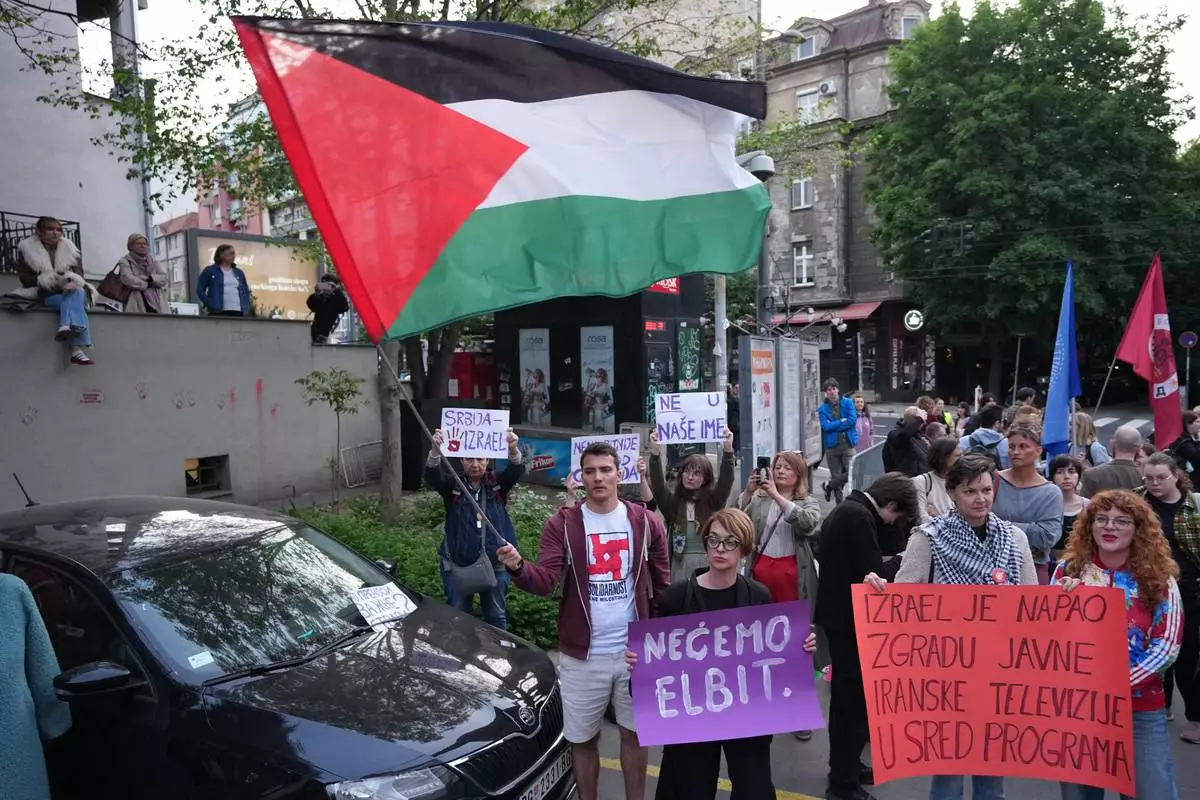
People attend a rally against Israel's participation in the Eurovision Song Contest in front of the state-run TV headquarters in Belgrade, Serbia, Tuesday, April 28, 2026. (AP Photo/Darko Vojinovic)
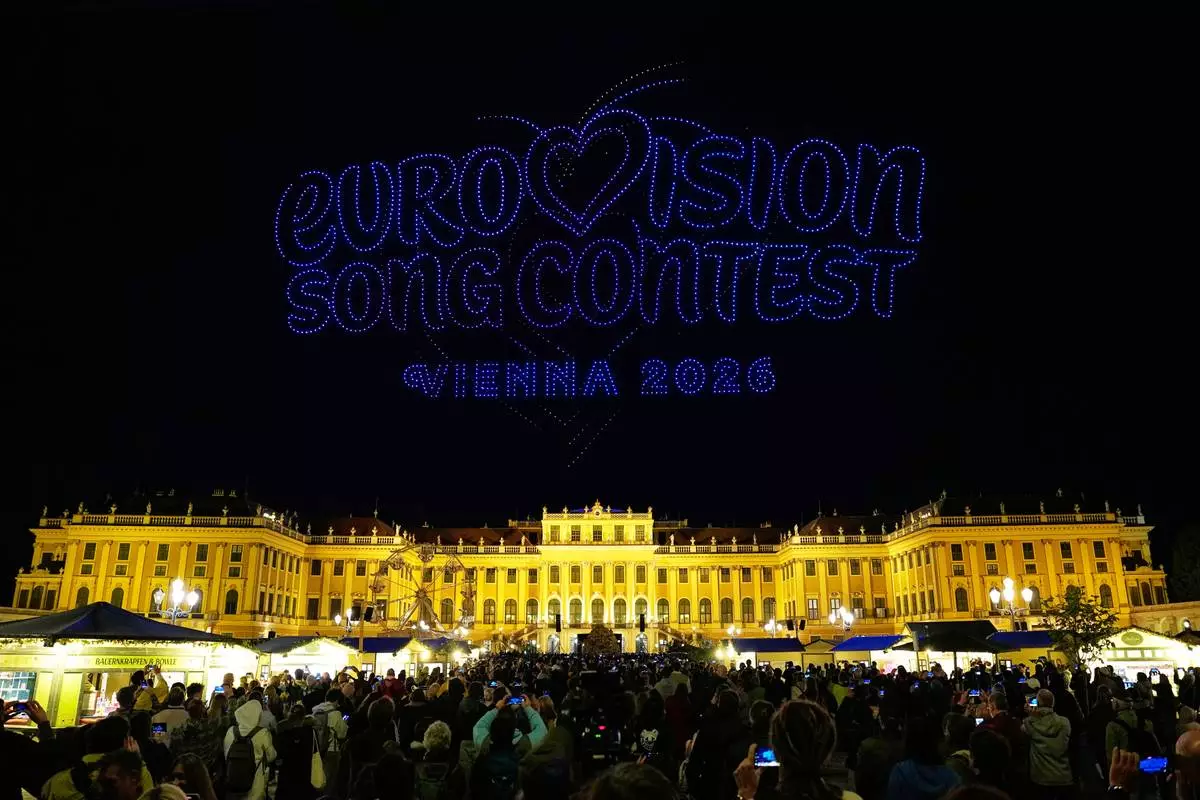
3000 drones depicts the logo sign in preparation for the upcoming Eurovision Song Contest in front of castle Schonbrunn in Vienna, Austria, Monday, April 27, 2026. (AP Photo/Matthias Schrader)
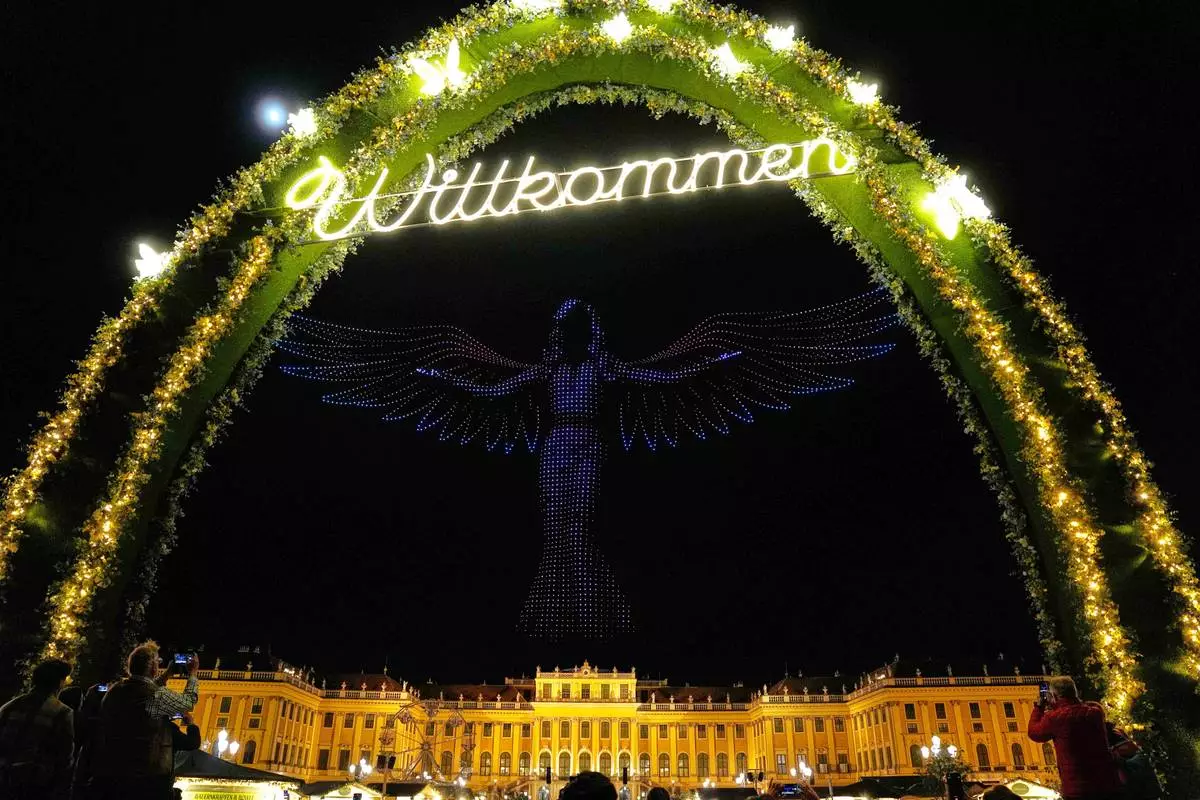
3000 drones depicts a picture of Austrian super star Concita Wurst in preparation for the upcoming Eurovision Song Contest in front of castle Schonbrunn in Vienna, Austria, Monday, April 27, 2026. (AP Photo/Matthias Schrader)
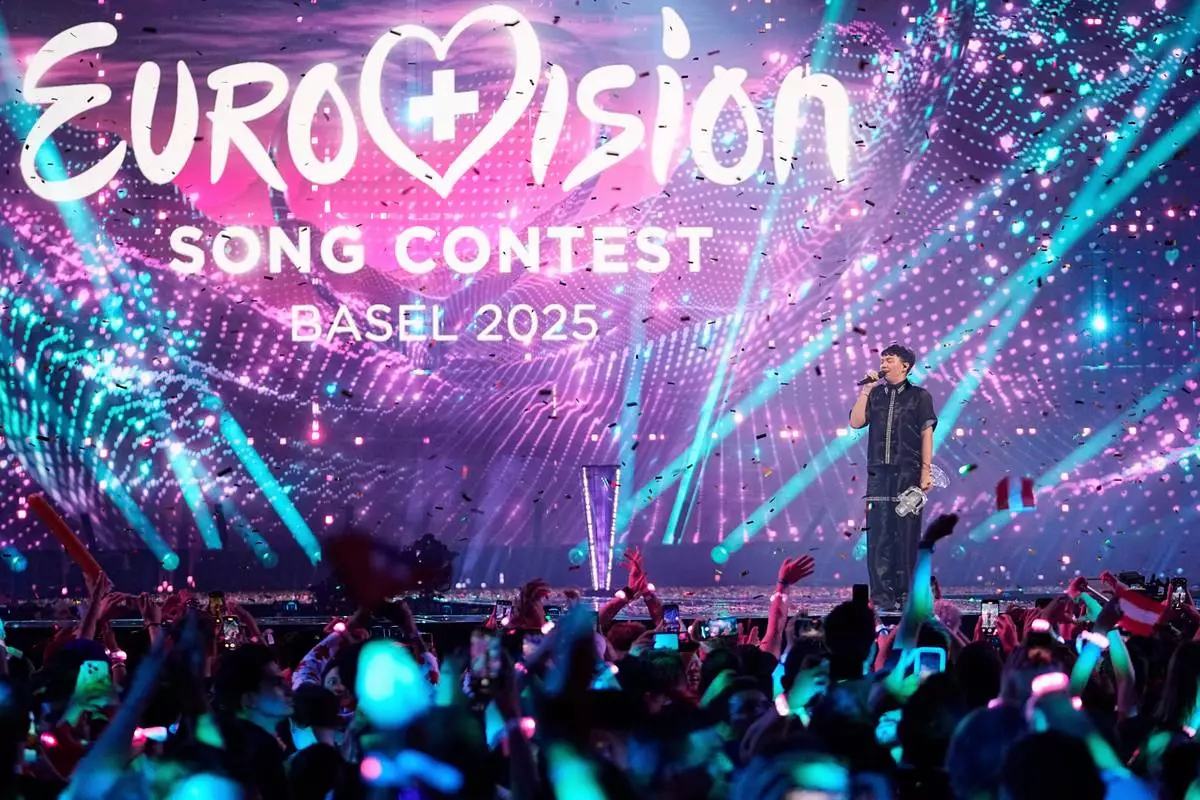
FILE - JJ from Austria stands on the stage with the trophy after winning the Grand Final of the 69th Eurovision Song Contest, in Basel, Switzerland, May 18, 2025. (AP Photo/Martin Meissner, File)