China's equipment manufacturing sector has demonstrated robust growth, with its sales revenue rising by 8.3 percent year on year in the first 11 months of 2025, according to data released by the State Taxation Administration on Monday.
The latest value-added tax (VAT) invoice data shows that the high-end development of the manufacturing industry accelerated in the first 11 months of the year. Sales revenue in the equipment manufacturing industry increased by 8.3 percent year on year. Among them, the computer and communication equipment manufacturing industry and the instrumentation manufacturing industry saw year-on-year sales revenue increases of 12.3 percent and 10.3 percent respectively.
Dai Shiyou, director of Tax Policy and Legislation Department, under the State Taxation Administration, said at a press conference that data shows that the pace of intelligent upgrading in the manufacturing industry is accelerating.
"From January to November, with the implementation of large-scale equipment upgrade policies, the amount of money spent by manufacturing enterprises on purchasing automated equipment increased by 14.2 percent year on year, reflecting the accelerated pace of intelligent upgrading in the industry. The amount spent by manufacturing enterprises on purchasing digital technologies increased by 11.2 percent year on year, also showing the further deepening integration of digital technologies with manufacturing," Dai said.

China sees robust growth in equipment manufacturing in first 11 months
U.S. stocks ended mixed on Monday as investors weighed escalating tensions in the Middle East and their potential impact on global oil supplies.
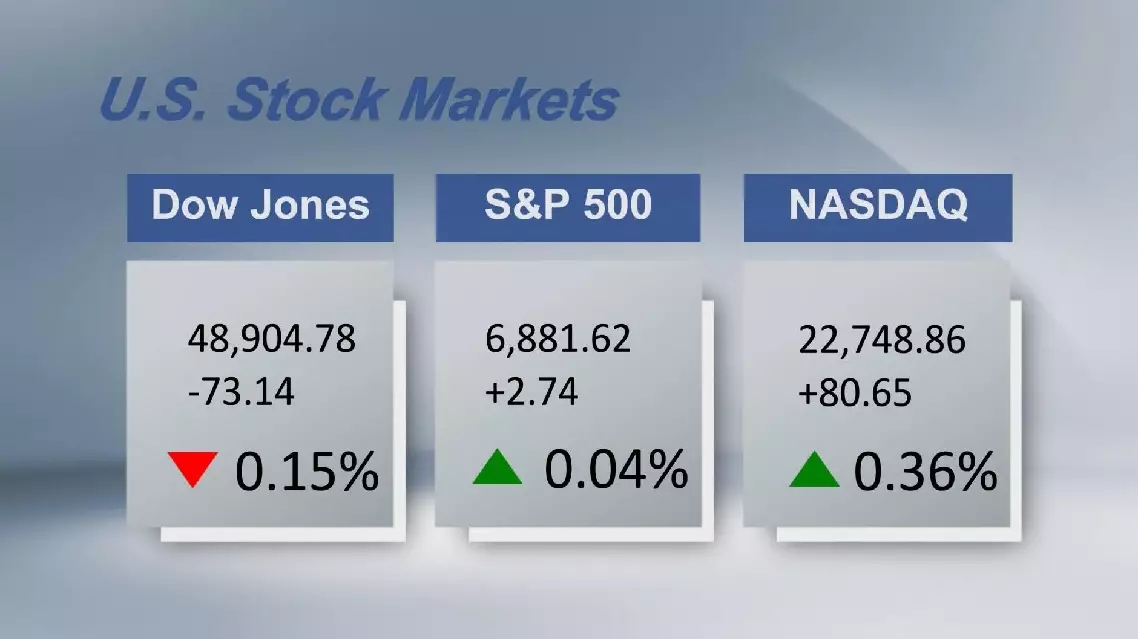
The Dow Jones Industrial Average fell 73.14 points or 0.15 percent to 48,904.78. The S and P 500 added 2.74 points or 0.04 percent to 6,881.62. The Nasdaq Composite Index increased 80.65 points or 0.36 percent to 22,748.86.
Seven of the 11 primary S and P 500 sectors ended in the red. Consumer staples and consumer discretionary led the laggards, dropping 1.35 percent and 1.09 percent, respectively. Meanwhile, the energy and industrials sectors led the gainers, advancing 1.95 percent and 0.98 percent.
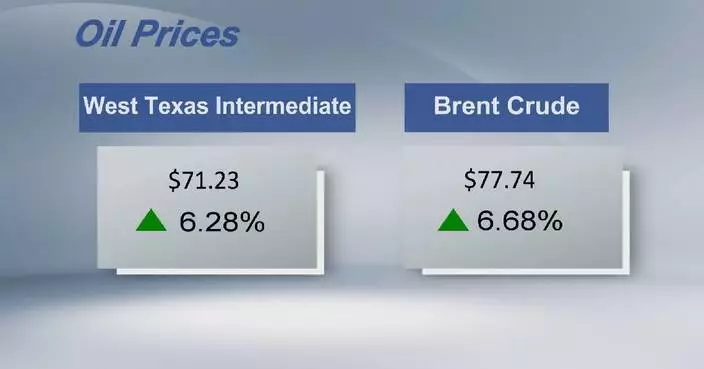
U.S. crude oil prices surged during the session as market participants expressed concerns over the interruption of supplies. Crude futures traded as much as 12 percent higher at their intraday peak.
Conversely, travel-related equities faced significant downward pressure due to the spike in energy costs. Major U.S. carriers, including Delta Air Lines, United Airlines, and American Airlines, declined between 2 percent and 5 percent.
In the technology sector, Nvidia gained 2.99 percent, and Microsoft rose 1.48 percent. Banking equities and economically sensitive stocks, such as Caterpillar, also managed to recover from earlier session lows to finish higher.
On the economic front, the Institute for Supply Management's Manufacturing Purchasing Managers' Index slipped to 52.4 in February from 52.6 in January. In the bond market, the yield on the benchmark 10-year U.S. Treasury note climbed over 8 basis points to reach 4.04 percent.
US stocks close mixed amid escalating Middle East tensions