BANGKOK (AP) — A history of enmity between Thailand and Cambodia over competing territorial claims has broken into open combat again, just a few months after the two sides agreed to a ceasefire promoted by U.S. President Donald Trump to end their border fighting.
The two Southeast Asian nations fought in July for five days in and around disputed frontier territory, causing dozens of civilian and military deaths and the evacuation to safety of tens of thousands of villagers on both sides.
Click to Gallery
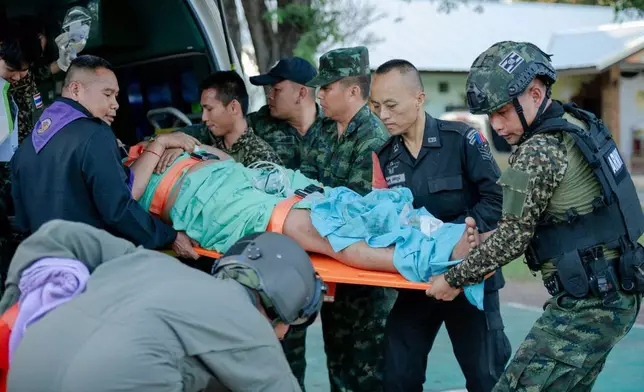
In this photo released by Royal Thai Army, a wounded Thai soldier is carried to be transferred to a hospital in Sisaket province, Thailand, Sunday, Dec. 7, 2025, after, according to a Thai army spokesperson, Cambodian troops fired into Thai territory. (Royal Thai Army via AP)
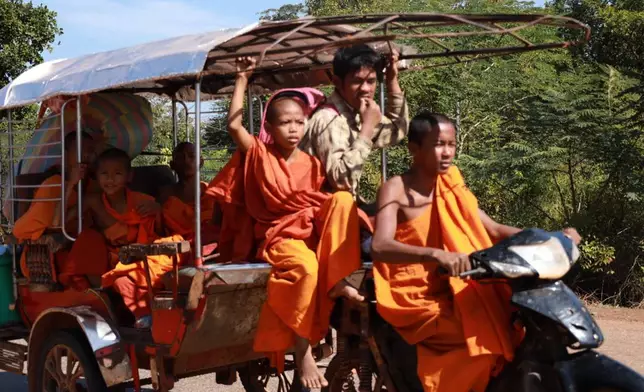
In this photo released by Agence Kampuchea Press (AKP), Cambodian Buddhist monks sit on a motor cart as they flee from their pagoda of Preah Vihear province, near the border with Thailand, Monday, Dec. 8, 2025. (AKP via AP)
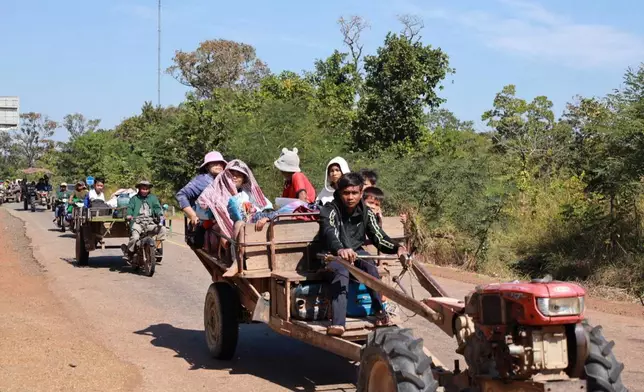
In this photo released by Agence Kampuchea Press (AKP), Cambodian villagers sit on tractors as they flee from the home in Preah Vihear province, Cambodia, Monday, Dec. 8, 2025. (AKP via AP)
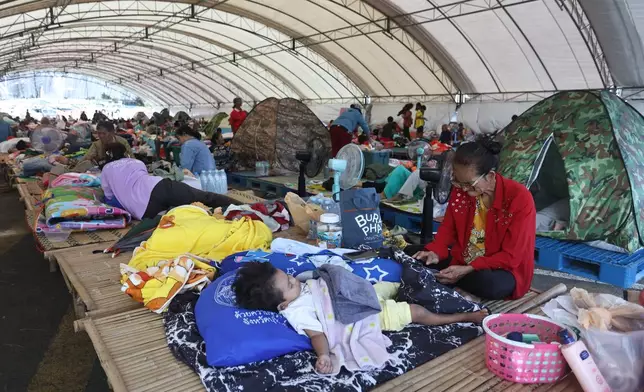
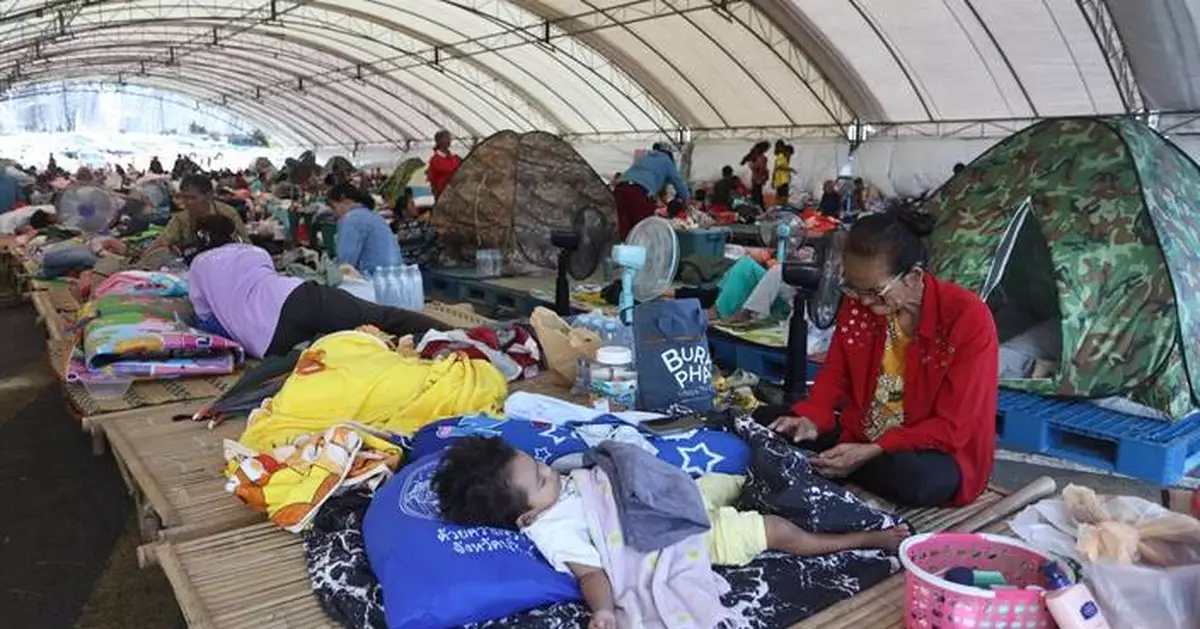
Thai residents who fled homes as Thailand and Cambodia clash over border, rest at an evacuation center in Buriram province, Thailand, Monday, Dec. 8, 2025. (AP Photo/Sopa Saelee)
On Monday, the heaviest fighting since the ceasefire erupted. While it is unclear who took the first shot, Thailand launched airstrikes along the border as ground combat also broke out.
Thailand and Cambodia have a history of enmity over centuries and experience periodic tensions along their land border of more than 800 kilometers (500 miles).
The competing territorial claims largely stem from a 1907 map created while Cambodia was under French colonial rule, which Thailand contends is inaccurate. Many Thais are still angered by a 1962 ruling by the International Court of Justice, which awarded sovereignty of disputed land to Cambodia — a decision reaffirmed in 2013. The disagreement fueled several armed clashes between 2008 and 2011.
An uneasy peace was reached in late July, when Malaysia pushed for peace talks and President Trump brought the contending sides to the negotiating table by leveraging the importance of the U.S. market for both nations’ exports, threatening to withhold crucial trade privileges.
Trump afterward claimed this intervention as one example among several from around the world where his actions led to peace between warring nations.
The preliminary pact was followed by a more detailed October agreement. Its terms called for coordination of de-mining operations, removal of heavy weapons and equipment from the border, implementation of measures to restore mutual trust, and desisting from harmful rhetoric and the dissemination of false information. None of these actions were implemented in full, if at all.
Both nations continued fighting a bitter propaganda war and there have been occasional minor outbreaks of cross-border violence.
A major Cambodian complaint has been that Thailand continues to hold 18 troops taken prisoner. Thailand accuses Cambodia of laying new land mines in the areas under dispute that maimed Thai soldiers. Cambodia says the mines are left over from decades of civil war that ended in 1999.
The failure to implement the ceasefire terms was used by the Thai side as an excuse not to promptly release the Cambodian prisoners, even though the October agreement urged it to do so “as a demonstration of Thailand’s desire to promote mutual confidence and trust."
Thailand is one of Washington’s closest and most longstanding allies. The country also holds a huge military advantage, best demonstrated by its mostly unchallenged ability to use air power.
But Cambodia has also been trying to strengthen its hand diplomatically. It was among the first countries to strongly support a Nobel Peace Prize nomination for Trump, even bringing out crowds to demonstrate in favor of that.
Cambodia has also employed an intensive propaganda campaign on social media portraying itself as the underdog and issuing frequent unverifiable accusations about Thai actions. Nationalistic saber-rattling has been ubiquitous on both sides.
Washington for its part appears to be trying to actively build better relations with Cambodia to woo it away from its close relationship with China, but that in turn has bred resentment in Thailand.
Cambodia has made further progress toward finalizing a trade deal with Washington than has Thailand, whose economy is much bigger and more complex.
Potential economic consequences go beyond trade.
The renewed fighting comes just as the winter tourism season is hitting its peak, and risks deterring tourists. Tourism is a major earner for both nations, which are still trying to recover from the battering the industry took during the coronavirus pandemic.
The ill feeling between the two neighbors is not just about overlapping border claims, but also deep-seated cultural enmity that has its roots from centuries ago, when they were large and competing empires.
In more modern times, bad feelings have lingered, as Cambodia’s development, hindered by French colonialism and, in the 1970s, the brutal rule of the communist Khmer Rouge, has fallen well behind Thailand.
Both have fought over claims on cultural products ranging from boxing, mask dancing, traditional clothing and food.
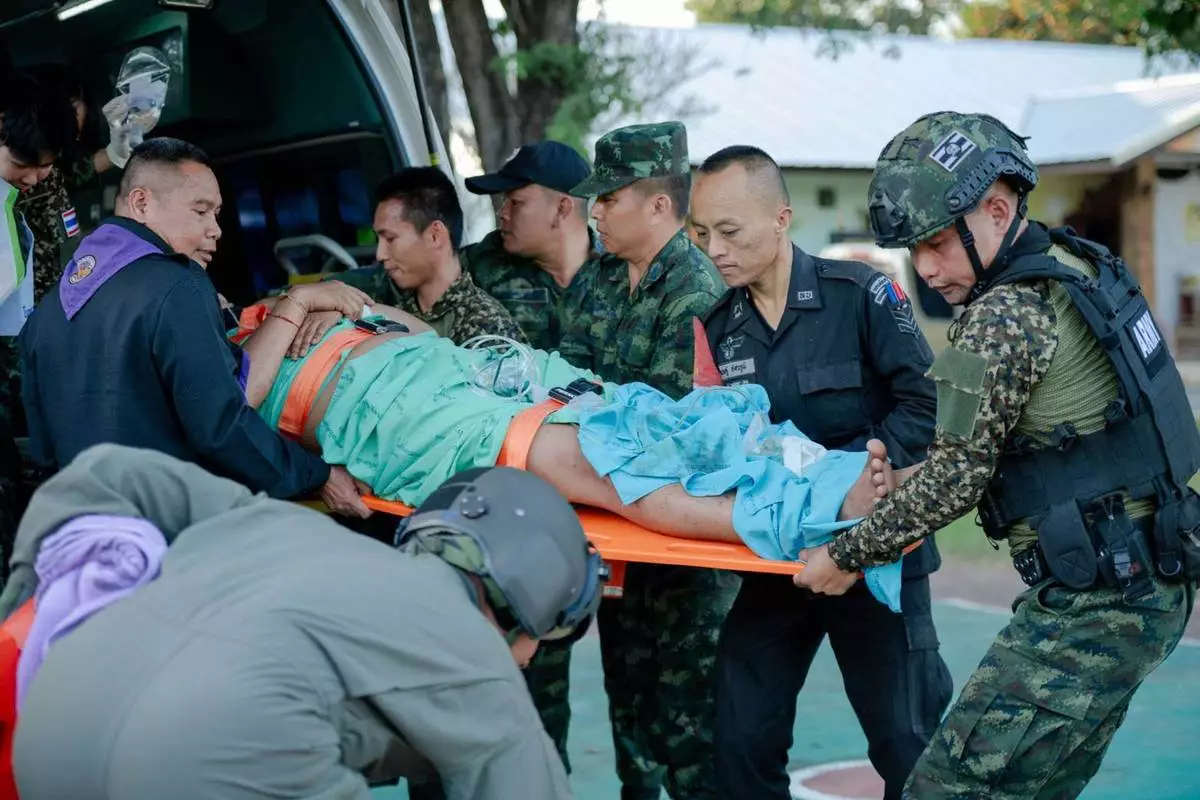
In this photo released by Royal Thai Army, a wounded Thai soldier is carried to be transferred to a hospital in Sisaket province, Thailand, Sunday, Dec. 7, 2025, after, according to a Thai army spokesperson, Cambodian troops fired into Thai territory. (Royal Thai Army via AP)
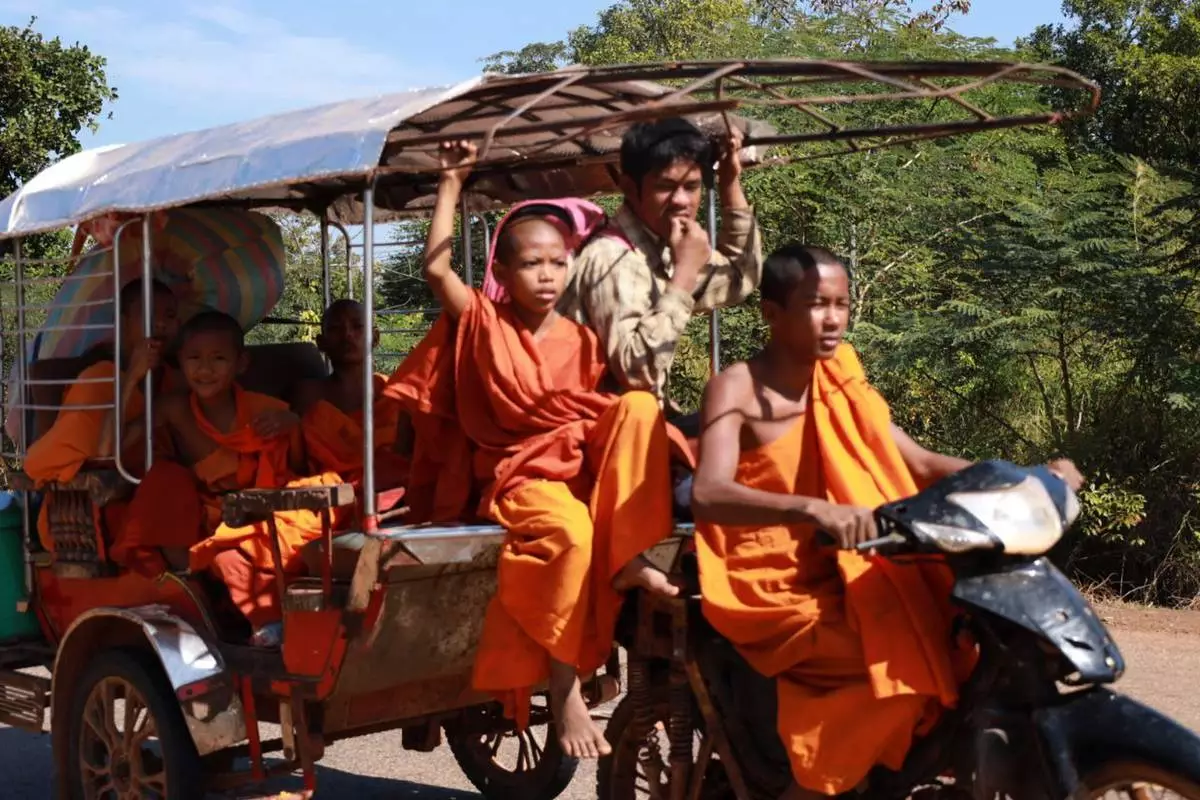
In this photo released by Agence Kampuchea Press (AKP), Cambodian Buddhist monks sit on a motor cart as they flee from their pagoda of Preah Vihear province, near the border with Thailand, Monday, Dec. 8, 2025. (AKP via AP)
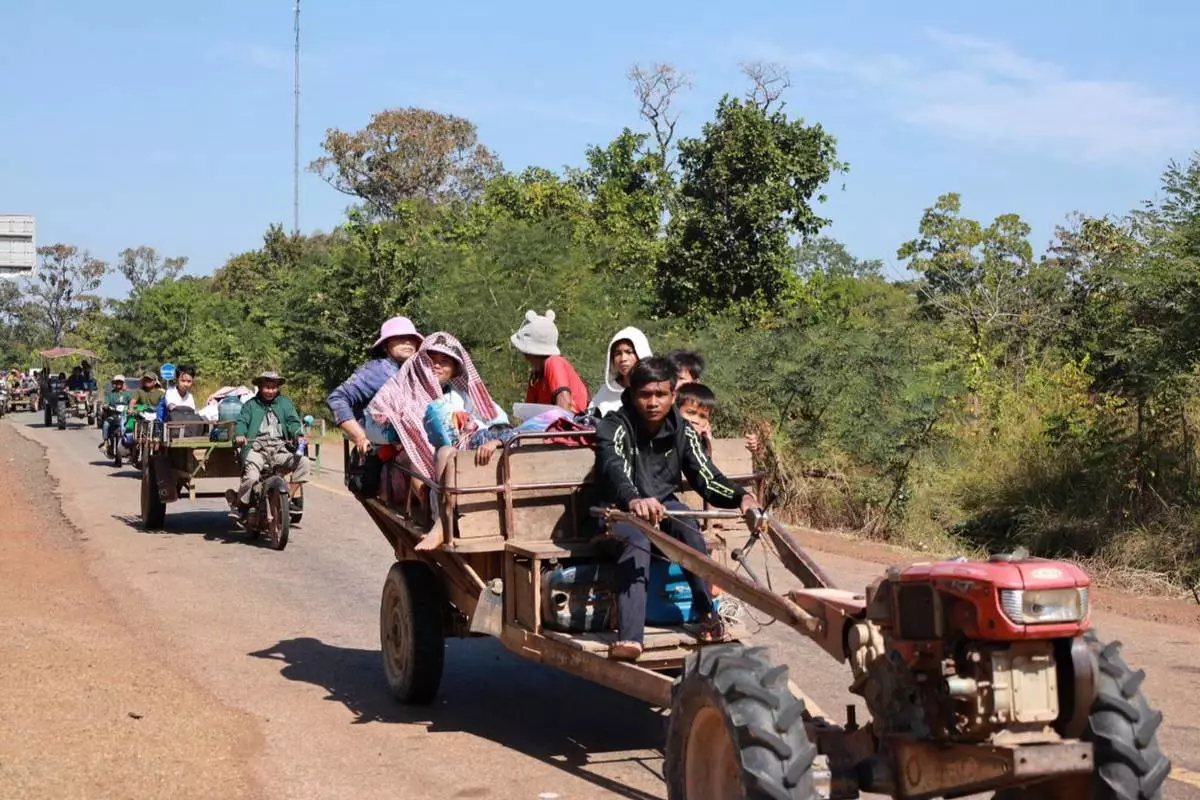
In this photo released by Agence Kampuchea Press (AKP), Cambodian villagers sit on tractors as they flee from the home in Preah Vihear province, Cambodia, Monday, Dec. 8, 2025. (AKP via AP)
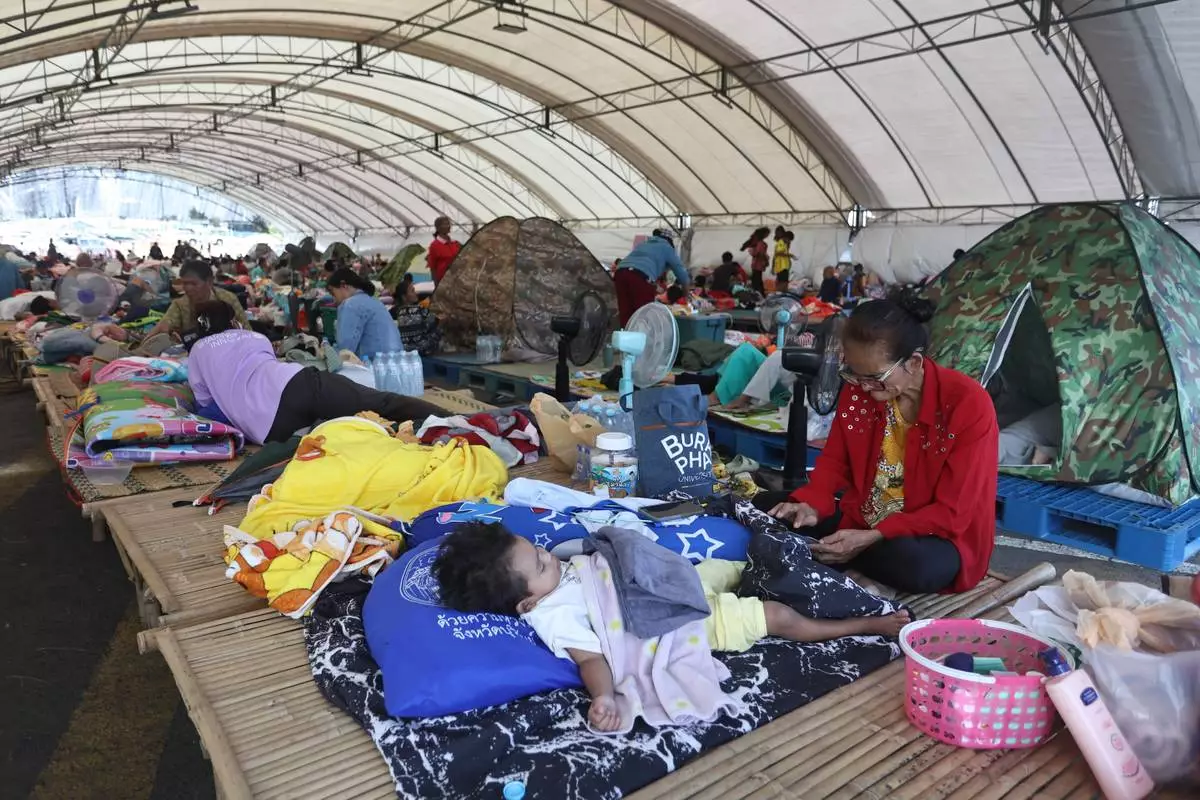
Thai residents who fled homes as Thailand and Cambodia clash over border, rest at an evacuation center in Buriram province, Thailand, Monday, Dec. 8, 2025. (AP Photo/Sopa Saelee)
HOMS, Syria (AP) — A year ago, Mohammad Marwan found himself stumbling, barefoot and dazed, out of Syria’s notorious Saydnaya prison on the outskirts of Damascus as rebel forces pushing toward the capital threw open its doors to release the prisoners.
Arrested in 2018 for fleeing compulsory military service, the father of three had cycled through four other lockups before landing in Saydnaya, a sprawling complex just north of Damascus that became synonymous with some of the worst atrocities committed under the rule of now-ousted President Bashar Assad.
He recalled guards waiting to welcome new prisoners with a gauntlet of beatings and electric shocks. “They said, ‘You have no rights here, and we’re not calling an ambulance unless we have a dead body,’” Marwan said.
His Dec. 8, 2024, homecoming to a house full of relatives and friends in his village in Homs province was joyful.
But in the year since then, he has struggled to overcome the physical and psychological effects of his six-year imprisonment. He suffered from chest pain and difficulty breathing that turned out to be the result of tuberculosis. He was beset by crippling anxiety and difficulty sleeping.
He’s now undergoing treatment for tuberculosis and attending therapy sessions at a center in Homs focused on rehabilitating former prisoners, and Marwan said his physical and mental situations have gradually improved.
“We were in something like a state of death” in Saydnaya, he said. “Now we’ve come back to life.”
On Monday, thousands of Syrians took to the streets to celebrate the anniversary of Assad's fall.
Like Marwan, the country is struggling to heal a year after the Assad dynasty’s repressive 50-year reign came to an end following 14 years of civil war that left an estimated half a million people dead, millions more displaced, and the country battered and divided.
Assad's downfall came as a shock, even to the insurgents who unseated him. In late November 2024, groups in the country’s northwest — led by Hayat Tahrir al-Sham, an Islamist rebel group whose then-leader, Ahmad al-Sharaa, is now the country’s interim president — launched an offensive on the city of Aleppo, aiming to take it back from Assad’s forces.
They were startled when the Syrian army collapsed with little resistance, first in Aleppo, then the key cities of Hama and Homs, leaving the road to Damascus open. Meanwhile, insurgent groups in the country’s south mobilized to make their own push toward the capital.
The rebels took Damascus on Dec. 8 while Assad was whisked away by Russian forces and remains in exile in Moscow. But Russia, a longtime Assad ally, did not intervene militarily to defend him and has since established ties with the country's new rulers and maintained its bases on the Syrian coast.
Hassan Abdul Ghani, spokesperson for Syrian Ministry of Defense, said HTS and its allies had launched a major organizational overhaul after Assad’s forces regained control of a number of formerly rebel-controlled areas in 2019 and 2020.
The rebel offensive in November 2024 was not initially aimed at seizing Damascus but was meant to preempt an expected major offensive by Assad’s forces in opposition-held Idlib intending to “finish the Idlib file,” Abdul Ghani said.
Launching an attack on Aleppo “was a military solution to expand the radius of the battle and thus safeguard the liberated interior areas," he said.
In timing the attack, the insurgents also took advantage of the fact that Russia was distracted by its war in Ukraine and that the Iran-backed Lebanese militant group Hezbollah, another Assad ally, was licking its wounds after a damaging war with Israel.
When the Syrian army’s defenses collapsed, the rebels pressed on, “taking advantage of every golden opportunity,” Abdul Ghani said.
Since his sudden ascent to power, al-Sharaa has launched a diplomatic charm offensive, building ties with Western and Arab countries that shunned Assad and that once considered al-Sharaa a terrorist.
In November, he became the first Syrian president since the country’s independence in 1946 to visit Washington.
But the diplomatic successes have been offset by outbreaks of sectarian violence in which hundreds of civilians from the Alawite and Druze minorities were killed by pro-government Sunni fighters. Local Druze groups have now set up their own de facto government and military in the southern Sweida province.
There are ongoing tensions between the new government in Damascus and Kurdish-led forces controlling the country’s northeast, despite an agreement inked in March that was supposed to lead to a merger of their forces.
Israel is wary of Syria's new Islamist-led government even though al-Sharaa has said he wants no conflict with the country. Israel has seized a formerly U.N.-patrolled buffer zone in southern Syria and launched regular airstrikes and incursions since Assad’s fall. Negotiations for a security agreement have stalled.
Remnants of the civil war are everywhere. The Mines Advisory Group reported Monday that at least 590 people have been killed by landmines in Syria since Assad’s fall, including 167 children, putting the country on track to record the world’s highest landmine casualty rate in 2025.
Meanwhile, the economy has remained sluggish, despite the lifting of most Western sanctions. While Gulf countries have promised to invest in reconstruction projects, little has materialized on the ground. The World Bank estimates that rebuilding the country’s war-damaged areas will cost $216 billion.
The rebuilding that has taken place has largely been individual owners paying to fix their own damaged houses and businesses.
On the outskirts of Damascus, the once-vibrant Yarmouk Palestinian camp today largely resembles a moonscape. Taken over by a series of militant groups then bombarded by government planes, the camp was all but abandoned after 2018.
Since Assad’s fall, a steady stream of former residents have come back.
The most damaged areas remain largely deserted but on the main street leading into the camp, bit by bit, blasted-out walls have been replaced in the buildings that remain structurally sound. Shops have reopened and families have come back to their apartments. But any larger reconstruction initiative appears to still be far off.
“It’s been a year since the regime fell. I would hope they could remove the old destroyed houses and build towers,” said Maher al-Homsi, who is fixing his damaged home to move back, although the area doesn't even have a water connection.
His neighbor, Etab al-Hawari, was willing to cut the new authorities some slack.
“They inherited an empty country — the banks are empty, the infrastructure was robbed, the homes were robbed," she said.
Bassam Dimashqi, a dentist from Damascus, said of the country after Assad’s fall, “Of course it’s better, there’s freedom of some sort.”
But he remains anxious about the precarious security situation and its economic impacts.
“The job of the state is to impose security, and once you impose security, everything else will come," he said. "The security situation is what encourages investors to come and do projects.”
The U.N refugee agency reports that more than 1 million refugees and nearly 2 million internally displaced Syrians have returned to their homes since Assad’s fall. But without jobs and reconstruction, some will leave again.
Among them is Marwan, the former prisoner, who says the post-Assad situation in Syria is “far better” than before. But he is struggling economically.
Sometimes he picks up labor that pays only 50,000 or 60,000 Syrian pounds daily, the equivalent of about $5.
Once he finishes his tuberculosis treatment, he said, he plans to leave to Lebanon in search of better-paid work.
Sewell reported from Beirut. Associated Press journalist Omar Albam in Damascus contributed to this report.
FILE - A man breaks the lock of a cell in the infamous Saydnaya military prison, just north of Damascus, Syria, Monday, Dec. 9, 2024. (AP Photo/Hussein Malla, File)
Former detainee Mohammad Marwan walks down a street on his way to the Homs Recovery Center in the village of Tell Dahab in the Homs countryside, Syria, Tuesday, Dec. 2, 2025. (AP Photo/Ghaith Alsayed)
A girl sits on a machine gun as visitors tour the "Syrian Revolution Military Exhibition," which opened last week ahead of the first anniversary of the ousting of the Bashar Assad regime in Damascus, Syria, Sunday, Dec. 7, 2025. (AP Photo/Ghaith Alsayed)
A boy checks out military equipment as visitors tour the "Syrian Revolution Military Exhibition," which opened last week ahead of the first anniversary of the ousting of the Bashar Assad regime in Damascus, Syria, Sunday, Dec. 7, 2025. (AP Photo/Ghaith Alsayed)
A Syrian man silhouetted by a digital billboard showing the date of the ousting of the Bashar Assad regime during celebrations marking the first anniversary, in Damascus , Syria, Sunday, Dec. 7, 2025. The Arabic words read: "A history retold and a bond renewed." (AP Photo/Hussein Malla)
Wanted portraits of former Syrian president Bashar Assad are displayed in the window of a coffeeshop, in Damascus Sunday, Dec. 7, 2025, as Syrians celebrate marking the first anniversary of the ousting of the Bashar Assad regime. (AP Photo/Hussein Malla)
Syrian men wearing anonymous masks flash victory signs, as they stand on top of their car with its front window covered by an Islamic flag, during celebrations marking the first anniversary of the ousting of the Bashar Assad regime in Damascus, Sunday, Dec. 7, 2025. (AP Photo/Hussein Malla)