Boeing said Monday it has completed a $4.7 billion purchase of key supplier Spirit AeroSystems, which builds fuselages for the giant aerospace company's 737 Max jetliners, including an Alaska Airlines aircraft that suffered a door-panel blowout last year.
The deal, in the works for over a year, also brings Boeing's largest provider of spare parts in-house. CEO Kelly Ortberg called it a “pivotal moment” for Boeing's future.
“As we welcome our new teammates and bring our two companies together, our focus is on maintaining stability so we can continue delivering high quality airplanes, differentiated services, and advanced defense capabilities for our customers and the industry," Ortberg said in a statement.
Boeing previously owned Wichita, Kansas-based Spirit but spun it off in 2005. Reabsorbing the company, which is not related to Spirit Airlines, reverses a longtime Boeing strategy of outsourcing major work on its passenger planes — an approach that faced mounting criticism in recent years as manufacturing problems at Spirit disrupted production and delivery of popular Boeing jetliners, including 737s and 787s.
When Boeing announced in July 2024 that it planned to reacquire Spirit, it positioned the move as a step toward improving quality and safety. Concerns about safety came to a head almost six months earlier, after the door panel flew off the Alaska Airlines plane as it traveled 16,000 feet (4,876 meters) over Oregon.
The mishap left a gaping hole in the side of the jetliner, but no one was seriously injured. Investigators with the National Transportation Safety Board later said four bolts that help secure door panels were missing from the Alaska jet after repair work at a Boeing factory.
The finding renewed questions about Boeing’s safety culture and came as the company confronted an ongoing criminal case over two earlier fatal crashes involving its Max jetliners.
Those crashes, which happened off the coast of Indonesia and in Ethiopia less than five months apart in 2018 and 2019, killed 346 people and led to a worldwide grounding of the 737 Max for nearly two years. The Justice Department accused Boeing of deceiving regulators about a flight-control system that was later implicated in the crashes.
The criminal case was resolved just last month, when a federal judge in Texas approved the Justice Department’s request to dismiss the charge as part of a deal with Boeing. In exchange, Boeing agreed to pay or invest an additional $1.1 billion in fines, compensation for the crash victims’ families, and internal safety and quality measures.
Boeing has said the total value of the Spirit acquisition is around $8.3 billion. Shares of the company rose 2.2% on Monday.
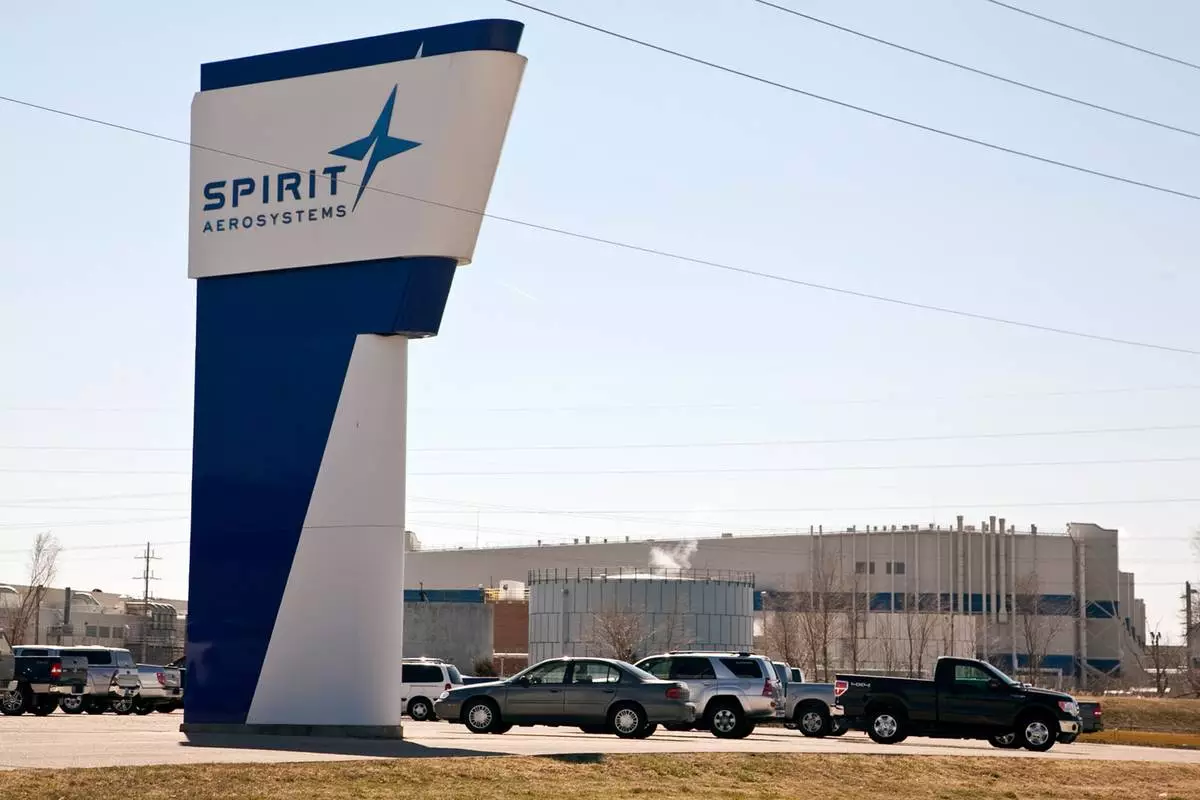
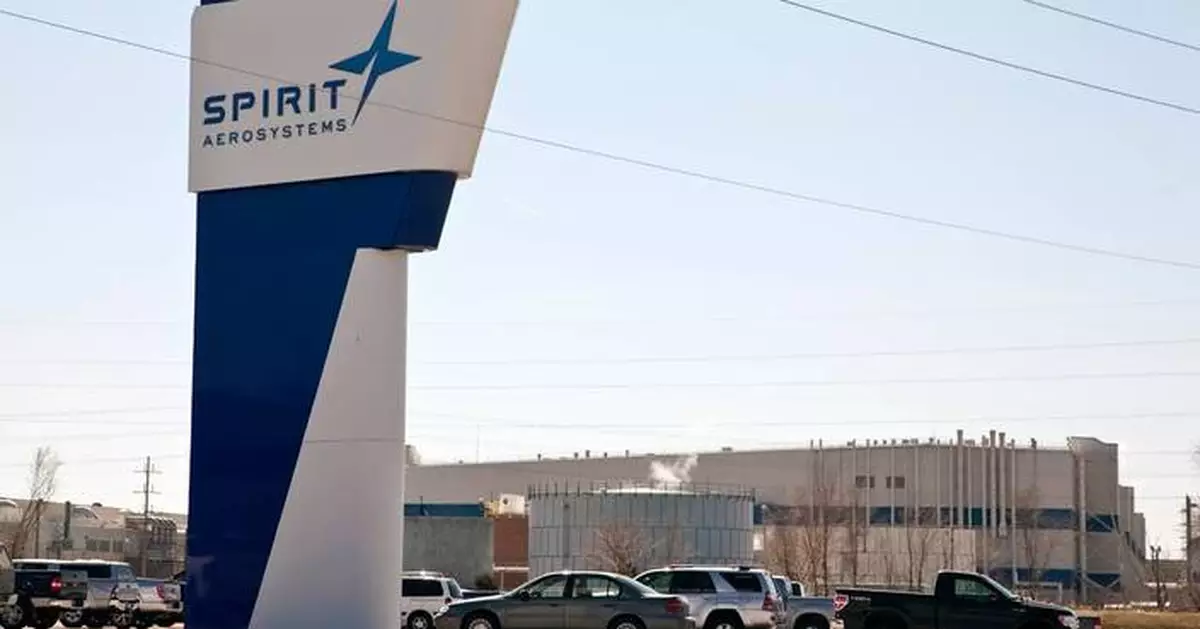
FILE - This Thursday, July 25, 2013, photo shows Spirit AeroSystems in Wichita, Ks. (Mike Hutmacher/The Wichita Eagle via AP, File)
BANGKOK (AP) — The price of a barrel of Brent crude oil briefly topped $100 a barrel early Thursday, just days after it spiked near $120 in the latest jolts to financial markets and the global economy as a whole.
Oil prices initially shot more than 9% higher as supply concerns worsened with Iranian attacks on commercial shipping around the Strait of Hormuz. The U.S. campaign of airstrikes in Iran is now in its 13th day.
U.S. benchmark crude oil jumped 4.5% to about $91 a barrel. Brent, the international standard, was trading 5.3% higher at about $97 per barrel.
Iran has escalated its attacks aimed at generating enough global economic pain to pressure the United States and Israel to end the war. But there was no sign the conflict was subsiding.
Iran has targeted oil fields and refineries in Gulf Arab nations and effectively stopped cargo traffic through the narrow Strait of Hormuz, through which a fifth of all traded oil passes.
In response, the International Energy Agency agreed Wednesday to release 400 million barrels of oil, the largest volume of emergency oil reserves in its history, in a bid to counter the war’s effects on energy markets. The U.S. planned to release 172 million barrels of oil next week from its Strategic Petroleum Reserve to combat steep prices.
The IEA’s announcement came a day after energy ministers from the Group of Seven — the leading industrialized nations of Canada, the United States, France, Italy, Japan, Germany and Britain — met in Paris to look at ways to bring down prices.
But the continued strife and uncertainty have fueled speculation prices could push still higher, and that pulled shares lower.
The future for the S&P 500 lost 0.4% while that for the Dow Jones Industrial Average was 0.5% lower.
Germany's DAX lost 0.4% to 23,533.60, while the CAC 40 in Paris lost 0.7% to 7,982.64. Britain's FTSE 100 sank 0.7% to 10,285.91.
During Asian trading, Tokyo's Nikkei 225 fell 1% to 54,452.96. In South Korea, the Kospi lost 0.5% to 5,583.25, while Hong Kong's Hang Seng gave up 0.7% to 25,716.76.
The Shanghai Composite index shed 0.1% to 4,129.10 and in Australia, the S&P/ASX 200 dropped 1.3% to 8,629.00.
On Wednesday, U.S. stocks were little changed as the S&P 500 edged 0.1% lower for a second day of modest moves following a wild stretch caused by the war with Iran. The Dow Jones Industrial Average dropped 0.6%, to its lowest level this year, and the Nasdaq composite rose 0.1%.
Since the start of the war, sharp moves for oil prices have triggered swings up and down for financial markets worldwide, sometimes by the hour. Oil prices briefly spiked to their highest levels since 2022 this week because of the possibility that production in the Middle East could be blocked for a long time, which in turn raised worries about a surge of debilitating inflation for the global economy.
In a report, Oxford Economics said “the swings in Brent crude oil prices over the past several days are eye-catching and odds are volatility will remain because of the absence of a timeline for when the conflict will de-escalate and when the Strait of Hormuz, which is effectively closed, will see traffic begin to recover.”
The level of volatility suggests that depending on news developments, oil prices could spike as high as $140 per barrel, it said.
A report released Wednesday showed U.S. consumers paid prices for groceries, gasoline and other costs of living that were 2.4% higher in February than a year earlier.
That's the same level as the month before and better than the 2.5% that economists expected, but it remains above the Federal Reserve's 2% target and doesn’t include the spike in gasoline prices this month due to the war.
High inflation combined with a stagnating economy would create a worst-case scenario called “stagflation” that the Federal Reserve has no good tools to fix. Stagflation fears are rising not just because of higher oil prices but also because of weakness in hiring by U.S. employers.
In other dealings early Thursday, the dollar fell to 158.84 Japanese yen from 158.95 yen. The euro fell to $1.1553 from $1.1566.
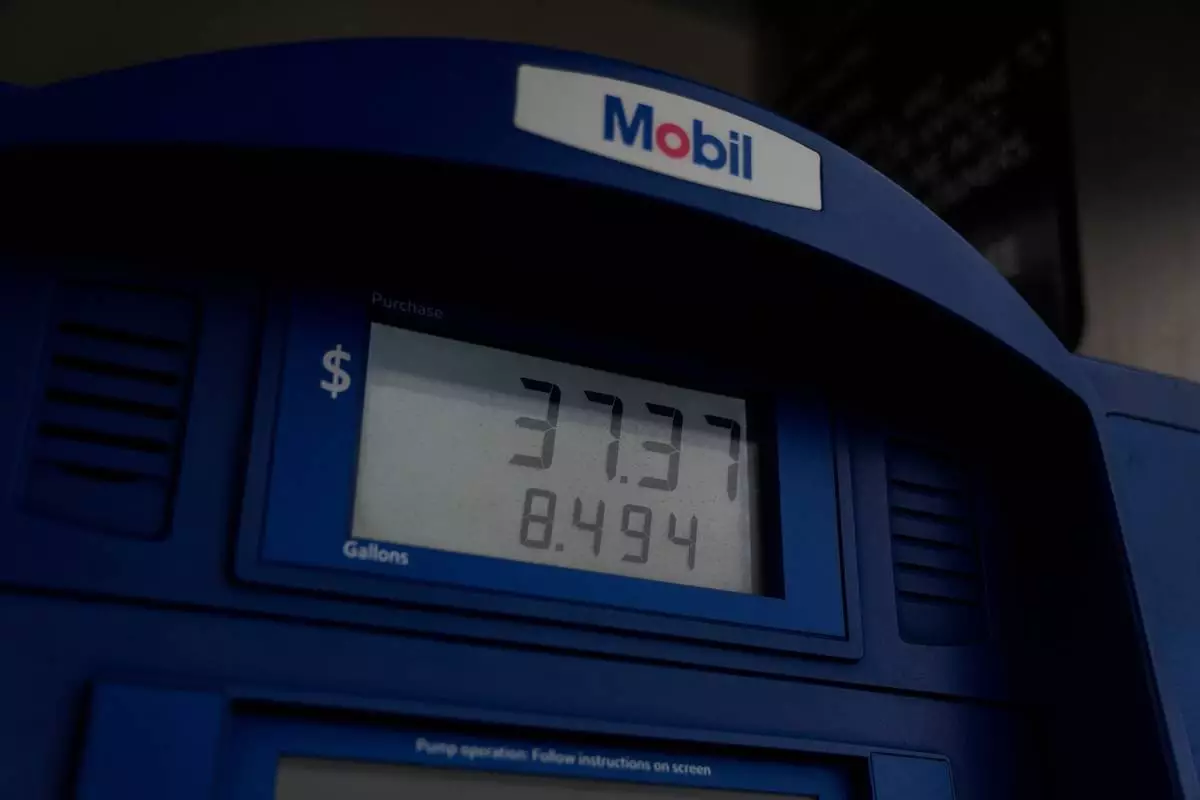
Gas prices are displayed at a station Wednesday, March 11, 2026, in Evanston Ill. (AP Photo/Erin Hooley)
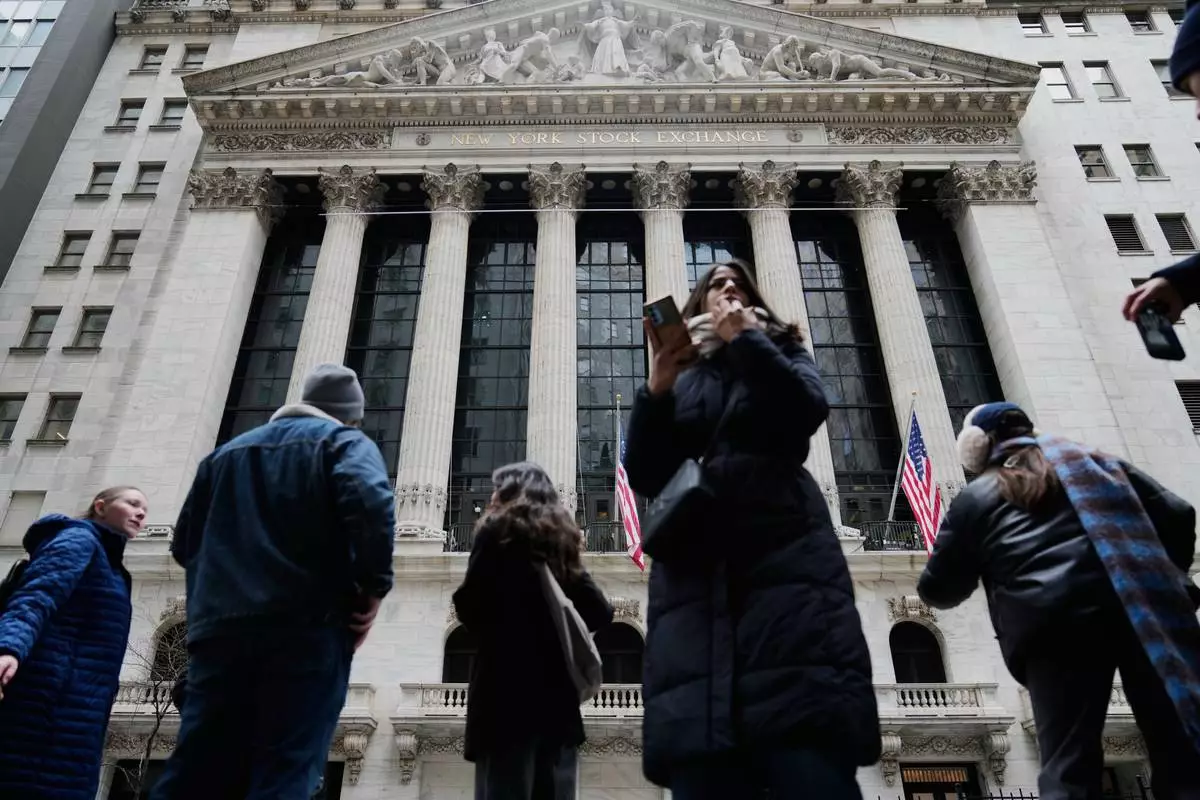
Pedestrians mill about outside the New York Stock Exchange in New York, Friday, March 6, 2026. (AP Photo/Seth Wenig)

The New York Stock Exchange is seen in New York, Friday, March 6, 2026. (AP Photo/Seth Wenig)

Traders work on the floor at the New York Stock Exchange in New York, Tuesday, March 10, 2026. (AP Photo/Seth Wenig)