Skip to Content Facebook Feature Image

Court settlement approved for New Orleans Archdiocese to pay hundreds of clergy abuse victims

News

Court settlement approved for New Orleans Archdiocese to pay hundreds of clergy abuse victims
News

News

Court settlement approved for New Orleans Archdiocese to pay hundreds of clergy abuse victims

2025-12-09 04:38 Last Updated At:04:50

NEW ORLEANS (AP) — The New Orleans Archdiocese will pay at least $230 million to hundreds of victims of clergy sexual abuse under a settlement approved Monday by a federal judge that follows years of negotiations.

Richard Trahant, an attorney representing victims in the case, and a spokesperson for the archdiocese both confirmed approval of the settlement to The Associated Press by U.S. Bankruptcy Judge Meredith Grabill.

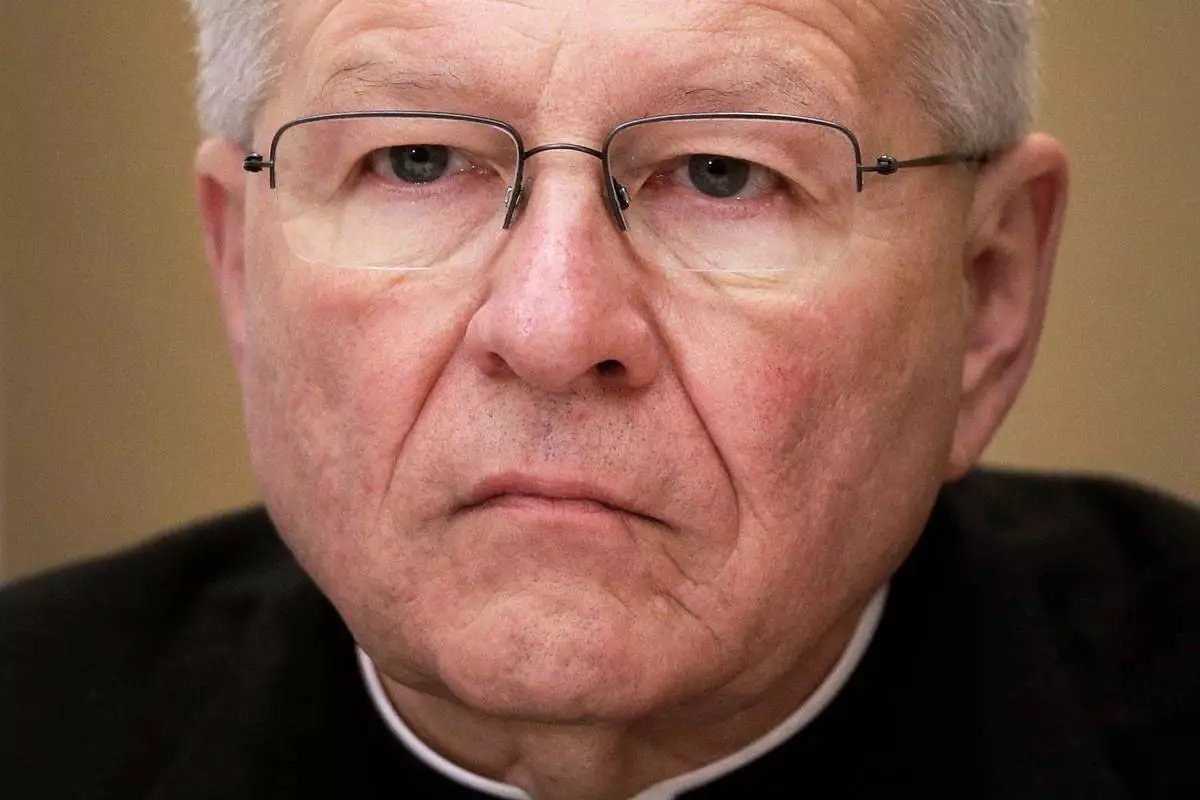
Archbishop Gregory Aymond, the head of the archdiocese, told reporters outside of a federal courthouse on Monday that he's pleased “this is the end of this process" and hopes that survivors will “find some closure.”

"We hope and pray that they will be able to not only receive what is given to them but they will know the healing of God’s love,” Aymond said.

Earlier this month, some of the survivors behind the more than 500 abuse claims testified in court, saying they are still affected decades later by the painful memories they shared publicly. The archdiocese had filed for bankruptcy in May 2020 rather than handle each abuse claim separately. Survivors noted that doing so enabled church leadership to avoid tougher questions they would have to face in court.

Some recalled battling substance abuse, struggling with intimacy and wondering whether they themselves were to blame for what happened. Some said they forgave the church, while others could not.

In her testimony, Kathleen Austin recalled being abused hundreds of times as a child and watching the perpetrator continue in a role within the Catholic Church even after its leadership knew what he was doing. She expressed skepticism that the church would hold clergy accountable in the future given how much she said it resisted responding to her experiences.

“Why has it taken so long to get to this point and at such a high cost?” she asked.

The Associated Press doesn’t generally identify people who are victims of sexual abuse unless they come forward publicly, such as those who testified in New Orleans.

Aymond, who is handing church leadership to a successor, listened to the survivors’ testimony last week.

“I also apologize for the church, that I’m embarrassed by what has happened in the church,” Aymond told reporters afterward.

Chris Naquin testified that his abuse began when he was 4 years old and that he cycled through decades of mental institutions and prisons.

“I don’t think I will ever, ever get over it. There’s no amount of money in the world,” Naquin said as he teared up. “I never had a childhood and I’m just now starting my adult life at 56 years old.”

Billy Cheramie, who said he felt he died the day he was abused as a little boy, told the archdiocese he forgave it for what he went through. He said God later helped him realize the abuse he suffered was not his fault, thus allowing him to release some of the anger that had propelled him to join the U.S. military to learn how to kill.

“Killing did not fix the pain and the memories,” he said.

Neil Duhon testified that he still struggles with the idea of forgiveness.

“This legal thing will maybe end but what it has done to us, the trauma it has done to us, will not ever end,” Duhon told the court, saying his perpetrator, former priest Lawrence Hecker, received a life sentence after pleading guilty to charges including rape and aggravated kidnapping.

Aymond, 75, had long resisted calls to resign from survivors who said the church did not take action against credibly accused perpetrators. The accusations of clergy abuse triggered a sweeping FBI probe and a cascading crisis for the Catholic Church, which drew on help from New Orleans Saints executives to help behind the scenes with damage control, an AP investigation revealed.

The finalized settlement plan, which received overwhelming approval by survivors during a vote in October, includes policies intended to prevent abuse from occurring in the future.

A survivor will have a seat on the archdiocese’s internal review board that handles claims of sexual abuse. An outside expert is to monitor the church’s child abuse prevention practices. The church also is adopting a survivors’ bill of rights and survivors will have a direct line of communication to the archbishop to direct complaints of misconduct. And a public archive will be established to share long withheld documents related to abuse claims.

In September, Pope Leo XIV named Bishop James F. Checchio, of the diocese of Metuchen, New Jersey, as coadjutor archbishop of New Orleans in line to succeed Aymond when he retires. A spokesperson for Aymond said on Monday that there is no confirmed timeline for the archbishop's retirement.

Brook is a corps member for The Associated Press/Report for America Statehouse News Initiative. Report for America is a nonprofit national service program that places journalists in local newsrooms to report on undercovered issues.

Associated Press writer Sara Cline contributed to this report from Baton Rouge, Louisiana.
FILE - Archbishop Gregory Aymond, of New Orleans, listens during a news conference at the United States Conference of Catholic Bishops' annual fall meeting in Baltimore, Nov. 12, 2013. (AP Photo/Patrick Semansky, File)


FILE - Archbishop Gregory Aymond, of New Orleans, listens during a news conference at the United States Conference of Catholic Bishops' annual fall meeting in Baltimore, Nov. 12, 2013. (AP Photo/Patrick Semansky, File)
The maker of an iPhone app that flagged sightings of U.S. immigration agents sued the Trump administration for free speech violations on Monday, alleging that U.S. Attorney General Pam Bondi used her “state power” to force Apple to remove the app.

Apple in October removed ICEBlock and other apps from its app store after Bondi said they put Immigration and Customs Enforcement officers at risk by enabling people to track ICE activity in their neighborhoods.

The lawsuit from ICEBlock app maker Joshua Aaron argues that the government's actions violated the First Amendment.

“We’re basically asking the court to set a precedent and affirm that ICEBlock is, in fact, First Amendment-protected speech and that I did nothing wrong by creating it,” Aaron said in an interview Monday. “And to make sure that they can’t do this same thing again in the future.”

Aaron said the other part of the lawsuit “is to basically have them stop threatening myself and my family.”

The lawsuit asks a federal judge to protect the Texas-based software developer from prosecution, alleging “unlawful threats made by Attorney General Bondi, Secretary of Homeland Security Kristi Noem, ICE Acting Director Todd M. Lyons, and White House Border Czar Tom Homan to criminally investigate and prosecute Aaron for his role in developing ICEBlock.”

The Department of Justice said it had no comment on the lawsuit beyond Bondi's previous statements about the app.

With more than 1 million users, ICEBlock was the most widely used of the ICE-tracking apps in Apple’s app store until Bondi said in October that her office reached out to Apple “demanding that they remove ICEBlock” and claiming that it “is designed to put ICE agents at risk just for doing their jobs.”

Apple soon complied, sending an email to Aaron that said it would block further downloads of the app because new information “provided to Apple by law enforcement” showed the app broke the app store rules.

According to the email, which Aaron shared with The Associated Press in October, Apple said the app violated the company’s policies “because its purpose is to provide location information about law enforcement officers that can be used to harm such officers individually or as a group.” Aaron has countered that it works no differently from Apple's own maps app that lets drivers know about nearby police speed traps.

Google also followed Apple in taking down some ICE-tracking apps from its app store in October, though ICEBlock was never available on its Android phone platform.

Aaron said Trump's immigration enforcement initiatives have only grown more aggressive since his app was taken down, and less information makes possible a “paramilitary force that can continue to operate with impunity.” He's repeatedly compared Trump's immigration enforcers to the “Gestapo” secret police force of Nazi Germany, though the lawsuit itself doesn't make that connection, instead drawing on U.S. founders' warnings against domestic despotism.

“I mean, these are people that are wearing masks --- which is the antithesis of everything about this country -- and they are not identifying themselves, and they’re zip-tying children and they’re throwing women into vans,” Aaron said by phone Monday.

Bondi told Fox News earlier this year that Aaron was endangering law enforcement and “giving a message to criminals where our federal officers are. And he cannot do that. And we are looking at it, we are looking at him, and he better watch out, because that’s not protected speech.”

Aaron said he launched the app in April as a way to help immigrant communities protect themselves from surprise raids or potential harassment. Immigrant advocates had mixed feelings about the app's usefulness, but civil liberties experts said efforts to remove it resembled what authoritarian governments have done outside the U.S., such as when Chinese pressure in 2019 led Apple to remove an app that enabled Hong Kong protesters to track police.

Apple, which is not a party in the lawsuit, didn’t immediately respond to a request for comment about it.

FILE - A U.S. Immigration and Customs Enforcement agent is seen in Park Ridge, Ill., Sept. 19, 2025. (AP Photo/Erin Hooley, File)

FILE - A U.S. Immigration and Customs Enforcement agent is seen in Park Ridge, Ill., Sept. 19, 2025. (AP Photo/Erin Hooley, File)

Recommended Articles