ATLANTA (AP) — Secretary of State Brad Raffensperger is the latest Republican candidate for Georgia governor to attack campaign finance rules, saying they unconstitutionally limit his free speech while allowing Lt. Gov. Burt Jones to raise unlimited contributions.
Safe Affordable Georgia filed suit Monday in federal court in Atlanta asking a judge to rule that the political action committee chaired by Raffensberger can coordinate with his gubernatorial campaign in the same way that Jones' leadership committee can.
“This filing simply asks the court to ensure fairness so that our committee has the same ability to communicate with voters as others already do,” Raffensperger said in a statement. “Equal access to speech isn't political or complicated — it's a foundational American principle that must be upheld.”
Jones spokesperson Kayla Lott didn't comment on the substance of the lawsuit, only saying it is a “pathetic legal challenge.”
Republican Attorney General Chris Carr, whose gubernatorial campaign filed its own unsuccessful lawsuit earlier this year trying to stop Jones from spending from his leadership committee, announced that his office would not defend the law in court, citing the conflict with his previous lawsuit. Instead, the governor's office will appoint lawyers to defend the law. Carr already had opted out of another lawsuit attacking the law.
“Burt Jones has rigged the system to benefit himself,” said Carr campaign spokesperson Neil Bitting. “That is not just unethical and wrong, it is unconstitutional.”
It's the latest round of litigation over Georgia's 2021 leadership committee law. Critics see the law as an incumbent protection racket, helping Gov. Brian Kemp, Jones and other Republicans maintain control of state politics. Party legislative caucuses also control leadership committees.
The committees can raise unlimited funds, can coordinate with candidates and can raise funds during legislative sessions when other fundraising is banned. But candidates can’t establish leadership committees until they win their party’s nomination for governor or lieutenant governor. Instead, they are limited to candidate committees, which can raise a maximum of $8,400 from each donor.
Raffensperger set up an independent committee — Safe Affordable Georgia — that can raise unlimited funds and help other candidates, but not himself. But he says he should be able to use the committee in the same way Jones uses his leadership committee.
Lawyers for Raffensperger argue the current law violates his First Amendment rights to free speech and free association. They're seeking a temporary order from a judge before a ruling on the whole case.
“Alone among current candidates for governor, the sitting lieutenant governor can solicit and accept unlimited contributions that can support his own campaign. That means that one current candidate for governor has different campaign finance rules that govern him than the other candidates. The Constitution does not allow this.”
Jones, Raffensperger and Carr are the top Republicans vying to succeed Kemp, who legally can’t run again after two terms, along with numerous Democrats. Republican and Democratic primaries are in May, followed by the general election in November 2026.
Carr's lawsuit cited a 2022 federal court ruling that a leadership committee for Kemp couldn’t spend money during the Republican primary that year, finding the “unequal campaign finance scheme” violated challenger David Perdue’s First Amendment right to free speech.
But in August, U.S. District Judge Victoria Marie Calvert dismissed the suit, ruling Carr should have challenged the constitutionality of the law. She said it was wrong to sue Jones and his campaign for “doing exactly what Georgia law allows them to do.”
An opinion adopted by the Georgia Ethics Commission on Thursday found that Jones is allowed to loan $10 million to his leadership committee, even though Carr alleged it evaded campaign finance restrictions. The opinion clears Jones to keep spending his family fortune to pursue the Republican nomination. Jones filed documents showing he made loans of $7.5 million and $2.5 million to the WBJ Leadership Committee when he announced his run for governor on July 8.
Like Raffensperger, supporters of Carr have established an independent committee that can’t coordinate with Carr’s campaign.
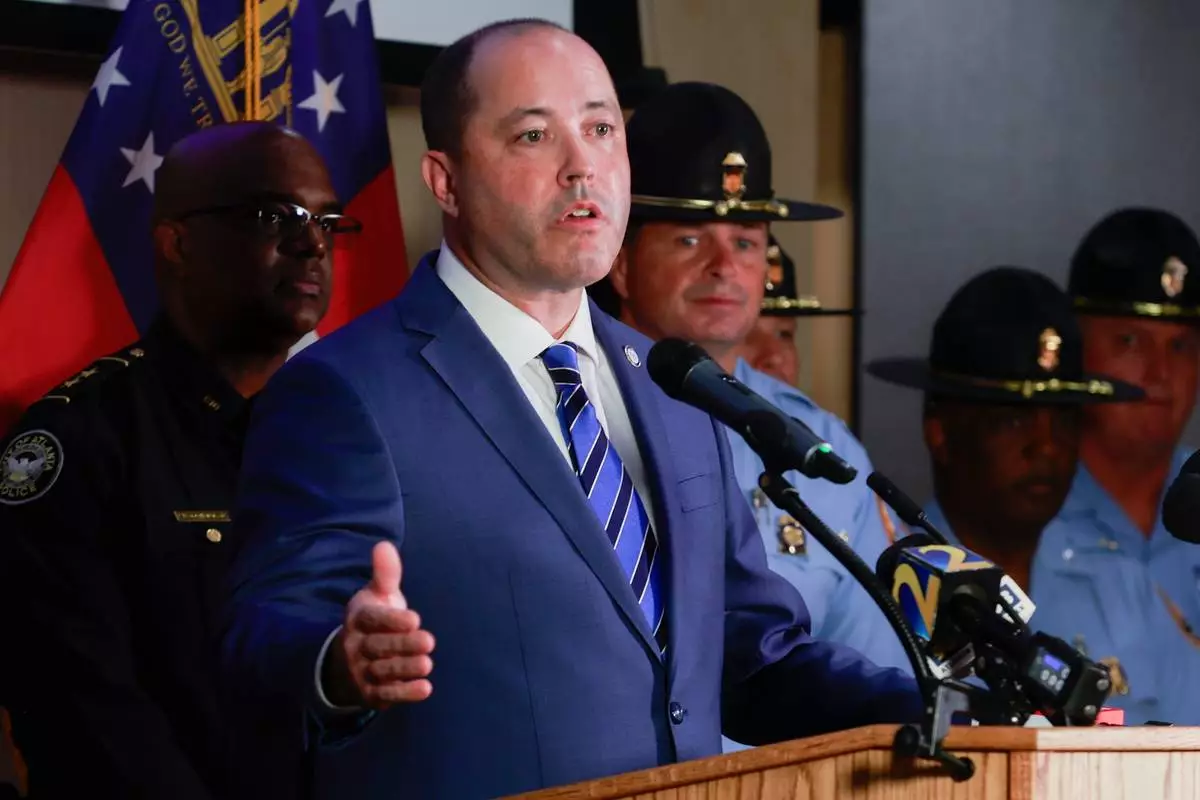
FILE - Georgia Attorney General Chris Carr speaks during a news conference at the Georgia Department of Public Safety in Atlanta on Sept. 5, 2023. (Natrice Miller/Atlanta Journal-Constitution via AP, File)
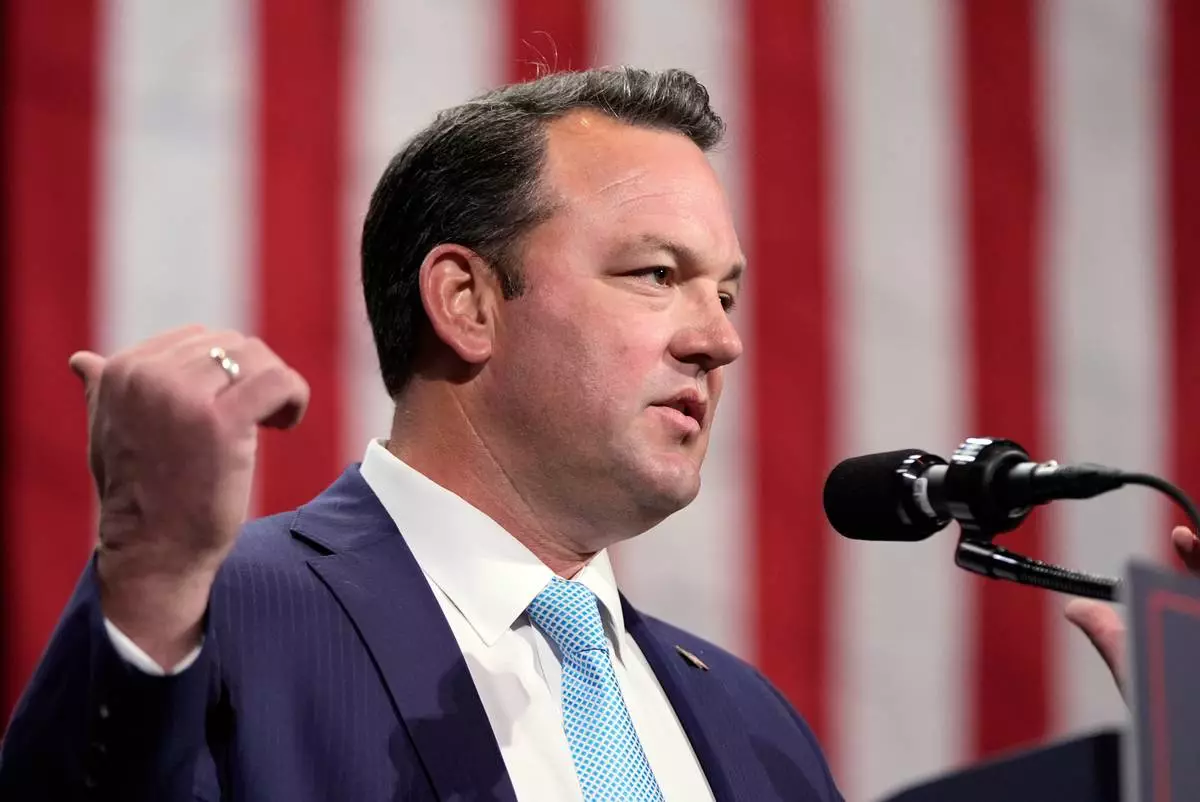
FILE - Georgia Lt. Gov. Burt Jones speaks at a campaign event at the Cobb Energy Performing Arts Centre on Oct. 15, 2024, in Atlanta. (AP Photo/Alex Brandon, File)
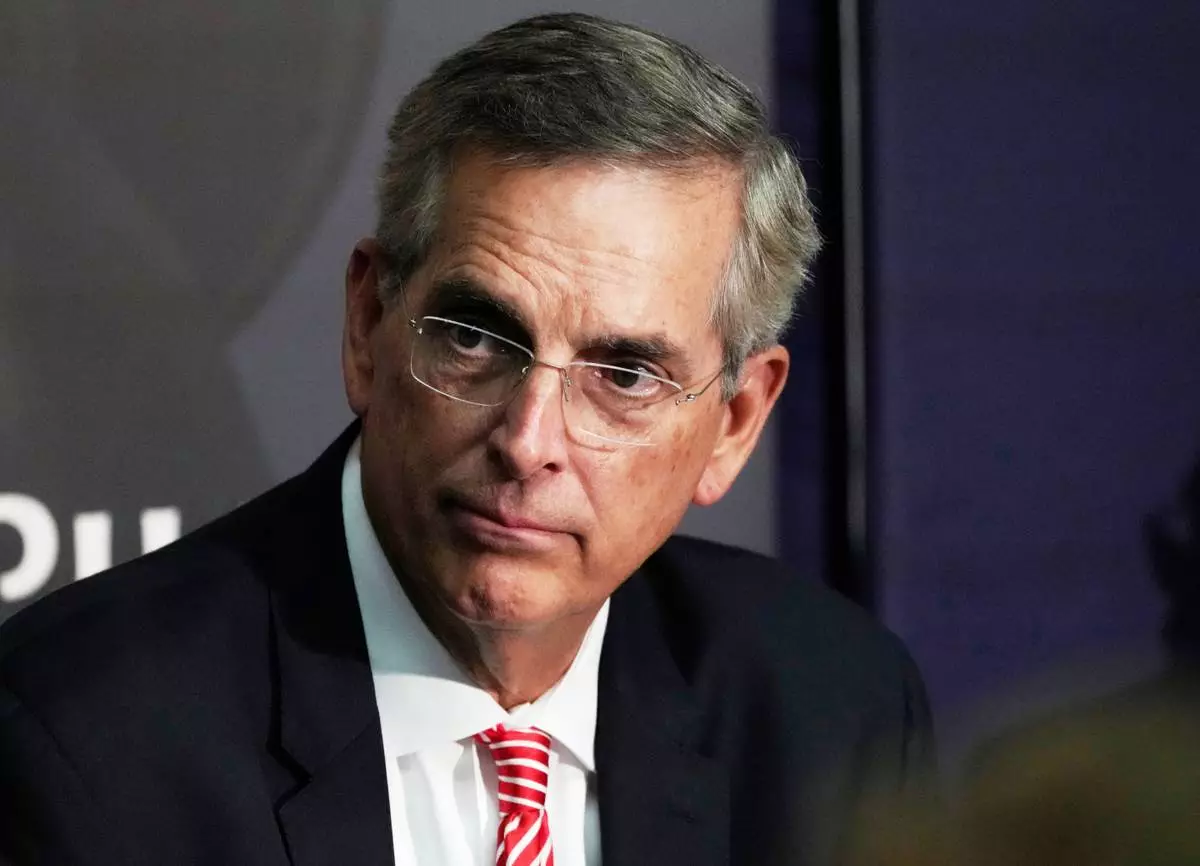
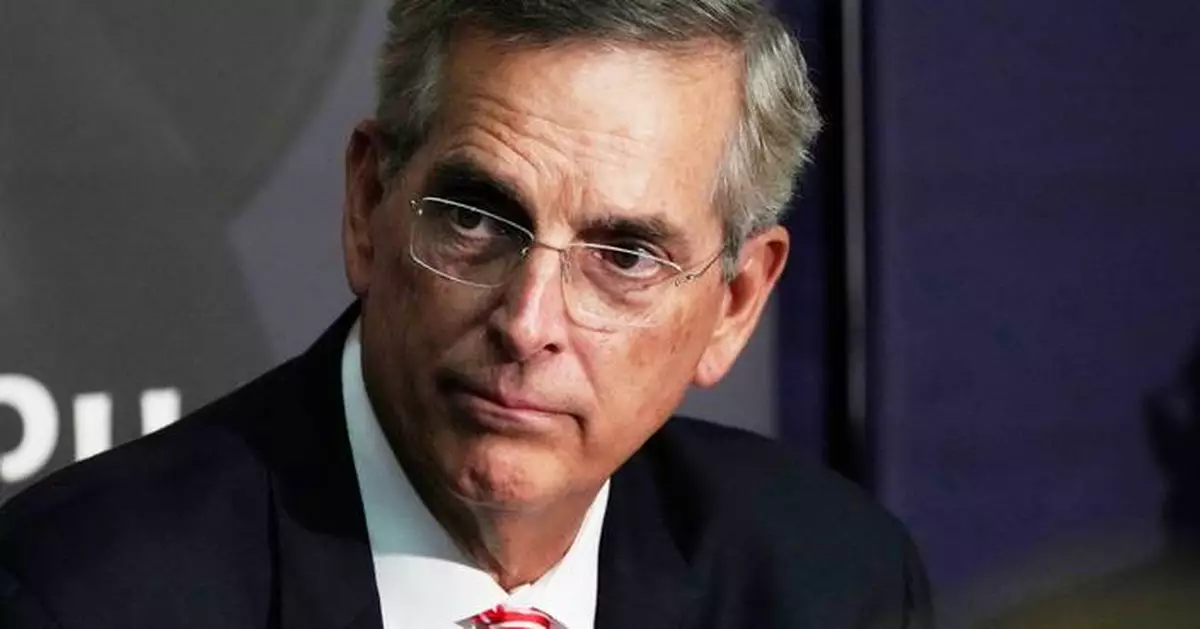
FILE - Georgia Secretary of State Brad Raffensperger participates during an election forum, Sept. 19, 2024, in Ann Arbor, Mich. (AP Photo/Carlos Osorio, File)
MINNEAPOLIS (AP) — Target is investing another $2 billion in its business this year to spruce up and remodel stores among other projects as it tries to turn around a persistent sales malaise and reclaim its authority on style.
The investment, announced Tuesday at its annual investor meeting in at its headquarters in Minneapolis, comes as the discounter reported another quarter of declining sales and profits amid its struggles to regain its footing with customers who are going elsewhere for fashion, home and other needs.
Tuesday's report offered some hope for the business. The company delivered a solid annual profit outlook that was better than Wall Street had been projecting. It also said it believes net sales will grow every quarter this year.
Target said comparable-store sales rose to start the current quarter.
“This is a new chapter, and it's all about growth,” said CEO Michael Fiddelke, a 20-year company veteran who succeeded longtime CEO Brian Cornell last month.
Fiddelke and other executives detailed plans to turn around Target as investors have been hungry for a return to Target’s former dominance in affordable chic for which it earned it the nickname “Tarzhay” in years past.
Target said that its stores will get the biggest refresh this year than they have had in roughly a decade. The company will invest hundreds of millions of dollars for additional store labor and training. And it plans to open 30 new stores and aims to remodel 130 of its existing stores.
In particular, Target is launching a new beauty area called Target Beauty Studio in 600 stores this fall, which will offer upscale beauty products and beauty services. The new area will partly replace its shops with Ulta, which is ending its partnership in August, the company said.
Fiddelke takes over with Target’s hometown of Minneapolis a front line of sorts in President Donald Trump’s campaign to curb illegal immigration. Some of the company’s stores have become a flashpoint in a pushback against U.S. Immigration and Customs Enforcement. The company has faced pressure to take a public stand against the immigration crackdown.
Even before the immigration clashes, Target had been facing protests and boycotts over the company’s decision to roll back its diversity, equity and inclusion initiatives. Critics believe it's a betrayal of Target’s philanthropic commitment to fighting racial disparities and promoting progressive values in liberal Minneapolis and beyond.
That is outside of a volatile economic and political environment that has been intensified by an aggressive trade campaign under Trump. The White House is now seeking a global tariff of 15%, after the U.S. Supreme Court struck down many of the far-reaching taxes on imports that he had imposed over the last year.
While the pace of inflation has cooled, consumer prices have soared about 25% over the past five years. U.S. companies are facing a hazy outlook with American households hurting, and the Trump administration is trying to work around the Supreme Court ruling to keep his duties in place.
And Target customers have soured on what they see as untended and messy stores with lackluster merchandise.
As the company’s nearly 2,000 store locations have become shipping hubs for online operations, customers say the in-store shopping experience has suffered with staff fulfilling digital orders rather than tending to store aisles.
Target is also facing stiffer competition from Walmart, which has stepped up its focus on fashion and other goods. As many Americans trade down because of inflation, Walmart has gained market share, particularly among households with annual income above $100,000.
Fiddelke has already reshuffled the leadership team at Target, boosted spending on in-store store staffing and made cuts at distribution facilities and regional offices, according to a memo sent to employees in February.
Target said it's focusing merchandise category by category and infusing its assortment with new differentiated items to set itself from its competitors. For example, in the home area, 75% of the company's home decorative assortment will be new.
The company is also reworking its store label brands such as its home goods brand called Threshold. It announced a merchandise collaboration with Roller Rabbit, a brand known for its 1960s-inspired silhouettes and colorful playful prints. The collection of clothing, pajamas and accessories is expected to make its debut at Target this month for a limited time.
The company said it's adding more fashion drops this year and using an artificial intelligence tool to better spot trends. In some examples, it's cutting the time frame from a design concept to store shelves to a matter of weeks from over a year, according to Cara Sylvester, Target’s chief merchandising officer.
And in food, the company is hoping to drive more trips by expanding its fresh produce while also offering innovative items. This year, it plans to increase the amount of newness across the assortment by nearly 50%, it said.
The company earned $2.30 per share, or $1.05 billion, for the three-month period ended Jan. 31. That compares with $2.41 per share, or $1.10 billion, during the year-ago period. Adjusted earnings per share for the most recent quarter was $2.44.
Sales fell 1.5% to $30.45 billion during the latest period. For the full year, sales fell nearly 2% to $104.78 billion.
Analysts were expecting $2.16 per share on sales of $30.46 billion, according to a survey by FactSet.
Comparable sales — sales at established stores and online channels — fell 2.5%, followed by a 2.7% dip in the fiscal third quarter. The latest figure marks 11 quarters out of the past 13 that Target has posted either declines or flattish growth for this measure.
Tuesday’s report offered some hopeful signs for the business. Target said that sales and customer traffic accelerated in the final two months of the quarter. And it saw sales growth in food and beverage, beauty and toys for the latest quarter.
Target said that it expects net sales for the year to increase by 2%, which would mean it expects sales to reach $106.88 billion. That’s a bit above analysts’ expectations of $106.7 billion. Target also anticipates earnings per share to be in the range of $7.50 to $8.50. Analysts are expecting $7.30 per share for the year, according to analysts polled by FactSet.
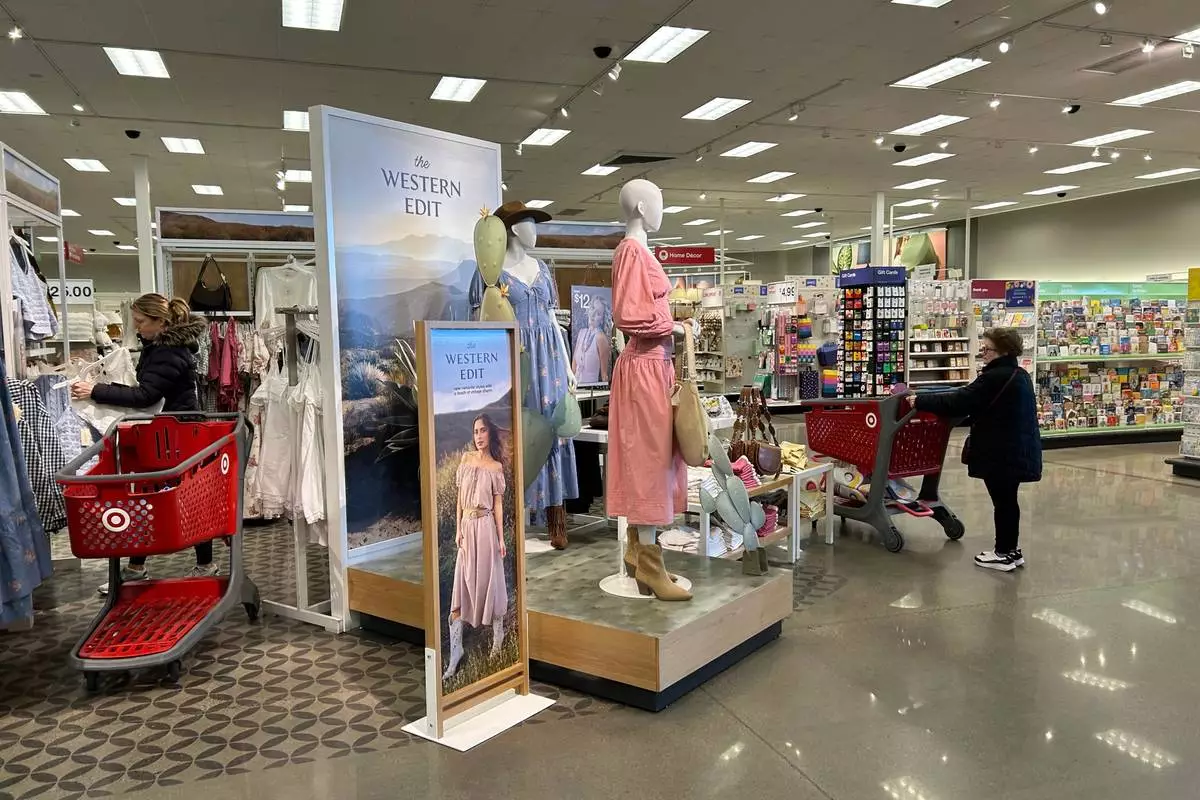
Products sit on display at a Target store, Monday, March 2, 2026, in Edina, Minn. (AP Photo/Anne D'Innocenzio)
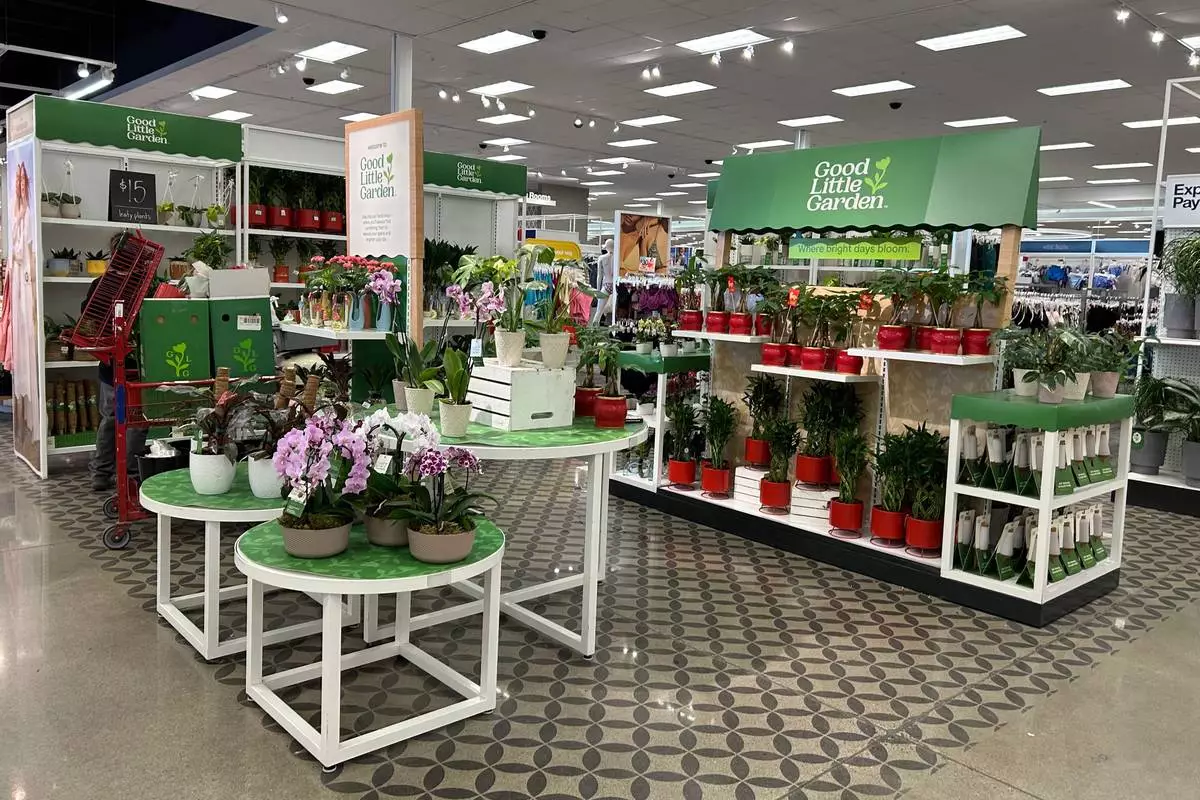
Products sit on display at a Target store, Monday, March 2, 2026, in Edina, Minn. (AP Photo/Anne D'Innocenzio)
FILE - The Target logo displayed on a sign outside a store, Nov. 18, 2025, in Salem, N.H. (AP Photo/Charles Krupa, File)
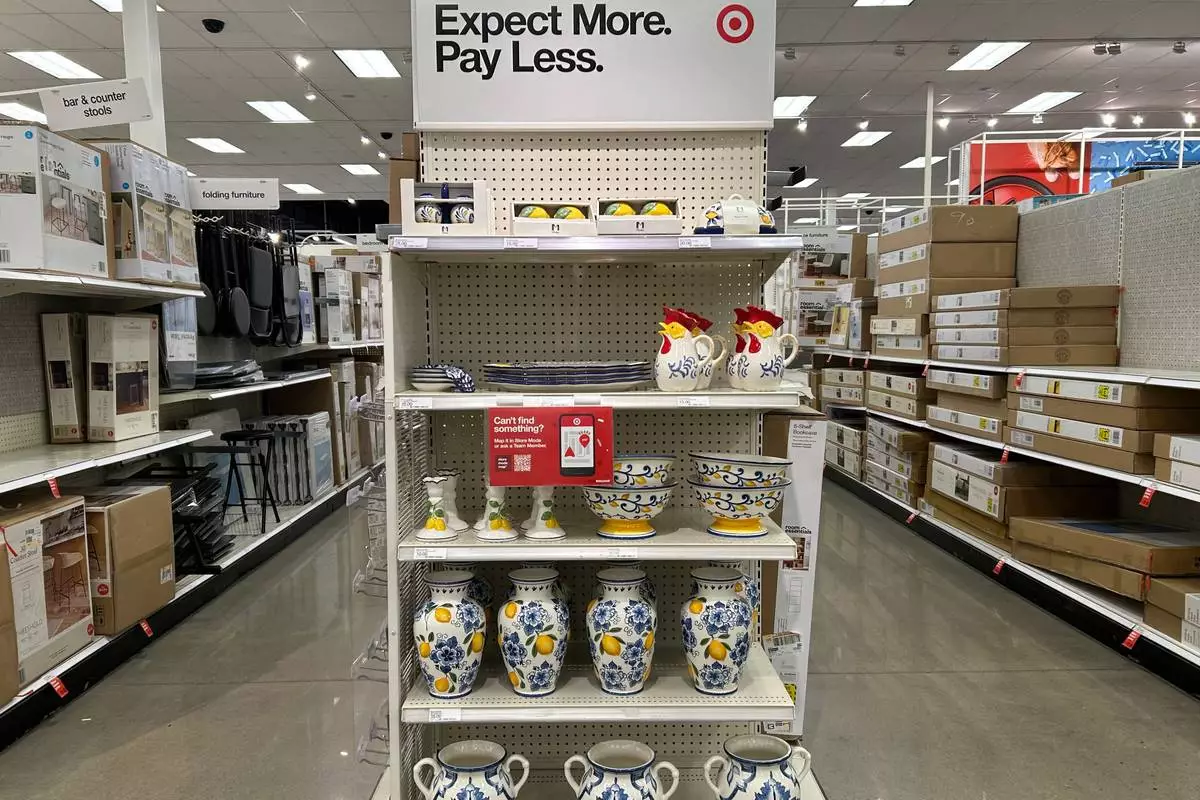
Products sit on display at a Target store, Monday, March 2, 2026, in Edina, Minn. (AP Photo/Anne D'Innocenzio)