SEOUL, South Korea--(BUSINESS WIRE)--Dec 9, 2025--
Alipay+, Ant International’s global wallet gateway services, revealed an 18% increase in Alipay+-supported QR code payment transactions, with total payment volume (TPV) growing 16% year-on-year in South Korea, as more tourists use Alipay+ partner wallets and bank apps to make digital payments for a range of services, from beauty clinic treatments and transportation to night market food stalls.
This press release features multimedia. View the full release here: https://www.businesswire.com/news/home/20251208351936/en/
South Korea is among the top destinations for tourists from regions such as Southeast Asia and the Chinese mainland, with the greatest number of tourists making transactions supported by Alipay+ in cities like Seoul, Jeju Island and Busan. In 2025, Alipay+ transactions for beauty clinic treatments, transportation and F&B were among the fastest-growing categories for tourists.
Apart from Chinese mainland tourists, the biggest spenders by the total number of Alipay+-supported transactions in South Korea were tourists from Hong Kong, Malaysia, Japan, Macao and the Philippines, growing rapidly in terms of both transactions and total payment volume.
As of November 2025, Alipay+ has connected 21 international digital wallets and bank apps to over 2 million merchants in South Korea, enabling tourists to pay with the apps they use at home. In September, Alipay+ brought Japan’s leading cashless payment service PayPay to the country, allowing Japanese travellers to make payments easily at South Korea’s stores and merchants wherever the Alipay+ logo is displayed.
Alipay+ trends in South Korea 1
From Jan-Nov 2025:
Top inbound Alipay+-supported transactions by region:
1) Chinese mainland - Alipay
2) Hong Kong - AlipayHK
3) Malaysia - Touch 'n Go e-Wallet
4) Japan - PayPay
5) Macao - Mpay
6) The Philippines - GCash
South Korean cities with the most spending via Alipay+:
1) Seoul
2) Jeju Island
3) Incheon
4) Gyeonggido
5) Busan
Empowering Local Businesses
Alipay+ covers 2 million merchants in South Korea, most of which are small and medium enterprises. Tourists are able to make payments seamlessly in a broad range of scenarios – from the moment they arrive and ride the airport limousine bus at Incheon International Airport, to paying for food and beverages in convenience stores and at cafés like Mega Coffee, or while shopping at retail stores for cosmetics and skincare products across the country.
Merchants in South Korea are also able to use various Alipay+ solutions to help them in their businesses, such as joining the A+ Rewards, a digital marketing and user growth platform, which allows them to offer tailored promotions powered by privacy-preserving computing and AI technologies.
Travellers can also discover services offered by global travel partners directly within Alipay+ Voyager, an AI-powered, built-in travel agent that is integrated directly into partner mobile wallets like Alipay, AlipayHK, Touch 'n Go eWallet and GCash. This AI agent will assist travellers in itinerary planning, booking, and purchasing in-merchant offerings, allowing merchants to expand their customer base and engage mobile-savvy global consumers in a more direct and efficient manner.
“Alipay+ is committed to driving sustainable travel, by empowering local businesses while enhancing travellers’ experiences, helping them to travel to more places and ensuring that they can pay easily with their home wallets abroad,” said Weixiao Jiang, General Manager North Asia and North America, Alipay+, Ant International. “Our AI-driven solutions ensure that merchants, big or small, can expand their business by tapping on international tourists to expand their customer base.”
Alipay+ users can pay easily on popular South Korea transport networks
Alipay+ has also partnered with local bus and taxi networks to accept digital fare payments for Alipay+ partner wallet and app users. In Seoul, tourists can use Alipay+ partner wallets for payments in over 70,000 taxis and more than 100 airport limousine buses from Incheon Airport. On Jeju Island, over 1,200 buses accept Alipay+ payments, while over 15,000 eZL taxis in Daegu also accept digital payments via Alipay+.
Chinese tourists can also use a mini-program on Alipay, an Alipay+ partner wallet, to buy tickets from Korea’s railway operator Korail Networks, and NAMANE x Alipay+ transportation pass, and book beauty clinic visits at popular clinics like PPEUM, Toxnfill, GU and over 1,500 others via a dedicated K-beauty mini-program.
Helping South Korean travellers pay seamlessly abroad
Alipay+ has brought South Korea’s three leading wallets – Kakao Pay, Naver Pay and Toss Pay to over 100 markets, allowing South Korean travellers to make payments when travelling with their digital wallets.
Kakao Pay users are also able to make contactless payments enabled by near-field communication (NFC) technology at more than 150 million Mastercard merchants worldwide, supported by Alipay+’s NFC payment solution.
As the global wallet gateway of Ant International, Alipay+ connects 40 mobile payment partners including e-wallets and bank apps with over 1.8 billion user accounts, to over 150 million merchants across more than 100 markets. Alipay+ also partners with 11 national payment networks.
About Alipay+
Ant International's Alipay+ is a global wallet gateway with cross-border payment and digitisation services that help connect global merchants to consumers. Consumers enjoy seamless payments a broad choice of deals and the convenience of digital services using their preferred payment app/e-wallet while travelling abroad. Many small and medium-sized businesses already use Alipay+ digital tools to enhance efficiency and achieve omni-channel growth.
Case Study: Alipay+ Local Partnerships with i-Aurora, Shinsegae Group
As South Korea becomes increasingly popular as a tourist destination, Alipay+ has linked up with local companies such as i-Aurora to allow foreign visitors to make seamless payments by using their existing mobile payment wallets.
Tourists who already use Alipay+’s partner wallets in their home countries are able to make cashless payments at various merchants in South Korea, such as street vendors at Myeongdong Night Market by scanning i-Aurora’s NAMANE payment QR code.
“Our partnership with Alipay+ helps to connect street vendors and local merchants to global travellers in South Korea by enabling them to accept QR code payments, be it at tourist attractions or traditional markets,” said Youngsu Chang, CEO of i-Aurora. “We strive to ensure that customers are able to make digital payments conveniently and securely.”
Both companies have also joined hands to launch an Alipay+ transportation card that lets Chinese tourists use Alipay to pay for subway and bus rides.
Alipay+ and i-Aurora have also signed a Memorandum of Understanding to jointly develop STAN, a tech-culture platform that integrates K-POP concerts, experiences, exhibitions, and merchandise in one ecosystem that enables users to easily enjoy cultural content both online and offline.
Separately, Alipay+ also has a long-standing partnership with Shinsegae Group, where Alipay+ is accepted as a payment method in Shinsegae department stores and duty-free stores and other major affiliates, with Shinsegae often running promotional campaigns and offers for customers who opt to pay with Alipay+ partner e-wallets.
“Through our collaboration with Alipay+, we have been able to expand our international customer base and provide them with Shinsegae’s exclusive benefits as well as a convenient shopping and payment experience that helps solidify Shinsegae’s position as a leading duty-free and retail brand,” said the Jongwoo Kwak,Senior Vice President of the Marketing Division at Shinsegae Duty Free.
1All Alipay+ data included are year-to-year comparison between Jan-Nov 2025 and Jan-Nov 2024

At Myeongdong Night Market, tourists using Alipay+’s partner payment apps can scan NAMANE’s QR codes for convenient digital transactions
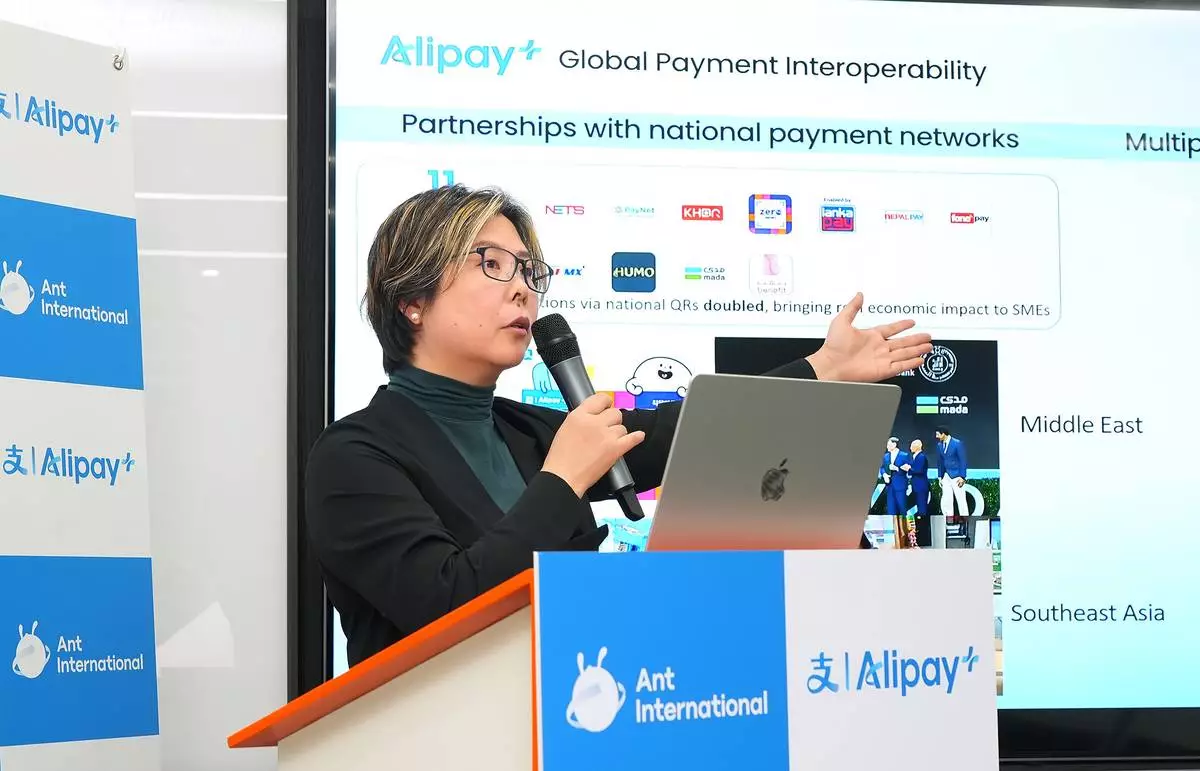
Weixiao Jiang, General Manager North Asia and North America, Alipay+, Ant International
DUBAI, United Arab Emirates (AP) — Airstrikes targeting an air base in southeastern Iran killed at least 13 Iranian troops there, local media reported.
The semiofficial Tasnim news agency and the Hammihan daily newspaper reported the strike in Kerman, 800 kilometers (500 miles) southeast from Iran’s capital, Tehran.
The Kerman Air Base is known to house military helicopters.
THIS IS A BREAKING NEWS UPDATE. AP’s earlier story follows below.
DUBAI, United Arab Emirates (AP) — Iran struck the U.S. Embassy in Saudi Arabia’s capital with a drone early Tuesday as it kept hitting targets around the region, while the United States and Israel pounded Iran with airstrikes in what U.S. President Donald Trump suggested was just the start of a relentless campaign that could last more than a month.
The attack from two drones on the U.S. Embassy in Riyadh caused a “limited fire” and minor damage, according to Saudi Arabia’s Defense Ministry, and the embassy urged Americans to avoid the compound. It followed an attack on the U.S. Embassy in Kuwait, which announced Tuesday it had been closed until further notice. The U.S. State Department also ordered the evacuation of non-emergency personnel and family in Kuwait, as well as Bahrain, Iraq, Qatar and Jordan as a precaution.
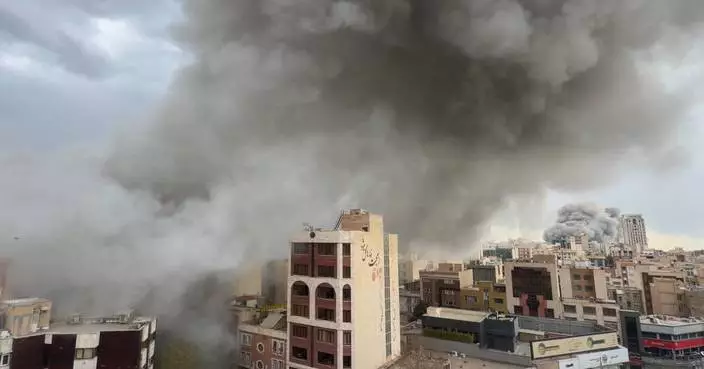
Across Iran’s capital, explosions rang out throughout the night into the early morning, with witnesses describing hearing aircraft overhead. It was not immediately clear what had been hit. And in Lebanon, Israel launched more strikes on Hezbollah, the Iran-backed militia group, and said its soldiers are “operating in southern Lebanon.” Explosions could be heard and smoke seen in a southern suburb of Beirut.
The expansion of Iranian retaliation across the Gulf and the intensity of the Israeli and American attacks, the killing of Iranian Supreme Leader Ayatollah Ali Khamenei and the lack of any apparent exit plan portend a possibly prolonged conflict with far-reaching consequences.
Many countries deemed safe havens in the Mideast have been hit by Iran in retaliation for the U.S. and Israeli strikes, with recent targets including two Amazon data centers in the United Arab Emirates and a drone impact near another in Bahrain that caused damage, the company said Tuesday. Iran has also hit energy facilities in Qatar and Saudi Arabia, and attacked several ships Strait of Hormuz, the narrow mouth of the Persian Gulf through which a fifth of all oil traded passes, sending global oil and natural gas prices soaring.
“The Strait of Hormuz is closed," declared Iranian Brig. Gen. Ebrahim Jabbari, an adviser to the paramilitary Revolutionary Guard, threatening to set fire to any ships attempting to transit. “Don’t come to this region.”
The U.S. State Department urged U.S. citizens to leave more than a dozen Middle Eastern countries due to safety risks, as have many other countries, though with much of the airspace closed many remain stranded.
Trump said operations are likely to last four to five weeks but that he was prepared “to go far longer than that.”
He later added on social media that the U.S. had a “virtually unlimited supply” of munitions and pre-positioned “high grade weaponry.”
“Wars can be fought ‘forever,’ and very successfully, using just these supplies,” he wrote.
The Iranian Red Crescent Society said the U.S.-Israeli operation has killed at least 555 people. In Israel, where several locations were hit by Iranian missiles, 11 people were killed. Israel’s retaliatory strikes against Hezbollah killed 52 people in Lebanon.
“Military escalation would force more families from their homes and hit civilians hard,” said Amy Pope, director general of the International Organization on Migration as she called Tuesday for the international community to press for de-escalation.
“Millions are already displaced in the region,” she said.
The U.S. military has confirmed six deaths of American service members. All six were Army soldiers in a logistics unit in Kuwait, according to a U.S. official who was not authorized to comment publicly and spoke on condition of anonymity.
Three people were killed in the United Arab Emirates, and one each in Kuwait and Bahrain.
The chaos of the conflict became apparent when the U.S. military said Kuwait had “mistakenly shot down” three American fighter jets while Iran was attacking it with aircraft, ballistic missiles and drones. U.S. Central Command said all six pilots ejected safely.
Iranian state TV said strikes caused two explosions early Tuesday at a broadcasting facility in Tehran, but said no one was injured.
Reza Najafi, Iran’s ambassador to the International Atomic Energy Agency, told reporters that airstrikes targeted the Natanz nuclear enrichment site on Sunday.
“Their justification that Iran wants to develop nuclear weapons is simply a big lie,” he said.
Israel and the U.S. have not acknowledged strikes at the site, which the U.S. bombed in the 12-day war between Iran and Israel in June. Israel has said it is targeting the “leadership and nuclear infrastructure.”
Trump said the military campaign’s objectives are to destroy Iran’s missile capabilities, wipe out its navy, prevent it from obtaining a nuclear weapon and ensure that it cannot continue to support allied groups like Lebanon’s Hezbollah, which fired missiles at Israel on Monday.
Iran has said it has not enriched uranium since June, though it has maintained its right to do so and says its nuclear program is peaceful.
Israeli Prime Minister Benjamin Netanyahu maintained, however, that Iran was rebuilding “new sites, new places” underground for making atomic bombs in an interview broadcast late Monday on Fox News Channel’s Hannity.
“We had to take the action now and we did,” said Netanyahu, who offered no evidence to support his claim.
Satellite photos analyzed by The Associated Press showed limited activity at two nuclear sites in Iran before the war. Analysts said Tehran was likely assessing damage from the 2025 U.S. strikes and possibly salvaging what remained.
The conflict has also spread to Lebanon, where the Iranian-supported militant group Hezbollah fired missiles at Israel on Monday, prompting Israel to retaliate.
At least 52 people have been killed and 154 wounded so far, according to Lebanese authorities.
Israel hit Beirut with more airstrikes early Tuesday morning, saying it was targeting “Hezbollah command centers and weapons storage facilities.”
Hezbollah also said it launched drones targeting an Israeli air base. The Israeli military said it downed two drones.
An Iranian-linked militant in Iraq has also claimed strikes on U.S. military facilities there. The Israeli military said its troops operating in southern Lebanon were positioned at several points near the border in what it described as a “forward defense posture.”
It said the deployment is part of a broader effort to increase security for residents in northern Israel near the border with Lebanon. It has also beefed up troops and air defenses in the area.
The army said there are no plans to evacuate Israeli residents of border areas.
Melanie Lidman in Tel Aviv, Israel, Hallie Golden in Seattle, Washington and Giovanna Dell'Orto in Miami contributed to this report. Rising reported from Bangkok and Magdy from Cairo.
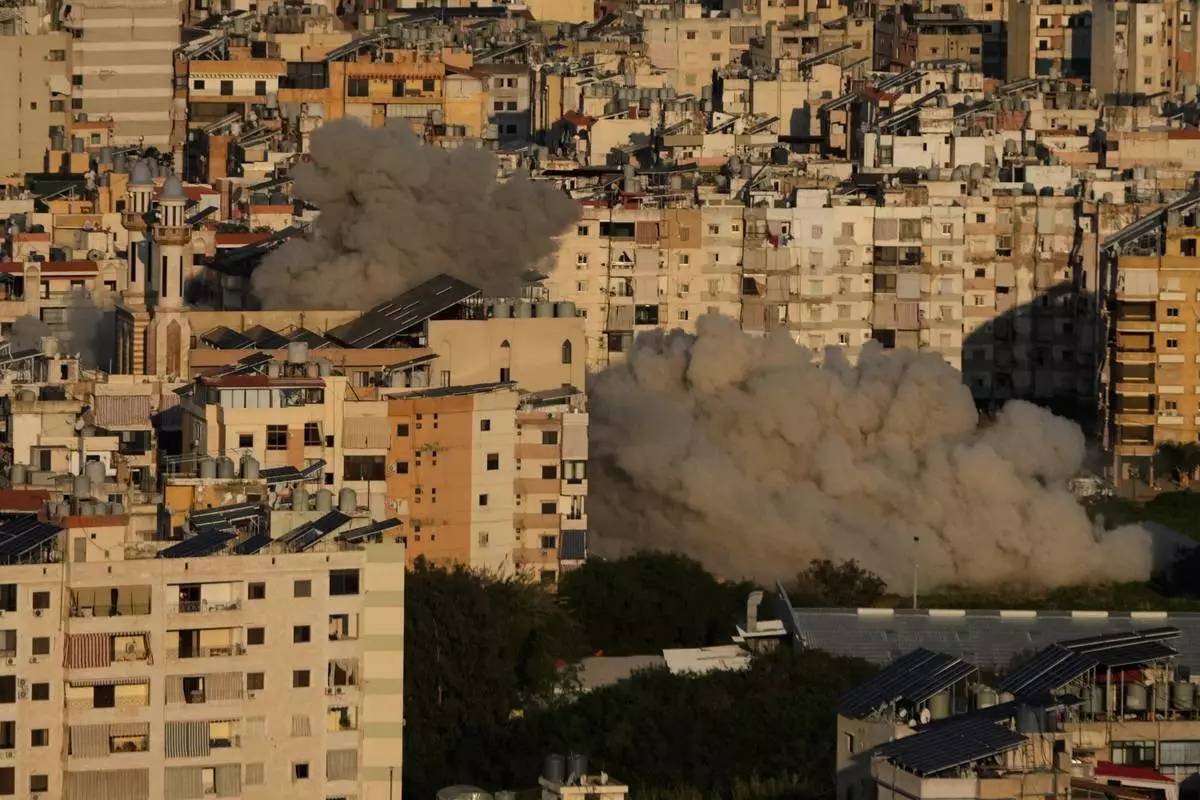
Smoke rises from Israeli airstrikes in Dahiyeh, a southern suburb of Beirut, Lebanon, Tuesday, March 3, 2026. (AP Photo/Hussein Malla)
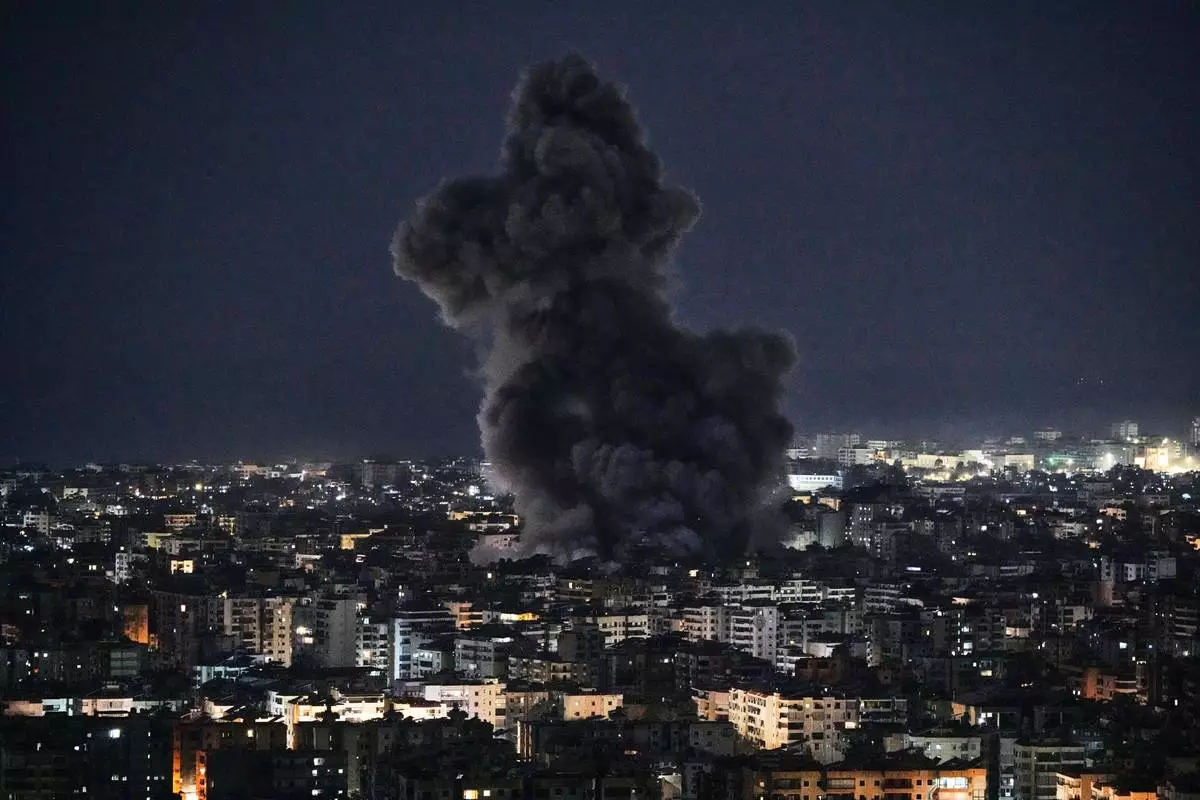
Smoke rises from Israeli airstrikes in Dahiyeh, a southern suburb of Beirut, Lebanon, early Tuesday, March 3, 2026. (AP Photo/Bilal Hussein)
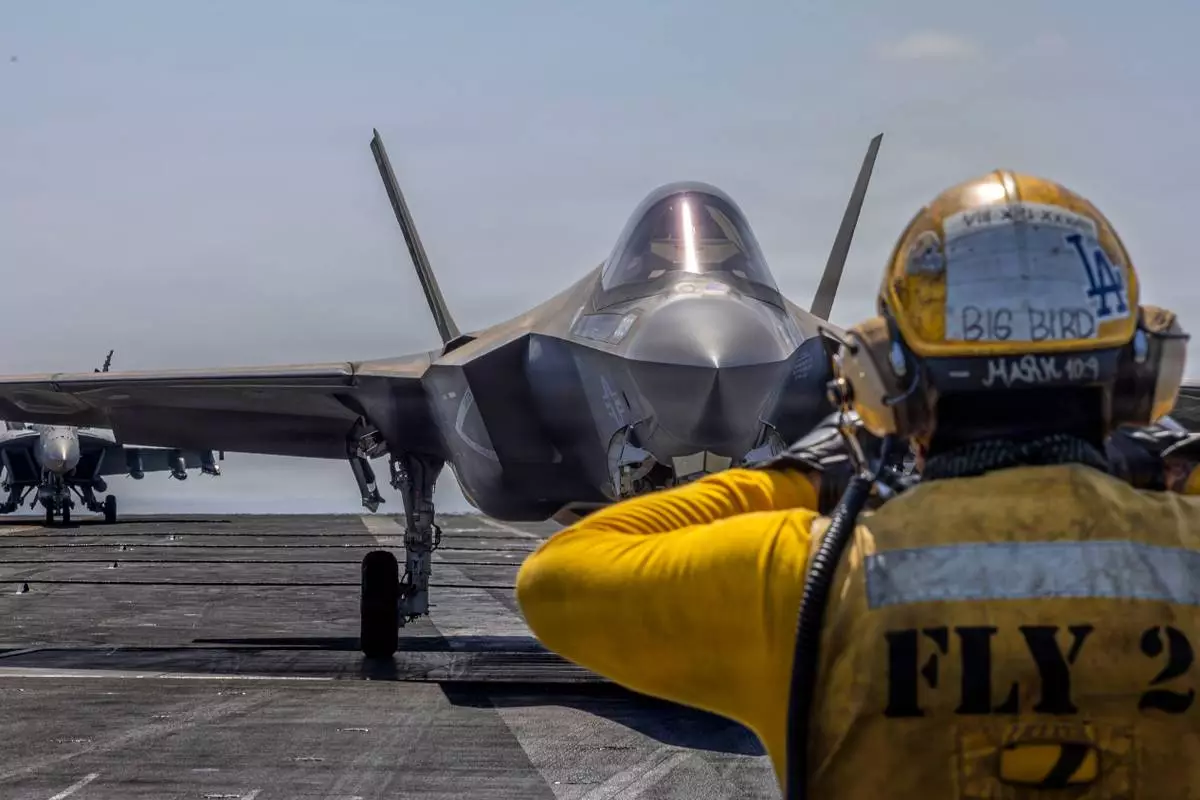
This image provided by U.S. Central Command shows a F-35C Lightning II preparing for launch on the flight deck of the USS Abraham Lincoln (CVN 72) in support of Operation Epic Fury on Monday, March 2, 2026. (U.S. Navy via AP)
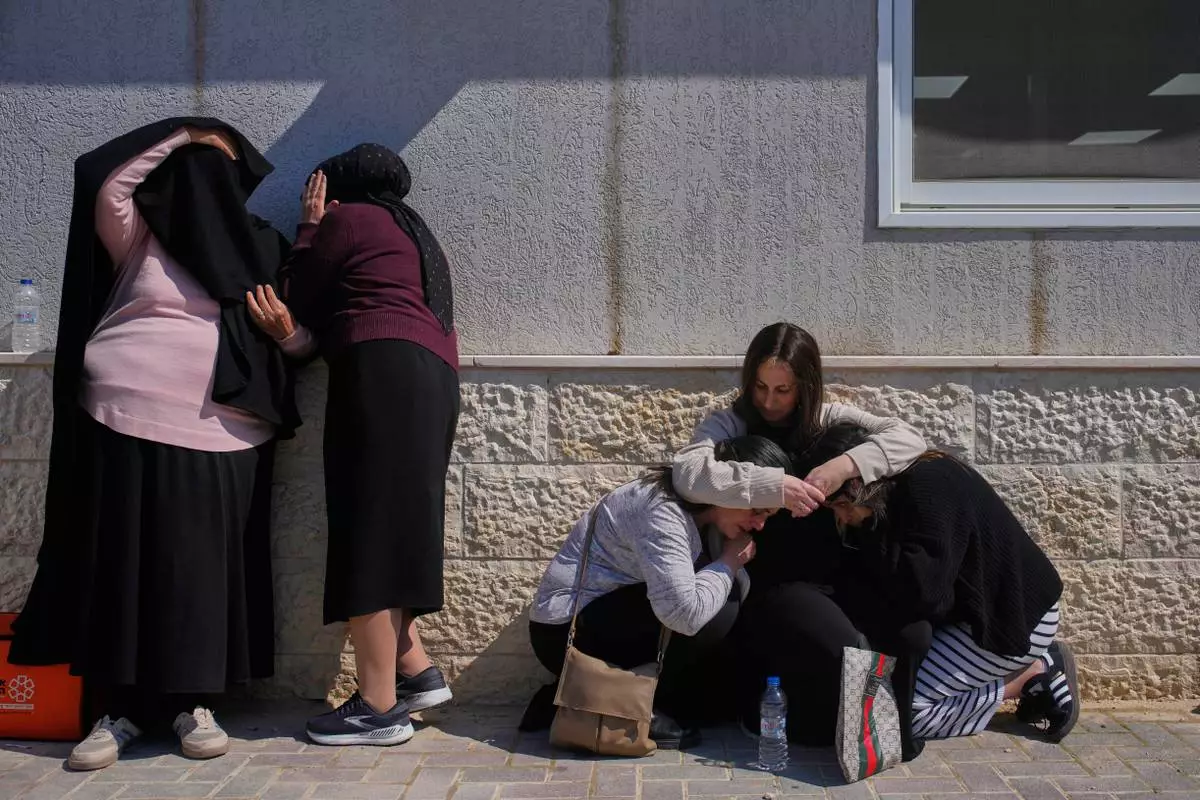
Mourners take cover while air-raid sirens warn of incoming missiles launched by Iran toward Israel during the funeral of Sarah Elimelech and her daughter Ronit who were killed in an Iranian missile attack, in Beit Shemesh, Israel, Monday, March 2, 2026. (AP Photo/Ohad Zwigenberg)
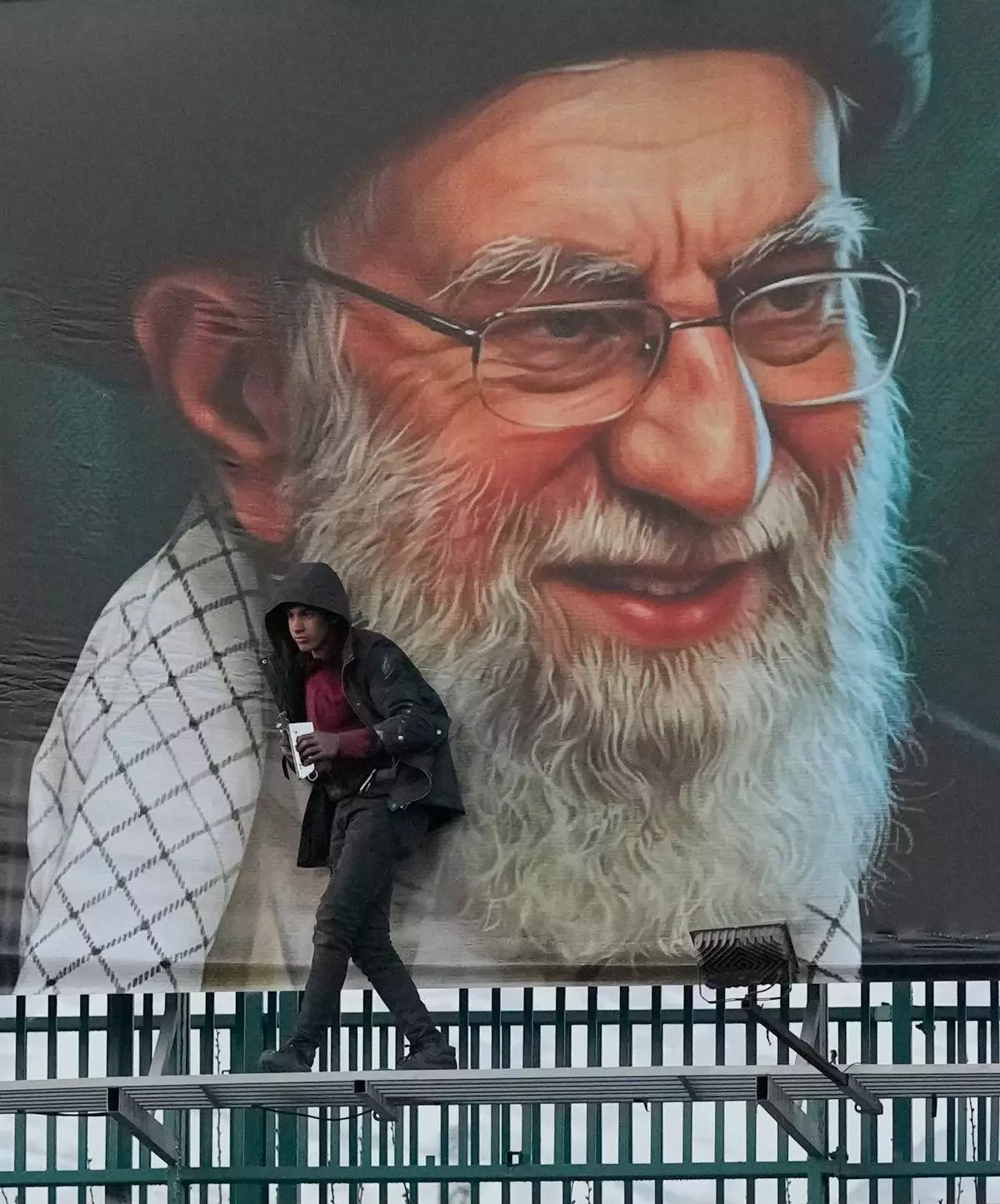
A worker instals a billboard on an overpass containing a portrait of the late Iranian Supreme Leader Ayatollah Ali Khamenei, who was killed during the ongoing joint U.S.-Israeli military campaign, in Tehran, Iran, Monday, March 2, 2026. (AP Photo/Vahid Salemi)
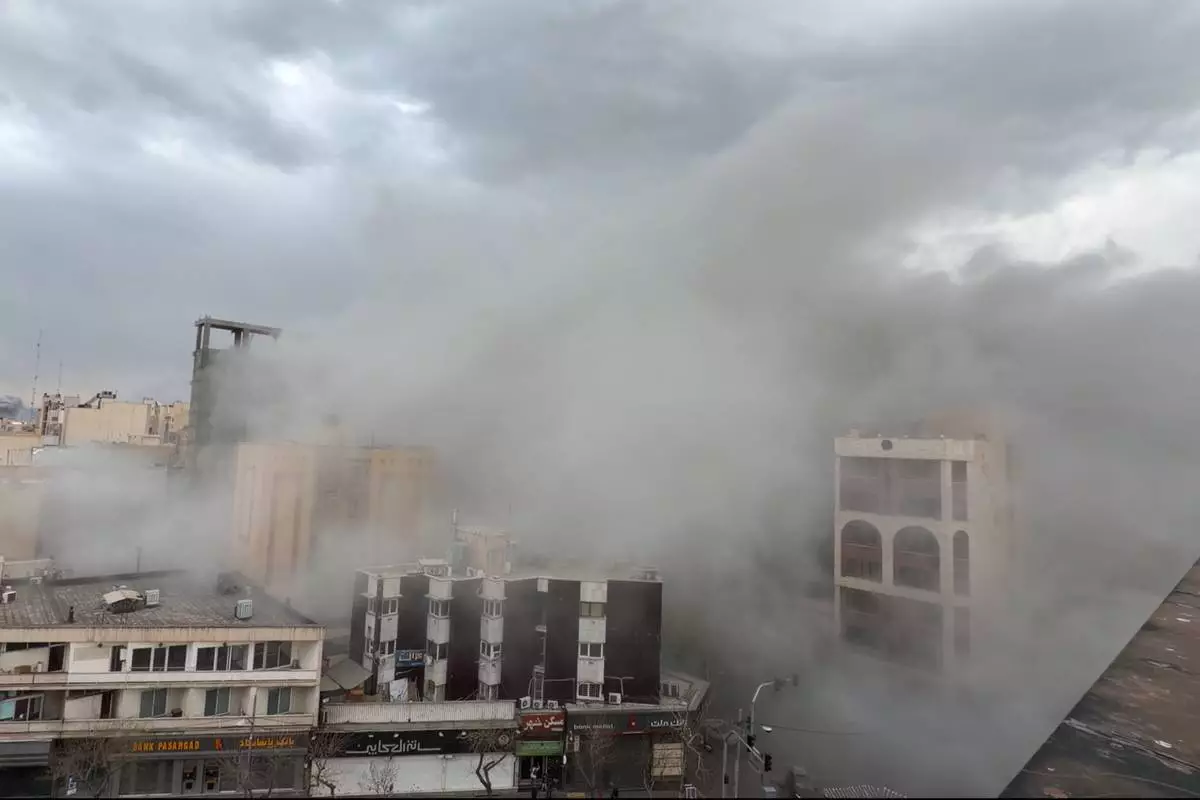
Smoke engulfs a street after a strike in Tehran, Iran, Monday, March 2, 2026. (AP Photo/Mohsen Ganji)