DAKAR, Senegal (AP) — A Nigerian Air Force plane made an emergency landing in Burkina Faso late Monday due to an in-flight emergency, according to a regional alliance that called it a violation of Burkina Faso's airspace.
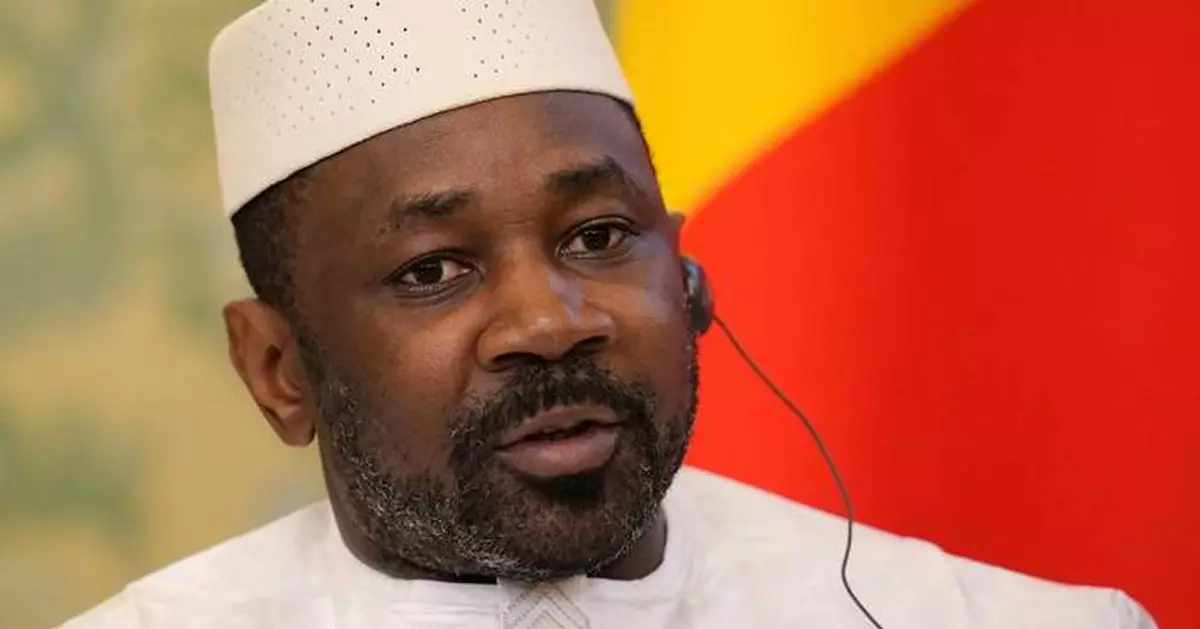
The Alliance of Sahel States, which includes Burkina Faso and neighboring Mali and Niger, placed their air and anti-air defenses on maximum alert with authorization "to neutralize any aircraft that violates the confederation’s airspace,” according to a statement by Gen. Assimi Goita, leader of Mali's military junta.
The Nigerian Air Force confirmed Tuesday that its aircraft headed to Portugal made the emergency landing in the western city of Bobo-Dioulasso, which had the nearest airfield. The nature of the emergency was not immediately disclosed.
Ehimen Ejodame, a Nigerian air force spokesman, said the landing was done in accordance with standard safety and international procedures.
“NAF crew is safe and have received cordial treatment from the host authorities,” Ejodame said in a statement.
The Sahel alliance statement said there were two crew members and nine passengers on the aircraft.
The incident follows fractured relations between the alliance and Nigeria, which was involved in intervention efforts that helped reverse a short-lived coup on Sunday in Benin, where the Nigerian Air Force conducted airstrikes targeting the coup plotters. Burkina Faso is on the northwest border of Benin and Nigeria is on Benin's eastern border.
Nigeria is one of 15 members of West Africa’s regional bloc, the Economic Community of West African States. Burkina Faso, Mali and Niger formed the Sahel alliance after withdrawing from ECOWAS, which the alliance accuses of inhumane, coup-related sanctions and working against the interests of citizens in alliance countries.
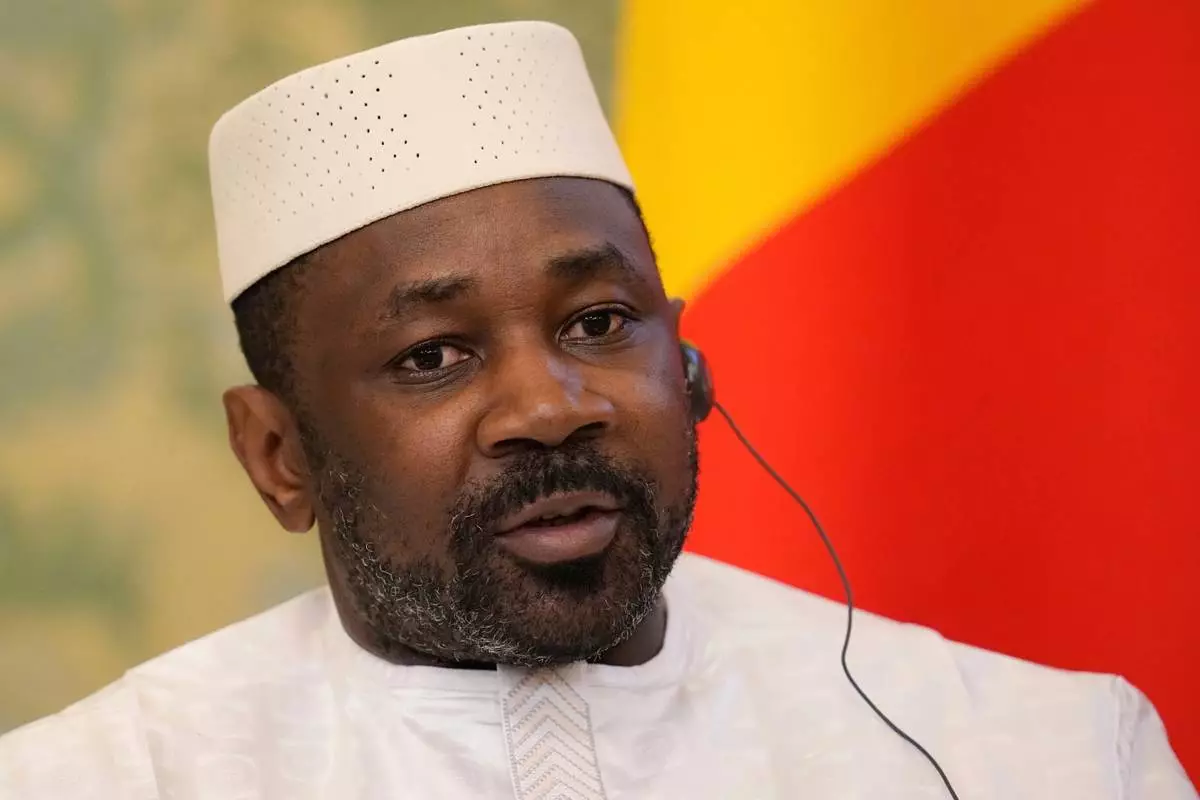
FILE -Interim President of the Republic of Mali Assimi Goita speaks to Russian President Vladimir Putin during their talks at the Grand Kremlin Palace at the Kremlin in Moscow, Russia, June 23, 2025. (AP Photo/Pavel Bednyakov, Pool), File)
WASHINGTON (AP) — President Donald Trump said Wednesday that the United States has seized an oil tanker off the coast of Venezuela as tensions mount with the government of President Nicolás Maduro.
Using U.S. forces to take control of a merchant ship is incredibly unusual and marks the Trump administration’s latest push to increase pressure on Maduro, who has been charged with narcoterrorism in the United States. The U.S. has built up the largest military presence in the region in decades and launched a series of deadly strikes on alleged drug-smuggling boats in the Caribbean Sea and eastern Pacific Ocean. The campaign is facing growing scrutiny from Congress.
“We’ve just seized a tanker on the coast of Venezuela, a large tanker, very large, largest one ever seized, actually,” Trump told reporters at the White House, later adding that "it was seized for a very good reason.”
Trump did not offer additional details. When asked what would happen to the oil aboard the tanker, Trump said, “Well, we keep it, I guess.”
The seizure was led by the U.S. Coast Guard and supported by the Navy, according to a U.S. official who was not authorized to comment publicly and spoke on the condition of anonymity. The official added that it was conducted under U.S. law enforcement authority.
The Coast Guard members were taken to the oil tanker by helicopter from the aircraft carrier USS Gerald R. Ford, the official said. The Ford is in the Caribbean Sea after arriving last month in a major show of force, joining a fleet of other warships.
Video posted to social media by Attorney General Pam Bondi shows people fast-roping from one of the helicopters involved in the operation as it hovers just feet from the deck.
The Coast Guard members can be seen later in the video moving throughout the superstructure of the ship with their weapons drawn.
Bondi wrote that “for multiple years, the oil tanker has been sanctioned by the United States due to its involvement in an illicit oil shipping network supporting foreign terrorist organizations.”
Venezuela’s government said in a statement that the seizure “constitutes a blatant theft and an act of international piracy.”
“Under these circumstances, the true reasons for the prolonged aggression against Venezuela have finally been revealed. … It has always been about our natural resources, our oil, our energy, the resources that belong exclusively to the Venezuelan people,” the statement said.
The U.S. official identified the seized tanker as the Skipper.
The ship departed Venezuela around Dec. 2 with about 2 million barrels of heavy crude, roughly half of it belonging to a Cuban state-run oil importer, according to documents from the state-owned company Petróleos de Venezuela S.A., commonly known as PDVSA, that were provided on the condition of anonymity because the person did not have permission to share them.
The Skipper was previously known as the M/T Adisa, according to ship tracking data. The Adisa was sanctioned by the U.S. in 2022 over accusations of belonging to a sophisticated network of shadow tankers that smuggled crude oil on behalf of Iran’s Revolutionary Guard and Lebanon's Hezbollah militant group.
The network was reportedly run by a Switzerland-based Ukrainian oil trader, the U.S. Treasury Department said at the time.
Venezuela has the world’s largest proven oil reserves and produces about 1 million barrels a day.
PDVSA is the backbone of the country’s economy. Its reliance on intermediaries increased in 2020, when the first Trump administration expanded its maximum-pressure campaign on Venezuela with sanctions that threaten to lock out of the U.S. economy any individual or company that does business with Maduro’s government. Longtime allies Russia and Iran, both also sanctioned, have helped Venezuela skirt restrictions.
The transactions usually involve a complex network of shadowy intermediaries. Many are shell companies, registered in jurisdictions known for secrecy. The buyers deploy so-called ghost tankers that hide their location and hand off their valuable cargoes in the middle of the ocean before they reach their final destination.
Maduro did not address the seizure during a speech before a ruling-party organized demonstration in Caracas, Venezuela’s capital. But he told supporters that the country is “prepared to break the teeth of the North American empire if necessary.”
Maduro has insisted the real purpose of the U.S. military operations is to force him from office.
Sen. Chris Van Hollen, D-Md., a member of the Senate Foreign Relations Committee, said the U.S. seizing the oil tanker cast doubt on the administration’s stated reasons for the military buildup and boat strikes.
“This shows that their whole cover story — that this is about interdicting drugs — is a big lie,” the senator said. “This is just one more piece of evidence that this is really about regime change — by force.”
Vincent P. O’Hara, a naval historian and author of “The Greatest Naval War Ever Fought,” called the seizure “very unusual” and "provocative." “As far as the principle of seizing ships on the high sea, that’s an important international question,” he said. “Nations go to war over that principle."
The seizure comes a day after the U.S. military flew a pair of fighter jets over the Gulf of Venezuela in what appeared to be the closest that warplanes had come to the South American country’s airspace. Trump has said land attacks are coming soon but has not offered more details.
The Trump administration is facing increasing scrutiny from lawmakers over the boat strike campaign, which has killed at least 87 people in 22 known strikes since early September, including a follow-up strike that killed two survivors clinging to the wreckage of a boat after the first hit.
Some legal experts and Democrats say that action may have violated the laws governing the use of deadly military force.
Lawmakers are demanding to get unedited video from the strikes, but Defense Secretary Pete Hegseth told congressional leaders at a classified briefing Tuesday that he was still weighing whether to release it.
The Coast Guard referred a request for comment about the tanker seizure to the White House.
Goodman reported from Miami, and Garcia Cano from Caracas, Venezuela. Associated Press writers Lisa Mascaro and Alanna Durkin Richer in Washington, Rebecca Boone in Boise, Idaho, and Susan Haigh in Hartford, Connecticut, contributed to this report.
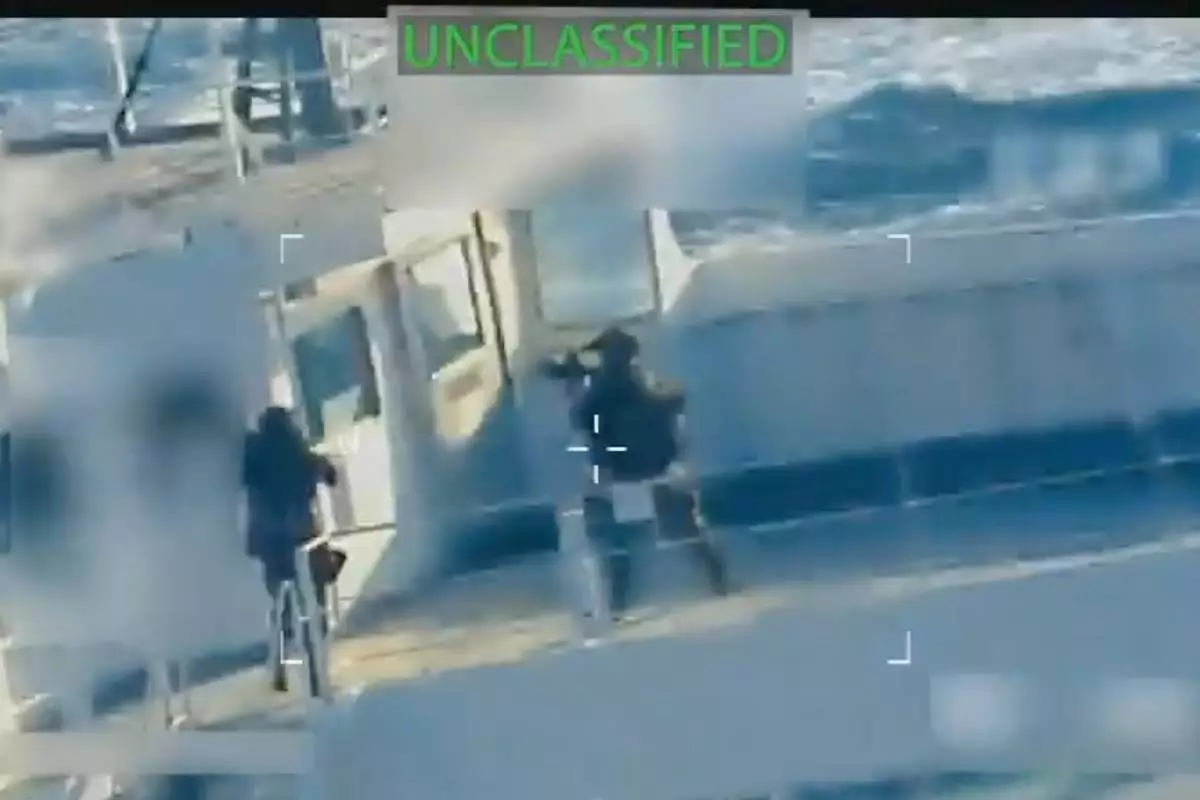
This image from video posted on Attorney General Pam Bondi's X account, and partially redacted by the source, shows an oil tanker being seized by U.S. forces off the coast of Venezuela, Wednesday, Dec. 10, 2025. (U.S. Attorney General's Office/X via AP)
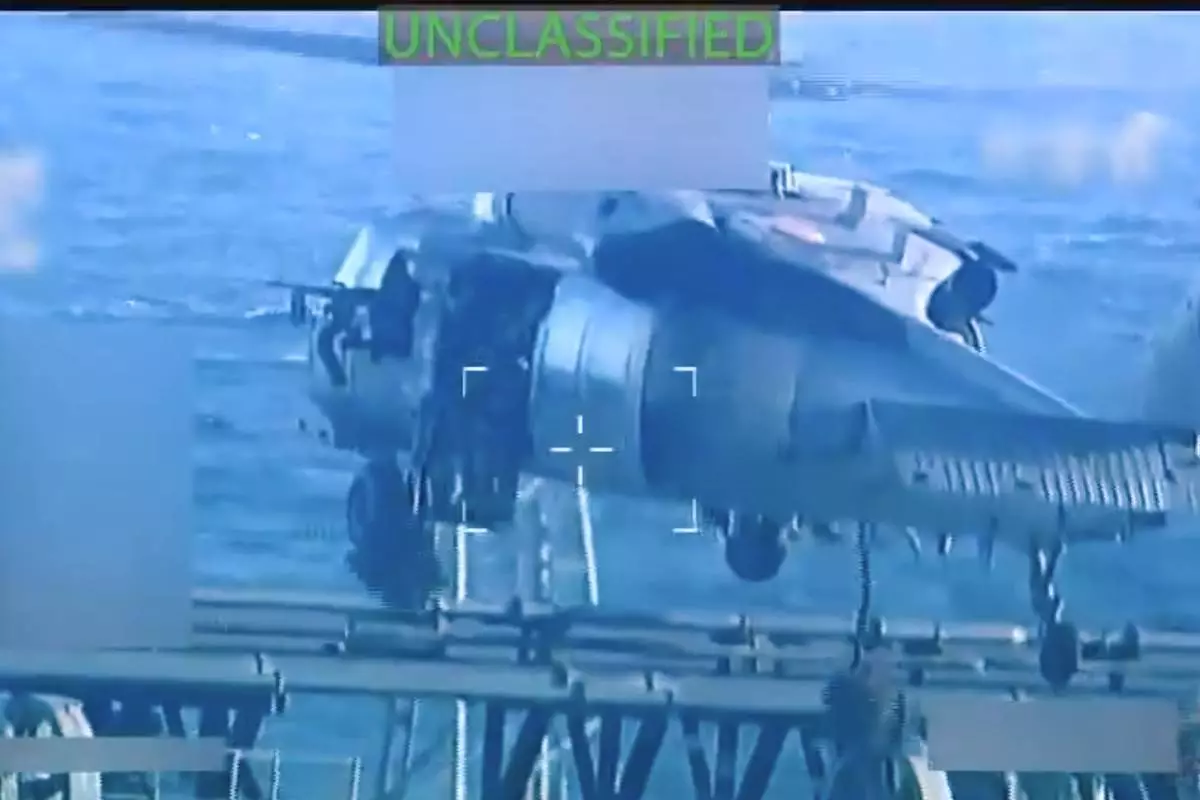
This image from video posted on Attorney General Pam Bondi's X account, and partially redacted by the source, shows an oil tanker being seized by U.S. forces off the coast of Venezuela, Wednesday, Dec. 10, 2025. (U.S. Attorney General's Office/X via AP)
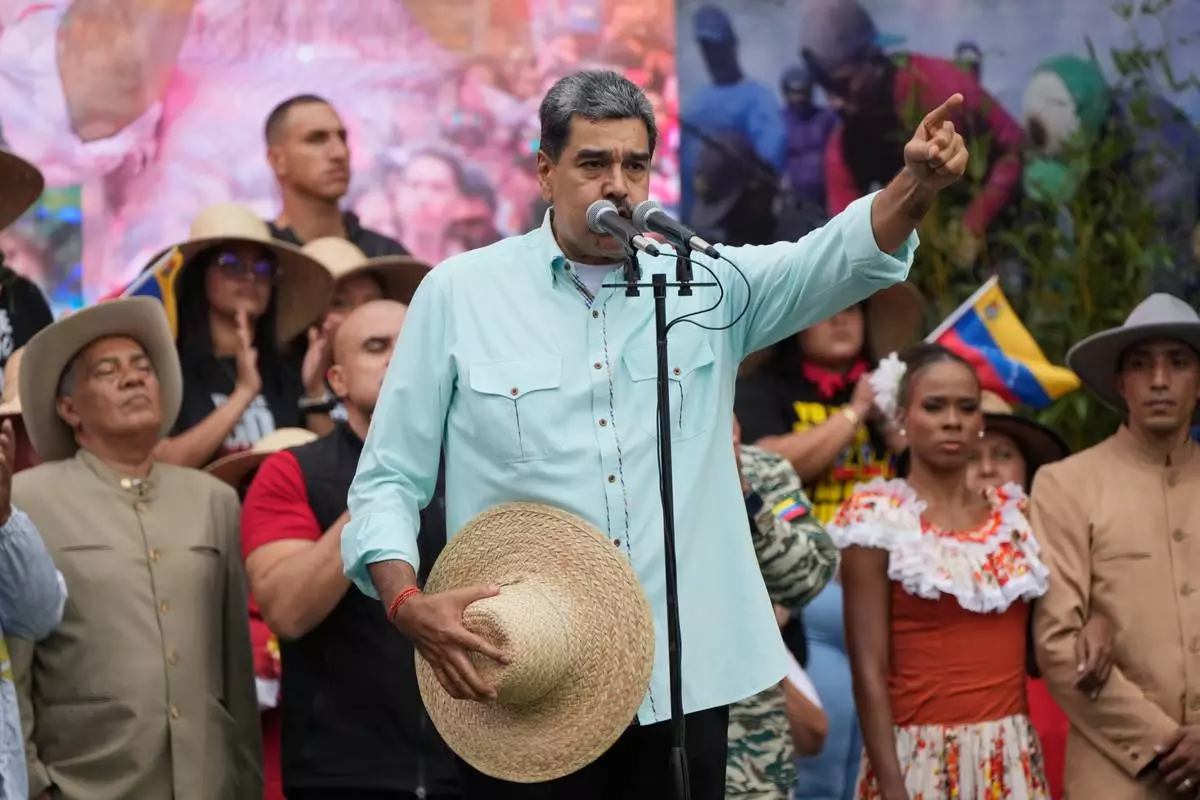
Nicolas Maduro speaks at a rally marking the anniversary of the Battle of Santa Isabel, which took place during Venezuela's 19th-century Federal War, in Caracas, Venezuela, Wednesday, Dec. 10, 2025. (AP Photo/Ariana Cubillos)
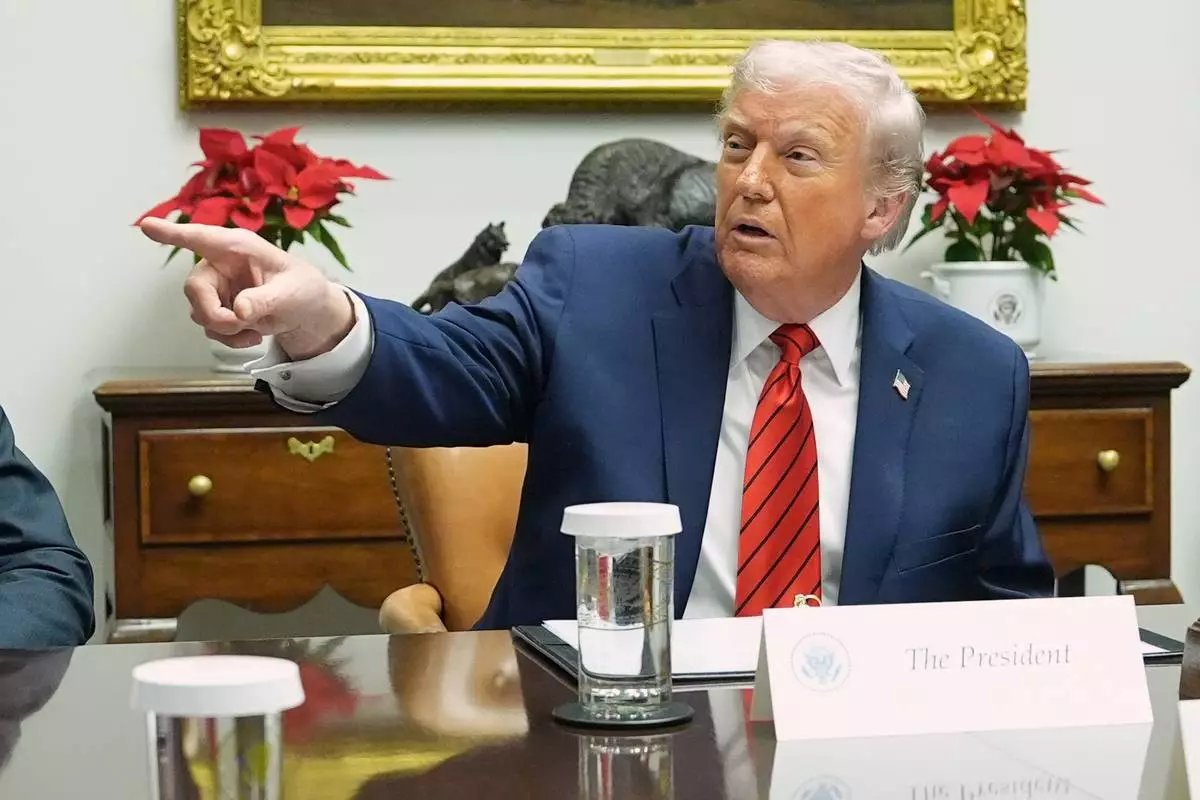
President Donald Trump speaks during a roundtable in the Roosevelt Room of the White House, Wednesday, Dec. 10, 2025, in Washington. (AP Photo/Evan Vucci)