Skip to Content Facebook Feature Image

European leaders agree to fund Ukraine for 2 years but using Russian assets poses a major test

News

European leaders agree to fund Ukraine for 2 years but using Russian assets poses a major test
News

News

European leaders agree to fund Ukraine for 2 years but using Russian assets poses a major test

2025-12-10 01:11 Last Updated At:01:20

BRUSSELS (AP) — Almost four years into Russia’s full-scale war on Ukraine, European Union leaders have committed to funding Kyiv’s economic and military needs for the next two years, one way or another. Ukraine is desperate and needs the money by early 2026.

At a summit next week, the 27 EU leaders will weigh whether to use tens of billions of dollars in frozen Russian assets held in Europe to help meet Ukraine’s requirements, which the International Monetary Fund puts at 135 billion euros ($157 billion).

More Images
FILE - A view of the headquarters of Euroclear in Brussels, on Oct. 23, 2025. (AP Photo/Geert Vanden Wijngaert, File)
FILE - A view of the headquarters of Euroclear in Brussels, on Oct. 23, 2025. (AP Photo/Geert Vanden Wijngaert, File)

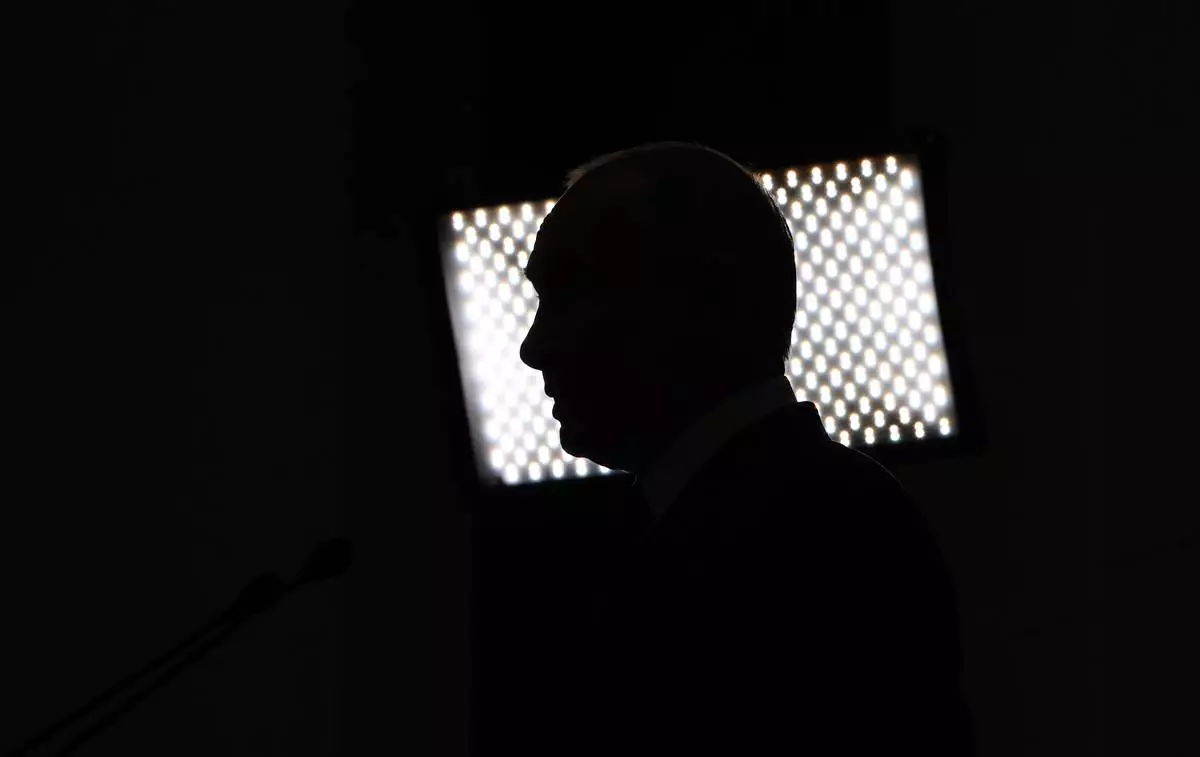
Russian President Vladimir Putin speaks to Russian journalists after the summit of the Collective Security Treaty Organisation (CSTO) in Bishkek, Kyrgyzstan, on Thursday, Nov. 27, 2025. (Alexander Kazakov, Sputnik, Kremlin Pool Photo via AP)
Russian President Vladimir Putin speaks to Russian journalists after the summit of the Collective Security Treaty Organisation (CSTO) in Bishkek, Kyrgyzstan, on Thursday, Nov. 27, 2025. (Alexander Kazakov, Sputnik, Kremlin Pool Photo via AP)

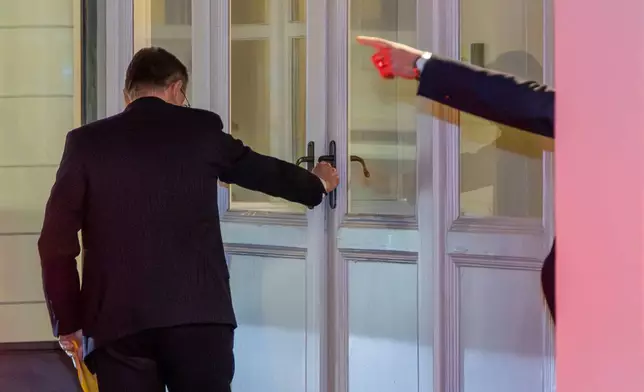
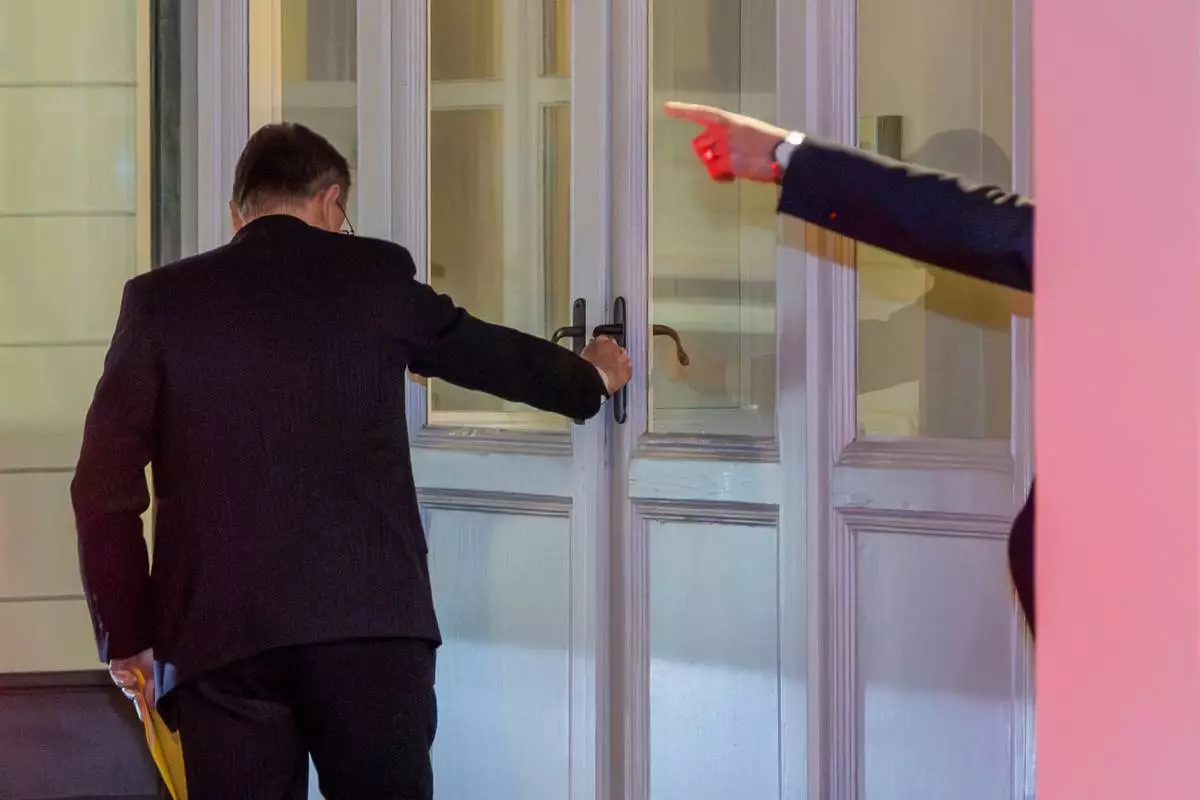
Belgian Prime Minister Bart De Wever arrives at his residence in Brussels, Friday, Dec. 5, 2025. (AP Photo/Geert Vanden Wijngaert)
Belgian Prime Minister Bart De Wever arrives at his residence in Brussels, Friday, Dec. 5, 2025. (AP Photo/Geert Vanden Wijngaert)

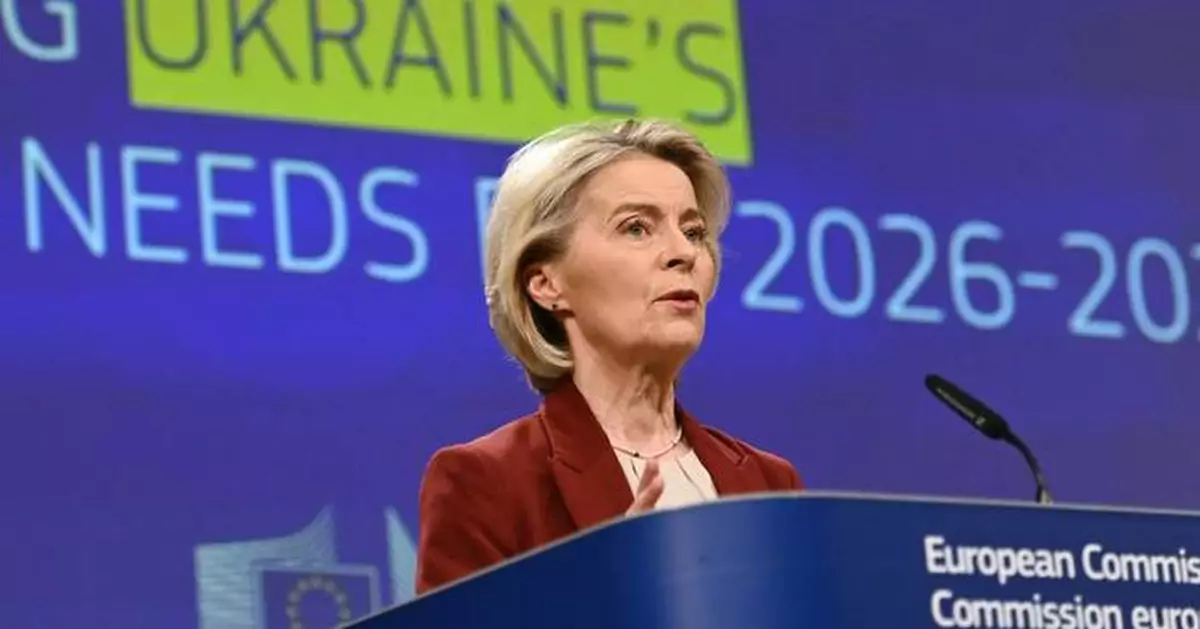
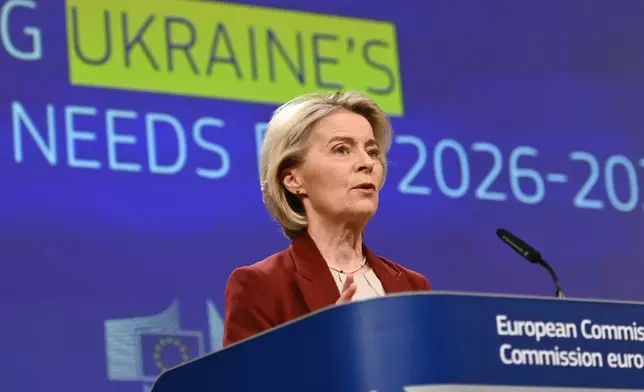
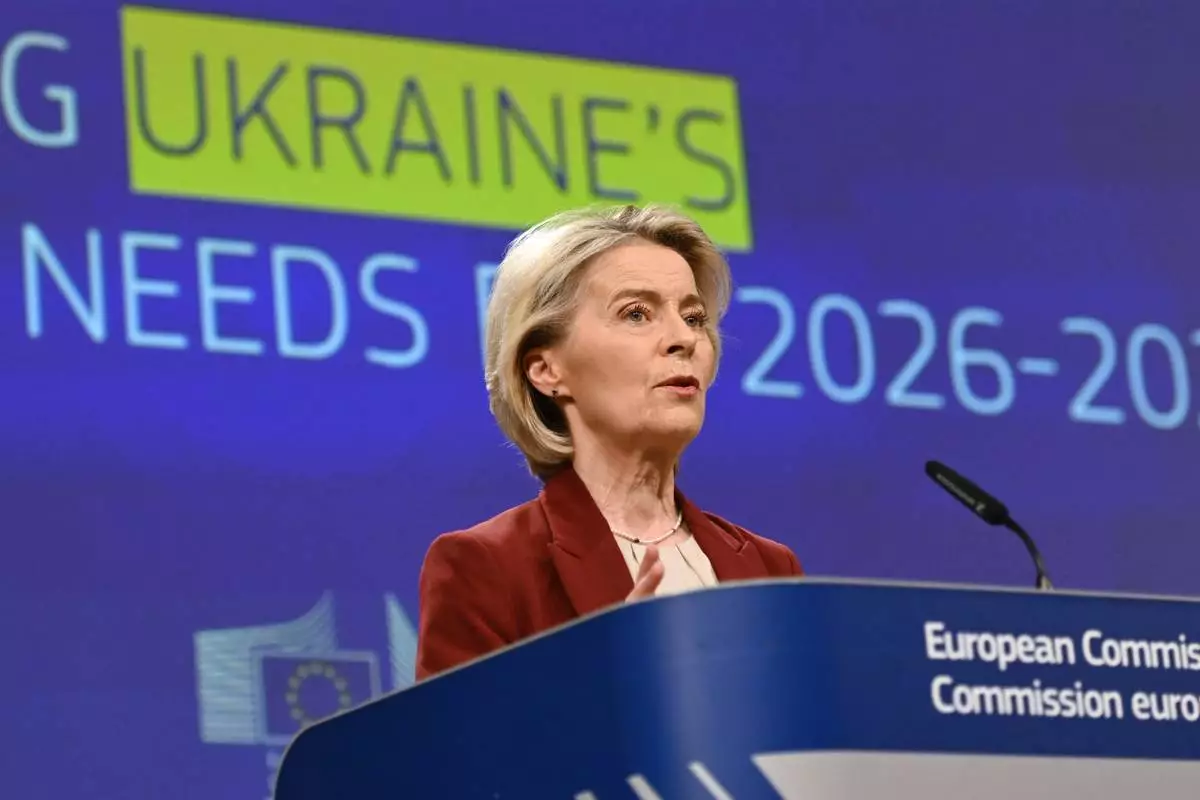
European Commission President Ursula von der Leyen speaks during a media conference regarding Ukraine's financing needs for 2026-2027 at EU headquarters in Brussels, Wednesday, Dec. 3, 2025. (AP Photo/Harry Nakos)

European Commission President Ursula von der Leyen speaks during a media conference regarding Ukraine's financing needs for 2026-2027 at EU headquarters in Brussels, Wednesday, Dec. 3, 2025. (AP Photo/Harry Nakos)

Such a move has never been done before, and it comes with risks. The European Central Bank has warned that if Europeans appear willing to grab other countries' money, it could undermine confidence in the euro currency. Some member nations are also concerned about inviting retaliation from Russia.

Belgium, where most of the assets are held, is the main opponent of the plan. It’s fearful that Russia will strike back, either through the courts or in more nefarious ways. A series of drone incidents near airports and military bases last month suggested that the Kremlin was already doing so, but those responsible were never publicly identified.

European Council President Antonio Costa, who will chair the Dec. 18 summit, has insisted that the leaders should not leave EU headquarters in Brussels until they have reached a decision.

EU leaders froze the money, most of it in Russian Central Bank assets, over the war that Putin launched in February 2022. Moscow has described the scheme as “theft.”

Two plans have emerged. The first would be a “reparations loan” that would use the Russian assets until Moscow agrees to pay for the damage inflicted on Ukraine. Few think Russian President Vladimir Putin will ever agree to pay reparations.

Plan B would be for the EU to borrow the money on financial markets, much as the bloc did to fund a massive loan plan to revive European economies after the coronavirus pandemic.

Many of Europe’s major economies are cash strapped and mired in debt. But Russia’s war on Ukraine poses an existential threat to the bloc. Intelligence assessments suggest that Putin could launch a war elsewhere in three to five years should he defeat Ukraine.

The assets make up a substantial pot of potentially ready-to-use cash.

The European Commission, the EU’s executive branch, estimates that 210 billion ($244 billion) euros worth of frozen assets are currently held in Europe. The vast majority — around 193 billion euros ($225 billion) at the end of September — are held in the Belgian financial clearinghouse known as Euroclear.

There are political advantages too. Should the EU choose to use the assets, only “a qualified majority” of countries — around a two-thirds majority — would be required for a green light. Borrowing on financial markets would have to be endorsed by all, meaning that even a single no vote would sink the idea.

Over the last year, Hungary has blocked EU support for Ukraine at almost every turn. The government in Slovakia is starting to dig in its heels as well. A new and stridently nationalist leader in the Czech Republic could further complicate the decision.

Avoiding a veto is in the interest of the vast majority of member countries.

Unveiling her plan on Dec. 4, European Commission President Ursula von der Leyen said the EU would cover two-thirds of Ukraine’s needs for 2026 and 2027, for a total of 90 billion euros ($105 billion). International partners would fill the gap.

Due to EU sanctions on Russia’s assets, cash balances have accumulated at Euroclear. They’ve generated interest — some 3.9 billion euros ($4.5 billion) this year, Euroclear says — which is already being used to fund a Group of Seven loan plan for Ukraine.

Under the new plan, some of the cash would be transferred to an EU debt instrument. Ukraine would owe the EU the money but would repay only after the bloc’s sanctions are lifted and after Russia agrees to pay war reparations.

The commission insists that there is no “theft,” as Russia has claimed, because the right of the Russian Central Bank to make a claim on its money and Euroclear’s duty to repay will remain intact.

Once Putin pays war reparations, Ukraine would repay the EU, the EU would repay Euroclear, and Euroclear would repay the Russian Central Bank.

Importantly for Belgium, the plan contains safeguards to ensure that the risks would be shared by its partners. Other EU countries would offer to guarantee the loan if something went wrong. Germany has already signaled that it would do so.

But the Belgian government has not been assuaged. Even before the commission's reparations loan plan was made public, Foreign Minister Maxime Prévot said that it “entails consequential economic, financial and legal risks.”

Prévot said Belgium — a strong backer of Ukraine that has provided military and financial support — feels that its concerns are not being heard by its EU partners.

“We are not seeking to antagonize our partners or Ukraine. We are simply seeking to avoid potential disastrous consequences for a member state that is being asked to show solidarity without being offered the same solidarity in return,” he said.

In an interview with Belgian public broadcaster RTBF last week, Euroclear CEO Valerie Urbain also said that court action could not be ruled out should the EU oblige the clearinghouse to transfer its Russian assets.

FILE - A view of the headquarters of Euroclear in Brussels, on Oct. 23, 2025. (AP Photo/Geert Vanden Wijngaert, File)
FILE - A view of the headquarters of Euroclear in Brussels, on Oct. 23, 2025. (AP Photo/Geert Vanden Wijngaert, File)

Russian President Vladimir Putin speaks to Russian journalists after the summit of the Collective Security Treaty Organisation (CSTO) in Bishkek, Kyrgyzstan, on Thursday, Nov. 27, 2025. (Alexander Kazakov, Sputnik, Kremlin Pool Photo via AP)
Russian President Vladimir Putin speaks to Russian journalists after the summit of the Collective Security Treaty Organisation (CSTO) in Bishkek, Kyrgyzstan, on Thursday, Nov. 27, 2025. (Alexander Kazakov, Sputnik, Kremlin Pool Photo via AP)

Belgian Prime Minister Bart De Wever arrives at his residence in Brussels, Friday, Dec. 5, 2025. (AP Photo/Geert Vanden Wijngaert)
Belgian Prime Minister Bart De Wever arrives at his residence in Brussels, Friday, Dec. 5, 2025. (AP Photo/Geert Vanden Wijngaert)

European Commission President Ursula von der Leyen speaks during a media conference regarding Ukraine's financing needs for 2026-2027 at EU headquarters in Brussels, Wednesday, Dec. 3, 2025. (AP Photo/Harry Nakos)

European Commission President Ursula von der Leyen speaks during a media conference regarding Ukraine's financing needs for 2026-2027 at EU headquarters in Brussels, Wednesday, Dec. 3, 2025. (AP Photo/Harry Nakos)

COPENHAGEN, Denmark (AP) — As Australia began enforcing a world-first social media ban for children under 16 years old this week, Denmark is planning to follow its lead and severely restrict social media access for young people.

The Danish government announced last month that it had secured an agreement by three governing coalition and two opposition parties in parliament to ban access to social media for anyone under the age of 15. Such a measure would be the most sweeping step yet by a European Union nation to limit use of social media among teens and children.

The Danish government's plans could become law as soon as mid-2026. The proposed measure would give some parents the right to let their children access social media from age 13, local media reported, but the ministry has not yet fully shared their plans.

Many social media platforms already ban children younger than 13 from signing up, and a EU law requires Big Tech to put measures in place to protect young people from online risks and inappropriate content. But officials and experts say such restrictions don’t always work.

Danish authorities have said that despite the restrictions, around 98% of Danish children under age 13 have profiles on at least one social media platform, and almost half of those under 10 years old do.

The minister for digital affairs, Caroline Stage, who announced the proposed ban last month, said there is still a consultation process for the measure and several readings in parliament before it becomes law, perhaps by “mid to end of next year.”

“In far too many years, we have given the social media platforms free play in the playing rooms of our children. There’s been no limits,” Stage said in an interview with The Associated Press last month.

“When we go into the city at night, there are bouncers who are checking the age of young people to make sure that no one underage gets into a party that they’re not supposed to be in,” she added. “In the digital world, we don’t have any bouncers, and we definitely need that.”

Under the new Australian law, Facebook, Instagram, Kick, Reddit, Snapchat, Threads, TikTok, X and YouTube face fines of up to 50 million Australian dollars ($33 million) if they fail to take reasonable steps to remove accounts of Australian children younger than 16.

Some students say they are worried that similar strict laws in Denmark would mean they will losing touch with their virtual communities.

“I myself have some friends that I only know from online, and if I wasn’t fifteen yet, I wouldn’t be able to talk with those friends,” 15-year-old student Ronja Zander, who uses Instagram, Snapchat and TikTok, told the AP.

Copenhagen high school student Chloé Courage Fjelstrup-Matthisen, 14, said she is aware of the negative impact social madia can have, from cyberbullying to seeing graphic content. She said she saw video of a man being shot several months ago.

“The video was on social media everywhere and I just went to school and then I saw it,” she said.

Line Pedersen, a mother from Nykøbing in Denmark, said she believed the plans were a good idea.

“I think that we didn’t really realize what we were doing when we gave our children the telephone and social media from when they were eight, ten years old," she said. "I don’t quite think that the young people know what’s normal, what’s not normal.”

Danish officials are yet to share how exactly the proposed ban would be enforced and which social media platforms would be affected.

However, a new “digital evidence” app, announced by the Digital Affairs Ministry last month and expected to launch next spring, will likely form the backbone of the Danish plans. The app will display an age certificate to ensure users comply with social media age limits, the ministry said.

“One thing is what they’re saying and another thing is what they’re doing or not doing,” Stage said, referring to social media platforms. “And that’s why we have to do something politically.”

Some experts say restrictions, such as the ban planned by Denmark, don’t always work and they may also infringe on the rights of children and teenagers.

“To me, the greatest challenge is actually the democratic rights of these children. I think it’s sad that it’s not taken more into consideration,” said Anne Mette Thorhauge, an associate professor at the University of Copenhagen.

“Social media, to many children, is what broadcast media was to my generation," she added. “It was a way of connecting to society."

Currently, the EU’s Digital Services Act, which took effect two years ago, requires social media platforms to ensure there are measures including parental controls and age verification tools before young users can access the apps.

EU officials have acknowledged that enforcing the regulations aiming at protecting children online has proven challenging because it requires cooperation between member states and many resources.

Denmark is among several countries that have indicated they plan to follow in Australia’s steps. The Southeast Asian country of Malaysia is expected to ban social media account s for people under the age of 16 starting at the beginning of next year, and Norway is also taking steps to restrict social media access for children and teens.

China — which manufacturers many of the world’s digital devices — has set limits on online gaming time and smart-phone time for kids.

FILE - Caroline Stage, Danish Minister for Digitalization and representatives from the agreement parties attends a press conference about a new political agreement for better protection of children and young people online, in Copenhagen, Friday, Nov. 7, 2025. (Thomas Traasdahl/Ritzau Scanpix via AP, File)

FILE - Caroline Stage, Danish Minister for Digitalization and representatives from the agreement parties attends a press conference about a new political agreement for better protection of children and young people online, in Copenhagen, Friday, Nov. 7, 2025. (Thomas Traasdahl/Ritzau Scanpix via AP, File)

Recommended Articles