COPENHAGEN, Denmark (AP) — As Australia began enforcing a world-first social media ban for children under 16 years old this week, Denmark is planning to follow its lead and severely restrict social media access for young people.
The Danish government announced last month that it had secured an agreement by three governing coalition and two opposition parties in parliament to ban access to social media for anyone under the age of 15. Such a measure would be the most sweeping step yet by a European Union nation to limit use of social media among teens and children.
The Danish government's plans could become law as soon as mid-2026. The proposed measure would give some parents the right to let their children access social media from age 13, local media reported, but the ministry has not yet fully shared the plans.
Many social media platforms already ban children younger than 13 from signing up, and a EU law requires Big Tech to put measures in place to protect young people from online risks and inappropriate content. But officials and experts say such restrictions don’t always work.
Danish authorities have said that despite the restrictions, around 98% of Danish children under age 13 have profiles on at least one social media platform, and almost half of those under 10 years old do.
The minister for digital affairs, Caroline Stage, who announced the proposed ban last month, said there is still a consultation process for the measure and several readings in parliament before it becomes law, perhaps by “mid to end of next year.”
“In far too many years, we have given the social media platforms free play in the playing rooms of our children. There’s been no limits,” Stage said in an interview with The Associated Press last month.
“When we go into the city at night, there are bouncers who are checking the age of young people to make sure that no one underage gets into a party that they’re not supposed to be in,” she added. “In the digital world, we don’t have any bouncers, and we definitely need that.”
Under the new Australian law, Facebook, Instagram, Kick, Reddit, Snapchat, Threads, TikTok, X and YouTube face fines of up to 50 million Australian dollars ($33 million) if they fail to take reasonable steps to remove accounts of Australian children younger than 16.
Some students say they are worried that similar strict laws in Denmark would mean they will lose touch with their virtual communities.
“I myself have some friends that I only know from online, and if I wasn’t fifteen yet, I wouldn’t be able to talk with those friends,” 15-year-old student Ronja Zander, who uses Instagram, Snapchat and TikTok, told the AP.
Copenhagen high school student Chloé Courage Fjelstrup-Matthisen, 14, said she is aware of the negative impact social media can have, from cyberbullying to seeing graphic content. She said she saw video of a man being shot several months ago.
“The video was on social media everywhere and I just went to school and then I saw it,” she said.
Line Pedersen, a mother from Nykøbing in Denmark, said she believed the plans were a good idea.
“I think that we didn’t really realize what we were doing when we gave our children the telephone and social media from when they were eight, 10 years old," she said. "I don’t quite think that the young people know what’s normal, what’s not normal.”
Danish officials are yet to share how exactly the proposed ban would be enforced and which social media platforms would be affected.
However, a new “digital evidence” app, announced by the Digital Affairs Ministry last month and expected to launch next spring, will likely form the backbone of the Danish plans. The app will display an age certificate to ensure users comply with social media age limits, the ministry said.
“One thing is what they’re saying and another thing is what they’re doing or not doing,” Stage said, referring to social media platforms. “And that’s why we have to do something politically.”
Some experts say restrictions, such as the ban planned by Denmark, don’t always work and they may also infringe on the rights of children and teenagers.
“To me, the greatest challenge is actually the democratic rights of these children. I think it’s sad that it’s not taken more into consideration,” said Anne Mette Thorhauge, an associate professor at the University of Copenhagen.
“Social media, to many children, is what broadcast media was to my generation," she added. “It was a way of connecting to society."
Currently, the EU’s Digital Services Act, which took effect two years ago, requires social media platforms to ensure there are measures including parental controls and age verification tools before young users can access the apps.
EU officials have acknowledged that enforcing the regulations aiming at protecting children online has proven challenging because it requires cooperation between member states and many resources.
Denmark is among several countries that have indicated they plan to follow in Australia’s steps. The Southeast Asian country of Malaysia is expected to ban social media account s for people under the age of 16 starting at the beginning of next year, and Norway is also taking steps to restrict social media access for children and teens.
China — which manufacturers many of the world’s digital devices — has set limits on online gaming time and smartphone time for kids.

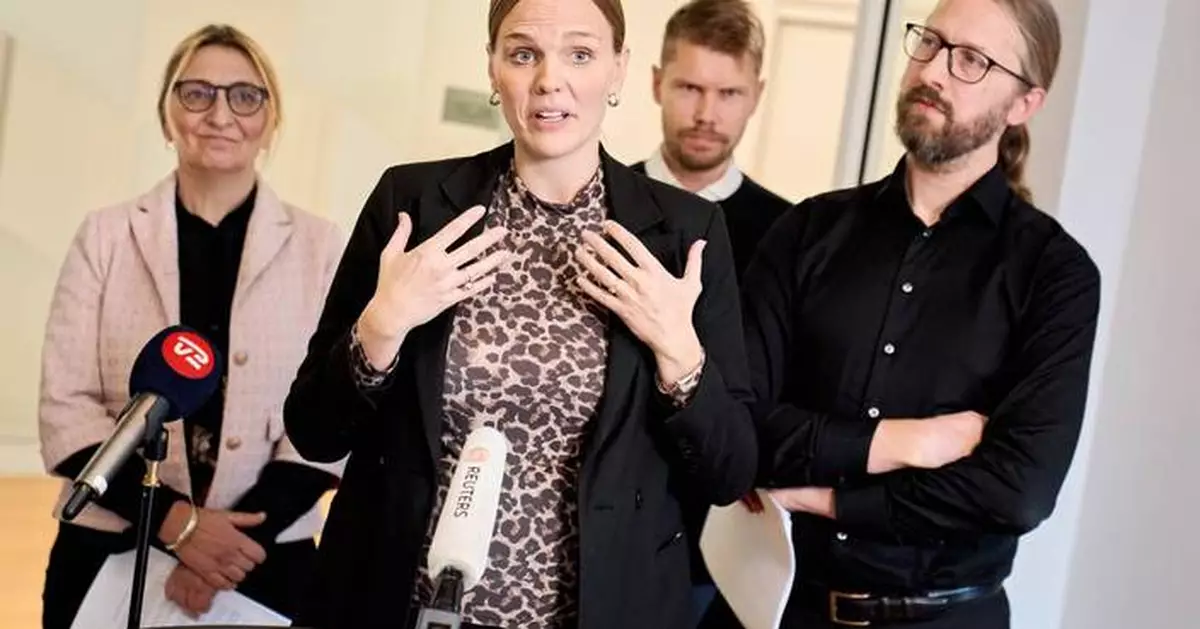
FILE - Caroline Stage, Danish Minister for Digitalization and representatives from the agreement parties attends a press conference about a new political agreement for better protection of children and young people online, in Copenhagen, Friday, Nov. 7, 2025. (Thomas Traasdahl/Ritzau Scanpix via AP, File)