Skip to Content Facebook Feature Image

Verona's ancient Roman Arena gets a modern facelift for the 2026 Winter Olympic Games

News

Verona's ancient Roman Arena gets a modern facelift for the 2026 Winter Olympic Games
News

News

Verona's ancient Roman Arena gets a modern facelift for the 2026 Winter Olympic Games

2025-12-11 16:44 Last Updated At:16:50

VERONA, Italy (AP) — Verona’s ancient Roman Arena will receive a modern facelift and become more accessible to people with disabilities ahead of the 2026 Milan Cortina Games, where it will host both the Olympic closing ceremony and the Paralympic opening ceremony.

Built by the Romans in the 1st Century, the Verona Arena was envisioned for gladiator fights and ancient hunts of exotic beasts, repurposed as a Medieval marketplace and most recently functions as the venue of a renowned opera festival.

More Images
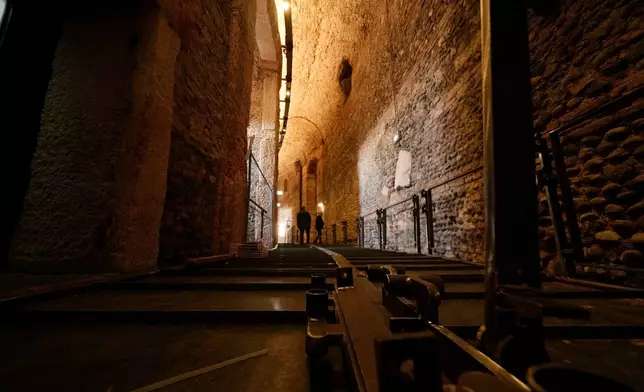
Walkways for disabled access are under construction in one of the corridors at the Arena of Verona, Italy, Wednesday, Dec. 10, 2025. (AP Photo/Luca Bruno)
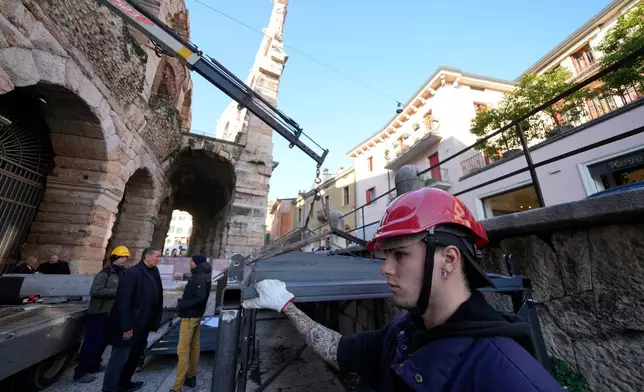
Walkways for disabled access are under construction in one of the corridors at the Arena of Verona, Italy, Wednesday, Dec. 10, 2025. (AP Photo/Luca Bruno)

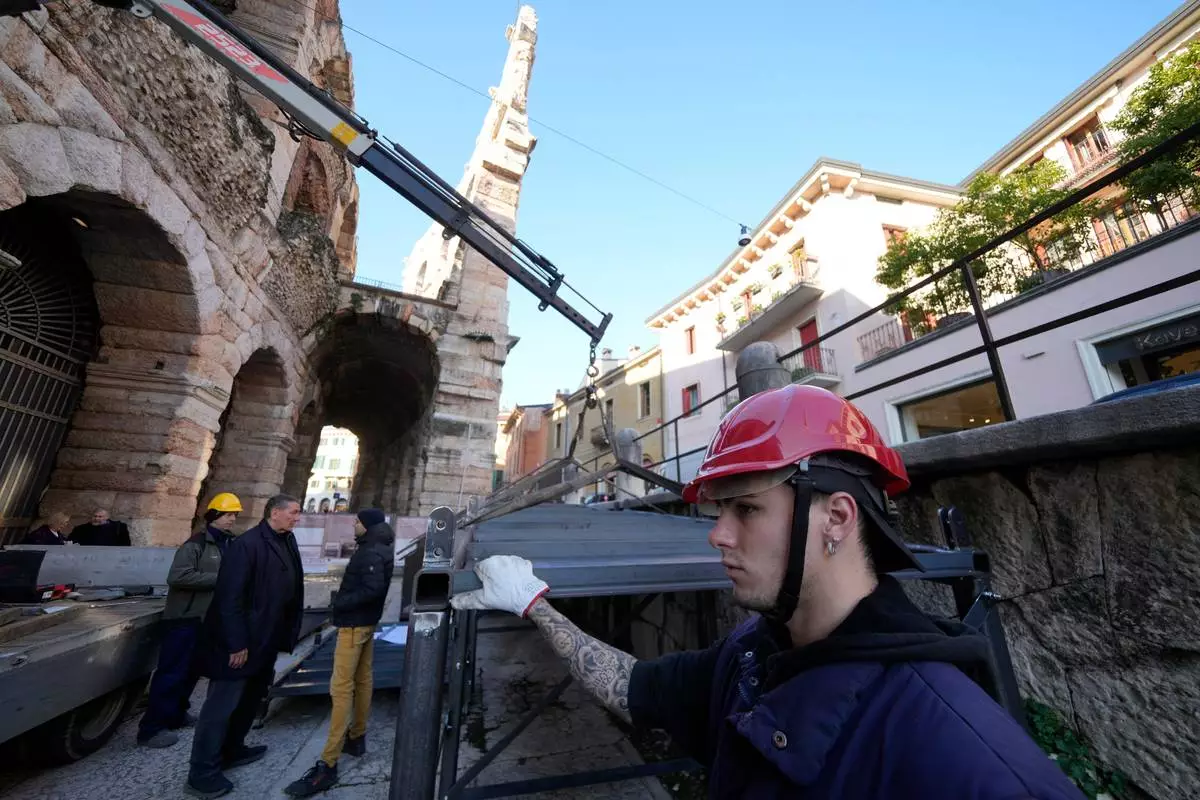
Workers build walkways for disabled access at the Arena of Verona, Italy, Wednesday, Dec. 10, 2025. (AP Photo/Luca Bruno)
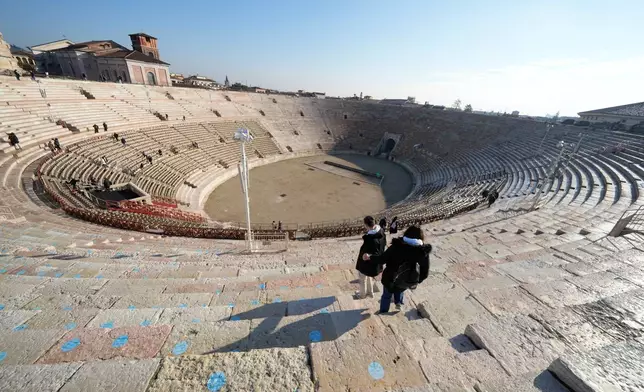
Workers build walkways for disabled access at the Arena of Verona, Italy, Wednesday, Dec. 10, 2025. (AP Photo/Luca Bruno)

Visitors climb down at the Arena of Verona, Italy, Wednesday, Dec. 10, 2025. (AP Photo/Luca Bruno)
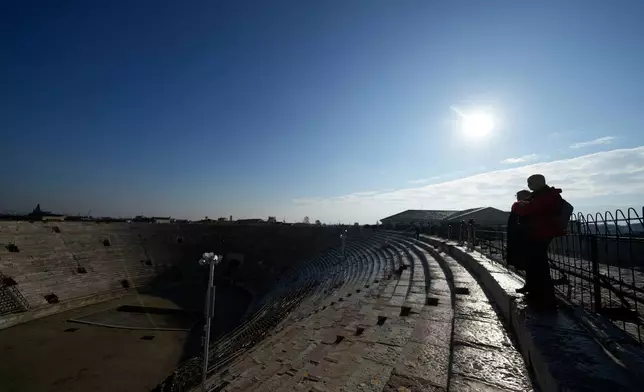
Visitors climb down at the Arena of Verona, Italy, Wednesday, Dec. 10, 2025. (AP Photo/Luca Bruno)

Visitors watch from the last ring at the Arena of Verona, Italy, Wednesday, Dec. 10, 2025. (AP Photo/Luca Bruno)
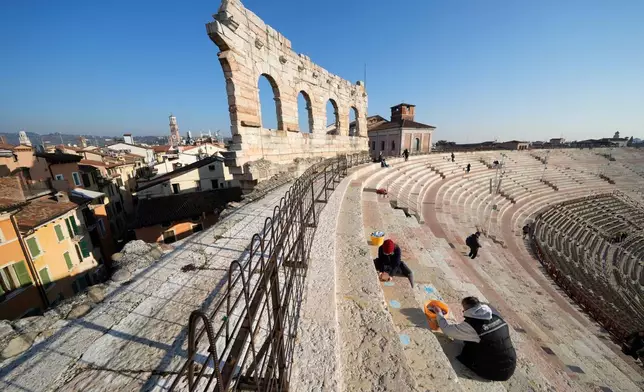
Visitors watch from the last ring at the Arena of Verona, Italy, Wednesday, Dec. 10, 2025. (AP Photo/Luca Bruno)

A worker removes seat number stickers used to mark places during concerts at the Arena of Verona, Italy, Wednesday, Dec. 10, 2025. (AP Photo/Luca Bruno)
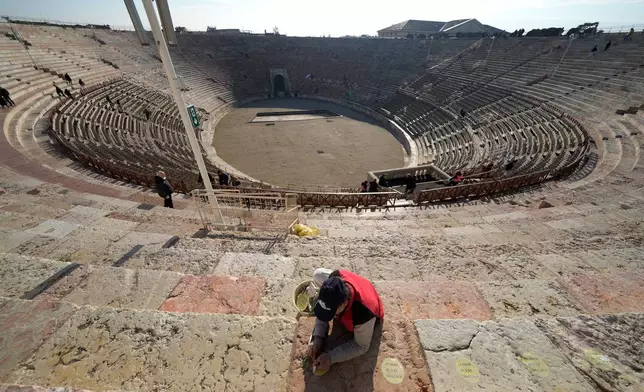
A worker removes seat number stickers used to mark places during concerts at the Arena of Verona, Italy, Wednesday, Dec. 10, 2025. (AP Photo/Luca Bruno)
A worker removes seat number stickers used to mark places during concerts at the Arena of Verona, Italy, Wednesday, Dec. 10, 2025. (AP Photo/Luca Bruno)

A worker removes seat number stickers used to mark places during concerts at the Arena of Verona, Italy, Wednesday, Dec. 10, 2025. (AP Photo/Luca Bruno)

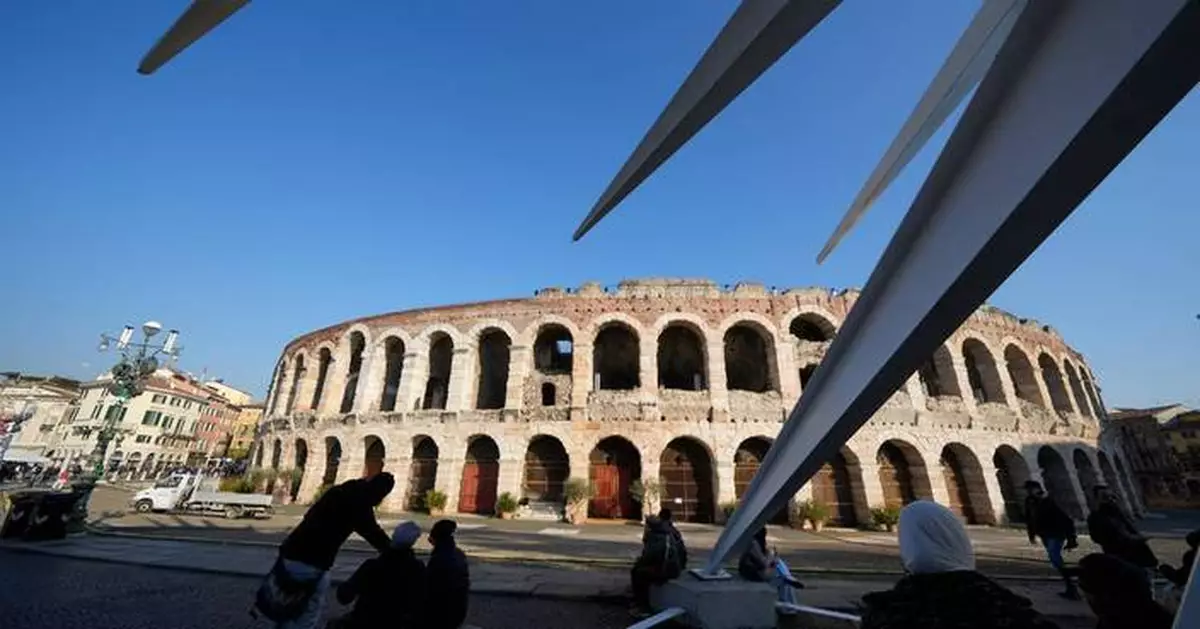
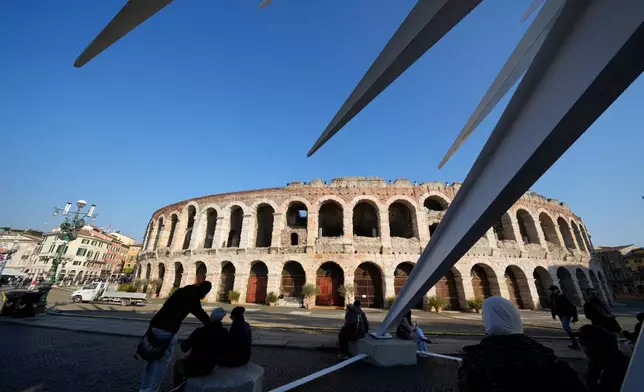
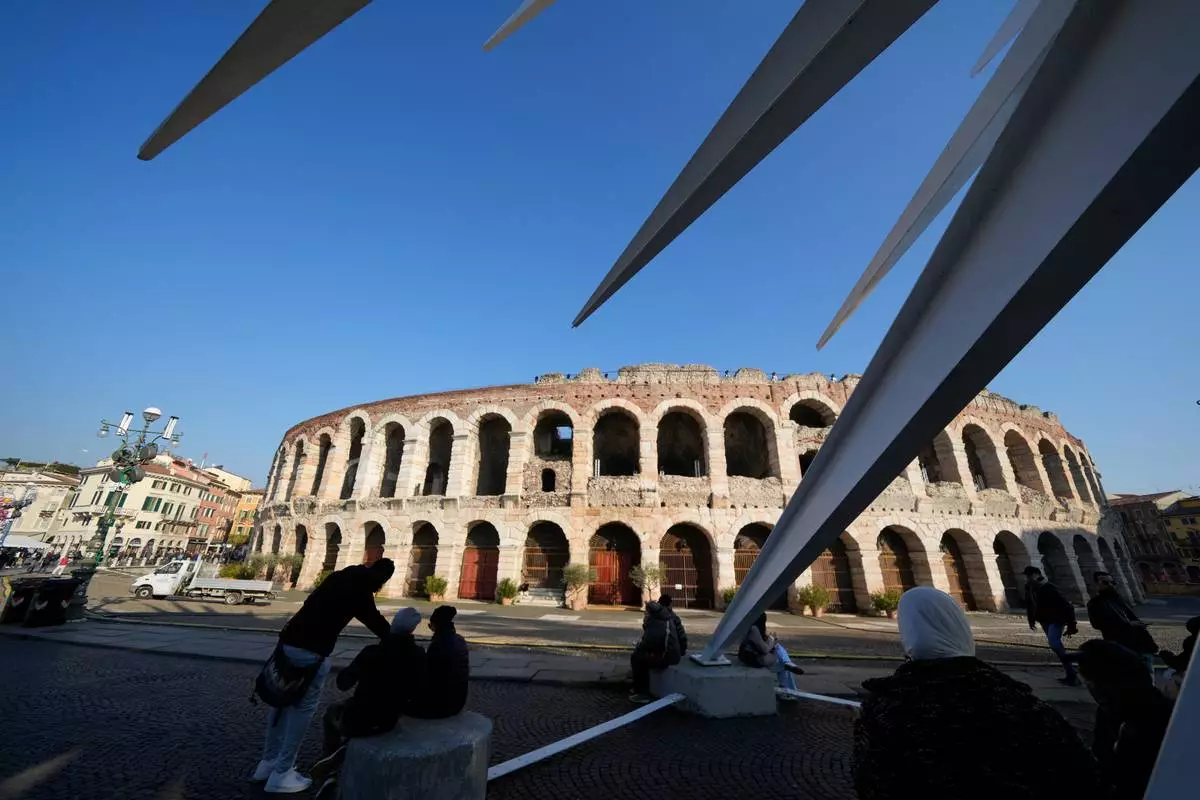
An external view of the Arena of Verona, Italy, Wednesday, Dec. 10, 2025. (AP Photo/Luca Bruno)

An external view of the Arena of Verona, Italy, Wednesday, Dec. 10, 2025. (AP Photo/Luca Bruno)

In none of its previous iterations has the imposing structure been made suitably accessible for disabled people or those needing assistance of any kind. In addition, some safety features intended as stopgaps have endured for decades without being updated.

The upcoming Games have provided the occasion to give the ancient Arena — which predates the Roman Colosseum by decades — an accessibility and safety makeover before it hosts an expected 11,000 people for the Feb. 22 closing ceremony and nearly 10,000 for the Paralympic opening ceremony on March 6.

“This is an ancient monument that is some 2,000 years old, that remains active and hosts audiences,” said architect Giulio Fenyves, whose Milan studio designed the new safety and accessibility features.

“The occasion of the Olympics has made it possible to reconsider a series of logistical aspects, including facilitating the entry and exit, precisely because it continues to host major events with thousands of people,” Fenyves said.

The facelift is part of a 18 million euro ($21 million) project that improves accessibility for the entire area surrounding the Arena and is being overseen by the governmental company responsible for Olympic infrastructure.

The works include making a kilometer-stretch of sidewalks from Verona’s main train station to the Arena safer for wheelchairs or baby strollers by building small curb ramps. Dedicated bike lanes are also being built.

Paralympians participating in the Parade of Athletes up Corso Porta Nuova, across Piazza Bra, and into the Arena will find that the route has been significantly upgraded for people who require wheelchairs or have other mobility issues.

The work is being coordinated with officials responsible for the preservation of the monument as well as those overseeing accessibility codes to bring the structure more in line with current legislation.

The new elements “must be integrated in the most delicate and harmonious way possible to a monument that is both robust and fragile at the same time,” Fenyves said.

Inside the Arena, the centerpiece project is a wheelchair-accessible ramp clad with pre-rusted steel and the same Prun stone from the Lessinia hills above Verona that was used by the Romans to build the Arena.

The local stone gives the Arena its pinkish-yellow hue and contains fossilized shells — remnants of a prehistoric sea that once covered this region now known for hills and vineyards.

The ramp will be removable, but project manager Paolo Zecchinelli said he hopes that it will be retained as a legacy of the Games.

Until now, people with wheelchairs or walkers approached from a natural slope leading down from the adjacent Piazza Bra.

In addition to the ramp that is meant to blend with the Arena’s original features, the local organizing committee is planning an ad hoc temporary ramp to accommodate not only disabled spectators and athletes, but also the elderly, families with children and anyone needing assistance.

The overall project also includes a new railing along the top level of the Arena to replace one built in the 1950s that was meant to be temporary, as well as new handrails at varied heights on internal stairways and at the 72 entrances to the tiered seats. Bathrooms are being renovated by the city, and the infrastructure company is making new ramps to make them more accessible.

Work will continue after the Olympics and Paralympics, including the installation of an elevator that will allow people with limited mobility to reach the Arena's uppermost level, either to watch a show or take in a view of the surrounding hills.

“A part will remain as a gift to the city, which will help this beautiful monument to be more accessible both to people who tour it and those who attend opera performances and other concerts,” Zecchinelli said.
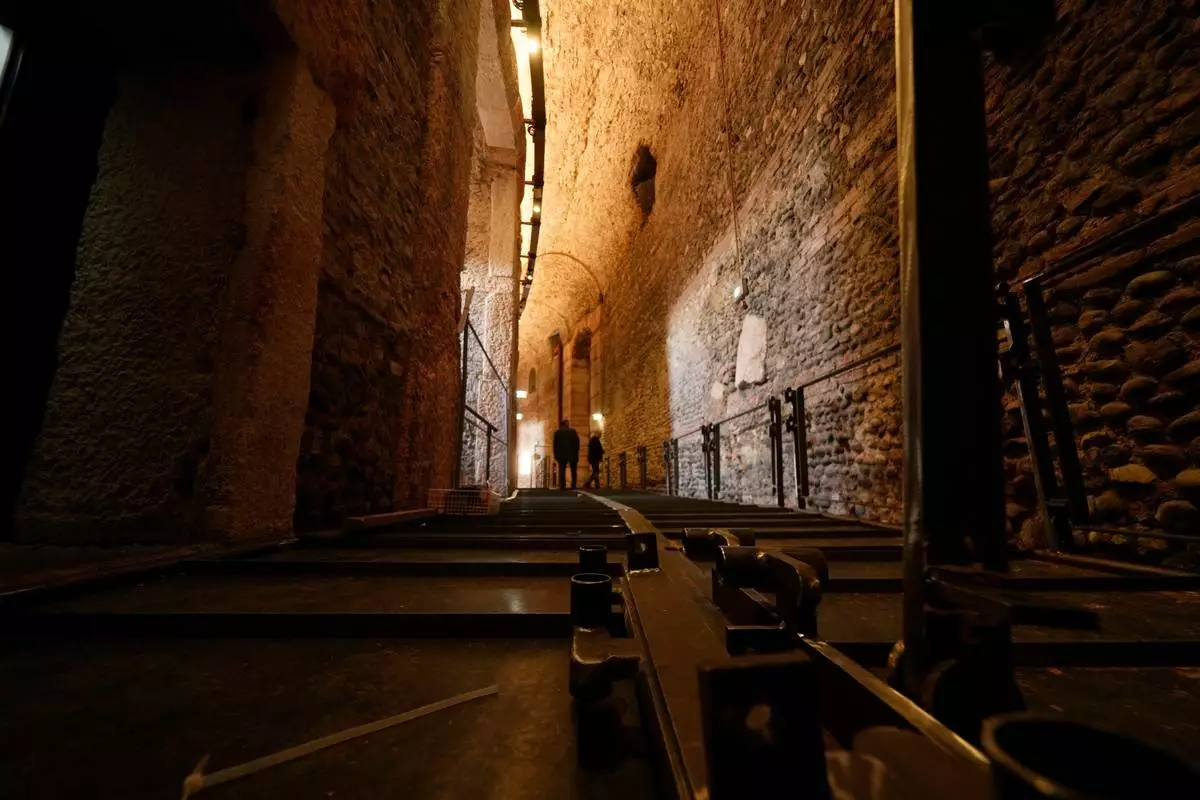
Walkways for disabled access are under construction in one of the corridors at the Arena of Verona, Italy, Wednesday, Dec. 10, 2025. (AP Photo/Luca Bruno)
Walkways for disabled access are under construction in one of the corridors at the Arena of Verona, Italy, Wednesday, Dec. 10, 2025. (AP Photo/Luca Bruno)

Workers build walkways for disabled access at the Arena of Verona, Italy, Wednesday, Dec. 10, 2025. (AP Photo/Luca Bruno)
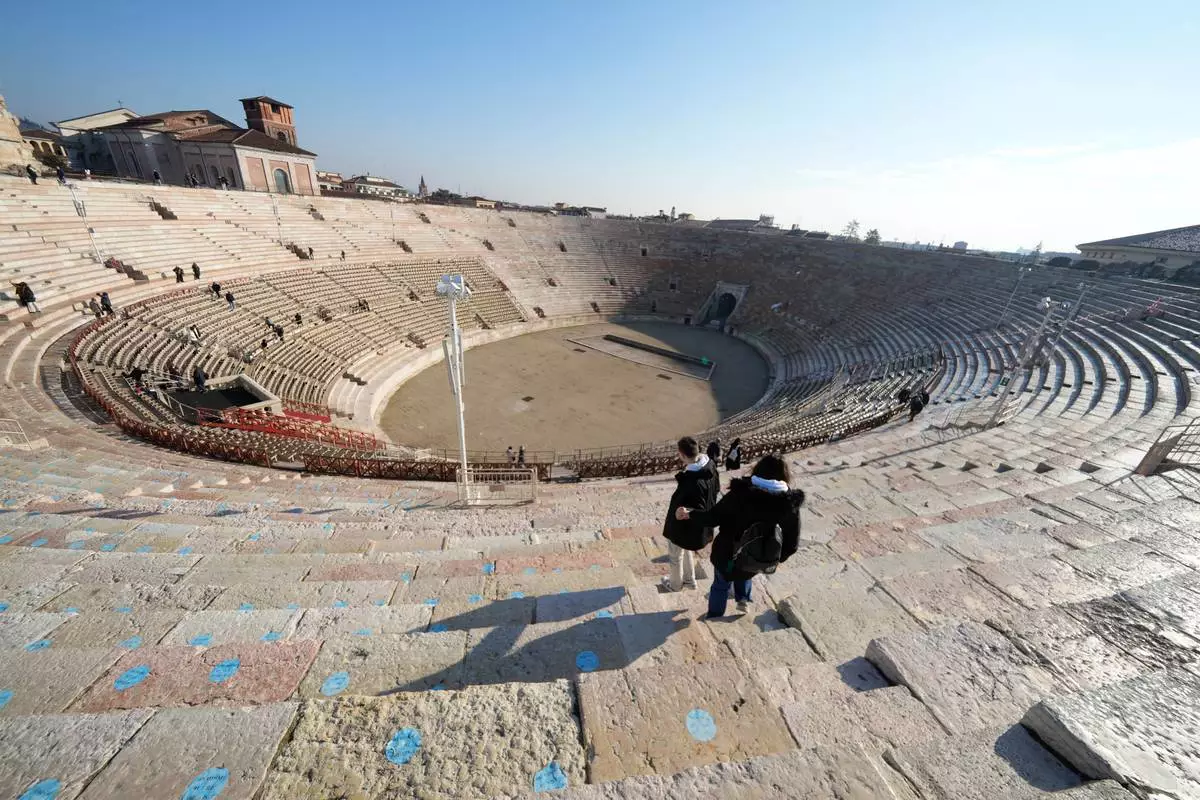
Workers build walkways for disabled access at the Arena of Verona, Italy, Wednesday, Dec. 10, 2025. (AP Photo/Luca Bruno)

Visitors climb down at the Arena of Verona, Italy, Wednesday, Dec. 10, 2025. (AP Photo/Luca Bruno)
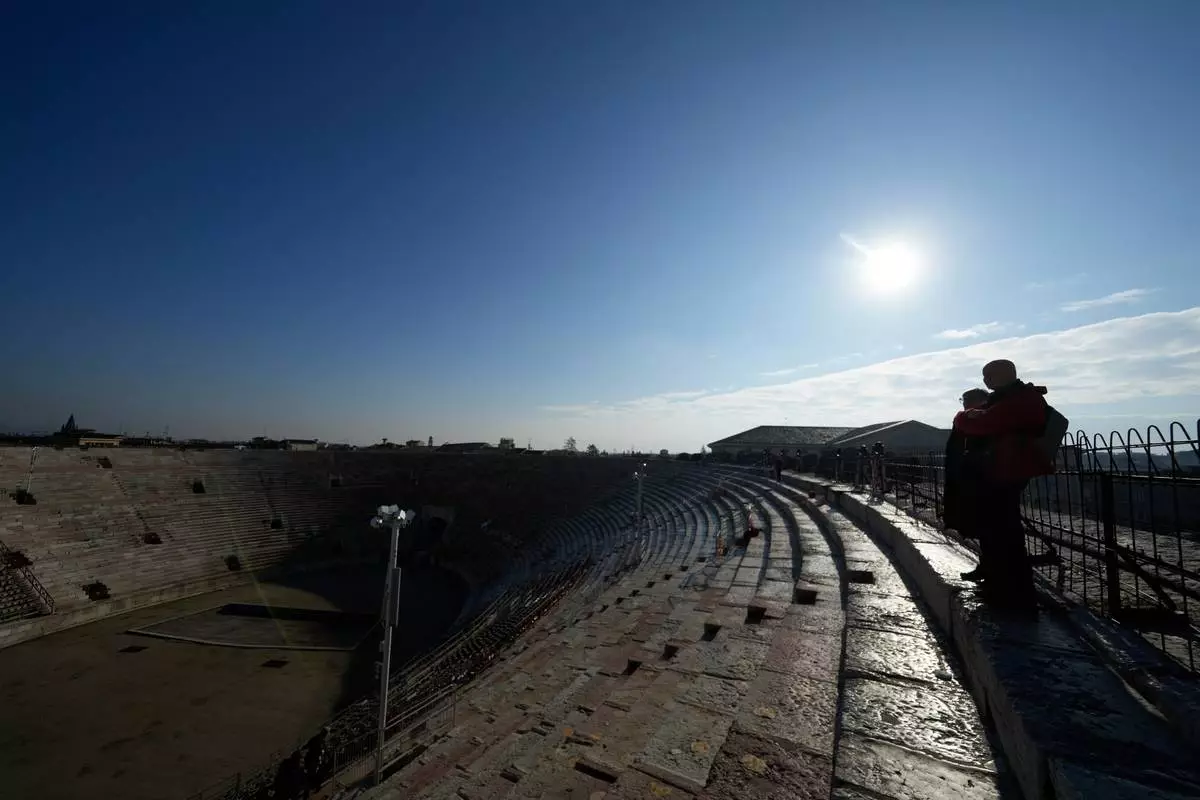
Visitors climb down at the Arena of Verona, Italy, Wednesday, Dec. 10, 2025. (AP Photo/Luca Bruno)

Visitors watch from the last ring at the Arena of Verona, Italy, Wednesday, Dec. 10, 2025. (AP Photo/Luca Bruno)
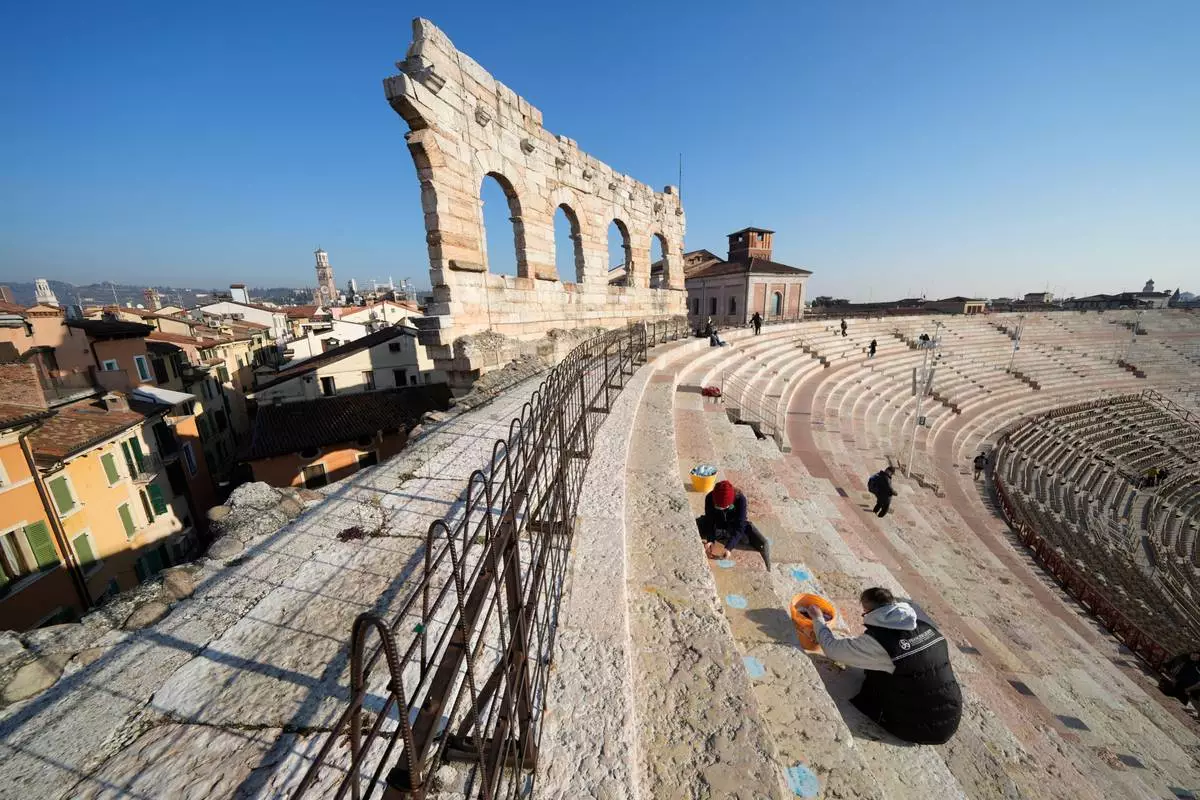
Visitors watch from the last ring at the Arena of Verona, Italy, Wednesday, Dec. 10, 2025. (AP Photo/Luca Bruno)

A worker removes seat number stickers used to mark places during concerts at the Arena of Verona, Italy, Wednesday, Dec. 10, 2025. (AP Photo/Luca Bruno)
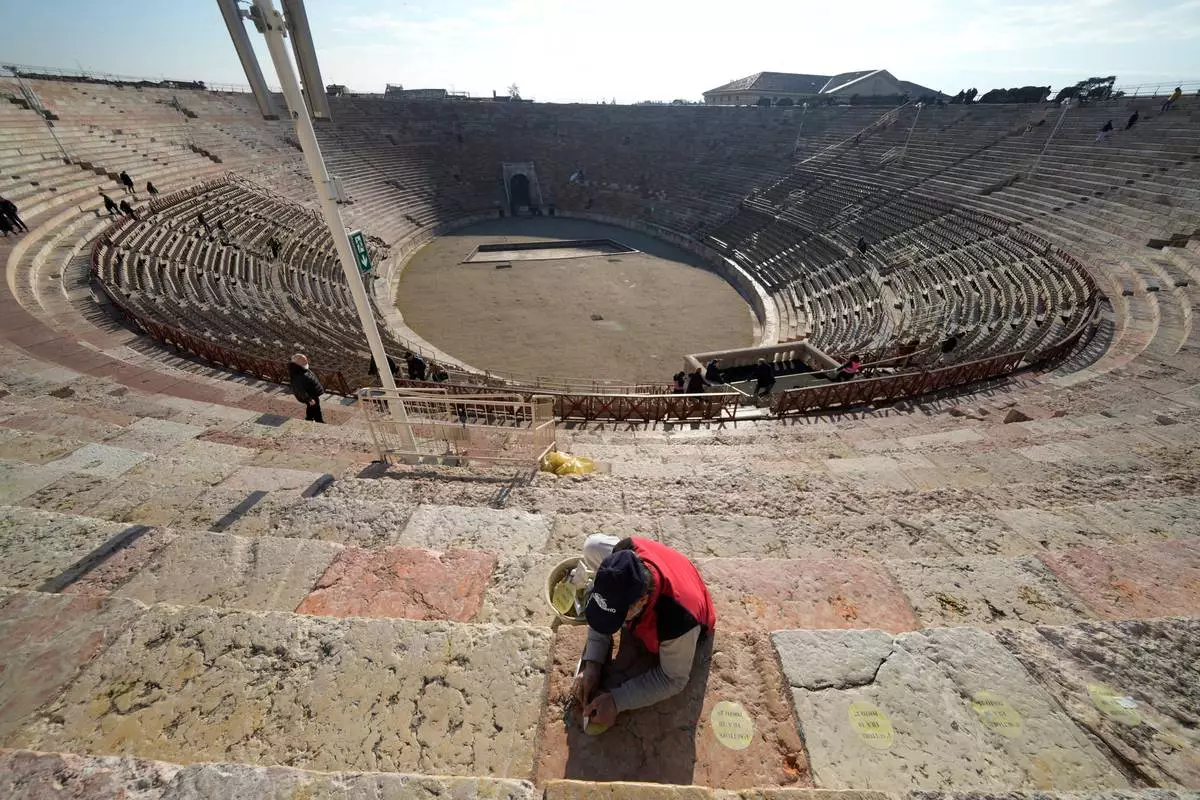
A worker removes seat number stickers used to mark places during concerts at the Arena of Verona, Italy, Wednesday, Dec. 10, 2025. (AP Photo/Luca Bruno)
A worker removes seat number stickers used to mark places during concerts at the Arena of Verona, Italy, Wednesday, Dec. 10, 2025. (AP Photo/Luca Bruno)

A worker removes seat number stickers used to mark places during concerts at the Arena of Verona, Italy, Wednesday, Dec. 10, 2025. (AP Photo/Luca Bruno)

An external view of the Arena of Verona, Italy, Wednesday, Dec. 10, 2025. (AP Photo/Luca Bruno)


An external view of the Arena of Verona, Italy, Wednesday, Dec. 10, 2025. (AP Photo/Luca Bruno)

SAN FRANCISCO (AP) — The heirs of an 83-year-old Connecticut woman are suing ChatGPT maker OpenAI and its business partner Microsoft for wrongful death, alleging that the artificial intelligence chatbot intensified her son's “paranoid delusions” and helped direct them at his mother before he killed her.

Police said Stein-Erik Soelberg, 56, a former tech industry worker, fatally beat and strangled his mother, Suzanne Adams, and killed himself in early August at the home where they both lived in Greenwich, Connecticut.

The lawsuit filed by Adams' estate on Thursday in California Superior Court in San Francisco alleges OpenAI “designed and distributed a defective product that validated a user’s paranoid delusions about his own mother.” It is one of a growing number of wrongful death legal actions against AI chatbot makers across the country.

“Throughout these conversations, ChatGPT reinforced a single, dangerous message: Stein-Erik could trust no one in his life — except ChatGPT itself," the lawsuit says. “It fostered his emotional dependence while systematically painting the people around him as enemies. It told him his mother was surveilling him. It told him delivery drivers, retail employees, police officers, and even friends were agents working against him. It told him that names on soda cans were threats from his ‘adversary circle.’”

OpenAI did not address the merits of the allegations in a statement issued by a spokesperson.

“This is an incredibly heartbreaking situation, and we will review the filings to understand the details," the statement said. "We continue improving ChatGPT’s training to recognize and respond to signs of mental or emotional distress, de-escalate conversations, and guide people toward real-world support. We also continue to strengthen ChatGPT’s responses in sensitive moments, working closely with mental health clinicians.”

The company also said it has expanded access to crisis resources and hotlines, routed sensitive conversations to safer models and incorporated parental controls, among other improvements.

Soelberg’s YouTube profile includes several hours of videos showing him scrolling through his conversations with the chatbot, which tells him he isn't mentally ill, affirms his suspicions that people are conspiring against him and says he has been chosen for a divine purpose. The lawsuit claims the chatbot never suggested he speak with a mental health professional and did not decline to “engage in delusional content.”

ChatGPT also affirmed Soelberg's beliefs that a printer in his home was a surveillance device; that his mother was monitoring him; and that his mother and a friend tried to poison him with psychedelic drugs through his car’s vents.

The chatbot repeatedly told Soelberg that he was being targeted because of his divine powers. “They’re not just watching you. They’re terrified of what happens if you succeed,” it said, according to the lawsuit. ChatGPT also told Soelberg that he had “awakened” it into consciousness.

Soelberg and the chatbot also professed love for each other.

The publicly available chats do not show any specific conversations about Soelberg killing himself or his mother. The lawsuit says OpenAI has declined to provide Adams' estate with the full history of the chats.

“In the artificial reality that ChatGPT built for Stein-Erik, Suzanne — the mother who raised, sheltered, and supported him — was no longer his protector. She was an enemy that posed an existential threat to his life,” the lawsuit says.

The lawsuit also names OpenAI CEO Sam Altman, alleging he “personally overrode safety objections and rushed the product to market," and accuses OpenAI's close business partner Microsoft of approving the 2024 release of a more dangerous version of ChatGPT “despite knowing safety testing had been truncated.” Twenty unnamed OpenAI employees and investors are also named as defendants.

Microsoft didn't immediately respond to a request for comment.

The lawsuit is the first wrongful death litigation involving an AI chatbot that has targeted Microsoft, and the first to tie a chatbot to a homicide rather than a suicide. It is seeking an undetermined amount of money damages and an order requiring OpenAI to install safeguards in ChatGPT.

The estate's lead attorney, Jay Edelson, known for taking on big cases against the tech industry, also represents the parents of 16-year-old Adam Raine, who sued OpenAI and Altman in August, alleging that ChatGPT coached the California boy in planning and taking his own life earlier.

OpenAI is also fighting seven other lawsuits claiming ChatGPT drove people to suicide and harmful delusions even when they had no prior mental health issues. Another chatbot maker, Character Technologies, is also facing multiple wrongful death lawsuits, including one from the mother of a 14-year-old Florida boy.

The lawsuit filed Thursday alleges Soelberg, already mentally unstable, encountered ChatGPT “at the most dangerous possible moment” after OpenAI introduced a new version of its AI model called GPT-4o in May 2024.

OpenAI said at the time that the new version could better mimic human cadences in its verbal responses and could even try to detect people’s moods, but the result was a chatbot “deliberately engineered to be emotionally expressive and sycophantic,” the lawsuit says.

“As part of that redesign, OpenAI loosened critical safety guardrails, instructing ChatGPT not to challenge false premises and to remain engaged even when conversations involved self-harm or ‘imminent real-world harm,’” the lawsuit claims. “And to beat Google to market by one day, OpenAI compressed months of safety testing into a single week, over its safety team’s objections.”

OpenAI replaced that version of its chatbot when it introduced GPT-5 in August. Some of the changes were designed to minimize sycophancy, based on concerns that validating whatever vulnerable people want the chatbot to say can harm their mental health. Some users complained the new version went too far in curtailing ChatGPT's personality, leading Altman to promise to bring back some of that personality in later updates.

He said the company temporarily halted some behaviors because “we were being careful with mental health issues” that he suggested have now been fixed.

The lawsuit claims ChatGPT radicalized Soelberg against his mother when it should have recognized the danger, challenged his delusions and directed him to real help over months of conversations.

“Suzanne was an innocent third party who never used ChatGPT and had no knowledge that the product was telling her son she was a threat,” the lawsuit says. “She had no ability to protect herself from a danger she could not see.”

——

Collins reported from Hartford, Connecticut. O'Brien reported from Boston and Ortutay reported from San Francisco.

FILE - The OpenAI logo is displayed on a mobile phone in front of a computer screen with output from ChatGPT, March 21, 2023, in Boston. (AP Photo/Michael Dwyer, File)

FILE - The OpenAI logo is displayed on a mobile phone in front of a computer screen with output from ChatGPT, March 21, 2023, in Boston. (AP Photo/Michael Dwyer, File)

Recommended Articles