MEUDON, France--(BUSINESS WIRE)--Dec 11, 2025--
AI is one of the fastest-growing technologies in the history of modern business, with the ability to revolutionize industries, optimize operations, and drive innovation, but it is also introducing security gaps, risks, and vulnerabilities. According to McKinsey, 78% of organizations are using AI in at least one business function, up from 55% two years ago. As a result, 73% of them are investing in AI-specific security tools, either with new or existing budgets, according to the 2025 Thales Data Threat Report.
This press release features multimedia. View the full release here: https://www.businesswire.com/news/home/20251211710650/en/
Thales is introducing the first foundational capabilities of its AI Security Fabric to protect the core and edge of enterprises' AI ecosystems.
Thales AI Security Fabric – Safeguarding LLM-Powered Apps, Data, and Identities
With Thales AI Security Fabric, organizations will be able to:
The first capabilities available now are:
“As AI reshapes business operations, organizations require security solutions tailored to the specific risks posed by Agentic AI and Gen AI applications,”Sebastien Cano, Senior Vice President of Thales’ Cyber Security Products Business,said. “Thales AI Security Fabric offers enterprises specialized tools to secure AI applications while minimizing operational complexity. Supported by decades of security expertise, Thales enables businesses to confidently scale their AI adoption, safeguarding sensitive data, applications, and user interactions.”
Thales plans to expand its AI Security Fabric in 2026 with new runtime security capabilities, including data leakage prevention, a Model Context Protocol (MCP) security gateway, and end-to-end runtime access control. These features will strengthen protection across data flows, secure agentic AI data access, and ensure unified, compliant management of interactions between users, models, and data sources.
See more information or get trials and access to some of these tools at the Thales AI Security Fabric Website.
About Thales
Thales (Euronext Paris: HO) is a global leader in advanced technologies for the Defence, Aerospace, and Cyber & Digital sectors. Its portfolio of innovative products and services addresses several major challenges: sovereignty, security, sustainability, and inclusion.
The Group invests more than €4 billion per year in Research & Development in key areas, particularly for critical environments, such as Artificial Intelligence, cybersecurity, quantum, and cloud technologies.
Thales has more than 83,000 employees in 68 countries. In 2024, the Group generated sales of €20.6 billion.
PLEASE VISIT
Thales Group
Cloud Protection & Licensing Solutions | Thales Group
Cybersecurity Solutions | Thales Group

Thales AI Security Fabric
EDMONTON, Alberta (AP) — Voters in Canada’s oil-rich Alberta province were deciding on Monday whether to begin a process that could lead to independence, testing national unity as Canadians rally against President Donald Trump’s trade war and threats to claim Canada as the 51st U.S. state.
Monday’s vote is not a direct referendum on independence. Alberta, home to most of Canada’s proven oil reserves — the fourth largest in the world — will decide whether to remain a province or begin the legal process toward a future referendum on separation.
More than 1.35 million Albertans, or 43% of eligible voters, cast advance or special ballots ahead of the referendum, far exceeding the 810,000 who voted early in the 2023 provincial election. Polls close at 8 p.m. local time, with results on the independence question expected in the hours afterward.
But even if Albertans reject the proposal, separatist leaders say the movement has transformed a fringe cause into a force in provincial politics and is not going away.
Canadian Prime Minister Mark Carney urged Albertans not to take the outcome for granted. He asked for a decisive result in favor of unity in his home province.
“Vote like Canada’s future depends on it because it does,” Carney told a pro-Canada rally Friday in Edmonton, where he grew up.
Alberta Premier Danielle Smith, who called the referendum despite opposing independence, cited a poll showing just 22% support for separation, a figure she said was still too high.
The vote also comes as Alberta reels from a grass fire that suddenly shifted into a military training exercise at Canadian Forces Base Wainwright, killing four service members and injuring 39, including 19 critically. Carney described it as one of the worst peacetime tragedies for Canada’s military on domestic soil.
The biggest cheers Carney received at rallies in Calgary and Edmonton came when he spoke about diversifying Canada’s trade away from the United States. The applause showed how Trump’s trade war and annexation threats have fueled Canadian nationalism even in traditionally conservative Alberta.
Liberal prime ministers have long faced resentment from Albertans over federal energy policies, but Carney has emerged as an unusually popular figure by backing policies more friendly to fossil fuels, such as a proposed oil pipeline to the Pacific Coast.
Joining Smith in a show of unity against independence, Carney warned that the referendum comes at the “worst possible time” and urged Albertans not to use their votes merely to send Ottawa a message.
Smith, who frequently clashed with Justin Trudeau, praised Carney for improving relations.
“I think what we can agree on is that we have had some real change in the last 18 months,” she said Friday.
By calling a referendum she opposes, Smith acknowledged pressure from separatist activists within her governing United Conservative Party who helped bring her to power. Some of those activists helped oust former Premier Jason Kenney in 2022.
Kenney said separatism had traditionally been a fringe cause, with independence parties typically attracting only 1% or 2% of the vote. He said the pandemic mobilized activists angry over public health restrictions and government authority.
Separatist leader Jeff Rath said federal COVID-19 vaccine mandates drove him toward independence, while Tanya Clemens, co-chair of Let Alberta Decide, said pandemic restrictions spurred political organizing. Keith Wilson, the group’s other co-chair, was a lead lawyer for the 2022 trucker convoy that paralyzed downtown Ottawa for weeks in a protest against vaccine mandates and other COVID-19 restrictions.
Wilson argues that Alberta’s grievances go deeper. With much of Canada’s population concentrated in Ontario and Quebec, he said Liberal governments can win elections without significant support in Alberta, leaving the province vulnerable to federal policies opposed by its energy industry.
Wilson argues that Carney’s proposed Pacific Link pipeline illustrates the dysfunction, saying federal restrictions have discouraged private investment and could leave taxpayers financing the project.
At the same time, Wilson rejects Alberta becoming an American state.
“I have no interest in substituting a master, that rules over my children’s future, who’s in Ottawa, with a new one who’s in Washington,” he said.
Other separatist leaders have sought contact with the Trump administration. Rath and fellow independence advocates met three times with U.S. State Department officials in Washington to discuss Alberta’s future.
Chief Sheldon Sunshine of Sturgeon Lake Cree Nation condemned those meetings, calling them “absolutely treasonous to the people of Canada, people of Alberta.”
Sunshine said Alberta cannot leave Canada without First Nations’ consent, citing treaties that predate the province — and said his nation would remain part of Canada even if Albertans vote for independence.
No matter the outcome, the referendum campaign has generated unprecedented discussion about Alberta’s place in Canada, Wilson said.
“I think we’ve already hit success when you look at the voter turnout,” he said. “People are engaged and people are talking about this topic at a level that’s unprecedented historically.”
Rath said he would be thrilled if 30% of Albertans vote to begin the separation process. He wants Smith ousted as UCP leader and said the party could splinter, potentially creating a new pro-independence political party.
Some Albertans hope Monday’s vote ends the debate and heads off a prolonged independence struggle like Quebec’s.
Dave Malka, a 59-year-old Edmonton government worker attending a pro-Canada rally Sunday, criticized spending money on what he called a “referendum on a referendum” when the funds could have gone toward healthcare.
With Trump threatening Canada, Malka said, “It seems to be happening at the absolute worst time when we should be united, instead we’re fighting amongst ourselves.”
Malka expects a decisive rejection but fears separatists won’t give up. “This is only the start of separation Armageddon, if you will. This is their starting point,” he said.
Jake Graham, 35, of Calgary, attended Carney’s rallies wearing maple leaf pants and a Canada hockey jacket, hoping voters will put an end to separation talk.
“I hope this squashes this for a long time to come and that it’s clear and decisive, that these grumblings disappear for a while and we can be a united Canada,” he said.
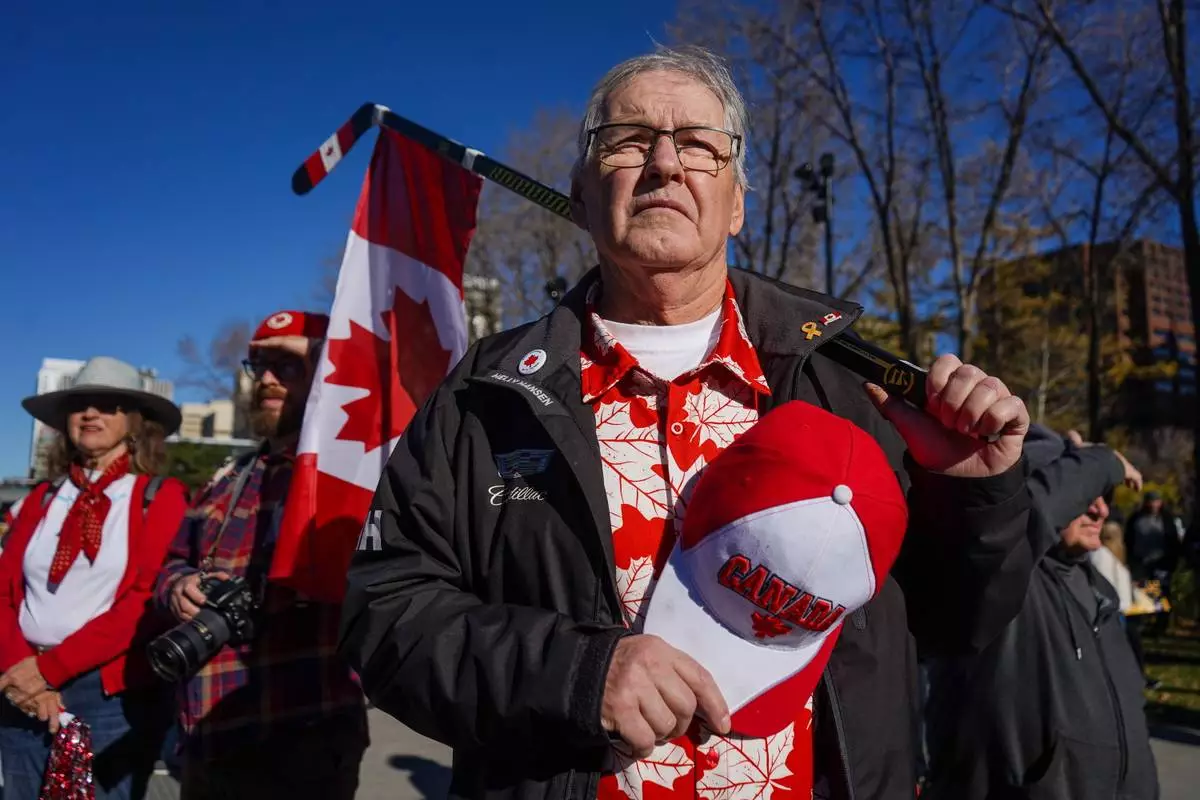
A supporter lowers his hat during a pro-Canada rally in Edmonton, Alberta, Canada, Sunday, Oct, 18, 2026. (Timon Johnson/The Canadian Press via AP)
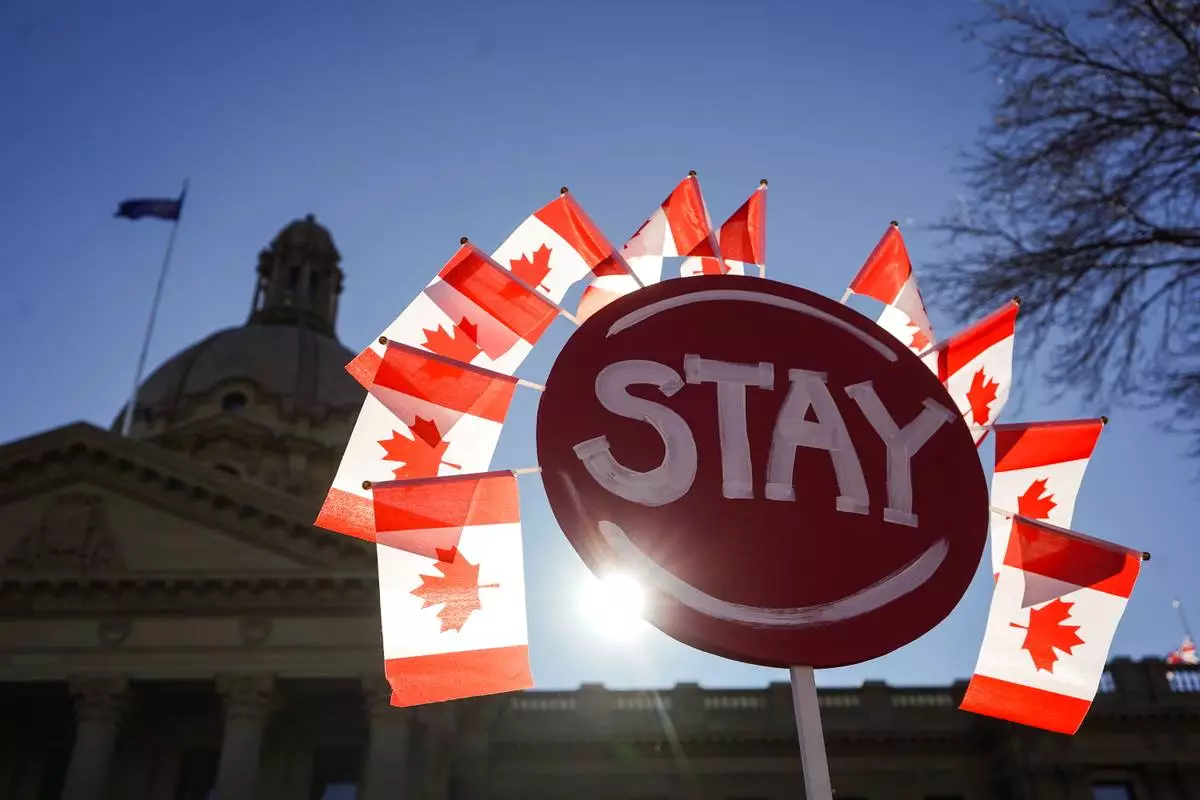
A supporter holds up a sign during a pro-Canada rally in Edmonton, Alberta, Canada, Sunday, Oct, 18, 2026. (Timon Johnson/The Canadian Press via AP)
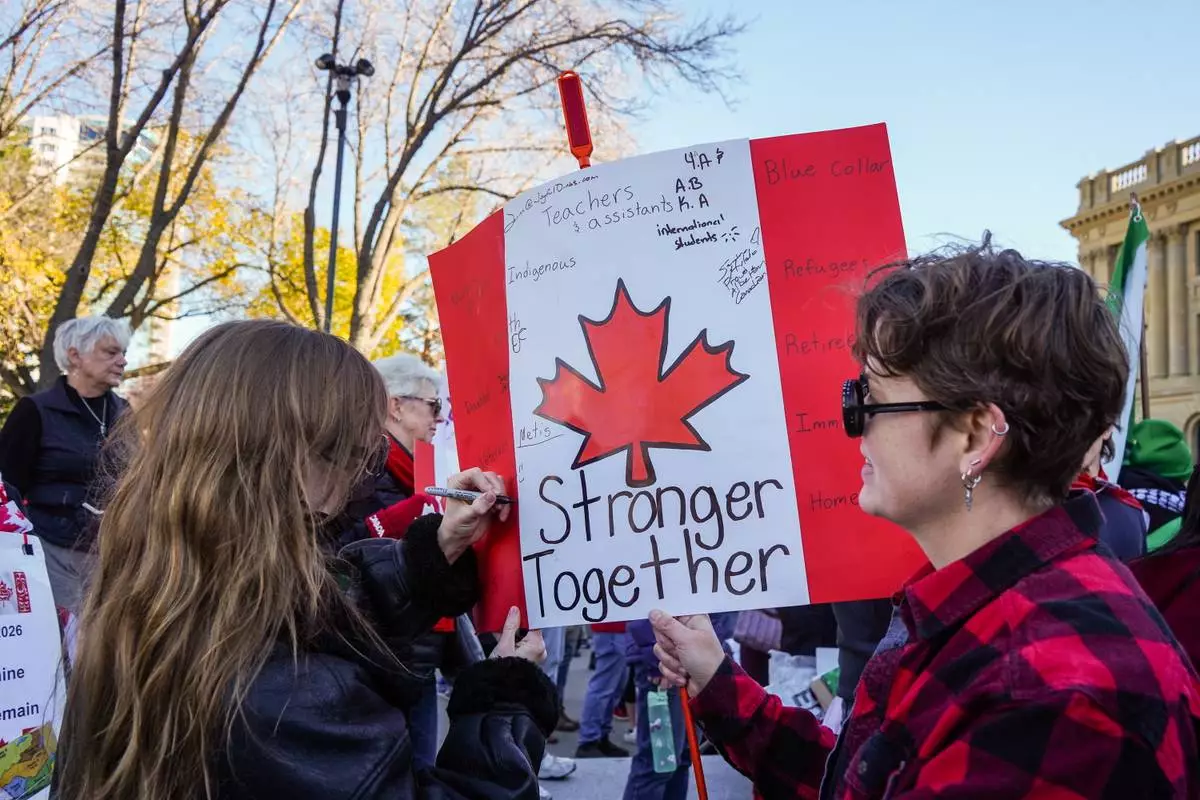
A supporter writes on a protest sign during a pro-Canada rally in Edmonton, Alberta, Sunday, Oct, 18, 2026. (Timon Johnson/The Canadian Press via AP)
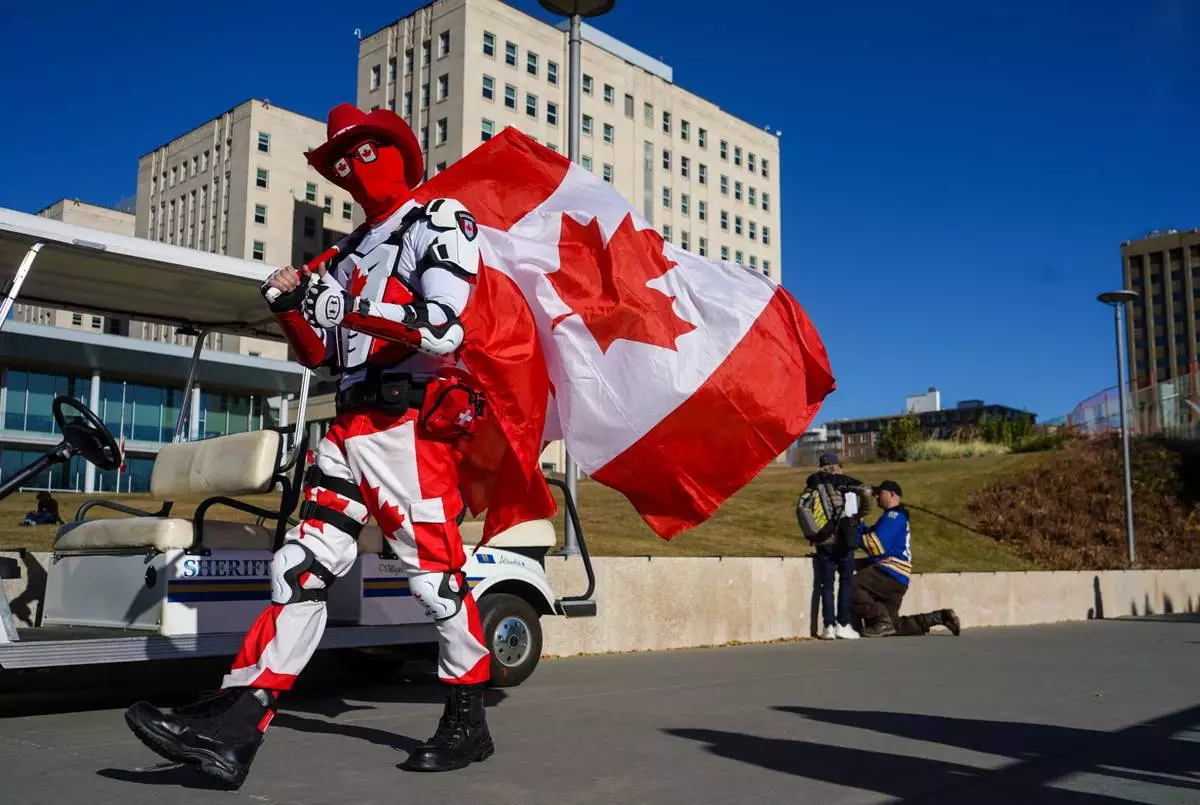
A supporter carries a Canadian flag at a pro-Canada rally in Edmonton, Alberta, Sunday, Oct, 18, 2026. (Timon Johnson/The Canadian Press via AP)
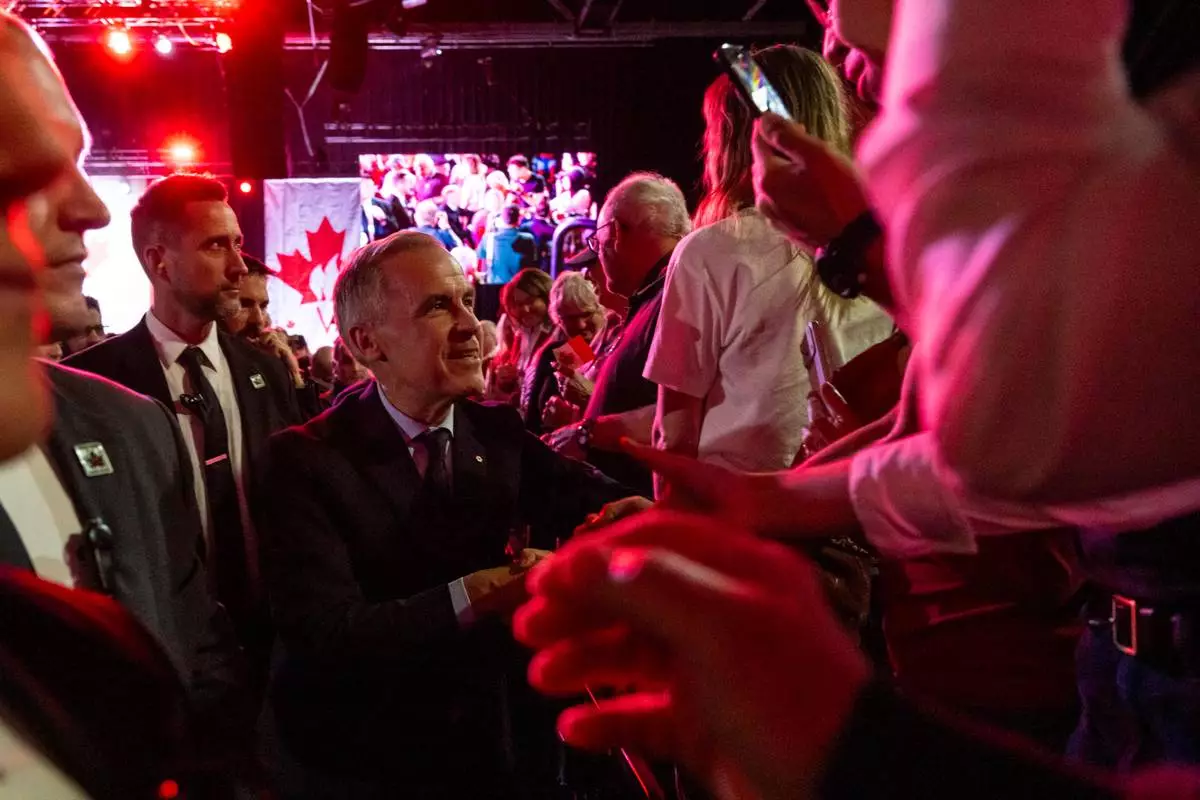
Canada's Prime Minister Mark Carney, center, greets people at a Forever Canadian rally in Edmonton, on Friday, Oct. 16, 2026. (John Ulan/The Canadian Press via AP)

Jeffrey Rath greets speakers during an Alberta independence rally at the Alberta legislature in Edmonton Alberta, Saturday, Oct. 17, 2026. (Amanda May Erickson/The Canadian Press via AP)
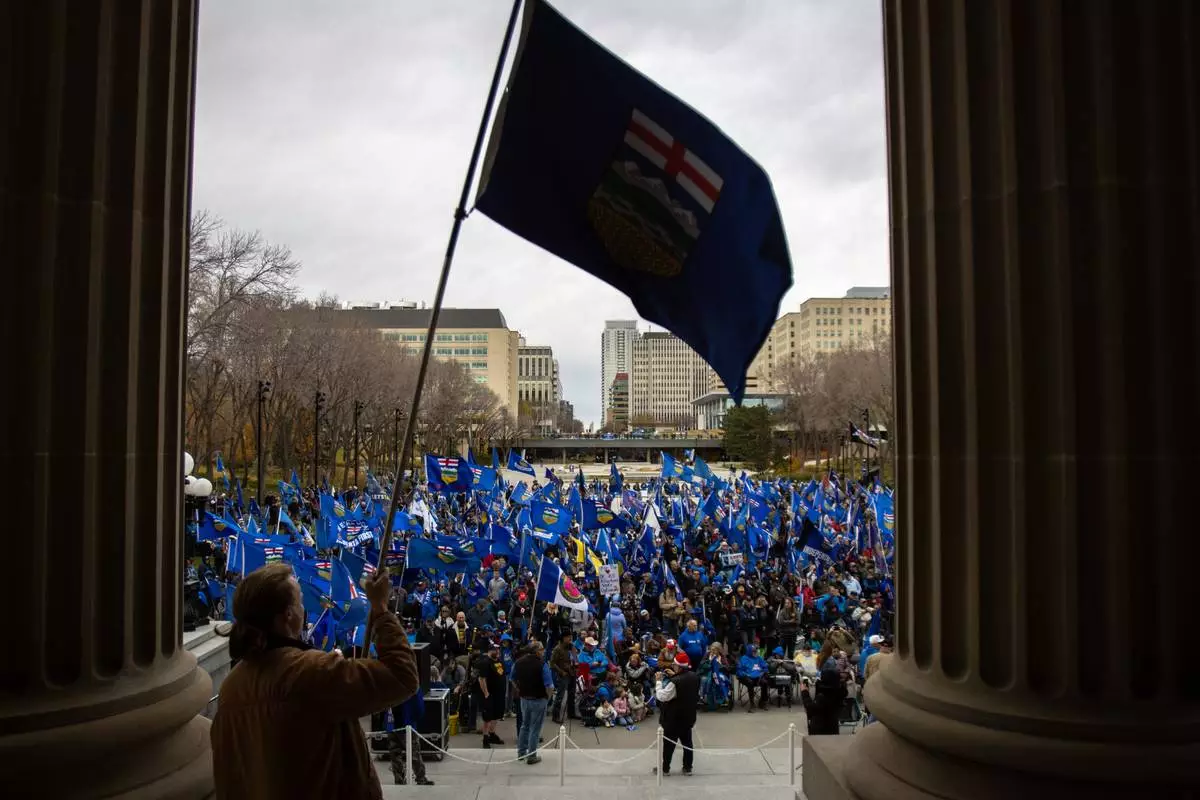
An attendee waves the Alberta flag at the crowd during an Alberta independence rally at the Alberta legislature in Edmonton Alberta, Saturday, Oct. 17, 2026. (Amanda May Erickson/The Canadian Press via AP)
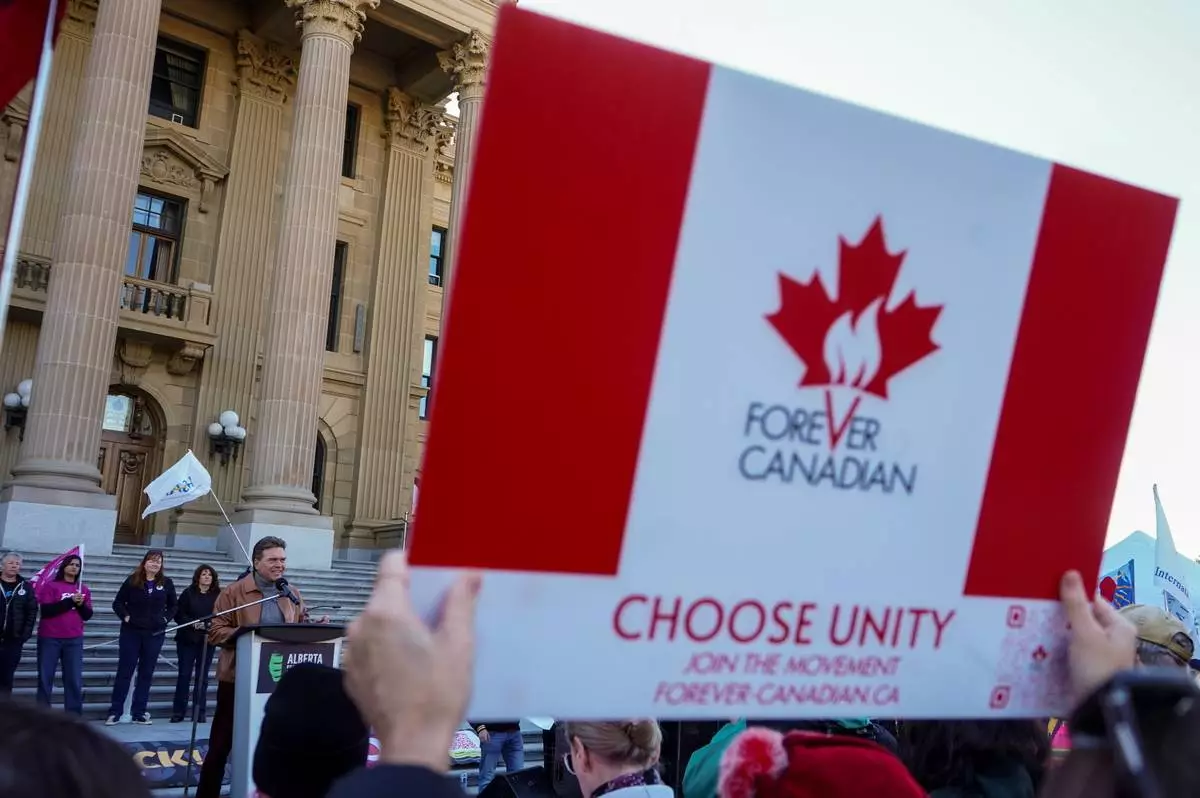
Forever Canada leader Thomas Lukaszuk, left, gives a speech during a pro-Canada rally in Edmonton, Alberta, Sunday, Oct, 18, 2026. (Timon Johnson/The Canadian Press via AP)