RIO DE JANEIRO (AP) — Brazilian President Luiz Inácio Lula da Silva signed into effect a law that reinforces protective measures for women who are victims of gender-based violence, a move welcomed by feminist activists although they also demand more funds for prevention.
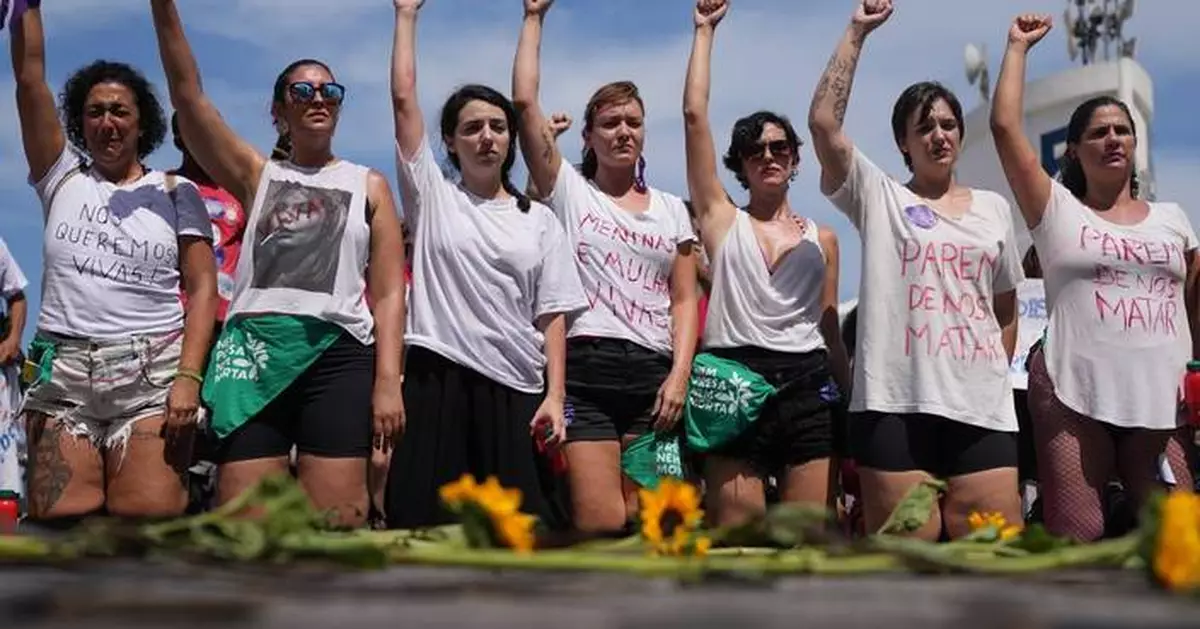
The introduction of the law comes at a time of anger in Brazil over record cases of violence against women and a series of high-profile incidents that shocked the country and sparked widespread demonstrations on Sunday.
The law, published in Brazil’s official gazette on Monday, allows judges to take actions to protect victims, such as suspending or restricting gun ownership, removing the abuser from the victim’s home and banning contact with the victim.
People who must follow the protective measures will now also be forced to wear an ankle monitor. Victims would be notified through a security device if the offender approaches them.
The legislation also increases the sentences for the rape of children under the age of 14 to a maximum 18 years, up from 15 years. When a child is raped and killed, the criminal will now spend between 20 and 40 years behind bars, up from 12 to 30 years.
Former Senator Margareth Buzetti — from the center-right party Progressives — authored the bill, which the Senate approved in November.
Rachel Ripani, one of the organizers of Sunday’s protests which she said took place in 90 Brazilian cities, praised the law's signing.
“It is very positive, but it is also an important sign of how these laws end up being relegated to a secondary plan without public pressure,” she told The Associated Press.
Last week, Ripani called for demonstrations following a series of cases that displayed particular cruelty. She pointed to the case of Taynara Souza Santos, who was run over by her ex-boyfriend and trapped by the car, which dragged her over concrete for one kilometer (0.6 mile). The 31-year-old’s injuries were so severe her legs were amputated. Video footage of the incident went viral.
In another shocking case, English teacher Catarina Kasten was raped and strangled to death on a trail next to a beach on her way to a swimming lesson, on Nov. 21 in the southern city of Florianopolis.
And on Nov. 28, an administrative worker at a school in Rio de Janeiro shot two of his female colleagues. One of the victims’ sister, Alline de Souza Pedrotti, said that he didn’t accept having female bosses.
Earlier this year, footage of a woman being hit more than 60 times by her boyfriend in an elevator also went viral. She later underwent facial reconstruction surgery.
“This violence is being filmed and seen,” said Ripani. “People see it and wonder why there is not punishment.”
More than one in three women in Brazil was a victim of sexual or gender-based violence over the course of a year, according to a 2025 report by the think tank Brazilian Forum on Public Safety, the highest number since records began in 2017.
A decade ago, Brazil passed a law recognizing the crime of femicide defined as the death of a woman in the domestic sphere or as resulting from contempt for women.
Last year, 1,492 women were victims of femicide, the highest number since the law was introduced in 2015, according to the Brazilian Forum on Public Safety.
In October 2024, Lula signed into effect a law stipulating that those convicted of femicide will face a minimum sentence of 20 years and a maximum of 40 years, up from 12 to 30 years.
Isadora Vianna, a sociologist from Rio de Janeiro State University, said heavier sentences for authors of sexual violence against women and children are popular among both progressives and conservatives, but that studies indicate that they are inefficient in preventing the crimes.
Regarding child victims, conducting sexual education classes at school and proposing a space for children to speak up would be much more effective, she said.
“But advancing on this issue is very difficult because the legislative debate is guided by moral values instead of technical studies,” she said.
Tatianny Araújo, a women's rights activist and a member of an abortion rights group, also said that the priority should be preventive policies, such as an increase in budgets to fight sexual violence and the training of the judiciary, health care workers and social services who come into contact with victims.
“No penal change will be successful, because underneath we still have the same sexist, misogynistic, racist structure that harms, violates and kills us,” she said.
—
Follow the AP’s coverage of Latin America and the Caribbean at https://apnews.com/hub/latin-america
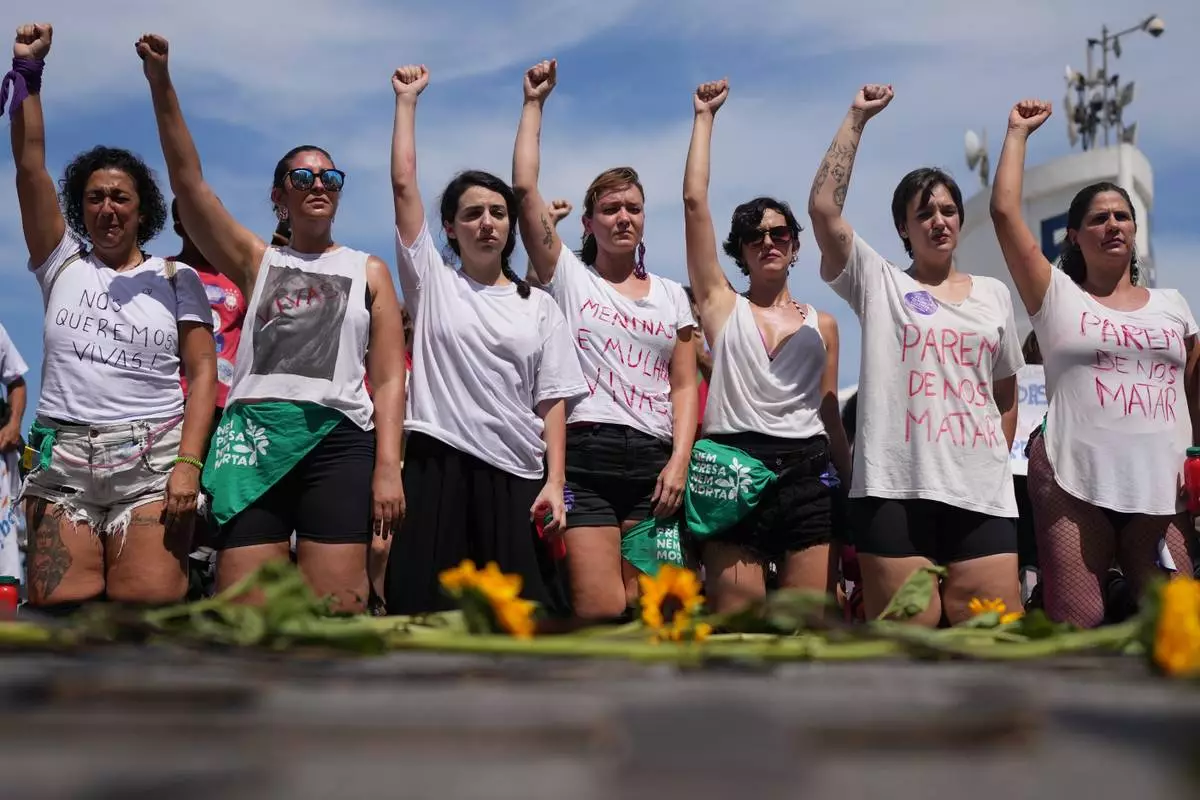
Women protest femicide following a series of high-profile cases in the country, on Copacabana beach, Rio de Janeiro, Sunday, Dec. 7, 2025. (AP Photo/Silvia Izquierdo)